Old Shit

Hey all! Thanks for stopping by. I realise it's been a while since my last post, but these things happen. Sometimes real life takes over with a veritable shitstorm of stupid things happening, and this was one of those times. This is not the place, nor is it the time to talk about these things, but suffice to say that blogging hasn't been at the forefront of my mind just recently.

Still, I plan to change that now and get back into the habit, and what better way to get back into things than with a good old-fashioned retro games post? You're absolutely right, there is no better way!

Okay. So my old Xbox 360 semi-died on me recently, with the DVD drive pretty much giving up the ghost and on several occasions failing to register that there was even a disc in the drive. This, of course, is a problem for a fundamentally DVD-based system – and also, the Xbox was acting as our primary DVD player in the house, too, thanks to its fancy-pants upscaling shenanigans.

So eventually after a bit of umming and ahhing we (yes, we) decided to purchase a new one. I picked up the new Premium, or Pro, or whatever they're calling it now, with the 60GB hard drive, which will be nice. That 20GB drive on the old one filled up surprisingly quickly. However, I do wish Microsoft had had the decency to include a transfer cable in the box. You can get one for free by sending off a form to them (through the post… no online request option, how quaint… and inconvenient) but mine hasn't arrived yet, so I'm using my new 360 with my old hard drive at present. FAIL.

The point, though.

Game were doing a couple of bundles with the 60GB model. One was with Call of Duty 4, a game which I know is fabulously good and marvellous and the best thing ever but I really have very little interest in whatsoever. What did interest me, however, was the Sega Mega Drive Ultimate Collection (or Sega Genesis Fuckfest as Tolkoto of the Exploding Barrel Podcast memorably dubbed it), which was the other game on offer. The irony of the fact I spent nearly £200 on a console only to get a bunch of Mega Drive games with it was not lost on me. You know what else plays Mega Drive games and costs approximately a tenth of an Xbox 360? A Mega Drive!

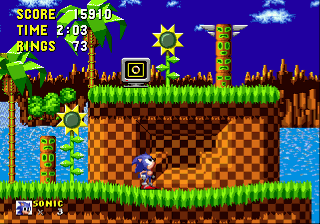
That's not entirely fair, of course, because the 360 version of the Mega Drive collection comes with a veritable plethora of 16-bit entertainment including all the expected things (Sonic 1, 2, 3, Sonic and Knuckles followed by various Sonic spinoffs as the blue spiny dude's credibility slowly began to wane, like a slow descent into alcoholism and drug abuse) plus some things that I personally am very glad to see in there but many others likely won't give a damn about (Phantasy Star 1, 2, 3, 4 and Shining Force, Shining Force II and Shining in the Darkness) and some other things besides. Purchasing (let alone locating) all these Mega Drive games would take time and money, whereas there's apparently over 40 titles to play with in this collection. I say "apparently" as they seem remarkably reluctant to list all the titles in too many places. Perhaps this means there's some pleasant surprises tucked away somewhere.

Sonic the Hedgehog
Sonic the Hedgehog

What struck me having played a few of these is that many of these games are still fundamentally excellent games. Sonic in particular still plays very well, although it's easy to forget with the rose-tinted spectacles quite how frustrating it was at times. It's also interesting to play a properly optimised version of these games finally. I've spent my whole life thinking that one of Sonic 2's great new features was the fact it ran at approximately twice the speed of the original Sonic. Not true. The PAL version of Sonic 2 ran at roughly twice the speed of the original PAL version of Sonic. In fact, this collection has taught me that Sonic 1 is actually quite fast and the original PAL port was one of the shoddiest 60-50Hz hack jobs of all time.

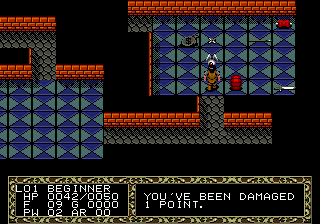
There's also some pleasant curios on the collection, too. I never knew the Mega Drive played host to a Roguelike, for example, but it did, in the form of Fatal Labyrinth (which is one of those examples of Japanese titling where two random, vaguely related words are thrown together) – an absolutely shameless remake of Rogue with 16-bit sprite graphics and smooth scrolling. It doesn't have much in the way of depth (as the original Rogue didn't – it wasn't until later titles like Moria and Angband that they became the behemoths they are today) but it includes a lot of the elements that make Rogue fun – the fact you don't know what anything does until you take a risk and use it being the main one. Chug back a potion and you might suddenly be stronger. Conversely, you might suddenly go blind. It's as brutal as Rogue and, despite its simplicity, it's actually fun and addictive.

Fatal Labyrinth
Fatal Labyrinth

There's a whole batch of unlockable extras too, with the usual video interviews that you get with this kind of package, but also a selection of Master System and arcade titles too. All in all, it's a great package that I will certainly enjoy delving into on a regular basis. Plenty of interesting Achievements to go for too – they're not just of the "Complete Sonic" variety, there's a little bit of creativity there, too. The Achievements are also used to unlock the additional content, too, so that actually gives you some incentive to go for them, too.

Anyway. More soon. I have plenty of things I want to talk about over the next few days, not least of which include Persona 4 along with City of Heroes and its new expansion, the Mission Architect.

See you soon.

Avatar Integration and Feeling the Burn

In my last post, I discussed the virtual world of Second Life. This is something that, as you probably noticed, is of particular interest to me – and I'm not the only one. Jenn Frank posted entries about the issue of avatars and personal identity at some length here and here – two articles on which I also commented at some length – and this led onto an interesting discussion of whether avatars were a reflection of your real-life personality or a fantastical creation from the depths of your own mind.

There are no particular conclusions to draw on this issue, as everyone's different. Just because someone enjoys being tied up and sodomized in Second Life (not me, I might add) doesn't necessarily mean that they will in real life. Just because a guy plays a woman (also not me, though I have been known on more than one occasion to play female characters in games), it doesn't mean that they want a sex change. An avatar doesn't have to look anything like the real-life human behind the controls, but sometimes it does.

My avatar, until recently, looked like me, sort of, a bit. A slightly-idealised version of me, if you will, if I were slightly cooler, less fat and able to pull off black leather jackets and red hair. This all changed the other night, however, when a friend that I had previously only had passing contact with on photo exchange site Flickr decided that tonight would be the night we would meet in-world. Said friend is an active Second Life photographer, fond of, as I am, grabbing groups of good-looking avatars, snapping some pictures of them and then Photoshopping the hell out of them in order to produce some pretty pics. I have something of a liking for this process myself, so here's a picture of aforementioned friend following aforementioned Photoshop mangling:

Morgana(Incidentally, if nothing else, working on SL pics is a fantastic way to get to grips with Photoshop – I've learned far more about graphic design and image manipulation through playing with SL pics than by working on actual photos.)

But anyway: the point. Part of SL's appeal is that you can change your appearance, shape and even gender on a whim. I hadn't done this until now, as I felt something of a personal attachment to my avatar, as you tend to do anything that you "own" and "use" for a long time, or characters in a lengthy RPG *cough*Persona*cough*. Besides, I felt that my avatar was an expression of me – me putting myself "out there" as me. So it was with some trepidation that when Morgana and her friend asked me if they could try out a new skin and shape on me I accepted – I was stepping out of my comfort zone.

The new shape and skin were very different from what I had played before. I felt uncomfortable. It wasn't me. But then the compliments started rolling in. Suddenly I was hot. As shallow as it sounds, a simple change in appearance – an easy matter in SL – was enough to bring these compliments and by extension, give me a huge amount of confidence. Over the subsequent few days, I have grown accustomed to my new avatar – so much so that I feel I am now unlikely to return to my old one, at least for now.

But something else happened in me, too. I looked at my new, buff, muscular self with cool hair staring back at me from the screen and I thought… "I wish I could be like that." The next day I signed up to our local gym and swimming pool complex, and I'm now following a regular exercise programme. It's funny the things that affect you personally and give you inspiration – I never thought the whole avatar thing would work in reverse, with it giving me a desire to do something positive about my real life appearance. And while it's unlikely I'm ever going to look quite like my improbably-shouldered alter-ego, it was very much the "trigger" to set me off on this process. It's an interesting inverse of the usual "avatar reflecting aspects of reality" thing that I hadn't thought of previously.

I discussed this with some friends recently, and they each admitted that they had had similarly peculiar experiences where something "uninspirational" had, ironically, provided them with the inspiration to make a change in their lives. Each of these things carried a certain degree of personal shame to them, too, so I won't embarrass those friends by sharing them with you now. Suffice it to say that I was faintly embarrassed to say that it was SL that inspired me to kick off this workout programme, until I realised that it really doesn't matter what it is that inspires you, so long as it inspires you. And this is why I'm sharing this story with you now.

The BattleIf you're the slightest bit curious about following said workout programme and my feelings towards it, you can follow my progress on Tumblr here.

On Virtual Worlds

I haven't really blogged about this much on this particular site, but I figured it's time to sit down and talk about it as it's something that I've found consistently interesting for quite a few years now.

The subject is virtual worlds – online spaces where tens, hundreds, thousands of people can log in and join a virtual community for one reason or another… it may be purely to socialise, it may be to battle monsters, it may be to have fun, it may even be to have sex. And I'm not talking about community or social networking websites here, as those are a different beast entirely. No, I'm talking about actual virtual worlds, where you can wander around as an avatar, explore the world, meet other people and interact with them in any of the ways described above.

There's literally hundreds of virtual worlds available for people to use nowadays, of many types – some are more "gamey", others are more "social", others still are focused on the less salubrious side of online interactions. Today I want to focus particularly on the virtual world of Second Life and its appeal to me, despite its many, many flaws.

I remember first hearing about Second Life while I was big into The Sims. My whole flat at university became obsessed with The Sims shortly after I built our first house, made virtual representations of all six of us in the flat, then realised that we didn't have enough money to buy beds to begin with, so the whole "family" slept in recliners. Over the years – yes, I was that guy – I bought most of the expansions and later moved on to The Sims 2.

I was, like many other fans of the series, extremely excited at the prospect of The Sims Online, offering the opportunity to have the same kind of fun, but with other people involved. It never made it over here to the UK – at least, not in any prominent way – so I never got the opportunity to try it. I forget exactly how I came across Second Life as a result of this, but it was something I stumbled across without hearing anything about it beforehand, and I thought that the concept sounded rather like The Sims Online, with players being able to design their own virtual person and "live" in a virtual world. As it happens, it has very little to do with The Sims Online, but I wasn't to know that at the time.

For the uninitiated, Second Life is an ambitious virtual world project by Linden Lab, offering "players" (and I use the term loosely, as it's really not a "game" as such… unless you choose to make it as such, which we'll discuss later) the opportunity to enter a world that is almost entirely user-generated. Buildings, textures, landmasses, interface features, animations, body parts, clothing – everything is created by the residents of the virtual world, and this is the thing that initially fascinated me. I couldn't comprehend the idea of being able to log into something where the content was so fluid, where there wasn't a static virtual world that was always the same every time you logged in, with monsters in the same place, prime "camping spots" and so on. So I signed up and signed in, not really knowing what to expect.
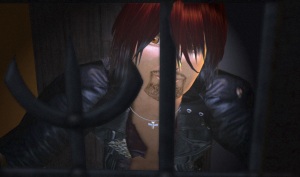
at-the-gateSecond Life is a peculiar experience the first time you log in, especially if you're more used to aforementioned online games with static content, such as World of Warcraft. You quickly become used to the concept of "rezzing", which is the process whereby you enter a new location and you can see things downloading and appearing around you. This is disconcerting the first time it happens (and more than a little irritating if you find yourself stuck against a wall which hasn't appeared yet) but, like many things in the world, you become used to it the more it happens. Similarly, you become used to the fact that other residents' avatars also go through this rezzing process in front of you, so it's entirely possible that someone could appear in front of you with no hair and no face until the textures and shapes have downloaded. Rezzing accidents are the subject of many a good laugh amongst SL residents, but they are accepted as part and parcel of life in the virtual world. People more used to traditional MMOs will likely find it a complete turn-off though – at least until they accustom themselves to it.

Upon arrival in SL, the question on many residents' lips is "what on earth am I supposed to be doing?" And the answer is not simple. Explore, interact, build things, take photographs, join groups, play games, look at art, shop, fuck, roleplay, pretend to be a vampire… the list goes on for a mile, and all of these interactions are built using the basic engine of the Linden Lab-developed software, with extensions built, designed and scripted by residents of the world, just like everything else. People make in-world money either by paying out of their own pocket to buy "currency" – or by working a job, just like real life (albeit with MUCH better hours). It's always interesting to hear how seriously people take their SL jobs, whether they're a DJ in a club streaming their music through something like ShoutCast, a live musician, a virtual performer, a dancer, a greeter, a builder, an estate agent, a facility manger, a prostitute, a Game Master for roleplaying areas – again, the list of things goes on, and people have the opportunity to completely subsidise their virtual existence through virtual hard graft if they so desire.

Another thing that is almost immediately noticeable about SL is the sheer diversity of the avatars present. And we're not talking a set choice of races here, with arbitrary "body size" sliders. We're talking complete customisation. We're talking this situation here:
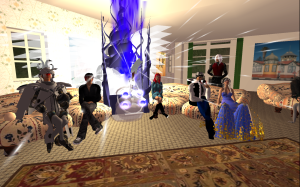
snapshot_111This wasn't anything particularly special happening – it was a discussion group where we sat down and had a civilised chat about a set topic. Like a real-world discussion group in fact.

And that's the thing with Second Life. It has this immensely odd (yet perfectly natural-feeling once you've been there a while) ability to combine the mundane and the absurd. Everyone is distinctive in Second Life – because you're not limited to hard-coded appearance options, you can be whoever you want to be. You don't even have to be human. I picked up an awesome Pac-Man avatar the other day that allows you to spawn dots and ghosts and turn any place you go into a game of 3D Pac-Man.

In fact, the question of not being human is one of the more interesting sides to Second Life that I haven't explored yet. It also happens to be the side that there's a lot of sordid assumptions about, particularly around the "furry" avatars. Yes, there are people who choose to represent themselves as furry animals and then have simulated sex whilst masturbating furiously at the sight of their interlocked pixels. But equally there are people who choose to represent themselves as furry animals just because they like them. On one memorable occasion I was spending some time at a hangout with my earliest friends in SL (who are still good personal friends to this day, I might add) and I was introduced to an immensely clever man from a university who was working on lots of exciting things to do with AI. My friend Lyndy, who introduced me, assumed that because I "knew about computers" I'd be able to chat to this guy no problem. However, he was explaining concepts that were way over my head… but they were interesting to hear. The really peculiar thing, though, was that he was dressed as a fox. Not a foxy lady, no, an actual fox. In a waistcoat. If anyone remembers a really old DOS point-and-click adventure called Inherit the Earth… the main character from that? Fox-in-a-waistcoat called Rif? That's about it.

Why do I remember that? I never even played it.

Second Life is flawed in many ways. I've talked about this many a time with Jennatar, and she suggested the notion that virtual worlds are a much younger technology than the Internet. Currently with virtual worlds, she says, we're at a similar sort of stage to the Internet was in in the early 90s in that there's a lot of stuff out there to explore, but navigation, user interfaces, efficiency and practicality haven't quite reached the level of stability you'd need to be completely "mainstream". This means that titles like Second Life are, at least for now, going to be "niche" interests. However, interestingly, the "niche" for Second Life perhaps isn't what you'd expect – an oft-quoted "statistic" is that of the many residents of the world, a significant majority of them are female and over 30. This is certainly true amongst my circle of online friends – I think there's one guy and about thirty gals on my friends list. This is also backed up by the fact that the "retail" sector in the world is very much female-dominated, with vast business empires and shopping malls devoted to female clothing, hair, animations and the like, with male products often relegated to the virtual equivalent of a dusty old cellar. One may argue that this may lead to a lot of males representing them as females, and of course this goes on – given the opportunity to live out a fantasy life, I'm sure there's plenty of men out there who wonder what it would be like to be a woman – and a hot one at that (no-one is ugly in SL unless you make a specific effort to do so!) – and give it a try.

There's a kind of implicit understanding amongst residents though – don't ask, don't tell. If someone doesn't want their "first life" brought into it, then you don't ask. If it's a female on the screen, then as far as you're concerned, it's a female you're dealing with. I actually don't have a problem with this. Perhaps it's because I'm not spending my time going around having sex with these people, but it certainly doesn't bother me – if they choose to represent themselves in that way, for whatever reason that might be, then that's their business.

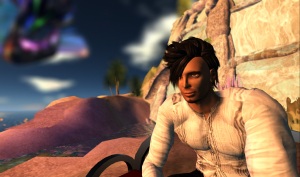
Despite its many flaws and its perceived "niche" interest, I have a lot of time for Second Life. It's an experience that is very much made by the people you interact with. Without people to meet, talk to and interact with you're relying on stumbling across interesting content solo – and while there is plenty of interesting stuff to do by yourself, it's always better to share with other people. Much like real life, in fact.
quiet-thunder

I'll certainly be very interested to see how virtual worlds develop over the years. Will Second Life remain in its pioneering position of almost entirely user-generated content? Will it be overtaken by something else? Who knows. I do know that I have made some genuinely close friends in its strange world, many of whom I am unlikely to ever meet face-to-face. And I'm fine with that. By having their "virtual" face in front of me on the screen – even if it's nothing like their real-life face – I still feel like I "know" them better than people I interact with on the Internet in less direct ways. Perhaps "know" is the wrong word – it's difficult to describe, but knowing someone's avatar feels a lot more "physical" (for want of a better word) somehow than a username on a page of text.

It's not an experience for everyone by any means. It would bore the pants off someone expecting to play an exciting game, because it's not a game. But as a means for virtual social interaction, it's an interesting experiment… one that still has a long way to go, but also has an incredible amount of potential.

I blog about my experiences in the world in more detail here. I post my photos from the world here. Feel free to check them out if you're the slightest bit interested.
Communication, mmm-mm-mmmm

Back in primary school, we used to have to sing songs in Assembly every morning. Then on Thursday mornings, we'd have "Hymn Practice" instead of Assembly, which in most cases was simply an Assembly by a different name. And then there was the one afternoon a week where the music teacher (who was also my piano teacher at the time) would come into the school and make us sing even more, using material from the BBC's Singing Together radio programme and companion songbooks.

One of the awful songs that has inexplicably stuck in my head ever since those dark, song-filled times ran thus:

Communication, mmm-mm-mmm,
Way back long ago men sent messages
Beating out rhythms on drums and bones

I remember the rest of the tune, but not the words. It was one of those songs that parents like to describe as "funky" when in fact, due to the fact it's performed by tone-deaf primary school students accompanied by a miserable pianist on an out-of-tune piano, is anything but.

This is a roundabout way of introducing the topic I feel like talking about today which is, oddly enough, communication (mmm-mm-mmm). I apologise, but if you're reading this post, you've probably indulged my flights into the bizarre in the past.

There's been a lot of attention on sites such as Twitter recently, and particularly, it seems, in the last month or so. Ever since Stephen Fry happened to mention it on the Jonathan Ross show here in the UK, people in my group of "real-life" friends have been signing up to it like crazy. This is a big thing, because many Internet "fads" often pass by the UK, the general (i.e. non-geek) population here being afflicted by a sort of general malaise and apathy that causes them to denounce anything where you have to do something that could be remotely considered as "work" (i.e. something where you have to use your brain or, God forbid, write something) to be a Bad Thing.

To give you an idea of how this has gone, let me paint you a little picture. I have been using Twitter for some time now as a means of communicating with my friends in the Squadron of Shame, who are mostly based in the US and Canada. It's been great for that, but it's also been great as a means of "stress relief" – a place to post those thoughts you don't really want to say out loud but you kind of want people to "hear", if you catch my meaning. I often refer to it as a means of externalising your own inner monologue, and for many people it is. Of course, blogs also carry that function for many people, but the immediacy of Twitter, coupled with the fact you are limited in how much you can say, makes it an attractive option for "microblogging", its originally intended purpose.

Now, as I say, I've been using it for some time both as a means of communicating with other people and venting my own frustrations, of which there are many, as you've probably seen. My friends here in the UK often wondered why on earth I was bothering with such a simple website when places like Facebook offered far more in the way of options, applications and other fluff – particularly when Facebook offers its own system for microblogging through its status update system. But the fact is, the simplicity of Twitter is the attractive thing about it. Facebook is full of fluff, and has been growing more fluff as time goes on, as have other sites like it. Now, much more than simply being able to post messages to that hot girl you fancy at college, or trying to avoid exes, Facebook markets itself as a "platform" for the interminable flow of applications that clutter up everyone's profiles and get in the way of the original purpose – communicating.

Twitter does no such thing. Twitter gives you a box to type in what you're doing, and a list of other people's answers to the same query. Nothing more. And as a result, the communication involved is much better. If you want to ask someone something, you ask them. There's no wading through their Tetris high scores, no comparing people and choosing who is "the most punctual" (thanks for voting for me on that one, you obviously don't know me THAT well) and no looking at daily LOLcats. Simple and clear.

There's a time and a place for these different types of communication, of course, but it was just interesting to me that it took a celebrity endorsement for people in this country to pay attention to something as simple as Twitter, while the glitz and flash of Facebook, MySpace and Bebo sweep through the lands like a plague.

With this in mind, over the last few months I've been exploring different alternatives for communicating on the web. With the ubiquity of the Internet these days, you're never very far from some means of talking to another person – be that in real-time via instant messaging services or in a more "when you feel like it" manner via services like Twitter, Facebook and message boards. There's an interesting variety of different approaches.

First, of course, is the humble blog. You're reading this, and presumably you've got this far otherwise you wouldn't know I'd said "presumably you've got this far". Why are you reading this? It could be one of several reasons. It could be because you want to get to know me better, it could be because you're nosey, it could be because you're interested in the things I talk about (though I defy anyone to pin a single "topic" on this blog) or it could simply because you like the way I write. How did you find me? Chances are, in my experience, that you found this place either because I told you, or because you clicked on a link in one of my other friends' sites. How you got here doesn't matter. If you're reading this, you're effectively allowing me to talk at you for several minutes before I pause, look around the room at the people who have been listening intently (and ignoring the people who wandered off to look at porn several paragraphs ago) and invite questions and comments in the… um… comments. Blogs can be good starting points for discussions, but they're inherently one-sided – the blog's writer has most of the power, and commenters have a more "subservient" role, if anything. That's not a bad reflection on any of you thinking about commenting, before you say anything – it's simply the way the medium works.

I find a blog to be a great way of getting complicated thoughts or opinions out of my head in a way I (and hopefully other people) can understand – when expressing myself verbally rather than through text, I often find that social anxiety takes over and I get tongue-tied. Here, though, I can consider what I say before I say it, and then invite questions or opinions after the fact.

Next up, I've been exploring Tumblr. Tumblr is a strange one, somewhere halfway between Twitter and a blog in its execution. Different people use Tumblr for different things. For the self-confessed lazy blogger, it makes a solid, easy-to-use foundation for blogging in the manner I discussed above. For others, such as myself, it becomes a sort of digital scrapbook, a receptacle for all the random noise floating around your head or pictures of cats that you see on the Internet that you don't want to clog up your Twitter stream with constantly.

For others still, it becomes a means of communication, though in a completely different manner to something like Twitter. Tumblr's communication centres around the idea of "reblogging" – taking something that someone else posted, posting it on your own page and adding your own take on it. This is something that tends not to happen with blogs like this one – either because they're too content-rich, too long or simply out of respect for the person who wrote it in the first place. After all, if you want to comment, there's a comments box right at the bottom. Not so on Tumblr, however – because posts tend to be short and snappy – a quote, an excerpt from conversation, a photo – it's easier to reblog them, comment on them and thereby expose them to more and more people. In that sense, Tumblr is very much a viral marketer's dream. Post something cool once and if someone reblogs it, then someone else reblogs it, then someone else… each time it gets more and more views and is accessible to a wider and wider audience.

Smokey Darth

Take this awesome picture of Darth Vader, originally from the Wired blog, apparently. By the time I came across it, fairly randomly, I might add, it had already been through about ten people. Currently, there are 134 "notes" on the image, which means it's either been tagged as "liked" or "reblogged" by 134 people. Similarly, take the Microsoft Songsmith stuff. There's absolutely no denying that Songsmith is a work of great evil, but I bet you know what I'm talking about without me having to post a link. Viral marketing at work. Sort of.

Then there's more "active" means of communication. I have had a long-time fascination with virtual world Second Life, it still representing a fairly unique branching-off from the typical massively-multiplayer scenario in that there are no goals, no scores, no experience points, no set content – pretty much everything – buildings, objects, scripting that makes objects work, bits of interface, even avatar clothing, hair and body parts – is created by the "players". This is a spectacular achievement, when you think about it, and whatever you may feel about Second Life and the people who enjoy it, there's absolutely no denying that it's an impressive means of communication and expression. It is very much its own world with its own rules and conventions, and it's an interesting place to spend some time, even if you don't plan on staying. Just to confuse matters, I started a Tumblelog about my Second Life experiences here, and microblog about it on yet another site called Plurk, which feeds to a Twitter feed, which… you get the idea.

There are a million and one other sites I could talk about on this note but I feel I have carried on for far too long already. The point of this post is simply to celebrate the possibilities for communication that the Internet offers. It's easy to forget – or at least take for granted – the fact that simply by sitting down in front of our computer, we can easily talk to and interact with people from all over the world. Let's never forget how awesome that is.

Listen To Whatever The Hell You Want

I'm many things, but one thing I've never been is cool. There are many reasons for this – crap hair, being overweight, dandruff, a tendency to blush furiously when talking to people, a voice I hate listening to (which, inexplicably, seems to have gained a cult following thanks to the SquadCast) and, of course, relentless self-deprecation.

This lack of coolness was particularly apparent during my teenage years. These days I like to think I have my own identity – nerd chic or whatever stupid post-modern label you want to apply to it – and I'm quite happy with this. During adolescence, though, it's easy to be jealous of "the cool kids" and for many nerds such as myself, the way to get in on some of that action was to get into the same music that they liked. At least then you'd have something to talk about, and you'd feel justified sitting in on them in the Music department at lunchtime, trying their best not to crucify their favourite song and, inevitably, failing.

I didn't quite manage this perfectly, however. Kids were into Blur and Oasis when I was at school, so the first album I ever bought for myself was Oasis' Definitely Maybe. Fine. A good choice. Unfortunately, I chose the day before (What's The Story) Morning Glory? came out to purchase it, so was thus branded an idiot.

Over time, I got a little better, picking up some other albums that other people considered to be "classics" for various reasons, and more than a few stinkers as well – all of which I have, and intend to hold onto with no shame as a reminder of my past. I never really strayed that far out of the cultural comfort zone of local commercial radio and what I read in magazines, though.

As time went on, I got older and I apparently at some point signed that non-negotiable contract that means once you're over the age of 25 you must immediately start hating all contemporary popular music. (To be fair, contemporary popular music is shit.) As such, I kind of stopped paying that much attention to a lot of music for a while, instead sticking to things that I'd liked for years, or more "niche" interests such as countless remixes, reorchestrations and even a spectacular metal reinterpretation of the Final Fantasy soundtracks. During my training as a teacher, my buddy Owen introduced me to 80s and early 90s metal, which I enjoyed greatly but didn't explore in any depth. In the meantime, the charts slowly filled up with 50 Cent and crap like the track in the link posted above, and television began search after search for "the next big star", with Popstars, Pop Idol, The X-Factor, Britain's Got Talent and all manner of other "talent" shows which proved again and again that the mainstream popular music industry at large wasn't interested in talent, just someone who "looked right" and was "marketable".

Fast forward a few years – to now, in fact. I picked up Guitar Hero World Tour and Rock Band 2 the other week, and between them those two games have reignited an interest in exploring music. Not middle-of-the-road chart music because that's still shit. (I know I posted that already. But it is shit.) No, I'm talking music where the artists actually play their instruments and in many cases compose their own songs too.

It may sound trite to quote Guitar Hero and Rock Band as influences on exploring music, but it's true in my case. Speaking as an actual musician (albeit not a guitarist, vocalist or particularly gifted singer), I can say that both games encourage analytical listening of the music you're playing, even if the note charts for you to play on your plastic instruments are sometimes a little questionable (but that's a discussion for another day). As such, it quickly becomes apparent which ones are the genuinely-well composed tracks and which ones are masking their compositional deficiencies behind lots of noise. For the most part, there's a clear divide between "classic rock" of the 70s and 80s and more recent tracks, with many earlier tracks displaying much more in the way of virtuosity (and stamina), particularly on the part of the guitarists and drummers – but there are some notable exceptions, two of which I thought I'd mention particularly, as the individual tracks in Rock Band actually convinced me to explore these artists further and purchase more of their music.

First up is Coheed and Cambria, which I know RocGaude is a fan of. Coheed and Cambria are prog-rock taken to the extreme, with spectacularly lengthy album titles (the one I purchased is called Good Apollo I'm Burning Star IV Volume One: From Fear Through The Eyes Of Madness) and even a companion series of graphic novels to flesh out the story of the characters in the songs. But there's something about the songs, particularly Welcome Home, the track from Rock Band, that "got" me. Now that I've mentioned this, Coheed and Cambria fans amongst my circle of friends have started coming out of the closet too. I'd never heard of them prior to a couple of weeks ago – now it seems that appreciation for their work is more widespread than I thought.

Next up is Dream Theater, their track Panic Attack representing one of the most difficult tracks in Rock Band 2, thanks to some tricky riffs and the fact that it jumps around from 5/4 to triplet rhythms at irregular intervals, meaning that everyone in the band has to keep on their toes. This piece was so unashamedly dramatic that it immediately appealed to me, with the concept of the piece also holding a degree of personal resonance for me. As a result, I decided to check out the album it was from, Octavarium. I wasn't disappointed – from the opening track through a hugely diverse range of styles paying homage to U2 and Muse among other things, and finishing with a twenty-minute long finale, I really enjoyed the album. It's the first album I actually decided to sit and listen to – as in, headphones on, lights off, concentrate on the music and nothing else – for a very long time. Not working with music on, not blogging, not browsing the Internet, not having the music on in the background – just focusing on the music exclusively. And I had a great experience with the album.

My point? Yes, there is one, however flimsy it might be. I have no idea if it's cool to like Coheed and Cambria, or Dream Theater, but I am happy to stand up and be counted as someone who likes them both. I'm sure I will discover more great new music as time goes on, from Rock Band, from the live gigs I've been to recently and via services like last.fm.

In short, anywhere but from BBC Radio 1.

And that song is shit.

The Squadron of Shame Squadcast #12: No Shame

The long-awaited first 2009 episode of The Squadron of Shame SquadCast is now available for download!

Subscribe now using one of the following links:

Subscribe via iTunes (M4A version)
Subscribe via RSS (M4A version)

Subscribe via iTunes (MP3 version)
Subscribe via RSS (MP3 version)

Direct download this episode (M4A version)
Direct download this episode (MP3 version)

You can also follow the Squad's updates on Twitter here.

This episode, we delve into Games of No Shame. These fall into several categories – the games everyone loves that you hate, the games everyone loves that you love too, the games that everyone hates that you love and the games you're terrified of being caught playing.

Also on this episode, Beige talks about jizz and Pokémon, we use the phrase "sucks like a banshee" and Pishu goes a-hustlin'.

Follow us on Twitter for up to date news, including rollout information of our exciting new website now that 1up has witnessed the power of that fully operational battle station that is UGO.

Stay tuned!

Haunted Stereo Live at the Hobbit

So here we are again. After a somewhat touch-and-go start to the day after being molested by numerous pints of toilet cleaner masquerading as Lord of the Rings characters, I find myself here considering what it was I saw last night at the Hobbit.

Things began well when I managed to sneak in and grab a peek at the performers' soundchecks earlier in the evening. When I saw that an electric ukulele was involved, I knew that this was going to be anything but traditional. However, as these things tend to go, it would be an hour or two between soundchecks starting and the actual performances beginning, so I took the opportunity to use every piece of mobile Web 2.0 technology at my disposal to write last night's blog post, tweet like crazy, post pictures of The Hobbit's pleasantly literate toilet graffiti to Tumblr and generally keep things rolling until the bands took the stage later. I also had the opportunity to people-watch a little, with The Hobbit's diverse clientele once again failing to disappoint. From the old drunk babbling about chicken to the selection of surly-looking goths playing pool, The Hobbit is a fine place to witness most subcultures coming together in relative harmony for once. The only group not really represented was the humble chav, which I have absolutely no objection to. I'd much rather they'd all be off their faces on cheap lager at Jesters down the road than spoiling everyone else's night.

But I digress. There were performances to watch, and it turned out to be a very entertaining, very pleasant evening.

I'm not going to talk much about the support acts here, but I did want to mention the first one. This was a solo female singer named Plat du Jour. She gave a good start to the evening's entertainment with her songs. Although her arrangements were necessarily simple, given that it was just her and her guitar, her songs were pleasant to listen to, covered a variety of different moods – all too many performers stick too much to one style and one style alone – and she had a wonderfully friendly, down-to-earth manner with the audience. She also had a great voice, with shades of Portishead's Beth Gibbons at times. I'll be interested to see where things go with her performances, as she certainly has a lot of potential, judging by her performance.

The main event of the evening, however, was Haunted Stereo, made up of members Andy, Anja, Dave, Joanna, Kenta and Lewis. They describe themselves on their MySpace page as "melodramatic popular song/folk/indie", which is immediately intriguing. The band's lineup changes from song to song, with some songs focusing on traditional guitar and drum sounds, with others bringing the folk angle to the fore with violin and accordion taking centre stage, others still involving banjo, the aforementioned electric ukulele and even a glockenspiel at one point. They're nothing if not diverse.

But what of the music? Well, their own description, as it turns out, is pretty apt. There's a definite folky edge to many of the songs thanks to the instrumentation involved and the patterns used in the backings. The melodrama comes mostly from the vocal lines which are simple, subtle and sometimes mournful, rising over the top of the busy backing. The combination of instruments means that although at times the band's pieces are filled with activity, with violin lines, accordion harmonies, banjo plucking, piano lines, drums and guitar parts all competing for attention, they have a pleasantly clean sound which, should you be that guy who sits there listening analytically until he learns how to hum the most obscure harmony part to a song, will make you very happy.

I was impressed with Haunted Stereo. I have a feeling they're another band that maybe won't be to everyone's taste due to their out-of-the ordinary stylings and instrumentation, but there's certainly a lot to like. The performers all obviously have great technical ability and versatility, and the songs are all extremely listenable, with more than a touch of Belle and Sebastian to one or two of them. They offer an interesting twist on the "folk rock" genre, artists of which The Hobbit seems to attract like flies (but, err, in a good way) and a sound that, even if it's not your thing, is nothing if not memorable.

Live music is absolutely not dead. Musicians with genuine creativity, too, are still alive and kicking, and this gig proved that. However, it's only by stepping outside the comfort zone of the national and commercial radio stations, and the pure banality of the popular music charts, that you find this creativity. What I've certainly opened my eyes to over these last couple of visits to The Hobbit is that there's a lot of very talented musicians out there who have no desire whatsoever to appear on The X-Factor in order to be catapulted to stardom and a career of mediocre, predictable songs. This is a good thing, as my thoughts on commercial crap are well-known and well-documented. Haunted Stereo are anything but commercial, but they have carved out a comfortable niche all of their own and I wish them every success in building their fanbase and being stars of the melodramatic popular song/folk/indie world.

Good music should speak for itself. And it does. I've enjoyed some good music recently. You should switch off your radio and join me.

Liveblogging from the bar

Well, here I am again, "here" being The Hobbit, aforementioned little live music-friendly pub, waiting for another group to strut their stuff on the tiny downstairs stage and sipping on a vibrantly radioactive-looking Gandalf as I wait.

I'm here as a result of a very pleasant and courteous Facebook message from Andy of Haunted Stereo who you'll recall, if you'll cast your mind and/or your browsers back, was playing The Hobbit the same night as Penny Arcade but I was too full of drinks that look more like toilet cleaner to be able to comment coherently on.

Given that I was asked so pleasantly, and my dubious "research" for the last post (well, hyperlinking the bands in question's MySpace pages) showed that Haunted Stereo would be a potentially entertaining band to watch, I find myself here at the bar with another glass of Domestos and a chicken-obsessed drunk making "small talk" (which, of course, is anything but) with the poor saps serving drinks.

I am blogging from the bar because I can. At least I'm honest about it. A full report of the gig will follow sometime in the next couple of days (i.e. when I actually have a free moment to write it). Along with a SquadCast.

Rock on!

Penny Arcade Live at the Hobbit

Photography in this post courtesy of Laura Bishop. If you're reading on Facebook and you can't see said pictures, click here to see the full article.

So I went out the other night. This is a pretty rare occurrence and worthy of discussion in and of itself but I'm not here to do that. Instead I'm going to be focusing on the gig I went to see – Penny Arcade, live at the Hobbit pub, Southampton, UK. I'm going to say now to all the gamers reading that this post has nothing whatsoever to do with Gabe and Tycho and the nomenclature of the band is a complete coincidence, apparently. Who am I to argue?

Live gigs here in Southampton are often a case of a million people crowding into a tiny pub that can seat about three old men and a dog around the fire, listening to ear-shatteringly loud music whilst downing drinks that look like they've been piped directly from the local toxic waste dump to the spigots, served frantically by an underpaid and overworked staff clearly insufficient in numbers to cope with the number of rabid, binge-drinking fans.

The Hobbit is, of course, no exception to this rule, with crowds regularly squeezing into its little downstairs bar (a little larger than the average living room) to listen to some tunes and destroy their brain-cells with the vibrant primary colours of the Lord of the Rings-themed cocktails. Actually, "themed" might be pushing things a bit far, as I don't remember Gollum having a thing for Bols Blue, though many is the time that consumption of too many Gandalfs has led to a fall into darkness, albeit not accompanied by a big flamey demon thing. (Balrog. I know. Be quiet.) Despite all this, however, the Hobbit remains a popular nightspot with a lot of local acts of a variety of styles from the Southampton area performing there on a regular basis. Plus sometimes there's a guy who comes around and sells fish. Really.

Penny Arcade (photo by Laura Bishop)

Penny Arcade, consisting of Alex Burton on guitar, Matt Rampton on vocals/bass and Tom Uplifter on drums, were performing as part of a complete evening's set including other local performers Andy from Haunted Stereo, and Long Shore Drift. In total, they graced us with six songs, including Straight Through, I'm Not Sleeping, Are We Talking, Jaws of the Enemy, Katie and a work-in-progress song called "Rocket Ship" performed solo by vocalist Matt. Are We Talking and I'm Not Sleeping can both be heard on their MySpace page, if you're reading this and are curious. You know you are.

Penny Arcade's sound is a pleasingly smooth guitar-bass-drum combo which, when coupled with the distinctively melancholy sound of Matt's vocals, is very listenable. The band keeps a deliberately lo-fi sound, with minimal guitar effects being used and repetitive, hypnotic guitar/bass riffs and beats making up the majority of the songs' backings. Performing with a more "clean" sound and using minimal effects to hide behind can be a challenge for many bands as it often highlights the shortcomings of their own technical abilities, but Penny Arcade manage to perform very tightly together as an ensemble. Their songs have an intimate, personal feel to them, with Matt's vocal performance style of eyes closed, mouth to the microphone and little in the way of body movement draws the audience in and encourages them to focus on what it is he is singing about throughout. This is a great style to perform in a venue as intimate/cramped (delete as applicable) as The Hobbit – arguably made rather more poignant by consuming just one too many Gandalfs to get one to that "drunken melancholia" stage.

Alex Burton on guitar (photo by Laura Bishop)

Penny Arcade's style undoubtedly isn't for everyone. They're low on flashy glitz and overt showmanship, both in their unassuming physical performance styles and the sound of their music in general, but they're all the better for it – to me, at least. All three performers look deep in concentration during their performance, which is in keeping with the "personal" feel to the songs, and the whole gig felt like the audience were being let in on some kind of secret. This is the kind of thing that I have a lot of time for, and it's this kind of feel that keeps people coming to the Hobbit for gigs – however sticky the floor gets, however terrible those vibrantly-coloured cocktails may make you feel the next day, however many sweaty bodies you may be squeezing yourself up against (and not in a good way… usually) – it's the intimacy of the venue and, by extension, the intimacy of the performances there that works so well. Penny Arcade fit right in, and I hope to see more of them in the future.

Matt Rampton on vocals and bass (photo by Laura Bishop)

As for the other bands? Well, to be honest, I couldn't comment. Gandalf number three made me fall into darkness.

Photo credit: © Laura Bishop, 2009.

Art/Fart

Now with pictures! Happy now? 🙂

The idea of "games as art" is an over-discussed topic and has been since the days of the later Final Fantasy games, which many regard as one of many points where video games just started to show their potential to tell interesting stories in interesting ways.

So I'm not going to talk about games as art – at least, not "mainstream" games. I want to take a moment to share a few curious experiences I've had recently. I hesitate to call all of these examples except one "games" by virtue of the fact that they're not really traditional "games" as such, more interactive artistic works, and I think that's fast becoming a genre of its own – something I'm all for.

A few of these games are probably quite well known by the side of the gamer community that is interested in this sort of thing, a couple of others you may not have heard of. So I hope that by the end of this post you might be inspired to check out some things a little bit outside the box. You may well find them pretentious, boring and crap – I'm sure many people do – but like any work of "art", there are bound to be differing opinions, expectations and feelings about them.

So let's jump in with probably the most well-known of the titles I'm going to discuss today. There may be spoilarz ahead… and you can click the game titles to visit the sites for them. (If you're reading this on Facebook, you might not be able to. Click here to read this post properly.)

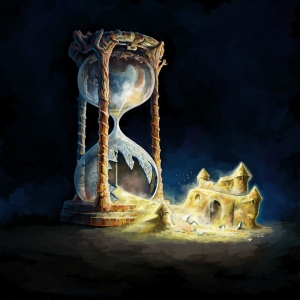
Braid

Braid
Braid

Braid is a game by Jonathan Blow that represents, to me, one of the interesting things about the Xbox 360 – the fact that this is a console with such diversity that triple-A "blockbuster" titles like Gears of War 2 and independent "arthouse" (for want of a better term) games like this can happily coexist on the platform quite comfortably. With the recent launch of the NXE and the Community Games project, I think it's relatively safe to say that Braid will not be the last game of its type that we'll see.

But what is Braid? Ostensibly it's a platform game that largely centres around puzzles rather than action. The central game mechanic is an interesting "time rewind" system which has an interesting twist put onto it in each of the game's worlds. In some worlds, you can simply rewind time if you make a mistake. In others, certain areas or objects are immune to time manipulation, so you can rewind time in the areas around the object and remain unaffected by this. In yet others, time winds forwards while you run to the right and backwards while you run to the left. It's an interesting mechanic that makes for some absolute brain-benders, and I maintain that I'm far too stupid to ever solve the game without help.

Still, the interesting thing about Braid for me, and the thing which divides opinion the most, is the "meaning" behind it all. Each world is preceded by a series of text interludes, describing the main character's quest to reach a princess in floaty, dreamy, vague language and tying the central mechanic of each world in with the main character's conflicting emotions and feelings about time, place, love and loss as he proceeds through the game. It's a fine line between "emo bullshit" and "existential masterpiece" – and there's plenty of people on both sides of the debate on this one. One thing is certain though, everyone who has played the game has plenty to say about it, whether it's good or bad.

Passage and Gravitation

Gravitation
Gravitation

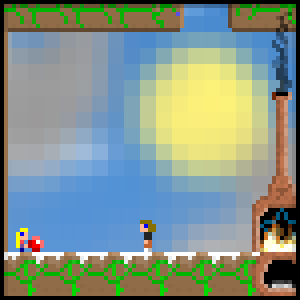
These two "autobiographical" games by Jason Rohrer at first glance appear to be simplistic "retro" style games with eye-catching super low-res pixel art. But look into them a little deeper (or, if you need a little prompting, as I did, read the Creator's Statement that Rohrer has thoughtfully posted for each game) and you'll find that each of these two games represent a deeply personal exploration of a certain aspect of "life" to Rohrer – with Passage offering a look at mortality, companionship, ambition, love, loss and the balance between these things and Gravitation looking at the concept of fatherhood, the creative process and again, the balance between these things.

Each is represented very simply with the aforementioned low-resolution pixel art. But it's the little things about the presentation and the games themselves that carry the deeper meaning. In Passage you start on the left of the screen, with more of the "world" – your life – stretching out ahead of you. Very shortly after the beginning, you have the choice of picking up a companion, who then stays with you until almost the end of the game. This makes you unable to reach some areas of the game, but it's actually quite difficult to consider leaving her behind. If you're me, anyway.

As you progress through the game, you gradually move across the screen towards the right side, meaning that at the beginning, you are looking forward to what is ahead, while at the end you are looking back on where you have just been. Shortly before the end, had you chosen to take your companion with you, she dies, leaving you as an old, lonely man left to trudge on towards his own death alone. This moment, although it is represented simply by the companion suddenly turning into a gravestone and the speed of movement of your character suddenly cutting to a quarter of what it was originally, is a hugely touching moment due to how understated it is. For me, it put across the idea that death is unglamorous, is unavoidable, but there is always someone left behind to trudge on without the person who is gone. I found it to be quite a beautiful, thought-provoking sentiment that is all the more poignant when you read Rohrer's description of the meaning behind the game.

Gravitation, conversely, does not deal with a subject such as death, but rather the struggle that a creative person has between his art and his family. The game starts with you playing "catch" with a child figure. Each time you bounce the ball back to the child, a little heart appears above their head, but you cannot make any progress in the game itself by doing this. To score "points", you have to leap up a huge tower, with gravity that is constantly changing, presumably representing varying degrees of motivation (or "mania" as the Rohrer puts it), and collect stars, which fall to the ground and form rocks. Following this, you have to drop back down and push these blocks into a furnace.

The twist is, the more stars that drop, the less able you are to get to your child to play with them, as the rocks that appear form directly in front of your child, blocking your way to her, and this also seems to have an effect on the gravity of the game. So it becomes a balancing act between play with your child and the "work" of pushing the blocks into the furnace.

These two games are two of my favourite examples of this subgenre because of their simplicity of presentation and gameplay, and the amount of "interpretation" that can be had by looking more closely at what is happening. I think it's also really interesting to see "autobiographical" games, as Rohrer calls them, and he himself points out that this is not something that many developers have done as yet.

The Majesty of Colors

The Majesty of Colors

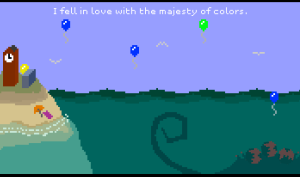
This is another game that chooses to use 8-bit style pixel art as its means of presentation, giving it a distinctive look and character that seems entirely appropriate for the game. I can't pin down why this is, but I love it. This is also the first of two games hosted on Kongregate, which originally became my favourite Flash games site purely for the presence of Desktop Tower Defense following my brother's recommendations, but seems to be developing into an interesting community of indie developers, "interesting game enthusiasts" like myself, and illiterate 12 year olds who just want to play stuff with badly-drawn animé-style characters. Fortunately, like the Xbox 360, the groups seem to coexist quite happily, meaning we get titles like this.

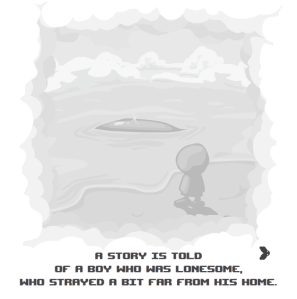
In The Majesty of Colors, you play a betentacled sea monster. The game opens in black and white with balloons floating past your face and the "monster's" inner monologue represented as text across the top of the screen. Grabbing a balloon and bringing it close to the monster's eyes suddenly brings the world into vibrant colour, and the story itself begins. Essentially, the player can choose to manipulate the humans who appear on the scene either through violence or helping them, and this eventually leads to one of five endings, each of which involves the "monster" (whom, it transpires, is actually a person having a dream) awakening in very different ways.

I kind of don't want to say anything else about this one, because I believe it's worth experiencing. It's a simplistic game with not a lot of "point" to it as a game, but it's very much an interactive work of art to me.

Coil

Coil
Coil

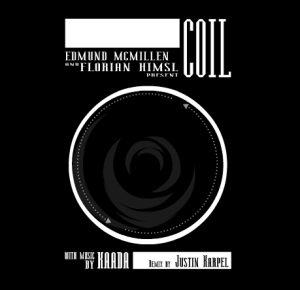
The first of two games by Edmund McMillen, Coil is a self-professed game with no instructions that requests you "keep an open mind while playing". It's presented in a rather abstract manner, with mouse-driven mini-games interspersed with Braid-style text interludes. The story of the game appears to be deliberately ambiguous to provoke discussion, but the consensus from many people seems to be that it is about a woman who was raped and the feelings she develops towards the child that is the product of that incident.

Like The Majesty of Colors, I believe this is a "game" that's somewhat open to interpretation, and another that will probably split opinion. The lack of instructions can make it challenging to progress, but it's worth persevering with the story to see what you think of it.

Aether

Aether
Aether

Another from McMillen, Aether seems to be a rather personal story about childhood feelings of inadequacy in the eyes of others. Players swing through space atop the back of a curious blob-like monster trying to solve simple puzzles on planets to restore colour to their lives. The game is a somewhat abstract "journey into imagination" that seems to represent an individual's struggle for validation and acceptance by others. It also has some fabulously hypnotic dynamically remixing music which really helps with the atmosphere.

So there you have them. Pretentious crap or an interesting method of displaying a work of art and telling a deeply personal story? I vote the latter, though I am more than prepared to hear people disagree, which they no doubt will!