#oneaday Day 788: From the Depths of the Subconscious

20120317-015032.jpg

Analysing your dreams can probably tell you a lot about yourself. If that's the case, though, I'm not sure I want to know what my most recent vivid imaginings say.

I dream best in the morning after I've woken up once. At least, those are the dreams I remember. If I wake up when Andie leaves for work and promptly fall back asleep again (which, to be perfectly honest, I usually do) then I'll often have incredibly vivid dreams which, more to the point, I tend to remember pretty clearly. They're certainly not conscious imaginings, because there's no way I'd choose to think of a lot of the things that flit through my mind. Rather, it appears to be a completely automatic process, presumably based on anxieties or thoughts already stuck in my head.

This morning, these bizarre "snooze dreams" were — and I apologise for what I'm about to recount — rather lavatorial in nature. To begin with, I found myself sitting on a toilet in an upstairs hallway of a house. It wasn't my real-life house, though I think it might have been my own house in the dream. Quite why there was a toilet in the upstairs hallway was anyone's guess. And quite why I was sitting on it when the house was clearly playing host to a large party is an even bigger mystery.

Despite the fact I had clearly just had a dump in front of all the passing partygoers — most of whom seemed oblivious to my presence and activities — for some reason (and again, I apologise) I found myself unable to… uhh… "clean up", as it were. I found myself panicking and wishing all these people weren't in my house, screaming at them to get out of the way, but still no-one paid me any heed.

I ran downstairs and found myself in the house I lived in for my fourth year of university. I knew there was a nice, quiet toilet in the back where I could complete my business, so I opened the door. I found a toilet all right, but it wasn't the one I was expecting. Rather, it was in a large, L-shaped room whose walls and floor were all made of ceramic tiles. There was no ceiling to the room, and outside I could see that we appeared to be floating in space. Worse, there was no bog roll here, either, only three circular red buttons next to the toilet.

I left, and the subsequent journey was a blur, but I ended up in what appeared to be an aeroplane bathroom, albeit one with a sloping roof that met the wall behind the toilet, and a large skylight in it. When standing in front of the toilet, I could look out through the skylight, and I saw that we were in some sort of rural area. Outside the skylight, men in peculiar costumes were being shepherded away by strange figures I can't remember any details about. For some reason, I thought nothing of this strange and slightly sinister behaviour, because I had more pressing matters on my mind.

There was a toilet paper dispenser on the wall, so I pulled the handle to dispense some, but the string of sheets went down a small hole underneath the dispenser. When I retrieved the paper from the hole, it was completely covered in a weird black sludge which was then all over my hand. After going "urgh" for a little while, I simply washed it off, finally wiped my arse (noting with some surprise that my underpants had not been soiled despite all the running around) and then woke up slightly worried that I might have shat myself in my sleep. (I hadn't.)

This particular incident follows a long stream of other bizarre "snooze dreams" I've had which include being unable to go through with a sexual encounter because I didn't have the sheet music for it; starting to read the TV Tropes page for my own life and being literally unable to look away from it; and a particularly unpleasant one where I lived in a big house with all my friends and we all suddenly started hating each other for no apparent reason.

My subconscious is fucked, basically. Oh well, at least it keeps things interesting. And the fact I can remember all this nonsense gives me good fodder for when I actually do want to do something creative and imaginative… though I can't see a novel about someone who might have shat himself catching on, really.

#oneaday Day 787: Shadow Hearts: A Scoreless Review

20120316-014112.jpg

Shadow Hearts for the PS2 is a game which seems to be almost universally adored by everyone who has played it. It's certainly a far cry from the reaction its PS1 predecessor Koudelka got, for sure, proving that yes, sometimes developers do learn from their mistakes.

Is it worth playing in 2012, though? That's one of the questions I set out to answer when I eschewed the latest and greatest in fancy-pants HD gaming and booted up Sacnoth's classic for the first time. I'd never played it before, so coming to it as a 2012 gamer would be my first experience — hopefully allowing me to determine whether or not it's still worth your time.

First impressions are striking, and not necessarily in a good way. We're in full-on old-school JRPG mode here, with polygonal characters wandering around on top of pixelated prerendered backdrops, occasionally stopping to perform a canned animation and generally not looking overly natural in their surroundings. Couple this with that much-maligned mainstay of Japanese roleplaying games, the random battle, and you have an experience which takes a little getting used to if you're accustomed to the ways in which the genre has grown, changed and adapted over the years.

Once you get your head into the mindset of how things work, though, all that culture shock quickly fades away. The characters may have somewhat wooden animations, but they're detailed 3D models with plenty of personality, and they provide the party you eventually assemble over the course of the game's 30 hours or so with a distinctive look. When combined with the good quality localisation job which has been done on the game's dialogue, the game's cast comes together as a loveable, memorable crew of misfits that is all the more notable for not relying on traditional JRPG archetypes.

The plot, too, is interesting and unconventional, blending real-world events from the early 20th Century with pure fantasy that occasionally drifts into Lovecraftian "it came from beyond the stars" territory, though with a slightly light-hearted edge on everything. It works well, and all the more so for the fact that it doesn't feel the need to necessarily spell things out for the player. You can tell that we're dealing with some sort of twisted alternate history here when we see how comfortable everyone is with the use of magic, for example — there are no exaggerated "Wow, you have amazing special powers!" scenes when new characters join the party, even when protagonist Yuri reveals the ace up his sleeve: his ability to transform into slobbering death monsters.

The characters' special abilities are what provides depth to the game's combat system. Characters tend not to be single-minded specialists, but often have a range of skills that unlock over the course of the game which can be applied to a variety of situations. Even leading lady Alice, who is set up pretty early on to be your stock "healer" character, has some entertaining tricks which she can perform — and she's not the only one with the ability to heal, either. Even some of Yuri's monster forms have the ability to heal, meaning the player can stick with a party arrangement that works for them — or that is simply made up of characters they find appealing. Given Yuri and Alice's importance to the overarching plot, however, most players will likely find themselves spending the majority of their time in the game with these two and one of the four other characters in the third slot.

Combat unfolds via a rather sedate turn-based system. There's no time bars here, just a simple behind-the-scenes initiative calculation determining who gets to go next. There are two twists on the traditional turn-based combat formula, however: sanity, and the Judgement Ring.

Sanity points gradually drain over the course of a fight, reflecting the mental strain battling horrific eldritch monsters has on the human psyche. Running out of sanity points causes the character to go Berserk, attacking enemy and ally indiscriminately accompanied by the word "Violently" curiously emblazoned in the air over their head. In a nice nod to characterisation through statistics, different characters have varying pools of sanity points according to their own mental faculties. Alice, for example, being a bit of a scaredy-cat girly-girl at times, has a very small pool of sanity points, while Yuri, who is wandering around with a variety of monsters living in his psyche, has a very large pool which he expends any time he turns into a monster — presumably a rather traumatic experience.

Meanwhile, the Judgement Ring is the mechanic which drives the whole game. Rather than simply hammering the Attack button to get through fights as quickly as possible, the Judgement Ring is a timing-based system that requires players to accurately tap the X button on their controller in time with a predefined pattern. Said pattern varies according to what the player is trying to do — using an item only requires one tap, for example, while the characters' later special abilities may require three or four carefully-timed taps in total. It's a simple means of making combat feel significantly more interactive than turn-based titles otherwise can, and it's also used outside of combat to resolve situations which would be handled by a dice-based "skill check" in a tabletop RPG — kicking down a door, negotiating for better prices in a shop, perfomring a task which requires endurance.

Whether or not you'll find Shadow Hearts to be a palatable play experience in 2012 will depend a lot on your patience. While the random encounter rate isn't overly high, you can expect exploration of the game's world to be frequently interrupted by battles with enemies — and, as is common for this breed of role-playing game, you'll see the same enemies and groups of enemies quite a lot over the course of a dungeon. Boss battles, meanwhile, are generally fairly lengthy experiences, partly to put a bit of pressure on the game's sanity system. Later conflicts can feel like they're dragging on a bit, particularly once you've managed to acquire some equipment for the party which allows them to shrug off things like status effects. The requirement to use the Judgement Ring with each ability use and attack helps keep things moving, but a few of the later bosses just go on a little bit too long to be comfortable or fun. The final boss is particularly prone to this, it has to be said, as it's something of a damage sponge. In a game where three-figure damage is considered a strong hit, taking down something with over 10,000 hit points is a task you'd better set aside plenty of time for.

Presentation has also moved on significantly since the game's original release back in 2001. Video sequences feature characters with that obvious sort of "rendered on the cheap" animation, and the voice acting is woefully inconsistent. Some English characters speak with an American accent, and others speak English at times and then yell something in Japanese in the middle of battle. The slightly rough edges do give the game a certain degree of charm, however, and the lengthy sequence where an old lady reads you a ghost story — complete with vocalised sound effects — is extremely memorable.

All in all, though, Shadow Hearts' charms considerably outweigh its idiosyncracies, and the game remains fun, entertaining and engrossing today. While it's not the most technically polished, high-budget JRPG — something which was apparent even back on its original release, especially when compared to Final Fantasy X, which came out the same year — it's certainly one of the most memorable. And, crucially, by clocking in at around 25-30 hours, beating the game is well within the reach of even people who like to go outside sometimes. In these days of everyone seemingly being increasingly busy, the importance of brevity shouldn't be underestimated.

So should you check it out in 2012 if you've never played it? Sure, but do be prepared for that initial culture shock as you adjust to the Way We Did Things over ten years ago. Times have changed, for sure.

#oneaday Day 786: On Endings

20120315-010927.jpg

I'm not going to discuss Mass Effect 3's ending here, largely because, as you all know, I have not played the game, nor will I be doing so. I have, however, been reading up on it and I understand that it is SUPER-MILD SPOILER rather bittersweet — or just plain bitter, if you prefer to look at it that way. /SUPER-MILD SPOILER

There's been a ton of coverage regarding fan outcry over the ending. For the most part, those complaining about the ending (and even, in some cases, petitioning BioWare to change it) have been held up as figures of ridicule, the exemplification of that overused and increasingly meaningless word "entitlement". Some professional industry commentators have even taken to insulting and verbally abusing people who believe that the ending is "wrong", with one notable example referring to anyone who had criticised either Mass Effect 3's controversial DLC strategy or its ending as "whiny fucking babies". (That netted an instant total loss of respect and an unfollow from me, incidentally, not that the person in question likely cared.)

Other outlets took a slightly more measured approach to criticising this group, noting that forcing BioWare to change its creative work according to public opinion rather than steadfastly sticking to the ending it chose to write would cause Mass Effect to cease being art and to simply be another product. (I would argue — and have done — that it's already there, but that's a whole other issue.) Meanwhile, articles like this one, that offer a well-considered message of support to disenfranchised fans, are rather more rare.

I'm not quite sure where I stand on the debate. From what I understand of the ending, the thing that people are most upset about is the fact that it appears to render most of the decisions made throughout the course of the entire three-game series completely irrelevant. Given that this "decision-making, choose-your-own-adventure then deal with the consequences" nature has been a key selling point for the entire Mass Effect series, I can see why people would be pissed off about it. And if this truly is the case (still haven't played it, remember) then I'd be inclined to come down on the side of supporting those who are upset at the ending.

On the flip side, I have nothing against a bittersweet ending. In fact, some of my favourite endings over the years have been bittersweet ones. (Spoilers ahead. Highlight the text to read it. Mobile users, copy and paste the white text into a note or something.) Take Conker's Bad Fur Day, for example, where despite kicking all kinds of ass throughout the course of the game, culminating in an epic battle spoofing Alien, Conker's girlfriend, whom he has simply been trying to make it home to for the whole game, is still dead. Or Final Fantasy XIII-2 (another game which saw a bit of fan upset regarding the ending, though not to the degree of spawning a petition) where Serah dies in Noel's arms, having suffered a vision just like all the Yeuls the duo had seen throughout the course of the game — a possibility which the game had set up and repeatedly reminded the player of throughout. Or To The Moon, where the old man dies and it's still massively upsetting despite the fact you've known for the whole game it's going to happen. Or how about Persona 3 (I haven't played FES yet so don't spoil it if I'm wrong here!) where it's rather strongly implied that the protagonist dies peacefully on the school rooftop surrounded by his friends. Or Persona 4, where after spending a year with people, building up close friendships, solving a series of horrible murders and eventually saving the world, you have to leave them all behind by getting on a train and not looking back. I even loved Fallout 3's original ending, where the player character dies a horrible, painful death in a radiation-filled room while saving everyone else. Or… you get the idea by now, surely.

I liked all of those endings. I thought they were effective and, in many cases, quite moving. I think the difference we're seeing with Mass Effect 3, however, is that the ending is being seen as rather at odds with the way the rest of the game — nay, series — has played out to date, and fans feel that they are being cheated out of the choice of ending that they want, deserve, whatever you want to call it. Of course, there is a very complicated flowchart in a ring binder somewhere in BioWare HQ that maps out all the possibile decisions players might have made over the course of the three Mass Effect games, and attempting to untangle that in order to produce an ending that would satisfy everyone would be absolutely impossible.

Without getting into spoiler territory here, though, I feel it would at least have been possible for there to be one or two alternative ways for the saga to end besides those which are already there — and which are, from what I've read, relatively similar in their execution, if not their consequences and eventual outcome. It seems very strange for BioWare to do this given that they've been so good at endings in the past — look at the variety of ways Dragon Age: Origins can conclude, for example, whereby the player is pushed towards the final battle of the game, making it seem like a linear run to the finish, but is then thrown a number of massive decision points that significantly affect exactly how the ending goes down. The outcome is the same in each case, but the means by which it is achieved is enormously different — and, more to the point, is dependent on player choice as well as how they have played their character up until that point, factors which Mass Effect fans feel that the trilogy's conclusion is not taking into account.

Basically, I can see both sides of the argument here, though both sides also have a lot to learn about respectful debate. Many in each camp are making valid points which then have all credibility removed when someone causes things to descend into name-calling and hair-pulling. A debate over something like this should be interesting and exciting, not leaving everyone involved and any onlookers feeling faintly disgusted and ashamed. A game provoking such discussion should be celebrated; instead, this whole episode is proving to be something of an ugly blot on gaming history.

#oneaday Day 785: The Case of the Disappearing High Street

20120314-021213.jpg

The oft-mentioned "economic downturn" (which has been turning downwards for so long surely it's completely upside down by now) has had wide-ranging effects — or, at the very least, things have happened which people feel can be attributed to said economic downturn. A lack of jobs meaning highly qualified people are forced to sit at home in their pants watching The Jeremy Kyle Show. Currency devaluation and something about inflation, which I shan't pretend to understand even a little bit. And, of course, the demise of the High Street.

To be fair, online shopping has been providing a compelling reason not to go and shop on the High Street for a number of years now, but as the news channels attempt to sex up incredibly boring financial stories with words like "CRISIS" and various incomprehensible graphs plummet inexorably downwards, the demise of in-person shopping could very much become a reality.

The latest casualty of various financial implications is the Game Group, who run both Game and Gamestation, the two main video game retailers here in the UK. Over the course of the last couple of weeks, major publishers and suppliers have pulled out of their deals with the two chains, preorders for big hits like Mass Effect 3 and the like are not being honoured, the company's share price has plummeted to something obscenely low and it's looking increasingly likely that the whole thing will go into administration, potentially leaving around 6,000 people out of a job. Which would suck.

For any Americans reading, Game is essentially our equivalent of GameStop. And while it's prone to many of the same problems GameStop has in the U.S. — inflated prices for preowned games, being bugged to preorder, a not-terribly-generous reward card scheme — it's been a fixture on the British high street for many years now, and the go-to destination for people to get the latest releases. Gamestation, meanwhile, was formerly the second-biggest game store chain, with a somewhat more grungey feel inside its various shops. It used to carry proper retro stuff — we're talking right back to Super NES and the like here — though that side of things has dried up a little in recent years, though you can still find the odd rarity. Game acquired Gamestation back in 2007, but kept the separate brand as a distinct shopping experience.

Both carried a wide variety of new games, preowned titles and gaming-related crap like Pokemon toys and Sackboy plushies. Until recently, they always seemed to be doing a roaring trade any time I paid them a visit — this perhaps partly being due to the fact that they were pretty much the only recognisable video game specialist retailers in the UK (barring second hand-only stores like Pink Planet and CEX).

Now, though, it's an altogether different story. The carefully-crafted music playlist playing through the store's speakers has been replaced by whatever the employees want to listen to (the other day, I heard some awesome metal versions of Nintendo themes, which made me wonder why on Earth they didn't do that more often); the employees seem a little downcast, particularly when people come in asking about (occasionally ill-informed) stories they'd read on the Internet; and the shelves are noticeably empty of the week's big releases. Every new day, it seems, sees a new publisher reporting that its latest titles will not be available on Game Group shelves — in just the last week or so, I've seen reports of EA, Capcom and Tecmo Koei pulling out before everything goes really tits up.

It's sad to see a once-proud retailer in what is clearly its death throes, and it's doubly sad when you think of the thousands of people nationwide who will likely be out of a job when the shit hits the fan. But as a consumer, it's worth noting that now is a great time to go and pay a Game or Gamestation a visit, because the stores are desperately trying to get rid of the masses of preowned games cluttering up their shelves. And you probably already know what that means — ludicrous savings.

In the last week, for the price of two brand new console games I've managed to acquire 17 games across several different platforms, many of which I've been meaning to try out for quite some time but couldn't really justify dropping £40 on. That's a pretty frickin' awesome deal, and while none of that money I spent makes it back to the publishers and developers of the titles in question thanks to the fact they're all preowned, frankly I don't really care at this point. I've long been a supporter of the used games market — over the years, it's been the source of some of my most beloved and rarest titles, which, in many cases, I've come to long after the game is out of print anyway.

But I digress. It's looking very much like Game is not long for this world, and once it's gone there will be very few places you'll be able to physically walk into to buy a new video game. What will take the place of these stores on the High Street?

Clothes shops, no doubt. One sector that remains resolutely safe from the "threat" of digital distribution.

#oneaday Day 784: Does the Games Press need a "6 Music"?

20120312-233914.jpg

I was chatting with a few people on Twitter the other day, one of whom was the fine and lovely Aubrey "Chupacaubrey" Norris, better known as Deep Silver's Information Tarantula and the sender of the best PR emails in the known universe. The main thrust of our discussion was that the games press is seemingly becoming increasingly homogenised, with the latest "blockbuster" releases consistently monopolising coverage to such a degree that smaller games such as those Aubrey frequently represents are finding it particularly difficult to get noticed by big sites like Gamespot, IGN et al.

In practice, the games press is likely no more homogenised than it has been in the past, but the medium it examines has, over the course of the last few years, diversified to such a degree that it's nigh on impossible for the staff of high-profile outlets to cover absolutely everything — particularly when you throw the burgeoning social and mobile markets into the mix. It's the "Cambrian explosion of possibilities" that Sim City creator Will Wright talked about back in 2008. On the one hand, it's great that the audience playing games covers a much wider demographic than ever before. But on the other, coverage hasn't adapted enough to be able to celebrate the full breadth of experiences on offer. No one site can do that by itself.

Instead, behind the scenes at outlets decisions are made, and those decisions inevitably err on the side of "cover the shit out of whatever is going to be a massive seller this month". There's also something of a crossover between the outcome of this decision and the amount of assets tossed out by publishers — those big publishers who are responsible for getting hot new titles noticed and scoring the fat sales figures ensure that absolutely bloody everyone knows about their game by issuing a press release every time they release three new screenshots. (This is not an exaggeration.) This has the side effect of, at times, taking over the front page of press release aggregators such as GamesPress, particularly if the announcements show up in several different languages. Consequently, announcements regarding smaller titles often fall by the wayside.

It's not just with press releases that this happens, either. At gaming shows such as Gamescom, which I had the pleasure to attend last year, large publishers often throw big events lasting for several hours, which can cut into the valuable time available for journalists to scoot around smaller companies and pick out what are likely to be the "sleeper hits" of the year. And no-one wants to be that one outlet who didn't cover, say, EA's press conference.

At the other end of the spectrum, we get the phenomenon of the "indie darling", whereby a developer which hasn't followed the same sort of marketing strategy as a giant, multi-million dollar publisher has grown to seemingly disproportionately huge success through viral promotion and word of mouth. It's great to see this, but again this can lead to the monopolisation of coverage as outlets consistently pick out titles like, say, Minecraft and Bastion to point at any time they want to go "LOOK, WE COVER INDIE GAMES TOO!" Then the problem starts all over again in a slightly different form. Look at all the lists of awards for last year, for example. Most of the awards which celebrated indie games mentioned Minecraft, Bastion or Superbrothers: Sword and Sworcery EP. Where was the love for Frozen Synapse? Dungeon Defenders? Sequence? Dungeons of Dredmor? Dustforce?

In many cases, it's not that these titles don't get covered at all, it's more that they're treated as curios at best, deemed somehow "unworthy" of the excessive amount of behind-the-scenes footage, interviews, opinion pieces, previews, multiplayer previews, DLC previews and what have you that the big hitters get. There are occasional outliers — look at the positive effect Jim Sterling's celebration of Deadly Premonition had, for example — but for the most part, I can see why people like Aubrey get frustrated when they just want people to give the games they represent the attention they deserve. Tom Ohle of Evolve PR — an agency which represents some of the best, most underappreciated games in recent years — wrote an excellent post on this very subject about a year ago.

So what's the solution? It's a difficult prospect, to be sure, for coverage of these large blockbuster titles is, in theory, what the majority of the audience wants. The games sell bucketloads of copies on release, everyone is talking about them months before they're on shelves and reviews often seem like foregone conclusions by the time the embargoes eventually lift. But the trouble with all this is it means that one outlet becomes very much like another. Sure, each outlet has their own distinctive "voices" and some try to make a point of having a "unique" editorial style — sadly, this often translates simply to "snark" or "swearing" — but all of them are generally covering the same things at the same time.

For a possible alternative way to look at things, I looked to a different creative industry with a similar sort of overwhelmingly massive breadth to gaming: music. In the music business, no one outlet attempts to cover absolutely everything. That would be pure folly, quite simply for the fact that it would be literally impossible to do, even with a massive staff. But not only that, the audience doesn't want that, either. A kid who's into One Direction and Justin Bieber doesn't give a toss about what Vladimir Ashkenazy is up to. Similarly, a classical music buff probably isn't that interested in what Skrillex has to say about his latest beats. All across the music business, coverage is tailored to a specific, more specialised audience according to any combination of popularity, genre and target demographic, with occasional overlap and crossover. This happens with magazines, TV shows, websites and radio stations. It's been like that for a pretty long time, and it works.

BBC Radio 6 Music is a digital radio station from the publicly-funded British Broadcasting Corporation. It is almost the complete antithesis to the small-playlist, youth-targeted pop-focused station that is the BBC's flagship station Radio 1. It purports to focus on "alternative" genres of music including indie, folk, rock, punk, funk, blues, soul, jazz, hip-hop and all manner of other disparate (but still "non-classical") genres, though it doesn't eschew the mainstream entirely. It is, however, the place to go if you're tired of hearing a loop of Adele-Katy Perry-Maroon 5-Justin Bieber-repeat, and is regarded by many as a fine example of How To Get It Right. In fact, it is so well-regarded that when the corporation proposed closing the station to provide commercial rivals with more "room" in July of 2010, outcry from fans was so vehement that the BBC Trust rejected the proposals, noting that the station was "well-liked by its listeners, was highly distinctive and made an important contribution".

But what, you may be thinking, does any of this have to do with the games press? Well, quite simply, why isn't there a high-profile outlet in the games media performing a similar function to 6 Music? Why isn't there a successful, "well liked, highly distinctive" games media outlet making an "important contribution" by specifically choosing not to let the mainstream dominate its coverage, instead preferring to delve deeper into the game's industry's equivalent of "alternative music" while still acknowledging the blockbusters exist? A site which focuses on, for want of a better word, "single-A" and "double-A" titles to the same degree that every site and their dog has been focusing on Mass Effect 3 for what feels like the last aeon?

The audience is certainly there. I can't be the only one in the world who would rather read that site than bear witness to the increasingly-predictable coverage provided by leading games sites today. And should the site have the chops to prove itself as a go-to destination for this "alternative" side of gaming — to the exclusion of blockbuster-centric sites for those who prefer to avoid the big titles (or who don't want to hear about them quite as much) in favour of slightly less well-known fare — there'd definitely be the full support of hardworking PR types. The BBC has the benefit of an established name to promote itself as well as public funding, of course, but there have been stranger success stories.

Food for thought, huh. Perhaps I should just start it myself!
#oneaday Day 783: Prepare for Moxibustion: Shadow Hearts First Impressions

20120311-235149.jpg

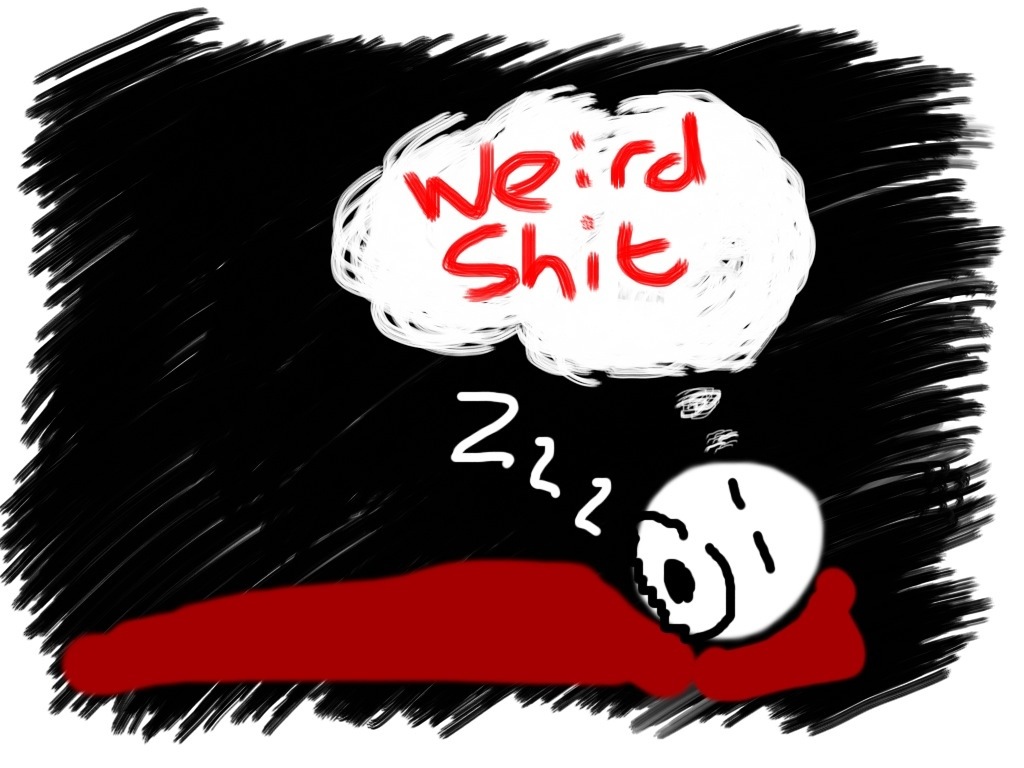
[I am not at all sorry for the above image.]

I recently acquired copies of Shadow Hearts and Shadow Hearts: Covenant for PlayStation 2. My good friend and podcasting buddy Mark has been extolling the virtues of this series (well, its first two entries anyway) for a considerable amount of time now, and given my current aversion to recently-released triple-A titles, I figured it was about time to give it a shot.

For those unfamiliar with this particular little gem, Shadow Hearts is a Japanese roleplaying game from 2001 developed by a company known as Sacnoth (later Nautilus) and published by Midway in Europe. It's the sequel to an unusual PlayStation 1 roleplaying game called Koudelka, which blended survival horror and tactical RPG elements to create a game that had a rather mixed reception upon its original release. Shadow Hearts, unlike its predecessor, is a much more traditional Japanese roleplaying game, with a great deal in common with the PS1-era Final Fantasy games. Players control a 3D character on a flat, prerendered backdrop and are thrown regularly into random battles against enemies which are otherwise invisible on the field.

Aside from these basic mechanical and technical similarities, however, Shadow Hearts is a very different beast to Square Enix's franchise, for a wide variety of reasons.

Mechanically, an innovative feature in the game was the "Judgement Ring" system, whereby any action which would be resolved in a tabletop roleplaying game by a throw of the dice is instead left up to the player's reflexes and sense of timing. The titular Ring appears on screen with markers placed on it to show where the player needs to press the button. An indicator sweeps round it, and the player must tap the button as the indicator passes through the various areas. There are variations on the theme, but this is used throughout the game whenever there is an element of chance — both in and out of combat. For example, the Judgement Ring is seen when attacking an enemy, attempting to cast a spell or use an item in combat (outside combat, magic and item use automatically succeeds, thankfully) or attempting to haggle for a better price in shops. It's a simple system that through its inclusion lends a much greater feeling of interactivity and involvement to a genre known for making the player sit back and tap the X button 300 times before getting to do anything. Its timing-based nature means that combat can't simply be resolved by strapping a rubber band to the X button and walking away — the player must learn the various characters' "rhythms" for their attacks and stay on their toes to tap the button appropriately.

It's not just in mechanics that Shadow Hearts differs somewhat from the norm, however. In a typical Japanese RPG, the party tends to be made up of a group of idealistic teenagers (with optional "old man" character who is actually simply in his late 20s), at least two of whom will be childhood friends; at least two of whom will fall in love with one another; at least one of whom will be a moody bastard who grows to understand human kindness and friendship by the end of the story; and at least one of whom will be a demure, shy girl while another will be a borderline-inappropriately sexy girl in a teeny-tiny skirt. This kind of ensemble works well, which is why we see it so often, particularly in popular franchises such as Final Fantasy.

Not so in Shadow Hearts. In Yuri, we have a moody protagonist, sure, but he's angsty because he can turn into monsters. Also he's half Russian, which explains why he hails from Japan but has a name which is commonly used to refer to lesbian-themed content in Japanese. (His name also means "lily" in Japanese, which might explain why he's so upset and surly. Although if we take "Yuri" to be the Russian half of his name, then that means "farmer", which is a bit more manly.) Then in Alice we have the shy, demure girl, but she's clad in what can only be described as an incredibly impractical outfit which precludes her from ever volunteering to bend over and pick anything up ever. She's also English. I've never met any English girls who dress like that. But then I wasn't alive in 1913, either.

Aside: not only does Shadow Hearts take place in the "real world" (albeit a real world with magic and demons and vampires and whatnot), it also takes place in recognisably "recent" (relatively) history, meaning we get a pleasing blend of low-tech fantasy-style stuff with the trenchcoats and Mauser pistols of the World War I-ish era.

But back to the cast. We also have a crotchety old Chinese oracle who calls people "son of a bitch" all the time and a friendly vampire called Keith (Keith?) who woke up from a 200 year slumber only to find himself bored stiff with nothing to do in his monster-infested castle. There may be more, but I haven't got that far yet. Already it's a memorable, bizarre cast, though the game nails the whole "suspension of disbelief" thing so well that it seems perfectly natural for this oddball group to be hanging out together while discussing the movements of the Japanese army.

Shadow Hearts is a slow burn that takes a while to get going. If you've been playing more recent Japanese roleplaying games that tend to be a bit pacier or have battle systems that veer a little closer to "action" (see: Final Fantasy XIII and its sequel, The Last Story and Xenoblade Chronicles to a certain extent) then there's a bit of an adjustment period to get back into random battles and completely turn-based combat. It's also a bit of a culture shock to go back to a game where the dialogue is pretty much all text — though this rekindles the once-common love for renaming your characters; a joy which the age of voice acting has rendered obsolete.

I'm guessing I'm about halfway through at the moment. Further thoughts to follow when I've beaten it.

#oneaday Day 782: Is It Worth Complaining?

20120311-020858.jpg

I had an interesting discussion on Twitter earlier with Peter Skerritt of Armchair Analysis and Craig Bamford of Leveling Criticism. Peter argued that gamers had made their bed with regard to questionable business practices surrounding downloadable content, preorder bonuses and all of the other annoyances which this particular generation of consoles has developed — that since so many people have bought into these schemes over the last few years that it's now too late to go back, that any sort of "action" is not worth taking, and that anyone feeling the need to speak out about it should understand that doing so will have negligible effect.

Craig, meanwhile, countered that "'shut up and consume' is just greasy", noting that Mass Effect 3's controversial day-one DLC "prompted a huge backlash which the company had to expend serious PR resources to fix."

I'm not going to get back into this specific argument here, but I did want to address some more general points which Peter, Craig and I discussed. Namely, the question of whether or not it's worth complaining about something.

It's easy to complain about things on the Internet. Start a blog or a Twitter account. Rail against anything you find personally objectionable. Talk up the people who agree with you and either ignore the people who disagree or get into very loud and public slanging matches with them. "Internet Rage" is its own meme now, though ultimately the concept of "the Internet being angry at something" has arguably done more harm than good to the concept of actual, genuine protest.

The trouble is that there's an element of bandwagon-jumping. With any kind of disagreement, most people are going to come down on one side of the fence or the other. In the case of Internet arguments, those who are skilled in rhetoric will have very little difficulty in recruiting people for their side, as all it takes, in some cases, is a particularly persuasive YouTube video or an article featuring carefully massaged statistics to get people onside. People are lazy. If you lay an argument out on a plate for them, relatively few of them will have the inclination to go and research things for themselves. 'Twas ever thus, and we even see this in the professional specialist press to a certain degree.

It loses its effect after a while, though. Words are just words, after all, and as any protestor worth their salt will undoubtedly tell you, actions speak far louder than words.

Or do they? I haven't bought Mass Effect 3 but do I think EA give a shit about that fact? No, because a healthy number of people have bought Mass Effect 3, and those are the only people that EA care about. Those are the people that say to EA "what you're doing is acceptable, please do it more." It's not just something that happens in video games. It happens with all sorts of shady business practices. The more people just accept something as "that's the way it is" (houuuuuaaahhh!), the more likely companies are to want to keep pushing the boundaries a little bit further each time, like a toddler trying to figure out exactly how naughty is too naughty, only with millions of dollars instead of plastic things made by Fisher-Price.

Does that invalidate the criticisms that those people who object to it have? Does the fact that, say, EA has no need to take those people's criticisms into account mean that they should stop speaking out against those things which they find unacceptable or distasteful?

Absolutely not. For if those people stop complaining, then we have no dialogue. We have no discussion, no debate. We simply blindly accept, consume, bend over, take it. You may be happy to blindly accept, consume, bend over, take it. You may believe that there are more important things to worry about in the world than whether or not a software company squeezes an extra $10-$20 out of its most loyal fans. You may believe the lines spun by public relations in an attempt to limit the damage done to a brand's reputation. But that doesn't mean that the people who don't feel the same as you should be silenced. State your case. Come out from your corner fighting. You might change their mind — though given my experience of debates like this, you probably won't — or you might at least give them an alternative perspective to consider, even if they ultimately end up feeling the same way.

In short, I believe that yes, it is worth complaining. In the video games case, Peter argued that complacency is what has led consumers to the point they are at now, where buying a $60 game is no longer the end point of the relationship between the customer's wallet and the publisher's pockets — it's the beginning. If that's the case, though, while it may be too late to salvage matters with regards to things like DLC, preorder bonuses, shady sales practices and all manner of other considerations, surely that's a sign that consumers upset by all this should be more vocal in order to preempt publishers attempting to take advantage of them any further in the future?

Those expressing upset and annoyance at what they see as unfair shifts in business practices are now often accused of being "entitled". But that's simply lazy rhetoric. There's a big difference between being "entitled" (typically used in this context to mean "expecting something for free") and having very valid concerns about getting value for money or being treated fairly as a consumer. In the Mass Effect 3 case, no-one's expecting something for free. They want to pay for the game, to support the developer, but they don't want to be treated like idiots and/or bottomless cash pits in the process. Personally speaking, I don't think it's unreasonable or "entitled" to expect a complete product when you hand over your money for it. But, well, we've been over that already and I know far too well how futile it is for both sides to try and convince the other of their viewpoint.

The point: complaining or protesting may not have a direct or immediate effect. But it ensures that we continue to discuss, debate and consider things a little more carefully than we would otherwise if there was a complete consensus of opinion. It keeps things interesting, it prevents people from becoming too complacent and it allows people to retain their individuality rather than being treated as an amorphous mass of identical, anonymous "consumers".

Sounds better than the alternative to me. But then you probably disagree. In which case you're wrong, you entitled twat.

#oneaday Day 781: Pink Pussp

20120310-005325.jpg

Poor old PSP. You've had a hard life. Unappreciated in your own lifetime, it seems that you're actually home to some truly brilliant games, particularly if your user happens to be a fan of JRPGs like I am.

I've owned two PSPs over the years. Both have been somewhat underused. My first had a dinky memory stick that was far too small to download anything on to, but then this was in the days long before PlayStation Network anyway, so it wasn't an issue. I recall spending many long hours playing Lumines and Untold Legend: Brotherhood of the Blade on it when it first came out, being rather impressed at the large, bright screen and then-impressive visuals for a handheld; being rather less impressed at the amount of "ghosting" which occurred whenever anything moved or scrolled and the dead pixel just to the right of the centre of the screen.

Then I put it down for a bit and didn't pick it up again for a long time, except for on one memorable occasion when I was guesting on an Internet radio show with my friends Mike and Simon and "someone" had loaded porn onto the memory stick in question in order to distract the person who was talking at the time. (It worked.) Besides that, I didn't take much time to explore the growing library of games out there — I played Loco Roco briefly, for example, and very much appreciated its charming aesthetic, but never quite thought it was worth the money to pick up a copy myself.

I got poor, and ended up selling the PSP and its games to help pay a gas bill or something. I regretted it a bit, but then figured that I really wasn't using it that much.

I got a Nintendo DS and found a bunch of games on there that I took to — Ace Attorney, Hotel Dusk and numerous others captured my attention so much that my DS was, for a brief period, my most-used games system. I didn't think about the PSP for quite a long time, until I went to visit my friends Mark and Lynette in Canada, and Mark was talking about the bizarre Atlus strategy game based on R-Type, and I found myself desiring a PSP once again. I took a trip to my Canadian friends' friendly local game store and scored myself a cheap PSP-3000 with a copy of Ratchet and Clank (which I, err, still haven't played) and 1 GB memory card.

All was well for a little while. I picked up a copy of Final Fantasy Tactics: The War of the Lions and played that for a while, and R-Type Command proved interesting, though I didn't finish either of them. (I had previously finished Final Fantasy Tactics on PS1, I should add at this point, back when the translation meant the plot made even less sense than it does now.) Eventually, it got set aside once again in favour of Big Exciting Things on Xbox 360, PS3 and iPhone, which was just starting to hit its stride with awesome games by this point.

I held onto it this time, though. And I'm glad I did, because I can't help feeling that the device is enjoying something of a renaissance thanks, as it happens, to its offspring, the recently-released PlayStation Vita. Vita's connectivity means that it's dead easy to get online and download games to play — something which Sony got terribly wrong with the rather disastrous performance of the PSP Go, but which they seem to have a better grasp on now. Even better, the Vita plays the vast majority of the PSP back catalogue, though lacking a UMD drive, it's unable to play games on physical media.

As such, the PSP library has been enjoying renewed scrutiny, and it's becoming abundantly clear to many people that the PSP, a system often passed over and at times even ridiculed, is home to some fine games. Just one such example that I've blogged about recently is Corpse Party, and I have several other titles lined up to play in the near future.

I was tempted to pick up a Vita, but there's not really anything on it right now that interests me enough to blow a few hundred quid on it. (When Phantasy Star Online 2 and Persona 4: The Golden come out, however, things will be very different.) So instead I bought a 32GB memory stick for my PSP. That 1GB stick I had was fine for save games, but wasn't big enough to contemplate downloading games from PSN to, so I'd never really investigated in great detail. I figured it was time I took a look, though, so that's what I've been doing.

I'm glad I did. I'm finally getting the chance to discover the roots of the Persona series, for example. P3 and 4 are probably my favourite games of all time, so to see where the series came from with the PSP remakes of the PS1 originals is interesting — it helps that they're still decent games, too, though from my relatively limited experience with Persona 1 so far, not a patch on their PS2 descendants.

Then there's all manner of other great titles just waiting for me, too. The portable versions of Disgaea, for example. Tactics Ogre. Trails in the Sky (aka "TitS", which makes me giggle childishly every time I remember). The PS1 Final Fantasy games in my pocket. Ridge Racer Type 4 (which is still awesome). And all manner of other stuff, too.

It's for this reason that I really don't feel like I'm missing out by not playing Mass Effect 3. Because there's a very deep library of unexplored classics just waiting for me to dive in, and I intend to do so with aplomb over the course of the next few months. Couple that with a pile of PC and PS2 titles that I'm finally going to get around to playing thanks to our "Pile of Shame" challenge, and my immediate gaming future looks both rosy and cheap. Which is nice.

#oneaday Day 780: Nihon

20120309-010142.jpg

It's a big ol' stereotype for someone who is "into" video games to have an interest in Japan — at least it was, anyway. As popular, mainstream titles have shifted far more towards Western studios with this current console generation, Japan and all things related seem to have been relegated to something of a niche. And that's absolutely fine, I think, because it means that people like me can explore things like the country's culture without feeling like they're jumping on some sort of bandwagon.

I say "explore". Most of my knowledge of Japanese culture comes from, you guessed it, video games. (That and following J-List on Facebook.) But before dismissing that out of hand, it's worth noting that many Japanese games do explore and celebrate Japanese culture and traditions in a way that you hardly ever see in Western titles.

I can remember the first game I played in which I was conscious of this: Shenmue on the Dreamcast. I found it interesting that the main character removed his shoes every time he entered his house. Not only was this a pleasing attention to detail, I discovered that this is traditional behaviour. And given that Shenmue was based very much on the idea of creating a realistic, small-scale game world in which to "live" as much as pursue the game's story, this was just one of many things which initially jarred but started to make sense the more time I spent with them.

The Persona series are notable for this, too. To date, I've only played Persona 3 and 4 (and have recently started the first game in the series) but I feel I got a good sense of what it's like to be a high school kid in Japan — or at least, as close an interpretation as the media will ever give you. I do wonder if the depiction of Japanese schoolkids in anime and video games is akin to the depiction of American "highschoolers" in TV shows and movies like Buffy the Vampire Slayer and Clueless.

From these games and numerous others (including Katawa Shoujo which, interestingly, was actually developed by Westerners who clearly had a good understanding of Japanese culture) I've picked up all sorts of useless facts (mostly centring around schools) which may come in handy should I ever find myself in Nihon-koku. I know that schools have big shoe racks inside their front doors. I know that kids are expected to join clubs as well as attend classes. I know that traditional festivals with fireworks are A Big Deal, and that boys supposedly go crazy for girls in yukata. Boys also go crazy for girls in hot springs. I know that udon and soba are types of noodles, and that takoyaki is both made from octopus and regarded as a kind of fast food. (I also know that your stats have to be high enough to finish a big beef bowl, but the same could be said for a big-ass steak in the West.) Moving into more esoteric territory, I know that popular supernatural mythology suggests that restless spirits often hold grudges and can do very unpleasant things to people who piss them off.

It strikes me every time I play one of these Japan-centric games (the most recent being Persona and Corpse Party) that it's rare to see an analogous "learning experience" in Western games. Or is it? Perhaps I'm just too immersed in Western culture on a daily basis to notice; or perhaps Western culture has lost a lot of its traditions over the years, leaving most people free to behave in a manner of their own choosing. Consider what you did when you walked into your house today: did you take your shoes off? The answer is "maybe", because it wasn't expected (unless you have a self-decided "shoes off household") so it was up to you.

We still have plenty of strange traditions of our own, though, mostly, like Japan, surrounding significant festivals. Look at Christmas: we have carol singers, German markets in city centres, mulled wine, mince pies, midnight mass, christingles and all manner of other things. We have very specific rituals in place to celebrate things like birthdays. We cheer when waiting staff drop trays of drinks (though I really wish we wouldn't), and we have songs for all occasions.

As I think about it further, it's becoming clearer to me why there's something of a tendency to see comparatively less traditional culture in Western video games than we do in Japanese ones. It's to do with subject matter and setting: Japan is very fond of mixing the mundane and the uncanny for dramatic and unexpected effect, whereas in the West we're rather fond of "hero"-type characters who focus on getting the job done, not pissing around building up his Social Links. This is a generalisation, of course — there are plenty of games that involve a lot of sitting around talking, though even then they tend to be through a self-deprecating lens rather than taking a genuine pride in traditional culture. When was the last time you saw an English character (i.e. someone from England, and not just a character with an English accent) who was not either 1) evil or 2) posh — or sometimes both?

Perhaps there's no place for traditional culture or ritual in Western video games — or no traditional culture or ritual left in our modern society to even incorporate into a game. That's fine, of course, though I think it rather sad, in that case, that we have the opportunity to learn a great deal about Japanese culture from their creative output, while any Japanese players exploring the Western body of work will arguably take little from it save "nice architecture".

Am I wrong? If so, please feel free to share some of your favourite examples of video games that exemplify Western culture, tradition and ritual in the comments — I'd be curious to hear what people think, or even, if they don't think it's relevant, why they don't care.

#oneaday Day 779: Snark Pit

20120307-235746.jpg

I've kind of had it with snark. The whole "let's piss on everything" parade that shows up any time something vaguely interesting or cool happens is getting really rather tiresome, and over the last few weeks and months I've actually been taking steps to minimise my exposure to it by simply unfollowing people on Twitter who prove to be irritants in this fashion. (British game journos, you don't come off well in this poll, by the way, naming no specific names.)

Unfortunately, on a day like today, which held among other things the promise of a hotly-anticipated iPad-related announcement from Apple (which turned out to be "The New iPad" with its shiny retina display and quad-core processor… yum) it's difficult to avoid said snark. It seems that for a lot of people nowadays that if something isn't to your own personal preference, then no-one should enjoy it.

At this point I'll say that I'm well aware I've been guilty of this in the past, and for that I apologise. (The X-Factor is still unquestionably shit, though. There is no valid argument in favour of a show that gave the world Jedward. I'm just not going to rant at length about the subject any more.) I am trying my best these days to see arguments from both sides, but unless you're some sort of level 99 mediator, you're always going to come down on one side or another. So long as you don't force your views on others and expect everyone to agree with you, everyone should be free to do that. (Unless it's about something dickish. I think we can pretty much universally agree that those who judge people based on skin colour or sexual orientation can all pretty much just bugger off and sit on a spike.)

I digress. I was talking about snark, and specifically relating to today's Apple announcements. The new iPad is, by all accounts, a lovely-looking device, and the Retina display is sure to raise some eyebrows. As per usual for an Apple event, the company came out with its usual stuff about how it believed we were entering a "post-PC" era and about how people supposedly "preferred gaming on their iPad" to consoles and computers.

Contentious comments, for sure, but firstly, they're marketing hyperbole — Apple announcements are press events, after all, and a company as big as Apple is never going to be humble about its achievements or lofty ambitions — and secondly, it might not be quite so unreasonable as you think. Already many households are making use of iPads for simple tasks such as browsing the Web, checking email, watching TV and movies, playing games, keeping themselves organised and all manner of other things. And the sheer number of people who have downloaded Angry Birds, whatever you may think of it (I hate it) should give you pause when considering the gaming-related comments.

But instead of thinking these points through rationally and considering the perspective that Apple might have been coming from, in it was with the snark about how wrong Apple was and how much bullshit they were talking. Up went the defensive walls, and a veritable barrage of snark was fired over the parapets towards anyone who dared to say "hmm, hang on, that's actually quite interesting, and possibly plausible". (I'm not saying their comments were true, rather that they deserved greater consideration than immediate outright dismissal.)

It only continued when, as usually happens in Apple announcement events, software started to be shown. The new versions of iMovie and GarageBand for iOS drew particular ire, with various Twitter users making acidic comments about how awful the music people makes with GarageBand supposedly is, and how terrible the "movie trailers" facility of iMovie is.

Once again, no consideration was given to the audiences that these features might be directed at. As a former employee of the Apple Store, let me assure you there is absolutely no love lost between me and the tech giant of Cupertino, so I have no "need" or contractual obligation to defend them — and also, a company the size of Apple certainly doesn't need my defence either. But as a former employee, I know that Apple customers aren't just high-falutin' creative types, gadget freaks, tech snobs and people with more money than sense. I know that people who walk through the front door of that store range from very young to very old; from experienced computer user to complete beginner. I know that there's a considerable proportion of that audience who came to Apple because of its products' reputation of ease of use. I've even taught plenty of those people how to achieve simple tasks in products such as iMovie and GarageBand, and to see the looks on their faces when they realised that yes, they could be creative with their computers despite their lack of technological knowhow was, to use a word Apple itself is very fond of, magical.

As such, I feel it's grossly unfair and downright blinkered for people (including professional commentators in some situations) to completely dismiss a considerable proportion of Apple's audience and declare a feature to be "awful" or "crap" simply on the grounds that they don't see the appeal, or think that its results are cheesy. (They are, but imagine if you had no idea how to edit a video and suddenly discovered you could put together a slick-looking movie trailer from your holiday footage and upload it to the Internet. You'd be pretty stoked, and you wouldn't care that it was a bit cheesy. If you were inspired by this ease of use, you might even look into the subject further to find out how to take more control over the stuff you were creating.)

I'm using Apple as an example today since the announcement is still pretty fresh in everyone's mind. But the presence of snark can be found pretty much any time something interesting is announced or discussed, especially in the tech or gaming industries. You can count on there being an unfunny hashtag pun game mocking the story within a matter of minutes; endlessly-retweeted "jokes" trying to look clever; and, of course, protracted slanging matches any time someone calls these people out on it.

And, you know, I've had enough. If you have a valid criticism of something, by all means share it and back up your point. But if you have nothing to say other than "I think this is crap, therefore everyone else should too" then kindly keep it to yourself. Because, frankly, your opinion isn't anywhere near as important as you think it is.