1661: Dead Dancing

Fancied a bit of a change today, so I decided to grab a copy of a game I've been keeping one eye on for a while now: indie title Crypt of the NecroDancer, which hit Steam Early Access recently.

Several hours later, I realised that I'd been playing Crypt of the NecroDancer for a very long time, and I was starting to do everything — not just in-game actions — in time with the beat in my head.

Rewind a moment, for those unfamiliar with Crypt of the NecroDancer: what the hell is this curiously-named game? Well, it's yet another example of one of the current "indie darling" genres: the roguelike. But this game's a bit different from the many, many other procedurally generated hack-and-slash RPGs out there, in that it's actually more of a rhythm action game than anything else.

Yes, you read that correctly: a rhythm action game. Crypt of the NecroDancer eschews the complexity of more stat-heavy roguelikes and RPGs in favour of an extremely simple system that only requires you to use four buttons on the keyboard: the directional arrows. Everything you do involves pressing one or two of these keys in time with the music — even using items. It takes a little getting used to, but the reason for this lightweight control system becomes obvious almost immediately: this is a game about sticking to the beat, watching for patterns and learning to exploit them, not about min-maxing your gear and gaining experience. It has a distinctly arcadey feel to it thanks to mechanics like score multipliers and powerups, and it's structured in such a way that play sessions are quick and brutally difficult, particularly once you get out of the first of the four "zones" that make up the game in its current Early Access form.

Speaking of Early Access, this is one of the most "complete" Early Access titles I've played to date, consisting of four zones with four levels each (three standard, one boss), each of which has their own music, composed by Danny Baranowsky, of Super Meat Boy and Desktop Dungeons fame. The music is absolutely fantastic, covering a variety of different electronic dance music styles and tempi, and gives each level a unique feel that you'll come to know and love (or hate) very well as you try again and again to make a little progress.

Progress in the game is somewhat akin to that other well-regarded lightweight roguelike of the moment: Rogue Legacy. Through playing the game normally, you'll acquire diamonds, which can be used to purchase permanent upgrades for the dungeon and your character, ranging from extra health to new items that show up in chests. The twist is that diamonds "expire" after you enter the dungeon again, so in order to unlock something expensive you'll need to collect all the diamonds you need in a single run — something that becomes "easier" (in that you'll start picking up more than one diamond at once) as you get into the harder zones.

The whole game is utterly charming, with some lovely pixel art — though a V-sync option would be nice to prevent the occasional bit of screen tearing that is apparent — and some well-designed, distinctive monsters, each of whom have their own attack patterns you'll have to learn how to tackle while staying on the beat. The use of a female protagonist feels a bit like she's there for the sake of it just so people can point at the game and use it as an awesome example of a game that uses a female protagonist by default — but this isn't a problem as such, more a pointed response to the growing focus on social issues that much of the games business has right now, for better or worse. Only idiots will actually complain about it, and besides, the finished version will have numerous unlockable characters, anyway, a la Spelunky, so I can only assume that those who do have violent objections to playing as a woman for any length of time will be catered to in this way.

Long story short, Crypt of the NecroDancer is looking (and sounding) absolutely fantastic so far, and I can't wait to see the finished version. There's every possibility that this could be one of the next big things in the indie space, and I would absolutely love to see it on other platforms — its quick-fire gameplay would make it an ideal fit for Vita in particular. Let's hope it sees enough success to make that happen.
1660: Stop Wasting Cool Licenses on Monopoly

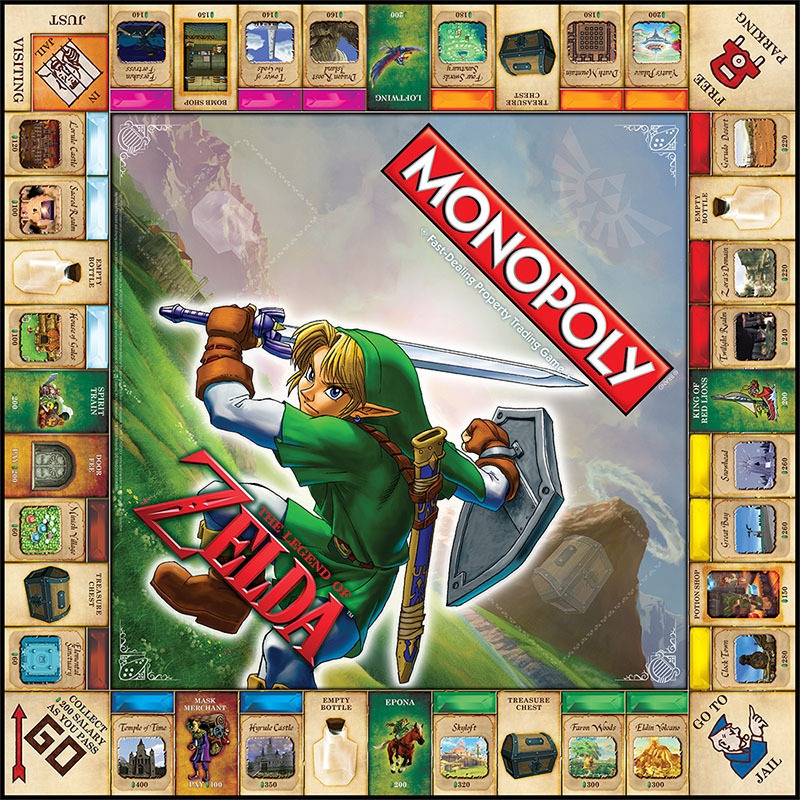
Hey! Listen! There's a Legend of Zelda board game coming! Awesome! Take a look!

zelda-board-monopoly…Oh. Monopoly. Again. Great.

Yes, indeed: the latest in a long-line of quick-and-easy cash grab Monopoly sets is one based on Nintendo's Legend of Zelda series, a franchise that has been running almost since the dawn of gaming, and one which has consistently provided gamers with some of the most enchanting interactive adventures of all time, blending childlike wonderment with epic heroic fantasy.

The Legend of Zelda, meanwhile, has not been particularly known over the years for its protagonist Link's desire to build up a sizeable portfolio of property, nor has Hyrule society ever been particularly dependent on capitalism. Link, more often than not, does good deeds out of a sense of altruism, or occasionally for the promise of "something good" (inevitably in bold print) — said "something good" is rarely financial reward, with questgivers instead tending to give him something of much more practical use.

I'm a bit annoyed about this. I'm not a particularly huge Zelda fan myself, but this is, without a doubt, a colossal waste of an awesome license. Monopoly is a terrible board game to shoehorn the Zelda license into. It's a terrible game in its own right, too, but I'm aware some people still like it, so I'm not going to push that angle too far — besides, my own personal dislike of Monopoly isn't why I'm frustrated to see Zelda squandered like this.

No, instead I find myself wishing for a more appropriate use of the license. It doesn't have to be an original board game in its own right — though that would be cool: spectacular Polish RPG series The Witcher is soon to get its own cool-looking original board game, so it's not without precedent either — but surely, surely there are better ways that Zelda could be adapted for tabletop play?

Here's just a few suggestions:

  • The Legend of Zelda: Carcassonne — Standard Carcassonne, except the tiles are all made up of actual tilesets from past Zelda games — A Link to the Past's 16-bit top-down graphics would be ideal for this. Meeples could be replaced by the different, distinctive races of creatures you come across in a typical Zelda game — one player could have a set of Gorons, while another could have Zoras, another still could have the Kokiri, and so on.
  • The Legend of Zelda: Catan — Much like Carcassonne, the bare minimum you need to do to make a convincing Zelda Catan set would be to redo the tile artwork in an authentically Zelda-esque fashion. You could incorporate some of the new rules and tweaks from things like Star Trek Catan — variable player powers is neat, for example — and Catan's numerous expansions for different scenarios.
  • The Legend of Zelda: Talisman — Talisman is, while flawed as a game, a decent depiction of an epic quest to achieve something. Reskinning this would be a more appropriate use of the license than Monopoly.
  • D&D Adventures: The Legend of Zelda — The dungeon-crawling co-op adventure games carrying the D&D brand are ripe for adaptation with Zelda artwork, enemies and items. You could even do a "Four Swords" thing, with each player having a differently coloured Link to control.
  • Arkham/Eldritch Horror: The Legend of Zelda — Okay, stretching things a bit here in terms of theme, but the mechanics of Arkham and Eldritch Horror are ripe for adaptation into a Zelda-style epic quest. There's exploration, treasures, character progression, battles, boss fights… everything a good Zelda game would need.

And this is just off the top of my head. All of the above would need very little adaptation in order to create a more convincing tabletop Zelda experience than Monopoly ever will. Come, on, Zelda Monopoly even still has "salaries", "Go To Jail" and "Free Parking", the latter of which in particular is completely incongruous with the setting.

So, this is pissing in the wind, I know, but please, please, license holders: when considering whether or not to license your awesome property for tabletop adaptation, please look a little further than Monopoly. It may be one of the most well-known games in the world, but there are hundreds, thousands of other, far better board and card games out there, most of which would be much better-suited for adaptations of this kind.


1659: Time Off

There's still nearly a month before I start my new job. With the job search over, this means that I am now being left largely to my own devices on a daily basis, which sounds like a dream come true, doesn't it?

It isn't.

Much like working from home isn't the wonderfully liberating experience you might think it would be, having a protracted amount of time to yourself with not a lot that you really "need" to do is not everything you might think it is, either. Days are long, boring and filled with vast tracts of nothingness, unless, of course, you find yourself something to occupy them with.

Most days, I'm pretty good at occupying myself. In the simplest cases, I'll simply play some games, watch some TV or read some stuff. Others, I might go out — maybe into town, or down to the gym, or just for a wander around outside. Others still, I might do things that "need" doing, like mowing the lawn or cleaning or tidying.

But there are days — today was one of them — where nothing feels like it's quite "right"; nothing feels like it will satisfy you. It's days like today that often see me sitting on the sofa staring into space for surprisingly lengthy periods of time, caught between desires, wants and needs, and never quite being able to muster up the energy or motivation to pursue any of them. Doing something I know I'll enjoy feels like a waste of time; doing something "productive" feels like it's an insurmountable challenge.

All this, of course, is a side-effect of depressive tendencies; it's not that I actually don't want to do anything, it's simply that, for whatever reason, my brain decides that it wants to be sad today, and the jumbled impulses the depressed brain fires out have a tendency to override everything else and prioritise that feeling of sadness. It's not sadness about anything in particular, it just is; it's just a frustratingly dark feeling from which it's difficult to escape, particularly if you're home alone, like I have been.

It's for this reason that I'm genuinely looking forward to starting work again — and genuinely looking forward to the fact that, for the first time in four years, I'll be working in a place where there are actual other living, breathing people with whom I might be able to interact on a daily basis. (Said interactions will, of course, be prone to my other big issue — that of social anxiety — but that's a bridge we'll cross when we get to it.) I'm looking forward to having the change of scenery each day — the chance to drive my new car and spend some time listening to the radio, music or podcasts; the opportunity to spend several hours away from the house; the pleasant feeling of "coming home" after a hard day's work — and of just, you know, doing something.

Tell that to my twentysomething self and he'd probably laugh in your face. But, frankly, life without work is not as fun as you might think it would be. (Well, it probably would be if you had more money than you'd ever know what to do with — though I imagine even that would get boring after a while.) Consequently, I find myself counting down the days until I become just another cog in the great machines of business — and genuinely looking forward to that day, rather than dreading it.

1658: Automobile

I bought a new car today. Like, an actually new one, not a "new for me" car. I didn't go out with the intention of purchasing a pretty much brand new (16 miles on the clock) car, but that's the way things went after being presented with a good deal by our local Toyota garage.

Yes, I am (hopefully) about to be the proud owner of a new Toyota Yaris. Not the most exciting car in the world, for sure, but out of the several cars I took for a test-drive today, it was by far the most comfortable, spacious and pleasant to drive. Also it has a magic computer thing in the centre console that includes a rear-view camera with overlays to assist with reverse-parking. Fortunate, since 1) I am bad at reverse-parking and 2) my new job, which starts at the end of the month, requires me to reverse-park in the staff car park.

To be honest, I've been kind of mildly blown away by how much cars have advanced since I last had one of my own. I've been driving Andie's car (I can call it that now, rather than "our car") off and on and have found it thoroughly pleasant to drive, and thus had some familiarity with what was now "standard" in cars, but looking around today really drove the point home: I used to drive some shit vehicles.

Actually, that's not altogether true; most of the cars I've driven over the years were perfectly acceptable at the time, but various bits of automotive technology and engineering have moved on considerably since then. To put this in context, the cars I've driven to date have included a G-reg Rover Metro that belonged to my mother; an L-reg no-frills Fiesta which blew up on the way to work one morning; a slightly-but-not-by-much-younger Escort that was actually pretty awesome due to the fact it had a fairly powerful engine, a "sports" exhaust and a spoiler, but which I knocked one of the mirrors off by dropping a bookshelf on it (don't ask); and a 2001 Peugeot 106 that used to belong to my mother and which was subsequently donated to me, shortly before it decided that the Right Thing to Do would be to occasionally, inexplicably, fill up one or both of the front seat footwells with water, despite there being no visible place from which a leak had sprung.

None of these cars were awful per se (aside from when they broke) but, compared to the stuff I looked at today, all were pretty primitive. All of them had simple tape decks, for example — though I replaced the stereos in both the Fiesta and the Escort with something a bit more badass — and none of them had anything that could reasonably be described as a "computer". Contrast with the Yaris, then, which has a touchscreen console from which you can access the radio, frighteningly detailed trip data (with graphs and everything), a Bluetooth connection to my phone for hands-free phone calls (not that I ever make or answer any) and music playing (much more "useful") and some other bits and pieces besides. Plus the aforementioned camera, which is pretty awesome.

The car itself isn't a particularly speedy little number, but it's economical — important, since I'll be commuting a reasonable distance to work each day — plus comfortable and pleasant to drive. There's a nice view through the windscreen from the driver's seat, and the brief test drive suggested that it would be a pleasure to drive, although I will have to adjust to the bizarreness that is having six gears. Six! What am I supposed to do with all those? At least it has a handy "shift up" indicator to remind me!

Anyway, assuming all the credit and whatnot goes through, I should have it by next weekend. Expect further enthusing then.

1657: Bloodlines

For a bit of a change this evening, I decided to fire up a game I've been meaning to play through and beat for a long time: Vampire: The Masquerade – Bloodlines. And, despite its now somewhat dated-looking visuals and inconsistent-quality audio, I've really enjoyed what I've played so far.

Bloodlines, as it shall be known hereafter, is an interesting game. Based on the White Wolf pen-and-paper role-playing game Vampire: The Masquerade, itself part of White Wolf's larger World of Darkness setting, it's an excellent take on the role-playing genre and a fantastic adaptation of its source material. The reason why it's so fondly regarded — even with its flaws and bugs necessitating the creation of a community-made patch well after its developers had abandoned it — is because it does things a little differently from other games of a similar type.

Vampire: The Masquerade was a fairly unconventional beast (no pun intended) in its pen-and-paper incarnation, too. Eschewing dungeon-crawling and loot whoring in favour of in-depth role-playing based on a shockingly well-realised world and society — World of Darkness features one of the most richly detailed explanations of vampiric culture since… well, ever, really — Vampire: The Masquerade was a game that rewarded those who sought interesting, unconventional and creative solutions to problems. There was combat, sure, but it was always rather heavily implied that getting into a true fight was something of a last resort for members of vampire society. Rather, you'd make use of your wits, your intelligence, your social skills and your charisma — with a bit of help from your supernatural vampiric abilities — and, more often than not, be able to get through situations without ever drawing your weapon.

Bloodlines is rather similar. It does cater to those players who enjoy the idea of swinging a tyre iron around and caving people's skulls in — although the combat is, it must be said, rather rudimentary compared to more modern real-time RPGs like The Witcher and Dark Souls — or even those who enjoy first-person shooting. But, for me, far more rewarding is the opportunity to get through most situations by making use of your vampiric powers, which vary according to what kind of character you create at the start of the game.

Much of Vampire: The Masquerade is based on the interactions between various clans of vampires, and each of these clans has its own specialisms. Some have magical abilities; others are strong fighters; others still are true "creatures of the night", able to disappear into thin air right before their enemies' eyes. The character I'm playing this time around is a Malkavian; their defining characteristic is the fact that they're, well, insane — but they can use this fact to their advantage by channeling their mental energy outwards to do things like inflict terror on others or make enemies have hallucinations. In conversation, Malkavians tend to speak in riddles, and, pleasingly, the dialogue options you have available to you when playing as a Malkavian are all borderline gibberish — though the longer you play, the more these riddles will start to make sense to you. Oh, and Malkavians also hear voices while they're wandering around. And occasionally stop to have a conversation with a roadsign. You get to "roleplay" all of this — something I haven't seen since the early Infinity Engine games, which featured differing dialogue depending on things like your Intelligence score.

Perhaps the most interesting thing about Bloodlines is that it uses all these traditional RPG mechanics without putting the player in the usual "god mode" perspective, watching the action unfold from above. No; instead, taking heavy cues from its contemporaries such as Deus Ex and the like, Bloodlines has plenty of "immersive sim" elements about itself, too: hub-based areas to explore, with buildings you can go into and investigate even if the game's quests haven't directed you to yet; objects you can pick up and manipulate; computers you can fiddle with by actually typing things into them; and a sense that, in a rather simplistic manner, the world will respond to the way you behave in it.

While we have plenty of open-world, non-linear RPGs today, nothing that's emerged recently has quite the same feel about it as Bloodlines. I've played it through once for about 20 hours or so — though to my shame, I never beat it — and I'm now very interested to take it for another spin with my adorably mental protagonist. If you haven't yet sampled its bloody charms — and can look past the visuals of a pre-Half-Life 2 Source Engine game — then I strongly recommend you give it a look.

1656: Notepad

For all the wonderful conveniences of the digital age, some things just can't be replaced. The exact trappings of the past that people cling to even as technology advances around them vary from person to person, but I'm willing to bet I'm not the only one who prefers scribbling notes on a piece of paper to tapping them into a phone or tablet.

It's silly, really. I can be doing something that requires me to make a note of something — solving a puzzle in a video game, say — and my phone can be right there next to me but I'll still get up and go hunting for a pen (inevitably a black biro — a trait I have inherited from my father) and a piece of paper on which to write. There's something far more satisfying about the scratch of pen on paper than there is for the far less tactile tapping on a touchscreen or finger-painting on a tablet.

And, sorry to say, a piece of paper is infinitely more flexible than any phone or tablet with all the apps in the world installed on it. A piece of paper can be the gateway to your imagination, limited only by its own boundaries — a limitation that can be easily circumvented with additional pieces of paper. A pen or pencil, too, is a far better writing or drawing implement than a fingertip; even tablet styluses are yet to capture the true feel of actually writing or sketching something by hand.

Sure, electronic notes have their benefits. Services like Evernote allow you to categorise and tag your notes for later retrieval, rather than having to rummage through endless reams of paper, some of which have useful notes on while others have nothing more than an array of crudely drawn penises doodled while on the phone to someone boring like a customer service drone for a utility company or anyone involved in government. But sometimes you don't need that level of permanence. Sometimes you just need to scribble something down quickly to aid in short-term memorising, then to discard it when you're done with it. For that, it's tough to beat the old faithful pen and paper combo.

Plus have you ever tried actually handwriting stuff on a palmtop device or tablet? However hard you try, it's impossible not to make even your neatest handwriting come out like that of a head trauma victim in rehabilitation given crayons for the first time. Sure, you could type it out, but doing that is, in a lot of cases, slower than just picking up a pen and writing it down — plus it doesn't allow for the flexibility of pen-and-paper notetaking such as being able to integrate both writing and drawing into a single note quickly and easily.

I guess what I'm trying to say in a roundabout way is that however far technology advances, I never want to be too far away from a pad of paper and a pot of pens and pencils. You may call be a traditionalist, bound by the conventions of the past rather than embracing the future, but I don't care; there are some things that technology simply doesn't improve, and I feel this is one of them.

1655: Tease Me, Tease Me, Tease Me... Actually, Don't

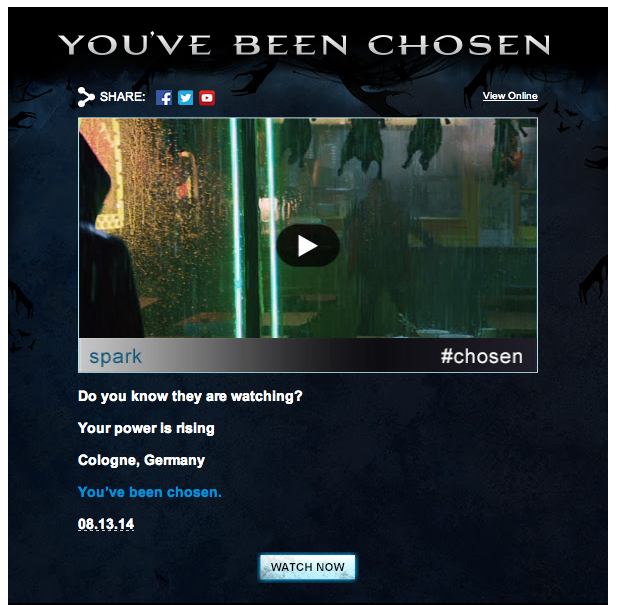
I'm not entirely sure how I got onto EA's mailing list, having not played any of their games for a substantial period of time, but I do know all it took to get me to immediately unsubscribe: this email.

Screen Shot 2014-08-01 at 00.09.31

Said email came from BioWare, a company whose games I used to happily purchase "day one" when they came up, but whom since being absorbed by EA a few years back have become increasingly disappointing — to such a degree that now, when they send me a "teaser" email like this, I don't find it exciting, I instead find it bothersome.

This isn't exclusively directed at BioWare, of course. I have very little time for teasers anyway these days, and their use in the increasingly sprawling marketing campaigns for big-budget games is getting to a stage where they simply dissuade me from wanting to check the game out rather than intriguing me.

I started feeling this way while I was working in the games press. Teasers are infuriating to receive as a news writer, because more often than not there's absolutely nothing to write about. As a general rule, I avoided writing about them altogether unless there was enough intriguing material therein to spin a story out into at least 300 words. In most cases, there wasn't, and inevitably there were plenty of other more interesting things I could write about on any given day, so I was inclined to write about those instead. I can't help feeling that this is the precise opposite of what whoever came up with the teaser campaign may have had in mind when they lovingly constructed it.

Now I no longer work in the games press, teasers are even more irritating. They clutter up news sites who are less discerning about what they cover than I am — the above email has likely been spun into at least one "BioWare is Working on Something" story somewhere on the Internet by now — and, when I have neglected to unsubscribe from a company's newsletters and promotional emails like I had apparently done with EA, they clutter up my inbox, and believe me, that doesn't need any help filling up with crap.

What I find somewhat hilarious is when mobile and social game developers decide to do teasers for their upcoming games. As much money as these types of game inevitably make at the hands of stupid people, I simply can't take them seriously; nor can I believe that anyone could possibly get excited about the prospect of a new mobile game from notorious free-to-play conmen like, again, EA, King or numerous others.

I long for the days gone by, when protracted marketing campaigns simply didn't seem to happen. You got previews in magazines, sure, but these actually told you something about the game. Like, you know, its title — something which the BioWare email conspicuously fails to mention. (I don't know if the video gives any more information because I didn't watch it. Instead of watching it, I unsubscribed from EA's mailing list. Good job, there.) Or details about what kind of game it is. Or a bit about the story. Or anything.

That anything is how you get me interested in a new game — not waffling around the point with vague, pointless emails that tell me nothing. Show me something interesting — show me a reason to care, otherwise, spoiler, I won't give a shit.

1654: Pay Attention, Bon-- Err, Remington

I felt like trying something new today, so after toying with the idea of downloading legendary military sandbox Arma III (and eventually resisting — its £35.99 price point is a little too high for me to consider taking a risk on it at the moment) I wandered over to GOG.com and took a look at a game that has caught my interest several times over the years: Sid Meier's Covert Action.

I remember first seeing adverts for Covert Action back in multi-format games magazine Advanced Computer Entertainment (aka ACE) way back around 1990, when the game first came out. I recall being intrigued by the prospect of what looked like a fairly convincing "spy game" — something that hadn't really been done at the time, and certainly not in the way that Covert Action chooses to do things.

Covert Action is, unlike other espionage-themed games on the market, very much a "spy simulator". Straddling a line somewhere between a surprisingly huge number of different genres, Covert Action casts you in the role of superspy Max (or Maxine) Remington as he (or she) attempts to foil the devious plots of various bands of criminals around the world. These plots range from simple thefts all the way up to the construction of doomsday devices, but the execution remains the same: gather evidence, infiltrate facilities, intercept communications and eventually — hopefully — bring the perpetrators to justice. Or, if you're as incompetent as me, arrest a few of them and allow the remaining criminals to happily get away with what they were planning.

Covert Action is split into a number of different components. The "main" part of the game, if you can call it that, involves moving from location to location both within cities and around the world, and choosing the best course of action. Actions always take varying amounts of time, so if you spend too long dilly-dallying around, you'll find the criminals get one, two, three steps ahead of you before you know it. This is a game about preventing a crime before it happens rather than solving a crime that has already happened, and as such you have to go about things a little differently to how you might do in other games; you have to anticipate what your opponents' moves might be, then react accordingly, ideally to catch them in the act and be able to arrest them in such a manner that causes the remainder of their plot to fall to pieces.

Choosing to perform various actions in the game's locations triggers minigames. Choose to wiretap a building's phones, for example, and you'll be confronted with a challenging PipeMania-esque puzzle where you must reroute power away from both the phones and the alarm systems of the building. Choose to decrypt an intercepted communication from one of the perps and you'll actually have to crack the code using your own brainpower. Opt to tail a suspect and see if they lead you anywhere interesting, and you'll find yourself playing an oddly strategic driving game in which you order two cars around in an attempt to follow the suspect without arousing their suspicions. And choose to break in to a facility and you'll have to actually infiltrate it yourself.

It's this latter part of the game that tends to form the meat of most investigations — and it's also an aspect that Meier himself was somewhat dissatisfied with, feeling that the game's minigames weren't tied together in a coherent enough manner. Break-ins are not the only option for gathering information, but they're by far the most efficient and as such you'll spend quite a lot of time doing them.

They take the form of an interesting pre-Metal Gear stealth action game in which you control Max as s/he explores a randomly generated building, opening filing cabinets and drawers and photographing all the files s/he can. You'll also have to deploy bugs in various items of furniture in order to raise your ability to perform remote surveillance on the building, and recover incriminating evidence from safes if you want to "turn" your opponents over to your side rather than simply arresting them. Some interesting, rudimentary AI sees guards patrolling the building and looking out for unusual things — containers you neglected to close, for example. You can also trick them somewhat by knocking one of them out and then disguising yourself in their uniforms — in a nice touch, your disguise will only continue to work if you don't allow them to look at your front or side for any length of time, leading to some comic situations as Max stares at a wall, hoping that the guard who just opened the door behind him/her doesn't decide to come in and check the room more thoroughly.

All the while you're investigating, the criminals are working on their plot in the background, and if you're not quick or careful enough, they will succeed. Regardless of whether you "win" or "lose" a case, however, the game continues, and you're evaluated on your performance, with a certain number of points being available for each mission according to who you managed to arrest, what key items you managed to confiscate and whether you actually managed to foil the plot at all.

It's a difficult, challenging, ambitious and somewhat flawed game, but it's a magnificent example of the creativity of game developers in the early '90s — particularly MicroProse, who were well-known for this sort of game around that time. It's also a game absolutely crying out for a remake — with today's technology, it's more than possible for someone to do the game's grand vision even more justice than the hardware and software of 1990 would allow.

That said, Covert Action still stands up remarkably well even today, despite its dodgy AdLib sound effects and horrid 16-colour EGA graphics. If you're looking for something a little bit different to entertain you for a while, I'd urge you to check it out.

1653: Impromptu Vacation

Whew.

Now that our international visitors have departed, it is time to collapse into a heap and fall asleep — and indeed, that is what I did for much of this afternoon, and that is what I'm probably going to do shortly after I hit the "Publish" button on this post.

It's been a great few days, though, and Mark and Lynette appeared to have an enjoyable time. We didn't have nearly enough time to do all the things we might have wanted to do — such is inevitably the way when you have just a few days to spend with people you don't get to see in person very often — but we got a decent amount of things in, including a wander around Southampton (including the waterfront and the "old bits" at the far end of town), a visit to the stately home and grounds at Mottisfont, and a trip to Oxford for two room escape games, a wander around two of the colleges and finally an evening of gaming at the UK's first (only?) board game café Thirsty Meeples.

Doing so much in such a short space of time has reminded me that our lifestyle on "normal" days is rather more sedate. I feel genuinely exhausted right now, though not at all sorry that we got to do as many things as we did. Whenever I host visitors — even if it's just for a couple of hours — I often find myself worrying that I'm not entertaining them enough, or not being a good enough host or whatever. This time around, I feel like we did a decent job: a bit of downtime to relax and play things like ZombiU and Towerfall, trips out to see interesting things near and far, and a few "quintessentially British" things just to make them feel like they've had an experience that they can't have anywhere else — even if that experience is just, I don't know, eating a Jaffa Cake or something.

But anyway. Now they have departed and I am about to collapse, it's time for a sort-of holiday before my new job starts at the end of August. I'm not quite sure what to expect from the job as yet, but I'm quite looking forward to it, for a number of reasons: chiefly, the fact that I'll have reliable money coming in every month, but also the fact that it's something I'll be able to show up to, do, clock out at the end of the day and not have to worry about in the evenings. (Hopefully, anyway.) This will allow me to kick back of an evening and enjoy myself with some games or some TV or some anime without feeling like I "should" be doing something specific — a common issue that will be familiar to anyone who has ever written about games for a living. While I still fully intend to write about a variety of subjects for my own site MoeGamer, I'm not planning on putting any undue pressure on myself to romp through games as quickly as possible; I'm not working to a review schedule, nor do I have to worry about the "glut" of games coming later in the year. I can simply write about games as and when I feel like it, as often as I feel like it, and in as much detail as I feel like. It's refreshing, and I can't help thinking it will be a fine way to dispel some of the cynicism I've built up over the last few years. (Shitty free-to-play mobile games can still eat a dick, though, as can pretty much anything from EA.)

Anyway. I can feel my writing descending into rambling stream-of-consciousness, so rather than inflicting that on you, I will simply say good night for now, and hopefully be a little more alert tomorrow!

1652: A Grand Day Out

We took our visitors up to Oxford today, for several reasons — to have a look at some genuinely Old Stuff, to play a couple of Zero Escape-style "room escape" games, and to visit Oxford's answer to Toronto's board game cafe Snakes and Lattes, Thirsty Meeples.

It was a great day out, though the amount of walking reminded me that I don't do nearly enough just walking around these days.

The early part of the day consisted of the aforementioned "room escape" games courtesy of Ex(c)iting Game, a modest operation that offers two different interactive experiences in which you're given an hour to solve a particular task. In the first room, we were challenged to break into a computer to recover a piece of information about someone who was going to be assassinated; in the second, we were tasked with locating a USB stick containing sensitive information before it was auctioned off.

In both cases, the games were fairly low-rent, consisting of straightforward and simple props with a few fun gadgets. The two games were markedly distinct from one another, too; the Stop the Assassin game was much more gadget-heavy, seeing us cracking a safe, using a blacklight and eventually cracking the code that led us to the computer password; conversely, second game The Auction was much more focused on deducing the answers to various riddles in order to solve combination locks and get them open.

Both games also featured a number of red herrings that had little to do with the games themselves, and both were reasonably challenging, taking our group of four a decent amount of time to crack in both cases. We completed the first game with just six minutes to spare; the second game we solved a little more quickly, with around twenty minutes left on the clock.

The setup, although simple, was effective. The staffer — whom I felt rather sorry for, since she clearly spent an awful lot of time twiddling her thumbs between appointments — observed our efforts to solve each room via webcam, and subsequently offered real-time hints through the monitor that otherwise displayed our time limit. Rather than these hints being predefined, she was able to highlight particular things in the room or type messages to us to ensure we could normally be nudged back onto the right track. In the case of both games, we would have probably found the answers ourselves eventually, but the hints were timed nicely so it didn't feel like our intelligence was being insulted.

All in all, the game experience was fun. It would be neat to see the idea implemented with a somewhat bigger budget — perhaps some more special effects, more high-quality props and a little more effort to make the games more strongly thematic — but for today, it made an enjoyable and memorable day out.

We then took a bus into the city centre of Oxford, where we had a wander around a couple of the colleges, which was a fairly humbling experience when I think back on the places I stayed and studied when I was at university in Southampton. The dining hall in one of the colleges in particular was a real Hogwarts-style affair that impressed me and Andie almost as much as it did our visitors.

Following some wandering around — and a break for a drink in an incredibly old pub — we made it to Thirsty Meeples, where we had coffee, snacks and some gaming. We played the cooperative game Robinson Crusoe, which I've been curious to try for a while, and Boss Monster, which I've likewise heard of previously and have been keen to give a shot.

Robinson Crusoe is a very cool and strongly thematic cooperative game, though for those who enjoy the more Euro end of the spectrum, there's plenty of worker placement and resource management involving shifting little wooden discs and cubes around the place. There's also a number of different scenarios that I can see would likely change the way you play significantly — it'd be a game you could get a decent amount of replay value out of, due to the randomised elements. It was initially a little difficult to grasp, but after a turn or two all becomes clear and highly enjoyable — likely a game I'll try and score a copy of for myself in the near future.

Boss Monster, meanwhile, is a short and simple card game in which you play a 16-bit era video game boss and have to build a dungeon to fend off the never-ending hordes of incoming heroes. It's a simple, easy-to-understand game that I think will be a lot of fun with various groups — I ended up picking up a copy of it along with Avalon before we left.

We also gave Concept a go, which is, along the lines of Dixit, more of a fun group activity than a "game" per se. Like Dixit, it involves a certain amount of creativity — meaning Andie wasn't a huge fan of it, but she soldiered on regardless — but handles things very differently. Rather than attempting to describe pictures on cards, Concept challenges you to get, well, concepts across by placing markers on various icons. It's kind of Charades-ish, only you don't do any actions — you place markers to describe the main concept of the word, phrase, title, whatever it is, and its "subconcepts". You can then use smaller markers to elaborate on these a bit, but the only thing you can say during this whole process — which is surprisingly frustrating if your tablemates just won't grasp something that seems obvious to you — is "yes" if they get something along the right lines.

So all in all, then, we had a great day. I'm pretty tired now, though, so I have a feeling I'll sleep rather well this evening!