 I was interested and excited earlier to hear that 3D Realms had come out of sort-of-retirement to unleash a pretty spectacular package onto the world: an anthology containing a fantastic selection of its games from over the years, going right back to its early days as Apogee — a time when men were men, women were women and PC games ran in four-colour CGA.
I probably don't have to tell you that I didn't hesitate to hand over the $20 for the complete collection of 32 games — many of these games were fixtures on my home PC while I was growing up, and even more of them were titles that I never got around to playing at the time for whatever reason. A surprising number of them hold up pretty well today, more to the point, and with the Anthology package updating them to run just peachy on modern Windows systems as well as providing rudimentary controller support, it's a great time to rediscover these great games.
Of the 32 games, I had heard of most of them — though a couple, like Arctic Adventure and Pharaoh's Tomb, were new ones on me. I'd played a decent number of them, too; particular favourites from the past included the Commander Keen games, Raptor: Call of the Shadows, Shadow Warrior and, of course, Duke Nukem 3D. I'm pleased that the collection offers the opportunity to rediscover somewhat lesser-known titles like Bio Menace and Terminal Velocity, too; both of these were games that I only ever played the limited shareware versions of "back in the day" and was always curious to see how they developed in their full, registered versions. This being the mostly pre-Internet days, however, it wasn't as simple as just clicking "buy" on a game and having it on your computer moments later.
I really liked the shareware model, and I'm actually surprised it's not used as much these days, since the Internet would seem to provide an ideal delivery medium for this sort of thing. For those unfamiliar, a shareware game could be distributed for free, and generally provided a full and satisfying game experience in its own right. It would usually only form the first "episode" of a fuller experience, however, and to see how the story concluded — or simply have the opportunity to acquire new weapons and fight new enemies — you'd have to pony up the cash for the full, or "registered" version. In some cases, you had the option to purchase some of the game instead of all of it — Wolfenstein 3D, for example, featured six episodes, the first of which was free, the second and third could be purchased as a bundle, and the fourth, fifth and sixth episodes could be purchased as a separate bundle. Or, of course, you could buy the whole lot in one go.
The closest equivalent we have these days is, I think, the "episodic" games that companies like Telltale put out, but they're not quite the same; although there are sometimes special offers or even giveaways of the first episode, the game isn't built around the assumption that the first episode is not only free, but also freely distributable. That "share" part was important — you were actively encouraged to share the free episode with family and friends, and in that way these games built up a very early means of viral popularity, without the Internet to support it. Kids were already illegally copying games and sharing them with one another in the playground, after all; all shareware was doing was legitimising this to a certain extent — though I don't doubt that a few dodgy copies of registered versions probably did the rounds, too.
Sony sounds like it's trying some interesting "sharing" functionality with the PlayStation 4, but it's still not quite the same. Perhaps I'm just being nostalgic and looking back on it with rose-tinted glasses, but I do know one thing for sure: I have very fond memories of a lot of these games, and a surprising number of them still hold up very well today.
If you'd like to try them out for yourself, you can grab a copy of the complete Anthology here, or download and purchase some of the games individually if you prefer.
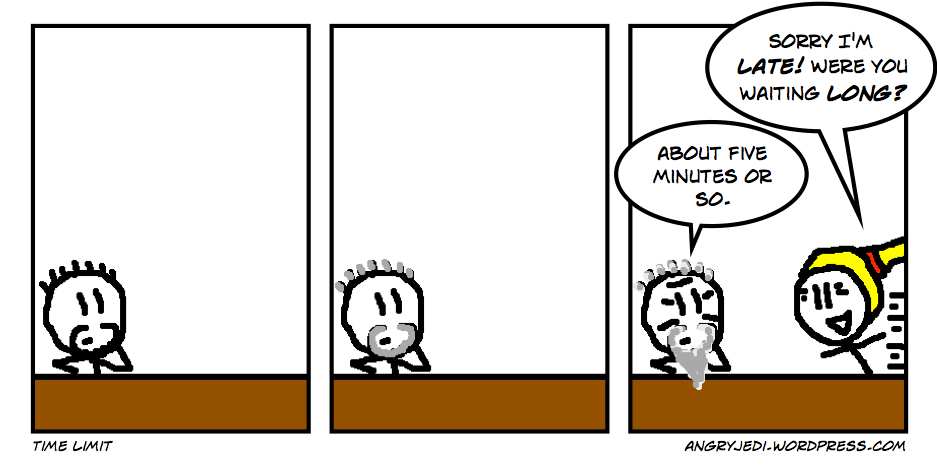 This week has been incredibly long. I mean, obviously it hasn't been any longer than a week normally is (about a week) but it's felt that way.
 It's my colleague's birthday tomorrow. She's bringing in cake — or, more likely, doughnuts, since most of our team is currently scattered far and wide (two of them on another site, one of them on holiday) — because That Is What's Done Now.
 After I beat Ace Combat 4 a few days ago — spectacular, incidentally; a game that still holds up marvellously well today, even on a big-screen HDTV — I moved pretty much straight on to its sequel Ace Combat 5, or Ace Combat: Squadron Leader as it is inexplicably known over here in Europe.
 I had the worst morning today. I say worst; at the time it was happening, it was already apparent to me that the unfortunate combination of mishaps that befell me were the stuff of farce, and looking back now it's just faintly amusing. But at the time it was spectacularly irritating, and put me in a rather grouchy mood for much of the day.
 It is traffic that drives the modern Web, whether we're talking about a commercial site or a personal social media page, but I'm gradually coming to regard the relentless pursuit of this easily measurable but sometimes quite misleading metric as something I'm keen to step as far away from as possible.
 I am glad to reach the end of this week — it's been a long one, largely because of that overnighter I had to pull in the middle; an inconvenience which even having the whole day off yesterday hasn't quite allowed me to recover completely from. I'm not as young as I once was, I guess.
 It's one of those times of year that there's seemingly hundreds (well, all right, that's an exaggeration) of great new games coming out, and relatively little time in which to play them all. That's not stopping me picking up the ones I'm interested in, mind, as I feel it's important to show your support to companies that are doing the right thing and releasing (or, in the case of most of the games I'm particularly interested in, localising) titles that other publishers might see as risky or too niche-interest to take a gamble on. (In actual fact, it's clearly not all that much of a gamble at all; if it were, I'm sure companies like NIS America, Xseed and Aksys, who bring these games from Japan to the West at an impressive rate, would have folded long ago.)