2188: Neptunia Games I'd Like to See

0188_001

With Megadimension Neptunia V-II and Megatagmension Blanc and Neptune vs. Zombies on the way to the West, hopefully with Neptunia vs. Sega Hard Girls to follow in the near future, a Neptunia fan such as myself has to ponder what might be next for the series, particularly now it's made the jump to PlayStation 4 and PC as well as Vita.

With that in mind, I had a think about some Neptunia games I'd like to see, particularly in the vein of "spin-offs" such as Hyperdimension Neptunia U Action Unleashed and Hyperdevotion Noire. Here are said thoughts, expressed in the style of a overly excitable PR blast, overuse of exclamation marks and all.

Hyperdimension Neptunia Infinity Dungeon

Gamindustri is in peril once again… and the CPUs are nowhere to be seen?!

Top Guild agent IF is assigned to the mystery and quickly discovers that the monsters pouring out into Gamindustri appear to be coming from a new dungeon that opened in the vicinity of Planeptune. Not knowing what to expect, she begins her quest to uncover the fates of her friends, the CPUs and the CPU Candidates. Just how deep does this mysterious dungeon, whose walls seem to shift and twist before her very eyes, really go?

FEATURES

  • The first Neptunia roguelike! Explore an infinite array of procedurally generated levels as IF and your favourite Neptunia characters as you attempt to discover the source of the Infinity Dungeon's power!
  • An all-new twist on Neptunia's crazy combat! Tactical turn-based movement allows for seamless transitions between exploration and combat; meanwhile, for the first time in the series, make use of the environment in creative ways to defend yourself and inflict massive damage on your foes!
  • Looking for a more direct route? Make your own! All of Hyperdimension Neptunia Infinity Dungeon's levels are fully destructible, with IF and friends' special moves just as likely to bash holes in the walls of the dungeon as they are to smash their enemies into oblivion!
  • Mix it up with Irregular Quest conditions! The Infinity Dungeon works in strange and mysterious ways; some floors will challenge you to clear them against the clock, while others will task you with defeating the enemies as stylishly as possible. Uncover and fulfil the Irregular Quest conditions to maximise your rewards!
  • A wide cast of playable characters! Explore the dungeon as IF, Compa, Neptune and the rest of the gang — plus a few special guests!

Coming soon to PlayStation Vita and PlayStation 4, featuring Cross-Save support. Pre-order your Limited Edition now, featuring a 2CD soundtrack, artbook and fully poseable IF figurine.

Hyperdimension Neptunia U2 Action Unchained

Peace reigns once again in Gamindustri, but the world — and its CPUs — are restless.

Enter, once again, intrepid journalists Dengekiko and Famitsu, who once again have an offer for the CPUs and their Candidates: a means of entertaining both themselves and their people, plus a way to keep their fighting skills in shape.

FEATURES

  • Hack, slash… and think?! Hyperdimension Neptunia U2 Action Unchained's dungeons are like nothing you've ever seen in the Neptunia series, combining challenging combat encounters with head-scratching puzzles that will require you to use your smarts, dexterity and a bevy of interactive items to progress. Nep-Nep might need some help with that last bit!
  • Custom combos GET! Edit your favourite fighter's moves and abilities as you see fit from a wide palette of options that expands as you progress. Develop your own personal fighting style for each character and display your skills with a selection of different weapons, each with their own movesets!
  • Fight one-on-one or go toe-to-toe against the horde! Hyperdimension Neptunia U2 Action Unchained's combat encounters range from challenging one-on-one battles against both monsters and incarnations of Gamindustri's great heroes to large-scale battles against overwhelming odds. Can you stem a seemingly never-ending tide of monsters?!
  • Fight smart, and fight cool! It's not just about beating your opponents; it's about making yourself look great! Mix up your combos, SP Moves and EXE Drives to impress the audience and earn more Shares to maximise your favourite character's abilities!

Coming soon to PlayStation Vita and PlayStation 4, featuring Cross-Save support and Cross-Play online co-op for 1-4 players. Pre-order your limited edition now, featuring a 2CD soundtrack, huge wallscroll and collection of chibi Neptunia figurines.

Hyperdimension Neptunia Gamindustri Idol Project

"Is anyone else getting a distinct sense of deja vu?!"

A new foe threatens Gamindustri — and this time it's not the fault of the monsters. No, the CPUs' very power is threatened by the rise in popularity of idols — and this time there's no Producer to help them out! Fortunately, old friend 5pb. is on hand to give the CPUs and their Candidates a bit of advice on winning the love of the people back…

FEATURES

  • Rhythm action gameplay developed in collaboration with SEGA and Crypton Future Media, developers of the Hatsune Miku Project DIVA series! Enjoy 35 songs, including classics from the Neptunia series and originals composed specifically for this game, as you challenge taxing note charts at four levels of difficulty!
  • Customise the CPUs as they aim for idol glory! A huge variety of costumes, accessories and stage props are on offer for both the CPUs and the Candidates; some even have special effects, but you'll have to experiment to find out what works best for you!
  • Two ways to play! Take on a new story of the CPUs and the Candidates attempting to win back the support of the people of Gamindustri, or play for fun in Arcade mode as you try to top your best scores!
  • Take the battle for best idol online! Join the Guild online to track your progress and best performances against players from all over the world! Share your customised CPU Idols and stage setups as you attempt to dominate not just Gamindustri, but our world too!

Coming soon to PlayStation Vita and PlayStation 4, featuring Cross-Save support and Cross-Play online functionality including social features, sharing and leaderboards. Pre-order your limited edition now, featuring a 2CD soundtrack, commemorative concert programme and collection of pendants, allowing you to proudly show the world who your favourite CPU Idol is!


Note: I know these games are not real. I also know that Hyperdimension Neptunia: Producing Perfection is a thing. Thank you in advance for your time and your desire to point these things out to me, though.

2187: Entering the Caves of Qud

0187_001

It's been a while since I delved into a full-on proper roguelike — and by "proper" I mean none of that "roguelite" nonsense — so I was excited to give Caves of Qud a go after picking it up in the Steam sale a while back.

So far I feel like I've barely scratched the surface of this game — largely because it's very fond of killing players off even in its introductory quests — but I like it a whole lot already, simply for the sheer amount of depth there is to it, while simultaneously remaining pretty much as accessible as it's possible to be for an almost-ASCII roguelike.

Caves of Qud is a far-future roguelike in which you play the part of Some Dude/Gal who shows up in a small settlement one day and… well, there's no real initial goal beyond finding out what interesting things there are in the mysterious and far-off region of Qud up in the top-right corner of the map. The inhabitants of the first village are more than happy to present you with a few quests, however, and it's these that will provide the motivation for your initial explorations.

Caves of Qud gets interesting before the game proper starts, though. Being set in the far future, we're not in a land of elves, orcs and goblins here; we're in a land where horribly mutated individuals are the norm, and indeed it's entirely possible for you to play the game as a four-armed furry narcoleptic esper who is good at butchery and first aid, and perhaps beneficial to do so. For those who prefer slightly more "conventional" characters, you also have the option of playing as a "True Kin", who start the game with better attributes, but less customisation, and as such are, in theory, better for beginners.

The mutations are pretty interesting, since many of them have attached game effects, not all of which are directly related to dealing or soaking damage. A character that is able to spit slime, for example, doesn't do so to damage enemies — instead, slime causes anyone who steps on it to have a chance of slipping, including yourself. In this way, it can be used as a defensive measure when gobbed out between you and the enemy while you're attempting to sprint away and heal the wounds you've taken.

That's not to say the more conventional aspects aren't interesting, though. The game has an intriguing twist on the usual roguelike formula of having unidentified items: as you progress, you'll occasionally come across "artifacts", which you can use your character's intelligence to attempt to make some sense of by examining them. Sometimes these artifacts are useful pieces of equipment; at other times, they're a folding chair. You can, however, use this knowledge to your advantage by offloading the aforementioned folding chair to a character that isn't all that bright on the grounds that it's a Mysterious and Wonderful Artifact From the Old World. There are lots of wonderfully subtle touches that the game doesn't explicitly tell you about, too. Little graphical effects may look like glitches until you realise that they're raindrops, or water splashing as something moves beneath the surface; characters, enemies and monsters can get splattered with blood during combat; and not every enemy is worth engaging "just because it's there". Stumble across a Slumberling in a dungeon, for example, and you'll discover that poking it with your sword is a very bad idea indeed; take a moment to examine it before poking it, however, and you'll discover that these are creatures that spend most of their time in a deep hibernation, completely oblivious to their surroundings — and that they really don't like being disturbed.

As I say, I feel I've barely scratched the surface of all the possibilities this interesting game offers so far, but it keeps me coming back for more despite its high level of difficulty — rather than easing you in and then spiking after an initial "tutorial" area, Caves of Qud starts hard and stays hard — and one day I might actually get beyond that first dungeon… until that time, however, I shall enjoy building new characters with increasingly outlandish combinations of mutations and watching them die at the hands of a swarm of snapjaws as they bleed to death after tripping over a thorny plant in the floor having been terrified by a nearby piece of Dreadroot.

2186: Hyperdimension Action

0186_001

I'm well into the post-game of Hyperdimension Neptunia U Action Unleashed (or, as certain parts of the Vita interface refer to it, Hyperdimension Action Unleashed Neptunia U, and I'm pretty sure there are a few other combinations too) and enjoying the game a great deal.

It's not the deepest game in the world, I'll be the first to admit: while there are a few levels that take place in "dungeons" — in true Neptunia fashion, these are, of course, recycled from the mainline games — on the whole, it's mostly an arena-based brawler in which you hack and slash your way through hordes of enemies using a few different moves with each character.

It is a game where you can win most of the levels by hammering the Square button repeatedly, but experimenting with the combos and special moves somewhat produces a much more satisfying experience. In many ways, I kind of wish there was more reward for doing so — some sort of style bonus, or a bonus for completing a level particularly quickly, or even a time limit — but seeing the combo meter rise into ridiculously high numbers is, to be honest, reward enough for me.

What I like about the post-game is that there's several different things to do. Firstly, there are some extra quests in the game's story mode that, in a twist on the game up until that point, only allow you to use a single character instead of the usual duo. This means you don't have the safety net of a partner if you get knocked down, and make these missions actually quite challenging for the characters you haven't levelled quite as much as the others. I had a bit of difficulty with Famitsu's mission, for one, but actually rather enjoyed this, as it forced me to figure out how her moves actually worked and use them effectively rather than just, as previously mentioned, hammering Square.

Once you're done with those, there's the Gamindustri Gauntlet, which is a tournament of one-on-one fights between a character you choose — in this mode, the characters' HDD/goddess forms are treated as separate characters — and a random (or player-chosen) selection of others. There are three difficulty modes, with the first being ridiculously easy (like, one-hit-kill easy if you've levelled your characters even a little bit) and the middle offering a decent but not insurmountable challenge. I haven't tried the top one yet. This mode reminds me a little of Neptunia U's stablemate Senran Kagura Estival Versus, which was a similar kind of game with a strong focus on one-on-one battles rather than hordes. It works quite well, though I do find myself wishing for a lock-on system at times. This mode does nicely highlight the fact the characters do all play rather differently from one another, though, with the contrast between ranged characters such as Rom, Ram and Uni and the rest of the cast being most apparent.

After you clear Gamindustri Gauntlet once, you unlock Neptral Tower, which is a string of 50 arena battles that, if you want the Platinum trophy, you're going to have to do with every character. Thankfully, a pair of characters reaching the top does count as them both having cleared it, regardless of which one you were playing as when you won, and Neptral Tower as a whole acts as a solid means of grinding out both levels for characters and Lily Ranks for bonuses — the latter, of course, being essential for the Platinum trophy, too, because what would a Neptunia game be without an epic Lily Rank grind?

Neptral Tower is quite interesting to play through because progress is recorded on a per-character basis, meaning you can't just take your strongest character all the way up and change partners as you max out Lily Ranks. Instead, you can voluntarily reset progress at any point and start bringing another character up as you so desire. While you could get that Platinum trophy by clearing all 50 floors with each character one at a time, it's much more efficient — and interesting — to make strategic use of this reset function to grind out the Lily Ranks you need and level your characters before making a break for the top floors when you're good and ready.

Neptunia U is a good game, then, and it makes me rather curious for the upcoming Megatagmension Blanc and Neptune vs Zombies, which is coming later this year. It's also been reminding me quite how much I love Neptunia, and it's got me very much in the mood to finally get around to playing Re;Birth 2 and 3 when I'm done — just in time for Megadimension Neptunia V-II, which looks quite likely to release next month.

Nepu!

2185: #WaifuWednesday

0185_001

I don't really have the mental capacity to write anything particularly deep or meaningful today, so here are some pictures of pretty girls.

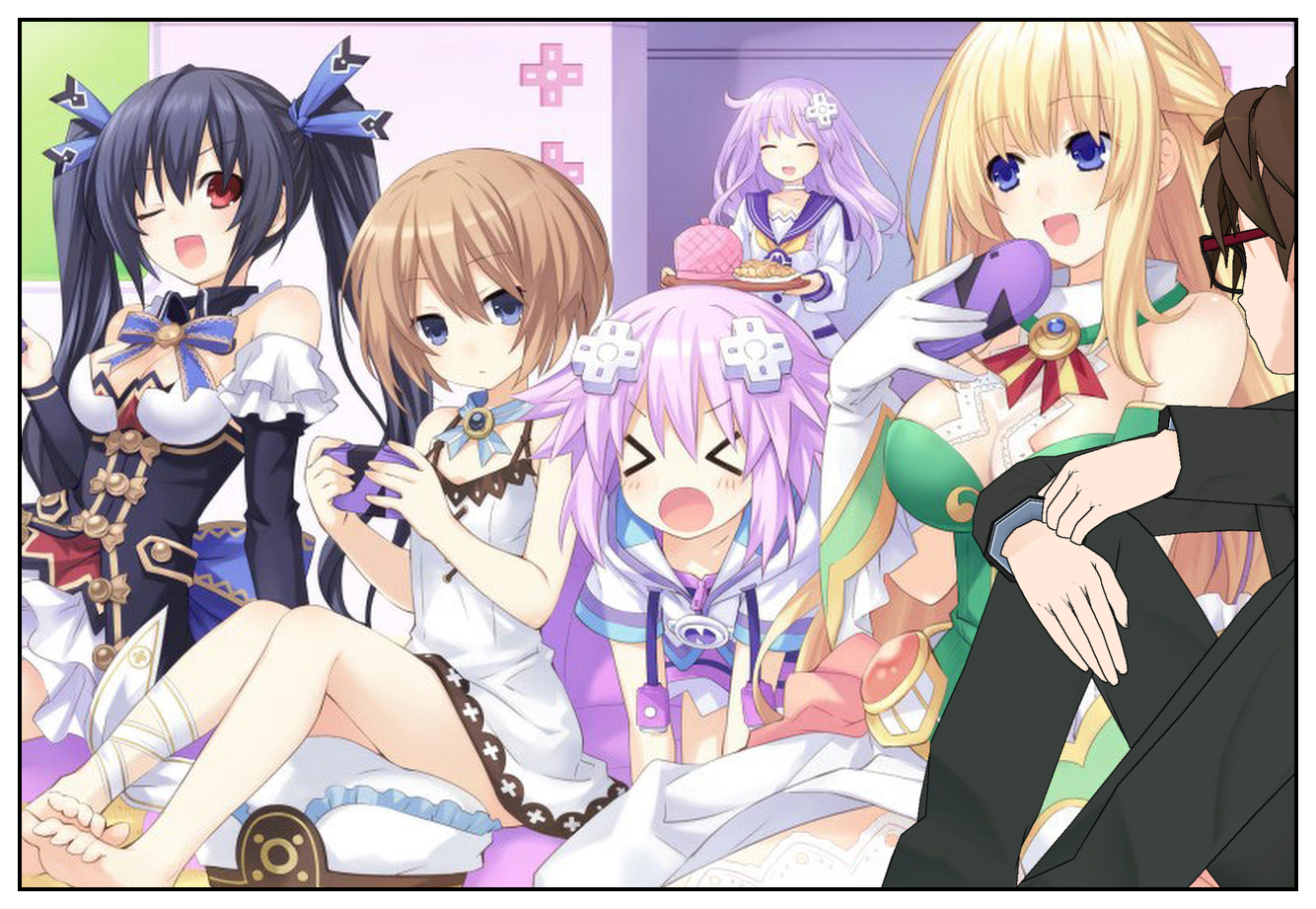
purplesisters

This is Purple Sister (left) and Purple Heart (right), the HDD/goddess forms of Nepgear and Neptune from the Hyperdimension Neptunia series respectively. This is one of my favourite pieces of official artwork for the series.

ikaruga

This is Ikaruga from Senran Kagura, displaying an uncharacteristically exhibitionist side of herself. Normally very prim and proper, we can probably assume that she is in private while this is going on, but I also have little to no doubt that Katsuragi is hiding somewhere just out of shot.

deviluke

The three Deviluke sisters from the To Love-Ru series. Lala (centre) is the original and best, but she was somewhat sidelined after the first series in favour of her two sisters Nana (left) and Momo (right).

miia

Miia from Monster Musume, who simultaneously encapsulates the inherent sexiness and strangeness of the lamia while also fulfilling the "doting girlfriend" trope nicely. Darling!!

saopantsu

A pleasantly candid shot of Asuna (canonical girl) and Lisbeth (best girl) from Sword Art Online.

nozomi

Nozomi from Love Live, who might be my favourite…

makipic

…although it might also be Maki.

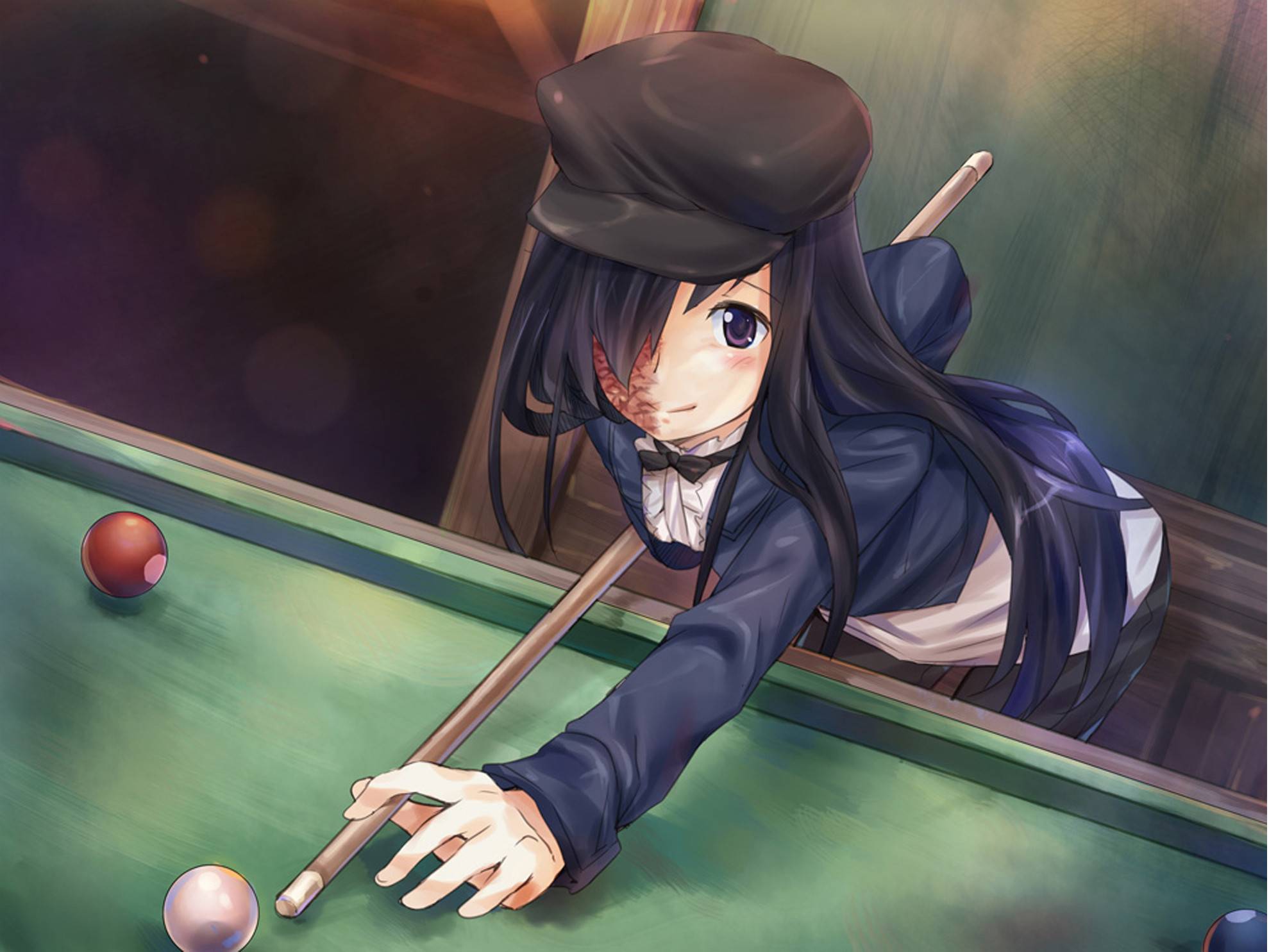
410811-katawa-shoujo-hanako-playing-pool

Hanako from Katawa Shoujo definitely deserves a mention.

2015-10-23_00038

And we'll close with Amane from The Fruit of Grisaia, who adorns my actual real-life wallet, and so I guess probably tops some sort of waifu leaderboard somewhere.

That's your lot for now. Hopefully I will be feeling better tomorrow and have something a bit more substantial to share with you all. In the meantime, enjoy the pics.

2184: Warhammer Quest Cards: A First Attempt

0184_001

Tried out Warhammer Quest: The Adventure Card Game with three of my regular board gaming buddies for the first time this evening. We challenged the first quest, which challenges the party to make it through three random locations and a quest location before getting splattered across the nearest wall, and came pretty close to completing it, but were ultimately unsuccessful. Fortunately, the penalties for losing this first quest are relatively minor, though we do miss out on the potential to grab a Legendary item in the next quest as a result.

So how does the game play? Very well, as it happens; each of the four characters gradually start to show how distinctive they are as the game progresses, with each having a clear specialism which can be further developed through the campaign progression system after each quest. The Bright Wizard is particularly good at dealing area-of-effect damage, for example, though many of her abilities require her to take damage in order to have increased effects. The Waywatcher, meanwhile, is very good at exploring, while the Dwarf Ironbreaker is good at tanking enemies and attacking two (or, later, three) at once. The Warrior Priest, meanwhile, is the aid-bot of the group, with his Aid and Rest actions both being particularly strong and benefiting both him and the party: Aid, aside from its usual effect of potentially granting a party member bonus "free" successes on a subsequent action, also heals both the Warrior Priest and the target of his Aid, while his Rest action allows him to endow a party member with the Empowered condition, which is very useful indeed — it prevents an action from being exhausted on use, as well as providing a bonus automatic success and defence on top of any results rolled.

The quest starts relatively straightforward, but gradually escalates as you progress. We cleared the last random location in a somewhat bloodied fashion, which meant we weren't in a particularly good position to deal with the Nemesis Odious Grump in the final location, particularly as the Peril track had advanced to its final stage, granting him two bonus activations per turn on top of his usual attack. Somehow we reached a position where in the last couple of turns, two party members were dead, leaving the Waywatcher (my friend Tom) and the Warrior Priest (me) to soak up the incoming damage from a good seven or eight enemies, which, of course, wasn't going to happen at all.

I get the impression the different quests each reward a somewhat different approach. This first quest rewards a quick, efficient exploration process, for example; the quicker you can get through the locations, the fewer enfeebling effects you'll suffer and the less you'll have to deal with Odious Grump being a nuisance. It's all very well knowing that, mind, but it's not always easy to put into practice: the game's elegant mechanics of exhausting your actions as you use them but allowing you to refresh them through the use of your character's otherwise weakest ability makes for some interesting strategies, particularly when you contemplate how the different party members can interact with one another by, say, Aiding one another to refresh actions ahead of time, or using other actions to exhaust enemies or cause them to retreat, taking some of the pressure off comrades.

It's a really interesting game. The basic mechanics are very simple to understand, but the execution of a quest gives the game a surprising amount of depth that might not be immediately apparent. I'm very keen to see how the game progresses over the course of the complete five-quest campaign, and everyone in our group seemed to enjoy the experience, too. So I call that a win — particularly as it was eminently possible to get through a whole quest on a weeknight evening, which is more than can be said for more conventional board-based dungeon crawlers such as Descent: Journeys in the Dark or indeed the original Warhammer Quest.

2183: Why It Would Be a Mistake to Not Localise Valkyrie Drive Bhikkuni

0183_001

Earlier today, a tweet from Senran Kagura creator Kenichiro Takaki did the rounds, apparently indicating that his newest video game creation Valkyrie Drive Bhikkuni — part of an ambitious transmedia project that involves anime, mobile games and conventional games — would not be localised.

Takaki's wording is a little ambiguous, due to English not being his first language, but if I'm interpreting his words correctly, it seems that there are no current plans to release a localised version of Valkyrie Drive Bhikkuni, but that he does want to release a localised version.

In other words, there's a shred of hope in that tweet thanks to the word "currently", particularly as the creator himself has expressed a desire to bring the game over. However, the final decision will be in the hands of Marvelous and their frequent localisation partners XSEED Games and Marvelous Europe, and this is where things become a little worrisome.

You might recall that a few weeks back there was something of a hoo-hah over Dead or Alive Xtreme 3, with a widely quoted comment apparently from a Tecmo Koei employee seeming to indicate that Western territories would not be receiving an official release of the game due to the unwelcome influence of loud-mouthed outrage megaphones in the games press and on social media at large. Whether or not those comments were actually true is beside the point; plenty of people believe them and have no reason not to given recent happenings. As a result, import specialist Play-Asia scored something of a coup by pointing out that there was an Asian English version available, and that, conveniently, they were offering it to those who wanted it — along with a cheeky biting of the thumb at so-called "social justice warriors" along the way, too. Fine with me.

The thing Valkyrie Drive Bhikkuni and Dead or Alive Xtreme 3 have in common is that they're both provocative, sexy games that feature exclusively female characters in cute outfits, suggestive poses and varying states of undress. The similarities end there, of course, with DOAX3 being a beach volleyball/dating sim type affair, while Valkyrie Drive Bhikkuni is more along the lines of Takaki's successful Senran Kagura franchise, but to the eyes of those who thing everything involving depictions of the female form — particularly in works of Japanese origin — is somehow worse than ISIS, there's little difference; these are games for neckbeard basement-dwelling virgins, they'd say — games for desperate losers who'd never get their hands on a real woman.

This is enormously reductive thinking, as I've argued on a number of occasions in the past. I think it's extremely important that video games as a medium feels that it is able to explore sex, sexiness, sexuality and deliberately provocative aesthetics. And, over the last few years, we've started to see more and more developers, publishers and localisation outfits apparently feeling the same way, with PlayStation platforms in particular getting more than their fair share of games that are unafraid to revel and delight in explorations of sexuality. Sure, a few have made it over with some edits here and there in the name of differing cultural norms — particularly with regard to the depiction of young-looking ("loli") characters in provocative situations, even if, canonically, they are of an appropriate age to be engaging with such activities — but for the most part, the last two generations of hardware in particular have been a wonderful time to be a fan of Japanese gaming and sex-positive titles.

What the loud-mouthed outrage megaphones threaten to do, though, is undo this amount of progress we've seen over the last few years. Because yes, it is progress, whatever you may personally think of the games in question. These games seeing a successful release to a passionate audience in the West demonstrates that it is possible to release games to a niche rather than a mainstream audience — and, thus, if it's possible to run a successful business catering to those who enjoy games involving pretty anime girls (which isn't just white cis heterosexual men, I might add, as my Twitter Following list will attest) then it is certainly possible to cater to other audiences too: gay men, heterosexual women, gay women, asexual people, bisexual people, trans people and even the genderfluid otherkin bullshit that Tumblr seems to make up on a regular basis.

As such, seeing a relatively high-profile title from a high-profile niche-interest creator like Takaki at risk of not coming over for reasons as-yet unknown — but you can bet it's something to do with the recent controversies, along with the amount of outright ill-informed abuse that has been spewed at the Senran Kagura series in particular over the last few years — is both saddening and worrying, but perhaps understandable. To be honest, were I in Takaki's situation, as a creator who clearly loves both his work and his creations, I would feel enormously demoralised every time the mainstream press covered my games and wrote them off without, in many cases, even playing them — though I would take heart from the fact that there are plenty of passionate fans out there willing to spread the good word, even if the press isn't. And in this age of social media, as the traditional games press becomes more and more irrelevant, sadly, it's word of mouth that really counts more than anything.

I sincerely hope that Takaki, XSEED and Marvelous are able to reach some kind of arrangement where Western fans are able to pick up Valkyrie Drive Bhikkuni officially, without having to resort to possible Asian English imports, because refusing to release this sends a message to the wannabe "progressive" bullies of the world that their tactics — shaming creators and audience members of niche-interest products rather than being the change they want to see in the world and creating their own media that better reflects their interests — are working. And I really don't want them to get that message, because for all their bleating about "diversity" and "representation", nothing good ever comes from denying groups access to the media they want to enjoy; in fact, if anything, it makes the world a less diverse and representative place overall.

So fuck that. Takaki-san, XSEED, Marvelous: you announce an official Western (preferably European — we're a lot more open-minded over here!) release of Valkyrie Drive Bhikkuni, and I — and numerous others I know — will more than happily pre-order it immediately, particularly if there's a lovely limited edition on offer with, say, posters, figurines, soundtracks, dakimakuras and the like.

Do the right thing. Don't let the crybullies of the world win. Take a stand. Show that you believe in your work, and in your audience. Tits are life, ass is hometown — and your games are happiness.

2182: The Comforting Familiarity of Nep-Nep

0182_001

There's a reason I frequently quote the Hyperdimension Neptunia series as my favourite game series of all time. And it's not because any of the games are particularly outstanding — though, it must be said, each and every one is far better than most reviews give them credit for — or because they're particularly impressive. In fact, technically speaking, outside of some excellent character models and animation, the Neptunia series as a whole is fairly flawed, though since making the jump to Vita, PC and PS4 rather than PS3, its average framerate has gone through the roof.

No, the reason I love Neptunia so is its comforting familiarity. Firing up one of these games is like meeting up with the sort of friends you always have a good time with. The kind of friends you might not see for months or years at a time on some occasions, but the kind of friends who allow you to pick right up where you left off when you do meet up again.

There are a number of ways the series achieves this. The first and most obvious is through its main cast: the combination of Tsunako's gorgeous character and costume designs, the excellent voice acting (in Japanese, anyway; I haven't spent long with the English dub) and a sharp, witty script really brings these characters to life and, over the course of all the games they've starred in to date, they've developed and become distinct. The Neptunia writers and localisers aren't under any misconceptions that these characters are particularly deep, flawed or, for want of a better word, "literary", but this adds to the series' charm; it's infused with a gentle sense of good-natured humour and an aesthetic that combines the bright, primary colours of a children's TV show with a strong sense of self-awareness and recognition that yes, grown-ups play this and appreciate a few dirty jokes here and there. It's unpretentious and casual; you never feel like you have to make an effort to enjoy spending time with the Neptunia characters, and, perhaps paradoxically, this makes you want to spend more time with them, to find out more about them.

The second way Neptunia brings a sense of warm familiarity to me is through its aesthetic. Developer Compile Heart frequently gets lambasted in reviews for recycling graphical, sound and music assets wholesale from game to game, but somehow this has never mattered to me; I like the fact that you know what a Neptunia game is going to look and sound like before you boot it up. I like the fact that the series has developed its own kind of non-verbal language using its soundtrack to denote what is happening on. And the fact that the same dungeon maps are used from game to game — or even, in some cases, recycled within the same game — has never mattered to me; on the contrary, these places are now familiar and comfortable to me, even if the occupants may differ from visit to visit and occasionally incorporate superbosses that splatter me up the nearest wall.

The third reason Neptunia makes me happy is because the whole thing is clearly infused with such joy and love for these characters and the setting in which they live that it's hard not to smile all the time you're playing. While it's questionable as to whether or not Compile Heart knew precisely how popular the series would become when the original Hyperdimension Neptunia was released in 2010, it's clear to see today, six years later, that the creators still adore their creations as much as the audience do. And, more to the point, the various spinoffs in the series allow fans to celebrate their favourite characters in a variety of different ways, be it through the clothes-ripping hack-and-slash action of Hyperdimension Neptunia U, the strategic battling of Hyperdevotion Noire or the purely "social" gameplay of Hyperdimension Neptunia Producing Perfection. We've seen these girls at work, rest and play over the course of these games, and it doesn't take long to fall in love with them.

Me, I'm at a stage where I honestly think I might be quite happy playing nothing but Neptunia games until the end of time, assuming that Compile Heart continued to explore collaborations with other developers such as Sting (Hyperdevotion Noire) and Tamsoft (Hyperdimension Neptunia U) as well as producing strong mainline installments in the series. Of course, this is an exaggeration, but one thing is true: I never have a bad time playing a Neptunia game, and I never feel sad while I'm playing a Neptunia game; I hope we continue to see them for many years to come.

2181: Coming to a Head

0181_001

I generally try and steer clear of Internet drama as much as possible, but sometimes it's impossible not to see what's been going on when it's all over a website you use regularly.

Most recently, Twitter has seen some interesting happenings that make it feel like the ongoing culture war between "loudmouthed, self-professed progressives (who aren't actually all that progressive at all)" and "people who just want to be left the fuck alone to talk to their friends about things they enjoy without being shamed for it" has been coming to a head. And it's been kind of fascinating to watch, particularly as the most recent happenings make one wonder what role — if any — sites that provide a means of communication, such as Twitter, have in these sort of sociopolitical debates.

The most recent drama surrounds one Milo "Nero" Yiannopoulous, a writer for the conservative/right-wing news site Breitbart. Nero is, to put it mildly, something of a controversial, divisive figure: he's brash, opinionated, flamboyantly homosexual and vehemently against the rise of "third wave" feminism — that particular ideological offshoot that we've seen in the last few years that seemingly concerns itself more with scoring "victim points" than actually promoting any sort of societal change for the better. At the same time, he's also someone who stands up for what he believes in, protective of people and groups he cares for and willing to go against the grain when he believes that the "grain" is going in the wrong direction.

I find him quite amusing to read at times. I don't follow him on Twitter, but in my occasional (non-participatory) explorations of what GamerGate subreddit KotakuInAction is up to, I tend to keep abreast of what he's been up to, and occasionally feel inclined to read some of the things he's posted on Breitbart. I don't agree with everything — many things, if I'm honest — that he says, but I do agree with some others. I find his writing entertaining to read, though, and challenging to my preconceived notions about particular issues. His writing makes me think, in other words, and contemplate how I feel about something, whether or not it's the same as what he thinks about the thing in question — and that's something that journalists should aspire to, in my opinion, wherever they are positioned on the overall political spectrum.

Anyway. The issue is with Nero's behaviour on Twitter, and with his subsequent treatment. He frequently comes under fire for "harassing" people himself, and for "inciting harassment" by drawing attention to things that people have said by using Twitter's built-in "quote and comment" functionality that they added to Retweets a while back. So strong is the backlash against him that a couple of days ago, his "verified" checkmark was removed from his Twitter account, seemingly as a punishment for the way he had behaved.

Thing is, the "verified" checkmark is not supposed to be a mark of good behaviour or anything; all it's supposed to be is an indicator that yes, this particular Twitter account is indeed the person or company that it claims to be. And Nero is Nero, no doubt about that. Taking it away for the way he has behaved on Twitter — whether or not you feel that was justified — is, frankly, insane, because it doesn't stop him being the person he is.

Naturally, as these things tend to go, the Internet reacted immediately, with a wide variety of Twitter accounts immediately rebranding themselves as "Milo Yiannopoulous" and adopting his avatar as their profile picture, making the timeline an occasionally extremely confusing place to navigate. Alongside this, the hashtag #JeSuisMilo — a reference to the #JeSuisCharlie hashtag movement from around the time the offices of French satirical newspaper Charlie Hebdo were attacked in Paris last year — was launched in an attempt to show solidarity with Nero and disapproval for Twitter's peculiar (and, as of the time of writing, unexplained) actions.

Various people, including writer and former Conservative MP Louise Mensch, did some digging and discovered the Twitter account of Michael Margolis, aka @yipe, the "engineering manager" at Twitter itself. Examining Margolis' retweets, likes and replies to people made it look to some like there were some conflicts of interest going on, with many people alleging that Margolis was inappropriately using his position at Twitter to do favours for "progressive" types — such as reporting Nero through means other than the usual channels.

All this is hearsay and conjecture, so far as I can make out, but it raises some interesting questions, for sure. Twitter is intended to be an open, free communication platform for everyone to use. It's not supposed to be moderated or policed — with the sheer number of users and messages that are exchanged every day, it's simply impossible to do so. Instead, Twitter operates on the (arguably flawed) assumption that, much like society, people will naturally peel off into their own groups and interact with one another, with any cross-cultural clashes able to be resolved through use of the mute and block functions — or, in extreme cases, through Twitter's formal reporting processes.

I have some experience with Twitter's formal reporting procedures. Some of you may recall a couple of years back I suffered a campaign of targeted harassment from a notorious group of Internet trolls known as the GNAA. At the time, this group were targeting people who were fans of the My Little Pony: Friendship is Magic TV show, and since I'd recently discovered this, I had the word "Brony" (the term for an adult-age fan of the show) in my Twitter profile bio. This, it seems, was an invitation for the group in question to start accusing me of being a paedophile, even going so far as to look up the WHOIS information of websites I'd linked to from my Twitter profile or this site, then phoning up the owners of said websites (which, in this case, were the owner of Games are Evil, a site I was running at the time, and my brother) and repeating said vile accusations.

It was an extremely unpleasant, scary experience, not so much because of the torrent of abusive tweets coming my way — those were easy enough to ignore and block using Twitter's basic tools — but because it was spilling over into the real world like this. Consequently, rather than simply shrugging the situation off, I reported it to Twitter and to my local police station. The latter were unable to do much about it — I suspected as much, but I thought it was worth doing anyway — and the former were simply useless, claiming that they were unable to intervene in this situation because it amounted to a "disagreement" rather than "harassment" by their definition.

In other words, under Twitter's definitions, you have to be receiving some pretty damn vile harassment before their formal reporting procedures will actually do anything — or, at least, this was the case back in 2013, anyway. For everything else, you have to just deal with it, or leave the site altogether — which I did for a while, but came back after I felt worse about being alone and isolated than I did about being targeted by trolls.

In a way, I understand the way Twitter reacted the way they did to my situation. I wasn't directly in danger or anything, and in retrospect the behaviour of the trolls was little more than the sort of casual abuse-hurling you'd get in the schoolyard. This isn't defending it by any means, of course — I had certainly done nothing to deserve such treatment, and I was genuinely very afraid while it was all going on — but in the grand scheme of things, it perhaps was barely a blip on the radar of Bad Shit happening in the world. By acting upon it, Twitter would be setting a public precedent, and this would then have to be followed up on in future to ensure that their policies were being enforced in an even-handed and fair manner — and I got the distinct impression that Twitter support felt that the whole thing was rather more trouble than it was worth.

This little digression is an explanation of the fact that Twitter is generally very hesitant to intervene in situations where people "disagree" with one another by their definition — and their definition of "disagreeing", at least as it stood in 2013, was rather, shall we say, lenient. So for a Twitter employee to put across the impression of giving preferential treatment towards particular individuals is not a particular fair and even-handed way to approach the situation. Moreover, Nero's behaviour in the instances where he was accused of "inciting harassment" wasn't anything out of the ordinary — he was simply using Twitter's own tools (in this case, the "Quote Tweet" function) to highlight some things he wanted to discuss or bring to the attention of his audience.

Several interesting questions are raised as a result of this debacle, however. The first is whether or not popular Twitter users such as Nero should be held responsible or accountable for the actions of their followers when they do something to make a conversation or comment public. Twitter does have tools to minimise contact with people you haven't specifically authorised to talk to you — most notably the ability to make your account private, locking it down to everyone except those who follow you — but at its core it's designed to be a means of public discourse: the world's biggest cocktail party, where anyone and everyone is free to wander around, listen in on what everyone is saying and contribute their own thoughts and feelings to a conversation, regardless of whether or not they know the existing participants.

In this instance, Nero was simply using Twitter as intended, so is it his fault if some followers took it upon themselves to be unpleasant little scrotes towards the person he quotes (whom, it has to be said, appears to be a fairly unpleasant little scrote herself — not that this justifies any sort of abuse)? I certainly don't have an easy answer to that.

The second question raised by all this — particularly Margolis' alleged involvement, which is yet to be conclusively proven — is whether or not social media companies as a whole or their employees have any sort of obligation to make decisions about users based on political or ideological viewpoints. The argument in this instance is whether or not the removal of Nero's verified status — his "punishment" — is justified on the grounds that he disagrees (there's that word again) with the views of third-wave feminism. Or, to take it as a broader picture, whether or not any user should be punished in any way for expressing an opinion that differs from the accepted "norm", or which some claim to find "offensive", or which is regarded as "unacceptable" in some way.

You get into dangerous territory with that last section. Twitter is a private company, however, so it is, of course, free to police its platform however it pleases, and if it wants to become some sort of "safe space" where third-wave feminists and their white knight "allies" can happily skip through fields of flowers (not white ones, though, because white people ruin fucking everything, apparently) then that is the company's decision entirely. Since it has always sold itself as a means of free expression and communication for people all over the world, however, there's an argument that we are taking a few tentative steps into a somewhat Orwellian area — though it is also worth noting that should Twitter actually decide to go down this route wholeheartedly, the market will be flung wide open for a new, alternative means of communication and expression for people who are no longer welcome under the New Tweet Order.

Personally speaking, I would rather Twitter remain completely apolitical, and continue to act as a means of free communication for groups all over the world covering a wide variety of viewpoints and ideologies, many of which would clash with one another if they came into direct contact. It's been a valuable tool in times of crisis, such as during the massacres in Paris, the assaults in Cologne over the New Year period, and during the riots in Egypt a while back. More than that, though, it's brought people together who may never otherwise have had the chance to talk to one another. It's allowed friendships and even relationships to blossom, and it's allowed differing viewpoints the chance to interact and attempt to understand one another. It's been inestimably valuable from that perspective, and for it to start pushing one particular political viewpoint or ideology as somehow "superior" or "correct" would go against this openness that has been its most key feature ever since day one.

More than that, though, regardless of whether or not you think Nero is a twat or a genius, removing his verified status as a "punishment" is just plain stupid. What kind of message, exactly, is that supposed to send? "You said the wrong thing, so you are no longer you?" What utter nonsense.

Perhaps this is why I don't run a huge, successful social media enterprise. Or perhaps the rest of the world really has gone completely and utterly mental.

2180: Action Unleashed

0180_001

I had a sudden and irrepressible urge for some Neptunia today, so I fired up the Neptunia game I was last working on: Hyperdimension Neptunia U: Action Unleashed. Having figured out that yes, it is indeed possible to stop the PlayStation TV from recognising accidental clicking of L3 or R3 as simulated touchscreen touches (which had previously made getting overexcited in this game somewhat hazardous, since I have a habit of clicking one or both of the sticks in when gripping the controller tightly) I decided to play it on the big screen. And I was reminded what an enjoyable game it is.

For those unfamiliar, Neptunia U, as I shall refer to it hereafter, is a collaborative, non-canonical entry in the Neptunia series (inasmuch as Neptunia even has a coherent canon, which is perhaps questionable) developed by both series creators Compile Heart and Senran Kagura developers Tamsoft. The latter's influence is very much evident in the game, since it plays rather like their other Vita game, Senran Kagura Estival Versus, right down to the characters' clothes getting ripped as they take damage.

Much like Senran Kagura, Neptunia U presents you with a series of missions to undertake, some of which are purely designed to challenge you and/or allow you to level up your characters, while others advance the plot. Neptunia U also throws a spanner in the works in its second chapter with "Irregular Quests", which generally have some sort of condition to you beating them rather than simply killing everything. The twist is that the game doesn't tell you what this objective is outright; you're expected to figure it out for yourself, though starting and quitting the mission does trigger a scene where the characters give you a few hints as to what you might want to do. Irregular objectives range from killing all of a specific type of enemy (while others respawn infinitely) to swapping characters in order to temporarily be able to deal damage to otherwise-invincible enemies.

Neptunia U's systems are fairly simple — like Senran Kagura, each character has both a fast, weak attack and a strong, slow attack as well as a couple of limited-use special moves. And, again, like its titty-ninja counterpart, the challenge is not necessarily in being able to perform these moves and combos — pretty much all of the combos in question run Square 4 or 5 times followed by Triangle — but in understanding the animations and movements involved in the abilities in order to deal damage most efficiently and clear levels quickly. Efficient performance results in bigger experience rewards at the conclusion of the level, as well as providing you with more Medals that drop from monsters. Collecting medals unlocks permanent stat boosts for the entire cast as well as new equippable items to boost (or, in some cases, deliberately penalise) their abilities.

Neptunia U is a game made for people who love the grind. It's not a particularly difficult game for the most part — at least its rather short, sub-6 hour story mode isn't; I'm yet to get into the substantial endgame involving the Neptral Tower dungeon — but in order to unlock everything and see everything, you'll need to grind a fair bit in various ways. You'll need to grind missions to gain enough experience to level up the characters. You'll need to grind specific missions in order to collect the enemy medals you need to unlock all the equipment. You'll need to grind specific partnerships of characters in order to raise everyone's Lily Rank to maximum — always the most time-consuming part of any Neptunia game, but pretty much everyone who calls themselves a fan somehow cannot resist this task every time it comes up — and you'll need to make sure said partnerships are levelled enough to clear the few character-specific missions throughout the game. In other words, if you're not up for a bit of grinding, this game will last you about 6 hours; if you are, however, it will push into substantial double-digit territory at the very least.

Mostly, I just like it because it's an enjoyable, simple brawler with quick, snappy levels and my favourite characters in the world smacking the shit out of all manner of different enemies. Of particular note is the game's implementation of the series' iconic "HDD" forms for the characters: in some of the mainline installments, these transformations didn't feel substantially more powerful than the characters' "human" counterparts, but here, their new movesets, animations and massively increased damage potential makes them feel as they should: earth-shatteringly powerful, cutting through enemies like butter. They are goddesses, after all.

I'm going to try and bash out the rest of the story mode in the next few days and then investigate the endgame. Whether it will crush my soul like the Lily Rank grind in Hyperdevotion Noire remains to be seen, but it's Nep-Nep, so of course I'm going to see it through to the bitter end; spending some time away from my favourite goddesses has only reminded me how much I love them. Absence makes the heart grow fonder and all that.

2179: Warhammer Quest: The Adventure Card Game Blind Tutorial Playthrough

0179_001

Longtime readers will know that I'm a fan of Games Workshop's wonderful but out-of-print dungeon crawler games, including Hero Quest, Advanced Heroquest and Warhammer Quest. Unfortunately, these don't hit the table nearly as often as I'd like, since they're quite time-consuming to play and fiddly to set up due to their sheer number of components and pen-and-paper RPG-style necessity to prepare adventures beforehand.

I was, as you might expect, quite excited to hear that Fantasy Flight Games, who have been leveraging a whole bunch of Games Workshop properties recently, had released an official card game adaptation of Warhammer Quest which promised to play in 30-60 minutes, and which many claimed offered a fun dungeon-crawling experience without the need for festooning your table in thousands of miniatures and cardboard tiles.

The game is extremely well-regarded on legendary boardgaming community site Boardgamegeek, so I was keen to give it a go. One of the most common complaints, however, was that neither the Learn to Play manual nor the Rules Reference guide were particularly well laid out, meaning it took a little while to get your head around how to actually play. This is nothing unusual for Fantasy Flight Games, however, who, although they produce absolutely beautiful components and cards, aren't particularly well-regarded when it comes to writing instruction manuals. (Hey. If anyone from FFG is reading, I am very much available for freelance manual and tutorial writing. Please get in touch.)

With that in mind, I decided to try the game's tutorial scenario and record my experiences for the benefit of anyone else considering this game. So let's jump right in.

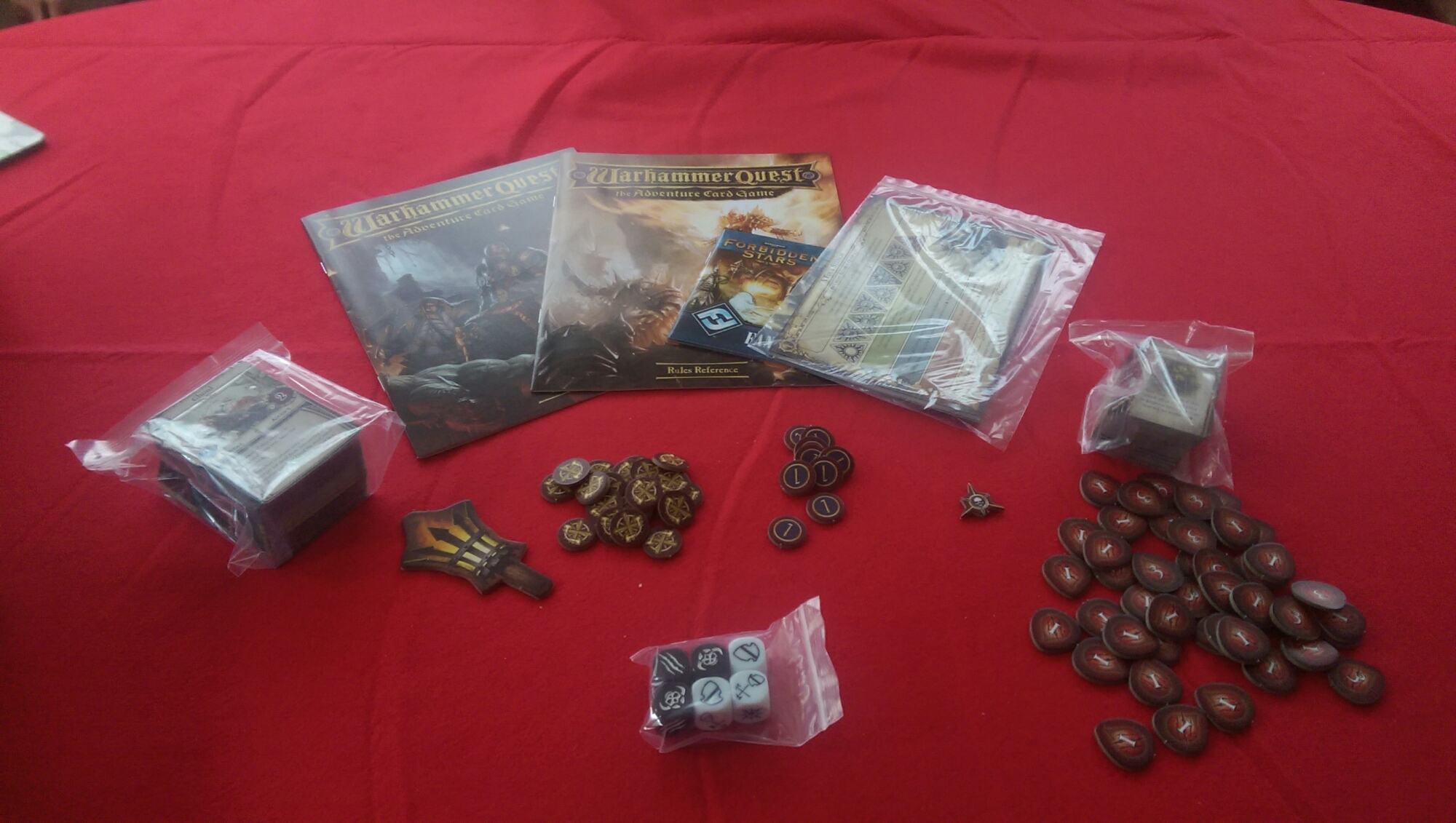
image

This is all the stuff you get in the box. Two rulebooks — a "learn to play" guide and a reference manual — plus a selection of quest sheets, a deck of large cards, a deck of small cards, six dice and a selection of tokens. Numbered tokens are double-sided so can be used to denote a value of either 1 or 3.

Let's get set up! I'll be trying out the Tutorial solo. The Tutorial isn't a full quest, rather just an opportunity to try out all the main mechanics before jumping in to a full session. I'm going into this pretty much blind, so I may get things wrong along the way. As such, do not take this post as a definitive How to Play guide for now!

image

First thing to do is pick two heroes to play. There must be at least two heroes in the party, even if you're playing solo. There are variations on each hero card according to how many party members you have. Generally speaking, the fewer party members you have, the more life each individual character has. If playing with two heroes, each hero gets two turns. If playing with three heroes, one hero per round gets an extra turn.

I'm going to go with the Ironbreaker dwarf and the Bright Wizard for this playthrough, because a tank/wizard combo sounds sensible, and also they're the two characters I've played most in Warhammer End Times: Vermintide on PC.

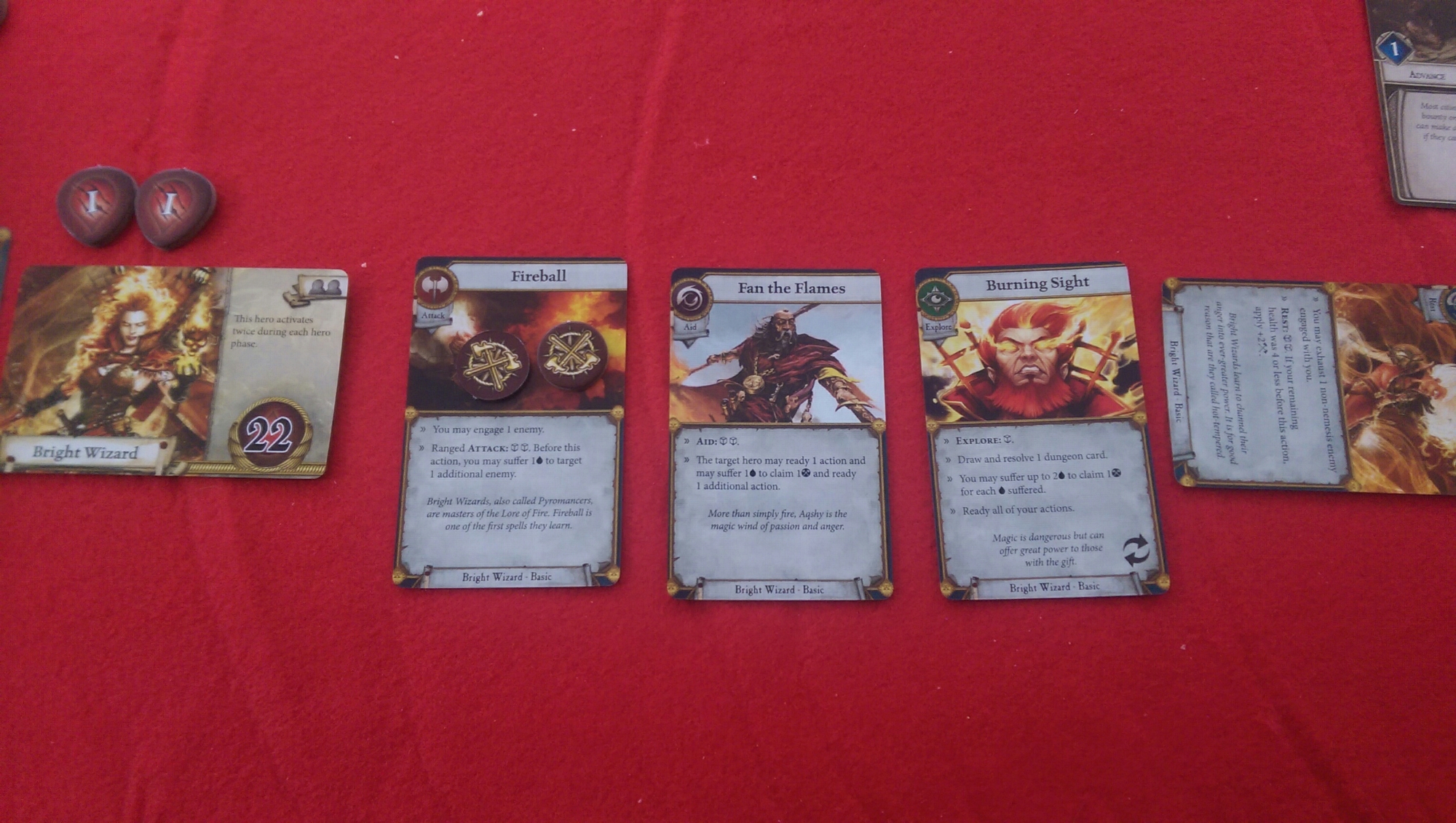
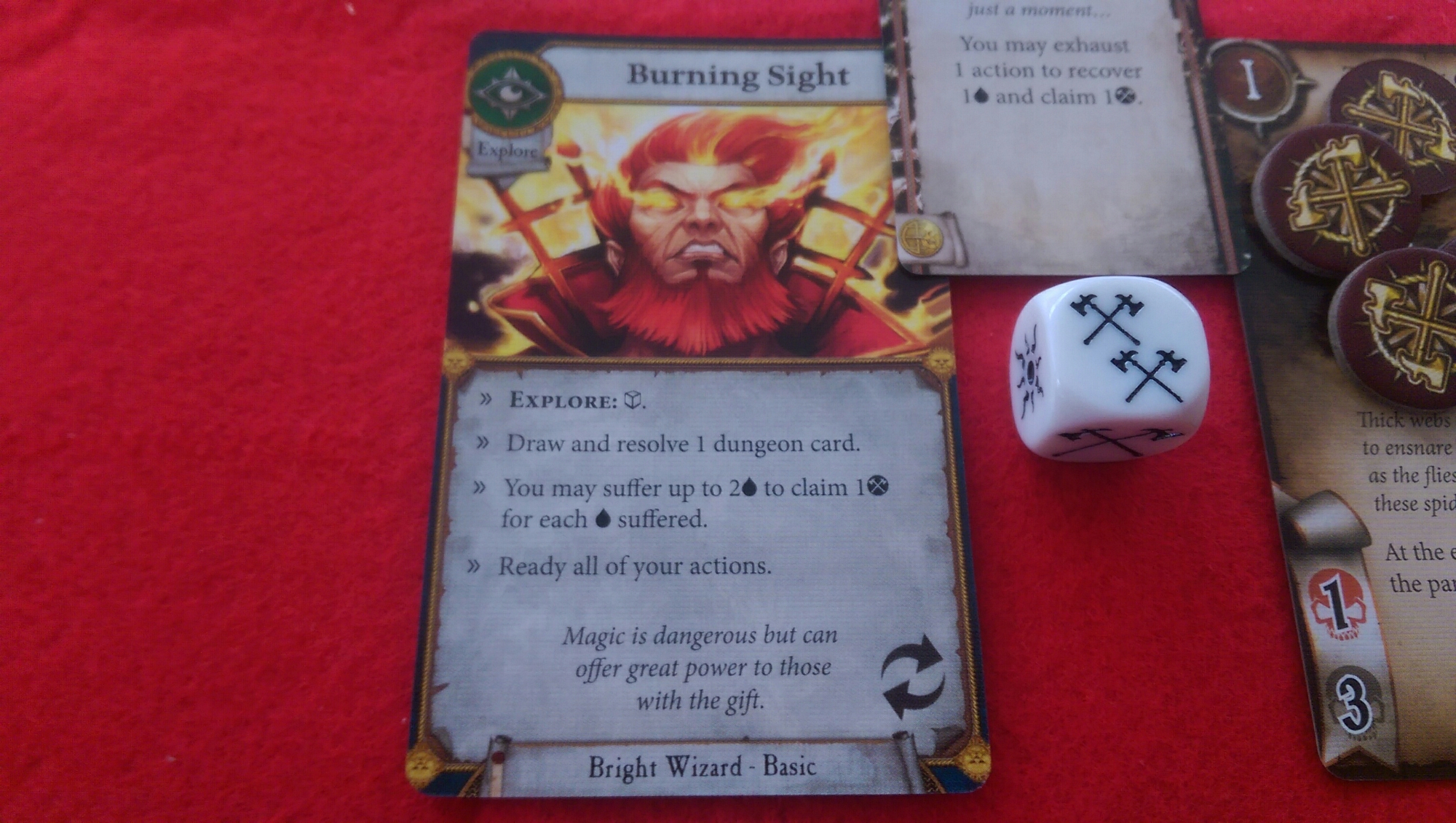
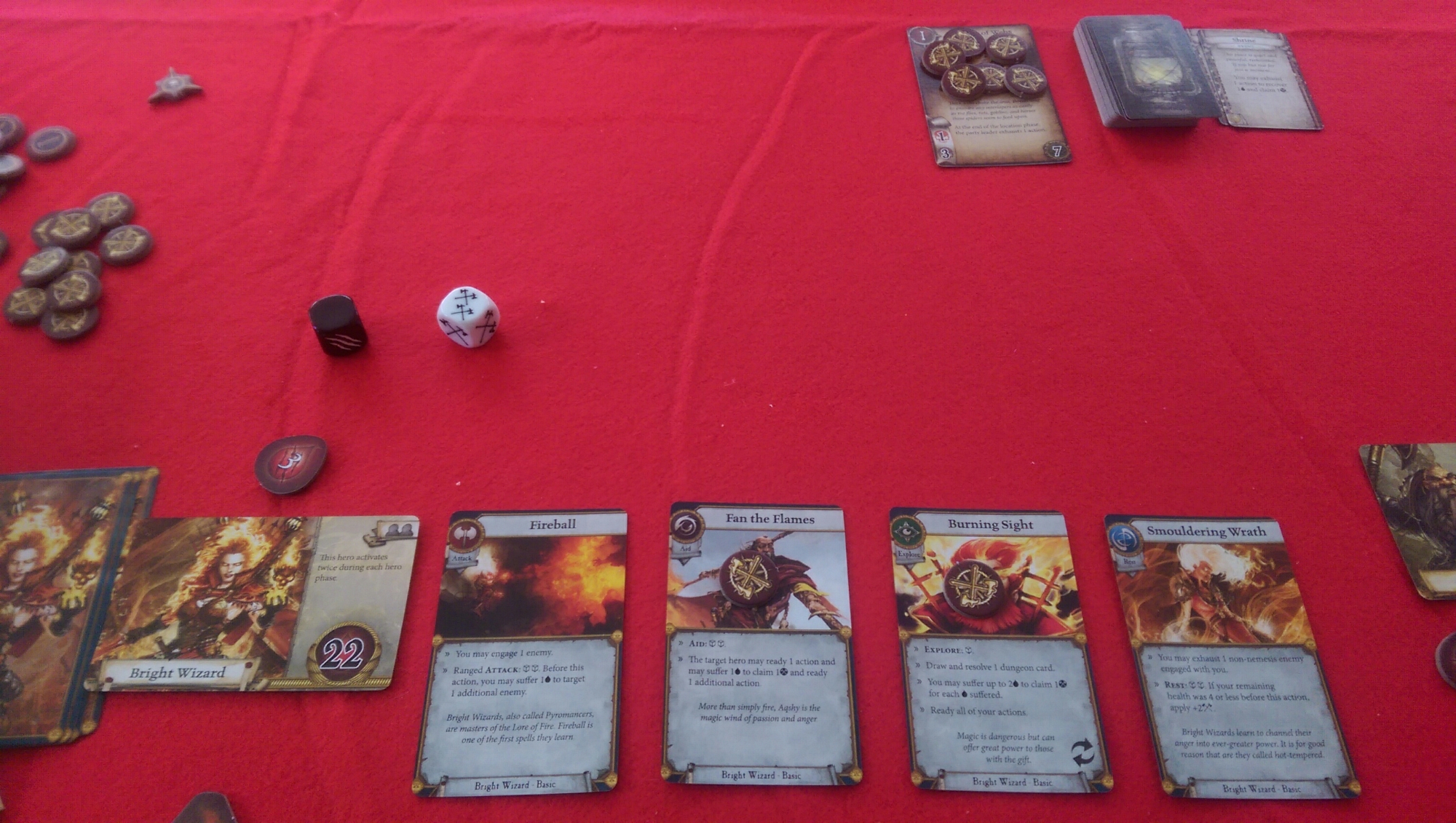
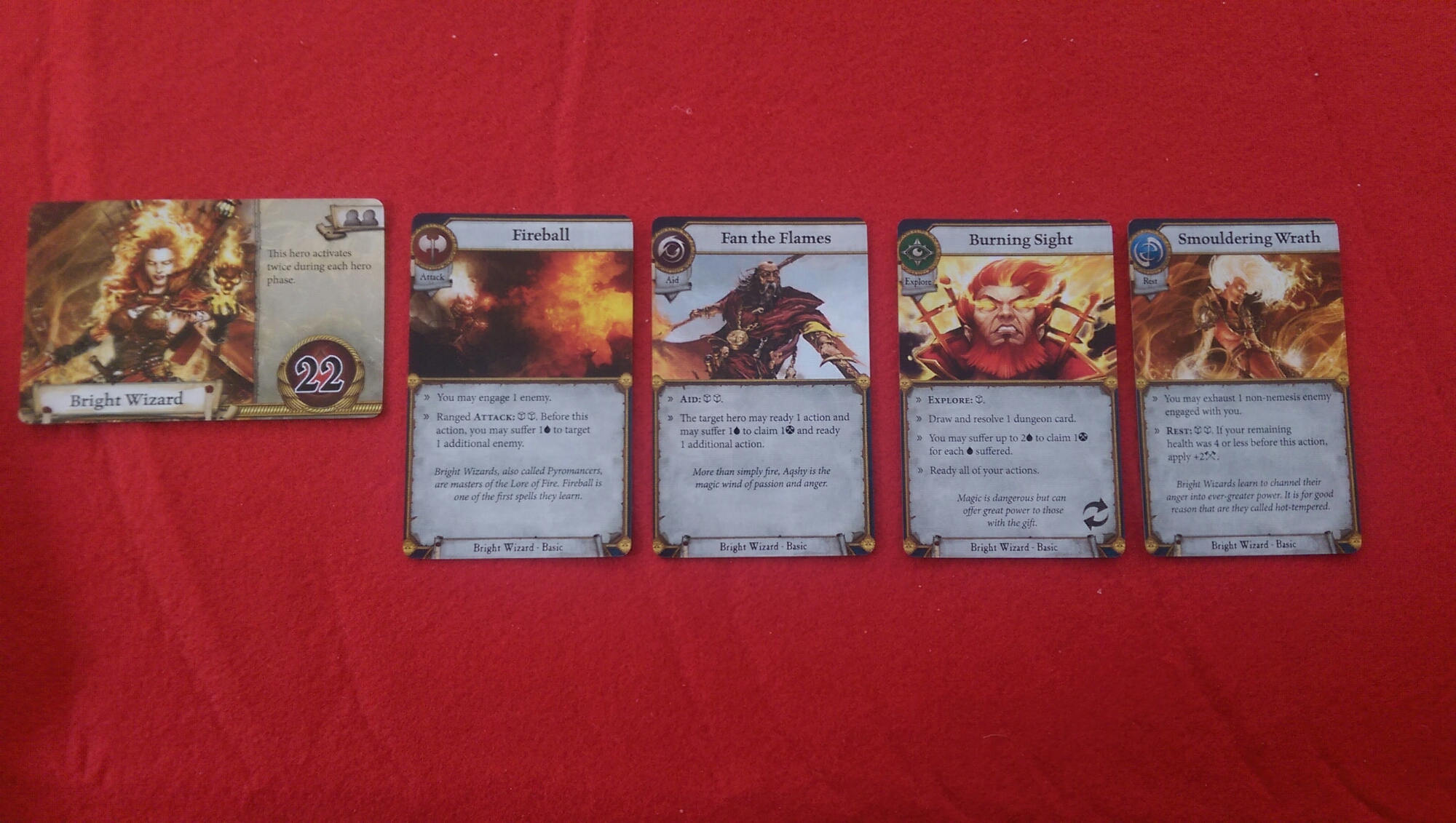
Each hero starts with four basic action cards that allow them to Attack, Aid, Explore or Rest. During a Campaign or Delve quest, these can be upgraded to Advanced versions later. Here are the Bright Wizard's basic actions:
image

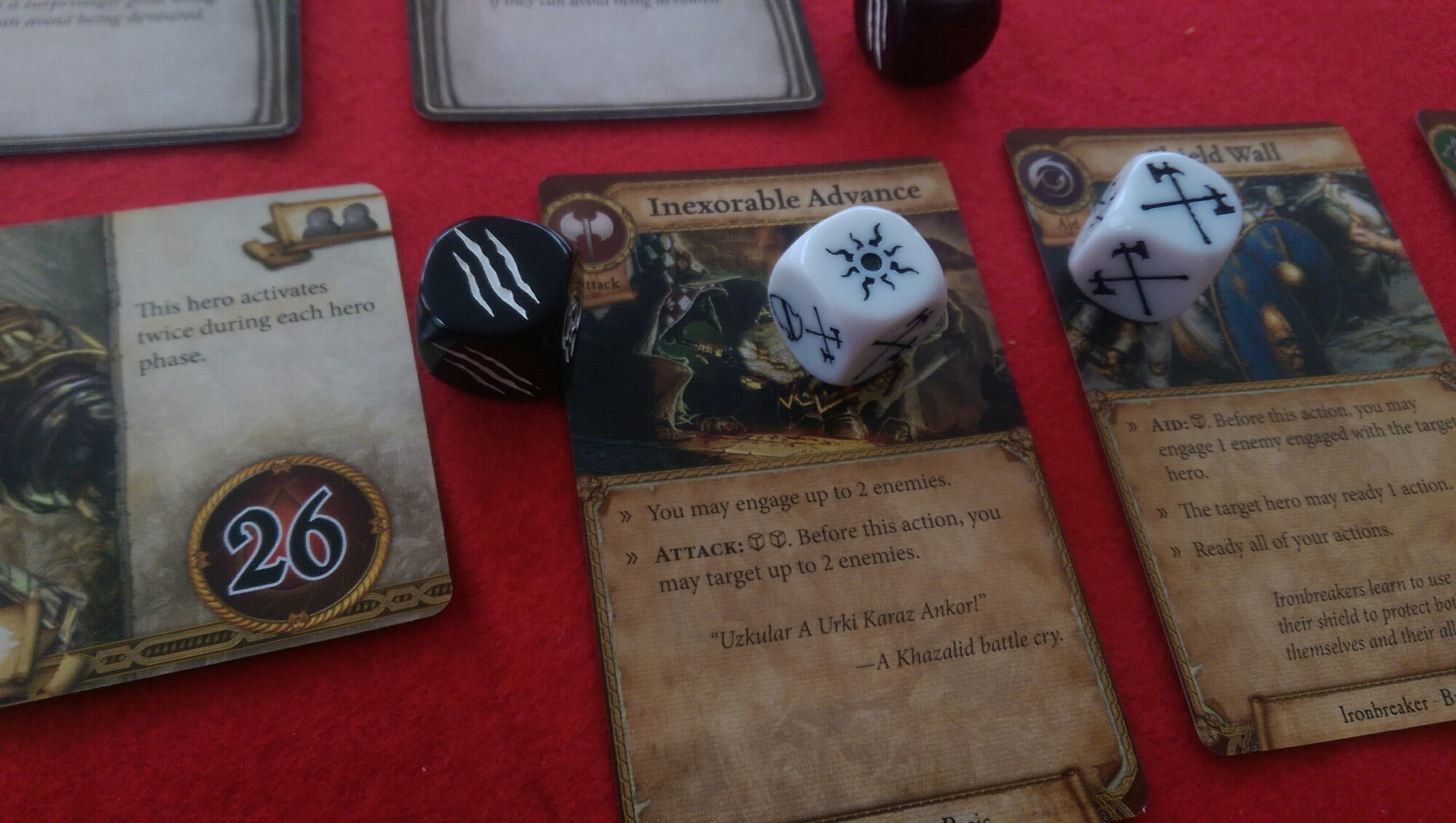
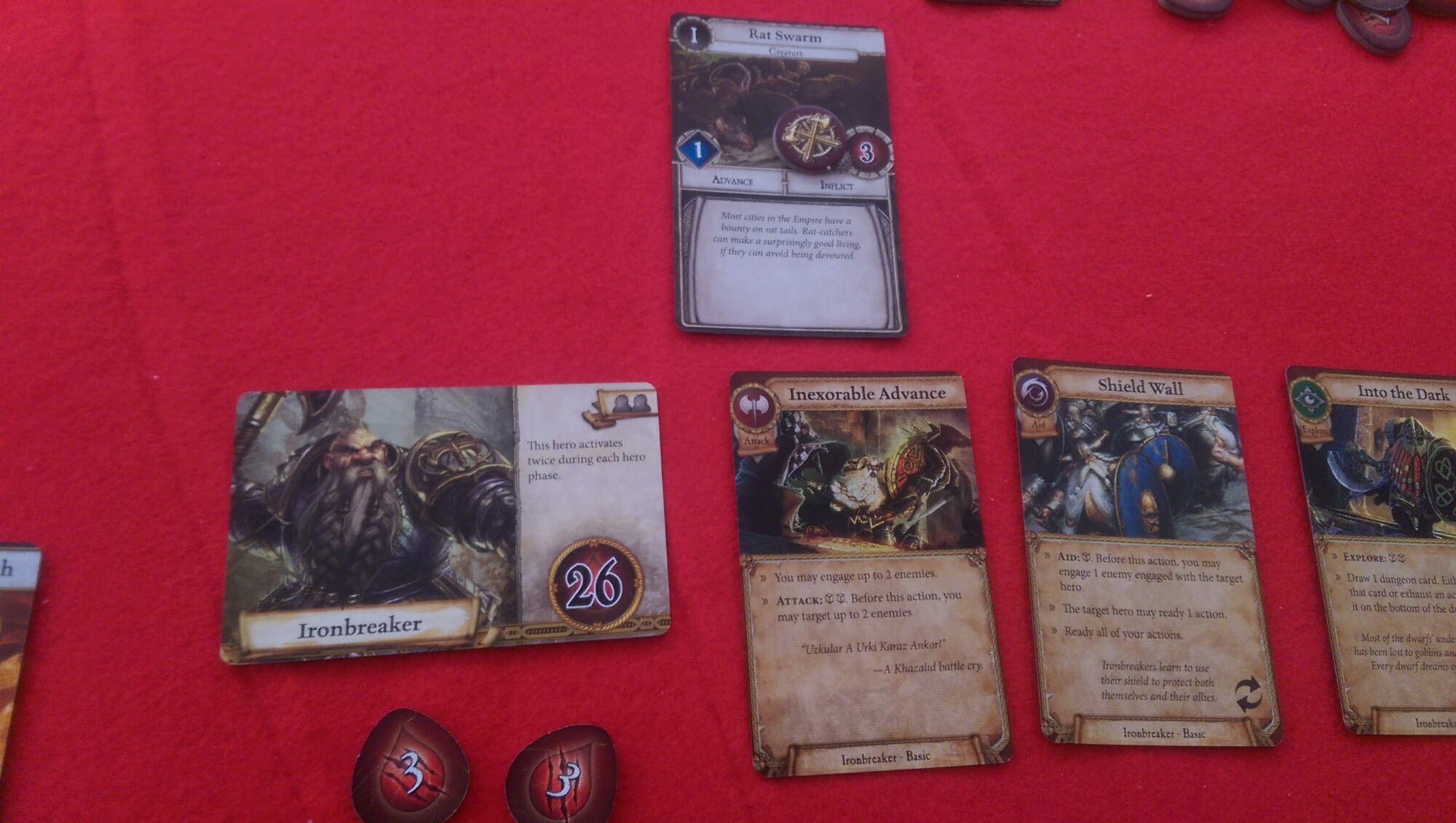
And here are the Ironbreaker's:

image

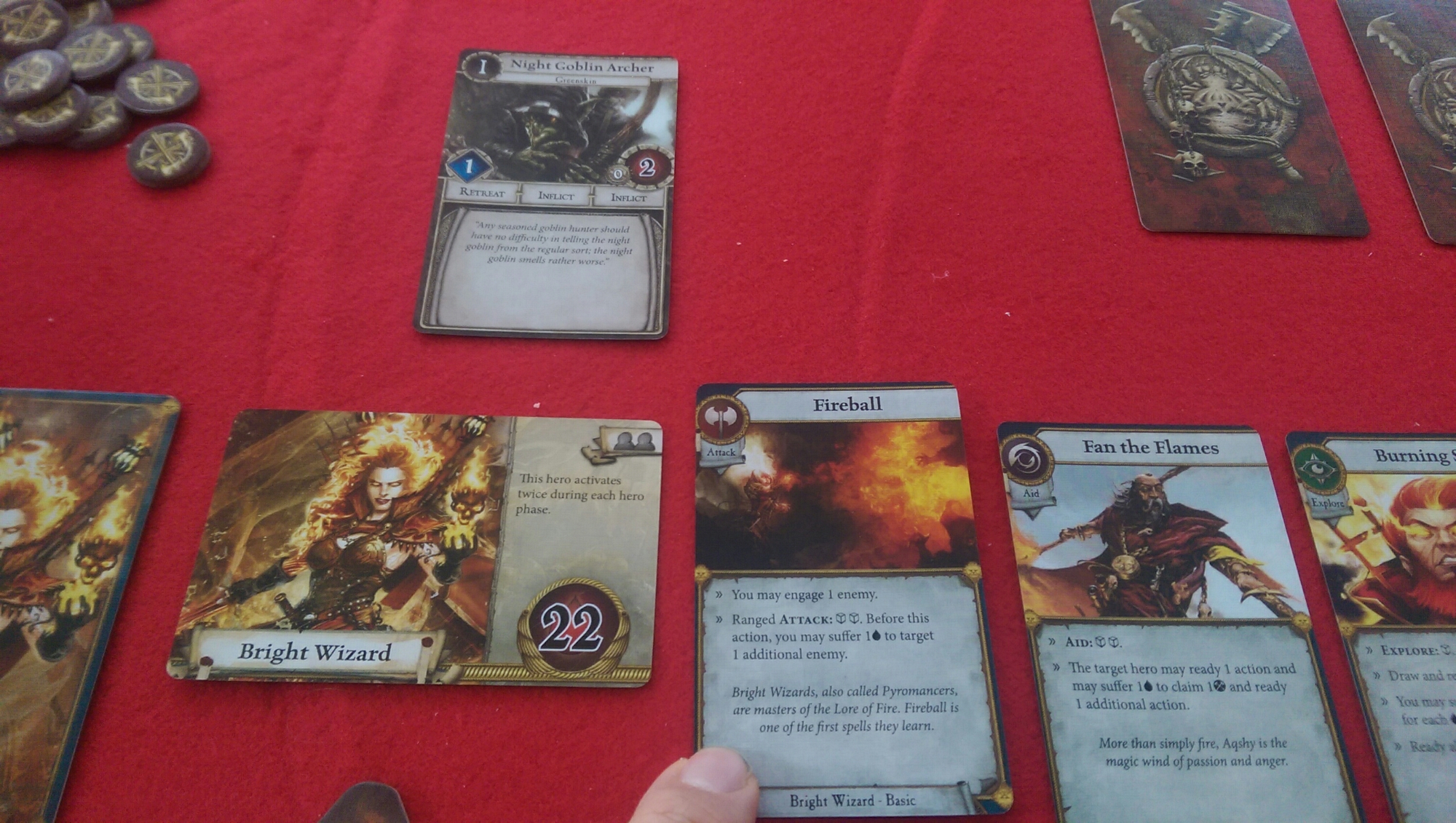
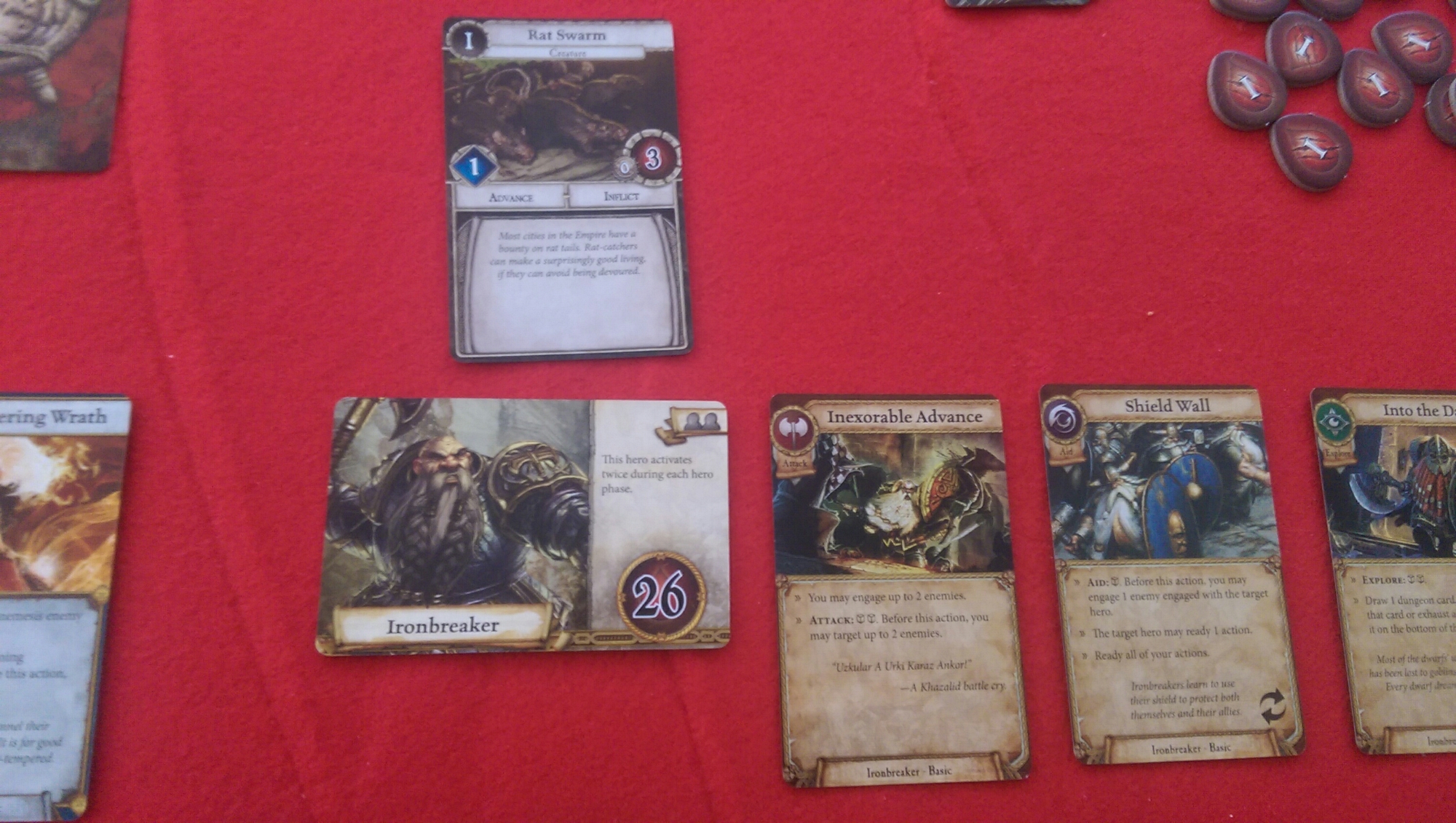
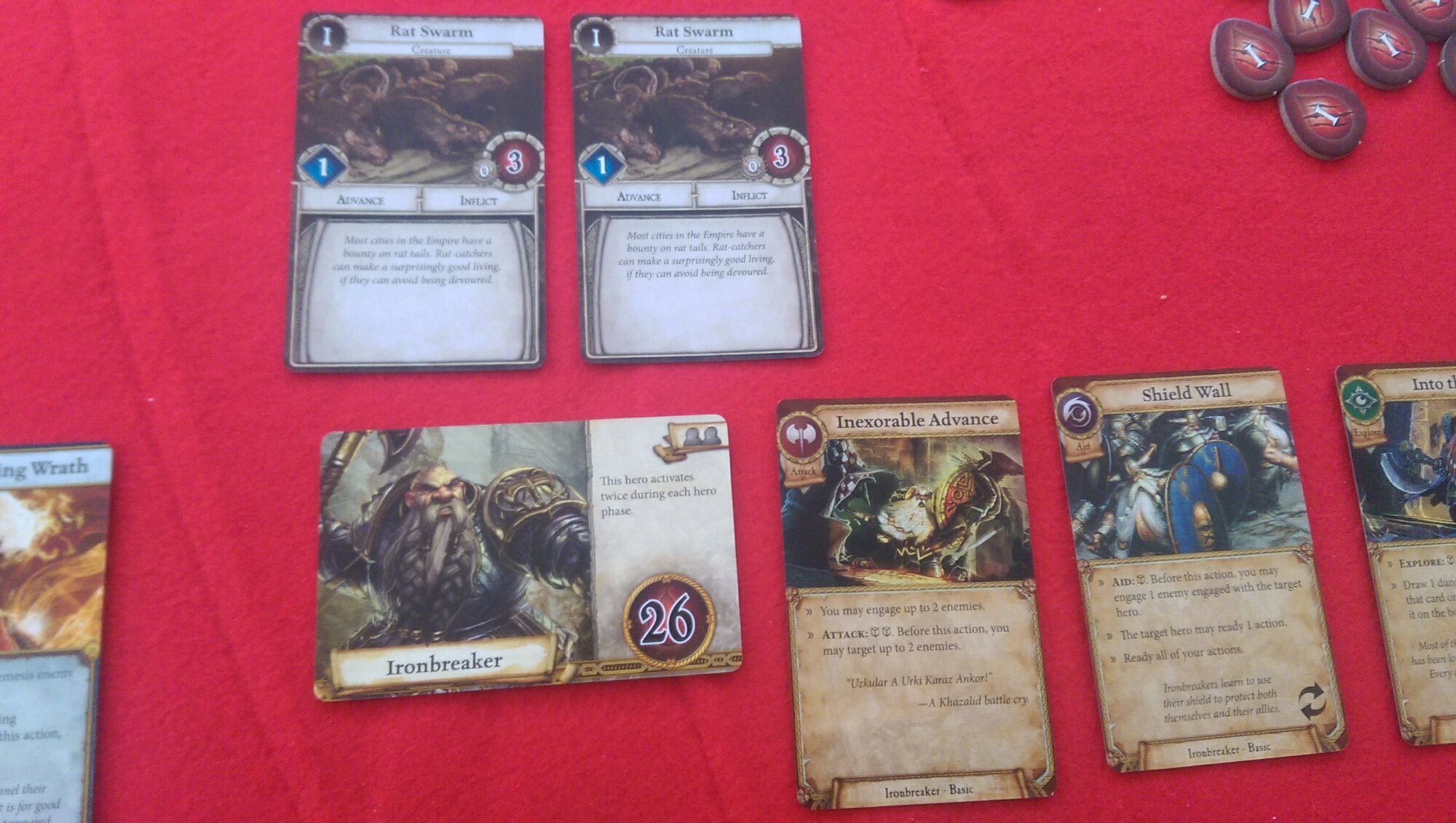
The Bright Wizard begins the Tutorial engaged in combat with a Night Goblin Archer, while the Ironbreaker has been set upon by a Rat Swarm. There are also two face-down enemies in the middle of the table, considered to be "in the shadows" for now.

image

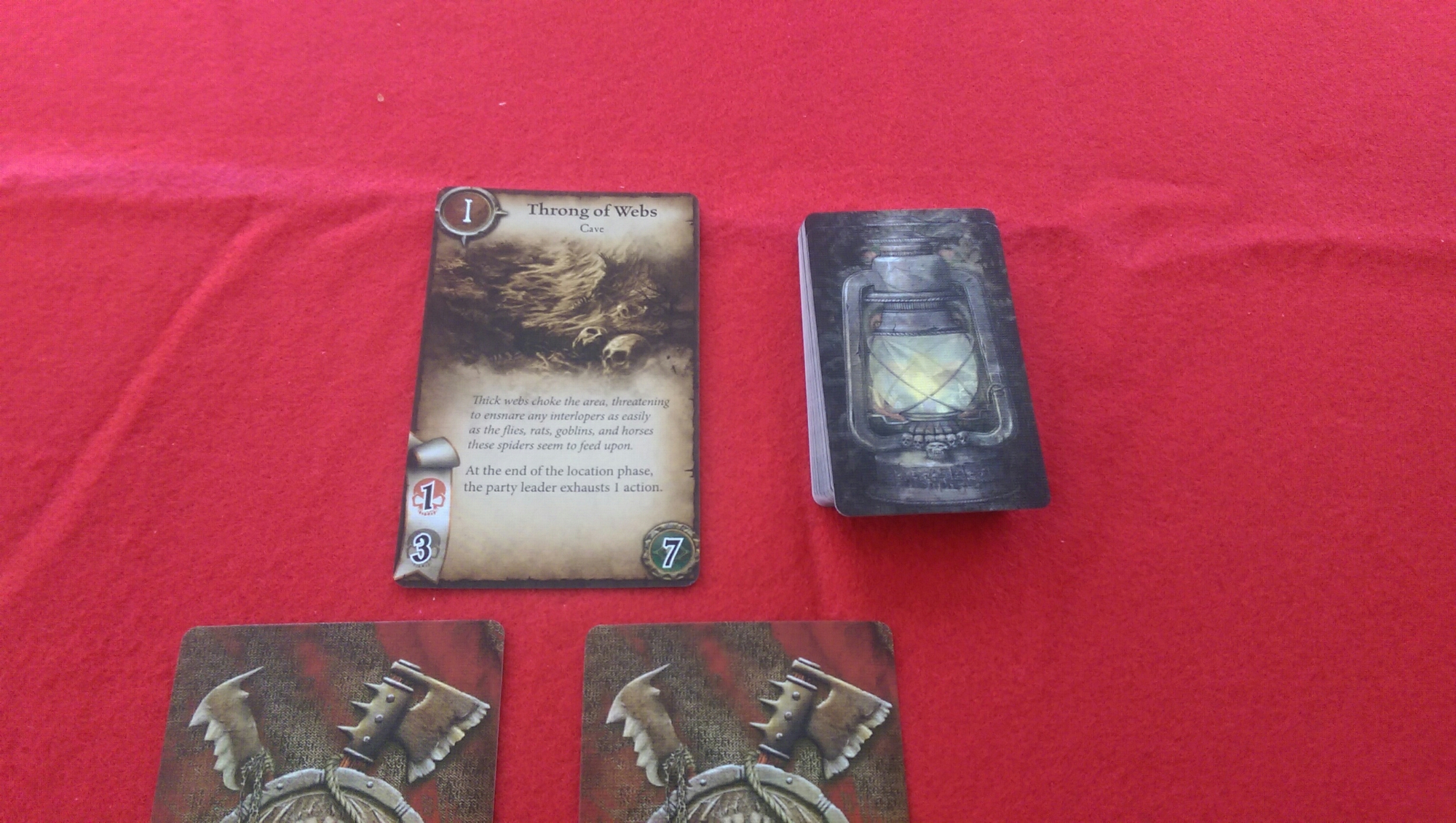
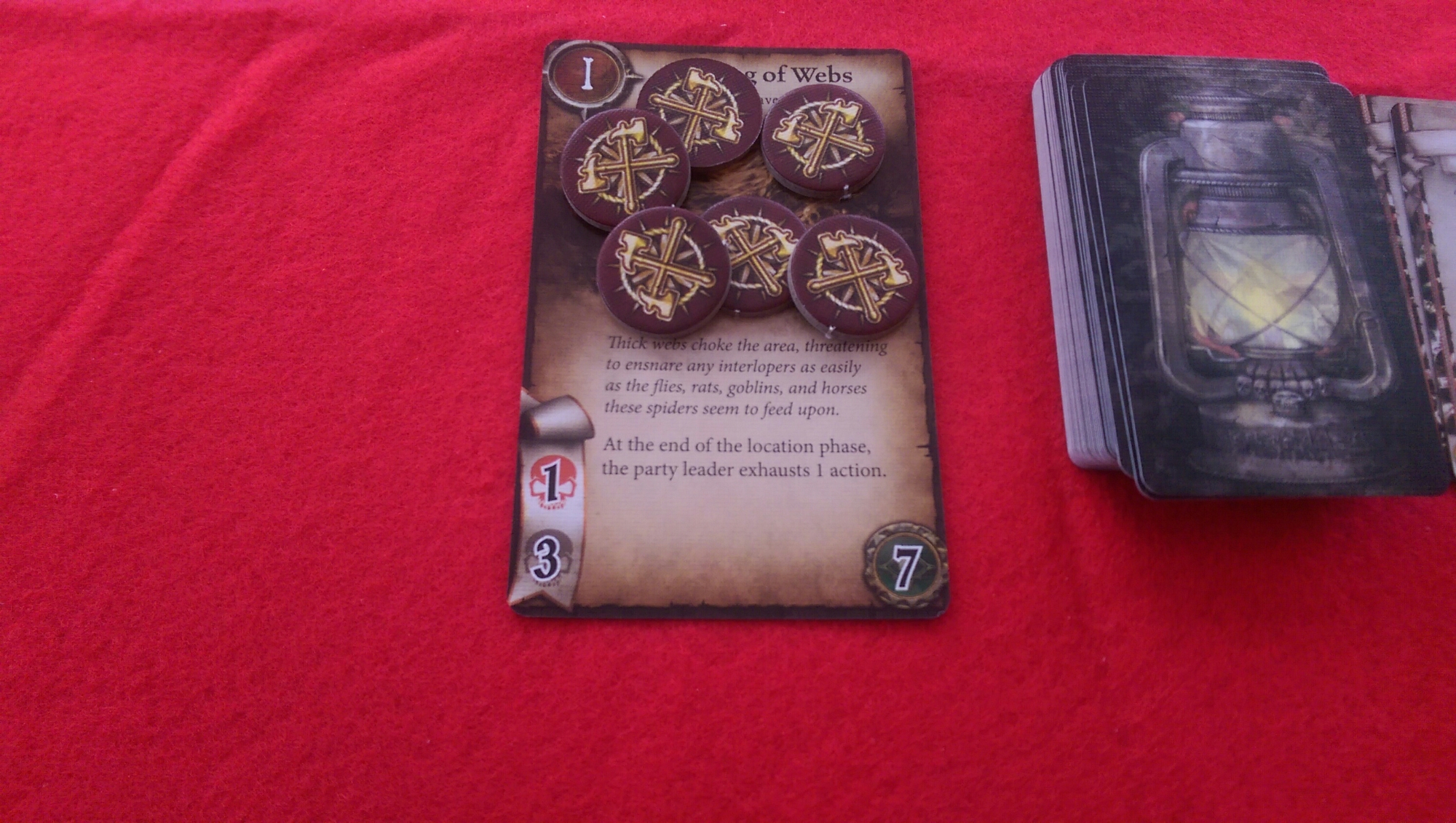
The Tutorial also specifies that we'll be exploring the Throng of Webs location for now, so this card goes in the middle of the table along with the shuffled Dungeon deck.

image

We're now ready to start. We begin with the Hero Activation phase, during which each hero activates in turn, beginning with the current Party Leader, and performs an action. The relevant card is exhausted once it is used, unless it has a Prepare symbol in the corner, in which case all action cards can be readied for the next round.

image

The Bright Wizard is first to play. Let's play her in an appropriately hot-tempered manner by immediately flinging a fireball at that pesky Night Goblin Archer in front of her.
image

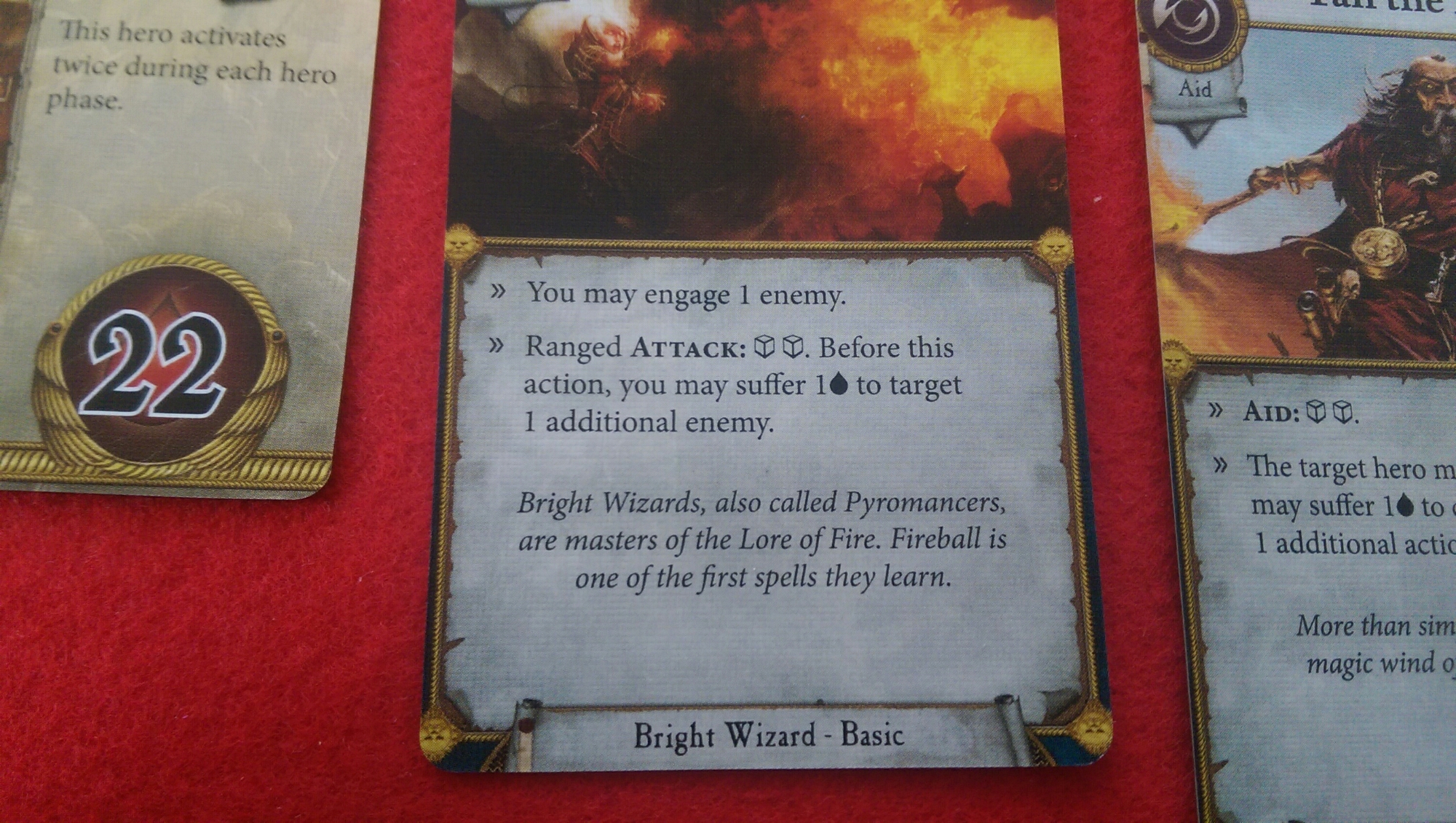
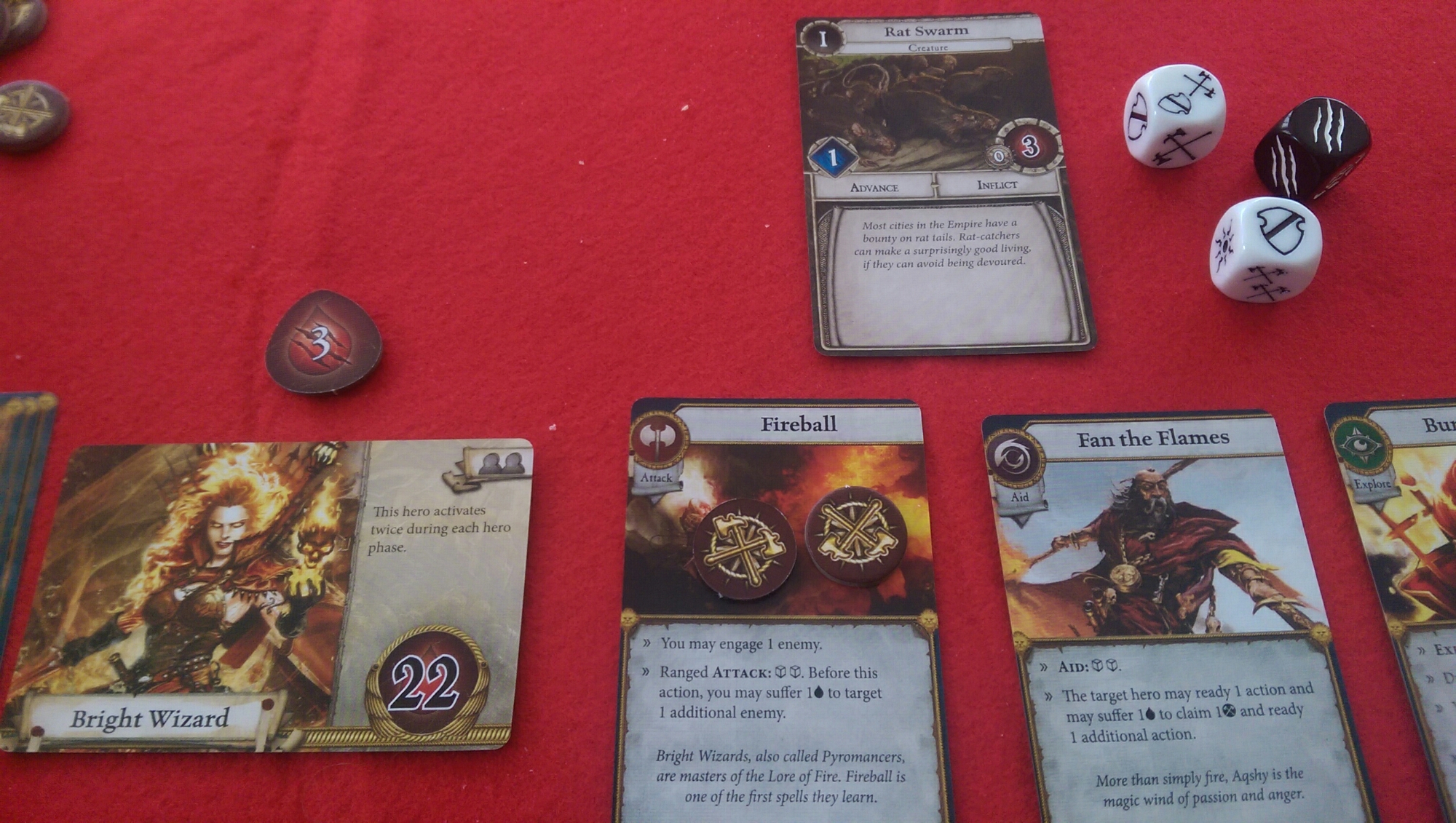
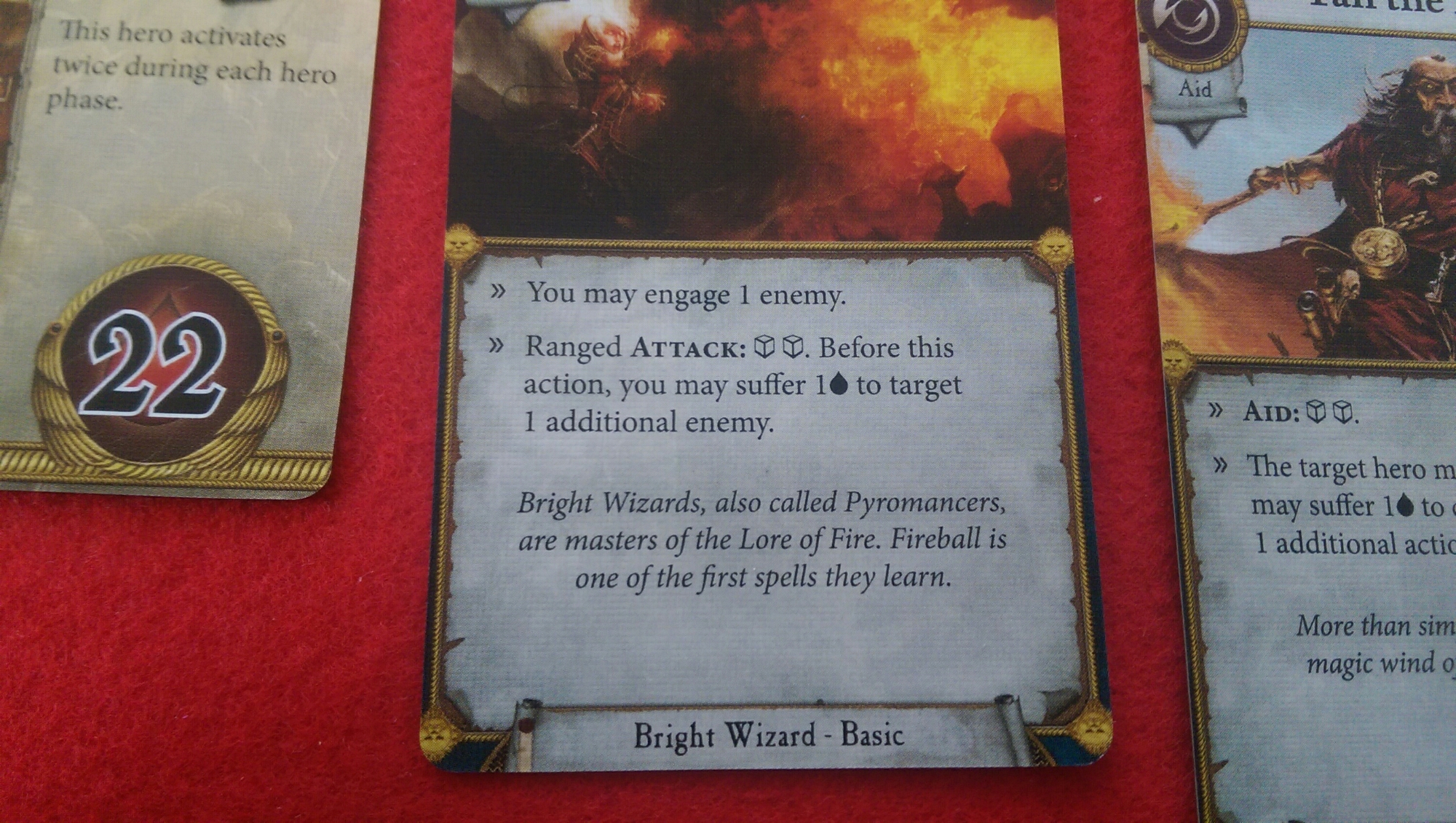
Fireball is the Bright Wizard's Attack action, and it allows her two white dice with which to attempt to deal damage. It's also a ranged attack, so she can fling fireballs at enemies in the shadows or engaged with other heroes and even target more than one enemy in exchange for taking a point of damage, but for now let's concentrate on the immediate threat.

image

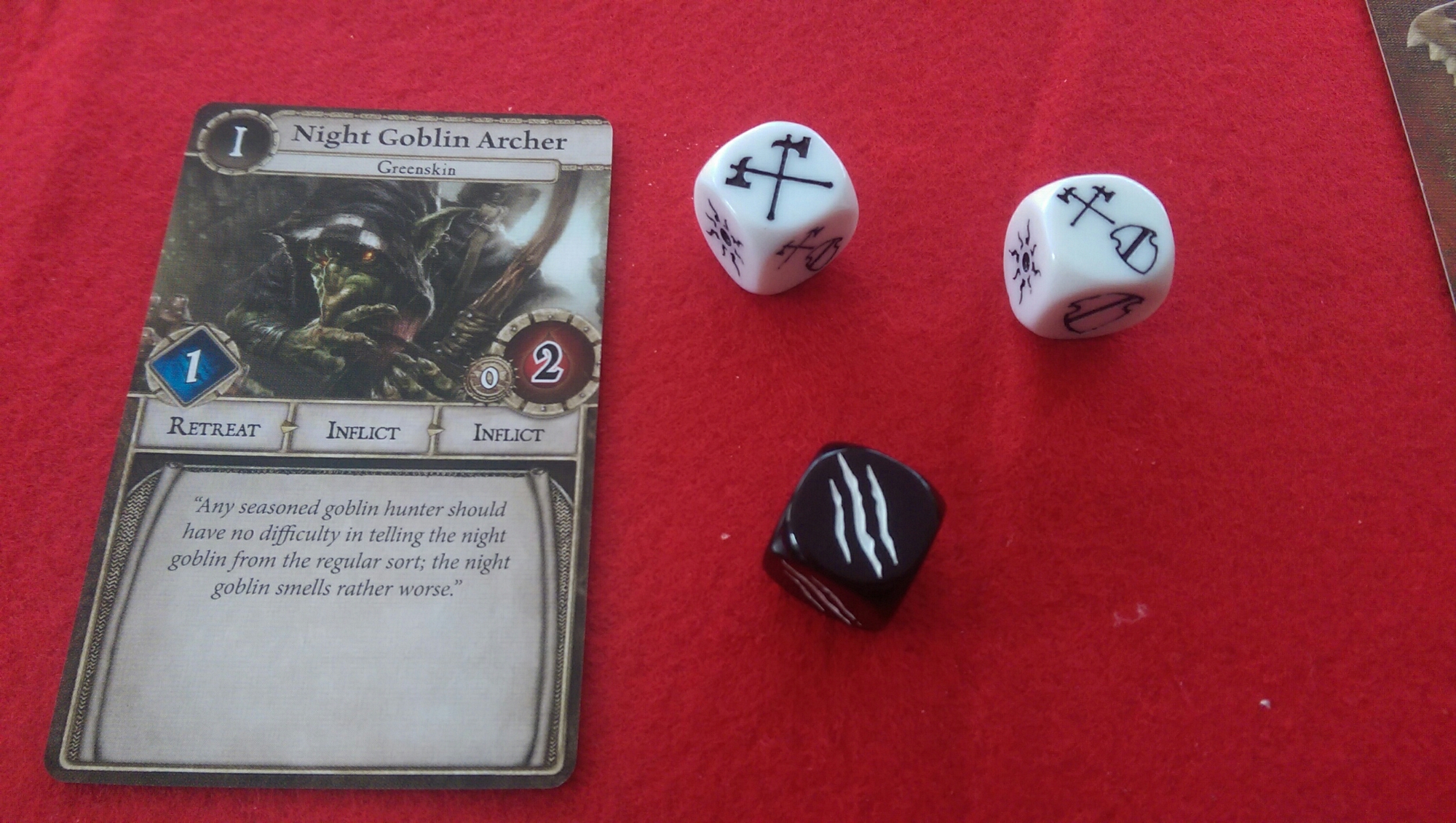
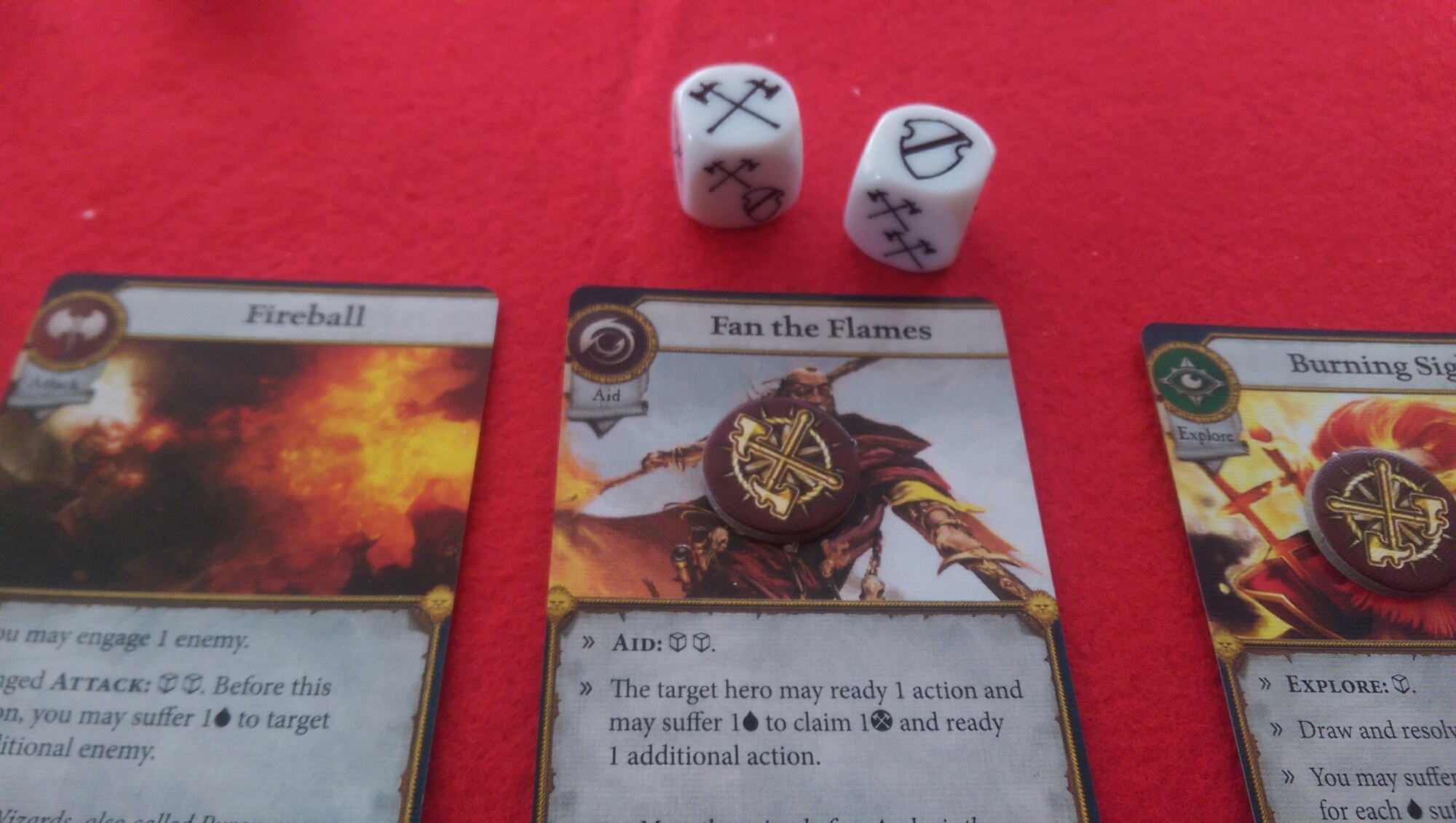
The Bright Wizard gets two white dice for her attack, and rolls against one black die because she's engaged with one enemy. She rolls two success symbols (the crossed axes) plus a defence shield, while the goblin rolls an attack for one point of damage. Since the Bright Wizard rolled a shield, she successfully defends against this damage, and since the goblin only has two hit points in the first place, she defeats it with an appropriately explosive flourish.

image

Now it's the Ironbreaker's turn. He, too, is going to attack. His attack allows him to engage up to two enemies. He's already engaged with one, but he's feeling cocky, so he also chooses to engage one of the enemies in the shadows. This flips the card face-up and places it in his engagement area in front of him.

image

It's a second Rat Swarm. They don't do much damage, but they do have 3HP each so it's unlikely either of them are going down this turn. Regardless, the intrepid Ironbreaker pushes on, rolling two white dice against two black dice.

image

He rolls one point of damage, which he applies to the enemy of his choice, and successfully defends against one incoming point of damage thanks to the two shields he rolled.

image

Now it's the Bright Wizard's turn again. Since her Fireball is exhausted, she can't use it again against the enemies engaged with the Ironbreaker or the one remaining in the shadows. She instead takes the opportunity to explore the location by rolling one white die against no black dice, since there are no enemies engaged with her right now.

image

She rolls a success, which puts the party 1/7 of the way to completing this location. She finds some Cool Waters, which allows her to recover 2HP or ready an action, but since she has taken no damage and her Explore action allows her to ready all her actions anyway, it's not much use right now. Since she's flush with life right now, she then chooses to take two points of damage to claim two success tokens and put them in her play area. These can be used next turn for two automatic successes on the Explore action if she uses it.

That's the end of the Bright Wizard's actions this round.

image

The Ironbreaker, meanwhile, is still engaged with the two Rat Swarms. He chooses to use his Stubborn Resolve ability to exhaust one enemy in front of him and automatically defend against up to two points of damage. He then gets to rest, which allows him to recover HP by rolling white dice against black dice, but since he hasn't taken any damage and there's no way for the single remaining readied Rat Swarm to do enough damage to get through that monstrous 2 defence, there's no need to roll any dice.

That's the end of all the Hero turns this round, which brings us to the enemies.

image

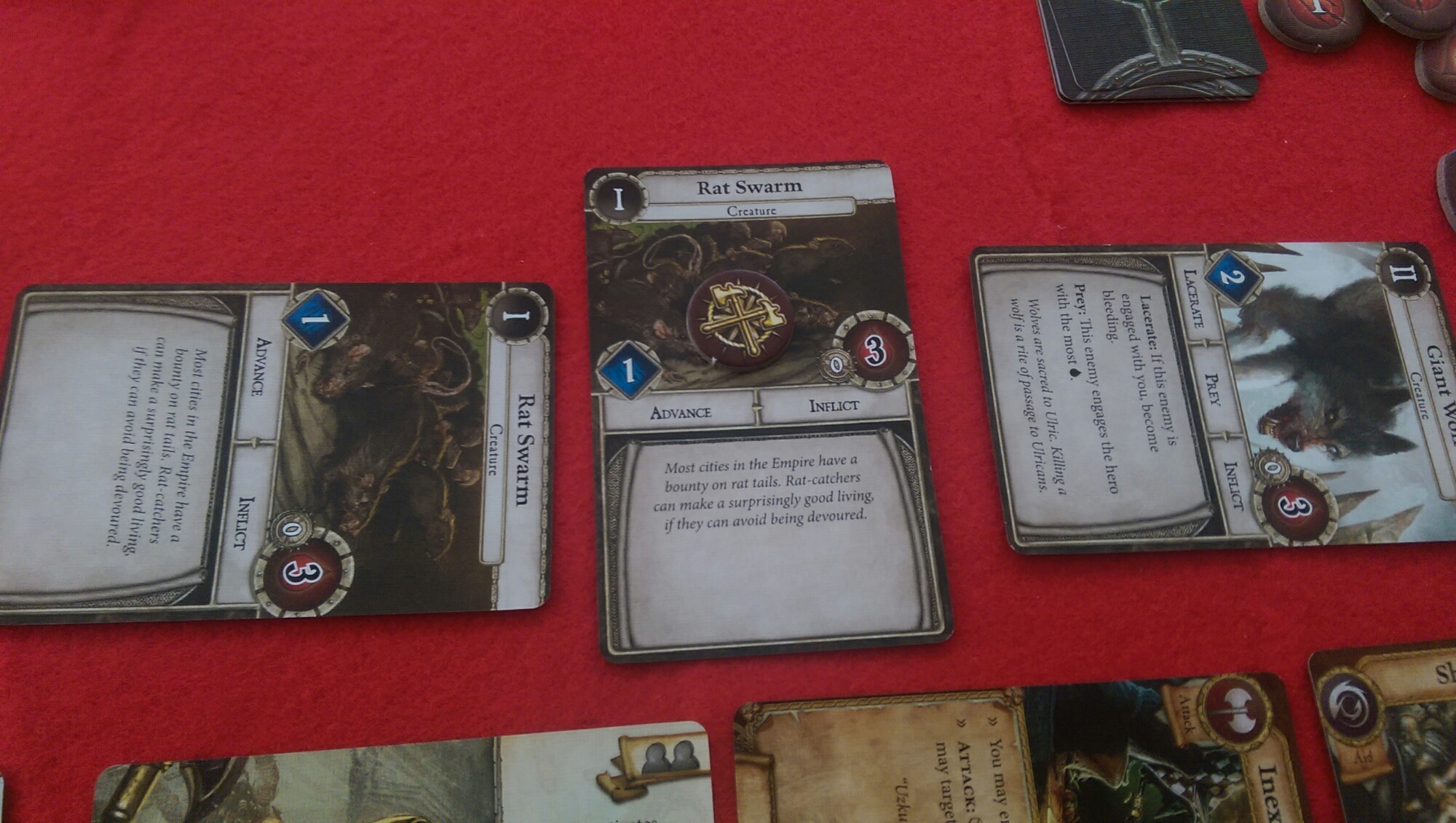
The Bright Wizard is first to activate an enemy. Since she is not engaged with any enemies right now, she must activate one of the enemies in the shadows, and since there is only one face-down enemy left in the shadows, she flips it face-up to reveal a Giant Wolf.

The Giant Wolf then resolves its three actions in turn. First is Lacerate, which causes whoever it is engaged with to be afflicted with the Bleeding status. Since it is not yet engaged with anyone, however, it does nothing.

Next, its Prey ability causes it to engage the Hero with the most HP, which is the Ironbreaker. It moves into his engagement area. Since the Ironbreaker is now engaged with the maximum three enemies, any additional engagements will simply cause him to take automatic damage, but since there are no other enemies on the table right now, that probably won't be an issue.

Finally, the Giant Wolf's Inflict ability deals two damage to the Ironbreaker. This can't be defended against. The Giant Wolf is then exhausted.

image

That leaves just the injured Rat Swarm for the Ironbreaker to activate. First it would Advance to engage the Hero activating it if it was in the shadows, but since it's already engaged with the Ironbreaker, nothing happens. It then deals another point of damage to the Ironbreaker.

At the end of the enemy phase, the Bright Wizard is on 20/22HP, while the Ironbreaker is on 23/26HP. Of the enemies, one of the Rat Swarms and the Giant Wolf are on 3/3HP, while the other Rat Swarm is on 2/3HP. All the enemies are now re-readied for the next round.

image

Before the round ends, the location's effects are resolved. In this case, the party leader (currently the Bright Wizard) must exhaust one of her four actions, though it can't be her Explore action, which has the Prepare icon on it — if this was exhausted, she would eventually be completely unable to act! She instead chooses to exhaust her Rest action Smouldering Wrath, since she's fairly hale and hearty right now.

Now the round ends, and the party leader token passes to the Ironbreaker.

image

The Ironbreaker is in a slightly sticky situation, since he's engaged with three enemies and two of his actions are exhausted. He chooses to offer his Aid to the Bright Wizard, since he has the HP to spare right now. He throws up a Shield Wall, rolling one white die against three black dice.

image

He rolls two successes, which the Bright Wizard chooses to "bank" on her Fireball action. He also rolls two attacks, causing him to take three points of damage — two from the Giant Wolf and one from one of the Rat Swarms, since higher attack value enemies are always prioritised in situations where not all enemies are attacking. He's now down to 20/26HP, but those two banked successes for the Bright Wizard will be useful.

Shield Wall also allows the Ironbreaker to re-ready all his actions, so he does so.

image

The Bright Wizard is up. She chooses to cast Fireball and engage the uninjured Rat Swarm, pulling it off the Ironbreaker. She then voluntarily takes a point of damage to target a second enemy. She then rolls two white dice against one black die.

image

She rolls one success and two defence, the latter of which allows her to shrug off the Rat Swarm's counterattack of a single point of damage. With the two banked successes from the Ironbreaker's Aid action, she has a total of three successes to assign between up to two enemies as she pleases, and since her Fireball is ranged she doesn't even have to attack the enemy she's engaged with. She chooses to assign all three points of damage to the Giant Wolf in front of the Ironbreaker, killing it instantly and levelling the playing field somewhat.

image

Next it's the Ironbreaker's turn again. Since he readied all his actions last turn, he is free to use his Attack skill Inexorable Advance. Since this allows him to engage two enemies, he pulls the Rat Swarm back off the Bright Wizard with a mind to cleaving both remaining enemies with a lucky roll. He rolls two white dice against two black dice.

image

He rolls a normal success, a critical success and an attack. The critical success counts as a normal success but also allows an additional roll of that white die.

image

Impressively, he rolls another critical success, which means another reroll. That's a total of three successes so far.

image

His final roll is a shield, allowing him to shrug off the single point of incoming damage. He assigns two of the successes to the injured Rat Swarm, killing it, while the remainder goes on the last enemy. This round is now over for the Ironbreaker.

image

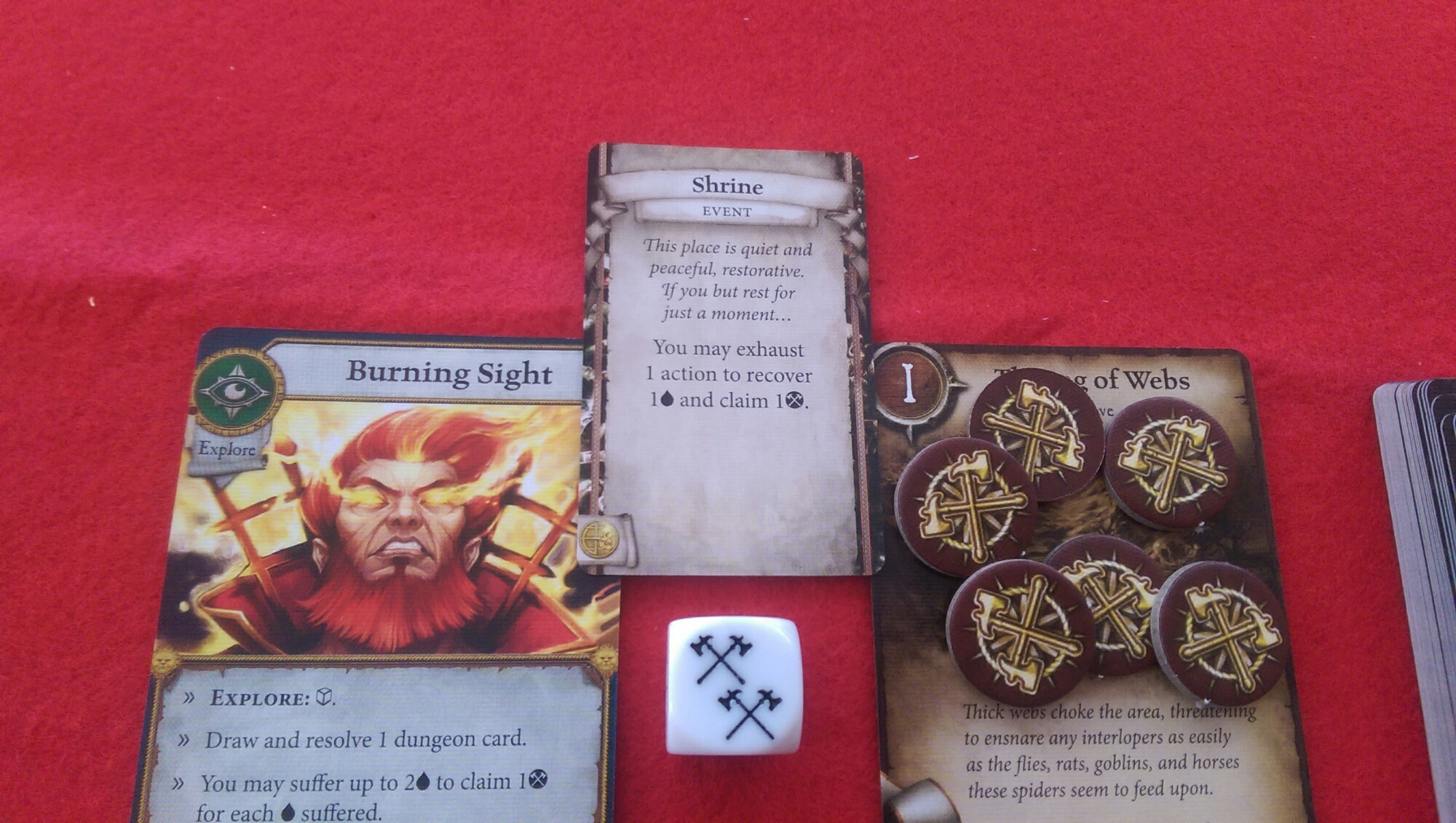
That leaves one action for the Bright Wizard. She chooses to use her Burning Sight ability to explore, using her two banked success tokens from the previous turn — these must be declared and used before rolling dice — and rolling a critical success.

image

She then rolls another two successes, bringing her to a total of five, including the banked tokens she used. This brings the overall progress on the location to 6/7. She then draws a Dungeon card.
image

The Shrine she discovers gives her the option of exhausting an action to recover 1HP and claim a success token. Since the Explore action allows her to re-ready all her actions anyway, there's no reason for her not to do this. She heals 1HP, exhausts her Aid ability Fan the Flames and banks a success token on it.

image

The Bright Wizard cannot finish the exploration this turn by burning HP, but she can bank one token for next turn. She takes the 1HP damage she just healed and claims a success token. She then re-readies all her actions, and that's the end of the Hero phase.

image

The only remaining enemy on the table is engaged with the Ironbreaker, who takes one point of damage.

image

The location effect then causes the party leader (currently the Ironbreaker) to exhaust one action dealing with sticky webbing. He chooses to exhaust his Explore action. Leadership of the party then passes to the Bright Wizard for what will probably be the final round.

image

To clear the Tutorial, the party must fully explore the Throng of Webs location (which requires just one more Explore success to do so) and defeat all the enemies. With that in mind, the Bright Wizard uses her first action to Aid the Ironbreaker for two dice plus the success token she banked earlier.

image

She rolls a success and a critical success…

image

…followed by a defence, which isn't much good right now, but three success tokens is still plenty. In fact, you can only bank up to two success tokens per card, so the Ironbreaker banks two on his Inexorable Advance card and a third on his Shield Wall card. He also readies his Into the Dark action to explore if necessary, since the Bright Wizard's Aid action allows him to ready one action.

image

The Ironbreaker uses Inexorable Advance and rolls two defence, which is more than enough to shrug off the incoming damage from the Rat Swarm. He uses his two banked success tokens from the Bright Wizard's Aid to defeat the Rat Swarm without the need for rolling further successes. Now the area is clear of enemies, which just leaves the exploration.

image

The Bright Wizard has a banked success token, so rolling the die is just a formality at this point, but she rolls a critical success anyway. That brings the location to 7/7 progress, completing it and clearing the Tutorial. Full quests would require the exploration of other locations and perhaps the completion of other objectives, but for now… victory!