2328: Play of the Game

0328_001

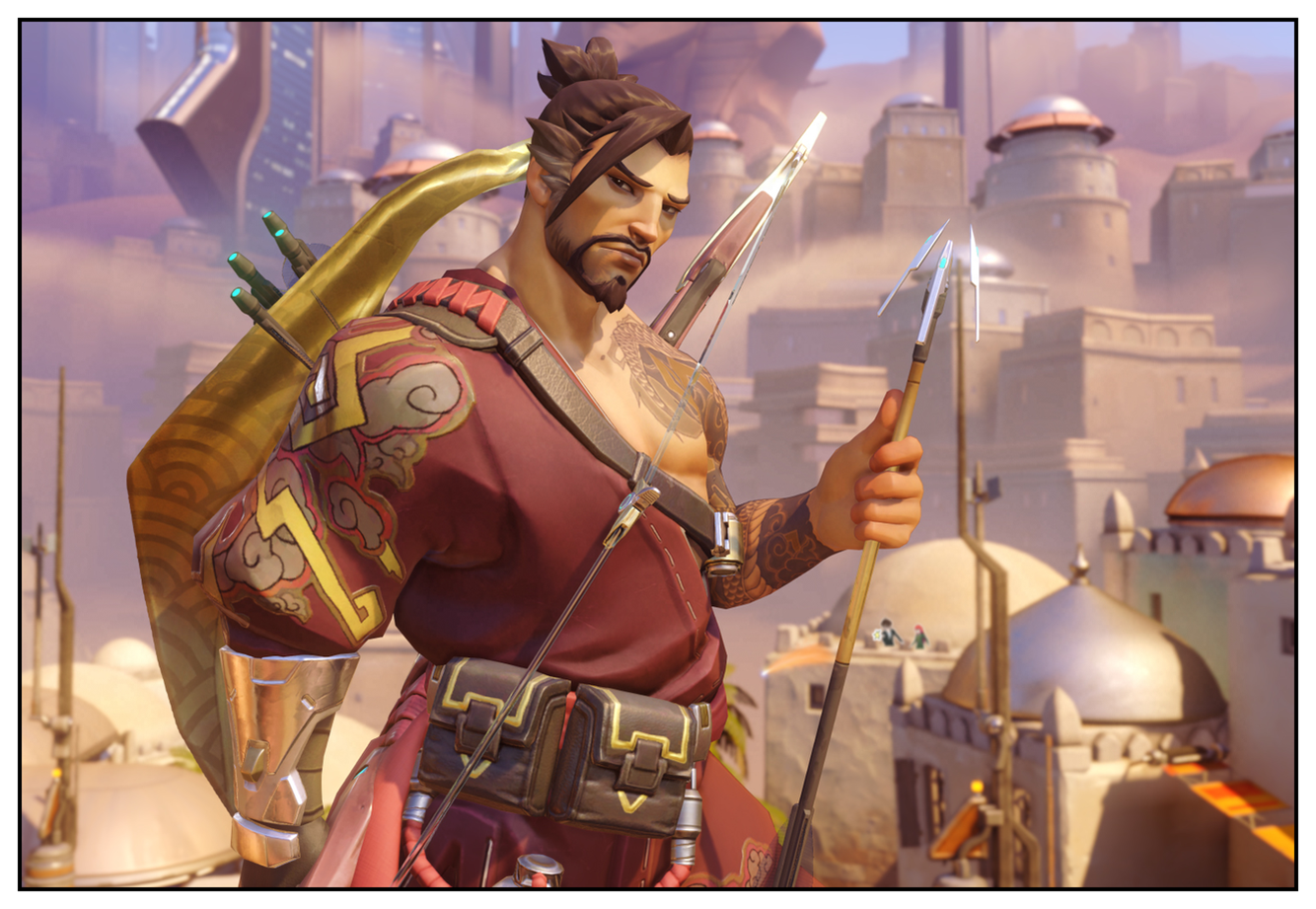
I'm really enjoying Overwatch. In fact, I'd go so far as to say I think it's the first competitive multiplayer game that I've actually wanted to "git gud" at enough to be truly competitive in the online sphere. I don't know if I actually have the skills or the talent to be able to do that, of course, but I've been performing reasonably well in the current "Quick Play" mode — effectively a "pre-season" warm-up — and getting a good feel for characters. So much so that when the proper Ranked Play mode makes an appearance in the near future, I feel confident stepping in and attempting to prove my worth.

Overwatch is also helping me to understand the appeal of e-sports. I'm still not entirely sure I would ever want to sit and watch a game of Dota 2 or something (as opposed to actually getting stuck in and playing it) but, playing Overwatch, I certainly feel something while I'm playing. It's particularly thrilling to claw back victory from the very jaws of defeat, and all of Overwatch's various game modes are well constructed to always make this a distinct possibility, meaning it's pretty rare to feel like you're being completely dominated unless your team is particularly incompetent.

It's quite entertaining to see the varying reactions of people you play against. Competitive gaming culture has, for the most part, instilled the impulse to type "gg" (Good Game) after a match has concluded — the online equivalent of a friendly handshake after a sports match — and more often than not you'll see this shorthand pleasantry being exchanged once the victor has been decided. (It's occasionally accompanied by "wp", which means "Well Played").

But there are some people out there who don't like losing. Some people like the guy who responded "no" to my "gg" after one match because he lost, and he didn't like losing. People like the guy who, in all caps, told his entire team to uninstall the game and that they were a "useless fucking team" after losing; he didn't like losing, either. And people like the guy who judged everyone on which character they picked, with sniper Widowmaker obviously being "for noobs".

Then, of course, there was the Chuckle Brothers my friend James and I encountered earlier, who starting sniping at each other in chat during the match and gradually escalated to threats to "wreck" each other. I may have prodded the fire a bit, but it was too hilarious not to troll a little bit; by the end of the match they'd both made themselves look like complete douchebags to the other participants, and one in particular (who was on the opposing team, who lost against me and my comrades) seemed to think that the fact he'd killed my character several times somehow made him superior than me and the rest of my team.

Me, I don't mind if I win or lose, because games of Overwatch are good fun, and the game is balanced well enough that I've only had one or two matches that I felt were completely imbalanced, and that was largely because the opposing side was using unconventional tactics that none of us knew how to counter. (Six Torbjorns is a force to be reckoned with… until you figure out Roadhog and Pharah.) It's a competitive game, after all, so by its very nature there has to be a winner and a loser in each and every match. If you want to win more, you practice and get better, just like anything — just like real sports. There's no sense getting angry and throwing a tantrum over it, because, more likely than not, that's just going to alienate you and make you less likely to be able to put a coherent team together — and coherent teams with good communication will always perform better at this sort of game.

I'm very interested to see how Blizzard plans to implement the ranked system into Overwatch; while I've never played Starcraft 2, I understand its online ranking system is pretty comprehensive and gives you a good idea of where you stand in relation to the rest of the community, so I'm expecting something similar here. I'm also expecting the game to have a good, long lifespan; Blizzard has a good track record of continuing to support its games over time — particularly those with multiplayer components — and with Overwatch proving as popular as it apparently has been so far (the amount of fan art out there already is insane!) I think we'll be seeing Overwatch tournaments and leagues for a good few years yet. And, for the first time, I want to be part of them.

2327: Not the Boss of Me

0327_001

It seems to be a bit of an unfashionable opinion these days, unless you're wanking over Dark Souls, but I really enjoy boss fights in video games. I have done ever since I encountered my first one: a big horrible tentacly thing that shot what looked like sperm at you at the end of the first level of Psyclapse's Menace, a not-terrible horizontally scrolling shoot 'em up on the Atari ST. (Its quasi-sequel Blood Money was better, or at least I thought it was, since I could actually complete a level in it; I never did beat that boss in Menace.)

Specifically, I enjoy boss fights that revolve around learning a boss's attack patterns, how to avoid or counter them and when are the openings you should use to launch your own attack. Conversely I tend to dislike boss fights where you're just up against a bullet-sponge enemy and they're either acting completely randomly or according to more unpredictable AI. I don't want them to act like a human opponent, in other words; if I want to fight something like a human opponent, I can just play a multiplayer game and fight actual human opponents.

Thankfully, it seems a lot of game designers out there feel the same way as I do, or at least enjoy designing encounters of this type. Final Fantasy XIV, for example, is full of bosses where you need to learn the mechanics, where to stand and what to do at all points in the fight, particularly in high-level challenges that require you to be on top of your game. Your average bullet hell shoot 'em up, too, tends to have bosses with predictable patterns that are as much about avoiding veritable hailstorms of bullets as they are about dealing damage to your opponent.

What I'm discovering with my first foray into the Ys series is that Ys has fantastic bosses. I would perhaps exclude Ys I from that description, owing to the fact that its bosses — particularly its final boss — are a bit rubbish, but from Ys II onwards, Ys bosses are exactly the sort of thing I really enjoy.

I'm currently playing through Ys Origin, which seems to be one of the more well-regarded recent installments in the series. Tonight I fought a boss which took a good four or five attempts to master, and I really enjoyed it; I didn't feel frustrated at any point, even when I failed, because I felt like I was learning something with each new attempt rather than just hoping my luck would be a little better.

The boss in question was "The Construct", who is a big giant mechanical beastie that lives in a lava pit. In the first phase of your fight with him, he has a couple of different attacks: pulling back one of his fists to slam it down a moment later on the platform you're standing on (which can be avoided by running away from the fist he pulls back), extending both his arms and spinning around (which can be avoided by a well-timed jump) and summoning a string of lasers from the ceiling (which can be avoided by moving out of the shining circle that appears on the ground a moment before the laser actually fires). The first phase essentially requires you to knock both of his hands off when he slams his fist down on the platform: avoid the slam itself, then dash back in and hit him in the mechanical wrist until his hand falls off.

Once you've done this, he then starts a different attack pattern: alternating between lurching forwards and biting the platform you're on (which knocks you back into the lava if you don't jump out of the way and avoid the shockwave this causes) and vomiting up an annoying little flamey creature which gets in your way and chips away at your health if you don't deal with it quickly. In this phase, you actually get to cause some damage to the boss's life bar by hitting him in the gem on his forehead when he bites the platform.

Following this, the process repeats, but harder; knock his hands off when he slams his fists down again, but this time there are bits of the platform missing you'll have to jump over when avoiding his various attacks. Then smack his forehead around a bit. Then the final phase adds an entertaining attack where he sweeps his hand slowly around the platform, knocking its sections into the lava as he does so, requiring you to run for dear life around the platform until he tires of this particular activity and returns to trying to turn you into a nice pâté.

I enjoyed this boss fight because at no point did I feel like it was patronising me, but at the same time I was able to figure out what I was supposed to do without resorting to guides and walkthroughs. It was an excellent piece of solid, enjoyable game design, and a potent reminder that sometimes the most technologically advanced ways of doing things with artificial intelligence and the like aren't necessarily the best.

2326: Purpose

0326_001

In response to the WordPress Daily Post prompt for June 2, 2016.

Purpose is, I am told, that little thing that lights a fire under your arse. Trouble is, finding one's purpose and then being able to actually, you know, follow it somewhere constructive is a bit harder than just lighting a match beneath your hairy, sweaty ringpiece and hoping for the best.

I don't think I've found my purpose yet. This is probably self-evident to those of you who have either been following this blog for a while or who know me in real life. It's not through lack of trying, mind you — I've tried all manner of different things, but none of them seem to have quite worked out in a way that is any way satisfactory. I've either found myself realising that no, I don't really want to do that thing after all — or in the few cases where I've found myself actually enjoying something that I'm doing, I find the opportunity snatched away from me through circumstances entirely beyond my control.

The closest thing I feel I have to any sort of purpose is to write. About what? I don't know. Games obviously spring to mind, as I do a lot of writing about those from various perspectives, and indeed one of the writing projects I'm finding most enjoyable at the moment is the production of in-depth studies of games over on the sister site to this blog, MoeGamer. I'm currently into my third month of producing work of this type, and I've even managed to attract a few people to my Patreon to support me financially in appreciation for my writing, which is nice. Not enough to live on, by any means, but a bit of pocket money each month, if nothing else.

What else do I feel qualified to write about? Music is another thing; music may not be as much of a focus in my life as it was when I was at school, but it will always be a big part of who I am, and I feel pretty confident both talking and writing about music — and indeed teaching it.

On the subject of music, I have a curious (and probably not all that interesting) anecdote to share. I tend to find that my subconscious often reflects things that are at the back of my mind or causing me anxiety through my dreams, and one recurring dream I seem to have is that I'm back at my old school, I know that there are orchestra and concert band rehearsals going on — these are both groups that I was a member of throughout my entire time at school — but I deliberately choose not to attend them, nor to participate in the regular school concerts. In the dreams, I often run into my old music teacher Mr Murrall, one of my absolute favourite teachers in the whole school, and he's extremely disappointed in me for not attending. Perhaps this is some sort of subconscious signal that I should try and do more with my music once again — question is, what?

That annoying question "what?" is the thing that I feel holds me back most from finding a purpose. Whenever I look for a job, I get hung up on what I should be looking for. Whenever I consider offering private services such as music teaching, I wonder what I should be charging and offering. Whenever I consider training myself up in a new field to try and find a new career, I stall on what I should be studying. What, what, what.

What should I do? I don't know. But hopefully the answer will come to me at some point, otherwise I'll just find myself staggering into middle- and old age feeling like I've not really accomplished anything along the way. And that's not a prospect I'm particularly happy about.

2325: Science Club

0325_001

I've never thought of myself as particularly "scientifically minded" — I always felt like I hated maths at school, although thinking about it I did end up doing reasonably well at it at GCSE level, and I did actually genuinely enjoy science lessons — but in the last few years in particular I've found myself very interested in TV shows that deal with scientific principles, preferably in an entertaining sort of way.

There are a few shows I have in mind for this sort of thing which if you, like me, are interested in generic sciencey things but perhaps don't have the opportunity to study them as a career (or as a hobby), you might want to check out.

First up is Brainiac, which I'm pretty sure I've talked about on these pages before. Brainiac is a show that aired on satellite channel Sky One between 2003 and 2008. Featuring Richard Hammond (best known for Top Gear and Total Wipeout) in the presenter's chair, sternly reminding viewers Not To Try This At Home, the show was designed to be "science entertainment" in that it set up all manner of experiments with genuine scientific principles in mind, but executed them with a fair degree of tongue in cheek. This made it both genuinely interesting and informative to watch as well as being something you could just chill out in front of and have a good laugh with. Despite having watched most of the episodes several times, I happily return to it every so often; it's a pity it's not on a service like Netflix for some better quality videos — I have to rely on dodgy downloads or YouTube at present.

Next up is Mythbusters, an American show which takes nuggets of popular wisdom and puts them to the test in various ways. The show's hosts have a background in special effects, so they often make use of this knowledge to perform their experiments in unnecessarily spectacular ways. It takes a little while to get into the show's groove if you're not accustomed to the hosts' rather dry, deadpan sense of humour, but it's very entertaining and, again, informative if you pay attention to the science bits.

Finally is my most recent discovery, Dara O'Briain's Science Club. O'Briain is primarily known as a comedian and host of topical panel show Mock the Week, but over the last few years he's been spreading his wings a bit and taking on subjects such as mathematics and now science. He's clearly a clever man, and he has some even cleverer friends who come out to play for Science Club. Each show focuses on a specific topic and explores it in detail, and the topics under the microscope (sorry) range from the human brain to the possibility of space travel and Mars colonisation. The show incorporates experiments, "live" studies involving the studio audience, documentary-style footage and layman's explanations of complicated scientific concepts. It's an extremely compelling show, and it's probably a mistake for Andie and I to watch it when we're trying to get to sleep, because it's the kind of show you want to pay attention to!

And on that note, I'm off to bed to learn some science and perhaps, maybe, get some sleep.

2324: A Portal to Quality Filth

0324_001

One of the things the video games industry has had trouble with over the years is the issue of "adult" games. I'm not talking about M-rated violence-fests — those are seemingly fine. I'm talking primarily about those that contain explicit sexual content and/or themes a little more ambitious than you might find in your typical focus-grouped commercial blockbuster.

The stigma attached to adult games is largely due to retailer concerns. Specifically, retailers like Wal*Mart and Target in America have historically refused to stock games that have an AO (Adults Only) rating from the ESRB (Entertainment Software Ratings Board), despite the AO rating existing and making it abundantly clear that the title is absolutely not for children. The situation is almost certainly the same in Europe when it comes to PEGI (Pan European Game Information) ratings, with the added awkwardness that different individual European countries have different rules on what is regarded as "decent". Germany, for example, has less of a problem with pornography than some other countries, but is very strict on depictions of violence, with many high-profile triple-A games either not making it to Germany at all or being gutted (no pun intended) of violent content in the process.

In other words, making an AO game would historically have been commercial suicide for a publisher trying to make money from their product. After all, if you can't get stock on the shelves of popular retailers, your avenues for selling your product are inherently more limited, and when it comes to big budget titles, you need every sales channel you can get.

But now we live in the age of the Internet, of course, and brick-and-mortar retailers are less relevant to our buying habits. It's still nice to be able to go into a shop, pick up a product and walk out with it (having paid for it, obviously) immediately, but a significant number of people now err in favour of the lower prices offered by online stores. And when it comes to computer and video games, the rise of high-speed broadband and high-capacity hard drives has made games with no physical component whatsoever a prominent part of the digital landscape. In fact, the ability for software to be released as digital-only has allowed more developers and publishers than ever before to be able to bring their products to market — without overheads such as duplication and distribution, developers can focus all their time on their product and, subsequently, promoting their product rather than boring logistics stuff.

And yet we're still stuck with the stigma over AO games. Console manufacturers won't allow AO games on their platforms' storefronts — presumably because it would be all too easy for minors to circumvent any sort of age gate technology and buy porn on Mummy's credit card (suggesting that they should perhaps think about stepping their age gate game up) — and Steam, while allowing a couple of games with boobs in to be sold on the platform, still seemingly stops short of allowing outright porn/hentai games to be sold. (There is, of course, a whole argument about why it's okay for The Witcher to have fairly explicit porking in it, yet the slightest hint of an anime titty gets the big red cross, but we won't get into that now; nor will we get into the "double standard" argument re: violence vs. sexual content.)

This has meant that until now, AO games have typically been sold direct or through specialist distributors. J-List, for example, sells AO visual novels in both physical and digital format from its own publishing arm JAST USA as well as third-party localisation companies like MangaGamer. MangaGamer also sell their own products on their own website. Localisation powerhouse Sekai Project, meanwhile, have their dirty little not-so-secret arm Denpasoft to sell their AO titles (or AO versions of titles that get a wider, edited release for platforms like Steam). It's good that we have all these places to buy AO titles, but until now there hasn't been a unified Steam-esque platform for them.

There still isn't quite that, but what Nutaku (very NSFW link!) is building is a step in the right direction. Nutaku, for the unfamiliar, is a website that sprang up relatively recently and provided adult browser games — typically the sort of gacha-driven free-to-play fare that you'd get on mobile phones, only with more porn. More recently, however, they've decided to launch a digital distribution platform for a variety of AO titles — primarily visual novels, as they tend to be — in collaboration with the popular publishers I've mentioned above.

This is a big deal. A centralised place for AO games to be distributed and for players to build up a library is a great thing, and helps deal with the inherent fragmentation of the market we've had up until now with everyone only distributing their own stuff (with the exception of J-List selling physical copies of some MangaGamer titles). While Nutaku's implementation of its storefront currently leaves a little to be desired — you have to buy games with the "Nutaku Coins" premium currency that is also used in their free to play browser games, and you can only purchase this in bundles rather than the exact amount you need to buy a game — it's very much a step in the right direction, and a system that is hopefully going to allow AO games to thrive in the online market. Perhaps it will even inspire some competitors to come along, or for services like Steam to have an age-gated 18+ section.

And it's started strong; some well-regarded titles such as the 18+ version of Princess Evangile are available on Nutaku's platform, and Sekai Project has even released the 18+ version of Sakura Dungeon first on Nutaku — even before the all-ages version hits Steam or the 18+ version releases on its own Denpasoft store. Let's hope it keeps up this momentum — and if you want some quality filth, be sure to support what they're doing.

2323: Gateway Games

0323_001

There's a good piece in the latest newsletter from Glixel, the upcoming new website that my brother's working on in collaboration with the folks at Rolling Stone. The article focuses on Blizzard's approach to game design, and how they rarely do anything completely new, and instead take an established formula that is often regarded as impenetrably complex or difficult to get into (especially once a community has been established) and make it accessible to the masses.

This isn't a matter of "dumbing down", though. No, it's rather intelligent game design: it strips out the complicated things that more "hardcore" games have in them as a means for players to show their skills, and instead focuses on the core experience, creating an "easy to learn, hard to master" kind of situation.

The most recent example of this is, of course, Overwatch, which takes the basic formula set in something like Team Fortress 2, strips out all the complicated bits that have been bolted on to that game over the years, and makes an enjoyably easy to get into but tactically rich multiplayer shooter that pretty much anyone can enjoy. But Blizzard's past work fits this mould, too, with perhaps their most famous work being World of Warcraft, which successfully made massively multiplayer online RPGs — traditionally not particularly user-friendly experiences — accessible and enjoyable to the masses.

It's not just Blizzard that does this, of course. There's great value in producing solid "gateway games" to particular genres, as they provide a means for people to learn about potentially new favourite styles of game without getting bogged down in complicated rulesets and techniques. Hopping genres from multiplayer shooters to dungeon crawler RPGs, Experience Inc's Demon Gaze provided an excellent jumping-on point for me to learn how these traditionally challenging, complex games worked, and built up my confidence to tackle the significantly more complicated, difficult and long Dungeon Travelers 2. Elsewhere, Codemasters' GRID series strikes an excellent balance between arcade-style handling and the greater realism of more "sim"-like racing games such as Gran Turismo and the early Forza games. Cave's Deathsmiles is a good introduction to bullet hell shooters. Dead or Alive 5 is a good game to learn about one-on-one fighting games, particularly with its excellent tutorials and practice modes.

Board games do this, too. Some of the most popular and well-respected board games out there are "gateway games" to more complex experiences. Ticket to Ride, for example, teaches players about dice-free mechanics, set collecting and strategic unit placement without overcomplicating things with unnecessary rules. The Settlers of Catan is a great introduction to "building" games where you have to manage resources in order to construct various things. And deckbuilding games like Ascension and Star Realms can lead naturally into more customisable card games such as Android: Netrunner, Magic: The Gathering and suchlike.

Some people never move beyond these gateway experiences, and that's absolutely fine. To be perfectly honest, I think I'm most comfortable with the simpler end of the spectrum when it comes to board games in particular, and I'm definitely digging the simplicity of Overwatch, as recent posts have doubtless made clear. What's important about these experiences, though, is that they're inclusive, allowing more people to enjoy hobbies traditionally thought as complex and difficult to get into than ever before. And having more people to play with is pretty much always a very good thing indeed.

2322: Lore of the Land

0322_001

(This should have posted yesterday but didn't, for some reason. Apologies!)

I love lore. I absolutely love it when something I'm enjoying has that feeling that the entire world in which it's set has been thought out and planned, even if 90% of the material is never seen within the work itself.

This is particularly brought to mind at the moment due to Overwatch, which has some absolutely fantastic superhero-style backstories for all its characters, with Pixar-quality animated shorts and comics putting a significant number of the characters in a lot more context than the game itself offers.

But there are some other particularly good examples I've experienced over the years, too.

One that springs to mind immediately is the visual novel-cum-strategy RPG hybrid Aselia the Eternal, which has some extraordinarily detailed writing throughout that means even though you never get to "explore" the world freely, you have a very strong sense of time, place and social norms. In the early hours of the game, you even start to get a feel for this strange other world's unique language — and indeed, for a significant portion of the game, the voice acting is not in Japanese, but rather in this fictional language.

Another good example is the Senran Kagura series, which always has the strong feeling that there is a lot going on outside the stories of the central characters the games focus on. I predict that as the series continues to grow over time, we'll start to see more and more of the broader context in which these young shinobi girls are fighting — we've already finally started confronting the terrifying youma in Senran Kagura 2: Deep Crimson.

And then, of course, there's Final Fantasy XIV, which has lore so detailed that they have a staffer specifically hired to ensure that the lore stays consistent and can be explained in great detail to those who want to know more. Indeed, the Lore subsection of the official Final Fantasy XIV forums is one of the most interesting parts of the website, as it includes all manner of things about the game you may not have otherwise seen unless you specifically went looking for it.

Lore also leads to people coming up with their own theories about what is going on. I enjoy doing this myself and indeed have indulged in it publicly on occasion, but I also really love reading other people's thoughts on things. I remember reading an extraordinarily detailed account of the metaphorical depictions throughout the Silent Hill series, for example, and being absolutely enraptured.

For me, lore makes things better. It gives things meaning and context. It can even give things that seem to have no real "story" as such — Overwatch is a good example, being a multiplayer shooter — a sense of narrative. And for me, in games at least, it's often the difference between a game feeling like a cynical "product" or clearly coming across as a creative work of art, filled with the passion of its designers.

So more lore, please. And, on a side note, familiarising myself with much of the Overwatch lore over the last evening has made me very interested to see how Blizzard plans to develop the game over time.

2321: Treading the Boards

0321_001

Watching popular British topical panel show Mock the Week, which has an inexplicably large number of episodes available on Netflix — peculiar to me due to the topical, timely nature of it, not because of any particular lack of quality — reminds me somewhat of one of my favourite activities at university: participating in the university Theatre Group.

We did all manner of things as part of the Theatre Group. We put on plays, of which I was in several, including Macbeth (which we rather edgily revamped to make it look like The Matrix, like no-one had ever done that before), Ivan Turgenev's A Month in the Country (which we took to Edinburgh, only to discover that the Edinburgh Fringe audience wasn't as receptive to tragic Russian love stories as we would have liked) and Alan Ayckbourn's Round and Round the Garden from the Norman Conquests cycle (which we also took to Edinburgh and discovered that the Edinburgh Fringe audience was a lot more receptive to Alan Ayckbourn).

I also directed an entertainingly chaotic production of Twelfth Night after my co-director sent me an email one morning informing me that she would be late back to university at the start of the spring term because she'd decided to go skiing, and would I mind awfully directing the show by myself because she didn't want to? (That production gave me more nosebleeds than I've ever had in my life, but it was one of the most memorable experiences of my university career, in a good way.

We also threw great parties, usually (but not always) after a production, and had a regular night out at local grotty (but cheap) club Kaos. But the thing that I miss the most, I think — and the thing I'm reminded of when watching shows like Mock the Week and Whose Line is it Anyway? — is the regular improvisation sessions we had just prior to the regular nights out at local grotty (but cheap) club Kaos.

The improvisation sessions grew out of the warm-up activities that had become a Theatre Group tradition when starting rehearsals. These tended to be simple but fun activities that could double as drinking games in a pinch, but were often also designed to get our minds warmed up as well as our bodies and voices, and so quite often incorporated improvisation of various types.

Theatrical improvisation games are a lot of fun if you let yourself get drawn into the experience. This is something I always enjoyed about acting ever since secondary school Drama lessons: getting swept up in a role and feeling like you really were, just for a moment, someone else. And in improvisation you're not confined by a script: you can take things to some very strange places indeed.

In fact, these improvisations eventually grew into a semi-regular improvisation-based show that the Theatre Group put on called Count Rompula's Showcase. When you showed up to a Count Rompula's, you never quite knew what you were going to get. On one particularly memorable occasion, the audience was subjected to The Web of Dan, a rather avant-garde piece that the eponymous Dan and some of his friends had joked about in rehearsals for other shows. I wasn't directly involved with this eventual production, though I was at least present for the genesis of the idea in the rehearsals.

I miss those days a great deal. I'm occasionally reminded of them when we play Final Fantasy XIV, usually on patch day, and devolve into a series of cringeworthy puns based on the environment and enemies we're fighting in a new dungeon. (The introduction of the icy dungeon Snowcloak was particularly good for this, as you can imagine.) But nothing will quite match the magic of those days when we sat in a circle, miming the action the previous person had said while saying a completely different action we wanted the next person to perform. Or performing scenes based on silly props. Or, indeed, playing Deutsche Erotika, which sadly is not quite as entertaining as its name might suggest.

2320: Never Pick One Main

0320_001

This advice is true for many different class-based games, be they massively multiplayer online RPGs like Final Fantasy XIV or competitive games like Dota 2 or, indeed, Overwatch. (Yes, it's another Overwatch post, for which I make no apologies.)

Overwatch is an interesting case study, though, in that unlike the other examples I gave above, you can change your character and indeed your complete role in the team at any time — either immediately after dying or if you're back in your base. This leads to a whole new interesting metagame where your team isn't bound by the principles of the "holy trinity" of tank, healer and damage-dealer (or, in Overwatch's case, the holy quartet of tank, support, offense and defense) and can instead evolve and change as a match progresses according to the team's needs.

Because this is such A Thing in Overwatch, you absolutely shouldn't pick a single character and "main" them like in other character-based games like competitive one-on-one fighters. At the bare minimum, you should be familiar with a hero in each of the four roles, and ideally you should at least know what every hero is capable of, even if you're not particularly skilled in playing as them.

You can read guides about this, but the best way I've found to learn which hero is good against which opponent is simply to experiment and see what happens. That way, you'll naturally figure out which heroes you enjoy playing and who they're effective against.

I have a number of heroes that I've started gravitating naturally towards so far. I intend to expand my repertoire over time, but for the moment here are my favourites.

In the offense role, I'm a fan of Tracer. Her rapid fire guns immediately hit their target when you fire them, so there's no need to lead targets in the same way as you need to with those who shoot more obvious projectiles — you still need at least a reasonable degree of precision, though. Her absolute best features are her special abilities, though. Her Blink ability lets her teleport a short distance up to three times in succession, letting her quickly dart across doorways and passages that are covered by dangerous sentry types such as Bastion or Widowmaker. And her Recall ability is great for confusing an enemy, as well as providing a means of self-healing by not only rewinding her location, but also the value her health was at a few seconds ago.

For defense, I like Mei. Her Ice Wall ability is great for blocking off specific routes and funneling the opposing team down a route you can cover more easily. Her weapon also has a great deal of flexibility; the short-range "ice thrower" acts a bit like a flamethrower only, you know, colder, and also has the added benefit of freezing enemies, initially slowing them and eventually freezing them completely for a brief moment. Her alt-fire, meanwhile, fires an immensely accurate icicle bolt that proves devastating to snipers such as Widowmaker, dealing a huge chunk of damage in a single hit at medium to long range. Combine this with her ability to freeze herself, making her temporary invulnerable while self-healing, and her Ultimate, which causes a freeze and damage effect over a decent-sized area, and you have a great defensive hero who is more than capable of going toe-to-toe with dangerous, occasionally insurmountable-seeming threats like Reinhardt.

In the tank role, I enjoy D.Va. D.Va is interesting to me in that she's not necessarily designed to soak up a huge amount of damage in the same way as some of the other tank characters, but is instead a rather mobile unit that can put out a good amount of close-range damage while having much better survivability behind enemy lines than the Offense heroes. Her absolute best thing, though, is her Ultimate, which self-destructs her mech suit, taking anyone in a significant radius with it, including herself if she doesn't get out of the way. What's fun about this ability is that you can combine it with her mech suit's jump jets ability, effectively "throwing" the self-destructing mech at the enemy team from a distance while she skips off happily into the distance. Also she's adorable.

Finally, in the support role, I've had most success with Lucio. A speedy character with a passive "aura" effect rather than a more active healer like Mercy, Lucio is an excellent support character who is very capable of putting out a decent amount of damage in his own right. His decent mobility thanks to his high speed and Wallride ability allows him to move unpredictably and avoid damage, while the relatively short cooldowns on his abilities let him provide either speed boosts or decent healing to nearby companions on a pretty consistent basis. Not only that, but the fact his buffs and healing work as an aura mean that he can concentrate on wrecking some fools while he's benefiting the team, meaning he can help out in several ways at once.

I'm sure I'll discover new favourites in the near future, but for now these are the ones I've had the most success — and fun — with.

2319: Pass into the Iris

0319_001.png

Overwatch is still excellent.

I'm tempted to leave it at that, but I should perhaps qualify my statement.

It's difficult to pin down a single, truly appealing element of it because there are so many, and that's perhaps it's biggest strength: there's something in there that will appeal to most people who are at least vaguely receptive to the idea of competitive first-person shooters.

For me, the absolute best thing about it is its accessibility. There's a wide variety of different heroes, some of which are more difficult to use, but all of which are rewarding. Plus some absolutely wonderful balancing has clearly gone into the game's development, since each hero has a clear "counter" that is eminently suitable for dealing with them when they start giving you grief.

It's a game with accessibility for casual players, in other words, but one which has sufficient depth to keep competitive players interested in the long term. It will be interesting to see how the community as a whole takes to the ranked competitive games when they launch soon, and whether the game as a whole takes off as an e-sport.

It's rather enjoyable to be in at the very beginning of what is clearly going to be a thriving game with the longevity of Valve's classic Team Fortress 2, a game to which Overwatch is often compared, and not unreasonably so. However, where I found Team Fortress 2 to be completely intimidating (due to the fact that by the time I had a computer and Internet connection that could handle running it, everyone else who had been playing for years was infinitely better than me, and it felt impossible to get any better), with Overwatch I'm finding it easy to contribute to a team effort, pick the right heroes for the right situation and help get the job done.

What seems nice about the community as a whole — at least on PC, I can't speak for the console versions — is that the player base isn't afraid to have a bit of fun. Earlier tonight, for example, I had a game where the opposing team started out by posting three Winstons (a giant Tesla cannon-wielding gorilla with a rather refined voice and attitude) outside our base, and gradually, as the match progressed, everyone else participating switched to Winston too, until by the end of things we had an absolutely chaotic melee made up of twelve mutant gorillas all going all HULK SMASH on one another at once. The results of that game really didn't matter in the end, because everyone involved had such a great time, and of course it was followed up with a couple of other matches in which everyone picked the same character again. Six Reinhardts bearing down on you is certainly a sight to behold, though this situation helped me realise Pharah's value in that she can leap high into the air and rain rocket death down on Reinhardt from above while staying well out of range of his big-ass hammer.

Overwatch is a game that hasn't forgotten a core reason we play games is, well, to play. It's a consistently joyful, smile-inducing experience that the vast majority of the community seem to play well and with a good attitude; you get the occasional ragequitter yelling "uninstall the game now" when their team loses, but they are relatively few and far between in my experience so far, and when this happens most people just shrug and move on. Overwatch's excellent matchmaking coupled with the significant player base means that their team slot will be filled in a matter of seconds anyway, so it's no great loss to the other players if that person wants to ragequit.

Assuming Blizzard keeps supporting Overwatch as much as it claims it will — we're promised free new heroes and maps on a fairly regular basis; the only "premium" paid content is the ability to purchase the Loot Boxes containing skins and other customisation items that you acquire for free every time your account levels up anyway — I can see myself playing it for a long time. And it's a nice feeling to find a multiplayer experience like that: it's one I can easily share with friends, since there's none of the MMO issue of you "outlevelling" each other, getting to different stages and being unable to play together due to the disparity in your characters' power levels, and its 5-10 minute matches make it eminently friendly to the more busy people I know who perhaps only have half an hour here and there to play some games together.

So yes. Overwatch. If you've been on the fence about grabbing it but you like the sound of it, stop hesitating and grab it. Then we can go and shoot some fools together.

Cheers luv.