2358: I Whip My Hair Back and Forth

0358_001

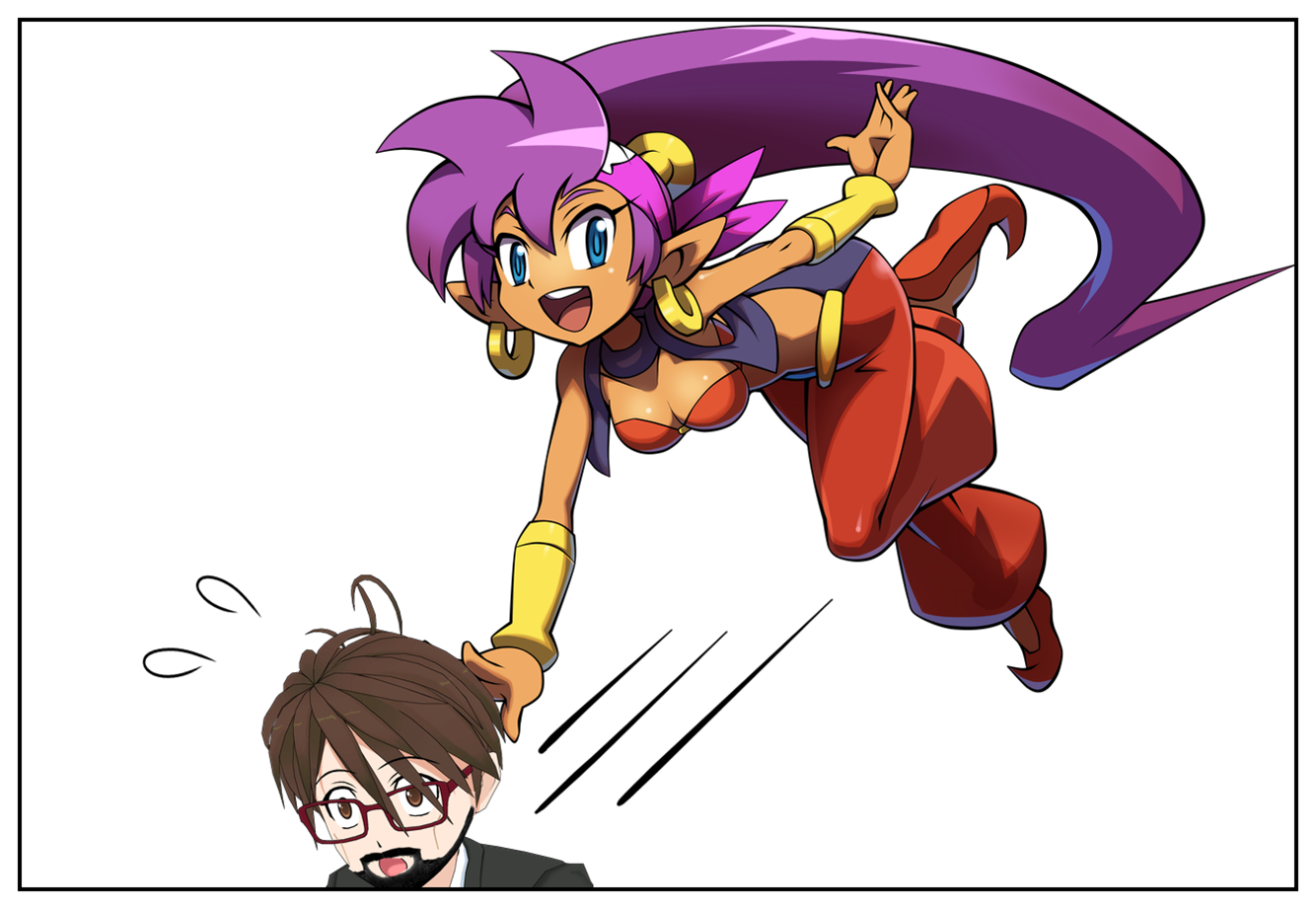
Shantae is a series I've been meaning to explore for a long time. Specifically, ever since I reviewed the iOS version of second game Risky's Revenge a few years ago and was absolutely enamoured by the graphics and overall presentation before being almost immediately put off entirely by the atrocious controls, proving once again that you should never, ever make traditional console-style games for platforms whose only input method is a touchscreen.

As part of the retro gaming and emulation kick I've been on recently, I decided I'd check out the Shantae series from the beginning, starting with its Game Boy Color incarnation. Shantae, as the first game is simply called, is widely regarded as one of the most impressive titles to be released on the GBC, as well as being a great game and the start to a marvellous series in its own right.

The eponymous Shantae is a half-genie girl who is the self-appointed protector of fishing village Scuttle Town. One morning, the voluptuous pirate Risky Boots shows up, bombards the town with cannon fire and then makes off with a Steam Engine, a new invention from local crackpot Mimic based on blueprints he found on an archaeological expedition. Frustrated with herself that she was unable to stop Risky's attack, Shantae pledges to try and get one step ahead of the pirate and find out what she's really up to, and thus begins your standard video game quest of "find the shiny doohickeys before the bad guy does".

In terms of gameplay, Shantae is a fairly simple Metroidvania-esque platformer in that it isn't really divided into discrete levels. Instead, there's an overworld which wraps around on itself, meaning you can start walking in one direction and eventually end up back where you started, and a number of small caves and larger "labyrinths" that can be accessed. There are also five towns that act as waypoints; completing a sidequest where you collect "Warp Squids" enables you to teleport back to that town at any point; the towns also each house various facilities such as shops and minigames.

Shantae definitely plays extremely well, with responsive controls and well-designed, well-paced maps that are challenging but rarely cheap, the odd "leap of faith" aside. As you progress through her quest, you unlock various transformation abilities, each of which are used by playing a rhythm-based minigame and pressing particular combinations of buttons in time with the music for Shantae to make use of her considerable (and frighteningly erotic) bellydancing skills. These transformations, in true Metroidvania tradition, enable you to reach otherwise inaccessible areas through various means: the Monkey form, for instance, can climb walls, while the Harpy form can fly.

While the gameplay is solid, where Shantae's main appeal lies is in its presentation. Although limited by the low resolution and limited colour palette of the Game Boy Color, Shantae is a gorgeous-looking game, with attractive, atmospheric backdrops and excellent sprite work. The star of the show is, appropriately enough, Shantae herself, who is animated with an amazing degree of fluidity and personality — and unlike previous games which had particularly fluid animation, such as Prince of Persia and Flashback, Shantae doesn't sacrifice responsiveness for smooth animation.

Shantae's visual appeal comes from the sheer range of animations she's been programmed with. Rather than simply being built with traversal animations in mind — walking, running, jumping, falling — Shantae has plenty of unique animations only seen in certain situations. There are the dance animations, for starters, one of which can be found on every direction on the Game Boy D-Pad and its two action buttons. When using these for gameplay purposes, you only see them for a brief moment, but they're so visually compelling that it's more than a little tempting to just switch into Dance mode by tapping Select and admiring Shantae's moves for a few minutes before continuing on your quest. On top of this, Shantae has a number of "mood" animations used during dialogue sequences that give her a great deal of visual character, and her personality is backed up by some snappy, witty but brief dialogue that gives you the important information you need to proceed while keeping things light and breezy in tone.

So far I've cleared the first "Labyrinth", which was a delightful delve into a well-designed dungeon with some interesting, creative puzzles involving memory, precision jumping and carefully exploring the environment. I'm looking forward to seeing what the rest of the game has to offer — and beyond that, finally playing Risky's Revenge on a platform that can do it justice, followed by its sequel Shantae and the Pirate's Curse.
2357: Life is Strange

0357_001

I've played the first two episodes of Dontnod's adventure game Life is Strange, and I'm enjoying it so far. It remains to be seen whether the whole thing is the life-changing masterpiece some people I know have made it out to be, but it's certainly solid and interesting so far.

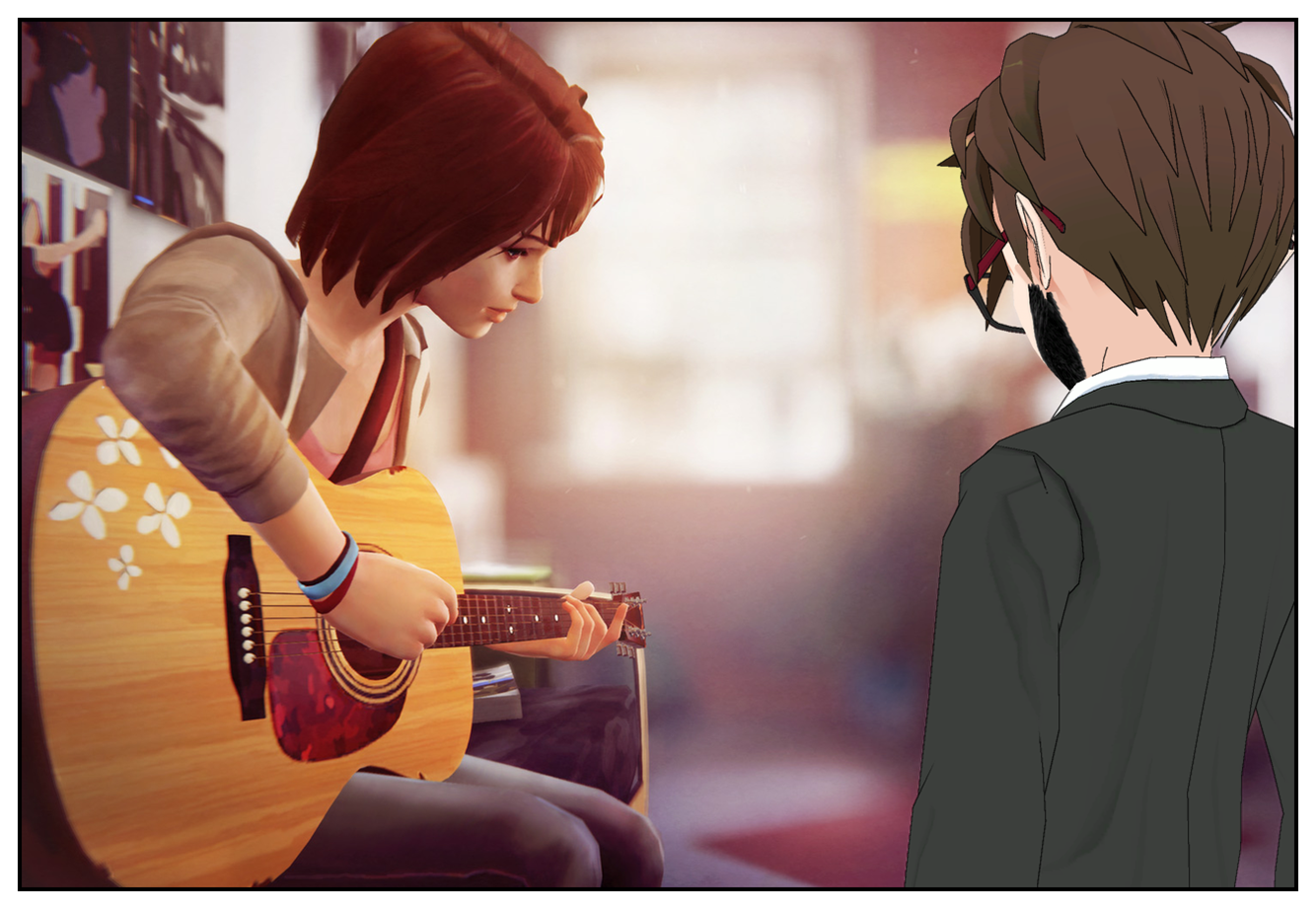
It didn't start brilliantly, though this was partly my own fault for deciding to read through all of protagonist Max's diary before actually doing anything. Max's blathering on about how amazing it was to be in a "diverse" school and other such witterings made me recoil at the prospect of an obnoxiously self-righteous heroine, but thankfully the game nipped that in the bud pretty quickly, and Max actually comes across as a likeable individual — a little shy and withdrawn as well as more than a bit nerdy, so eminently relatable to me. Whew. Bullet dodged.

I'm less enamoured with her friend Chloe, who is built up in Max's diary to be some sort of amazing super-friend, and comes across as a spoiled, unnecessarily rebellious jerk when we finally meet her. It's been years since Max and Chloe have seen each other, and Chloe has been through some changes that are perhaps best exemplified by the fact her hair is now blue. Her rebelliousness is at least a little understandable, though; she's dealt with the death of her father and her mother marrying someone else, who so far has been depicted as a bit of a twat — and an abusive, angry twat at that. Unfortunately, Chloe's way of dealing with things just makes her, too, come across as a twat, and I find myself questioning why Max fawns over her at every opportunity, since they are so very different. Still, I guess we'll find out more about Chloe as the series progresses, so I will reserve final judgement on her until we see where this all ends up.

Outside of the Chloe-Max interactions, which are clearly intended to be a centrepiece of the narrative, Life is Strange is solid and enjoyable, being effectively an interactive high school drama, with all the usual frictions and cliquiness that signifies. There are the bitchy cool girls, who Max takes great pleasure in successfully humiliating in the first episode. There's the hot teacher that all the girls fawn over. There's the weird janitor. There's the overly religious, abstinence-preaching girl who stands up for what she believes in even as she gets relentlessly abused by those around her. And like in most good high school drama movies, Max is a relatively inoffensive, pleasant sort of individual who manages to get along with most people if she tries.

Where things get interesting is in Life is Strange's main twist: Max's discovery that she has time-shifting powers. In other words, she is able to rewind time and make use of this fact to her advantage: perhaps she can learn some information, then rewind back before a conversation and use that information when talking to someone. Perhaps she can see the consequences of an action, then rewind and reconsider. Perhaps she can use her powers to save people's lives. The mechanic itself is simple and well executed, and it's used creatively in a variety of places, both to allow you to reconsider your actions, and to resolve various situations.

Being an adventure game of the Telltale-esque mould, Life is Strange is riddled with decision points, some of which are more important than others. Particularly significant decisions tend to be binary in nature, and Max always has something to ponder after making one of these choices. Interestingly, the game's script always manages to make it seem as if the other choice was the "right" one, so there's no real sense that there's a path down which the writers feel like you "should" continue; often, there are no real good choices in particularly difficult situations, so it's a case of deciding how to handle it in the moment.

Life is Strange's setting is presented really nicely. Deliberately eschewing photorealism in favour of a somewhat watercolour-esque aesthetic, there's a lovely vignetting effect on the screen that blurs the edges, and scenery and set dressing is heavily stylised rather than realistic. The characters have a touch of "plastic doll" about them, but this is in keeping with the rest of the aesthetic; a kind of slightly otherworldly appearance, like things just aren't quite right, but where it's hard to put your finger on what is actually wrong.

The writing is good, too. Conversations are believable, riddled with modern slang and authentic modern cultural references. Like Deadly Premonition, the last game I can remember that did this, Life is Strange isn't afraid to namecheck real things — celebrities, movies, books, authors, artists — and does so without feeling like they've been included just to show off how cultured the writers are. Instead, it all feels very natural, and adds to the authentic feeling of the setting as a result.

I'm intrigued to see where the overarching narrative goes. There's clearly something very odd going on with Max, whose power appears to take a physical toll on her, and she also keeps seeing visions of her town being destroyed by an enormous tornado, which presumably will show up (or not?) in the final episode. But alongside this, there are numerous other well-crafted subplots that intertwine with one another nicely, so it will be interesting to see how all these fit together by the end. Aside from a few hitches in the script here and there where you'll figure really obvious things out long before Max does — a common problem in adventure games — the whole thing seems like a very well-crafted narrative experience, and I'm intrigued to see where it ends up, though I kind of hope it doesn't involve Chloe quite as much as I feel like it's probably going to.

2356: Packing a LaunchBox

0356_001

I'm a big fan of emulating old systems. There's no substitute for playing on original hardware and having original packaging, of course, but emulation is a relatively straightforward and cost-effective means of enjoying older games without having to brave eBay, thrift stores or exorbitant "collector's" prices.

The legality of emulation is something that has been discussed to death online, so I will sidestep that particular issue for the moment and instead bring your attention to a wonderful tool I've started using recently.

One of the biggest pains with emulation of older systems, particularly if you have a lot of ROM files, is managing and organising all these files, and indeed even knowing what you have available to play. This is a particular issue with old computers, whose disk images tend to contain multiple titles much like the pirated disks "computer clubs" would exchange freely in the '80s and '90s, but given the sheer number of games that have been released for various console platforms over the years, it can be an issue finding what you're looking for even on systems that use media that only contains a single title.

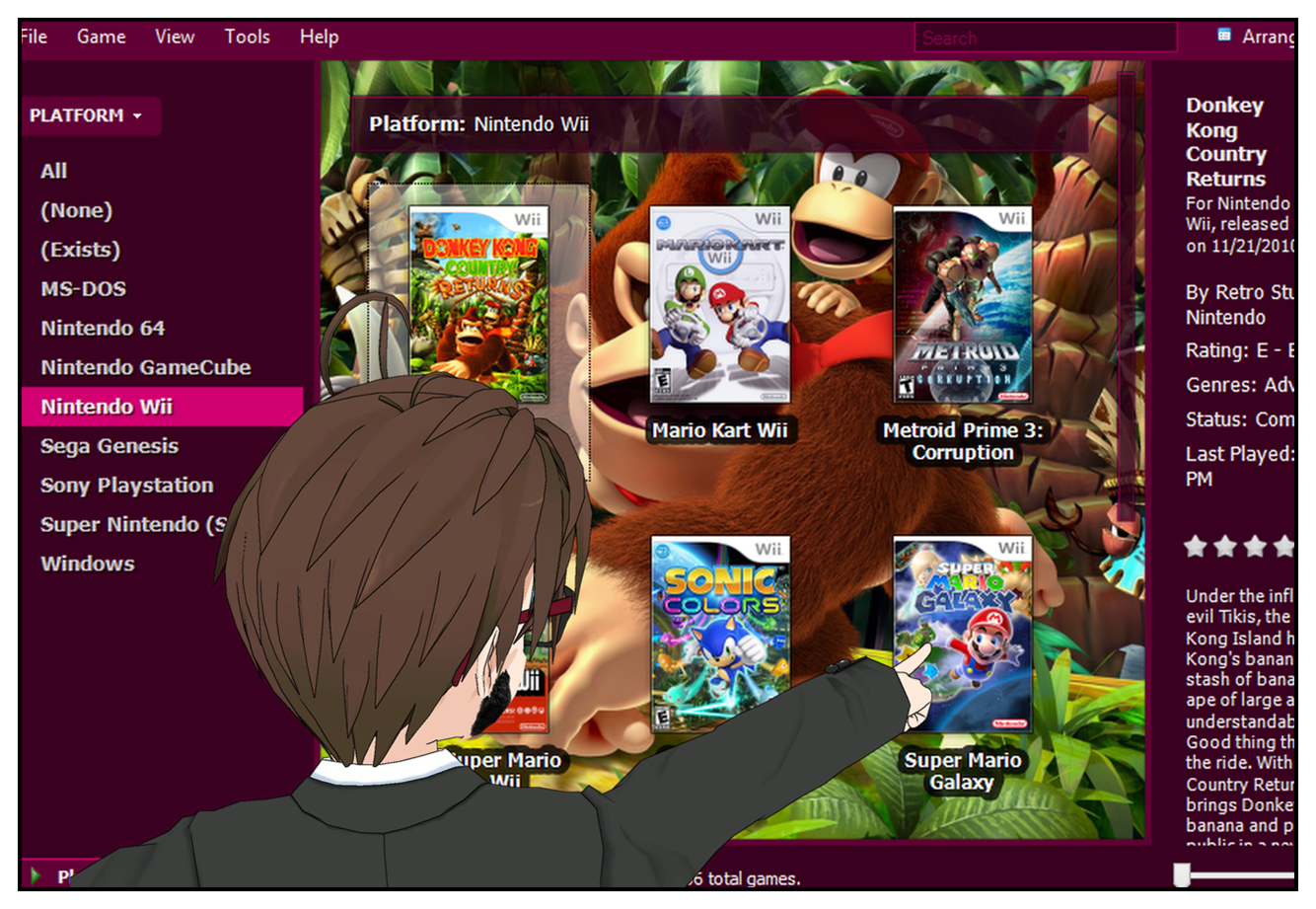
Enter LaunchBox, then, a thoroughly pleasant and well put together front-end for all your emulation… well, no, all your PC-based gaming needs, with a particular emphasis on the emulation of old platforms and operating systems.

Launchbox is, at its heart, a database designed to be filled with records of games with related media files — including ROMs and disk images — attached. It organises software by platform and allows the automatic launching of a particular emulator when selecting a game.

Perhaps its best feature, though, is its online connectivity, which allows it to connect to various online services, including its own online database, Wikipedia and Emumovies, and download all manner of supporting media for each game, where available. This supporting media ranges from simple box art and PDFs of the original manuals to music, movies and fanart of the games. By importing all your ROM files into LaunchBox, you can quickly and easily build up a full gaming database and automatically populate it with relevant information about pretty much any game you'd care to name; any game that doesn't get automatically populated with information can either be corrected yourself or manually searched in case it was stored online under different details.

This makes LaunchBox an excellent resource both for organising your collection and learning about titles you might not be familiar with — particularly those from other territories. The brief blurb LaunchBox provides for supported titles gives a good synopsis of what the game is all about and what to expect from it, and from there it's a simple matter to double-click the game in your collection and be playing it in a suitable emulator almost immediately. LaunchBox even recommends and provides download links to emulators for the most popular platforms and can automatically set them up for you; it also comes bundled with the wonderful DOSBox, which enables you to play old DOS-based games on modern Windows computers.

While I'd still prefer to have a wall full of original packaging and games playable on their original systems, that's not an especially cost-effective thing for me to do right now. So LaunchBox is very much scratching my "collector's" itch until I'm in a position to put together an actual physical collection. And in the meantime, it's turned my PC into pretty much the ultimate games console ever.

2355: Playing God

0355_001

After reading up on their work a bit over on Hardcore Gaming 101, I've become interested in the Super NES games of a developer called Quintet. Their work consists of several games that I've heard of but never actually played, plus one PS1 game that I did enjoy and feel to this day is rather underappreciated: the unusual and interesting action RPG The Granstream Saga.

Quintet are perhaps best known for early SNES game ActRaiser and their subsequent Heaven and Earth trilogy, consisting of Soul Blazer, Illusion of Gaia and Terranigma. (The Granstream Saga is kinda sorta also part of this series, too, though in an unofficial-ish capacity and on a different platform to its three predecessors.)

I decided to start with ActRaiser, since when exploring a developer's work like this I like to start with their early titles and work my way forward through them to see how they developed over time. ActRaiser has primitive elements, for sure — most notably an almost total lack of narrative development, though there are some interesting events that come and go as you play — but by God it's an interesting game, the likes of which I've only ever seen on one (two?) other occasion(s) in the form of Arcen Games' similarly unusual and fascinating A Valley Without Wind.

ActRaiser casts you in the role of God. (Due to the SNES era being the dawn of Nintendo of America's prudishness that persists to this day, He is known as "The Master" in the localisation.) Your job is to deal with Satan. (Likewise, everyone's favourite Ultimate Evil is known as Tanzra in the English version.)

Satan has been up to no good, you see; taking advantage of God having a much-needed rest after Ultimate Good and Ultimate Evil had their last showdown, Satan decided that he should wipe out all of humanity, taint the land to make it uninhabitable by humans should God decide to try and repopulate the world, and then ensconce some of his most trusted lieutenants to make doubly sure that those pesky white-winged types didn't try and undo all their hard work. God isn't standing for this, of course, and so begins your unusual quest.

ActRaiser is split into two very different sections. When you first arrive in a realm tainted by Satan's machinations, your first order of business is to clear out the monsters roaming freely over the land. You do this by descending to the surface and possessing a conveniently placed warrior statue, which comes to life with God's holy power and proceeds to dish out some righteous justice on anyone who dares come in range of its blade. Fight your way through a distinctly Castlevania-esque level to a boss, kill the boss and you're ready for the next phase.

Once you've cleared out the monsters, God has enough power to create two followers, who immediately start shagging and pumping out new population for you, so long as you tell them to build some nice streets to put their houses on in a completely different mode that is somewhat like SimCity "Lite". The town then proceeds to repeatedly inbreed with each other as you direct their expansion efforts, with your ultimate aim being for them to build over the top of the inconveniently placed monster lairs around the land, each of which spit out annoying creatures that steal your population or set fire to your buildings at inconvenient moments. Once you've successfully redeveloped the monsters' areas of outstanding natural beauty, you then unlock the second action-platforming stage of the region, which is different and harder, with a different boss at the end. Once this boss is defeated, the region is at complete peace and you can then continue developing it or move on to a new region.

While these two elements of the game are obviously very disparate, they do feed into one another. Your performance in the initial action phase, for example, partly determines the maximum possible population the region will be able to sustain when you start developing it — score more points and you'll have a higher (unseen) cap on your population. Conversely, the more your population expands in the building phase, the stronger the warrior statue gets in the action phases and the more "SP" God has to spend on Miracles.

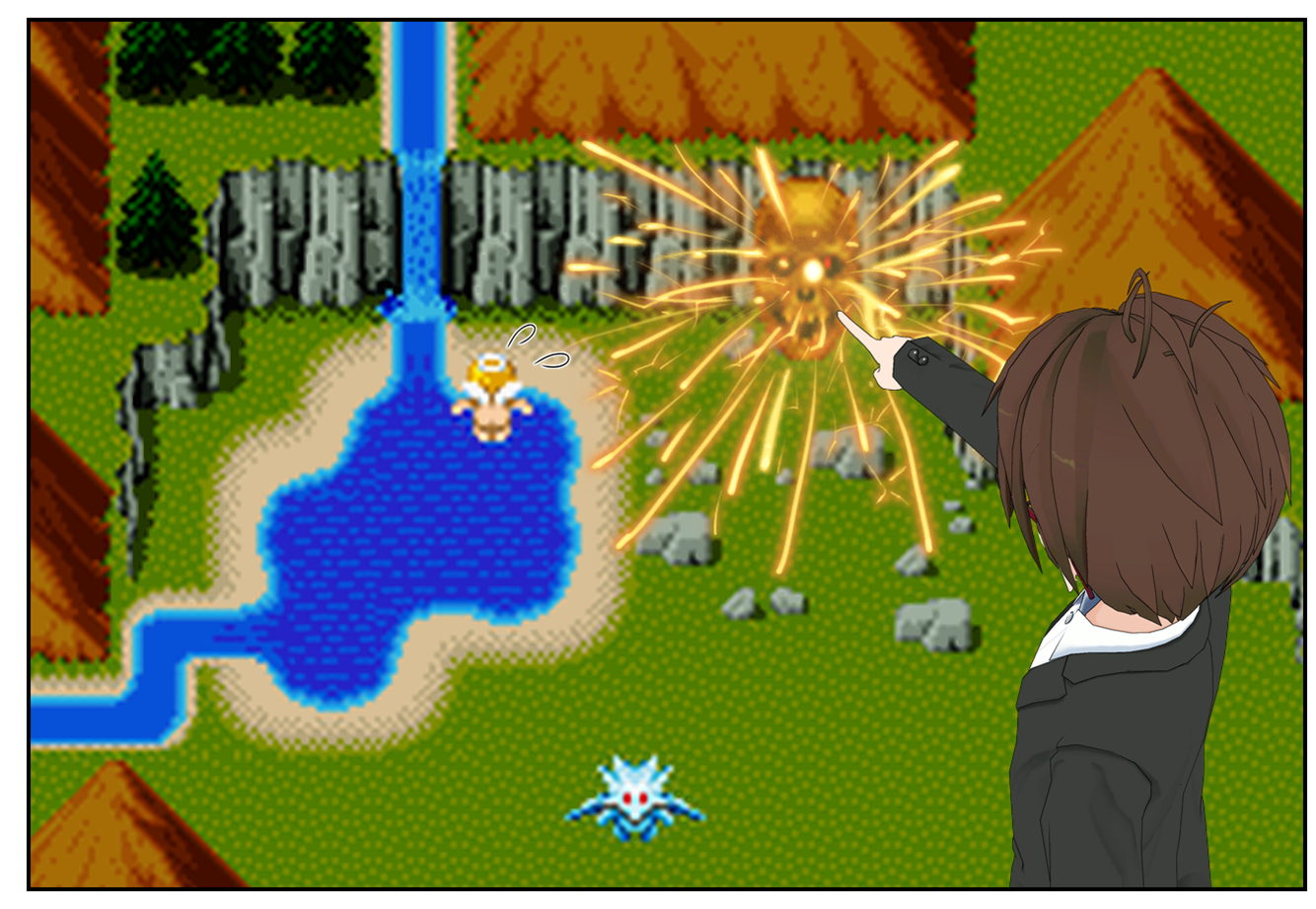
Oh yes, Miracles; these are a rather integral part of the building phase, and obviously the most fun, too. Beginning with a lightning bolt that burns down most things on a single tile (including houses) and working up to an earthquake that knocks down all low-level structures in a region, your Miracles are used to both direct development of the towns and clear obstacles out of the way. You have to force yourself to feel a certain amount of detachment when doing this, since as the tech level of each region increases and it becomes able to support houses that hold more occupants, it becomes necessary to demolish low-tech houses to make way for denser developments. And, being God, you don't use a bulldozer; you use natural disasters, which is far more fun. It's hard not to feel a little pang of guilt when you watch the little counter of "total population" in the upper-right corner of the screen plummet after you unleash an earthquake, though.

ActRaiser is a really interesting game. Both elements are solid, though neither of them are especially complicated. This is probably for the best; it keeps things reasonably accessible for those who tend to gravitate more towards one of the two styles of gameplay than another, though the difficulty of the action phases in particular is a little on the high side if you're not accustomed to how unforgiving old-school games are.

Ultimately it's a satisfying experience to descend to Earth and smite Evil before watching your little minions gradually spread out to cover the entire continent. You really do get the feeling that your people are relying on your divine powers, too; they pray to you every so often and ask you to help make things happen, and they'll reward you with offerings if you fulfil their requests. Many offerings can then be used in other regions to spread various innovations or culture, making the whole world work a bit better; for example, as soon as the second region discovers that wheat is a more productive crop than corn, you can then export wheat from this region to everywhere else so they can all take advantage of this improved efficiency. Likewise, when your followers reach a man lost in the desert a little too late, a distraught artist discovers the secrets of music, which you can then take to another region and use it to lift their spirits after they've been feeling a bit bleak. In this way, the world of ActRaiser feels very much alive, even if you're not dealing directly with named characters or a rigid, ongoing plot.

I like it a lot, in other words, and it makes me excited to check out Quintet's other work. You can count on a full report when I get to them.

2354: They're Both for Monsters

0354_001

(yes, I found a way to put a beard on my model in ComiPo! Woo!)

I've been playing a bit of The Witcher 3: Wild Hunt lately. I've been meaning to give it a go for ages, but it's never quite dropped in price enough for me to want to jump on board; thankfully, the combination of the Steam Summer Sale and Andie generously buying me a copy as an anniversary present means that I can now explore this game to my heart's content.

Playing Witcher 3 alongside Ys: Memories of Celceta is an interesting experience, because it's a study in contrasts between Western and Eastern game design philosophy. Both of them have a surprising number of elements in common: they're both action RPGs, they both involve exploring a large overworld, fighting monsters and completing quests, they both feature a muscle-bound man with white hair tied back in a ponytail (though he's not the protagonist in Celceta, instead acting as a Dogi-substitute and cipher for the ever-mute Adol) and they're both very good. But they're both very different.

Celceta is fast-paced and action-packed. Its combat is very arcadey, with lots of flashy special effects, overblown sound effects, rockin' music and celebratory messages flashing up on the screen as you do things like use the right attack type to take advantage of enemy weaknesses. In contrast, Witcher 3 feels almost sedate in its pacing, even in combat, which, thanks to its excellent animations and fluid movement, has an almost dance-like feeling about it as opposed to the frenetic leaping around of Celceta.

The upshot of this is that Witcher 3 is a surprisingly relaxing game to play. This might sound strange, given that the setting for the Witcher series is one of the darkest, bleakest takes on Western fantasy out there, but I've absolutely found it to be the case. While in Celceta you can't relax for a moment when you're out in the overworld because everything is trying to kill you, in Witcher 3 there's plenty of opportunity to explore, wander off the path into the bushes and just start walking in a direction to see what's there. Worthwhile things are marked on the map so you're not wandering completely aimlessly — unless you want to — but for the most part the game's rather sedate pacing has the pleasant feeling of a walk in the countryside or the woods rather than constantly fighting for your life, even though the countrysides and woods of Witcher 3's world are far more dangerous than what your average rambler might have to contend with.

Both games have their place, then, and I'm enjoying them both a great deal. I feel like on the whole, I tend to enjoy the more frenetic, chaotic, joyful pace and tone of the Japanese approach to RPGs more — they cheer me up with their sheer energy — but there's most definitely something very appealing and oddly relaxing about the more sedate pacing and carefully crafted periods of solitude in games like The Witcher 3.

2353: Be a Better Sportsman, Online or On the Field

0353_001

One thing that I don't think school P.E. lessons focused on enough was good sportsmanship. The people who were good at sports did well and enjoyed themselves; the people who were bad at sports (like me) got picked last for teams and put in places where they didn't have to do much, like goalkeeping. (Which always seemed a bit weird to me, given that the goalkeeper is the last line of defense in a football match and consequently should probably be quite good at protecting the goal. I was not.)

The upshot of this unfortunate tendency was the reinforcement of these positions: the people who were good at sports continued to be good at sports and grew to expect everyone on their team to be on their level and would sometimes even become abusive towards those who they perceived to be not pulling their weight; the people who were bad at sports grew increasingly bitter and resentful of games that, while competitive, should be fun.

Bad sportsmanship hurts everyone. It means the good players don't get to nurture up and coming talent, help people improve and introduce new players to the activity they love, making them more likely to be able to get a good game. And it means the less skilled players feel ostracised and like they will never have an opportunity to learn more about something they might actually be quite interested in.

It's unfortunate that this happens in online games, too. I don't play a lot of competitive multiplayer games, but I can comment on it a bit with regard to Blizzard's new title Overwatch, whose ranked competitive mode launched late last night.

For the most part, the Overwatch community actually seems pretty good; the game is a team game with variable character skills and statistics, so everyone needs to cooperate to achieve a common goal. If you don't, you lose; it's pretty simple. Unfortunately, there are players out there who seem to believe that if they just make unhelpful comments and call the rest of their team "noobs" that they somehow have the moral high ground and are justified in complaining and whining.

The trouble, I think, is that this particular type of player doesn't like to lose. It's more than that, even: this particular type of player thinks that they have a right to win every game they play. Whether this is due to overconfidence in their own abilities, a misplaced sense of entitlement or having grown up in the obnoxious "everyone's a winner!" culture of many educational establishments these days, I don't know, but it's not a helpful way to be.

A competitive, two-team game by its very nature has a winner and a loser. Every time. You cannot rely on always being the winner — more than anything, that would make the game itself pretty pointless if the outcome was already known before you started. And being on the losing side doesn't make that game a bad experience, either; some of the most interesting, exciting Overwatch matches I've had to date have come when I've lost, but it's been close. And in those matches where it wasn't close, I can usually learn something from the experience. You take it on the chin, you try again, you get better — perhaps you even help out people you were playing with that you know could do something differently.

What you don't do is rage and piss and moan at the rest of your team (or worse, just say "………", which is pretty much the least helpful thing you can possibly say — literally saying nothing is more helpful than that) because that sure as hell isn't going to make them want to play with you again.

And what you absolutely shouldn't do is go off in a strop because you're not absolutely dominating the other team, which is what happened to me in one game I played earlier today. Said player decided he had the "perfect" way to play and wanted everyone to fall into line with him, regardless of where his teammates skills' and expertise lay. The match was pretty even — our opponents scored 2 points on offense, then we scored 2 points on offense, then our opponents scored another 1 point on their final round of offense, meaning we still had the potential to win, or at least draw and push the match into Sudden Death… and Salty McSaltyson decided that no, he wasn't going to stand for having to actually put in some work to winning, he would, instead, leave the match altogether, leaving us down a team member and thereby at a significant disadvantage. Shortly afterwards, another player left in frustration, putting us two people down and therefore completely unable to be competitive at all. The rest of us, to our credit, carried on playing until the "you can leave without penalty when this timer expires" timer expired, but then it fell apart, leaving our team with a loss that could have been avoided. It was a shame, since it had been a great match up until then; our opponents were gracious and apologetic about it, so at least it wasn't a completely negative experience, but still.

That one player being a twat spoiled the match for eleven other people. I doubt he even thought about that when he clicked "leave game" and accepted the penalty the game gives you for leaving Competitive games early — but it really did spoil the whole match which, like I say, could have gone either way in that last round.

Be a better sportsman. Accept that sometimes you win and sometimes you lose. And if you think you're better than other people — you might well be! — how about actually offering them some advice and help to get better rather than just being a dickhead? Everyone benefits in the long term.

2352: Fuzzy Head

0352_001

I've had a horrible, fuzzy head today. I don't mean physically — although after getting my hair cut yesterday, my head is a bit fuzzy — but rather a not terribly pleasant feeling of "detachment"; of being slightly "out of phase" with the rest of the world. And a slight headache.

I've felt this before, and it's usually a symptom of depression and anxiety. In this instance, the fact I haven't been sleeping well for the past few nights and am feeling especially worried about my future have been contributing particularly to the way I'm feeling. It's not nice, so after writing this I'm going to go and sit in bed and relax with a bit of Ys: Memories of Celceta, then try and actually get off to sleep at a reasonable time if at all possible.

I actually have a job interview tomorrow. As usual when this happens, I'm being struck with anxiety over whether or not I'm actually suitable for the job and whether or not I'm going to make an idiot of myself in the interview. (Mind you, last time I thought I made an idiot of myself in the interview I ended up getting the job. Of course, that turned out to be the worst job I'd ever had, but that's perhaps beside the point.) The thing I've been telling myself — and Andie said the same earlier — is that if I looked completely unqualified and unsuitable for this job, the company wouldn't have got in touch and offered me an interview in the first place. This isn't any guarantee that I'll actually get the position, of course — given the geographical location, I'm not sure I'd want it, anyway, as it would mean a bit of a commute each day — but we'll see.

All in all, I haven't had a particularly good day. Not for any particular reason — nothing actually bad has happened, I just feel shitty.

Such is the way of things when your own mind likes to do its best to sabotage your life and happiness, though.

Oh well. All I can do, I guess, is take tomorrow as it comes and see how it goes. It's not as if the interview I have tomorrow is the only iron I have in the fire at the moment, so it doesn't really matter one way or the other as to whether I get it. But, you know, getting back into a routine and actually having an income would be nice.

One step at a time.

2351: One Year Anniversary

0351_001

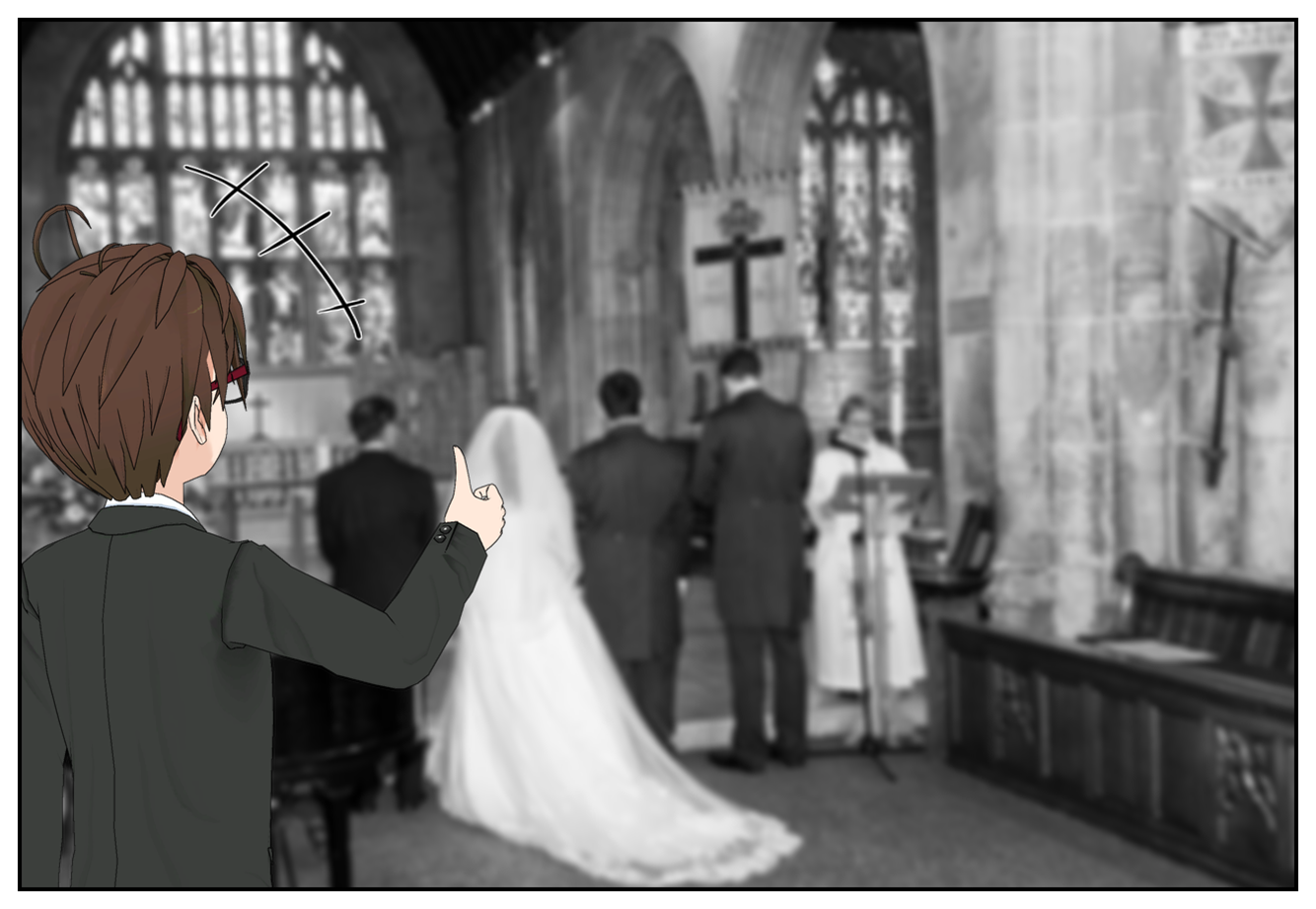
My wife Andie and I have been married for one year today. Good going, us.

For those of you who were unable to attend our wedding last year, I thought now might be a good time to share the speech I made at said reception, as it's still relevant now. (Apart from all the bits that refer to "today", which you can take to mean "June 27, 2015" instead.)


Hello everyone, thanks for coming. It's great to see so many of you together here in one place — in some cases, we haven't seen each other for quite some time. I think there's a relevant Lord of the Rings quote here, but my best man Tim is more suitably equipped to be able to make that reference, so I'll leave that to him.

I wanted to start today with something that is probably the height of impropriety, and that's to acknowledge that this isn't the first time I've done this. I think most of you here already know that, but it's important to acknowledge it, I feel — not only to dispel any awkwardness that might result from that knowledge, but also because it's relevant to why I'm standing here today.

First time around, you see, things were a whirlwind. And in all the excitement, I failed to realise some very important things: that while it absolutely is possible to make a partnership work if the two of you have disparate interests, if either or both of you find it difficult or impossible to meet the other halfway and at least respect the things that they're into even if you don't share those interests, things will go south pretty quickly.

Now, I don't want to dwell on that too much, because that's not the reason we're here today. Suffice to say, however, that awkward situation is a thing of the past — and while my new wife and I certainly have our own interests that we're happy to pursue independently of one another (I like Japanese video games with saucy artwork, she likes painting intricate designs on her fingernails) we also share some very important things that have become a big part of our life.

Those of you who know your video games will recognise a lot of today's festivities as involving Final Fantasy — particularly Final Fantasy XIV, an online multiplayer installment of the long-running series that I've been playing since 2013, and which Andie later joined me in, much to my surprise and delight. Through that game, we've forged some very close friendships — as close as the friendships we have with many of you sitting here — and as such, I thought it was eminently appropriate for my proposal to Andie to be delivered as part of our in-game characters' wedding ceremony back in January. Unusually, this means that there's an actual video of how I proposed thanks to our guildmate recording the whole experience if you ever want to go and watch it and make me blush a bit. (It's not hard.) [Editor's note: I genuinely don't know what the link is to this or if it's still online. But it may still be out there somewhere.]

Now, unfortunately, as our guildmates are scattered across the world, most of them couldn't join us here today, but we know that they're here in spirit — and I did want to particularly show my gratitude to Chris, aka Reimi, healer extraordinaire, for sharing today with us. The rest of our fellow adventurers are eagerly awaiting photos and videos of our big day, so please do share any media you create today!

But back to Andie and me. I feel that our shared love of Final Fantasy XIV is actually rather symbolic of the journey we've taken together in many ways. We both play the game to a high level, taking on some of its toughest challenges together with our friends. Together, we've toppled the mighty dragon Twintania, fended off meteors and ancient pillars dropping on our heads long enough to dispatch Nael deus Darnus, and even vanquished the very angry — justifiably so — Elder Primal Bahamut himself.

And we've overcome our own challenges in reality, too. I shan't go into details for now, because it really isn't the time — suffice to say, though, both of us have dealt with our share of real life raid bosses: challenges that seem insurmountable and want nothing more than our complete annihilation, but challenges that we could overcome by working together, supporting one another and simply being there for each other. I'll forever be grateful to my new wife for standing by me through some difficult times — and I hope she feels the same way too.

Sappy bit over. I believe it falls to me to deliver some "thank yous", because a lot of hard work has gone on behind the scenes to make today happen.

Thanks to Andie, first of all, for doing the lion's share of the organisation, because I'm a man and therefore useless at sorting this sort of thing out.

Thanks to our parents: Agnes, Val and John, for working together to help today be truly special.

Thanks to Rob for his generous loan of the PA system which we're pumping music through over the course of the afternoon and evening.

Thanks to my best man Tim for his support in the weeks leading up to the wedding, and for being one of my most trusted friends who doesn't spend most of his time pretending to be a catgirl on the Internet.

Thanks to everyone else who has contributed their time, money and effort towards today; I'm almost certain there are people I've forgotten or don't know by name well enough to acknowledge you individually, but believe me, your labours are very much appreciated.

And thank you all for being here today. It means a great deal that you can share this special day with us.

Finally, Googling "who does the groom toast" reminded me that I'm supposed to toast the bridesmaids at the end of my speech. Before I do that, I'll also thank them for their contributions today — and for both being an important part of Andie's life. So please, if you would, raise your glasses, and join me in a toast to the bridesmaids.


A toast to Andie, too, for putting up with me while dealing with all the things she has to deal with, too. She's stronger, more capable and more wonderful than she'd ever care to admit (and me attempting to say this to her face normally results in her wriggling off uncomfortably somewhere, so I'm saying it here instead) and I love her to bits.

Here's to many more years ahead of us. And I say that with confidence.

2350: Back to It

0350_001

It's back to the jobhunting grindstone tomorrow. My wife Andie has found herself a new job and is starting tomorrow, which finally brings this difficult period of both of us being out of work simultaneously to a close, so now I just have to secure myself a position of some description.

Thankfully, there are a few possibilities on the horizon, for once. I sent out a huge number of applications over the last few weeks, taking a chance on positions that I might not have done before, but which I had the appropriate skills to be able to do with a bit of training. While I still wouldn't describe myself as feeling particularly ambitious, I want to do something a little bit more lucrative than retail work; while I enjoy retail work for the most part, the pay is pretty shit, and certainly not proportionate to what you have to put up with on a daily basis.

While I've had a few rejections already, the fact I've sent out so many applications means that I don't feel quite so bad about these as I have done in the past, because — this sounds bad, but you'll know what I mean — I'm not especially invested in having that specific job. It's not the perfect wonder-job; it's just something I'll be able to do that will pay a decent amount of money and give me the opportunity to progress if I want to — and, importantly, time to myself when I'm not there. A job that I can leave behind at the end of the day and the week and just get on with enjoying life; no taking my work home, like there was in teaching.

I got a voicemail message on Friday offering me an interview for one of these positions I've applied to. It's not ideal due to where it's located — I'd rather keep commuting time and distance to a minimum — but it's something, at least. I also wasn't able to get in touch with the contact who left the message for me because by the time I received it after taking care of some other business, they weren't answering their phone, since they left me the message at the very end of the working day. Tomorrow's job, then, is trying to get hold of this person and hopefully sorting myself an interview out for later this week. And then, if that happens, getting the haircut I've been putting off for the last six months as usual.

In the meantime, I'm hanging in there, just about. I'm continuing to update MoeGamer in my spare time — expect a gushing writeup on VA-11 Hall-A this week — and I'm also casually studying the material for the IT qualification known as the CompTIA A+, which if I can attain will make me eminently more attractive to employers in the IT field, what with it proving that I actually know my stuff about computers rather than me having to convince them using nothing more than a CV and a cover letter. I'm attempting to use my time productively when I'm not lapsing into depression, in other words, and on those occasions where I do lapse into depression, at least I have plenty of things I can enjoy to take my mind off said negativity.

Everything is going to be all right. Probably.

2349: Arcade Golf...?

0349_001

To my surprise, the game I'm enjoying most out of the Neo Geo collection I got recently is Neo Turf Masters, a golf game. Now, I'm not averse to a good golf game at the best of times, but I'm really surprised and impressed with how well Neo Turf Masters adapts the standard golf game format to a (relatively) fast-paced, challenging arcade format. It really works!

Neo Turf Masters is pretty simple and straightforward as far as golf games go. You don't have to worry about things like elevation when driving your way up the fairway, just smack the ball in the right direction and make sure it doesn't land in places it shouldn't. When it's on the green, line up with the hole and hit the button when your power meter is around the same point as the handy mark showing where you should hit it. Repeat.

It's refreshingly simple, even as the more cartoony golf games (such as Sony's Everybody's Golf series) adopt more complex mechanics, and it works really well for a quick game of golf. Despite the simplicity of the basic mechanics, the game instead provides most of its challenge through some surprisingly fiendish course designs and an extremely unforgiving structure designed to keep you pumping coins into the arcade original version. (Of course, on the port you can simply continue as many times as you like, but this isn't really in the spirit of playing arcade games.)

No, Neo Turf Masters' biggest challenge comes from its unusual "lives" system. You begin the game with 3 lives or "holes" and spend one of these lives any time you get a Par. (For the non golfing-literate, this means putting the ball in the hole in the exact number of shots the hole's Par says.) If you get a Bogey (one more shot than the Par) you spend an extra hole on top of this. But if you get a Birdie (one fewer shot than the Par) you not only don't lose the hole, you get an extra one to add to your stock. I haven't seen what happens if you do worse than a Bogey or better than a Birdie because my skills at Neo Turf Masters are thoroughly average.

I really like this system, though. It has the arcadey addictive quality of wanting to "1cc" (1 Credit Clear) it without using the Continue function, but considering I can only make it to about hole 4 or so before getting a Game Over, I feel it may be a while before I can manage a full round yet. Still, this is a game designed very much in the old-school mould, where you couldn't just plough through it from start to finish — you had to get good at it. And that's fine! If you could just hammer straight through it would be back on the shelf in less than a couple of hours; with only four courses on offer, there's not a lot of "content" (as modern gamers like to say) here, but it will sure as hell take you a while to master the game and its courses enough to be able to clear each of them.

Easy to pick up, difficult to master, then; something of a mantra for retro games, arcade games in particular, and I can see that the Neo Geo library, regardless of genre, very much seems to be designed around this particular philosophy. And I like it!