My Mega Everdrive Pro arrived today. For the unfamiliar, this is a flashcart for the Sega Mega Drive that supports Mega Drive, Master System, and perhaps most intriguingly, Mega CD games. More on that in a moment.
I haven't spent much time with it as yet, as I was working, then I had to make dinner, then eat dinner, then I needed a poo and now here I am, responsibly writing this post before I go off and do something "fun". (Not that this isn't fun, but this is a self-imposed obligation, whereas what I intend to do next is pure recreation.) I loaded up an SD card with everything I wanted to put on it earlier, fired it up briefly and checked it was working, and all seemed in order (aside from a bit of rolling interference on my screen that the Internet tells me is the fault of a crappy aftermarket power supply for the Mega Drive, so I'm replacing that soon). But aside from that, it's up there waiting for me right now.
Obviously a big part of the appeal here is easy access to both Mega Drive and Master System games (for the unfamiliar, the Mega Drive actually contains most of the necessary guts to run Master System games pretty much natively) but one thing I'm particularly intrigued to explore is Mega CD compatibility. Or, more accurately, Mega CD hardware emulation. The Mega Everdrive Pro features some FPGA shenanigans that I don't really understand the workings of, and the upshot of it is that you can make it convince your Mega Drive that you have a Mega CD connected, even if you have nothing of the sort plugged in. (You cannot do the same with the 32X; you still need a real 32X if you want to go down that road.)
I've always been curious about the Mega CD, because it's one of a few consoles from the era that I had absolutely no contact with whatsoever. I had friends with Mega Drives and my brother often brought one home when he came to visit but I didn't know anyone with a Mega CD. I remember reading articles about the games on Mega CD in the magazine my brother was working on at the time (Mega Drive Advanced Gaming, if you were curious) and thinking they sounded really cool, but I have never gotten around to exploring that library at all… yet, anyway.
Of course, retrospectively we all know that the Mega CD wasn't a particularly successful add-on, and there aren't a ton of Mega CD games that are particularly worth playing. But there are a few, and I'm excited to try them. (I'm excited to try some of the "bad" ones too, just to understand the platform a bit better!)
With the addition of this to my collection, I now have Super NES, Mega Drive/Master System (outside of the few incompatible games) and N64 all hooked up and ready to play pretty much anything I would care to throw at them. Just the thing for when I'm in the mood for something short and sweet, like I talked about the other day. And like I'm feeling right now.
So I think I can't put it off any longer. It's time to go get Blast Processed. With Compact Disk power!
Want to read my thoughts on various video games, visual novels and other popular culture things? Stop by MoeGamer.net, my site for all things fun where I am generally a lot more cheerful. And if you fancy watching some vids on classic games, drop by my YouTube channel.
If you want this nonsense in your inbox every day, please feel free to subscribe via email. Your email address won't be used for anything else.
I have been rewatching a lot of some of my favourite YouTube videos recently: the back catalogue of Mark "Classic Game Room" Bussler, who was a big inspiration to me back when I started doing YouTube things. Throughout his various runs of his show Classic Game Room, Mark primarily focused on what we today describe as "retro games" — meaning, in his instance, pretty much anything from PS2 backwards, though primarily focusing on 8-bit and 16-bit consoles such as the NES, SNES and Mega Drive.
One thing that strikes me any time I either go back and explore games from this era either by myself or when I do it vicariously through a show like Classic Game Room is that the way we engage with video games has fundamentally changed at some point. I don't mean the way we interact with them — though control schemes have, of course, become more refined as time has gone on and "best practice" has become established — but rather what we consider to be a "worthwhile" experience.
For many years, the majority of my gaming has focused on long-form games like role-playing games and visual novels. This started back in the PlayStation era, where I discovered Final Fantasy VII for the first time and promptly started devouring pretty much every RPG I could get my hands on. But it wasn't always that way; when I think back to the time I spent playing games on the Atari 8-bit, Atari ST and Super NES, the games were (typically by necessity, as a result of their technology) more short-form, immediate experiences. And, back then, I derived just as much value from those as I did the longer-form stuff I started playing with the PlayStation.
Okay, I do recall my sessions on the Atari 8-bit often involving booting up one game, playing for a bit, then loading something else up, playing that for a bit and so on — like most early home computer owners, we had a big disk box full of pirated games, so I wasn't exactly short on choices — but I also feel like it was a lot easier to become engaged and invested in something simpler, shorter and less narrative-focused. I'd spend a lot of time playing Super Mario World, Starwing and SimCity on my SNES, for example; while one might argue both Super Mario World and SimCity are each in their way "long form" games of a sort, they're a different breed to your average RPG, and neither focus on an unfolding story; they use nothing but their mechanics to keep you engaged, and SimCity in particular flat-out just doesn't have an end.
These days, I feel like I'm easily falling into… I don't know if I want to call it a "trap" as such, so let's call it a "routine" instead… where I tend to focus on one "big" game at a time, and that "big" game is something with a lengthy storyline. Over the last couple of months, I spent 120 hours playing through Xenoblade Chronicles: Definitive Edition and its expansion Future Connected, for example. And that's the main thing I played during that period; I had the odd diversion for a few bits and bobs along the way, but for the most part, I was focused on that one game.
There's value in those shorter games, though, and finally fixing up my retro consoles with Everdrive units and equivalents (as well as all the stuff I work on for the day job with Evercade) is really helping me rediscover that, as there's a definite magic to playing on the classic hardware that emulation still just doesn't quite capture perfectly. (Mostly the scrolling. Real hardware scrolling is flawless; emulation still has just enough tiny hiccups, even on a powerful system, to remind you that it's not quite perfect.)
Beetle Adventure Racing on N64 was a real pleasure to finally explore, as previously discussed, and I've always had a very soft spot for Tetrisphere. I had a pretty limited library of SNES games back in the day — Super Mario World, Super Mario All-Stars, Super Mario Kart, Starwing, SimCity and Zelda — so there's a lot to discover on SNES. And when my Mega Everdrive Pro arrives for the Mega Drive hopefully later this week there's a whole other library of 16-bit goodness to play with, too.
The danger, of course, is giving yourself too much choice, which can lead to the dreaded Analysis Paralysis, which in turn leads to enjoying nothing at all. But I've got a nice expanse of time between having finished Xenoblade Chronicles: Definitive Edition and Xenoblade Chronicles X: Definitive Edition coming out later this month. So I intend to make good use of that time to explore some short-form fun.
And finish Soul Blazer. I'm already halfway through that, and that's sort of a Big Game, but also kind of not. I'm enjoying it a lot, either way, so I will probably try and bash that out before Xenoblade X day on the 20th. That and I finished Tokyo Dark: Remembrance today, too. I'm doing well!
Anyway, for now, bed. Perhaps with a little bit of 16-bit action before that…
Want to read my thoughts on various video games, visual novels and other popular culture things? Stop by MoeGamer.net, my site for all things fun where I am generally a lot more cheerful. And if you fancy watching some vids on classic games, drop by my YouTube channel.
If you want this nonsense in your inbox every day, please feel free to subscribe via email. Your email address won't be used for anything else.

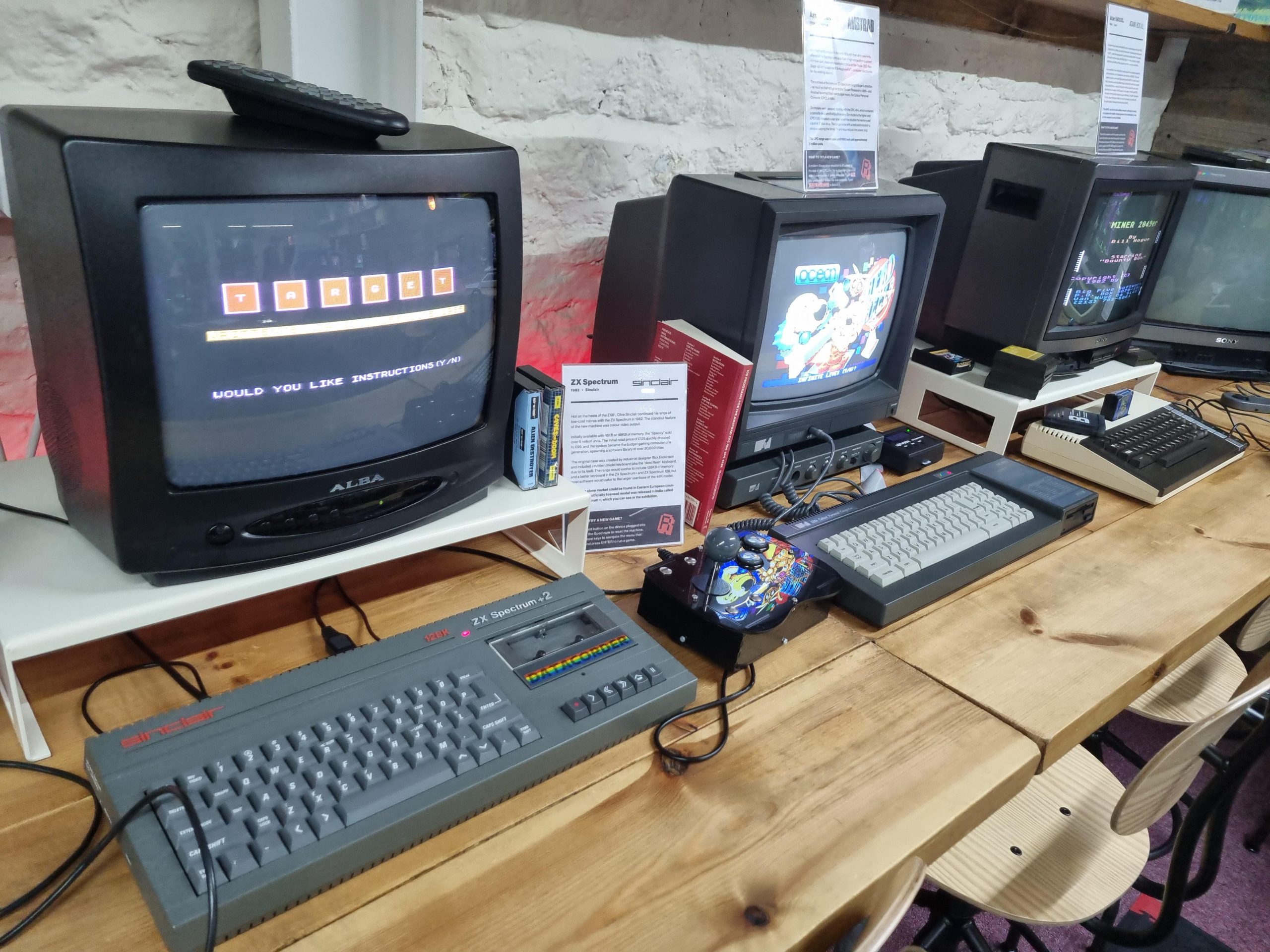
One of the things I've been keen to do with my YouTube channel for a while is branch out into areas that are less familiar to me. I've done a lot of championing Atari stuff, and while I don't see that going away any time soon, the fact it's so easy to play with all manner of different platforms today through emulation and suchlike means that I really don't have an excuse for not educating myself on things like the Spectrum, Commodore 64 and Amiga libraries. (Especially since I have modern recreations of all of them!)
I've already covered a couple of Spectrum games previously on my channel, but the one I published today is one that I had been oddly worried about spending some time with. Here's the video if you fancy following my journey:
Ant Attack is an all-time classic for the Spectrum, frequently appearing in "Best of Spectrum" lists and suchlike. But Lordy is it hard to get started with. Keyboard controls which were clearly designed by a madman. Mechanics that are baffling and unpredictable. An engine that often struggles to keep up with what you're doing. I honestly would not blame anyone for trying it out for five minutes, going "fuck this" and booting up a NES emulator to play Super Mario Bros. 3 for the umpteenth time.
I've never been about that on my channel, though. My philosophy is always to "find the fun" — an idea that, if I remember rightly, I borrowed from Mark "Classic Game Room" Bussler, an influential early gaming YouTuber who, among others, was a big inspiration on me getting into YouTube in the first place.
Finding the fun isn't always easy, but I always make a point of giving a game a bit more of a chance than most people might. I'm aware that in a lot of cases, old games are all well and good if you grew up with them, but if they're brand new to you, they can take a bit of effort before they show their true charms. And, indeed, this is very much the case with Ant Attack.
My first couple of attempts went badly. I didn't know what I was doing wrong, it was frustrating and I was a little tempted to give up. But I didn't; I kept going, I kept exploring, I kept an open mind. And while I won't say I came away from the game loving it, I can at least say with honestly that I appreciate and quite like it now.
Possibly more than any other vaguely popular retro platform, I think the Spectrum library rewards this kind of persistence. If the Spectrum was all you had growing up, doubtless you learned to live with QAOP control schemes and all the other little idiosyncrasies the system had to offer — but I bet even for some folks who were hardcore Speccy fans back in the day, it's difficult to go back to some of these games. It's even harder if you have no nostalgia for these games; you're coming at them blind from a modern perspective, and so there are a lot of things "against" the experience from the outset: garish colours, the notorious "colour clash", screechy beeper music, sluggish controls and game design from an era where people hadn't quite figured out "good" game design yet.
Honestly, though, for me, all that is what makes it so interesting. The early days of computer games were a wild and experimental time, and no, not everything worked. But you have to make mistakes in order to make progress, and the popularity of the Spectrum means that it was absolutely instrumental in shaping modern game development for a significant portion of the world.
That's why I stuck with Ant Attack for nearly an hour. I wanted to "get" it. And, by the end, I think I did. And I'm looking forward to exploring other parts of the system's library over the long term.
Want to read my thoughts on various video games, visual novels and other popular culture things? Stop by MoeGamer.net, my site for all things fun where I am generally a lot more cheerful. And if you fancy watching some vids on classic games, drop by my YouTube channel.
If you want this nonsense in your inbox every day, please feel free to subscribe via email. Your email address won't be used for anything else.
One of the troubles I am sure anyone with any sort of "online presence" will be familiar with is the feeling that you "should" be doing something "productive" with any free time you happen to have. Such is the case with me; I've been on holiday all week, and I've had the lingering sensation that I should make some videos for my YouTube channel, since it's something I enjoy doing, and having a bunch of free time available is, surely, the ideal time to do such a thing.
And yet. And yet. There's always a part of your brain at times like this that says "no, fuck that, you booked time off so you don't have to work, so just relax and enjoy yourself". Of course, making YouTube videos is a relaxing and enjoyable activity, but it also requires effort, so you can see the quandary.
Anyway, I made some time to get some stuff done today. I'd already scripted the intro sections for several vids yesterday, so all I had to do was set aside a few hours to record the intros and gameplay sections, and there we were.
I'd been meaning to do several of these videos for a while, but had put up a bit of a mental block towards a couple of them, because they involved games and a platform that are unfamiliar to me: specifically, two Spectrum games that had the potential to be rather challenging to cover.
And they were challenging to cover, but I found a solution. Mostly dogged determination, to be honest, though in the case of one of them, copious use of save states and rewind functions. And the result is, I hope, some videos where I demonstrate how a lot of Spectrum games can be something of a "slow burn", particularly if you didn't grow up with them, but if you are willing to put in the time and effort, there are potentially rewarding experiences that await you.
All in all, I got five videos done altogether today: three Spectrum vids and two Atari games as a palate-cleanser. Want specifics? Oh, all right then; on the Spectrum front, the two I was worried about were Ant Attack and Army Moves, the latter of which is where the majority of the save state/rewind "cheating" took place, because fuck that game's first four levels, plus Auf Wiedersehen Monty, which I knew probably wouldn't be an issue and, sure enough, wasn't. The two Atari games were Lode Runner's Rescue (which is a really interesting game I'd never heard of until very recently!) and Frogger II (which I just like).
That's pretty danged productive, so I should be pleased with myself. So I am! I'm looking forward to sharing these videos with you, as I think they're all a lot of fun. Watch out for them over the course of the next couple of weeks.
Want to read my thoughts on various video games, visual novels and other popular culture things? Stop by MoeGamer.net, my site for all things fun where I am generally a lot more cheerful. And if you fancy watching some vids on classic games, drop by my YouTube channel.
If you want this nonsense in your inbox every day, please feel free to subscribe via email. Your email address won't be used for anything else.
In retrospect, when I had two game cartridges fail in the exact same way as one another, I should have probably considered the possibility that it was, in fact, the game console itself that was at fault rather than the cartridges. But, well, I was going to get an FX Pak Pro anyway, so all that's really happened is I spent £40 more than I thought I was going to, traded in the few loose N64 carts I had lying around (and which were now redundant thanks to the Everdrive 64 X7 I have) and now have two SNESes: one with (presumably) a fried chip that means anything involving "Mode 7" scaling and rotation (and adjacent graphical techniques) is borked, and my new acquisition which, so far, appears to work just fine.
I'm a little sad at the apparent death of my old SNES; that thing had followed me since childhood and has always been a treasured part of my collection, even at the times it wasn't getting much use. I suspect it probably is possible to fix somehow, but that would involve getting stuck into some electronics that I'm not confident enough to explore just yet, and my wife Andie, who is quite happy to get the soldering gun out, is in the middle of numerous other projects, so I don't want to bother her.
So anyway. Yes. CEX did not, in fact, sell me two consecutive faulty copies of Desert Strike, it was my bloody SNES after all. At least that's all resolved now, and with the FX Pak Pro safely in place, I can now just enjoy the thing without worrying about dead batteries, corroded connections and all that other good stuff that we never even thought would be a consideration back when these things were new.
I am looking forward to spending some quality time with the SNES library. As I've alluded to a few times in the past, despite owning that SNES since… probably '92 or so? I didn't have all that many games for it. I had Super Mario World, Super Mario Kart, Super Mario All-Stars, Starwing, SimCity and American copies of Street Fighter II and Chuck Rock. Plus two of those converter thingies that allowed you to play games from another region by plugging a "native" game into the back and the game you wanted to play into the top.
I played a few other SNES games through borrowing them from friends. I borrowed Super Star Wars from my friend Andrew on multiple occasions and liked that a lot; these days people seem to remember that as a ludicrously difficult game, but I don't remember it striking me as being unusually hard back in the day. Definitely one to revisit, and I was always curious to try Super Empire Strikes Back and Super Return of the Jedi, because I never even saw those running.
I'm also going to make some time to play through Soul Blazer, Illusion of Time (better known as Illusion of Gaia) and Terranigma, because I like Quintet's work (and their subsequent work as Shade) but have never settled down to spend a good amount of time with any of these games. I've played the start of all of them multiple times and enjoyed what I saw in all instances, but I definitely want to play them properly.
Then there's just the odd stuff. While loading up a flashcart or emulator with a bunch of ROMs is often a ticket to Analysis Paralysisville, one of the things I like about retro gaming is that you can pick something pretty much at random and probably be able to figure things out without too much difficulty. Sometimes when you do this you make wonderful discoveries of things you never would have thought to try otherwise; at others, you realise why these games aren't better known.
Earlier today, I tried the Infogrames Asterix game. I was a big fan of Asterix as a kid and am still rather fond of it; I still have all my old Asterix books, and the Konami arcade game is, I maintain, one of their best belt-scrollers. I was always frustrated that there was no home version of that arcade game, though, and for one reason or another never came into contact with any of the console games. This particular one isn't anything particularly remarkable, but it does have some of the Asterix wit and charm about it, and Roman soldiers go "PAF!" when you punch them, which is nice.
Another nice thing about the FX Pak Pro is that it functions as a Super Game Boy 2, meaning you can load up Game Boy ROMs as well as SNES ROMs. I found a couple of games that don't seem to work with it — The Smurfs, sadly, which is a shame, as the soundtrack for that game is way better than you would think it would be — but Rod Land does, which is all that really matters.
So mixed feelings today, then. Sadness at the apparent death of my childhood SNES, but joy at the world the FX Pak Pro is about to open up to me. And when the Mega Everdrive Pro gets here in a few days… well, I'll be in 16-bit heaven for quite some time, I feel.
Want to read my thoughts on various video games, visual novels and other popular culture things? Stop by MoeGamer.net, my site for all things fun where I am generally a lot more cheerful. And if you fancy watching some vids on classic games, drop by my YouTube channel.
If you want this nonsense in your inbox every day, please feel free to subscribe via email. Your email address won't be used for anything else.

After writing a bit about flash cartridges the other day (and, err, ordering one for my Mega Drive when I saw it was payday) I thought it was probably time I sat and played some of the stuff I had on my Everdrive 64 X7 hooked up to my Nintendo 64. So I did. And I'm reminded that while the Nintendo 64 was a rather odd system in many ways, it also had some great games.
I will probably write some more on these over on MoeGamer at some point, but in the absence of anything particularly interesting happening today, I thought at least a couple of them would make worthwhile blog fodder.
The first one I decided to give a bit of a go was Beetle Adventure Racing, a game which I remember reviewing well back in the day, which I know is often featured in "best of Nintendo 64" retrospectives, which I know my brother likes and which, somehow, I have never gotten around to trying. So I decided I would fix that issue and try it.
Beetle Adventure Racing is really good, you guys. I'm kicking myself for not trying this sooner — and kicking myself for not taking a punt on it back in the days when the N64 was current, either, because I would have absolutely loved this.
For the unfamiliar, Beetle Adventure Racing is an arcade racer from Electronic Arts (boo, hiss, I know, but we still liked them back in the N64 days) and Pilotwings 64 co-developer Paradigm Entertainment. It was created at least in part as a sort of "advergame" for the new-model Volkswagen Beetle, which launched in the late '90s, right when the N64 was in its heyday. It's not obnoxious about it, mind; it's just a game in which all the cars happen to be '90s New Beetles, and apparently Volkswagen weren't all that precious about what EA and Paradigm did to them, because Beetle Adventure Racing sees you doing some ridiculous things with them.
At its heart, Beetle Adventure Racing is a relatively straightforward arcade racer. You can play single events as either full-field races, duels against a single opponent or time trials. There's a championship mode with several difficulty levels, each of which unlocks some new tracks. You can play two-player races. And there's a four-player battle mode that, back in the days when I had three-dimensional friends and we, as a people, went around to each other's houses on a fairly regular basis, I feel we would have had a lot of fun with. One day. Maybe.
The "Adventure" part of the title comes from the design of the courses. While they're relatively straightforward (albeit surprisingly long by genre standards) circuit races at first glance, it won't take you long to notice that there seem to be a lot of scenery elements that just beg the question "I wonder if I can go over there". And the answer, usually, is yes. Track splits in two? Pick a direction. Road goes one way, railway lines head the other way into a boarded-off tunnel? Crash through that sucker and see what's in there! Curious-looking pathway running parallel to the main course, then branching off in a different direction? Check it out next lap.
Now, the nice thing about the course design in Beetle Adventure Racing is that taking these detours doesn't put you at a disadvantage, despite, in some cases, appearing to lead you in a completely different direction to the "official" course. Nope, a lot of them are, in fact, shortcuts that let you skip parts of the track — or at the very least take a different route to get to the same destination.
In the championship mode, they have a secondary purpose, too: they tend to conceal boxes with numbers on them. Crashing into these boxes gives you points. If you get 50 points in a single race, you get a continue that lets you try again if you mess up. If you get 100 points, you get a "bonus" that the game is rather coy about — I believe it's extra stages for the battle mode. There are also, I've just discovered, three hidden "flower boxes" in each stage that unlock "cheats". I haven't even seen one of these yet.
Anyway, the long and short of it is in Beetle Adventure Racing it pays to really explore the different tracks, understand the different routes it's possible to take and practice nabbing the bonus boxes at every opportunity. Because while it's relatively easy to win the novice-level races without putting yourself out too much, combining the point-scoring (and the flower box-hunting) with still winning the race makes things much more interesting than your average arcade racer.
And the tracks! While obviously a little limited by the late '90s tech and the system the game is on, they're proper "thrill ride" courses. One takes you through a not-particularly-subtle Jurassic Park homage, complete with T-Rex bursting through the bushes at the side of the course. One takes you through a volcano. An icy course sees you careening through crystal caves and negotiating huge frozen obstacles. And, as previously mentioned, they're all long, meaning you get plenty of time to enjoy them, and there are plenty of opportunities to spot the different shortcuts, detours and otherwise optional areas.
It's not quite the same as today's "open world" racers, where it's possible to go very off-piste, often to the detriment of your race performance. In Beetle Adventure Racing, the alternative routes are very much designed as integral parts of the courses, rather than simply a thing to go "huh, cool" at, then return to following the guide line for maximum efficiency.
It's a joyful, silly game that I've had a lot of fun with so far — and will likely continue to do so for quite a while yet. In fact, I think I will go and do just that right now.
Want to read my thoughts on various video games, visual novels and other popular culture things? Stop by MoeGamer.net, my site for all things fun where I am generally a lot more cheerful. And if you fancy watching some vids on classic games, drop by my YouTube channel.
If you want this nonsense in your inbox every day, please feel free to subscribe via email. Your email address won't be used for anything else.

I can't remember if I mentioned it on here before, but even if I did, I'm going to mention it again anyway: I recently ordered an FXPak Pro for my Super NES, to add to my collection alongside the Everdrive 64 X7 I got a while back for my Nintendo 64, and long-term I intend to also get Everdrives for the Mega Drive, Master System, NES and possibly Game Boy Advance.
For the unfamiliar, an Everdrive is a cartridge for a retro gaming system that allows you to pop in an SD card full of game ROMs, then play them on original hardware. The FXPak Pro is a similar device, but it's distinguished from Everdrives primarily due to its origin, but also because it is capable of emulating the custom chips that many SNES cartridges had in them, such as the famous Super FX chip that powered Starwing.
Most of these devices also have additional benefits such as being able to back up save data and even make use of emulator-style save states in some circumstances — one model of the Mega Drive one can even full-on emulate a Mega CD without having to have an actual Mega CD attached — but their main appeal element is the ability to play any games you want on original hardware without having to use original cartridges. Of course, this generally involves piracy, but at this point, none of the original makers of games on old games consoles are making any money from you buying an original cartridge anyway, which means the often exorbitant prices they go for are pretty much pure profit for the individuals or organisations involved.
A while back, I was all about building a curated collection of games for vintage systems, and there's part of me that would still like to do that. But I have had a few considerations arise over the last couple of years: the first being the available space I have, which is rapidly running out (although I've reclaimed some by banishing some items to the loft and rearranging some of the other shelves) and the second being that I had a run of bad luck with buying second-hand cartridges.
To give specifics, I attempted to buy the game Desert Strike for SNES, a game I never actually owned back in the day, but always enjoyed any time I borrowed it from a friend or played it at their house. I paid £8 for a copy from CEX, and was a little put out to discover when it arrived that it didn't work. Well, it sort of worked; the Electronic Arts logo on startup was garbled, in-game graphics occasionally corrupted and it would just randomly reboot sometimes. This problem persisted even after several sessions with the contact cleaner and cotton buds. The cart was just fucked.
No matter, I thought, it's only £8, I'll buy another copy and return this one if I can be arsed — though I knew from experience that if I attempted to return it to CEX, they'd almost certainly test it, find it didn't appear to work, then refuse me a refund, despite them selling it to me in a faulty state in the first place. So I bought another copy. And the same thing happened.
Couple that with several experiences I've had where I bought games where the save batteries had failed, and, y'know, I just can't be bothered with all the faffing around with aging, failing media when there's a better option just sitting there. Playing on original hardware definitely has its own distinct appeal from playing on emulation or even official rereleases on modern systems, so going the Everdrive or FX Pak Pro route just makes a lot of sense when my priority is not "investing" in a collection, but instead just enjoying the games.
I will add to the above that, if a game I'm particularly fond of or always wanted to play should suddenly become available commercially, I will happily pay up money for it, and have done on numerous occasions, even if I'd already played and beaten the game via "unofficial" means. It's the right thing to do. But there are myriad games out there that are never getting a rerelease for all manner of stupid reasons, and that doesn't mean no-one should be able to play them any more.
So, long-term, I'm intending that all my retro systems will be equipped with Everdrives or equivalents so they can be used and enjoyed without having to roll the dice on whether aged media is still in working order. And once that's all sorted out, I'm looking forward to spending some quality time with some classic games — both ones I loved back in the day, and hopefully some new discoveries, too.
Want to read my thoughts on various video games, visual novels and other popular culture things? Stop by MoeGamer.net, my site for all things fun where I am generally a lot more cheerful. And if you fancy watching some vids on classic games, drop by my YouTube channel.
If you want this nonsense in your inbox every day, please feel free to subscribe via email. Your email address won't be used for anything else.
Two for the price of one today! Aren't I generous? Of course, I could have probably put what I'm going to say in this post into the previous post, but then I wouldn't have "caught up" having missed a day, and I (and, let's face it, no-one else) would feel bad.
So with that in mind, I'll do my best to try and talk about something completely different in this post.
I've spent my evening playing some Midnight Resistance on Evercade. I do like that game a great deal, and there is, in fact, a reason I've been playing it outside of just "because I want to", but I also just wanted to.
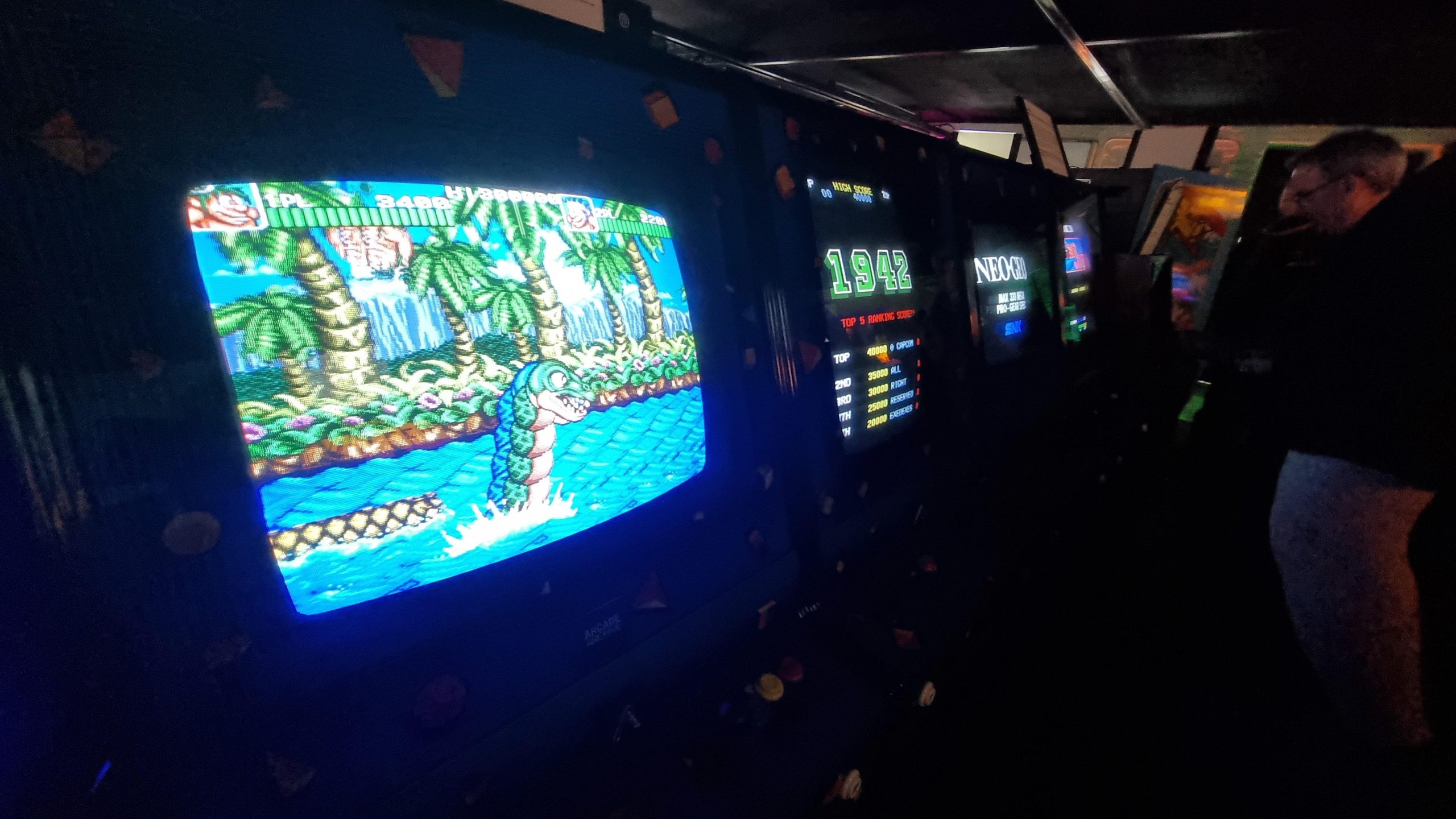
With the general size of modern-day games, it's easy to forget about the appeal of classic arcade-style games from earlier generations of hardware. It's easy to think of these games as being somehow "lesser" thanks to them not having in-depth storylines, not having hours upon hours of gameplay (assuming you can make it through them) and not having in-depth secrets and lore for theorycrafters to post six-hour video essays on YouTube about.
I'm as guilty of this as anyone. When I sit down to play a game in the evening, I'm usually prioritising whatever my "big game" is at the moment — Xenoblade Chronicles at present, for example. But sometimes, as I alluded to the other day, I'm in the mood for something different. And that's generally when I bust out something that doesn't take as long to play, but which I often find is still incredibly rewarding, relaxing and enjoyable.
Take The Excavation of Hob's Barrow, which I played and wrote about recently. I decided to play this pretty much on a whim, but almost as soon as I started I knew that I would be devouring this game within a day or two. And, rather than coming away from the experience feeling like I hadn't had value for money from the game because it only lasted for 6 hours, I came away not only immensely satisfied with the experience I'd just had, but also inspired to write nearly 3,000 words about it.
It's the same any time I jump into something a bit shorter. I need to stop thinking of these as "filler" games, as it's easy to do, and actually settle down and spend some proper time with shorter experiences. Because there's a lot to appreciate in them, and it's valuable to consider the various different ways that interactive entertainment can engage our brain, excite us and distract us from the misery that is generally existing in 2025.
I'm feeling increasingly attracted to 16-bit games specifically, and with that in mind I've ordered an FX Pak Pro for my Super NES. This is a flash cart from the Everdrive maker Krikzz, based on an open source project known as SD2SNES, and it supports pretty much every SNES game you can think of, including the ones with the funny custom chips like the Super FX chip or DSP chips — and supposedly it even runs Game Boy games via the Super Game Boy 2 setup. I'm looking forward to loading it up with European SNES ROMs — the TV I run my SNES on doesn't like doing 60Hz — and spending some quality time with some excellent 16-bit games in the very near future.
And, once my wallet has recovered from the not-inconsiderable amount that the FX Pak Pro costs, I'm going to do the same for the Mega Drive and have an absolutely delightful selection of games to spend some time with when I just feel like kicking back and playing things that aren't too demanding of my time.
I do like collecting retro games, but realistically speaking, I have a few considerations: firstly, I don't have a lot of space for more games, and the priority on the remaining space is for current stuff; secondly, retro is getting very expensive, and not always worth the amount you need to pay to get stuff in reasonable condition; and thirdly, retro is also getting a bit unreliable at times. I bought the game Desert Strike three times from CEX and all three cartridges have an issue in the same way. It's not my SNES because that runs absolutely everything else just fine. Combine that with the fact that batteries in carts with save game functions are starting to fail and it's just easier to go the flash cart route. It's not as if buying a second-hand copy of a game from CEX is sending any money back to the original devs, after all — and as a general rule, if something I enjoy gets an official rerelease on a modern system, I will happily pay up for a physical copy of it. (Even better, often with Evercade I get to be part of making those physical releases!)
So yeah. 16-bit is where it's at for me at the moment. And with that in mind, I think a few more attempts at Midnight Resistance before bedtime.
Want to read my thoughts on various video games, visual novels and other popular culture things? Stop by MoeGamer.net, my site for all things fun where I am generally a lot more cheerful. And if you fancy watching some vids on classic games, drop by my YouTube channel.
If you want this nonsense in your inbox every day, please feel free to subscribe via email. Your email address won't be used for anything else.
I am an avid reader of Ed Zitron's blog (sorry, newsletter, because apparently that's just what we call blogs now) Where's Your Ed At? If you're at all interested in the tech space, I highly recommend you subscribe or at least check in on it regularly, because Zitron is one of the only people in the space who has the balls to say it like it is: that an awful lot of what is coming out of the mouths of tech companies right now is complete and utter bollocks.
Today, a story went round about a research project at Microsoft where they were using generative AI for "game ideation", and also noted that they thought they could use their generative AI models for "preservation". This was reported on by Tom Warren, senior editor at The Verge, thus (screenshotted rather than embedded 'cause the coward deleted it after everyone dunked on it):
Now, if you know anything about video game preservation, you know that feeding an old game into a generative AI model and then hoping it will hallucinate at least a rough approximation of the original game experience is not "preservation". It's bastardisation at best, a completely useless endeavour at worst, and a massive waste of energy and money regardless of the result that comes out of the other end.
Game preservation is a problem that, for the most part, we have solved. We have excellent software emulation solutions, built over the course of decades of development. Hardware emulation via FPGA at an affordable cost for the general public has advanced hugely in just a few short years. Software libraries for pretty much any system you can think of are archived in their entirety at numerous places across the Internet, and strong strides have been made in providing commercial, legally relicensed versions of classic games for a modern audience, both on existing modern systems and on bespoke emulation-centric devices.
So why, then, why the fuck would we want a generative AI model to make a best guess at what a video game that already exists and has been preserved perfectly well might look like if you play it for longer than 10 frames?
That paragraph above is what tech journalists should be asking. And the reason I bring up Ed Zitron at the start of this post is because he's one of the only people to actually ask questions like this: to take a look at the utter garbage being spewed by today's tech companies and to say "this is complete horseshit, what the actual fuck are you on?"
And Zitron, being an outspoken type, is not afraid to call out today's tech journalism space for not doing this. And he's absolutely right to do so. It is the tech journalism sector's job to look at what it going on, to realise that it is complete horseshit and then have the confidence to say that it is complete horseshit.
But they won't do that, for a variety of reasons. Advertising deals. Exclusive access. PR partnerships. An inexplicable desire not to rock the boat, despite the fact the boat has a huge hole in it and has been steadily sinking for 15-20 years at this point.
I'm not one of those people who thinks that journalists are taking bribes for positive reviews in literally all circumstances — I have experience in the industry, remember, and the most I had to worry about in that regard was a mild admonishment from my editor for criticising a Mortal Kombat game's DLC plan when Mortal Kombat was the cover game for that issue of GamePro.
But come on now. Tech journos should be looking at this utter garbage that keeps getting flung our way, and instead of declaring it "interesting" and doing the stupid looky-eyes emoji that makes their post immediately look like a 14 year old girl wrote it, they should be going "hang on a minute, what does that actually mean?" then exploring it further, asking some probing questions (which inevitably won't get a response, but that in itself says something) and then confidently declaring the latest generative AI "innovation" to be what it is: complete and utter horseshit doused in the finest snake oil.
And people wonder why the entire journalism sector is floundering. Could it perhaps be because very little actual journalism seems to be getting done?
Shout-out at this point not only to Ed Zitron's aforementioned blog, but also the excellent coverage of the Elon Musk nonsense in the States by Wired's politics department, 404 Media being a rare example of tech journalism that actually asks those hard-hitting questions, and Aftermath for doing something similar with games journalism. There are still people doing good work out there. But the people on the big, well-known mastheads, like Warren above, need to step their game up, stop being so incredulous and start acting like actual journalists.
Want to read my thoughts on various video games, visual novels and other popular culture things? Stop by MoeGamer.net, my site for all things fun where I am generally a lot more cheerful. And if you fancy watching some vids on classic games, drop by my YouTube channel.
If you want this nonsense in your inbox every day, please feel free to subscribe via email. Your email address won't be used for anything else.
Likely to be a long one today, and I'm not entirely sure exactly what I want to say, nor exactly how to say it, but I ask you to indulge me, whether you're a regular reader, someone who stumbled across this page, or someone I specifically pointed in the direction of this post.
I'm just going to start typing and see where things go from there.
This is something I've been meaning to write for some time, but have never really known exactly how to write it. It's probably going to be difficult to write, it's probably going to be difficult contemplating the possible reactions to it, and I honestly don't know if it's a good idea to even write it at all in the first place. But having had… Feelings festering inside me for probably the best part of a decade and some change at this point, I think it's time I got at least some of them down on paper.
I was inspired to write this by Chris "Papapishu" Person's excellent post over on Aftermath, I'm Only Here Because I Was A Forum Poster, in which he contemplates how, in the mid 2000s, he found a community of like-minded folks on the forums for 1up.com, and that, via a somewhat roundabout route, resulted in him being a professional games journalist, initially for Kotaku and subsequently for Aftermath.
Pishu isn't the only person for whom this is true. I can probably attribute my current position indirectly to those days back on the 1up.com forums, and Jeff Grubb and Mike "Tolkoto" Minotti of Giant Bomb, both specifically namechecked in Pishu's piece, almost certainly have their own similar stories. Those heady pre-social media days on 1up.com were, it's fair to say, a real high point for online socialisation for me and for many others, and I feel like things have only gotten worse since the collapse of that site and its consequences: the community scattering to the four winds, never really settling down and calling one place "home" ever again.
I first came to 1up.com because of the family connection. My brother, John Davison, helped to launch the site, and was also working on Electronic Gaming Monthly and the Official U.S. PlayStation Magazine at the time. 1up.com was a bold new experiment in online video game-related media: its social features were, at the time, pretty revolutionary, allowing any of its users to start a blog, create a club with its own private message board, and post on the forums. The site still had professional staff, of course, and for many folks the various 1up.com podcasts by that staff were a real highlight of the site. But for me, the thing that made me happier more than anything was the sense of community it had at its peak.
As someone who is what I now understand to be autistic, finding a community of like-minded nerds online was an absolute lifeline. Finally, I had a place where I could well and truly be myself, among "my people". And it didn't take long for me to find a niche within a niche: nerds who enjoyed video games, and who enjoyed talking about them at great length, in great detail, and with a mind to proper in-depth critical analysis rather than just flame wars or quickly writing things off because they didn't score over 80% in a review.
If you look back over the past entries of this blog, you'll see frequent references to "The Squadron of Shame". This was a loose conglomerate of 1up.com members who came together after a discussion on the 1up Yours podcast about "The Pile of Shame": what today tends to be referred to as "the backlog". The pile of games that you've bought, but haven't gotten around to. The games you always meant to play, but haven't. The games that don't get the time of day in reviews, but which you always thought looked interesting.
Fun fact: the first video I ever posted on YouTube was a hacked-together "trailer" for the games we'd covered up until that point.
1up Yours was initially intending to pick a game from the hosts' respective Piles of Shame, play it as a group, then discuss it the following episode, book club style. They didn't really manage to do that — and this isn't a criticism or admonishment of them, as they were all busy people — but a group of us on the forums thought that it was a really good idea… so we did it instead, beginning with the game the 1up Yours crew intended to cover: Psychonauts.
Squad "Missions", as they were known, took the form of a forum thread, in which the person proposing the "mission" would outline the reasons they thought the game in question was noteworthy and why they thought it could do with some in-depth discussion. These initial posts were often long and in-depth in their own right, and they set a good tone for the subsequent discussion: Squad threads became notorious as being wordy, but no-one gave us grief for it, and we often got a shout-out on 1up Yours for successfully picking up and running with the otherwise aborted concept.
One day, something terrible happened on those forums, and I'm not entirely sure why. Where there once had been a selection of subforums specific to particular types of discussion — including individual platforms, plus a special forum for the "1up Radio" podcasts, which is where the Squad threads resided — there were now just two forums: "Games" and "Not Games". Presumably this was done in an attempt to make moderation easier, but it was the beginning of the end for 1up.com's community.
The first Squad thread we posted under this new layout (in "Games") was immediately trolled by someone, clearly unfamiliar with how we had done things on the 1up Radio boards, complaining about a "massive fucking wall of text", and things derailed quickly from there. It was abundantly clear, both from this forum upheaval and various other behind-the-scenes happenings at 1up.com, that the writing was on the wall for this community, and so we started looking into alternative approaches. (1up.com actually hobbled along until 2013, but most of the community and staff left long before that.)
Many of us settled on the fledgling Twitter as a means of interacting with one another, but one of the most important things we did was organise a podcast. This would take the place of our megathreads on the 1up.com boards, and allow a rotating group of us — with several regulars — to discuss the games in-depth, in person, for as long as we wanted. Although severely lacking in confidence to speak up when surrounded by people I always felt were probably a lot more clever and articulate than I was, I quickly developed a reputation among the group as The Guy Who Was Good At Editing The Podcast, so my seat in pretty much every episode was all but assured, and I made a (now-defunct, and apparently non-archived) website that left a written record of all the podcast episodes and the things we discussed. (The episodes themselves, thankfully, survived — you can find them all on my Soundcloud.)
For a while, things went well, and friendships solidified. I even made the trip across the pond to visit various other members of the Squad (who were mostly North America-based) on multiple occasions, and we played host to some Squaddies on at least one occasion that I recall.
We changed the format in which we discussed things several times over the podcast's complete run, shifting from the "book club" format to focusing on a particular topic and bringing our own examples to the table. Things were good, for a while. Then we stumbled across Katawa Shoujo, a visual novel about a boy with a heart condition and how he came to love a group of girls with disabilities that he came into contact with when they all attended the same special school.
Katawa Shoujo was — is — a thoroughly interesting cultural artifact, if you're unfamiliar. It stems from the work of an independent Japanese artist named RAITA (if I remember correctly), who sketched some girls who had various forms of physical disabilities. Various members of the notorious imageboard 4chan found these images somewhat striking, and so, seven years after the original images' publication, they took the unusual step of forming a development collective of individuals from all across the world in order to bring these characters to life. The result was an absolutely fascinating visual novel that handled the subject matter infinitely more sensitively than anyone would have ever expected, given the origins of the development team being a website commonly referred to by many (not without cause) as a "cesspit".
In keeping with the visual novels that tended to come west at the time of its release, Katawa Shoujo was a sexually explicit game, featuring erotic scenes between the protagonist and each of the various heroines. Unsurprisingly, this made some people uncomfortable, particularly given the high school setting of the game and the way it (like many other localised Japanese works) left the cast members' ages somewhat ambiguous. And, although we had a great podcast discussion about the game itself — during which several of us opened up emotionally more than we'd ever done in public before — some damage had been done to our group. I don't blame the folks who splintered off or their reasons for it, but I am still sad that it happened, because it marked the beginning of the end.
We managed a few more episodes post-Katawa Shoujo, but eventually things petered out. We'd had plans for a Squadron of Shame website with its own forum to host discussions just like in the Good Old Days, but it took a long time for those to come to fruition, and it never quite built up the same momentum as in the 1up.com era. Eventually, it fizzled out completely, and after many years of reflection I probably can't say with any confidence that I was completely blameless in this.
Around the time of our Katawa Shoujo discussions, I'd started getting to know one of our members known as "Shingro" a bit better, and he was particularly interested in anime, manga and Japanese games. He, along with a couple of other people I knew in other places online (including Google+, remember that?) had given me some recommendations for some localised Japanese games to try — games that never got much attention from the press, weren't received particularly positively when they did, but which were likely to appeal to anyone who "got" what Katawa Shoujo was going for. Among those games were the early entries in the Hyperdimension Neptunia series, the Atelier Arland series and the Ar Tonelico series.
I played and absolutely adored all of those games, and, along with Katawa Shoujo, found that I was experiencing something unusual and interesting: I was enjoying games that felt like they had been tailor-made to suit me and the way what I would later come to recognise as my neurodivergent brain worked. I recognised that they likely wouldn't appeal to everyone for a wide variety of reasons — and not just the sexually provocative element. They were unabashedly cheerful, they were colourful, they were often gleefully experimental (and not always successfully so) with their game mechanics, and their voice acting had a lot of screeching and shouting, particularly if you played in Japanese.
But I liked them for that; they knew their audience, and they unashamedly catered to that audience and no-one else with a laser-like focus. I started to discover hidden depths in these games; even the most silly-seeming ecchi titles, like Senran Kagura Burst, had something interesting to say, and they often had a lot less shame about it than many mainstream titles, many of which were still in their "dark and edgy equals mature" phase. In stark contrast to my growing disillusionment with triple-A games — Gears of War was my absolute last straw in this regard, as I hated that game and pretty much swore off "big games" after that — I felt like I was discovering gaming afresh for the first time.
And, naturally, I wanted to share the way these games made me feel. So I did. And for a while, things were okay, until I saw a few messages that made me feel a bit uncomfortable. Messages that, while it almost certainly wasn't the intent, given the sources, made me feel like I was being judged for the type of entertainment I was enjoying — entertainment that, let's not forget, I had recently come to feel was "speaking" to me like pretty much never before in my gaming career. Words like "creepy" and "perverted" were bandied about a bit too readily, and I… did not like that.
For a bit of context, I was struggling in my personal life around this time. (So what else is new?) Shortly after I took one of the aforementioned trips across the pond to meet some Squad members at PAX East in Boston, I split up with my first wife. And I… did not handle it very well. I felt betrayed, broken, utterly destroyed, and the things that I could cling onto for some degree of comfort in those trying times were of increasing importance to me. By the time Katawa Shoujo and the aforementioned other games came along, I was several years deep into A Difficult Time and, although I had met Andie, the wonderful person who is now my wife, I was still struggling and in great need of comfort.
I started to get frustrated when I saw the things I enjoyed come under what I perceived to be "attack". In the early to mid 2010s, this really started to come to a head, as the modern progressive movement started to really raise its head online — and was being more than a little abrasive about it, with public shaming often being the weapon of choice. In retrospect, I recognise how effective this can be — and how flaccid groups like the USA's Democratic party appear when they're not willing to step up and confidently declare their opponents to be Bad People — but at the time, I did not like it, particularly as I saw people I knew and cared about caught in the crossfire on multiple occasions.
At this point I should clarify that I have always had beliefs that are broadly in line with what one would call "progressiveness". I believe that straight white men have indeed been in a position of power and privilege for many years, and that marginalised groups, including women, have had an uphill struggle to stand on the same level — and that it is the responsibility of those who are in positions of power and privilege to help others up, so we can all benefit. I believe trans rights are human rights, I believe everyone has the right to love whoever they want to love, regardless of gender, and I believe racism is something we should have left behind long ago, and that it doesn't go challenged nearly often enough these days.
At the same time, part of my frustration stemmed from those mid-2010s feeling like I was being demonised for my gender and my sexuality in particular. I am sure at least part of this was down to my vulnerability at the time, but when I saw articles literally branding people who liked certain games as "creepy", "paedophiles" and "sex pests", I didn't like it. At all. Striving for equality, I felt, shouldn't mean dragging people down — particularly when there's a lot more nuance to the situation than just "white straight man = privileged". As someone having difficulty with my own personal situation — and what I later learned was neurodivergence — I certainly didn't feel like I was in the same position as the hypothetical straight white bogeyman, sitting in his suit with his perfect white teeth, counting his money and posting slurs on the Internet.
So I lashed out. There are numerous posts on both this blog and on MoeGamer where I did just that: I attempted to express how I was feeling about this. I attempted to express how these things that were important to me made me feel — and how it made me feel when I was called all manner of horrible names simply for what I liked, including by former colleagues. When I left USgamer, I was subject to some absolutely horrible abuse from an individual who joined the organisation as I was on the way out, and I received absolutely no support from anyone when that happened.
All this, as you might expect, eventually attracted the attention of the Gamergate crowd, who also counted among their number people who liked sexually provocative (or explicit) games, just like I did, and seemed to be forming a community of like-minded folks. I recognised even in the early days that Gamergate — and particularly its subreddit, KotakuInAction — was a scarlet letter, so I always took care not to publicly associate myself with the movement or even express support for it, particularly as things escalated and it became clear that no, for some of those people, it really wasn't about ethics in games journalism.
I maintain to this day, however, that among the early Gamergate crowd were some genuinely good people who wanted change for the better — and in a few cases actually achieved meaningful change that didn't involve any sort of bigotry — but with the inherently disorganised nature of the whole thing, it was, in retrospect, very easy for it to become an alt-right pipeline, and for bad actors to take control of things. And, as silly as it may sound for a dispute supposedly over video games to have such power, I firmly believe that at least part of the reason the world (particularly the online world) is in such a mess today is down to Gamergate.
Although I continued not to associate myself with Gamergate or its supposed beliefs, I found supporters from among its members for what little overlap we had. And I won't lie, it was nice to feel like there was someone who supported the way I felt, regardless of where they'd chosen to plant their flag. I found people who seemed to understand me, many of whom were on the periphery of the whole "culture war" by choice, much like I was, but who often got dragged into things whether they wanted to or not.
I continued to feel frustrated and vulnerable, though, like I was being pushed aside by people I had once called friends and a community I had once felt part of, all for the things I enjoyed. I continued to lash out, including towards people who had once been good to me, close friends, all because I felt like they had "sided" with people who didn't value my opinion, who wanted to brand me some of the worst names you can call people. And all because I liked anime-style games that occasionally crossed a line into sexual provocativeness or explicit scenes.
I said some things that I regret on multiple occasions, and I am deeply sorry about that. I recognise today that, in retrospect, I was standing at the very mouth of the alt-right pipeline and, if I had made some very different choices, I would be in a far worse situation than I am in today. Thankfully, I eventually recognised the danger I was in, and successfully changed my ways in such a way that I could continue to enjoy the things I loved without putting myself at risk of becoming one of those "everything I don't like is WOKE" idiots who infest online discourse today. And one of many positive results from that was a very enjoyable period in charge of Rice Digital, which subsequently led to my current position with Evercade — a job that, were it not for the necessity to check in on social media every day when I have otherwise mostly abandoned it for my personal life, would be 100% a dream assignment.
That doesn't change the regrets I have, though, and I wish I had come to the above realisation sooner than I did. There was still a period where I was in a bad place, and doing bad things, whether or not I really intended to. I deeply regret lashing out and pushing people away, and I wish I could make up for what I did, regardless of my reasons for it.
The reasons don't even matter any more; all that remains is the result, that being that I am growing older, I am mostly alone (except, thankfully, for the blessings that are my wife, cats and family) and in complete and utter despair at the mess I've made of my interpersonal relationships over the course of the last decade and a half.
I have many regrets. I am sorry to those I hurt. And I want to make things right. I just don't know how.
So this post is, hopefully, a start.
If you're reading this and you used to know me before… all this, I would like to know you again. I'm sure both our lives are very different to how they once were, hopefully for the better. On the whole, my life is much better than it was 10-15 years ago.
But I wish I hadn't lost those 10-15 years, and all the people I lost with them.
I am sorry to those of you I pushed away, either consciously or unconsciously. I am sorry to those of you I hurt. It doesn't matter if it was deliberate or not; if I hurt you, I hurt you, and I am sorry.
I just want things to go back to how they were during that one brief time in my life when I can say I was happy, when I felt I was accepted, when I felt I was among "my people". I know it can never be exactly the same as it once was. But I'm willing to put in the work needed to rebuild, reconnect and rekindle lost friendships.
Whatever it takes.
Thanks for reading.
Want to read my thoughts on various video games, visual novels and other popular culture things? Stop by MoeGamer.net, my site for all things fun where I am generally a lot more cheerful. And if you fancy watching some vids on classic games, drop by my YouTube channel.
If you want this nonsense in your inbox every day, please feel free to subscribe via email. Your email address won't be used for anything else.