
1979's Star Raiders and its 1986 sequel are, to me, two of the most memorable games I've ever played. The original Star Raiders was notable for being a pretty convincing simulation of what it might like to be to fly a spaceship and defend a galaxy that absolutely, 100% wasn't ripped off from Battlestar Galactica, oh no, from the "Zylons". Sure, it had crude graphics and sound, but its interesting blend of spaceflight, combat and light strategic elements made it a compelling example of early gaming that is actually still perfectly playable today, unlike many other retro "classics". It also taught me what "red alert" meant long before I ever saw my first Star Trek episode.
Its sequel upped the ante with better graphics, a wider variety of foes to battle against and more things to do than just fly around and shoot Zylons in space — you got to orbit planets, take on motherships, bomb bases and all sorts of things.
Now, some 25 years after the last Star Raiders game made an appearance, we have a brand new one for both Xbox 360 and Windows (and, if Sony ever gets PSN up and running again, PS3.)
I will preface this by saying that if you are thinking about playing this game on a console, just don't, all right? If you never played Wing Commander III on PlayStation 1, you've never known the horror of having too many controls and not enough buttons on your joypad. Hint to developers: if you need to include a "shift" button in your joypad-based control scheme, you may wish to rethink it somewhat.
Try it on a PC with a proper Giger alien-penis joystick and some not-inconsiderable control redefining, though? Now that's more like it. What we have here is a relatively simplistic space game that, unlike many recent examples, remembers that space is three-dimensional, and that it is, in fact, possible to "loop the loop" in space, along with go up and down, turn left and right and roll around your axis.
A good start. Add a transforming ship to that mix and you have some interesting possibilities. Your all-new Star Raiders ship (called, inexplicably, "Jasper") can transform between "Attack" (constant forward movement, high top speed, poor turning, guns and missiles), "Assault" (mech-like move-and-strafe, lower top speed, excellent turning, guns and heavy laser beam) and "Turret" (rapid aiming, snail's pace movement, super-powerful heavy weapons) modes. When I first started playing, I wondered why you'd ever want to switch out of "Attack" mode, until I realised that I was spending an awfully long time chasing down Zylon fighters that were more manoeuvrable than me. So I switched to "Assault" mode and found that I could kill them rather more easily. And "Turret" mode came in handy for dealing with capital ships.
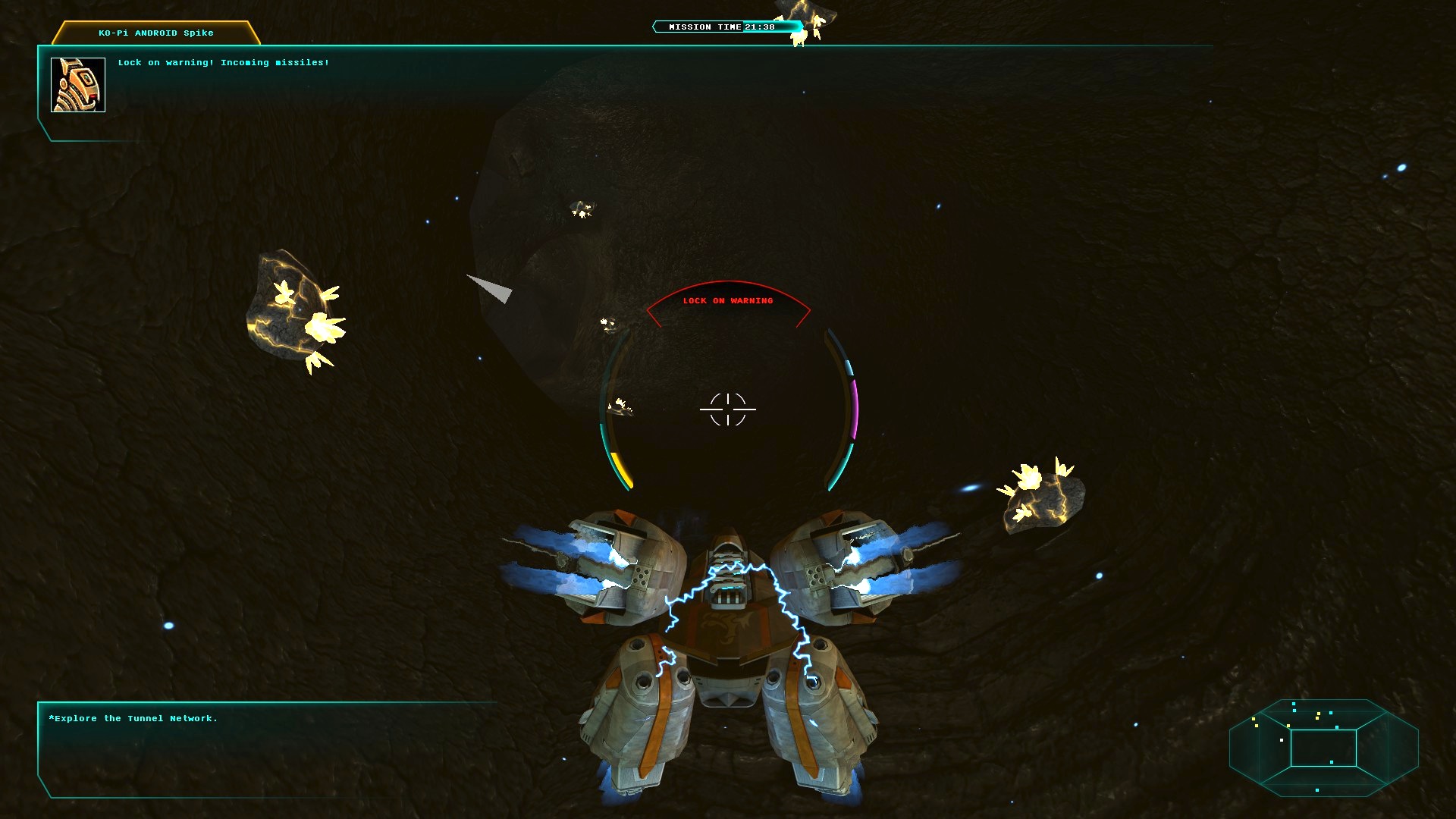
The first few missions were a bit samey, despite claiming to be "recon" and "combat" missions — they all seemed to involve "destroy [x] number of Zylon fighters", possibly against a time limit. But then the fourth "story" mission came along, which tasks you with finding a piece of a secret weapon that will help you deal with a Zylon secret weapon. Said piece of secret weapon is stashed somewhere in an asteroid. And this asteroid is pretty big. So big that when you're flying over its surface, you'd be forgiven for thinking you were conducting a planetside mission. Not only that, but part of the mission involves going inside the asteroid, at which point switching to Assault mode effectively turns the game into Descent, which is awesome. I'll ignore, for now, the fact that the game crashed on me at this point just as I was about to finish that mission.
I wasn't sure what to think of Star Raiders when I first started playing it. Then I looked at the clock and realised I'd been playing for nearly two hours. So something must be right somewhere. It's clearly not the original game in any shape or form — the "galactic map" interface in the game is a glorified mission select screen rather than the strategic overview of the original — but what it does offer is a good, fun, if simplistic space combat game with some nice ideas and a horrendously poor control scheme on console.
At £6.99, though, you can probably afford to take a chance on it, though, right?
Oh, if you're interested, then…
Old:
 New (previously-mentioned Descent bit):
 It's a sad but true fact that returning to the games of your youth usually ends in disappointment as you realise that gaming has moved on a lot, and those games never got a re-release on Xbox Live Arcade or the like for a very good reason — they're not very good.
 Since I'm currently going through my backlog of games and beating them one at a time, it seems only fitting that I should write a sort of "review" of each one as I come to their (hopefully inevitable) conclusion. So tonight it's the turn of Final Fantasy XII, one of several "black sheep" of the series thanks to its complete defiance of established series conventions and adoption of a quasi-Western RPG style of gameplay. I will try and avoid as many spoilers in this post as possible.
 An oft-had discussion in gaming is what constitutes the "golden age" of gaming, or indeed if there has even been one.
 The
The 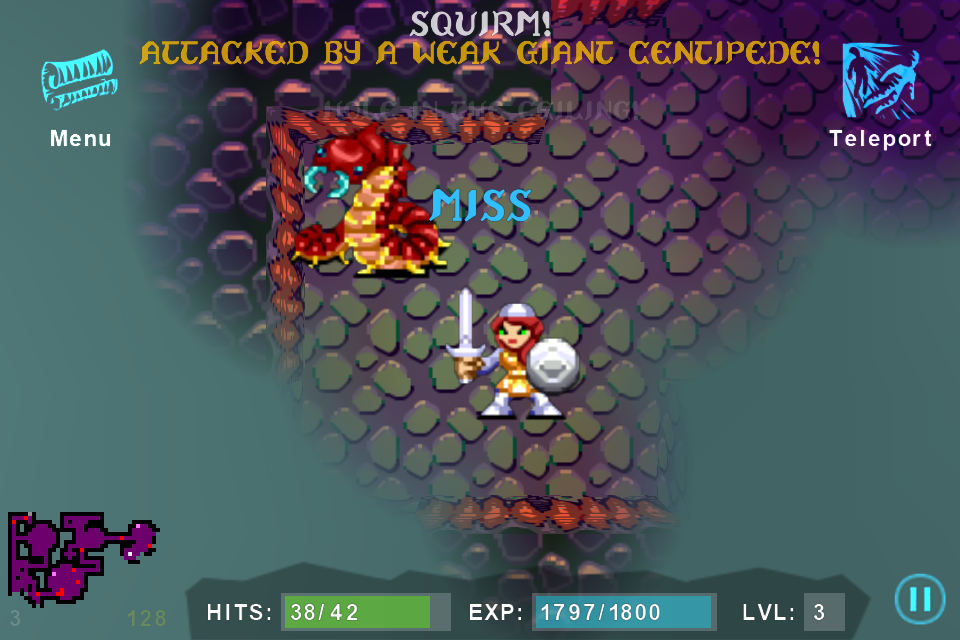 Sword of Fargoal is actually a remake of an old Commodore 64-era title which didn't look like the picture above. No, it looked like this:
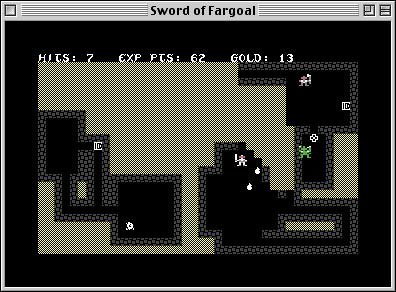 The best thing about Sword of Fargoal is its simplicity coupled with a surprising amount of hidden depth. While Angband is rather intimidating to get started with, with pretty much every key on the keyboard (shifted and non-shifted) mapped to something, Fargoal simply requires that you get to grips with moving and using a context-sensitive button in the top-right corner. And keeping an eye on the text display at the top of the screen for hints and cues, too. Combat is a case of running into an enemy—the player and monster will then take turns bashing each other until one or the other falls over or one runs away. Gold is collected to sacrifice at altars throughout the dungeon for experience point bonuses. And the rest is left to the player to discover. The more you play, the more you start to notice little graphical details and cues tipping you off to the location of traps or treasure.
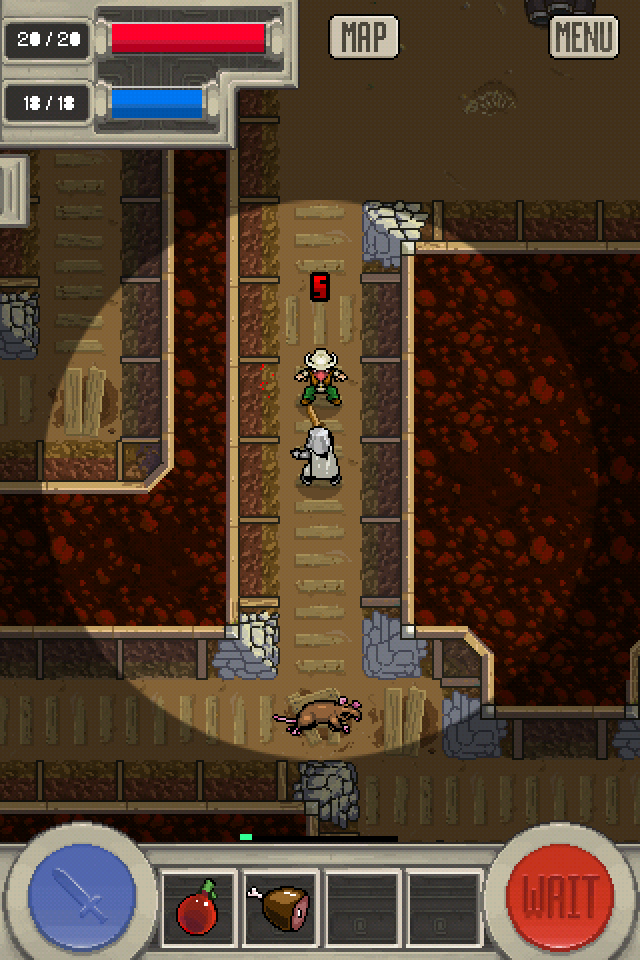 Then we have 100 Rogues, which takes a slightly different approach to that of Sword of Fargoal. While Fargoal's quest is lengthy, 100 Rogues can potentially be beaten in one sitting. Key word here being "potentially". 100 Rogues is particularly brutal, fond of surrounding the player and battering them to a pulp. Fortunately, the player also has a Diablo-style skill tree at their disposal, including a number of attacks that can beat back several enemies at the same time.
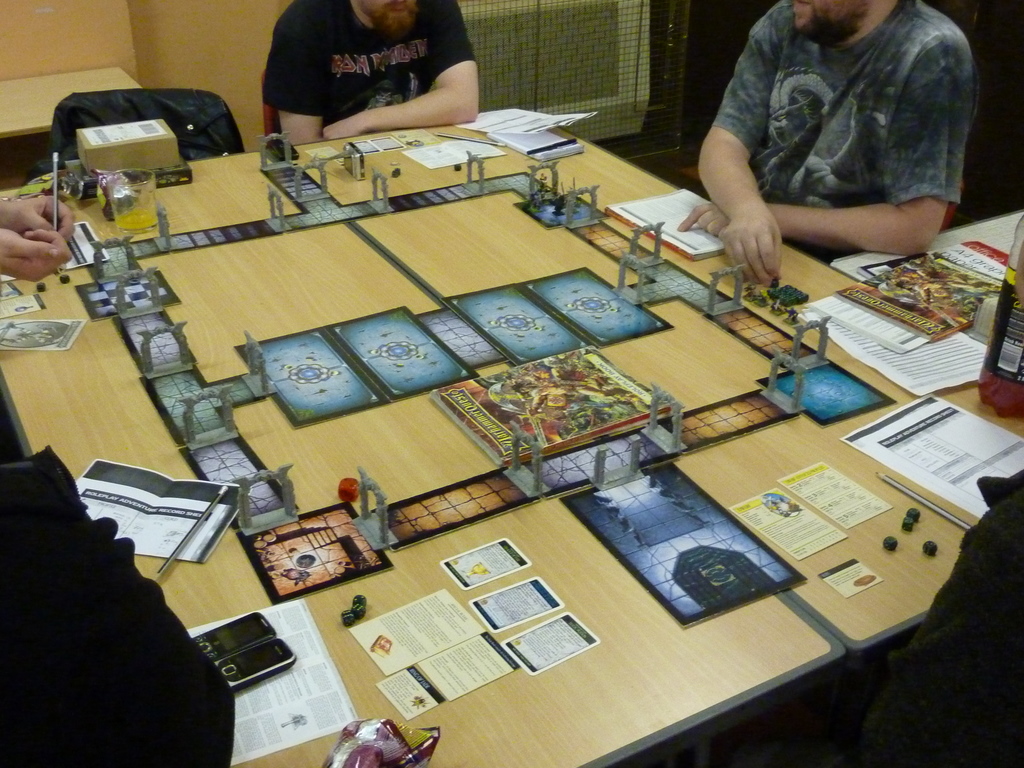 Finally, one of my favourite roguelikes of all time is Warhammer Quest, a game that involves you having people you actually don't mind being in the same room with. Featuring all the genre staples—a randomly generated dungeon, permadeath, brutal difficulty, vast amounts of phat lewt—it's very much the board game equivalent of Rogue et al. Even better, everyone gets to join in on the fun—there's no need for a Game Master player (unless you really want to use one) as the rules cater fully for monster "behaviour".
 I've been playing Scott Pilgrim vs. The World: The Game recently. Besides being an excellently fun game that hearkens back to the golden days of the brawler, it also has some of the most adorable graphics you'll ever see. By deliberately rendering things in low-res pixel art, it somehow manages to have approximately three thousand times more charm than the shiny brownness that is Gears of War. Granted, Gears isn't a cartoony game, so it's probably not an apt comparison. But even 3D-rendered "cartoony" or light-hearted games pale in comparison to some good old-fashioned pixel art.
 Tomorrow night, The Squadron of Shame are back in action after something of a hiatus.
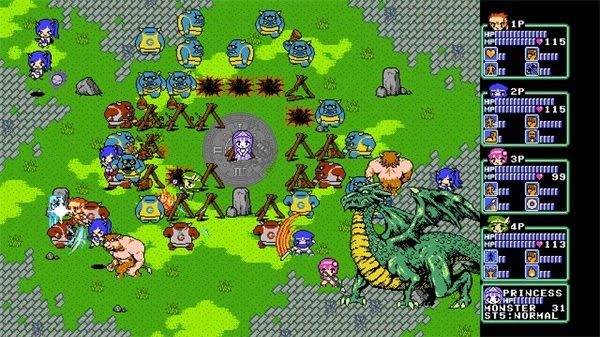 It becomes very hectic very quickly. And with multiple players, it's a hell of a lot of fun. It's an incredibly simple game—and pretty short, too—but it is unashamedly fun. And the Engrish continues throughout the game. The skill descriptions for each new level are hilarious. For example, the fighter's top skill (a spinning melee attack) is described as "MORE MORE MORE MORE MORE MORE TORNADE!" (with previous levels being "TORNADE!", "MORE TORNADE!", "MORE MORE MORE TORNADE!" and… you get the idea.)