2301: Overwatch

0301

I decided to give the game everyone seems to be talking about — Blizzard's new first-person shooter Overwatch — a bit of a go this weekend. They were running an open beta, after all, so there was no risk whatsoever involved in downloading it and giving it a shot.

And what do you know — it's actually pretty good. I'm not sure if I'm sold enough on it to want to pick up a copy when it comes out later in the month, but I certainly enjoyed the time I spent with it over the last couple of days.

For those who have perhaps heard of Overwatch but not found out any more information about it, it is, in many ways, similar to Valve's classic Team Fortress 2 in that two teams made up of various different characters with different capabilities face off against one another in order to complete an objective of some description. In the game as it stands at the moment, the objectives on offer include a "king of the hill" type affair, where over the best of three rounds, each team has to control a particular area on the map for a certain amount of time; an "attack and defend" situation, where one team has to defend a point against assault from the other team; an "assault" variant, where the attacking team has to escort a slow-moving "payload" vehicle from one end of the map to the other while the other team stops them; and a mode that mixes the "attack and defend" and "assault" objectives together.

Like Team Fortress 2, the different characters have different roles on the team. Offensive characters are nimble but fragile, with their weapons and abilities concentrating on inflicting damage efficiently. Defensive characters have the ability to do things like lay down turrets or, in the case of one particular character, turn themselves into a turret. Tank characters have a huge pool of health points so are designed to act as a distraction for the other team. And support characters generally have some sort of useful ability to help the team out — usually some form of healing, buffing or both.

Where Team Fortress 2 only had one character of each archetype, though, Overwatch has several, each of whom has a unique weapon and loadout of special abilities. Weapons have clips of ammo and have to be reloaded when empty, but you have infinite clips, so there's no hunting around for ammo or any punishment for spray-and-pray gunplay. You can restore your health by returning to your home base, similar to how Blizzard's MOBA Heroes of the Storm works. And if you find a hero isn't working out for you, you can switch either when you die or when you're in your base.

Overwatch strikes an excellent balance between simplicity and tactical depth. The characters are all easy to learn in terms of mechanics, but applying their weapons and skills to situations throughout a match is the real challenge. That and not blowing yourself up in some instances; my favourite character so far, D.Va, has the ability to self-destruct her mech suit, killing anyone nearby, which is an absolutely devastating skill, but also very likely to take you with it if you don't immediately run away.

There's also a fun metagame that doesn't fall into the Call of Duty trap of excessive challenges and skill levels: you simply have an experience level, which gives you a "loot box" every time you level up, and the items in the loot box are randomly selected skins, animations, spray paint logos and voice clips for the various characters in the game. None of these have any effect on the characters' abilities — they're just there as cool collectibles as an incentive for players to keep playing. The choice to make Overwatch a full-price game rather than a free-to-play affair also seems quite sensible, too; while some may balk at paying full whack for a multiplayer-only game, there's a substantial amount of content in here, both heroes and maps, and Blizzard claim that they're going to support the game post-launch with new, free add-on content rather than paid DLC. A round of applause for them, then; doubly so since their parent company is Activision, who loves milking the annual Call of Duty installments dry.

The other nice side-effect of it being a full-price game is that everyone has access to everything from day one. Everyone can pick a favourite character and get to grips with them without having to wait for them to come around in a free-to-play rotation; everyone is, in other words, on a level playing field to begin with, with no advantage given to someone who has paid up for characters, boosters or whatever.

As I say, I'm not yet sure if I'm convinced enough by the beta to hand over 50 quid for the full game when it releases later in the month, but I will say it's the most fun I've had in a first-person shooter for a very long time indeed, and I generally don't go in for competitive first-person shooters. The beta seems to have had some positive attention, too, so hopefully it will enjoy a solid community for some time — long enough for it to be worthwhile for Blizzard to keep adding new content.

If you want to give it a go for yourself, I believe you have until Monday morning to try it out. Better hurry!
2300: Buried Treasure

0300_001

Andie and I were both feeling a bit sorry for ourselves earlier (well, emphasis on me, somewhat; recent life has been getting me down a bit. All right, a lot.) so we decided to go out and do something together rather than sitting at opposite ends of the house playing computer games and not talking to each other.

Andie's sister Michelle had taken her Geocaching a while back, so she suggested we give it a try. Geocaching is something I've been meaning to try for a while but never got around to; it's also something that, I feel, is more fun with other people in tow, as you can put your heads together to solve problems then.

For the unfamiliar, Geocaching is a sort of real-world game that you play using a GPS-equipped phone, a pen and possibly some digging implements, tweezers and bramble-proof clothing. Hidden caches are marked on your map; you have to find them. Whoever hid the cache leaves a description, a hint and perhaps a hint photo to help you find them, then when you find it you open it, write your name and the date on the bit of paper inside it, log it on the website or phone app, then put it back so someone else can find it at a later date.

That's about it for the basics, really. There are different types of caches, including those that you're only "allowed" to register if you've fulfilled certain conditions beforehand, and those that hide their final location behind a series of riddles, but yes; the basic formula is go to place, find thing, log thing, put thing back.

What I find interesting (and pleasing) about the whole thing is that it's all built on trust, and people appear to stick to this honour system. I don't see any trolling on the cache pages, and I don't see any evidence of people deliberately and maliciously moving or hiding caches somewhere other than where they're supposed to be — both things I would have thought would be a risk with this sort of activity. But, at least in my local area, I haven't seen anything like that so far, though admittedly I've been out on just one excursion so far.

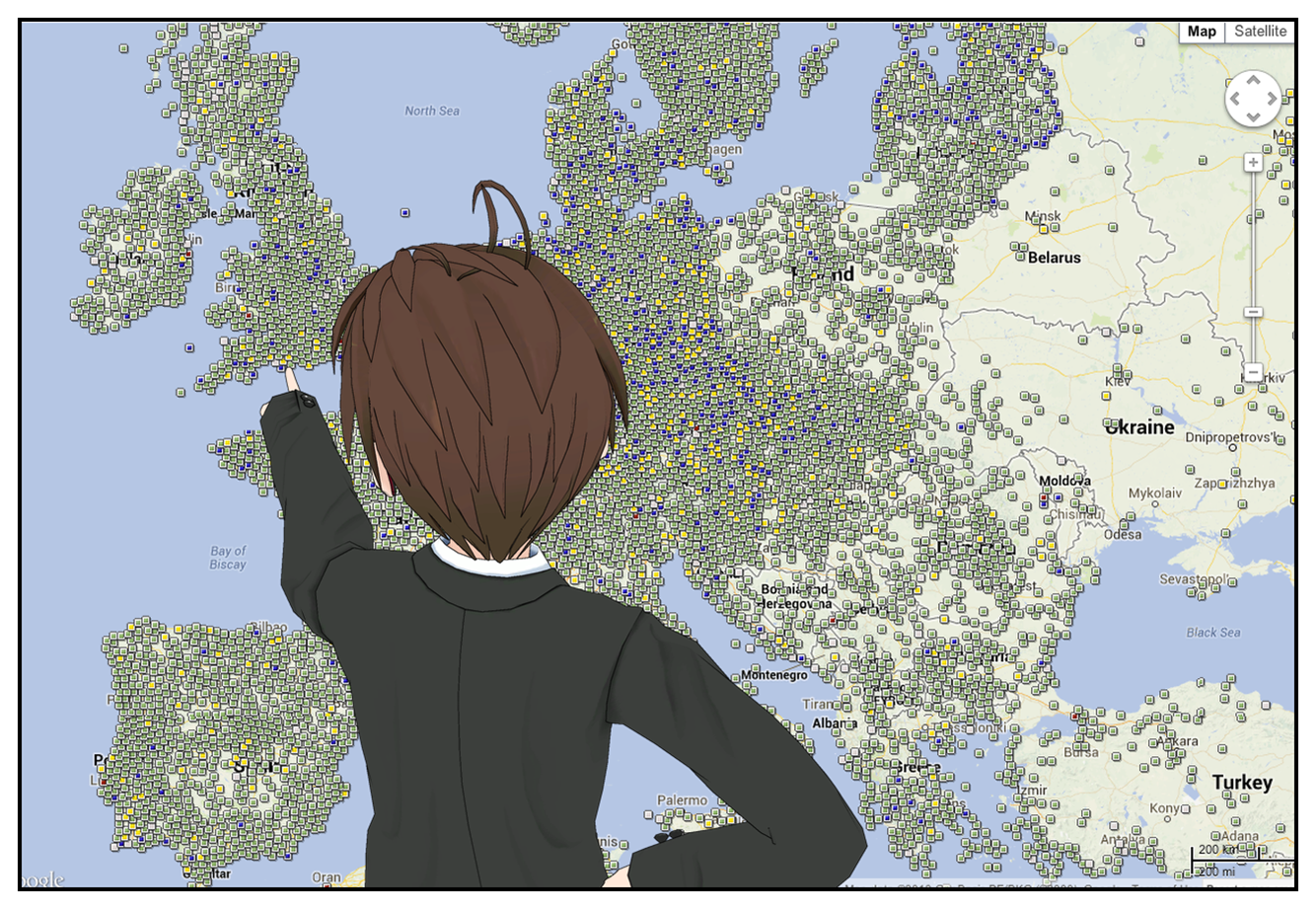
I think part of the reason that there's no trolling involved is that, despite technically being a "game" of sorts, Geocaching has very little in the way of actual "gamification", to use the buzzword that was popular a few years back. In other words, there's no scoring points, no earning experience, no levelling up, no badges — just a simple count of how many caches you've found and a map that gradually fills up with smiley faces as you successfully find the hidden goodies secreted at the various locations around your area — or indeed the area that you happen to be in, since one of the fun things about it is that you don't have to limit yourself to the local area, and can instead participate in it as an activity wherever you happen to be, assuming there are some caches hidden nearby.

It was a fun afternoon, then, and a pleasant way to spend a Saturday in the sunshine — though after all the walking we did we were both more than ready for a long sit down by the time we finished. I'm looking forward to giving it another try in the near future; there are still lots to find around Southampton, and I bet there's a whole bunch out in the New Forest, too…

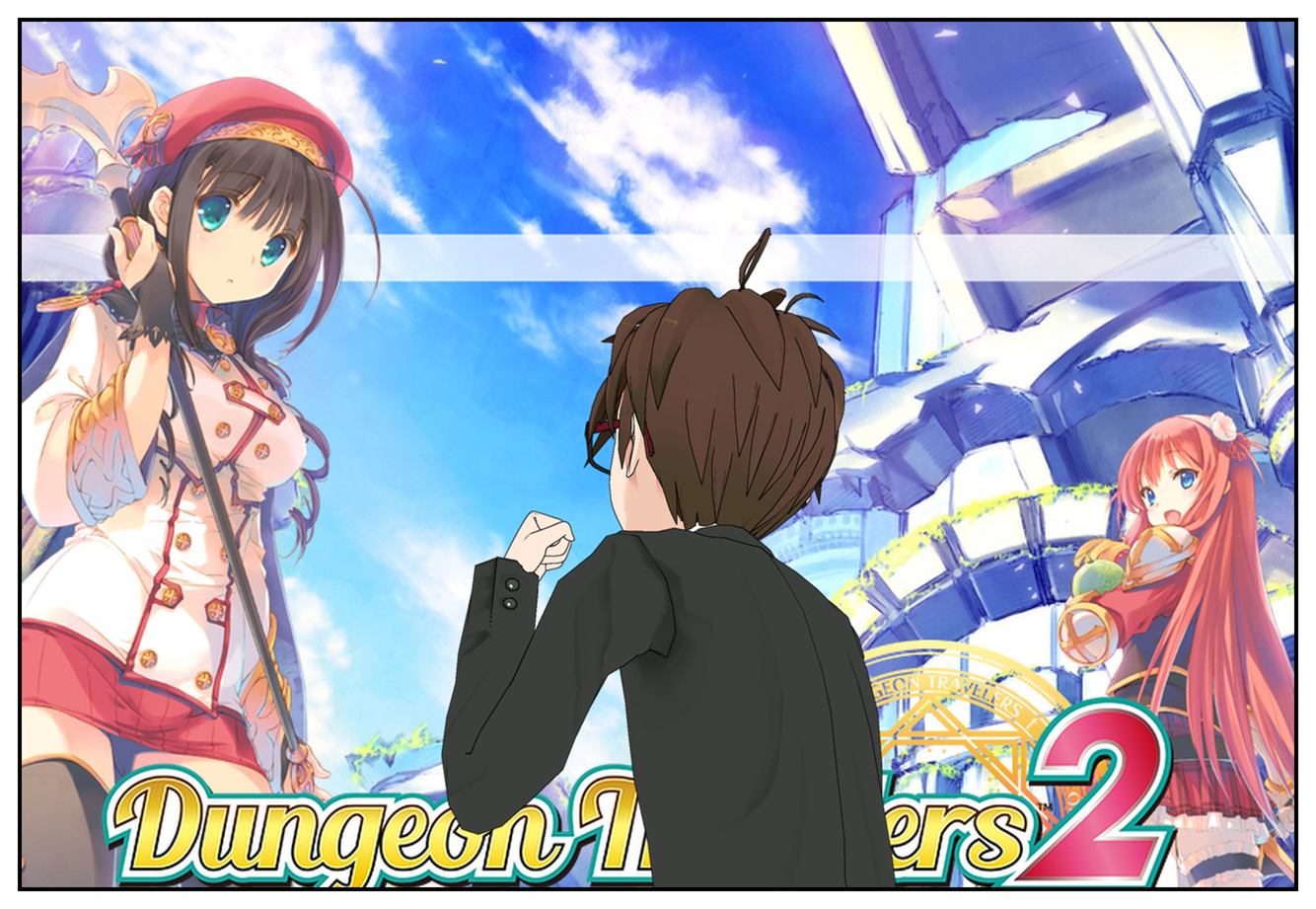
2299: The Sprawling Endgame of Dungeon Travelers 2

0299_001

I must admit, when I first started playing Dungeon Travelers 2 I was concerned that its dungeons were a bit on the small side compared to the dungeon crawler I had previously played, Demon Gaze. As the game progressed, however, it became apparent that I didn't have anything to worry about.

And then I heard about the post-game content. And then I got into the post-game content.

Demon Gaze had a certain amount of post-game content — most notably a fairly straightforward dungeon where you re-fought all the bosses from earlier in the game, then a horrendously difficult true final boss right at the end. It took me quite a while to plough through it, mind you, though this was partly due to the fact I was also chasing the Platinum trophy, which necessitated a certain amount of grinding on the random number generator in the hope of getting some of the best item drops in the game.

Dungeon Travelers 2's postgame is on a whole other level, though. It's practically a whole other game's worth of content; you finish the main story of the game around about the level 50 mark or so, and the postgame will take you to 99 (and beyond, if you level reset in the hope of "crowning" your characters through permanent stat bonuses) across a number of different dungeons.

What I find most fascinating about Dungeon Travelers 2's postgame is how much effort has been put into it. I find myself wondering how many people will beat the final boss of the main story, watch the credits roll and then put the game down. It would be perfectly valid to do so, after all, since the game is technically "complete" then, even if you haven't even seen half of what it has to offer. There aren't even any specific trophies for the postgame — the only trophies you're likely to see pop in the postgame is the enormous grind that is "kill 20,000 enemies" (you won't even have killed 10,000 by the end of the main story, but you most certainly will have at least 20,000 under your belt by the end of the postgame) and the Platinum. In other words, the only reward you're going to get from seeing the game through to its true end is the satisfaction of having beaten it.

But boy, is that going to feel good when it happens. The postgame dungeons are significantly more challenging than their main story counterparts, and in some cases make use of mechanics that haven't been seen anywhere else in the game. There are dungeons where you have to contend with the relationship between several different floors, dungeons where you have to flip switches to open coloured doors in the right order, dungeons where you have to bring certain classes in order to pass through certain doors (bet you wish you'd leveled Tsurara now, huh) and dungeons that are just a single floor, but absolutely enormous.

Each of the dungeons has two or three bosses to fight as you progress through them, and a level 99 God boss at the very end who will most likely destroy you if you charge in there when you first reach them. Instead, what you're supposed to do is explore each dungeon until you reach a trigger point (normally just before the door to the God battle) which opens up the next one. In a couple of cases, you have to increase your Quest Rank to a certain level before the next dungeon will open up, too, so hopefully you've been paying attention to the Quests as you go through the game!

I'm currently on the second-to-last dungeon, Gear Castle. This is a five-floor futuristic tower with a lot of puzzles. The first floor featured switches that opened blue or red doors (and closed the others), while the second was largely based around conveyor belts that you could switch the direction of with levers around the level. The third, which I'm currently on, features a mix of these two aspects, and I'm yet to see what the fourth and fifth floors offer.

Once I'm through Gear Castle I'm on the home straight: all that stands between me and final victory — aside from that 20,000 kills trophy, which I have no idea how close I am to — is the 30-floor Tower of Bogomil and whatever lies at the very top. I understand that reaching the 26th floor of Bogomil is a significant moment, as it's at this stage your party should be levelled enough to take on the Gods, so I'm looking forward to that with a certain amount of trepidation.

All in all, the clock is going to be well over 200 hours by the time I'm finished with this beast, and I have absolutely loved it throughout. It's seriously one of the best dungeon crawlers — if not RPGs, generally — that I've ever played, and more people need to play and love it.

Assuming I make it to the end by then, I'm planning a month of coverage on MoeGamer next month. There's certainly a hell of a lot to write about.

2298: Holiday on Zack Island

0298_001

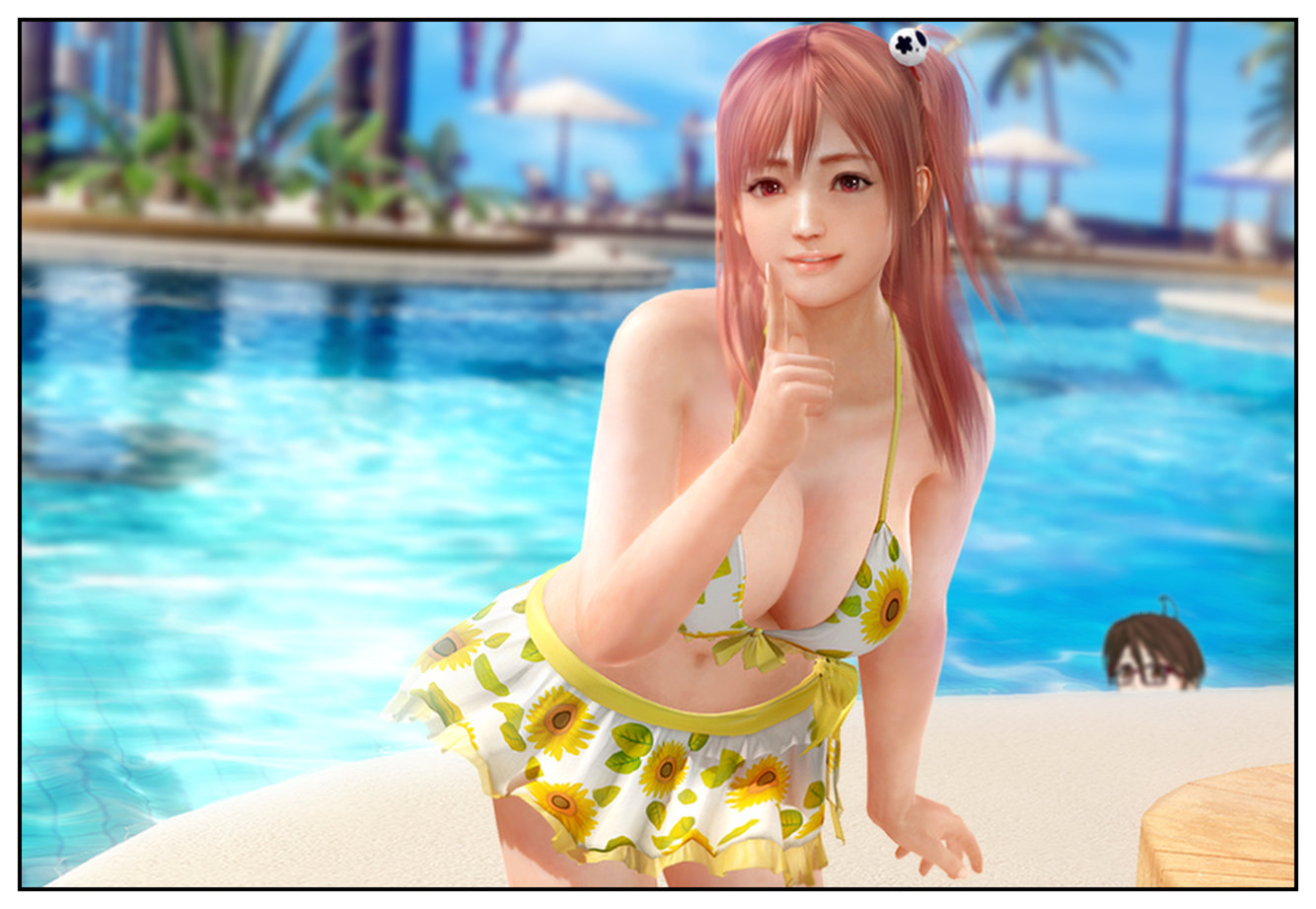
I wasn't just trying Dead or Alive 5 Last Round out of the blue yesterday; I was inspired to finally pick it up after playing some Dead or Alive Xtreme 3, which I've been enjoying a great deal.

For those unfamiliar, the Dead or Alive Xtreme series has very little to do with the fighting game series Dead or Alive save for involving some of the same characters — specifically, kickboxer and playboy Zack, who owns the various tropical paradises the Xtreme games unfold on, and a selection of lovely ladies from the series indulging in various holiday-ish activities.

The first Dead or Alive Xtreme game — Dead or Alive Xtreme Beach Volleyball, which many people thought might be a joke when it was first announced — was released on Xbox and largely focused, as you might expect, on playing volleyball, but there was a curious dating sim metagame attached, too, where you could give gifts to the various girls in the hope of getting them to partner up with you — you can't play beach volleyball without a partner, after all.

Dead or Alive Xtreme 2 on Xbox 360 was a very similar game but had a couple of additions to the original formula. Most notably, it added jetski racing, which was a hell of a lot of fun, and provided a reliable means of making money for those who weren't very good at volleyball or some of the smaller activities the game offered.

And so we come to Dead or Alive Xtreme 3 on PlayStation 4, which in many senses is a bit of a step backwards for the series in that it's closer to the original game in structure, but manages to remain enjoyable regardless. I miss the jetskiing in particular, but I'm enjoying the volleyball and other activities, and the fact that the game is a lot less obtuse about things like what gifts the girls like, what is happening to your relationship levels and suchlike makes it a much more pleasant experience. Couple that with a simple mission and levelling system plus a "grade" given at the end of every 14-day virtual vacation, and despite being pared back in terms of content, Dead or Alive Xtreme 3 is, in many regards, the most well-structured game in the series.

The thing I like about Dead or Alive Xtreme — all of them, but most recently in particular — is that it's just plain relaxing to play. Gentle, chilled out music plays in the background as you engage in various activities ranging from beach volleyball to rock climbing or a tug of war on floating platforms in the swimming pool. As day gives way to night, your chosen girl heads back to her hotel room and has the option to hang out in the casino and play roulette, blackjack or poker. Then the whole process repeats again.

The reason why it's so relaxing is that it doesn't put any particular pressure on you to play in a given way. "Mission" pop up every so often, either from the girl you're controlling or Zack, and these provide rewards for the overall metagame, but they're strictly optional. In the case of the girls' missions, they can provide a good indicator of how well you're doing on this playthrough, though — in order to get the best score at the end of her holiday, you need to have completed 7 of her specifically numbered missions, ending with "Satisfy [girl] by the end of the vacation".

Aside from that, though, you can tackle the game how you see fit. You can focus on trying to get a complete collection of swimsuits for a favourite character. You can work on trying to satisfy as many of the girls on the island as possible in a single playthrough — pretty difficult when you first start playing, but as you level up their "excitement level" over time, it becomes easier. Or you can switch to "Owner Mode" and just use the game as an attractive software toy, allowing the computer to take control of your chosen girl in various activities while you play with the camera angles and take photographs.

Dead or Alive Xtreme 3 is notorious for not getting an official English localisation due to some controversy a while back. There is some debate over whether or not publisher Koei Tecmo really believed that the game would be subject to backlash from social justice types when it was released, but you can bet if the game did see an official Western release, we wouldn't hear the end of it from the numerous holier-than-thou publications and writers on the market today.

The silly thing is, it's not offensive in the slightest. It's sexy, sure, but Dead or Alive has always featured spectacularly beautiful women, and this in itself isn't offensive. Some of the swimsuits are quite revealing, and some of the minigames cause an entertaining "swimsuit malfunction" for the loser, though the suit in question doesn't actually fall off or anything — it just comes untied and stays magically attached. In other words, there's no nipples, no fannies, no bumholes, no fucking, no kissing and definitely no holding hands. It's just an all-female cast hanging out on the beach, playing games and having fun rather than punching each other in the tits like they do in the mainline Dead or Alive games.

To put it another way, Dead or Alive Xtreme 3, like its predecessors, is a game that it's just nice to play. It's not a deep game, it's not a complicated game (unless you want to optimise your playthrough strategies for the fastest progress) and it's not a difficult game, but it is a game that it's just thoroughly pleasant to spend time with, and I predict it's one I'll keep coming back to when I just want to chill out and enjoy myself without thinking too hard about anything.

The perfect virtual holiday, in other words.

2297: Fighting Rhythm

0297_001

I've been giving Dead or Alive 5 Last Round a bit of a go. Dead or Alive has been probably my favourite fighting game series since its second installment on Dreamcast, although I wouldn't say I've ever been particularly amazing at it. The wonderfully assorted characters and the satisfying fighting action meant it didn't matter all that much, though; I just enjoyed the spectacle of the game, since it's always been quite a looker, and the PlayStation 4 incarnation of Dead or Alive 5 is no exception.

What I surprised myself with earlier today was how much I actually managed to get "in the zone" and feel like I was getting a much better grip on the button combinations necessary to fight effectively rather than just mashing the punch and kick buttons and directions randomly and/or instinctively. I deliberately invested some time in the game's training mode — by far the most in-depth, helpful and well-designed training mode I've seen in a fighting game — and came away with a somewhat better understanding of many of the mechanics as well as knowledge of at least a couple of basic combos. Doubtless not quite enough to make me competitive online, of course, but a start, at least.

When I was focusing on correctly performing these combos in the training mode, I found myself focusing and concentrating on the movements of my fingers in much the same way one does when playing a musical instrument. Speed and accuracy is key in both instances, and you won't truly master either until you have the necessary movements well and truly ingrained in your muscle memory. Music is perhaps a bit different in that performing a piece usually involves doing the same movements at the same time each time you play it, whereas a fighting game involves making use of various combos — musical phrases, if you will — according to the situation in which you find yourself. In some regards, then, it can probably be likened to an improvisatory performance; the cues are just visual rather than a chord sequence.

I've never been that good at improvisation, tending to fall back on a few reliable things that I know. In music, it's things like the blues scale; in fighting games, it's the few combos I know — inevitably the most simple ones. To step up your game in either field, you need to expand your repertoire: learn new phrases, be able to perform them on command, commit them to memory, then know the best circumstances in which to use them. It's something that takes practice, and something that not everyone will have the patience for.

I've shied away from many modern fighting games simply because their mechanics and systems seem so obtuse, with meters all over the screen and all manner of peculiar terminology flying around. Dead or Alive, meanwhile, has always felt like a relatively pure and easy to understand experience, and after my experiences today I find myself feeling a little more confident that I might actually be able to learn the game beyond button-mashing. Whether or not that ends up being the case remains to be seen, but in the meantime, I have one hell of a pretty game to look at.

(Also, Marie Rose best girl. Now I know, people. Now I know. Bakabakabakabaaaakaaaa!)

2296: Games Called "Simulator" That Aren't Simulators: A Joke That's Run its Course

0296_001

Back in the Good Old Days, my Dad played a whole lot of Flight Simulator, both in its SubLOGIC days and subsequently when it became a Microsoft product. (He still does, though perhaps not quite as much as he used to.)

One recurring joke we had in our family was taunting my Dad by saying that Flight Simulator was a game (which it is), which he would inevitably respond to by vociferously declaring that "it is not a game", because he didn't play games. (He has relaxed this policy in recent years, largely due to the advent of iOS.)

While I didn't agree with his assessment of what a game was, I did, however, understand where his argument came from. Proper noun Flight Simulator was a cut above even other lower-case flight simulators in terms of realism and depth, and noteworthy at the time for being one of the only civil aviation flight sims. It was also noteworthy for being one of the first ever open-world sandbox games, in that there were no goals whatsoever besides those that you set for yourself; there wasn't even really a "fail" state, since if you crashed, you could just respawn and start again.

By far the most noteworthy thing about Flight Simulator was the fact that it did exactly what its title suggested: it provided an accurate simulation of what it was actually like to fly a plane. That means no simplified controls; that means no throwing your plane around the sky; that means the need for at least a basic understanding of physics (including lift, thrust and drag) in order to even get off the ground. And even outside of the more obvious realism aspects such as the flight model, even navigation was simulated accurately; you had to tune navigation radios, follow the needle and so forth. Many real-life honest-to-goodness pilots actually trained to fly on instruments using Flight Simulator, such was its level of realism and detail when it came to this side of things, even if the graphics weren't particularly impressive in the early days.

As a result of all this, I came to associate the word "simulator" with… well, simulations. Virtual depictions of something real — and a depiction that errs more on the side of realism than providing a thrilling gaming experience.

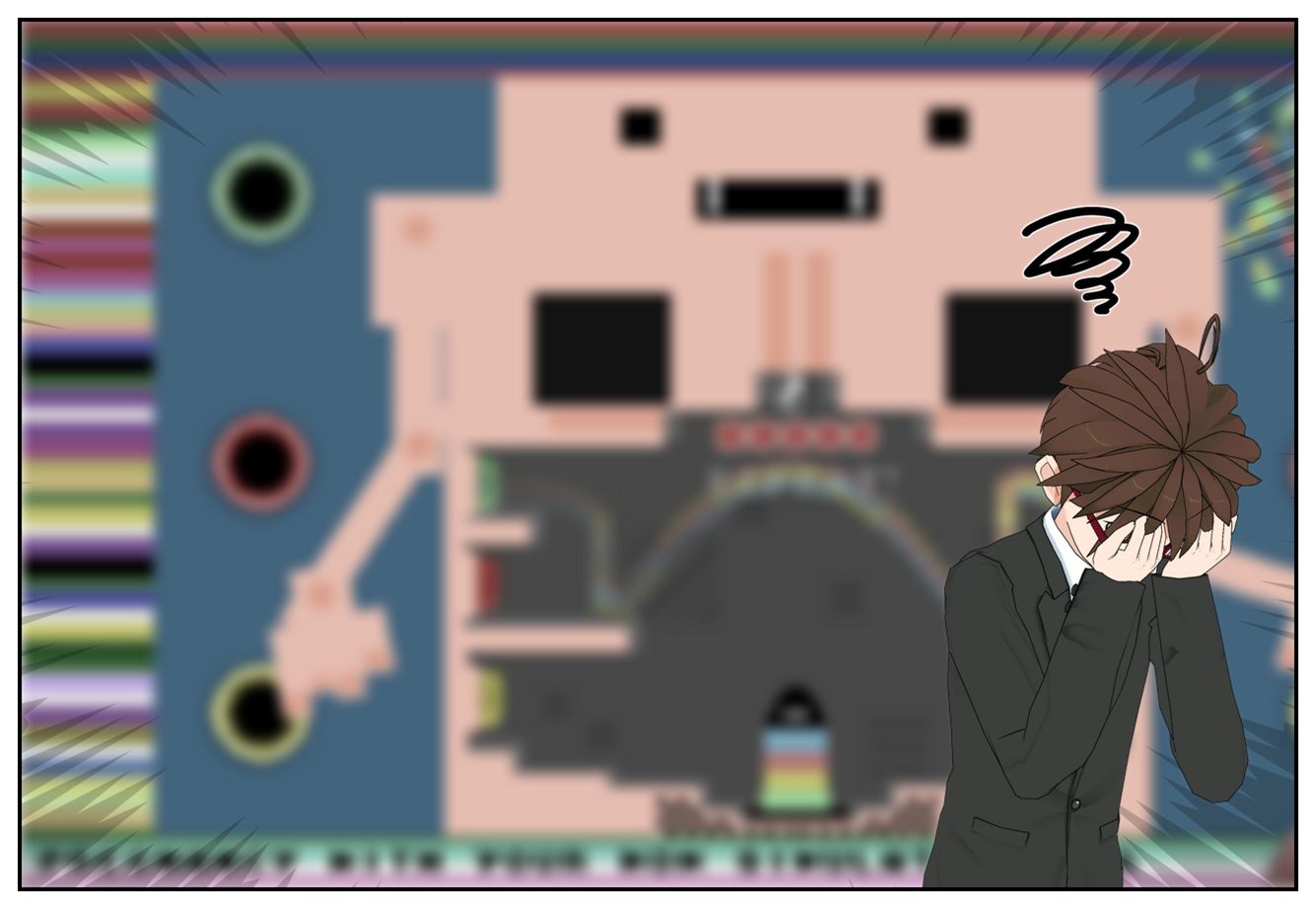
This morning I received an unsolicited Steam invite to a group promoting an upcoming game called Pregnancy with Your Mom Simulator 2016. This is what Pregnancy with Your Mom Simulator 2016 looks like.

If you have never encountered the modern use of the word "simulator", Pregnancy with Your Mom Simulator 2016 pretty much sums it up. These days, although Flight Simulator still exists, the word "simulator" is much more frequently used in a "hilariously" ironic manner to describe something ridiculous, obviously unrealistic and filled with puerile humour.

I generally have nothing against puerile humour for the most part, but the use of the word "simulator" for this kind of thing is just getting a bit beyond a joke now. In just the last few years we've had Surgeon Simulator, Goat Simulator, Shower with Your Dad Simulator, Zombie Training Simulator, Corporate Lifestyle Simulator, Domestic Dog Simulator… and, well, literally hundreds of others. While there are a few genuine simulators in among the dross — the most noteworthy being titles like Euro Truck Simulator and its ilk, which follow the Flight Simulator mould of actually providing a realistic simulation of a real-life activity — the vast majority of these games are designed to be stupid visual jokes for YouTubers and streamers to whoop and holler over on videos with headlines like "CRAZY game from HELL?! SHOWER with YOUR MOM!!"

More than anything, I find it a bit frustrating to see the word "simulator" thrown around so casually these days because sometimes you just want to actually indulge in a genuine simulation of something — you want to see what it's like to drive a truck, use heavy construction machinery, fly a plane, launch a rocket, whatever — and this nonsense's use of the word completely devalues the word "simulator" to such a degree that it's now meaningless. Moreover, it's actively difficult to find real simulators — which, in the past, have had pretty functional, self-explanatory titles, such as Flight Simulator — among all this shit.

Ultimately this sort of thing is just another side-effect of the attention deficit disorder that the Internet seems to collectively suffer from. The population of the Internet staggers drunkenly from meme to meme, desperately searching for the next joke they can milk until it becomes the opposite of funny, then all the people who only use Facebook can start posting about it and it officially becomes dead, at which point a new meme shall rise and everyone shall become sick of it once more.

Perhaps I'm just old and cynical. Or perhaps I'm just tired of Steam and the mobile app stores getting flooded with "joke" games like Pregnancy with Your Mom Simulator 2016. People complained about the Wii being laden with shovelware, but that was nothing compared to the shit we see on Steam and mobile in 2016 — shit that distracts attention away from stuff that is actually noteworthy and interesting.

2295: You Should Play Aselia the Eternal

0295_001

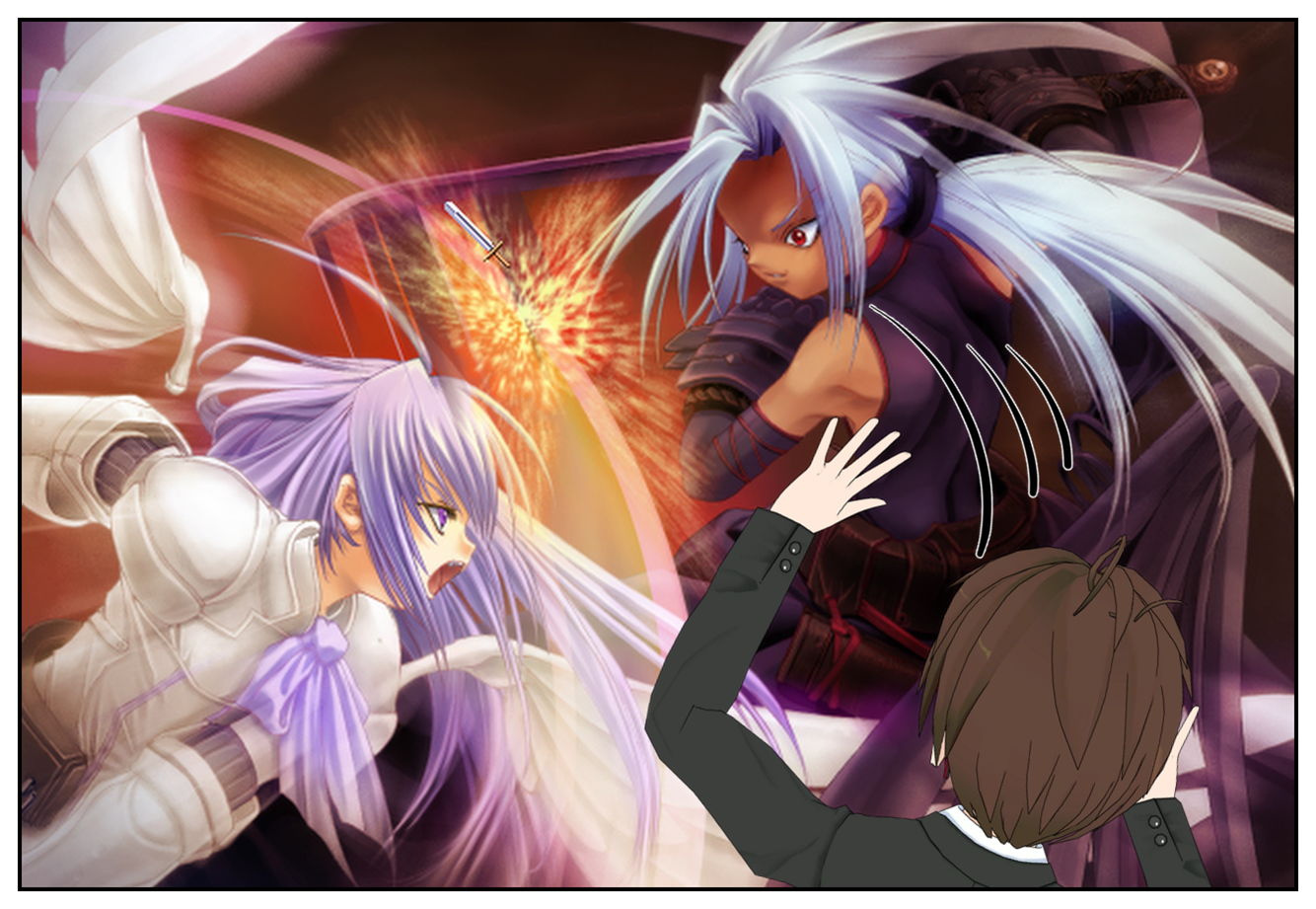
JAST USA recently released Aselia the Eternal on Steam. The game's been around for a good few years now — its original Japanese version for even longer — but its release on Steam will doubtless allow a whole new audience to (hopefully) enjoy it. I will now attempt to explain why it is worth giving it a go.

Aselia the Eternal is a combination of a visual novel and a strategy game. The overall balance is very much in favour of the story side of things — it's a good six hours of reading before you get to the game's first strategy battle sequence — but when you do get to the strategic aspect, it's a game that puts up a good fight.

The narrative concerns the player-protagonist Yuuto, who finds himself drawn into another world populated by people who speak a completely different language to him. Unable to find his way home, he gradually learns to communicate with these people — the ones with whom he's staying known as "Spirits" — and finds himself recruited into the army as an "Etranger", a wielder of a powerful, sentient sword that regularly threatens to eat his soul.

Gradually, as Yuuto becomes more and more involved in the lives of the Spirits, he starts to worry less and less about trying to find his way back home and more about helping to resolve the conflict that threatens to tear this fantasy world apart. As such, the narrative becomes very much a high fantasy sort of affair — war on a grand scale, magic and mayhem around every corner, transcendence of humanity not at all out of the question — and builds to a thoroughly exciting conclusion that I won't spoil here.

The story is compelling, interesting, well-written and well-translated, but it's the gameplay part that is perhaps the most interesting thing about it, since it's one of the most original takes on strategic RPG-style combat I've seen. Virtually eliminating all luck from the equation, combat in Aselia the Eternal is actually about putting units together in small squads to perform most effectively according to what type of unit they are — and by doing this correctly you can effectively guarantee that you'll win a conflict before you reach it. The tricky part is in finding those suitable combinations in the first place.

The basic rules of engagement have each of your squads made up of three ranks — a frontline fighter, a mid-range tank and a support fighter bringing up the rear. Each of the different types of Spirits perform best in a particular slot: Blue Spirits (such as the eponymous heroine) do their best work as speedy damage dealers in the front row; Green Spirits tend to have the highest defense and HP, so sit in the middle; Red Spirits often have support abilities that can damage an entire enemy squad or provide suitable benefits to your own, so sit at the back. You're not limited to this arrangement — and indeed, with Yuuto in the mix, who is none of those things, you'll have at least one squad with an unconventional lineup — but there are clearly optimal ways to do things, making each of the battles in the game as much of a puzzle as a strategic RPG experience.

Aselia the Eternal comes together so nicely because everything it does is in service to its narrative and worldbuilding. Despite not having an open world you can freely explore, its excellent storytelling and descriptive narration builds a wonderfully convincing setting that gives the strategic sequences genuine meaning and drama. And, as a result of that worldbuilding, your units in the strategic sequences become more than just sets of stats and abilities; they become people. People who you don't want to see die, because yes, this game has permadeath.

The question of being "more than just a soldier" is one of the main narrative themes explored in the game, and it's a rather wonderful moment when you realise that you, the player, are having the same epiphany that the characters in the game are. There are some wonderfully touching sequences with Yuuto and the Spirits as they get to know one another, and you're right there with them. And, as the narrative ramps up and you bring more and more allies with you, the tension becomes palpable as you take them into battles that you really don't want to see them lose.

I don't want to say too much more because part of the wonder of Aselia the Eternal is exploring the experience for yourself and discovering everything this remarkable work has to offer. Suffice to say if you enjoy in-depth storytelling — and lots of if — and aren't averse to a bit of red-hot strategy action, you should most certainly check it out. And then strongly consider supporting JAST's recent release of the sequel Seinarukanawhich I'll be investigating for myself in the near future!

2294: Partners in Space Empires

0294_001

Finally got the chance to try out the physical version of Star Realms today, and it turns out to be an excellent game that appeared to go down well with all four people who were playing it.

I was particularly interested to try out the physical version of Star Realms because it provides the opportunity to play in ways other than the head-to-head two-player default style that the computer and mobile versions offer. You need more than one deck to do so (one deck per 1-2 players) but since the game is not expensive in the first place, getting enough cards to play with up to 6 people is still eminently affordable, and probably cheaper than many other, bigger-scale games.

We played in two different ways: firstly as a "free-for-all" game in which anyone around the table could attack anyone else on their turn, including splitting their combat scores between multiple opponents if they saw fit. The climactic moment of this particular game came when my friend James scored a massive 34 points of damage on my friend Tom, taking him down to just 7 Authority remaining. Conveniently, the hand I had drawn for my next turn — I was after James — had exactly 7 damage worth of combat power in it, so Tom was swiftly dispatched, to our great satisfaction; Tom generally beats both James and me in most games, so it's always a genuine delight to utterly destroy him.

Following that, we tried a team game in which two two-player teams face off against one another, each team starting with a single Authority pool of 75 instead of the usual 50. In the team game, both players on the team play simultaneously and have their own "in-play" area, hand, draw deck and discard pile, but can pool the Trade and Combat resources they accumulate by playing cards. This means that the game's "ally" abilities (which tend to trigger when multiple cards of the same colour are on the table) can only happen within an individual team member's in-play area, but players can pool their resources in order to more easily acquire expensive cards or deal significant amounts of damage to their opponents.

I particularly enjoyed the team game; the dynamic was very different to the free-for-all multiplayer and two-player head-to-head variants, and the cooperative aspect worked well. In many cooperative or team-based games, "alpha player" syndrome rears its head, with one player tending to dominate discussions to such a degree that teammates go along with whatever they say without any real input. In Star Realms, however, the fact that each player is building their own deck — and teammates are mutually agreeing on how to proceed — allows for them to feel like they're taking independent actions, but also to feel as if they're contributing to the overall effort. Discussion and collaboration is essential to success — and can lead to some spectacular combos of cards hitting the table — but at no point did I feel like one player was dominating the table talk, nor did I feel like the game was especially unbalanced when played in this way. In fact, there are many aspects of the game that actually feel more balanced when played in a team game — certain abilities appear much stronger and more useful than they do in the free-for-all or head-to-head game, and specialising your deck with particular colour cards becomes even more important than it already is.

Star Realms was a resounding success, then, which I'm pleased about. It's a simple, quick and easy to set up game that has a nice blend of theme and mechanics. I'm looking forward to playing it some more in the near future.

2293: Scorched Earth

0293_001

Had the pleasure of playing a game of Netrunner this evening. I still don't know the game all that well, but with each new game I'm learning new things about it — most notably what cards to expect to come up against, how to counter them and, most importantly, what not to do.

Tonight, the main lesson was the existence of a card on the Corporation side called Scorched Earth; this is an Operation (something that takes effect immediately when you play it) that, for the low, low price of just 3 Credits, allows the Corporation to immediately and unavoidably do 4 damage to the Runner if the Runner has a Tag on them. Given that the Corporation deck in which Scorched Earth appears has a number of security programs that automatically give the Runner a Tag, Scorched Earth appears to be a very real and constant danger, and the way to deal with it is to ensure that you don't end a turn 1) with a Tag on you and 2) with less than 4 cards in your hand. As it stood, I did end the turn with 3 cards in my hand and a Tag on me, meaning that the 4 damage immediately and unavoidably killed me horribly. And after I was doing so well at stealing my opponents' Agenda cards, too.

I really like Netrunner, even though I haven't played a whole lot of it so far. It's very strongly thematic, despite being a game in which you primarily focus on the mechanics of the cards you play. The lore is clearly very well thought out, as the various Corporation and Runner decks available are very consistent in their overall themes — one Corporation deck (Jinteki) is all about being sneaky and laying traps for unsuspecting Runners, while others focus on acquiring income, Tagging the Runner or all manner of other nasty things.

I don't yet know the game well enough to feel confident about building my own deck, but the starter decks that the basic Core Set comes with are providing more than enough variety for me to be getting on with. Given that it's pretty rare you'll get through a whole deck in a single game — in fact, the Corporation loses if they get through their whole deck — I find that I'm still seeing new cards with each new game I play, which is nice, though not necessarily entirely conducive to developing effective strategies for the game. I am at least getting a feel for how the different factions play; tonight I played the Anarchs faction of Runners, who have a strong emphasis on playing Virus programs, which become more powerful and effective over time or through repeated use. This has, I think, so far been my favourite Runner faction to play, but I don't think I've had the opportunity to try the Criminals yet, who, I believe, focus on acquiring money, which is very important. (I, in fact, struggled a bit for cashflow in this particular game until the neutral Armitage Consulting cards came out, allowing me to earn a little more per turn rather than a measly 1 Credit for 1 Click).

I'm interested to play more. I don't know if I'll ever be good enough to play at a tournament level or anything like that — probably not, to be honest — but I certainly enjoy the experience of playing it. It's a game that is surprisingly straightforward to understand once you decipher the basic rules (and the non-standard, asymmetrical terminology it uses for different parts of the play area) and, more importantly, pretty quick to play, too. It's easy to set up, highly portable and expandable, though I will likely hold off on acquiring new packs of cards for it until I have a better handle on the basic mechanics and the ways the different factions handle.

We'll hopefully be playing a bit more tomorrow. Now I know to watch out for that damned Scorched Earth cards, I can hopefully survive a little longer without embarrassing deaths such as the one I suffered this evening!

2292: Thirty-Five

0292_001

It was my birthday today; I am now thirty-five years of age, which means on some forms I'm officially in the next age bracket. If ever there were a more obvious marker of our respective mutual creeping towards the grave, it is surely moving down through the age ranges on official forms. I'm not sure if this means I count as "middle-aged" or not yet and honestly I don't really care all that much; age has always just been a number to me, and, for better or worse, I've always preferred to act the age I feel rather than the age I am.

It was a pleasantly quiet day today — something much-needed for both my wife Andie and me after numerous recent stressors. We had a lazy morning, Andie made a "mug cake" in the microwave for me (delicious), and then we went out to our local Japanese eatery Zen for some sushi and deep-fried goods (also delicious). The remainder of the day has been spent writing an article about Senran Kagura's art and soundtrack, playing Final Fantasy X HD and, as a lazy post-dinner activity, a spot of Dead or Alive Xtreme 3.

I'm probably supposed to reflect on where I've come from and where I'm going on such a momentous occasion as my age going up by one. Right now that's a fairly depressing prospect, though, to be honest, so I'm going to refrain from going too much into that. Let's just say that things haven't been great, but plans are in motion to make life a little better, even if it takes a while to bring them to fruition.

For now, I'm pursuing home-based work so I can be with my wife while she's off work with her chronic pain condition; hopefully this will provide enough of an income to at least survive on, if not live a particularly exciting life, but then I never really lived much of an exciting life anyway, with the most exciting things I tend to buy being either video or board games. With that in mind, please do get in touch if you have any (paying!) writing work that I might be able to do from home — or if you'd like to support me directly, please consider making a pledge to my Patreon, which was set up with a mind to making my work on MoeGamer a bit more regular and in-depth.

You may ponder why I don't pursue writing gigs in the games press any more. To be honest, I wouldn't mind that, though the way I've been treated in the past has somewhat soured me on the business as a whole — plus there's the fact that the mainstream games press (i.e. the ones that pay) all still have the "feminism" stick firmly jammed up their collective asses which, far from promoting the amorphous concept of "diversity" as they'd like to think, actually just stifles criticism from a variety of perspectives, not to mention thoughtful, meaningful exploration of games on the more provocative end of the spectrum. And as my good friend Chris was kind enough to say the other day, I'm better at writing about games than 1,200 word reviews talking about how nice the graphics are and whether or not there's any screen tearing, or 500-word news pieces on industry Twitter spats and inevitably fake rumours about new Nintendo hardware.

MoeGamer, as it stands, is an experiment in sustained long-form writing on very specific topics in games, and if this proves to be worthwhile I'll consider expanding the project into perhaps putting together a book or two. That would be exciting. As longstanding readers well know, I firmly believe that there's an absolute ton of scope for thoughtful, interesting, meaningful analysis of games beyond what the current clickbait model of games journalism focuses on, and longform articles not beholden to advertisers or honest-to-goodness books are clearly the way to go for this sort of thing.

Other people out there are already doing this sort of thing; Boss Fight Books is a particularly interesting project, though it takes a somewhat scattershot approach to which games are noteworthy for one reason or another, and many (though not all, thankfully) of the authors involved are members of "the clique" of games writers and developers that has made viewpoints that deviate from the standard (and fallacious) "everything is sexist and gamers are awful people" rather unwelcome. In other words, I don't see them publishing a book exploring the satire of Hyperdimension Neptunia or the meaning carried in the sexual content of The Fruit of Grisaia any time soon.

Basically, now I've made the decision to, at least for the immediate future, stay at home for work, I can start looking at ways to 1) pin down a reasonably secure monthly income and 2) start pursuing passion projects in earnest. Because for all the noble intentions in the world, the last thing you want to do after coming home from a 9-5 is sit down at the computer and do something else that feels like it's "productive", even if it's something you do genuinely really want to do. I'm going to have to make some decisions on how to proceed from here — do I keep attempting to promote my Patreon, or look into something like Kickstarter to fund a book series? Do I look into monetising MoeGamer's content somehow, or share it across some other channels such as video? (I kind of hate video for anything other than TV shows and the occasional Zero Punctuation; give me some nice words any day, millennials' attention spans be damned.) Do I attempt to pitch some articles to mainstream games press sites? (Probably not.)

There are lots of things to think about and it's both exciting and scary. I want everything to be all right, as it emphatically isn't right now, but at least I have options to explore, so everything isn't hopeless quite yet. I hope, anyway.

Now, I'm off to bed to hopefully sleep soundly, and then I'm going away for the Bank Holiday weekend to play some board games with friends and probably get attacked by a dog. I sincerely hope this coming weekend is as relaxing as I need it to be, as the last few… weeks, months, I lose track… have been pretty hellish stress-wise, and I'd rather have just one weekend where I can just enjoy myself without having to worry about anything.

Thankfully, I don't see anything standing in the way of that happening, so expect suitably enthusiastic reports throughout the weekend, and be prepared to commiserate with me on my inevitable losses at games that involve any sort of strategic thinking.