I got an Echo Show at some point. I think it was a birthday or Christmas present. I don't really know what it's for. I don't like voice-activated tech and I legitimately don't understand how a device that says things out loud is better than one with a screen and keyboard for anyone except blind people.
I do know, however, that said Echo Show has been gradually and subtly making itself worse ever since I first turned it on, and it's been sitting on my bedside table ever since, the world's most technologically advanced bedside clock.
Since I actually quite like it as a bedside clock — it has an excellent light-responsive display so it doesn't overwhelm you with glare in the dark — I turned most of its "helpful" features off. These features mostly came in the form of "Suggestions", and I'm pretty sure I've previously covered why I detest "Suggestions" from tech.
However, one thing I've noticed is that not only does the device sneak in new Suggestions that have to be turned off separately on a fairly regular basis, it also turns things back on that I've previously turned off. This is annoying.
However, this evening its enshittification reached a whole new level: it started serving me ads. Yes, the clock display was interrupted by a "Sponsored" display inviting me to find out more about the Nissan Qashqai. I do not need a new car. I have given no indication that I need a new car. I have not spoken about getting a new car in earshot of Alexa. And I certainly didn't turn on "Show Me Ads" anywhere in the device's settings.
Hopefully you can turn them off, but I suspect you can't. If it's magically turned into a bedside ad-serving machine with no opt-out possible, I think it may finally get retired. And I'll just buy a nice digital clock with a radio and an LED display, like I had 20 years ago.
Want to read my thoughts on various video games, visual novels and other popular culture things? Stop by MoeGamer.net, my site for all things fun where I am generally a lot more cheerful. And if you fancy watching some vids on classic games, drop by my YouTube channel.
If you want this nonsense in your inbox every day, please feel free to subscribe via email. Your email address won't be used for anything else.
Finished Disco Elysium this evening. I think I will save more in-depth thoughts for a proper write-up on MoeGamer, but I came away very satisfied with the whole thing, and impressed that the game as a whole managed to successfully carry a highly replayable 30+ hour RPG without a single combat sequence. If you've been hanging fire on giving this one a go, don't; it's absolutely great, particularly if you enjoyed Planescape: Torment's approach to the CRPG: dialogue-heavy, emphasis on the story and on having the flexibility to really "play" your character in a number of different ways, despite following a canonical storyline that focuses on them.
Anyway, that has… been the majority of my day, to be perfectly honest. It's the last full day of my week off work, so I thought I'd take a day to just do "nothing" in particular, just enjoy something. So I did. And I'm glad I did; it's always satisfying to reach the conclusion of an enjoyable game, and especially if you can do so while not under any real sort of time pressure to do anything else.
Tomorrow I might go into town for a bit to have some lunch with Andie and a couple of her friends, then I think I might record a few more videos. I had sort-of planned to make a bunch of videos during this week off, but that didn't happen for one reason or another. I'm not annoyed about that, mind; part of the reason for having this week off in the first place was just to decompress and unwind somewhat from the daily grind and stress of work, so loading myself up with self-imposed "work" to do may not have been the best thing to do.
But anyway. Now Disco Elysium is safely ticked off the list, I can think about other things. I got a few retro treats through the post today — Jungle Strike and Urban Strike for SNES (I already have Desert Strike), Golfamania for Master System and Rad Racer for NES. I'm excited to give all of these a go for various reasons. But that can probably wait until tomorrow. For now, I need a poo, then to go to sleep. So that's what I'm going to do. In that order.
Want to read my thoughts on various video games, visual novels and other popular culture things? Stop by MoeGamer.net, my site for all things fun where I am generally a lot more cheerful. And if you fancy watching some vids on classic games, drop by my YouTube channel.
If you want this nonsense in your inbox every day, please feel free to subscribe via email. Your email address won't be used for anything else.
I bought a piano today. Those who have been following this blog for a while will know that this is the second time I have done this, with the last being about nine years ago. Back then, I noted that the piano we bought was relatively cheap (about £250) and the seller noted that, since it was quite old, it wouldn't necessarily last very long — but it would be fine for a few years.
Well, turns out he was correct; the piano was consistently going out of tune around the E-flat below middle C — interestingly, the exact same note my childhood piano consistently went out of tune on — and after a visit from a local tuner, it became clear that getting it fixed up was going to cost more than we paid for it in the first place.
I have been somewhat lax on my piano-playing for a while, and this is at least partly because when you have an instrument that isn't quite right like this, it doesn't incentivise you to want to play because you know you have to deal with the boingy out-of-tune notes. It's weirdly "embarrassing", even though it's not the player's fault.
But I had been feeling like I want to play some more again, and if I wanted to do that something had to be done about the poor old piano. The repair option didn't seem worthwhile, so I started looking into replacements and/or a means of getting the old one responsibly removed — a piano isn't the sort of thing you can just take to the tip (and not just because of its size) and the council won't take it away as "bulky waste", so you generally have to hire a specialist to get rid of it.
Thankfully, I found a good piano place about 40 miles from us in the form of Chamberlain Pianos. This is a company over in Haslemere, Surrey, not far from where I used to work as a teacher, and it seemed they offered part-exchange deals. So I enquired as to whether the old piano — which dates back to the 1920s — would be worth anything in part-exchange, and expressed an interest in a couple of the pianos they had on offer.
As it turns out, our old piano was not worth anything in part-exchange — which I was not surprised about, as it's very old — but the company would be able to take it away when delivering a new one. So I made an appointment to go pay them a visit. And today was that appointment.
I was initially interested in an "Essex"-brand piano that had Steinway connections — I technically "have" a Steinway grand piano, but we don't really have anywhere to put it right now, and I'm sure my parents are loathe to part with it anyway, which is perfectly fine as it has been a feature of their living room for a long time at this point. I gave it a go and it was… not bad, but not as mindblowing as I thought it might be.
Thankfully, the chap showing me around Chamberlain Pianos, sales director Dominic Barnett, knew his stuff about pianos and was keen to show me some other pianos around a similar price point that I might be interested in. These included a couple of Kemble-brand pianos that were about 10-15 years old (which are basically Yamahas without the badge and consequently half the price) and a brand new Kawai. I tried them all, and there was definitely a difference between them; I would have probably been happy with any of them, but the one I eventually plumped for was the Kemble "Conservatoire" model — so called because of its use in music schools, apparently — that had a winning combination of a nice action and a lovely tone.
So that should be with us next Friday, which is exciting! It's shiny and black. I've always kind of wanted a shiny black piano ever since I played my secondary school's shiny black Yamaha piano in Music Room 1. So I'm looking forward to putting that through its paces and hopefully making a bit more of a habit of playing and practicing again. I'm long overdue for doing that.
I am exceedingly grateful to my ever-generous parents for providing a contribution towards this new piano; it allowed us to plop down a deposit on a piano that is a bit nicer than we might otherwise have been able to afford by ourselves. So I guess I better make good use of it, huh?
Want to read my thoughts on various video games, visual novels and other popular culture things? Stop by MoeGamer.net, my site for all things fun where I am generally a lot more cheerful. And if you fancy watching some vids on classic games, drop by my YouTube channel.
If you want this nonsense in your inbox every day, please feel free to subscribe via email. Your email address won't be used for anything else.
It's been a bit of a funny day. Went out to the gym earlier, all well and good, then came home to an email from said gym saying that they were closing at 4pm due to the potential for "protests" later in the evening.
I have, of course, heard about the wave of racist riots that have been breaking out in various places across the nation recently, but somehow you never think of it happening close to you. So I won't lie, I was a little bit concerned — even if with our position on the outskirts of the city proper, we were unlikely to see anything particularly untoward happening.
Looking through the local newspaper's coverage of the evening's happenings, what appears to have happened is that several hundred anti-racism counter-protestors turned up in the town centre where the racists were rumoured to be gathering, and found themselves confronted with maybe four or five actual racists. So I think we're probably okay here.
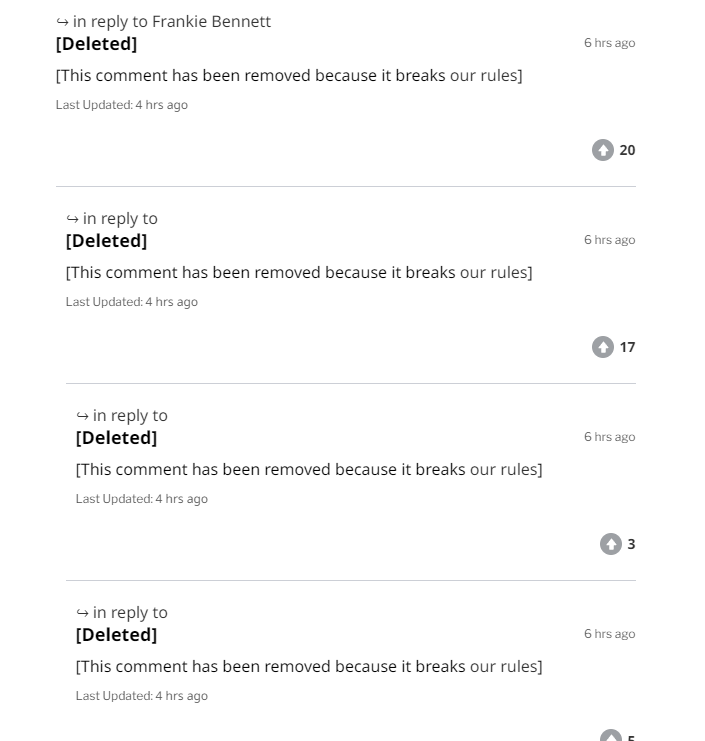
What I did find funny, however, was the comments section underneath the local paper's reporting on the situation, which almost entirely looked like this:
Looking at this — and scrolling down the many, many pages of it — really drove something home: while foul and odious people with noxious viewpoints most certainly do exist in this day and age, and that is something we as a society are going to have to deal with in some way, a significant proportion of them aren't willing to actually go and do anything beyond typing some impotently angry comments into their computer.
This, of course, isn't to downplay the very real and very serious situations that have occurred elsewhere, but I am not at all surprised to see that the rumours of riots breaking out all across the country turned out to be exaggeration and/or misinformation. I've seen far too many examples of "keyboard warriors" over the course of the last decade or so to believe that many of them will actually take to the streets and start real trouble — and that's probably for the best.
Of course, you can still cause plenty of trouble from your computer chair through harassment, doxxing and suchlike — and believe me, having been on the receiving end of both, I know exactly how unpleasant and scary it can be — but at least these impotent, red-faced, gurning idiots aren't out there breaking windows, setting fire to things and inflicting real injuries — or worse — on innocent people. So we should probably be thankful for small mercies.
I suspect the country as a whole isn't out of this dangerous period it's in, but at least the potential worry for this evening is seemingly over and done with for now. So I guess now we wait and see how long it takes for things to return to whatever passes for "normal" these days.
Want to read my thoughts on various video games, visual novels and other popular culture things? Stop by MoeGamer.net, my site for all things fun where I am generally a lot more cheerful. And if you fancy watching some vids on classic games, drop by my YouTube channel.
If you want this nonsense in your inbox every day, please feel free to subscribe via email. Your email address won't be used for anything else.
I've gone on the record numerous times about how much I hate the word "content" to describe individuals' hard creative work online, but that's not what I want to talk about today. Instead, I want to talk about a somewhat related matter that has arisen as self-publishing your own writing, videos and all manner of other creative material online has become more and more straightforward.
And that is: not everything you enjoy has to become "content". Not everything you do has to turn into a video or an article or a blog post or even something on social media.
I am saying this primarily to myself, because I've definitely felt myself veering in that direction at times. Indeed, a significant portion of my game collection consists of stuff I picked up because I thought it would be fun and/or interesting to write about at some point — though this was back when I was working an incredibly boring job pre-COVID and had both the time and mental energy to be able to post something substantial about video games nearly every day.
The trouble with thinking that "everything has to be content" (and I'm using that phrase as a shorthand, not as approval of the term) is that it gradually makes it more and more difficult to just enjoy yourself — to such a degree that it can lead to a form of analysis paralysis where you end up discarding certain experiences on the grounds that they won't be "meaningful" enough. And by "you" in that sentence, I mean "I".
I am proud of what I have created online: there's this blog, which might be of interest to someone; there's MoeGamer, which features a wealth of in-depth articles about games that don't get much attention anywhere else; and there's my YouTube channel, which focuses primarily on retro platforms that don't get as much love as others.
But my brain is always going. It's always thinking "oh, yeah, wouldn't it be cool to make an in-depth video about Disco Elysium?" or "go for it! You absolutely can write one article for every single game on Evercade!" or "don't start playing something else until you've finished what you're playing, because you might not be able to write about it otherwise".
These of the words of someone who is at risk of turning his hobby into work, and I have become increasingly conscious of it over the last few years. The trouble is, I am increasingly aware of how I'm growing older, and thinking about what sort of "legacy" I want to leave behind. My wife and I aren't having children — by choice, I should probably add — but that doesn't mean I don't want to leave anything behind. I would love it if some of my writing and videos were useful to someone down the road, even if they only have something of a niche interest audience now.
But that doesn't mean I should spread myself too thin and try to cover everything. That's simply unrealistic. So I think I should probably try and impose some restrictions on myself to keep my "ambitions" under control, because otherwise I risk 1) overwhelming and burning myself out, and 2) never being able to "just enjoy" something ever again.
So for now I think what I'm going to do is I'm going to keep my YouTube channel focused near-exclusively on Atari stuff: primarily 8-bit and ST, perhaps with some 2600 stuff thrown in here and there if I can be bothered. MoeGamer I'd like to get back to doing some stuff a little more regularly with, so I think I will continue to use that as a means of posting in-depth thoughts on games I've actually finished in the case of narrative-heavy games, or spent enough time with to be able to comment on in the case of gameplay-centric titles. That may mean updates are sporadic, but there's nowt wrong with that. It's not a professional site, and I'm not in a position where I need or want to use it as a "portfolio" of sorts right now.
Evercade stuff is my day job, so any time I'm tempted to write something or make a video about Evercade stuff in my free time, I should instead channel that energy into doing something about it during working hours, particularly if I hit a period of "downtime" between major time-sensitive jobs. Of course, there are things I can't do or say when doing things from a "professional" perspective, but honestly it doesn't really matter too much; if I was doing Evercade stuff privately, I'd be wanting to explain why each and every game (yes, even the "bad" ones) is interesting and worth exploring rather than tearing it apart, and that's not much different from taking a slightly more "marketing" approach. (Incidentally, if you want to see some of the stuff I've done professionally for Evercade, check out the official Evercade blog, and particularly the Evercade Game Spotlight, Evercade Cartridge Preview and Top 5s sections.)
Everything else? I should just enjoy it. Sit back, enjoy without guilt. Write about it or make a video if I feel like it, but don't place undue pressure on myself to make everything into a video or an article. Sometimes a good time is just a good time and doesn't need writing about. Sometimes a good time is something best kept to yourself. Sometimes it's nice to try and forget that the Internet exists, and get yourself back into the '80s mindset of just enjoying things because.
Anyway, that's my ramble for today. I'm off to go put it into practice.
Want to read my thoughts on various video games, visual novels and other popular culture things? Stop by MoeGamer.net, my site for all things fun where I am generally a lot more cheerful. And if you fancy watching some vids on classic games, drop by my YouTube channel.
If you want this nonsense in your inbox every day, please feel free to subscribe via email. Your email address won't be used for anything else.
And not in the way you might be thinking. Okay, there are times when someone getting popular or enjoying some success with something leads to them becoming a prick, but that is not what I'd like to talk about today. I'd like to talk about life as a small-scale creative person on the Internet, and what happens when something you produce manages to extend far outside of its usual audience.
I'm prompted to talk about this as a result of the thoroughly lovely RoseTintedSpectrum's recent video on the first series of beloved video game TV show GamesMaster, which, to put it mildly, has been doing numbers since he released it. If you haven't watched it yet, I highly recommend giving it a look:
What we've all been noticing since the video started blowing up, however, is how much more frequent comments from complete arseholes become once you cross a particular popularity threshold. Not necessarily comments that are being directly insulting to the video maker, but comments from people who are just being dickish. People who use terms like "woketard". People who think the '90s was a utopia where white people flourished and you never, ever had to look at those filthy Muslims. You know the sort of people. The same sort of people who cry "DEI" anyone someone with a slight tan appears on screen.
When this first started happening, we were discussing the phenomenon in a Discord server that hosts a number of UK-based retro gaming and retro tech YouTubers, and we all had similar stories to share. There comes a point, it seems, usually after you cross the 1,000 views mark, where there's a marked uptick in comments from twats.
It makes sense when you think about it. A video blowing up and getting a lot of views means that it's being pushed by the ever-mysterious YouTube Algorithm to people beyond your usual audience and subscriber base, which means people from circles you might not normally mix (or want to associate) with may start stopping by. And boy, do they love to hear themselves talk.
I had something similar a while back when I had my own video "blow up". It was this one, a video I'm still pretty pleased with, but which left me feeling well and truly vindicated in just making videos about what pleases me, rather than what is guaranteed to be "popular".
Because what no-one tells you about getting popular and suddenly attracting all these complete penii is that it's genuinely stressful and often quite upsetting. I got to a point where I had to "pause" comments on the video above because the influx of them was stressing me out so much. And I wasn't even getting nearly as many dickheads as Rosie is getting on his video. It was just overwhelming, and not in a good way; I did not like it at all.
The same is true for anything tangentially related to social media or online presence. Post something — be it picture, video, blog post, article, whatever — that manages to get a significant reach, and it's seemingly inevitable that you'll have to deal with dickheads. This is, of course, frustrating, because one would hope that it's possible to get a significant reach on something without attracting the very dregs of Internet society, but with every "success story" like the ones I've described above, it seems increasingly inevitable that the dickheads? Oh they will come. They will come in droves.
I wonder how many people have been put off from a potential career of making creative things online by this sort of thing. I guess after a certain point you start to get used to it and be able to tune things out — and once you reach a certain size as an online personality, you can start hiring staff to take care of things like the comments section for you, so you can focus exclusively on actually making the videos.
But for everyone who gets to the point where they're able to hire a staff, I'm sure there are myriad more who gave up the first time they saw mild success, because the dickheads came. And I can't help thinking that's a real shame. Online culture shouldn't have come to this. But it has, and we just have to live with it, it seems, because no-one seems in a particular hurry to do anything about it.
Thank heavens for YouTube's "Hide user from channel" setting, at least, which means the dickhead of your choice is banished to the abyss; you'll never see them in your comments section again, and neither will the rest of your audience — but, here's the fun bit: they're still able to rage impotently at you, never knowing that you've effectively "blocked" them because YouTube doesn't tell them that.
This is the one bit of YouTube I can honestly say is absolutely masterful. There are few things better than knowing that there are dickheads who think they're posting amazing putdowns of your latest work, only for their comments to be silently banished to the abyss before they get anywhere near you.
Anyway, the Internet sucks, but go subscribe to Rosie 'cause he makes good vids. Ta-ra.
Want to read my thoughts on various video games, visual novels and other popular culture things? Stop by MoeGamer.net, my site for all things fun where I am generally a lot more cheerful. And if you fancy watching some vids on classic games, drop by my YouTube channel.
If you want this nonsense in your inbox every day, please feel free to subscribe via email. Your email address won't be used for anything else.
There's some nasty shit going on in the world right now. Without getting bogged down in the details, there are some vicious riots going on "Up North" in this green and pleasant land, following the horrible killing of several young girls at their dance class.
It's hard to understand quite how outrage over the murders has escalated to what it is, but it's fair to say that things have gotten A Bit Racist, to say the least. Last I heard of the situation, a Holiday Inn Express that was supposedly housing immigrants — immigrants completely unrelated to the murders, I might add — was besieged by exactly the sort of people you're probably picturing when talking about people who are A Bit Racist Against Immigrants.
I won't dwell on the situation because I haven't read up much on it, so I'll refrain from commenting further about specifics. But it's brought something into focus for me which is a tad worrying: the fact that despite how we're supposedly a lot more tolerant, progressive and understanding these days, as a society, a lot more of this horrible shit appears to be happening.
Whether it's racist riots against people who had nothing to do with a horrible crime, transphobia at the Olympics (against someone who isn't actually trans) or just general foul behaviour and intolerance, we seem to have hit something of a bump in the road in attempting to create a 21st century utopia.
Who am I kidding; we absolutely were not on the road to a utopia. Everything has been going to shit for a while, so it's perhaps not altogether surprising that people are starting to act up, even if their behaviour and attitudes are completely misdirected. So I have to ask myself: was ignorance actually bliss?
I think back to my time living through the '80s, '90s and '00s and I don't remember ever feeling the sense of existential anxiety and dread over the world that I do these days. It's entirely possible that this was entirely due to our collective ignorance of various groups of people who were downtrodden and oppressed, which of course carries its own problems, but I don't remember encountering anywhere near the sort of outright hatred that is expressed today towards certain groups.
And it wasn't as if we weren't aware of the people who come in for the brunt of the abuse today. I just legitimately don't remember the hatred being anywhere near as vicious as it is today.
At least some of that is down to social media, of course. It's entirely possible that hatred like this was going on, but no-one saw it because not everyone had the means to plaster all their odious beliefs over every available space online. There was no "collective public space" like Twitter once was (and I don't think it is that any more, since a significant portion of people have abandoned it completely, and the most active of those remaining tend to veer fairly hard right) and so people tended to stick to their own communities.
On the one hand, that probably allowed hate groups to thrive in private; on the other, well, you can see the result of everyone being thrown together just from a casual glance at Twitter on any given day. It's not pretty.
Part of the existential anxiety and dread I feel over this whole situation is whether or not I "should" be doing something more, or even if that's possible. I've always settled for some variation of "treat others as you would like to be treated", and even take that as far as not commenting mean things on YouTube videos I really dislike (because I hate it when I get horrible comments). But is that really enough today? And if not, what can one do, other than simply actively not be a racist transphobic shit, and not go deliberately seeking fights?
Want to read my thoughts on various video games, visual novels and other popular culture things? Stop by MoeGamer.net, my site for all things fun where I am generally a lot more cheerful. And if you fancy watching some vids on classic games, drop by my YouTube channel.
If you want this nonsense in your inbox every day, please feel free to subscribe via email. Your email address won't be used for anything else.
I've been playing Disco Elysium for the last couple of evenings. I finally got around to nabbing it in its The Final Cut incarnation last GOG.com sale, and I felt like playing something a bit "different", so I fired it up. (I'd also been waiting until the hype surrounding it had died down so I could approach it with fresh eyes and zero expectations or prejudices.)
This is a very good game, although it's also a game for a very specific type of person. Despite having console versions, it is very much a game for those who grew up with PC gaming in what old men like me tend to vaguely refer to as its "golden age" — around the turn of the century, approximately. No, I'll be a bit more specific; it's for people who grew up with text adventures and subsequently found themselves particularly enjoying CRPGs on PC in the late '90s/early '00s.
The reason I say this is because Disco Elysium has a significant text component. All of it is voice acted — and for the most part voice acted very well, I have to say — but at its heart, it is a role-playing game in which the majority of its major happenings are conveyed almost entirely through text rather than flashy graphics or even animations. It takes some strong cues from the legendary Planescape: Torment in this regard, but it also successfully distinguishes itself as something that builds on what that game was doing, rather than simply aping it.
For the unfamiliar, the big Thing with Disco Elysium is that it's a role-playing game that focuses almost entirely on non-combat situations. I'm not even sure there's a combat system at all — after playing for (checks GOG Galaxy) 8 hours so far, there has not been a single fight. Instead, everything has occurred through a combination of exploration and text-based interactions.
This isn't to say that Disco Elysium is a kinetic novel, either. Not only do you have a lot of choices in terms of dialogue options in most conversations and interactions, but the wide array of skills your player character has play a significant role in almost everything that happens in the game. And, unusually, this isn't just the form of "SUCCESS/FAILURE" rolls to perform particular actions based on your skills — although those do feature at various points — but rather the various facets of your personality actually "speaking" to you, offering suggestions and commentary on what is going on.
For example, if you've put points into the Empathy skill, at various points in conversations your Empathy trait will actually chime in to "conversations", giving you greater insight into how the person you're talking to is feeling, or how you might be able to get through to them. Your Perception skill will "speak" to you and notice little habits people have. Your Drama skill will flamboyantly point out opportunities where you might be able to express yourself. And there are tons more besides these examples, suggesting that playing Disco Elysium with a different "build" of skills and stats will end up being a markedly different experience; it'll still cover the same basic plot beats and events, but doubtless you'll end up resolving various situations in different ways.
This is really cool, and it feels very much like a natural evolution of interactive fiction. While you don't have quite as much freedom as in a traditional "text adventure" style piece of interactive fiction by virtue of not having a text parser to type in whatever you want, there's a really strong feeling that you're seeing the world through the eyes of the character that you have designed. And, interestingly, that character is designed not as an "ideal", but as an absolute wreck of a human being.
Amnesia is an overdone trope, particularly in role-playing games, but having your player character waking up with a raging hangover and no memory of what got him into the situation he starts the game in is a great means of bringing the player into the game almost in medias res. You, the player, are discovering things about the game world and the story as the protagonist character is (re)discovering them, and you have a lot of scope as to how you want to play that protagonist, who is canonically a policeman.
Do you play things by the book and attempt to impress your partner with how you get your life back together and work hard on solving the investigation that has brought you together? Do you lean into the "weird" and start freaking people out with how you behave around them? Do you start spouting particularly extreme political ideologies at every opportunity? You have the option to do all of these things in Disco Elysium, right up to deciding that you're the one who is going to bring Communism to the people, becoming a massive racist or turning into someone whose sense of self-worth flew out of the window along with his shoe prior to us joining the narrative at the start of the game.
A lot of it is smoke and mirrors, I'm sure, but I can't remember the last time I felt like I was so completely being invited to inhabit the role of a game's main character. The way Disco Elysium works strikes a great balance between having some things that are canonical fact about the protagonist, and allowing you to mould them as you see fit.
I'm not sure it would have quite the same impact if you had a completely freeform self-insert protagonist, because the temptation there is always to go down the "idealised" route, and a significant part of Disco Elysium involves how one deals with one's own flaws — whether that be accepting them, attempting to overcome them, ignoring them in the hope they don't mess things up further for you, or leaning hard into them. By forcing us to inhabit this absolute disaster of a human being, we're put in a position where we can explore how we might get out of a situation that is pretty much rock bottom. Will we rise to the challenges life has thrown at us — at least some of which are our own fault? Or will we crumble under the pressure?
It's a game that I feel could have only been made these days. I'm looking forward to seeing how it develops — and if my take on the protagonist manages to survive to the end of proceedings.
Want to read my thoughts on various video games, visual novels and other popular culture things? Stop by MoeGamer.net, my site for all things fun where I am generally a lot more cheerful. And if you fancy watching some vids on classic games, drop by my YouTube channel.
If you want this nonsense in your inbox every day, please feel free to subscribe via email. Your email address won't be used for anything else.
I'm officially on holiday for a week! I don't have anything much planned for the time off, aside from our trip on Thursday to go and look at pianos, but I'm going to try and be vaguely "productive" with my time. That means I'm going to try and force myself out in this heat and into the gym — once I'm in the air conditioning, I'm sure it'll be fine — and I'm going to record some videos, and perhaps write some stuff.
One thing I'm going to try and make an effort to do is not look at "online" stuff as much as humanly possible. I'm not going to look at Twitter (easy, since I don't have an account any more except the official one I use for work), I'm not going to look at Facebook (ditto), I'm not going to look at BlueSky (easy enough) and I'm probably going to try and ration my Discord usage as much as possible also.
I just don't want to know, you see. I don't want or need to know what people are arguing about today, or what the worst people on the Internet are being sexist, racist or transphobic about today. I don't want to know about the seemingly endless parade of layoffs in the games industry. And I don't want to know how shit online media in general is. I know all these things. They are not going to change.
Instead, I would like a nice, quiet week off, away from it all as much as possible. This will demand a certain amount of willpower, of course, but I'm confident I can find enough things to occupy myself with that I won't need to idly flip through social-related apps on my phone. I have games to play, books to read, episodes of Deep Space Nine to watch, music to play, videos to make and all manner of other things. So why should I waste my time with stuff that, on balance, makes me miserable?
I shouldn't, obviously. So that's the plan. Minimise looking at anything potentially upsetting, frustrating or annoying online and just enjoy the things I have around me. I will, of course, still be checking in here and those videos I'm making will be up on YouTube, but aside from that… a bit of "digital detox" is just what the doctor ordered for a week. I hope it leaves me feeling refreshed, because heaven knows I feel run-down right now.
Time for the first sleep of the holiday, then. Bring on the aircon!
Want to read my thoughts on various video games, visual novels and other popular culture things? Stop by MoeGamer.net, my site for all things fun where I am generally a lot more cheerful. And if you fancy watching some vids on classic games, drop by my YouTube channel.
If you want this nonsense in your inbox every day, please feel free to subscribe via email. Your email address won't be used for anything else.
Partway through writing the previous post, I was surprised to see a weird yellow underline appear under one of the words I'd used. I hovered over it and was horrified to see the symbol no-one wants to see pop up, completely unasked for and unbidden. It seems that Automattic, makers of WordPress and specifically the JetPack plugin that handles things like social sharing and search engine optimisation, have been sneaking in an "AI Assistant" without anyone asking for it.
And I really haven't asked for it, because I saw it pop up in the sidebar a few months back and immediately turned it off in the options. See:
And yet turning it off in there has not made it go away. Because this shit is still here:
I do not want this. I did not ask for this. I specifically turned this off and it's still fucking there. And you can guarantee with that "Available Requests" counter at the bottom, they're going to try and sell me a subscription plan to get more "credits" for their stupid pointless pile of crap feature.
I am not the only one who feels this way. And the fact that comments are closed on WordPress' blog announcing this garbage feature speaks volumes.
A recent study published by the Journal of Hospitality Marketing and Management suggests that the terms "AI" or "artificial intelligence" are proving a turnoff to users.
"When AI is mentioned, it tends to lower emotional trust," said the lead author Mesut Cicek. "We found emotional trust plays a critical role in how consumers perceive AI-powered products."
The study is mostly around purchasing decisions rather than just generally using services, but the point stands: people see "AI" in something these days, and unless they're an insufferable Silicon Valley-poisoned techbro, they are immediately switched off by it. Social network Bluesky recently announced that they were partnering with social analytics and scheduling platform Buffer, and the response was universally negative not because Buffer is a particularly bad service on the whole — I've used it in the past — but because they, like so many other tech companies right now, have shoehorned in an "AI Assistant" when no-one wanted one.
No-one wants this. Stop trying to make AI happen. It's not going to happen.
I've long recommended WordPress as a great platform for folks who want to build a regularly updated website without getting too deep into the nitty gritty of web dev. But forcing AI on people may cause me to rethink that somewhat.
I wouldn't mind it being there if it was opt-in, and one could ignore it. But it is not. It is turned on by default. And you can't make it completely go away, only stop it being quite as annoying.
I cannot wait for this AI "gold rush" to be over. It is infesting everything even vaguely tech-related right now, including services that, as noted, I would previously have recommended without any reservations whatsoever.
Fuck off, AI. As a large language model, you are ill-equipped to receive my fist up your arsehole, but you're going to anyway.
Want to read my thoughts on various video games, visual novels and other popular culture things? Stop by MoeGamer.net, my site for all things fun where I am generally a lot more cheerful. And if you fancy watching some vids on classic games, drop by my YouTube channel.
If you want this nonsense in your inbox every day, please feel free to subscribe via email. Your email address won't be used for anything else.