2071: Eschatos

0071_001

The other day, I talked a bit about shoot 'em up Cardinal Sins. Today, I've been spending some time with its follow-up (or, more accurately, the follow-up to Judgement Silversword) Eschatos.

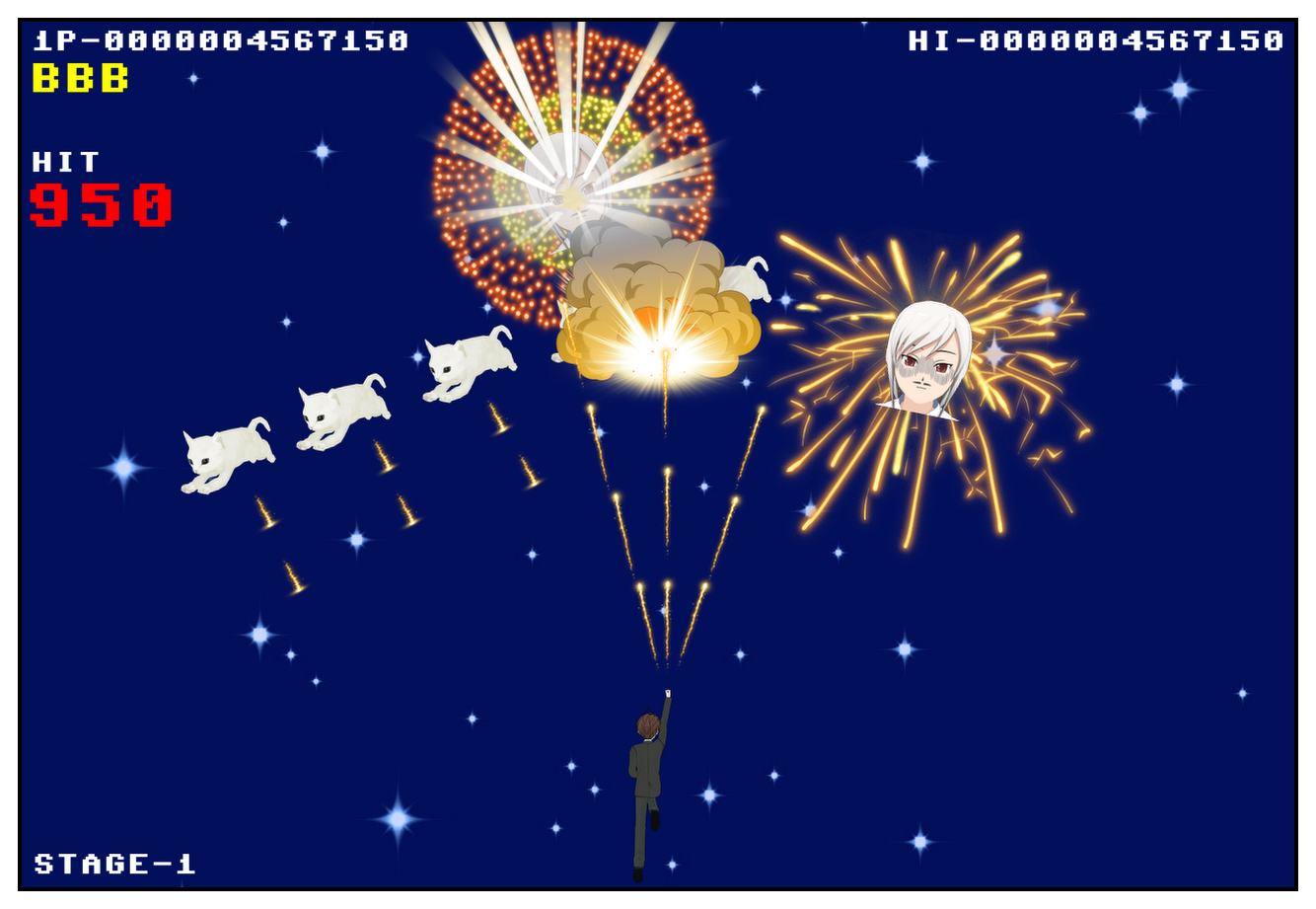
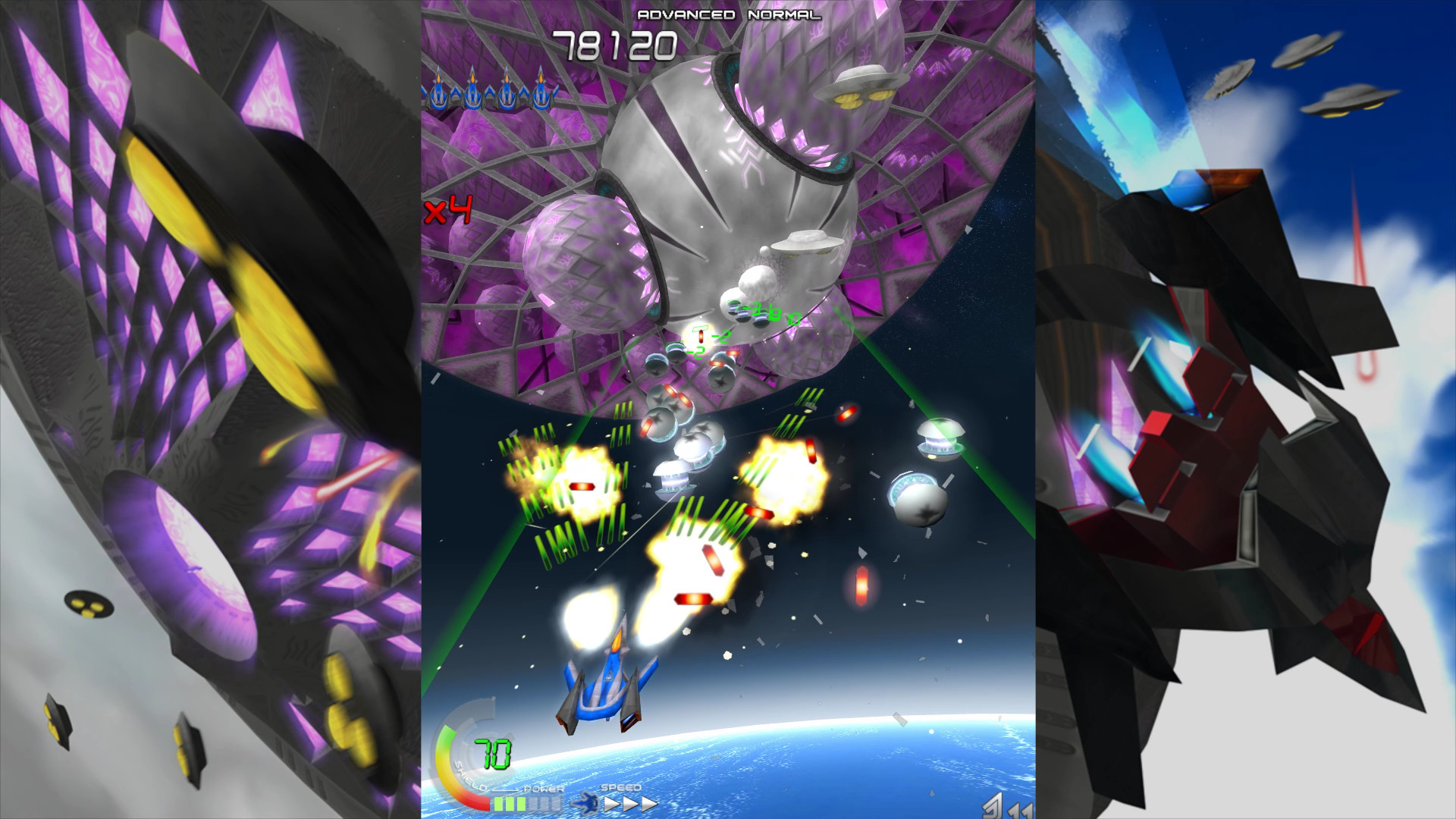
Eschatos is very obviously cut from the same cloth as its predecessors, since it plays almost identically. Its main difference is the fact that it's a considerably more technically advanced game, boasting dynamic camera angles, full 3D polygonal graphics and all manner of other goodies. It's not the most stunning game you'll ever see, but it looks good for a game of this type, and it runs gloriously smoothly, which is of vital importance to the genre.

(At least, the original Xbox 360 version of Eschatos runs gloriously smoothly; at the time of writing the newly translated PC version has some framerate issues on nVidia cards, but the devs are working on resolving this.)

Eschatos is a shoot 'em up that understands that shoot 'em ups should be thrilling theme park rides: exciting and surprising at first, predictable after a few goes. That "predictable" part is important: the essence of getting good at a game of this type is learning what the game is going to throw at you and then dealing with it accordingly, which is something you can only do with practice.

eschatos

Eschatos makes the learning process quite straightforward by splitting each of its stages into areas, and each of its areas into waves. In order to get the best scores, you need to completely clear waves in succession (which increases your score multiplier) as quickly as possible (which nets you a time bonus, multiplied by your multiplier). Even boss encounters are broken down in this way, making it relatively straightforward to learn what to expect, with the challenge then coming from correctly and consistently dealing with it.

It's particularly nice to note that the scoring system is easy to understand and parse, even on the game's "Advanced" mode; having largely come to modern shoot 'em ups through Cave games, which tend to have some of the most complicated scoring mechanics known to man, this is a very pleasant surprise indeed, because it makes it easy to understand how to get better at the game: destroy more stuff more quickly, simple as that. (This is where someone chimes in and points out it's actually much more complicated than that, naturally…)

I'm a fan. I must confess the 360 version had been on my shelf for a while unplayed, but the event release of the Steam version (and the realisation it could do with a patch) inspired me to dig it out again. I'm once again reminded that Japanese devs really are the masters of their craft… and, apparently, of glorious FM synthesis music that sounds like it's straight out of a Mega Drive game.

Time to go chase some high scores!

2069: Cardinal Sins

0069_001

In between some lengthy Grisaia sessions today — I'm tackling Michiru's route now, and my goodness is there going to be a lot to talk about there — I decided to check out some shoot 'em ups that hit Steam the other day: Eschatos and Judgement Silversword, previously available on Xbox 360 and, in the case of Judgement Silversword, the WonderSwan Color, of all things.

Judgement Silversword comes with a spinoff game called Cardinal Sins, and it's actually that I've spent the most time playing today. Cardinal Sins takes the basic gameplay of Judgement Silversword and, instead of pushing you through a sequence of stages with difficulty that gradually ramps up (with a few big spikes along the way, if the first boss is anything to go by!) it challenges you to complete various objectives in the stage.

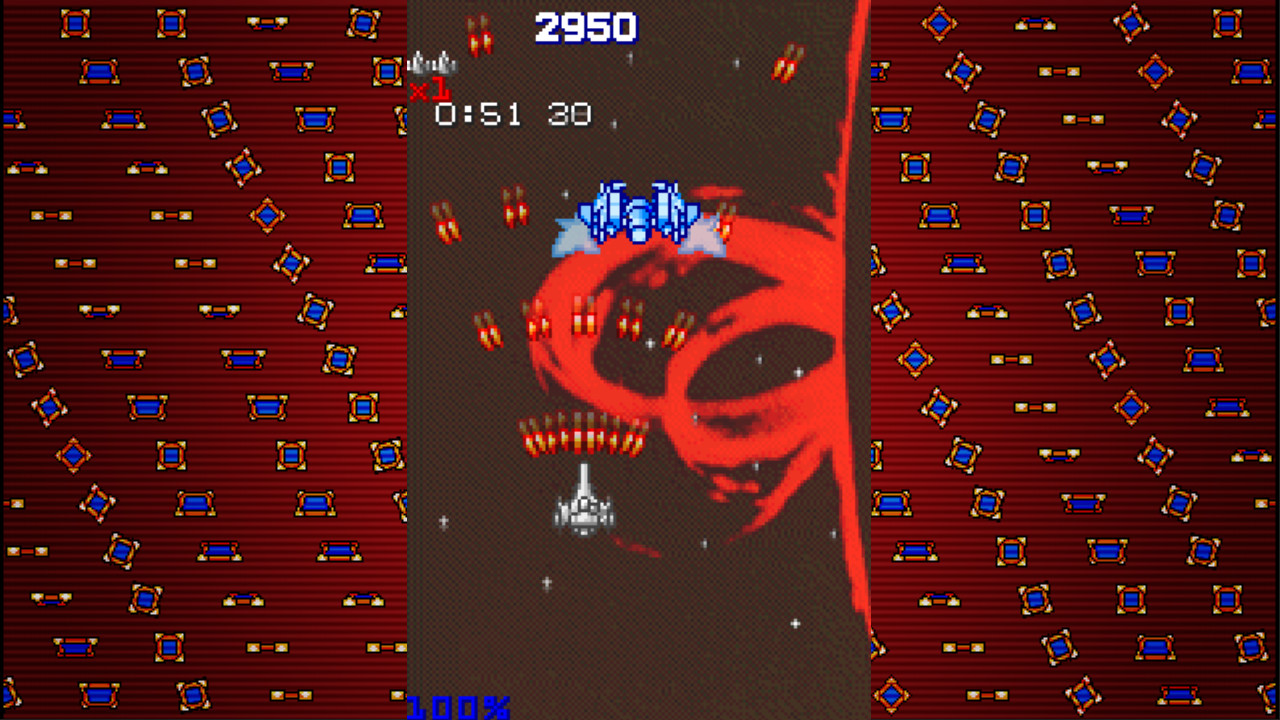
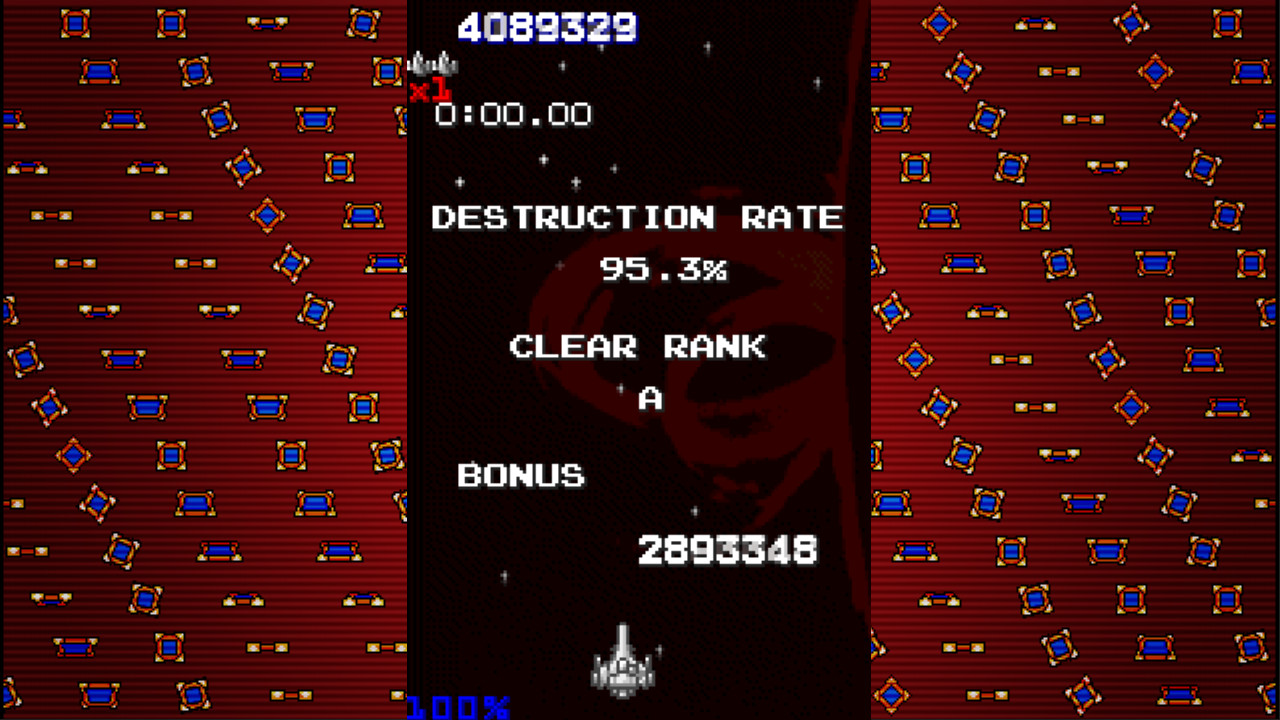
The game is themed around the Seven Deadly Sins, with each of the seven stages being named after one of them and providing you with a different means of attaining a strong grade or "judgement" at the end of the game. The first stage Envy, for example, tasks you with simply destroying as many enemies as possible, with your grade dependent on the percentage of all the available enemies you destroyed. Sloth, meanwhile, tasks you with simply grabbing as many extra life pickups as you can (and you can destroy them, so you have to actually ease off the shooting a bit), while Greed tasks you with "gathering data" on enemies by fulfilling various hidden conditions.

cardinal1

Greed is perhaps the most interesting of the stages as well as the most thematically appropriate, because getting too greedy for the "data" will result in your untimely destruction; instead, you need to learn moderation (or at least master the peculiar "shield" ability your ship has, which allows you to cancel bullets, but only from the front of your ship) in order to succeed.

After Greed comes Pride, where your job is to raise your score multiplier to x100 by destroying enemies as efficiently as possible — your multiplier increases by one for every enemy destroyed, but also drops by one every second or so. Following this is Lust, where you must clear as many enemy waves as possible; Gluttony, where you must destroy enemies for collectibles; and finally Wrath, where you are graded according to how many times your ship is destroyed during a horrid boss fight.

Interestingly, Cardinal Sins doesn't kick you out to a Game Over screen if you run out of lives at any point; you always play through the seven levels in order, with your lives being reset at the start of each stage. Run out of lives and you simply get a "failing" F-grade on that stage, but you can carry on. There's incentive not to do this, however; get through all the stages without any failures and you'll be presented with the final battle, initially against a series of small but strong bullet-spewing enemies, and subsequently against a larger version with some seriously unpleasant bullet patterns to fend off. Only by defeating this "Mirror of Cardinal Sins" can you clear the game and sit back with a satisfied expression on your face.

cardinal2

I really like this game for a number of reasons. Firstly, it's nice to play a game that is genuinely retro rather than the fashionable faux-retro of much of the indie scene today; the game features some simple but deliciously crunchy chiptune music and sound effects as well as some limited but effective and clear visuals.

Secondly, it's damn fun. The difference in structure from the usual shoot 'em up format of "survive as long as you can" makes it immediately stand out for me, and I'm a sucker for anything with an interesting grading and scoring system.

Thirdly, I'd never heard of it before, and now it's on Steam a whole bunch of newcomers — including me — will get to experience it for the first time, along with its companion game Judgement Silversword and its pseudo-sequel Eschatos.

With Cave shoot 'em ups apparently on the way to PC via Steam soon, it's starting to look increasingly likely I can finally retire the Xbox 360, which had previously been my shmup machine due to Japan's bizarre rejection of the platform for everything except fantastic arcade shooters.

2068: Personality is Like a Cube

0068_001

"Personality starts off like a cube," says The Fruit of Grisaia's protagonist Yuuji in Yumiko's route. "When we're young, we clumsily bump our corners against other people in the form of childish conflicts. Eventually, our sharp edges are worn away to leave something more like a sphere. That's more or less what people are describing when they say someone's 'softened'.

"Moderate collisions with others help us mature. But when those first impacts are too strong, they can have a different effect: instead of losing our corners little by little, we splinter in strange, harsh ways, warping into crooked shapes. Once crooked, it's hard to become a sphere. Even as the people around them mellow, their sharpness only grows harsher, and everyone who approaches ends up getting hurt."

I immediately liked this analogy when it first scrolled across my screen following Yumiko's revelations about her past. And, not for the first time, I found the writing in a visual novel resonating with me somewhat. While I'm in no way comparing my life situation to the struggles Yuuji and Yumiko have to deal with in The Fruit of Grisaia — struggles which I won't discuss specifically here, for those who are interested in reading it and wanting to avoid spoilers — I could certainly relate to a lot of the sentiments involved.

Most recently, I've been becoming conscious of how I've "softened" somewhat in the last few… months, maybe? My own personal struggles over the last five years — and even earlier than that, to a lesser degree, if I'm completely honest — have certainly chipped away at my original "cube", and there have been more than a few crooked splinters here and there that make me into a not-exactly perfect specimen of normalcy. But then, who is "normal" anyway?

Some of those sharp edges feel like they're wearing away a little bit, though, after a long time. I contemplate my new part-time work in retail and realise that I'm actually quite enjoying interacting with other people, both colleagues and customers alike, even despite my long-standing struggle with social anxiety. I contemplate my fight against my once-constantly rising weight, and how I've scored a resounding victory over it so far by shedding just under five stone since February of this year. I can look in the mirror now and not hate myself; I can speak to other people now and not worry that they hate me.

In other areas, there are still sharp corners and splinters, though, preventing me from becoming that perfect "sphere". I still harbour a considerable degree of resentment towards people who have done unpleasant things or treated me unfairly in the past, and I just can't seem to let go of those feelings. There are nights when I can't get to sleep because my mind insists on replaying some of my most upsetting memories over and over again — sometimes with slight variations depicting how I wish I'd acted, sometimes unfolding exactly as they did in reality — and this makes it clear that I'm still rather more "crooked" than I'd like to be.

I don't know if I'll ever be that perfect "sphere"; by this point, I feel like I've "splintered in strange, harsh ways" so many times that it probably won't ever happen, but I can at least try to round off as many corners as I can and make the best of things, one day at a time.

2067: Yumiko

0067_001

Spoilers for not-quite-all of Yumiko's route of The Fruit of Grisaia ahead!

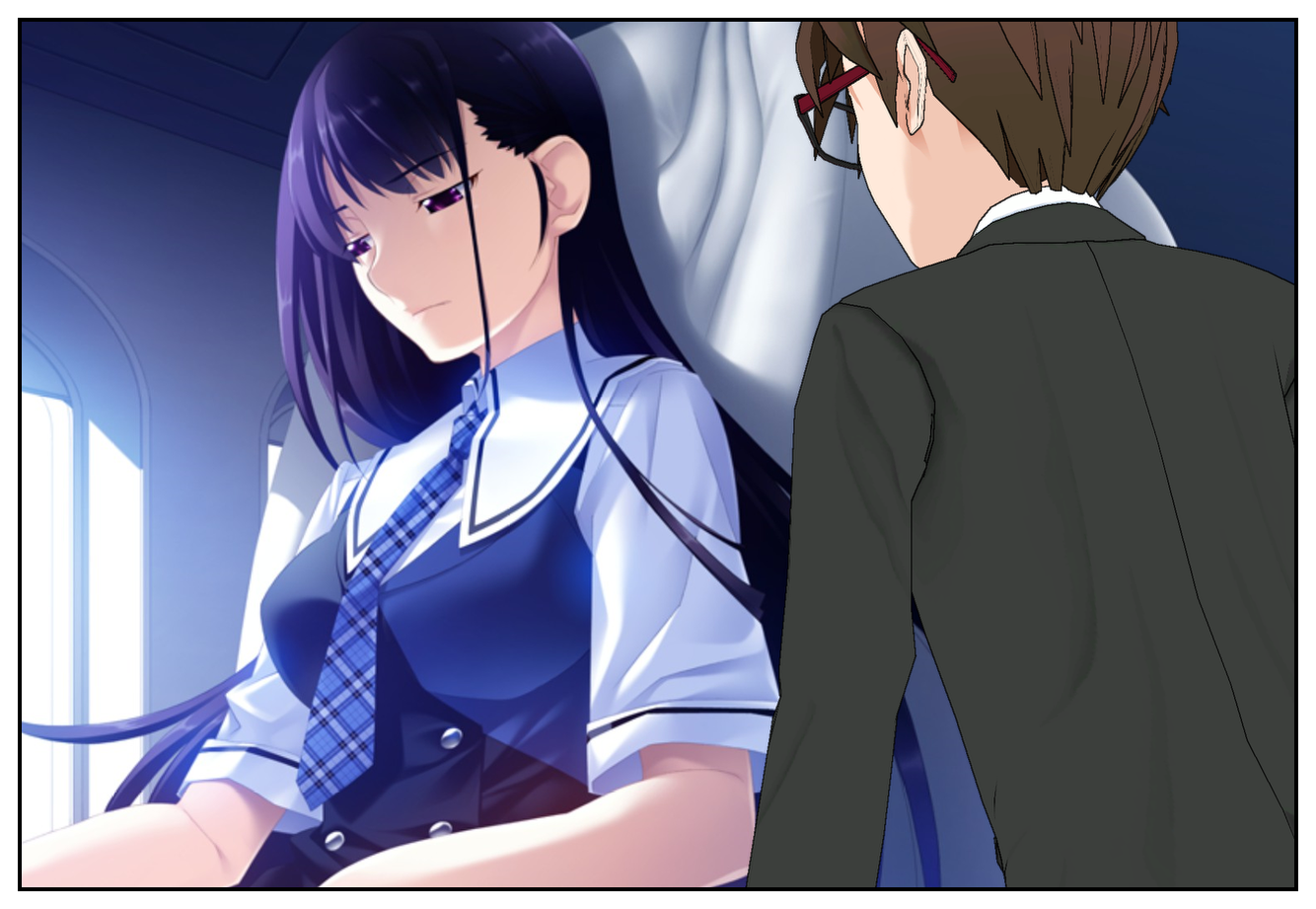
When we're first introduced to Sakaki Yumiko in the common route of The Fruit of Grisaia, it's clear that she is both troubled and likely to be trouble for Yuuji. When Yuuji first tries to introduce himself to her, she initially tries to ignore him, and subsequently tries to slap him when he persists. This eventually escalates into her lashing out at him with a box cutter whenever she sees him, a fact which Yuuji's fellow students just shrug off as being "something she does", because they've all been through it too. Yuuji, being a certified badass, shrugs off Yumiko's attacks without injury easily, and eventually they stop altogether, though she still proves herself to be a prickly individual who is generally unwilling to interact with others.

2015-09-13_00009.jpg

Except it's not that simple. Throughout the common route, Yumiko can often be found lurking on the periphery of the rest of the group's social activities; they're all aware of her and take care not to exclude her, but they also don't try to force her to participate in anything. It's clear that even if she doesn't show it on her face or through her behaviour, she finds comfort in being around people who care for her and are considerate of her feelings. Even the foul-mouthed Makina proves herself to be enormously perceptive of Yumiko's personality traits, accurately "reading her thoughts" in one particularly memorable scene.

In the common route, we're given a teaser of what has made Yumiko as withdrawn, sullen and prone to lashing out as she is — it's clearly to do with her father. Upon returning from a shopping trip to the town, a number of the group report a suspicious-looking black car outside the station, though those who have been at the school longer know that this is a sign that Yumiko's father is coming to inspect the school, which it seems he financed and had built. Yumiko, meanwhile, refuses to see her father, instead preferring to watch his cursory inspection of the school grounds from the dormitory rooftop; it's clear that he's not really inspecting anything, but is instead hoping that he might be able to get through to his daughter.

2015-09-10_00018.jpg

When Yumiko's route proper starts, we're given a bit more information about Yumiko's father, who has already been suggested to be a not very nice person. Indeed, early in Yumiko's route, we're given a third-person scene (i.e. protagonist Yuuji isn't present for it) in which we see Yuuji's handler JB and Yumiko's father discussing how they might get Yumiko to come back to her family and be prepared to take over the family railway business. Yumiko, until now, has been having none of this, of course, and so her father resorts to desperate measures, requesting that JB assign Yuuji to bodyguard duty for Yumiko and then arranging for her to be attacked and abducted. What he didn't count on is that Yuuji is more than capable of taking care of a few hired thugs, particularly as they had been specifically instructed not to actually harm Yumiko — at least initially.

Yumiko is initially resistant to Yuuji guarding her, insisting that "it's not as though [her] life's anything worth protecting", and that she "doesn't particularly mind if someone does come for [her]". The initial attack from her father's men puts her somewhat on her guard, though, and from that point on she is less resistant to Yuuji's efforts to protect her, and gradually softens towards him over time, eventually developing feelings for him because she's come to rely on his protection — a feeling of safety and security that she's never enjoyed before.

2015-09-16_00038.jpg

Yuuji, being a stubborn idiot prone to inadvertently annoying women with non-deliberate insensitive comments, of course, doesn't notice that Yumiko has started to feel something for him — or refuses to admit that this might be a possibility, at least — but sticks beside her "because it's [his] job". When JB pulls him off the case at the request of Yumiko's father, he is somewhat surprised to receive a direct request from Yumiko to continue working as her bodyguard in a private capacity.

On one excursion, the heavens open and Yuuji and Yumiko find themselves trapped under a bridge in a torrential downpour. Something doesn't seem right about Yumiko's behaviour to Yuuji, and it's not long before things come to a head; a thunderclap and flash of lightning absolutely terrify Yumiko, who crumples into Yuuji's arms in an uncharacteristic display of weakness, fragility and reliance on others. Having already come this far in showing her fragile side to Yuuji, she then relates the story of how she came to be the person she is today, and what she is doing at the mysterious school.

2015-09-16_00045.jpg

Yumiko's mother was the daughter of a pair of struggling business owners. She married into the Sakaki family primarily for financial and political reasons, and bore Yumiko as the family's only child. Being a girl, Yumiko was an immediate disappointment to the family, who had been hoping for a son and heir apparent, but Yumiko's mother was much too weak to survive another pregnancy, and eventually succumbed to a debilitating psychological disorder that saw her and Yumiko retreat back to the countryside and her family home. She was hospitalised, and Yumiko was left to live with her grandparents, who resented her existence because she was a symbol of their failing business, and how they wouldn't be able to rely on the support of the Sakaki family forever.

Yumiko tried to stay positive amid this bleak situation, but the youthful joy she once had at the simple sight of a passing dog eventually gave way to bitterness and resentment. Her only outlet was her neighbour, who had formerly been employed by her grandparents as a servant, but now continued to help them out for free. Yumiko was the only one to show her gratitude, and she resented her grandparents for taking advantage of her right up until her death — a feeling shared by her daughter and son-in-law.

2015-09-16_00073.jpg

Her hospitalised mother gradually comes to show an improvement, eventually reaching a point where it looks like she's going to be discharged from hospital, but suffers a catastrophic relapse upon hearing the news that her husband — Yumiko's father — had taken a mistress in her absence, and said mistress had borne him a son.

A year passes, and Yumiko's bitterness grows, since her mother had relapsed so severely that she couldn't even remember anything about her family. She had no-one to rely on, no-one to talk to, no friends, which is why when her father's aides come to collect her from her grandparents' house — bearing the offer "if you let me have Yumiko back, I'll continue supporting your family and your business" — she jumps at the opportunity.

2015-09-17_00011.jpg

Initially resenting her father for the anguish he caused her and her mother, Yumiko eventually softens towards him as he appears to be making a genuine effort to reconnect with his daughter. It eventually transpires that he is only doing this because his illegitimate son died and his mistress abandoned him shortly afterwards, leaving Yumiko once again as the only potential heir to his business. Feeling a familiar, growing sense of rage at this, Yumiko is in a fragile mental state and is pushed over the edge when she overhears one of her classmates speaking untruths about her.

Prior to this, she had taken to expressing her anger through destruction. "The clicking of the blade emerging from its sheath," she relates. "The sound of something once whole being severed apart. Those had become calming sounds to me. How wonderful would it be if I could slice away my femininity with a single box cutter? How wonderful would it be if I could sever my fate with the touch of a blade? How wonderful would it be if one movement of my hand could cut me free of all the troubles that coiled around me and choked the air from my lungs?"

2015-09-16_00072.jpg

The first thing she destroys is her long, black hair; an attempt to "slice away her femininity" and look more like a boy — a largely successful effort, though one that causes people to shy away from her even more than normal. Later, she destroys her artwork and the diary in which she had written down all the growing positive thoughts she had been feeling as she had mistakenly thought her father truly loved her.

And ultimately, the event which sees her totally severing her ties to her old life: she stabs her classmate, whom she had previously thought was a friend, but who had turned out to be just as much of a turncoat as everyone else in her life.

2015-09-17_00025.jpg

Yumiko escaped a criminal conviction for her violent outburst, because money can make anything go away, and her father knew that very well indeed. Knowing that the situation couldn't continue in the way it had been, however, he offloads her onto Mihama Academy, where she meets Yuuji, and her life undergoes some considerable changes once again.

When Yuuji ends up injured in the line of duty protecting her, Yumiko is wracked with guilt, not just at the trouble she's embroiled Yuuji in, but at how much she's hurt her other classmates too. This guilt eventually manifests itself in her deliberately allowing herself to be taken away by her fathers men and capitulating to whatever demands he might have — which turn out to be her attendance at a school in America, far away from anywhere she could possibly become a problem.
2015-09-17_00047

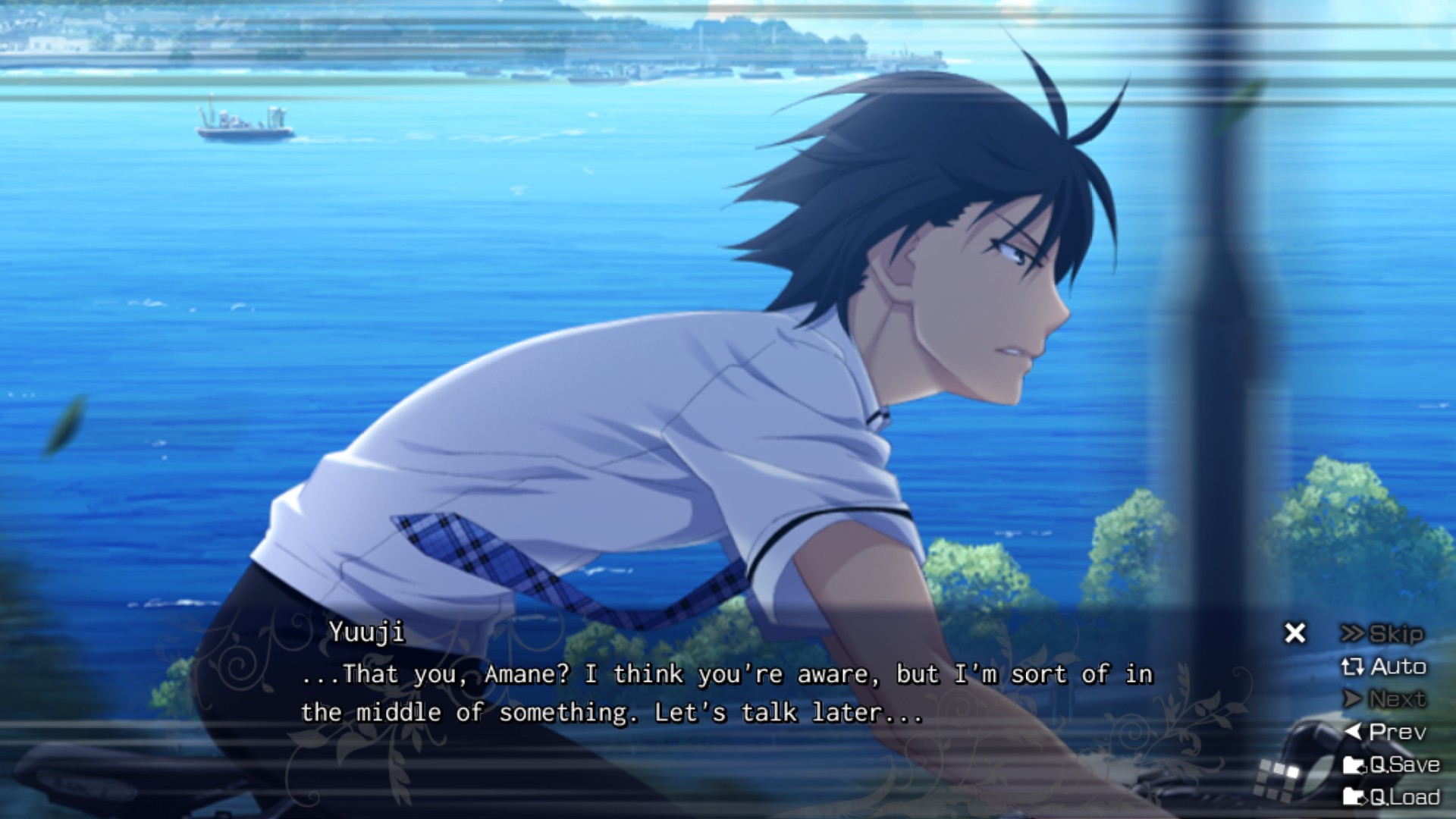
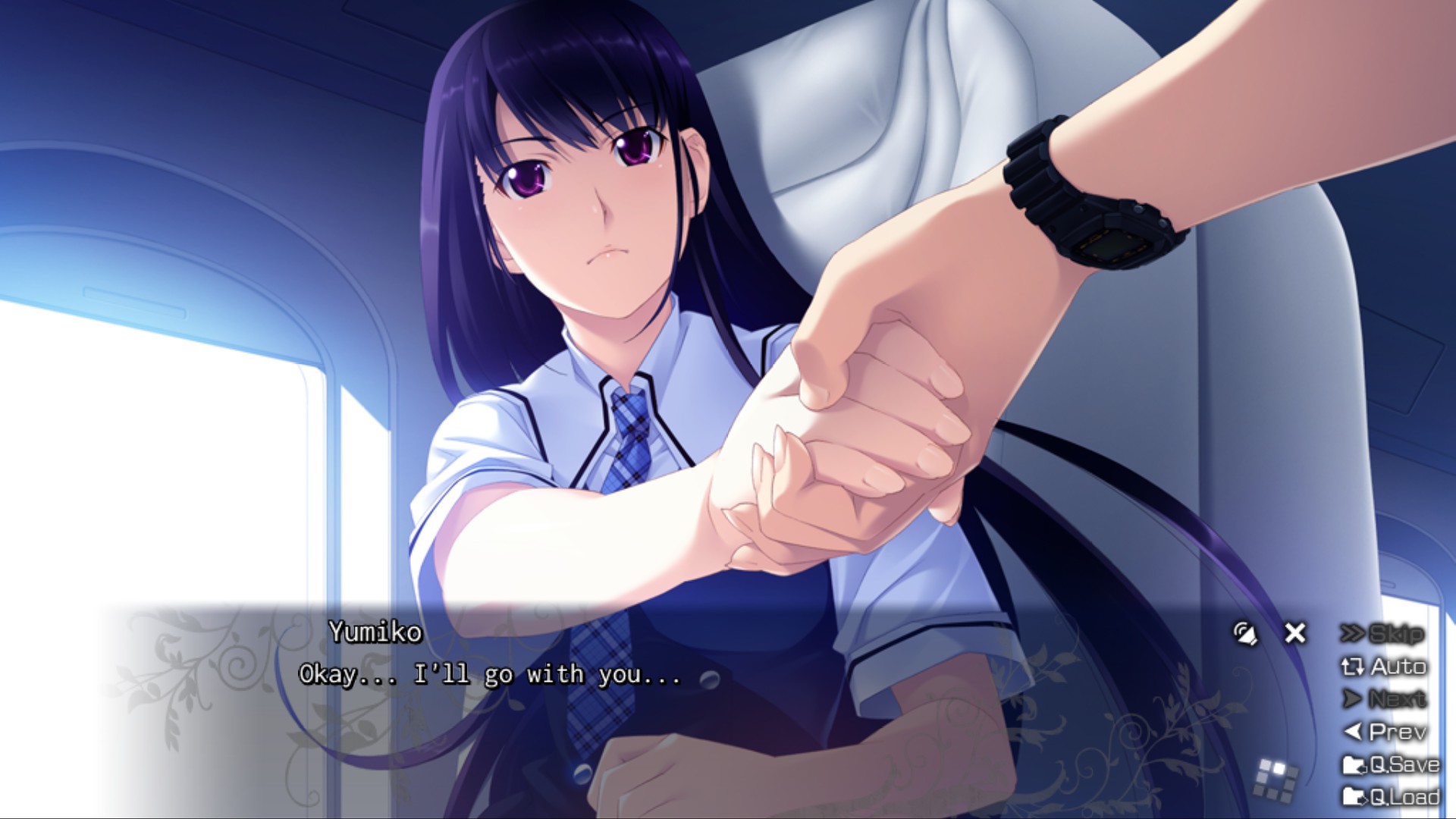
Yumiko's father doesn't count on Yuuji's stubbornness, though; spurred into action by a text message from Yumiko apologising for a situation that is in no way her fault, he eventually rescues her following a dramatic chase, and the two of them begin a life on the run, during which period they both eventually manage to admit their feelings for one another — though it takes Yumiko essentially sexually assaulting Yuuji in the middle of the night to spur the latter into action and contemplate that she might actually possibly maybe be interested in him.

Yumiko and Yuuji making love for the first time — and, for that matter, the subsequent time, during which she admits that she "doesn't dislike" playing a submissive, masochistic role — is a turning point for Yumiko in particular, and to a lesser extent for Yuuji. Yuuji reveals that he has some sexual experience thanks to sex workers that were laid on for him in a previous assignment, but comes to realise that sexual intimacy with someone you truly care about is on a whole other level of pleasure. Yumiko, meanwhile, allows this ultimate expression of intimacy as a means of demonstrating that she trusts Yuuji absolutely; the pair of them continually push the boundaries with each other to see how far they will each go, and it turns out that they both feel absolutely comfortable with one another after all the time they have spent together.
2015-09-17_00056

Yumiko's growth is pretty touching to see, but tragic at the same time. On more than one occasion, she ponders whether it's acceptable for her to be happy, or whether she "deserves" it. Yuuji has to admonish her several times for apologising when it's not necessary, though she does the same for him too; eventually the two settle into a pattern of gratitude for one another, neither of them quite sure how to deal with having been alone for so long and now having another person to take into consideration.

I haven't quite finished Yumiko's route as yet, but I'm excited to see how it concludes. There's been plenty of drama and touching, emotional moments so far, and the whole thing is clearly building towards what I hope will be a satisfying final confrontation with her father. I'll just have to wait and see how that pans out!
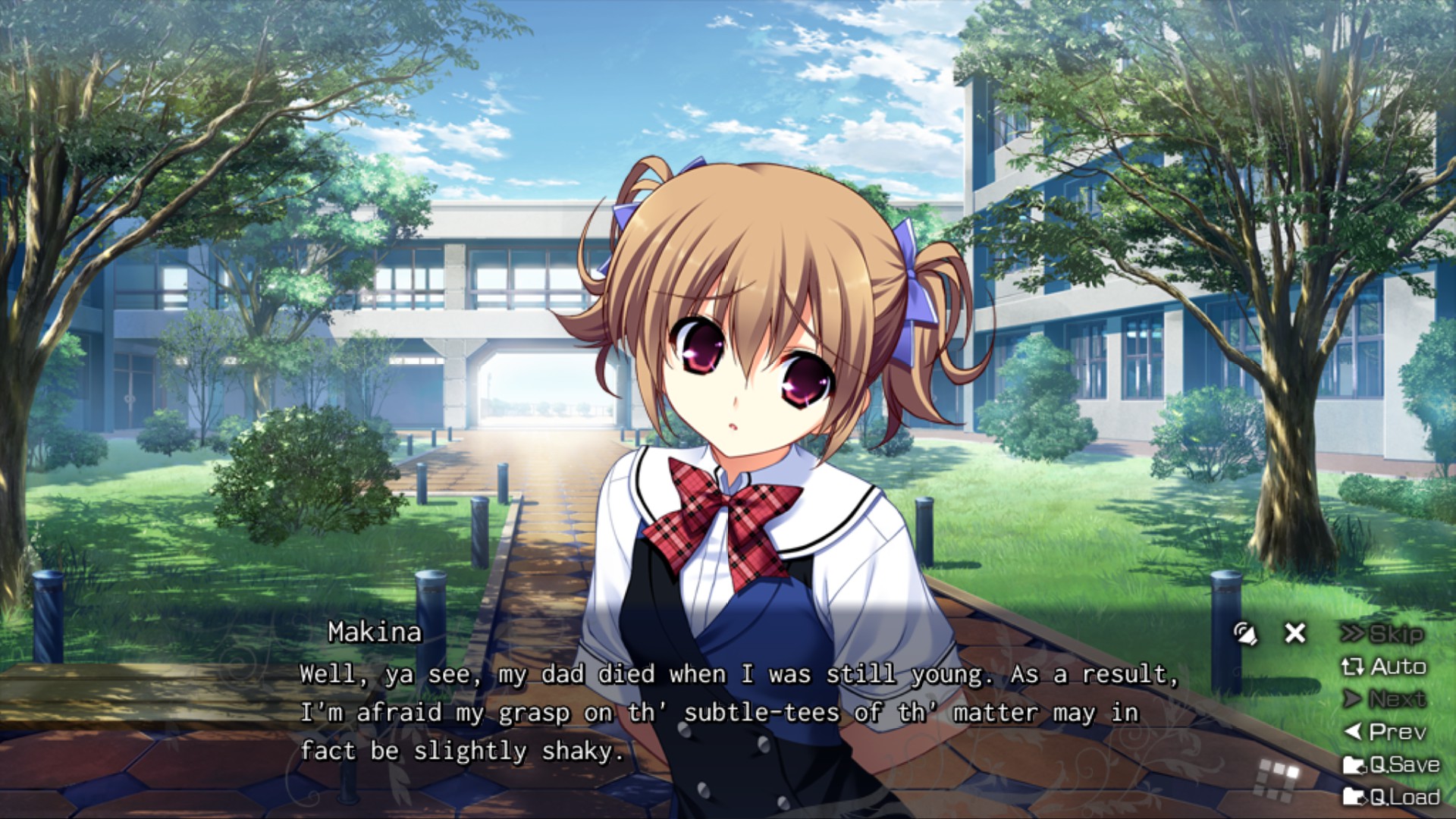
2066: Reflections on Grisaia's Common Route

0066_001

I've finally reached the end of the rather lengthy common route in The Fruit of Grisaia, and so it's on to the unique routes for each of the main cast members. I've decided to explore them in the order Yumiko > Michiru > Sachi > Makina > Amane so as to save my favourite heroine for last, but this also apparently works out quite well narrative-wise, since Makina and Amane's routes sound as if they are more important with regard to the series' overall continuity.

I've already started on Yumiko's route, but haven't read enough to be able to comment on it with any particular authority as yet, so I will save that for another time. Instead, I wanted to reflect a little on the common route, since it was very enjoyable in its own right.

2015-09-14_00007

The Fruit of Grisaia's common route is actually more of a collection of short stories loosely organised into chronological order to allow for references to past events and a certain degree of character growth as the chapters proceed. By the time you reach the decision points that determine which unique route you'll be proceeding down, you'll have a pretty firm understanding of all the characters on at least a superficial level, plus astute observers will have picked up a few hints as to what their own personal stories will be all about.

Aside from the overall development, though, each chapter of Grisaia is pretty much a self-contained story in its own right. They open with protagonist Yuuji delivering some philosophical narration about the situation, then the scene itself unfolding, then Yuuji wrapping things up with some conclusions from his own perspective. It's a structure that works well, and it keeps things moving along; none of the chapters feel like they particularly drag, even though there's not a lot of "action" in the whole common route, and the tone bounces around between comedic, romantic, dramatic and tragic between different chapters, giving you a chance to see all of the characters respond to various situations and understand them as people rather than archetypes.

2015-09-13_00005

And that's quite a key point, as I've mentioned in previous posts on the subject: none of the characters in Grisaia quite conform to the stereotypes you're clearly supposed to think of when you first see them. Amane's onee-san act is stymied by her Kansai coarseness; Makina's loli appearance belies a foul mouth that would make the dirtiest of dirty old men blush; Sachi's compliant nature and habitually calm tone of voice makes it all the more surprising when she comes out with a surprisingly cutting remark; Michiru is fully aware of the fact that her tsundere personality is a deliberate act, as is everyone else; and Yumiko… well, of the lot of them, she, so far, appears to have so far been the one who conforms most to her stereotype, but she's also the character whom Yuuji has had the most difficulty connecting, so I don't doubt we'll learn more about her in her unique route.

Peppered throughout the common route's short stories are little hints and clues about the cast's histories, though nothing is quite made explicit until towards the end of the common route, and even then there are still a lot of mysteries. Who is Yuuji, for example? What is his mysterious "job" that he keeps referring to? What is his connection with the school and its principal? Yuuji represents probably the most intriguing mystery of the lot, but the other cast members all clearly have their own skeletons in the closet, too.

2015-09-15_00002

But because those skeletons are all rather personal to the individual characters, they're left to be explored in their personal routes, leaving the common route free to let its hair down a bit and indulge in some light-heartedness such as the obligatory "beach episode" (which features a hilariously filthy scene between Sachi and Michiru) as well as everyday happenings around the school that give us an ideal of who these characters are and how they relate to one another. It's a close-knit bunch that starts to feel rather like family after a while — an observation that several characters comment on a few times.

So far, then, the common route has thoroughly enraptured me in the world of The Fruit of Grisaia and smitten me with its characters — all of them, too, which is nice; usually in this sort of setup there's at least one cast member that, even if I don't actively dislike them, I feel as if I like less than the others — and I'm very much looking forward to seeing how their stories unfold. And, from there, the fact that there are two sequels to look forward to at some point down the road makes me very happy indeed.

2065: Some Thoughts for Critics

0065_001

Hi critics of the world. I'm going to try and keep my anger in check today, but I'm making no promises, because this heap of crap from (once?) respected critic Jim Sterling was brought to my attention earlier today.

I don't want to dwell on Sterling's piece specifically too much because, to be honest, there's even less substance there than there was in this piece for Vice UK a little while back. Instead I want to talk about a more general philosophy that I think would be of benefit to everyone: critics involved in the industry, PR representatives whose job it is to get the word out about their clients' games, the developers and publishers of said games and, of course, the various audiences who are interested in all the different types of games out there.

It's actually a pretty simple philosophy, and it would go a long way towards preventing me from ever having to write another post like this, which, to be perfectly honest, I would be very happy about.

It goes like this: if you're not going to give something a chance, I'd rather you simply didn't cover it at all than spew ill-informed nonsense.

It makes perfect sense, surely: you don't have to write about something you personally find repugnant/offensive/boring/unengaging/rubbish; PR representatives don't have to look at the pipes in their ceiling and wonder if they can support the weight of a dangling human body; developers and publishers get their creative efforts into the hands of people who will actually respect their work, even if it's not "flawless" (and nothing is flawless); and audiences aren't belittled by people branding things they enjoy with pejorative statements.

You'd think it'd be that simple. You'd think that, with all the diversity in the modern gaming landscape, that supposedly respected critics like Jim Sterling and Mike Diver would recognise that something like Senran Kagura 2 is not going to interest them in the slightest, and, rather than posting provocative nonsense on the Internet about them, which only has the effect of riling fans up and cementing the attitudes of the prejudiced, they would simply move on to something that they are willing to engage with, that they are willing to explore in detail, that they are willing to do justice to.

Because coverage such as the pieces from Sterling and Diver recently — and God knows, there's a bunch more of crap like this out there — helps no-one, not even the critics themselves. In demonstrating a clear unwillingness to even attempt to engage with a work they find personally objectionable, they undermine their credibility in the eyes of people who are interested in it. Note: this doesn't necessarily mean that the people who are interested in it like it — there are plenty of Senran Kagura fans out there who prefer the Vita and PS4 games to the 3DS installments, for example — but rather, it just means that the critics in question become someone whom those audience members will not trust the opinions of in future.

As I say, this is easy to do. I don't like Call of Duty and Battlefield, so you know what? I don't talk about them at all, except on the occasions where I've decided to give them a try just to ensure that I really do dislike them and I'm not just against them because they're popular. I don't understand in-depth strategy games — I wouldn't say I dislike them, because I'm often enamoured with the concepts, I just don't "get" them — so, you know what? I don't talk about them, either, because I can't do justice to them. I don't like Dota 2, so you know what? Of course you do by now.

The only reason that critics like this put out pieces like they have done recently is to get a reaction. And it pisses me off that it works. In an ideal world, we would be able to ignore this sort of thing, and I would love to do that, but as I've commented previously, the world we live in right now means that it's important to call attention to bad practice like this, because there's not enough in the way of high-profile good practice to counteract the damage that bad critics like this are doing. Sure, there are sites like Niche Gamer, Operation Rainfall and the like who give this sort of thing a fair chance — as well as following the eminently sensible idea of having specialist writers rather than generalists attempting to cover everything and doing justice to nothing — but their reach is still limited compared to more well-established, profitable, commercial sites like Vice and high-profile Patreon beneficiaries like Sterling.

As I said before, it's important to fight. I'd love to see outlets like Niche Gamer and OpRainfall grow into sites that can truly compete with the big boys, but I can't help thinking before that happens there really needs to be a dramatic shift in how content is produced for the Web, and how people pay for it. Because it all comes down to clickbait; Sterling's piece today is provocative nonsense, pure and simple, designed to rile up the Senran Kagura fanbase and allow those who dislike Senran Kagura the opportunity to laugh at their expense. And the only reason he felt it was appropriate to publish this — much as Vice thought it was appropriate to publish that pile of crap the other day — is because it would get people to click on it. Well, great job at being a critic. Ebert would be proud.

To summarise: if you don't think you can do justice to something, or feel unwilling to put in the effort to engage with something on anything more than a superficial level, do us all a favour and don't cover it. There's plenty of other stuff out there that needs your attention, so rather than wasting everyone's time — including your own — how about putting your critical faculties to use on something you're actually interested in?

Just a thought.

2064: Makin' Marios

0064_001

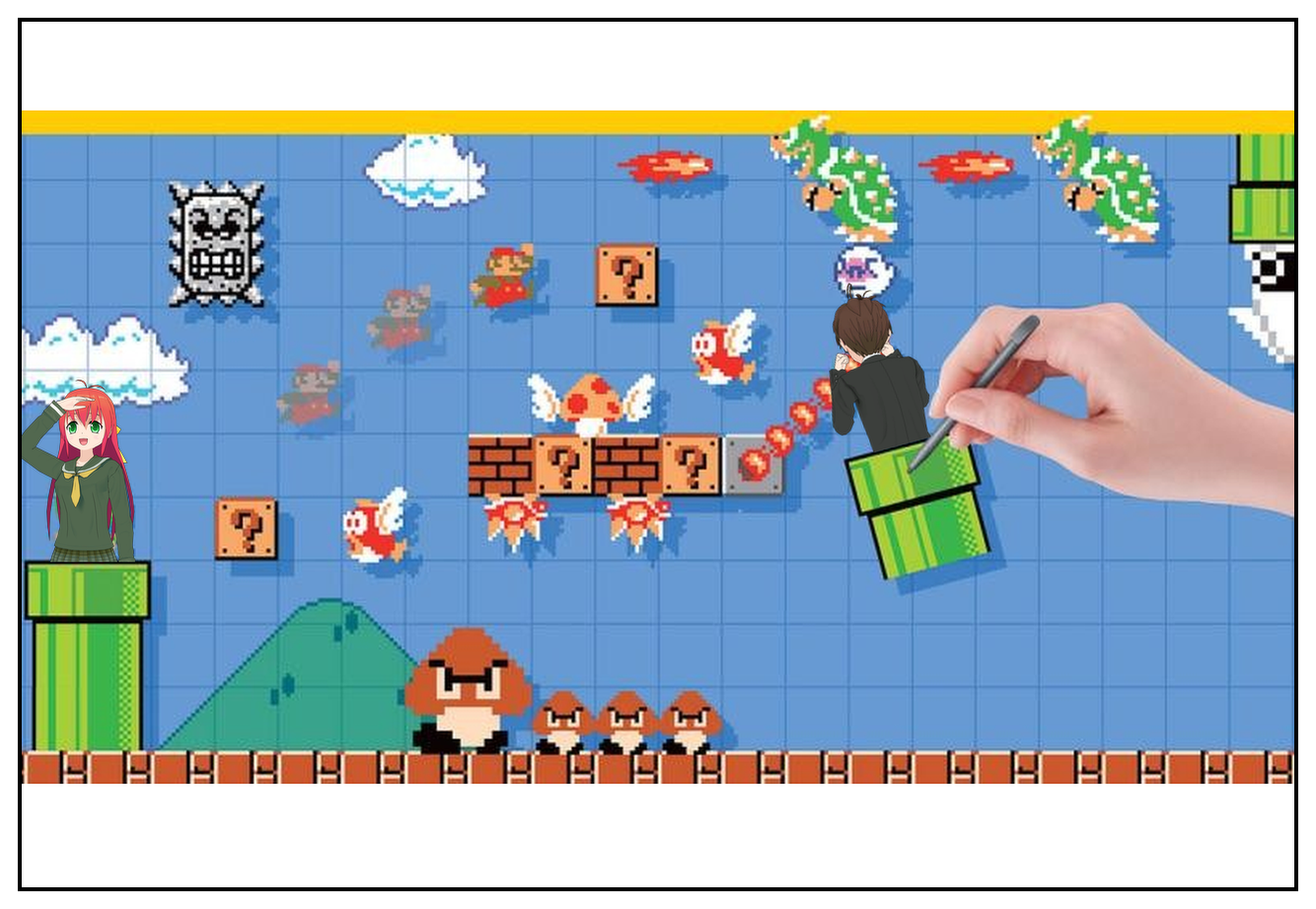
I picked up Super Mario Maker for Wii U the other day. I originally wasn't going to bother with it, but a lot of positive feedback from people I know, like and trust convinced me to give it a shot.

I like the concept of games with built-in level designers very much, but the execution has to be good to make them something I want to engage with in the long-term. TrackMania does it well; LittleBigPlanet less so. For me personally — and this doesn't apply to everyone, I know — the key is the balance between simplicity and flexibility: the freedom to realise your creative ideas without it being too much work to do so.

Fortunately, Super Mario Maker strikes an excellent balance, and part of that is due to how it gradually dishes out new parts, themes and level types over time from launch. It can be mildly frustrating to have a level concept in mind and be unable to realise it completely until you've unlocked the relevant pieces of content, but there are ways to game the system if you feel that strongly. In the meantime, though, it's worth exploring the initially limited toolset, because artificial limitations can often stimulate creativity in the strangest of ways.

It's ridiculously easy to make a level in Super Mario Maker. Choosing from a palette of objects at the top of the screen, you just draw things onto the level using the Wii U GamePad stylus. There are limits on how much you can put down, but they're pretty generous; likewise, the overall width and height of a level can be fairly large. We're not talking Metroidvania territory, of course, because that would go against the philosophy of a Mario game, but you can certainly put together some fairly intricate designs in the available space if you so desire.

As with any type of game like this, it's always fascinating to see what other people have come up with, and the creative ways in which they've used the tools. TrackMania, for example, fostered a subculture of track creators who made "press forward" tracks, in which all you had to do to complete it was simply continuously accelerate; the design of the track would take care of the rest, automatically flinging the car through a series of ridiculous stunts, with objects placed in the absolute perfect locations to ensure that you always landed in the right place and the right way up.

It's the same with Super Mario Maker. The game's only been out for a few days, and some of the most popular levels out there are already of the "don't press anything" variety; in other words, they play themselves. These levels aren't any challenge to play, of course, but it's fascinating to see the intricate "machinery" these creators have put together, and worthy of respect, because it must have been a painstaking process of trial and error to get it working perfectly.

As for me, I haven't unlocked everything just yet, but I've been enjoying dipping in and out of the game, playing a few levels here and there and even making a few. I like the whole package very much, though there are a few things it would be nice to see expanded on over time: most notably, it would be good to see the in-game score and coins actually matter, because outside of the "Mario Challenge" modes, in which you're presented with a randomly selected series of levels to complete, even the concept of "lives" is completely irrelevant. It would be good to see some sort of leaderboard system with clear times, scores and number of attempts, for example, and perhaps coins could be used to unlock additional features.

It remains to be seen if Nintendo will expand this over time, but with Mario Kart and Splatoon on Wii U, Nintendo has shown itself to be open to the idea of games growing and changing over the course of their lifetime. Super Mario Maker already has a wealth of content in it, but it would be fantastic to see more features — perhaps even based on the Amiibo compatibility, since most currently available Amiibo already unlock character sprites; it would be cool to be able to unlock visual themes, sound effects and music through the Amiibo, too; I might even be tempted to collect a few more then.

In the meantime, though, Super Mario Maker is an enjoyable package that is well worth a purchase. Even if you never make any levels yourself, it's great to fire up for a quick blast of Mario action — and if you do make your own levels, it will give you a whole new level of appreciation for what professional level designers do all day!

2063: No, Apple TV Isn't "Game Over" for Xbox and PlayStation

0063_001

Cometh the new Apple announcements, cometh the silly season of people making all sorts of bold statements about how what Apple is doing is somehow The Future, even if what Apple is doing is actually the same thing as other people have been doing for several years, only with more shiny knobs on.

The latest instance of this happening comes courtesy of Forbes, where contributor David Thier gave Smule's Jeff Smith the opportunity to wax lyrical about How Amazing iOS Is, and How Amazing tvOS Will Probably Be.

Smith brings up some good points about "mobile" development (I'm going to keep calling it that, even if we're referring to Apple TV, because the iOS and tvOS ecosystems are intertwines) — the most important being the fact that iOS and Android are both relatively "open" platforms so far as development is concerned; pretty much anyone with the knowhow can download development tools and crank out an app or two if they have the inclination to learn the ins and outs of both development and the two platforms' respective publishing processes.

This is admirable in some respects: it lowers the barrier of entry to fledgling developers and allows them to get their name known without being subject to the whims of a monolithic megacorporation like Sony or Microsoft, though it's worth noting that the barrier isn't completely gone; Apple still has a reasonably rigorous approvals process for the App Store, though unfortunately this isn't always enough to prevent some fetid turds from filtering through.

We've seen more than a few success stories over the last few years, where small developers put out a simple game that turned out to be a huge success, though, as with Flappy Bird creator Dong Nguyen (who was unprepared for the attention his shitty but popular game attained and subsequently retreated from the Internet) these tales don't always end entirely happily.

But unfortunately a low barrier means that it's easier for people to get over it, and, as well as allowing talented but unknown developers to get stuck in, it also allows the very worst kind of shovelware to get churned out by the bucketload. And, as we've already seen over the last few years, neither Apple nor Google are inclined to do anything about the massive "cloning" problem on mobile, where the market is flooded with literally hundreds of knockoffs of a popular game, all in the hope that, in the best cases, they can score some sweet income from people who think they're downloading the actual popular game, and in the worst cases, mislead ill-informed customers into downloading something outright malicious.

We see this elsewhere, too. Popular PC digital distribution storefront Steam used to be much more heavily curated than it is now, and while its somewhat more relaxed approach these days means that we get lots of stuff on there that we wouldn't have seen three or four years ago, it also means that there's a veritable deluge of crap hurled at an unsuspecting public on pretty much a daily basis. This is bad for customers, who are forced to wade through lots of inferior products in order to find what they're looking for, but it's also bad for developers, because it absolutely tanks discoverability; sometimes word of mouth is enough to mitigate being pushed off the front page of "new releases" by the latest triple-A game, but more often than not something small-scale gets released on Steam and is promptly never heard from again.

Smith's assertion that Apple TV means "game over for console" appears to be otherwise based on the fact that the iPhone and iPad made fairly rapid leaps in graphical fidelity and performance over the course of several hardware generations. But what this — and his enthusiasm for the relative "openness" of the iOS and Android marketplaces — doesn't take into account is the quality issue. Sure, there are developers putting out decent-quality games for mobile devices (and, Smith clearly hopes, many of these will jump to Apple TV when the new tvOS arrives) but I am yet to play any mobile game that truly competes with a game on a dedicated games-playing platform, be it a handheld like the Vita, a console like the PlayStation 4 or a gaming-spec PC. The experiences you get on the latter platforms are just more fleshed out; they may be more expensive to buy a ticket for in the first instance, but once you're in, you're in for a good long while, immersed fully in the experience.

By contrast, the sort of games that iOS and Android developers are mostly inclined to put out are short, bite-sized experiences designed to be dipped in and out of throughout the day. This is fine for those who just want a bit of lightweight entertainment or brain exercise, but it's far from ideal for those of us — and there are many of us! — who take our gaming time seriously, sitting down with a game much like an avid reader would sit down with a book, or a movie buff would enjoy their favourite director's works. Mobile platforms treat gaming as disposable, moment-to-moment entertainment; the market for Xbox, PlayStation, PC and handhelds, meanwhile, expects more substance — something more than a timewaster: something they can truly call a hobby.

So no, Apple TV isn't "game over" for Xbox and PlayStation. It will probably do quite well, sliding nicely into the niche the Wii left behind and which the Wii U has subsequently struggled to fill — family entertainment for people who don't really know a whole lot about gaming and are disinclined to explore in great detail — but there's no way it's ever going to replace dedicated gaming boxes for those who take their playtime deadly seriously.

2062: By Request: 100 Reasons You Should Play Metal Gear Solid V

0062_001

Continuing with my exercise from the last few days in which I take "requests" from my Twitter followers, today I follow the suggestion of Josh "Musubi Azeyma" Major, a friend whom I originally met through Final Fantasy XIV. Josh requested that I present a hundred reasons why people should play Metal Gear Solid V, because he's obsessed with it right now and thinks everyone else should be too. So, who am I to argue with that logic?

DISCLAIMER: The only real potential issue with this task is that I haven't actually played Metal Gear Solid V, nor do I own a copy. Since we have, however, established that it is acceptable for professional journalists to comment negatively about things without putting in a substantial amount of time with them — or in some cases, without even playing them at all — it's surely fine for some nobody blogger in the wilds of the Internet (albeit one who used to be a professional games journalist) to speak positively about something he has absolutely no experience with whatsoever. So, without further ado, let's begin.

  1. It's part of the Metal Gear Solid series, which people have heard of.
  2. Hideo Kojima is a cool dude who posts pictures of Eggs Benedict on Twitter and makes jokes about them jiggling like boobs.
  3. Konami fucked Hideo Kojima up the ass pretty royally towards the end of Metal Gear Solid V's development, so while buying a copy and enjoying it may support Konami to a certain degree, it also shows your support for Hideo Kojima's creation.
  4. The graphics are quite pretty.
  5. It's available on Xbox 360, Xbox One, PlayStation 3 and PlayStation 4, so unless you're a weirdo who only has a Wii U in the house, you can almost certainly play it.
  6. Quiet has nice tits.
  7. Quiet is pretty badass.
  8. Appreciating Quiet's feminine wiles pisses off the outrage brigade.
  9. There are guns in this game.
  10. And dogs.
  11. And a horse that you can command to shit whenever you want.
  12. You can attach balloons to bears and send them flying off into the sky.
  13. You can do the same with enemy guards.
  14. There's apparently some sort of story that's pretty good.
  15. Something interesting happens in the medical bay or something, everyone keeps yammering on about it without actually saying what it is because spoilers.
  16. Something about cassette tapes.
  17. METAL GEAR?!
  18. It is, I am assured, open world without being directionless.
  19. It does that thing I like where it presents each mission as its own self-contained "episode", complete with intro and outro credits sequences.
  20. Each mission is apparently pretty tightly focused rather than making use of the open world unnecessarily.
  21. It's not Splinter Cell.
  22. Revolver Ocelot.
  23. Metal Gear is a Japanese series that it's apparently still acceptable to like without people calling you a paedophile.
  24. There are achievements and trophies in the game.
  25. If you're really good at a mission, you get an S-rank and feel all happy.
  26. You can tranquilise people.
  27. You can kill people.
  28. You can sneak up on people.
  29. You can charge in the front door of an enemy base brandishing an assortment of improbable military hardware, then blow everything up with reckless disregard for the "Tactical Espionage" part of the game's subtitle.
  30. Something about tanks.
  31. Anita Sarkeesian's puppetmaster Jonathan McIntosh doesn't like Hideo Kojima for the jokes he makes on Twitter (see #2).
  32. Posting things about Metal Gear Solid online at the time of writing is a sure-fire means of getting those sweet-ass clicks.
  33. There's a Mother Base that you manage or something.
  34. You can get soldiers and dogs and stuff for your base or something.
  35. Some of it's a bit like Peace Walker, which I also haven't played but people seemed to like.
  36. Kojima has dialled back the "I'M MAKING A MOVIE!!" chaos. A bit.
  37. Kiefer Sutherland is like a proper famous actor, innit.
  38. The probably-vain hope that David Hayter will show up at some point in the same, growl "SURPRISE", snap the neck of KieferSnake, forcing you to play the rest of the game as Snake with his proper voice.
  39. Lid from Hyperdevotion Noire was pretty fit.
  40. You can hide in cardboard boxes.
  41. You can play as people who aren't Snake if you so desire.
  42. Including women. SHOCK
  43. But Snake has a robot arm or something, so he's clearly the best.
  44. If you're playing this game, you are contractually obliged to put the word "Punished" in front of your Twitter name, because it makes you at least 20% cooler to do so.
  45. This coolness quotient increases to 30% if you also scrawl an eyepatch on your avatar using Microsoft Paint.
  46. Hurt me more, Snake
  47. There's a sweet-ass limited edition PlayStation 4 to tie in with the game's release, because we all know Metal Gear is a series that belongs on PlayStation.
  48. There's some sort of online feature, I think.
  49. You're banned from soliciting relationships with other people through Metal Gear Solid V's online features, which means you can protect yourself against people who are on the pull through Metal Gear Solid V's online features.
  50. Who does that?
  51. I anticipate it will be less than a week before someone recreates a scene from this using nothing but Super Mario Maker.
  52. Someone already did the microwave tunnel scene from Metal Gear Solid IV.
  53. This game is longer than Ground Zeroes.
  54. It is also a lot longer than previous Metal Gear games.
  55. My friend Josh claims to have spent over a hundred hours on this game so far.
  56. A lot of stuff is optional, so you can probably whizz through it a bit quicker if you want to.
  57. Something about vagina bombs. (I didn't play Ground Zeroes either.)
  58. You like Castlevania, don't you?
  59. There are no navel-gazing codec conversations between Raiden and Rose.
  60. There are, instead, navel-gazing cassette tapes, but you can listen to these while you're attaching helium balloons to bears.
  61. Metal Gear games usually have good villains. (I have absolutely no idea who the villains are in this.)
  62. Ditto boss fights. (Likewise.)
  63. The old games had good music. This one probably maybe does too.
  64. Ditto voice acting.
  65. You can level up Snake or something.
  66. I think you can possibly maybe level up the other soldiers you collect too.
  67. If Quiet's boobylicious outfit bothers you that much, she has numerous other costumes, including being completely covered in blood and Sniper Wolf's somewhat more conservative but still boobylicious outfit.
  68. Apparently there's some explanation for why Quiet dresses the way she does.
  69. Something about photosynthesis.
  70. Or possibly nanomachines. Son.
  71. That big speech at the end of Metal Gear Solid 2 was kind of cool in how eerily prescient it was.
  72. That means that in roughly ten years' time, something in Metal Gear Solid V will probably be looked back on and numerous chins stroked thoughtfully.
  73. This installment uses a Roman numeral instead of the Arabic digit 5, because Roman numerals are, as everyone knows, inherently classier.
  74. The Phantom Pain sounds kind of cool as a subtitle.
  75. Although it's a bit close to The Phantom Menace for my liking.
  76. Although it looks as if Metal Gear Solid V may well be reclaiming the subtitle structure The Phantom [x] from the damage that Star Wars did to it.
  77. George Lucas had nothing to do with this game.
  78. This game does not feature, at any point, in Disney Infinity.
  79. If you play this game, you can talk about it with your friends rather than just nodding and smiling and pretending to know what they're blathering on about.
  80. The Steam version might have trading cards or something, I don't know because the Steam store isn't working for me right now.
  81. The PC port has to be better than that dogshit effort with the last Batman game.
  82. Hey, it's a Metal Gear Solid game that you can actually play on PC without dicking around with emulators!
  83. You should still probably play it on PlayStation, preferably on that sweet-ass limited edition console.
  84. If you buy one of those sweet-ass limited edition consoles from me when I'm working, do me a solid and also buy the extended warranty coverage and preorder some other stuff.
  85. The person who hired me for my part-time seasonal retail job is a huuuuge fan of Metal Gear Solid.
  86. I was hired for said job partly because I included the words "nanomachines, son" under the "Skills" section on my CV.
  87. I'm running out of things to write here.
  88. I'm honestly impressed that I've made it to 88 without much padding.
  89. If you buy a physical copy of the game you can put it on your shelf alongside all the previous Metal Gear Solid games for a cool display of the series over time.
  90. The uneven sizes of the boxes for Metal Gear Solid over the years — CD-sized PSone cases, DVD-sized PS2 cases, slightly-smaller-than-DVD-sized PS3, PS4 and Xbox One cases — makes for an attractively wibbly-wobbly effect on your shelf.
  91. The hardback strategy guide for Metal Gear Solid V is very pretty indeed, and if you can still find a copy anywhere you often get a free poster with it.
  92. The softback one is still pretty meaty and can probably do some damage to an assailant if you have it to hand when you come under attack.
  93. Even if you have no intention of playing Metal Gear Solid V, tossing the disc case out in front of a passing guard will distract them long enough for you to sneak up behind them and snap their neck.
  94. You probably shouldn't do that.
  95. Instead, you can indulge such fantasies in the new video game from Hideo Kojima, Metal Gear Solid V: The Phantom Pain.
  96. There's some sort of kawaii idol girl posters scattered around the place in the game.
  97. Have you considered trying Mad Max as well, which came out the same day? Polygon hated it, which is reason enough to try it.
  98. You should probably also give Until Dawn a go if you have a PlayStation 4, because Sony idiotically released it last week and not at, I don't know, Halloween.
  99. You can probably edit together some entertaining and silly videos using the next-gen consoles' video capture facilities and software such as the PS4's ShareFactory.
  100. If you bugger off and play Metal Gear Solid V, I don't have to keep writing this, and I can get on with playing Super Mario Maker instead.