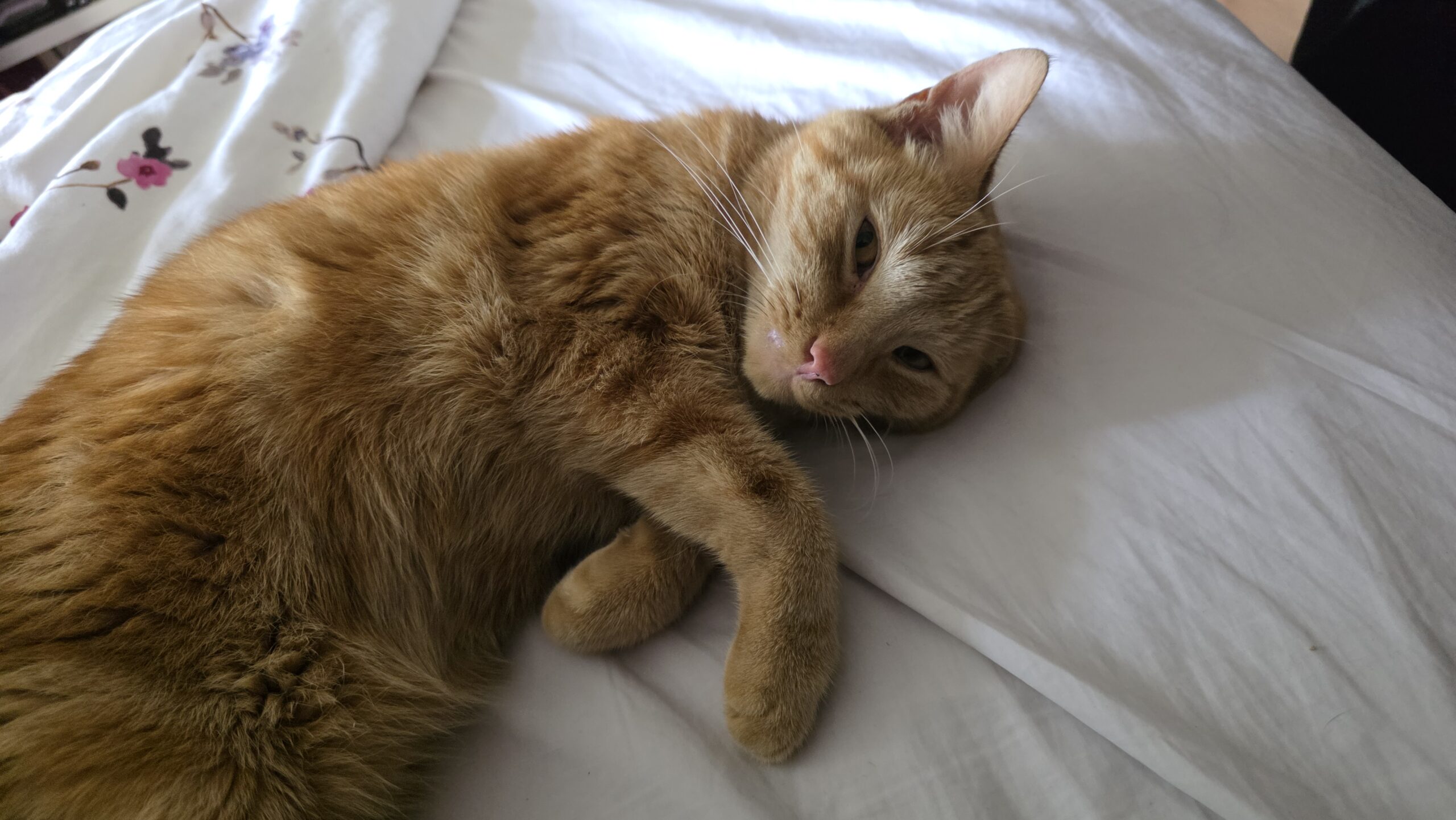
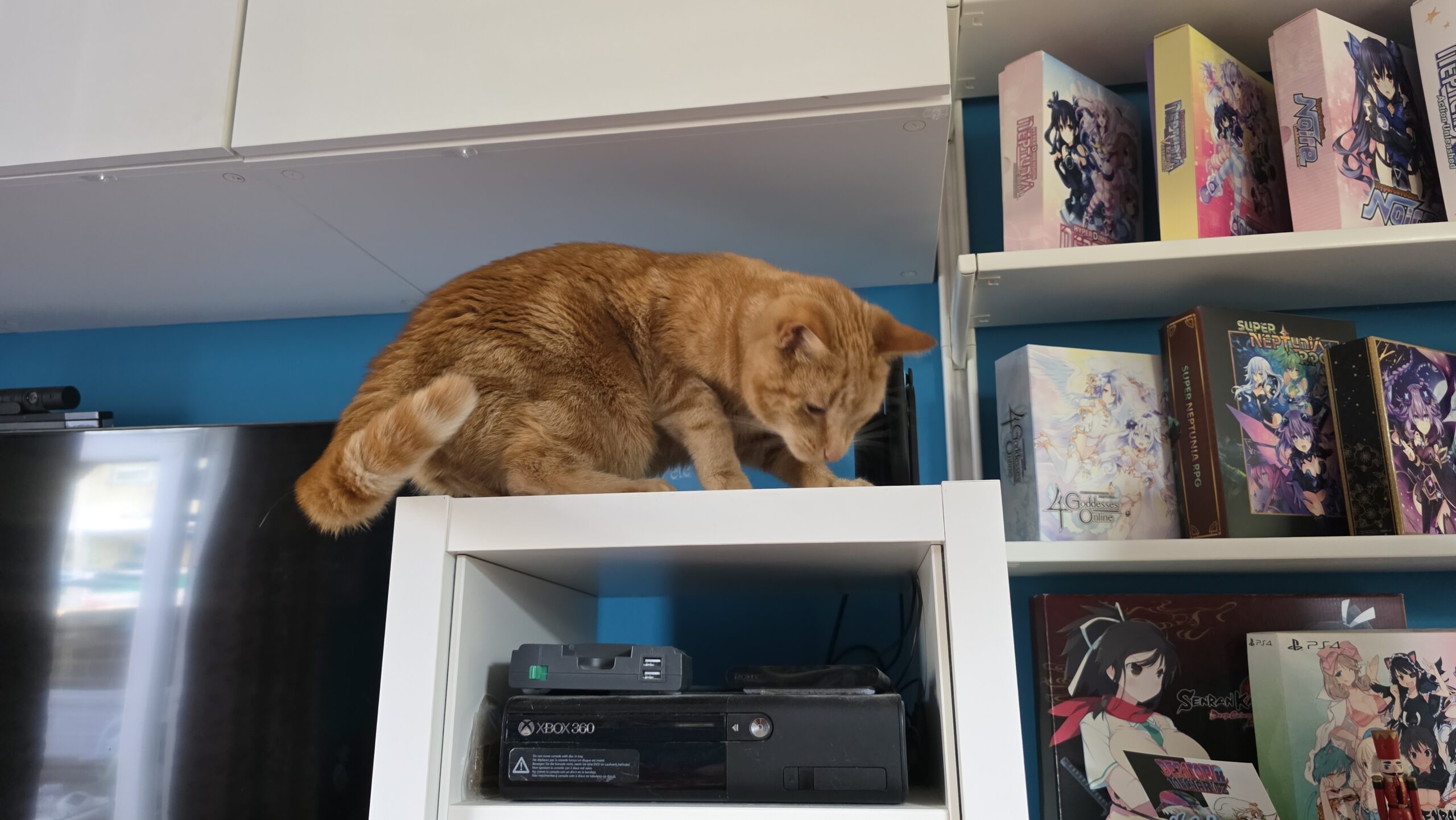
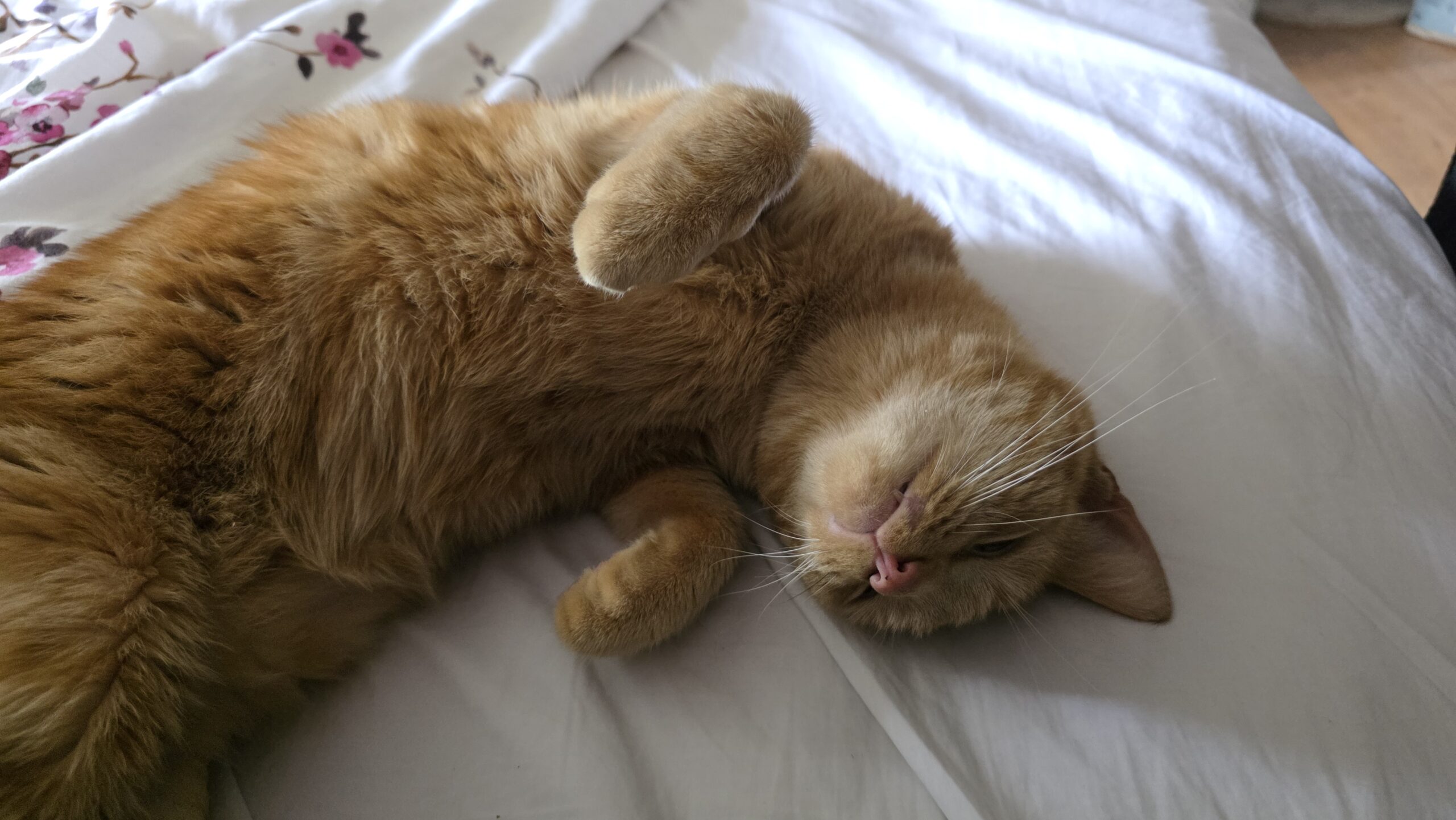
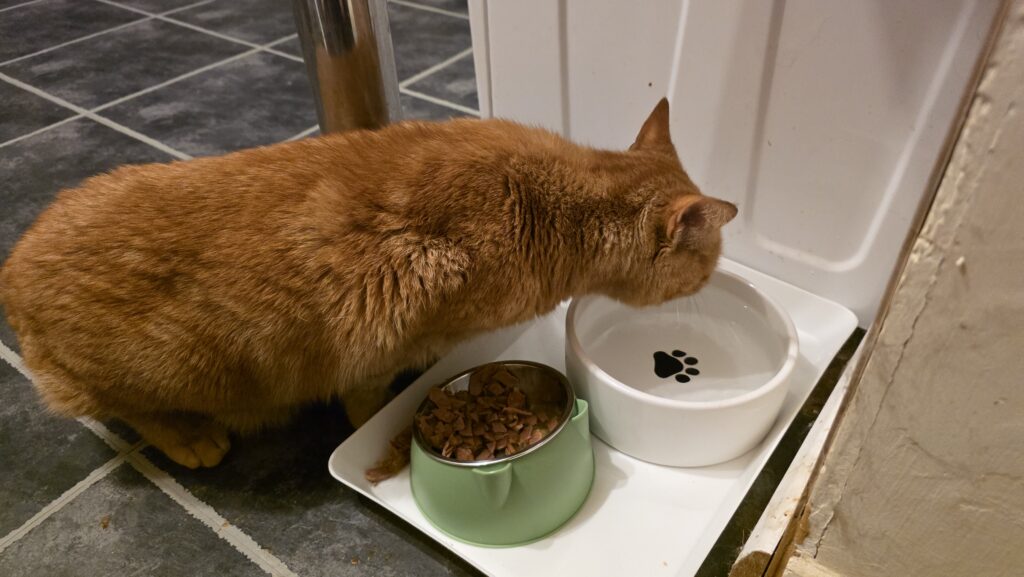
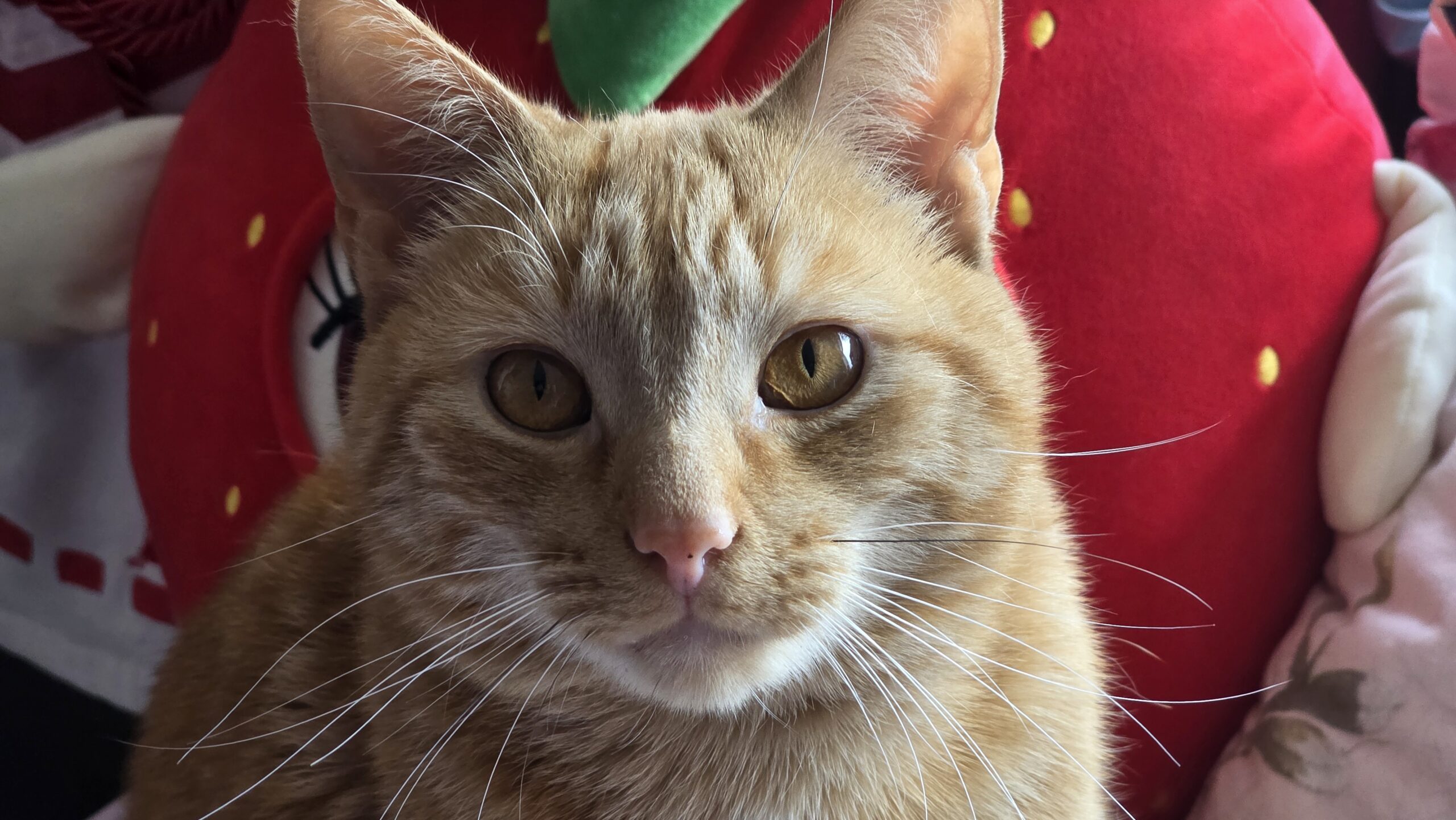
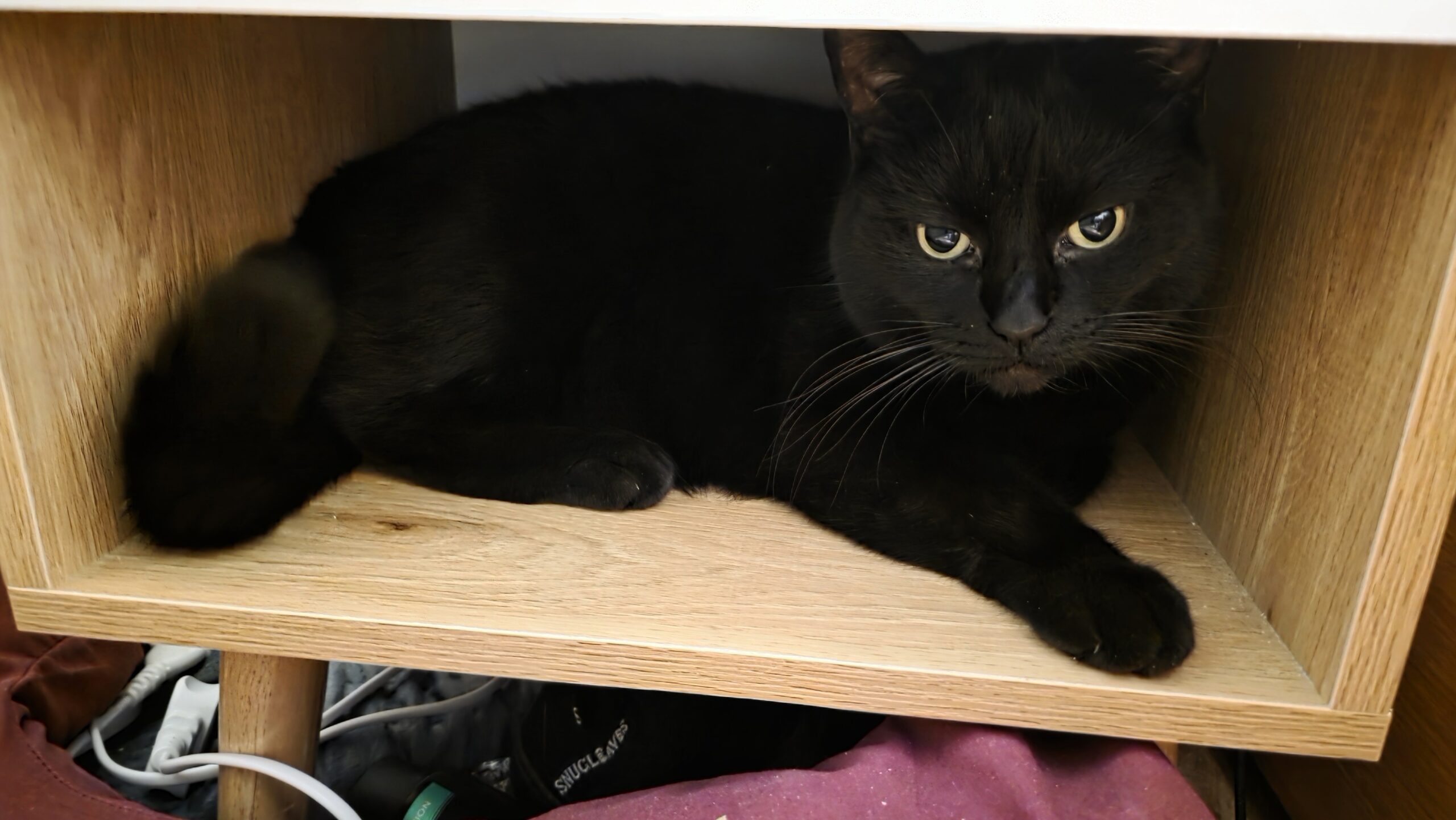
I know I said I'd write about something else on here, but after the late-night update on the situation, I feel inclined to bring this little saga to something of a "close" in a more conclusive manner. We are exhausted and emotional, but delighted beyond belief to have our precious Oliver back at home with us. There will be images of him peppered throughout this post.
It's hard to believe that this whole saga is over — and over in a way that is about the best possible way it could have resolved itself, outside of him coming home a little bit earlier. We took him to the vet today to get checked over, and outside of him having lost a bit of weight and muscle definition on his legs — unsurprising given his three weeks living rough — he has been given a completely clean bill of health. This is our last remaining worry put to rest: he is back, he is alive, he is safe, and he is healthy. Evidently he was a very lucky boy — and a clever boy for taking care of himself for so long; things could have been much worse, and I am grateful to anything that will listen that things did not end up that way.
Patti has not yet adjusted to his presence. She was very clearly missing him, because we caught her looking for him, she was acting incredibly clingy and occasionally letting out the most heartbreaking plaintive howls of an evening. But as soon as he came back, she was puffing up, growling and hissing, and she's spent all of today in the wardrobe. The wardrobe is a safe place. She is fine in there, she's just not quite ready to come out again yet. But she will get there.
As for Oliver himself, he is doing just fine. He's clearly very tired by his whole ordeal — and who can blame him? — but he's already settling back into his usual routines and behaviour. The one and only thing that has really changed about the way he behaves is that he is a lot more vocal now than he was before he escaped; he is spending a lot of time shouting at us, which is probably an aftereffect of him calling for us up the tree last night. He wants to know that we are nearby, and that he is safe.
The one thing we'll probably never know is where he went for most of those three weeks. Given that we found him a couple of hundred yards down the road, he probably didn't go all that far, but aside from him being stuck up a tree last night, we have no insight as to where he might have been. Was he locked in somewhere? Quite possibly. Was he taken in by somebody? Probably not, as otherwise he'd probably be a bit more well-fed than he is now. Did he just get lost? Entirely possible, as he's never been outside in this neighbourhood before, and thus even though we left him plenty of familiar scents outside, he was unable to find his way home by himself, even though he was so close. So very close.
The hardest thing about the whole situation was contemplating the possibility that we might never see him again. There are things everywhere in the house that remind us of him. There's some cat plushies on the shelves in the living room: a black one and a ginger one, for Patti and him. There's a little stained glass thing depicting a black cat and a ginger cat hanging out together on the shed. The wallpaper on my living room PC was Oliver. The avatar I used on Facebook and Nextdoor was Oliver. Days before he went away, I set my blog to automatically set a "Featured Image" on every single post that didn't already have one, and for the image in question to be one that showed Oliver and Patti napping together. I couldn't even contemplate booting up Tomodachi Life: Living the Dream for Switch, because I made anthropomorphised versions of Oliver and Patti in that game, and playing it while we didn't even know if Oliver was still alive or not would have absolutely broken my heart even more than it was already.
For me, one of the worst parts of dealing with some sort of loss is seeing all the remnants that are left behind, and deciding what you are going to do with them. Just little things that remind you of who or what you have lost; sometimes even the simplest, silliest little thing can bring you to tears. Back during a particularly bleak period in my life circa 2010 — the time I split from my first wife and was faced with essentially having to completely "reset" my post-graduate life and start over — I described these things as "crystallised memories", and it's a description I stand by. There they sit: a solid, tangible reminder of something that was once in your life and now is not. It can be difficult to let go of them, but sometimes that is the healthiest thing to do.
Thankfully, none of that was necessary this time around. And while there most certainly was a great deal of grief while Oliver was away from home, we can now thankfully set that grief aside and appreciate how lucky we are to have someone we love so much and that we feared we'd lost forever return to our lives, safe and well. Sometimes amazing things really do happen, seemingly against all odds.
Want to read my thoughts on various video games, visual novels and other popular culture things? Stop by MoeGamer.net, my site for all things fun where I am generally a lot more cheerful. And if you fancy watching some vids on classic games, drop by my YouTube channel.
If you want this nonsense in your inbox every day, please feel free to subscribe via email. Your email address won't be used for anything else.
Hello. Second entry for today (although technically it's tomorrow now, as it's 1:21am as I type this) but this is big, important news: OLIVER HAS RETURNED!
Oh my God. I am an emotional wreck, and so is Andie, but our brave little boy managed to survive for three weeks out in the wilds of Lordswood, and we found him this evening thanks to a tip from a kind neighbour on Nextdoor. I had a feeling that either Facebook or Nextdoor, for all those platforms' many, many faults, would be the main way in which we tracked down our precious boy — but it certainly didn't hurt to advertise him on all manner of different services, even if it cost money to do so in some cases.
Our neighbour, Sam, reported that they had seen a ginger cat on his security cameras recently, and that they'd also been hearing a cat crying from the property over the road from them for a little while. We went out to go and check the area on the offchance that we would find at least a clue — and we heard a yowling from up in the tree. I knew immediately that it was Oliver. Oliver has never been a particularly vocal cat except under quite specific circumstances — usually rolling on the patio in the sunshine — but I recognised his voice straight away, and as soon as I saw him up there, I knew.
We couldn't work out how to get to him, though. The tree he was up was on private property — a children's home, I believe? — and initially we couldn't work out how to get in touch with them. When we did manage to run into a staff member leaving the property, they basically said they couldn't (or wouldn't) help us and said we'd have to wait until the morning, even though we made it clear Oliver has been missing for three weeks, and this was the first time we'd seen him.
So from there we tried to work out what to do next. Do you actually call the fire brigade when a cat is stuck up a tree? Apparently Hampshire Fire Service has a specialised animal rescue unit, but they are somewhere not in Southampton, and they weren't answering their phones. I called 101 and asked the police what we should do, and they said to phone the fire brigade. I phoned the fire brigade and they said that no, they don't do that, it's an urban legend.
So then what? I tried the 24-hour RSPCA hotline for animal welfare, but it turns out that it is not, in fact, a 24-hour service. I tried calling a local tree surgeon who had a 24-hour hotline for animal rescues, but again, it turns out that it is not, in fact, a 24-hour service either. Seemingly no-one was willing to help, at all. No-one that you would think to try calling in a situation like this was going to help us. Panic started to set in.
On the off-chance, I posted an update on both Facebook and Nextdoor that we had found Oliver, but we needed help. I honestly wasn't expecting anyone to come — but three very kind people showed up at various points, all very kind, considerate and understanding of our situation and our emotional state. Eventually a chap who was clearly some sort of tradesman in possession of an absolutely massive ladder — and who had clearly done this many times before — showed up, shot up his ladder and was back down with our precious boy in less than five minutes. Amazing.
Anyway. Fuck me, that was an awful three weeks. On the plus side, I can get back to writing about other things on here now, which I'm sure you'll all be delighted to hear. Thank you all for your patience — and for the kind words you have had to share during this absolutely, mindblowingly traumatic three weeks! I'm just glad it all ended well — though we're taking Oliver to the vet for a checkup tomorrow just in case.
Want to read my thoughts on various video games, visual novels and other popular culture things? Stop by MoeGamer.net, my site for all things fun where I am generally a lot more cheerful. And if you fancy watching some vids on classic games, drop by my YouTube channel.
If you want this nonsense in your inbox every day, please feel free to subscribe via email. Your email address won't be used for anything else.
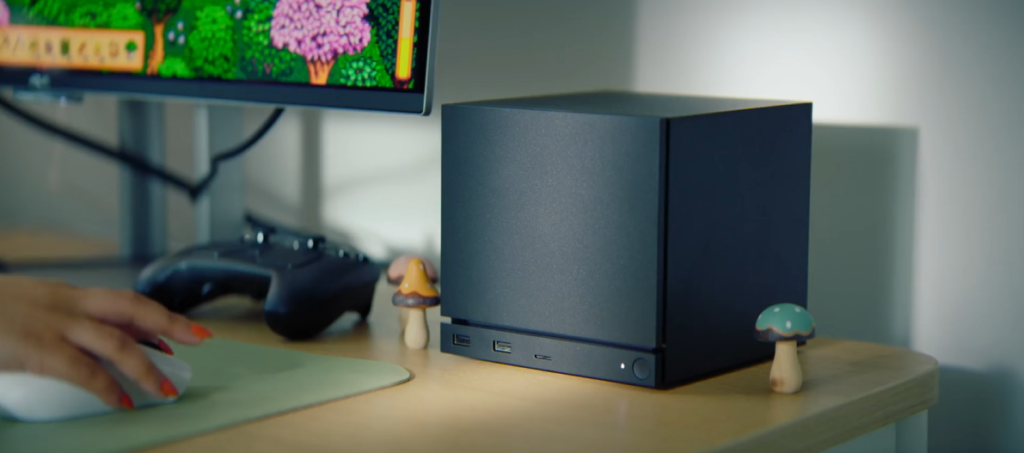
Valve apparently announced the price of their long-awaited Steam Machines today and, unsurprisingly, given the general price of tech right now, they ain't cheap. They're "starting at £879" not cheap, and that only gets you 512GB of storage; they break the £1,000 mark if you want the 2TB model, though both are expandable with microSD cards.
Image: Valve
We have long since reached a point where it is not particularly cost-effective to start taking an interest in modern gaming if you are not already involved in the overall ecosystem and thus resigned to vast swathes of your monthly pay packet disappearing on your chosen hobby. Sure, you can get away with a somewhat lower-end mini PC if all you want to play is relatively small-scale indie games — but even those lower-end mini PCs are going up in price nowadays. Therefore, it is worthwhile looking at more cost-effective options for enjoying video games — even if the video games you will be enjoying are a few years old. Good games are still good years after they're released, you know! So here's my personal recommendations on that front.
Evercade
Of course I'm going to recommend Evercade because I work for them, but the reason I work for them is because I was all-in on the idea of the system from day one. A new, affordable system with a focus on retro gaming that provides officially licensed physical releases of classic games from home consoles, computers and arcade machines? Regardless of if I'd ever managed to secure employment with Blaze, makers of the Evercade, I would have been a "full setter" from day one — indeed, when the original handheld released, I immediately took advantage of the "All-In" bundle to get the first 10 cartridges included with the system.
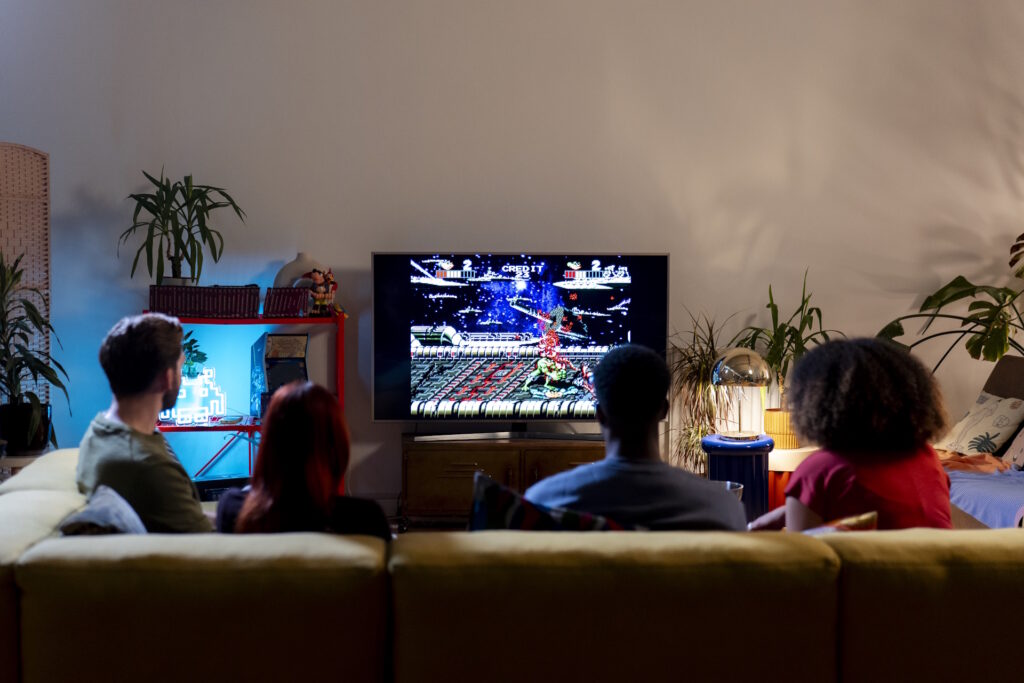
Why recommend something like Evercade when emulation and other options exist — some of which we'll talk about in just a moment? Well, that "officially licensed" part is important. The current state of the games industry may appear to be teetering on the brink of unsustainability, but that doesn't mean people who enjoy video games want the whole thing to collapse. It would be rather nice if we could recover from this situation we're currently experiencing — and one way to help that come about is to support officially licensed rereleases of classic games, updated to play nice with modern audio-visual equipment, particularly televisions. On top of that, Evercade also plays host to physical releases of a lot of "modern retro" titles — games originally designed with vintage hardware in mind, but developed in recent years.
Image: Evercade
Many of the rights holders of these old games are also game companies that exist in the modern sector, and so throwing your support behind retro rereleases that don't require turbo nutter ninja bastard hardware to run is one way of helping ensure we still have a healthy video game economy whenever the AI bubble finally bursts and — hopefully — hardware prices start to settle back to what we have previously thought of as "normal".
Plus the physical nature of Evercade collecting allows you to rediscover the fun of having a shelf full of games to pick from, rather than a boring old list of downloads on your PC, many of which you scroll past without even noticing every single day.
MiSTer
Evercade is great, but there are some classic games that are never, ever going to get a rerelease for one reason or another — be it the rights holders being unwilling to put them out again, more complex licensing situations (such as video games based on movies, or which feature licensed music, vehicles or actors' likenesses) or some other reason entirely. For those situations, that's where what I would describe as more "community-focused" solutions come into play — as a general concept, this covers emulation, but I would specifically call out the MiSTer project as being a particularly worthwhile investment in these peculiar times.
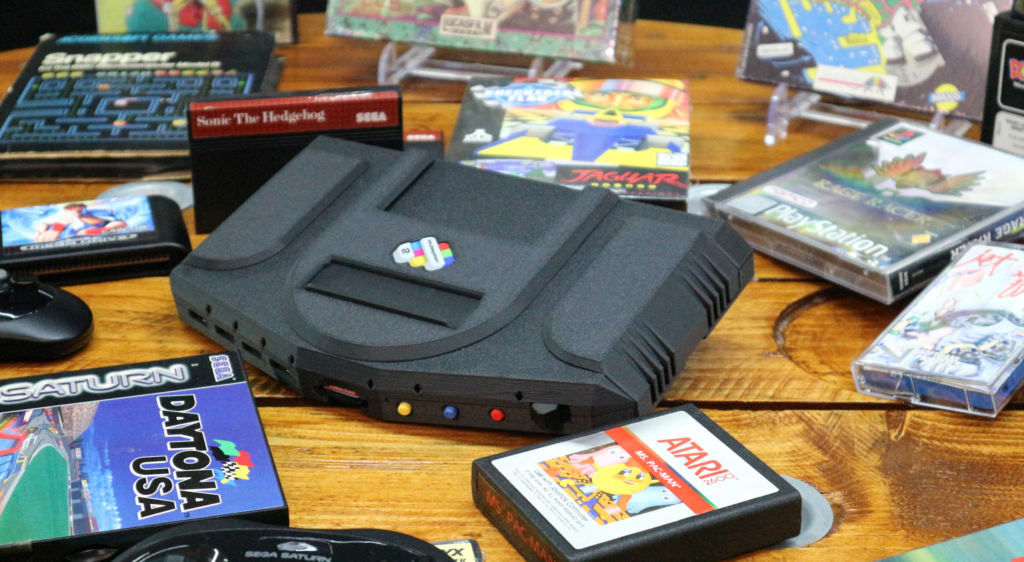
For the unfamiliar, MiSTer is a platform based on "FPGA" (Field Programmable Gate Array), which is a technology I have absolutely no understanding of whatsoever, save for the fact that it effectively allows a device to recreate the way another piece of hardware would have worked in the past, not through simulation in software (which is how emulation works), but through a reconfigurable chip that basically "pretends" to be the old system. Some describe it as "hardware emulation"; all you really need to know is that, under most circumstances, it results in the most authentic recreation of a classic console, home computer or arcade cabinet possible, particularly if you happen to have an old CRT television hanging around that you can hook it up to. (Never fear if you don't, however; one of the core concepts of MiSTer from the outset was to provide a relatively straightforward means of enjoying classic "hardware" on modern displays, and the platform has a variety of built-in and fully customisable visual filters that allow you to recreate the CRT "look" if you so desire.)
Image: Heber Electronics
MiSTer is a project you can build yourself, but it's actually probably more cost-effective these days to go for a pre-built solution such as Heber's Multisystem 2 (pictured above, which I use) and Taki Udon's SuperStation One. You will also need to add some form of storage to whatever setup you go for, which is likely to be the expensive bit these days; however, it's a one-off expense, and you can look at it as a lump sum you are spending on your own entertainment, rather than buying a bunch of individual things piecemeal. Tot up how much you've spent on individual games in the last year or so, and an SSD probably won't seem quite so expensive.
MiSTer requires a bit of setting up, including installing the actual software on the device to make it work, and then loading up your storage medium of choice with games — which, of course, you will have to "procure" yourself. For everything from the earliest games consoles right up to PlayStation, Nintendo 64 and Saturn, however, a MiSTer is all you need for… honestly probably enough games to last you the rest of your life.
Why do I recommend this and not investing in some classic hardware? Several reasons. One, classic hardware is prone to failure. Two, the games for classic hardware are often ludicrously expensive these days thanks to all the arseholes who have bought them as "investments" rather than to enjoy them — and you paying £400 for a copy of Buggy Run on Sega Master System doesn't help anyone other than the person you're foolish enough to hand over those notes to; the original creators certainly don't see a penny of that money! And three, getting classic hardware working on modern displays can be a bit of a pain… or at least demand you invest further expenses in a decent scaler.
Sixth- and seventh-generation consoles
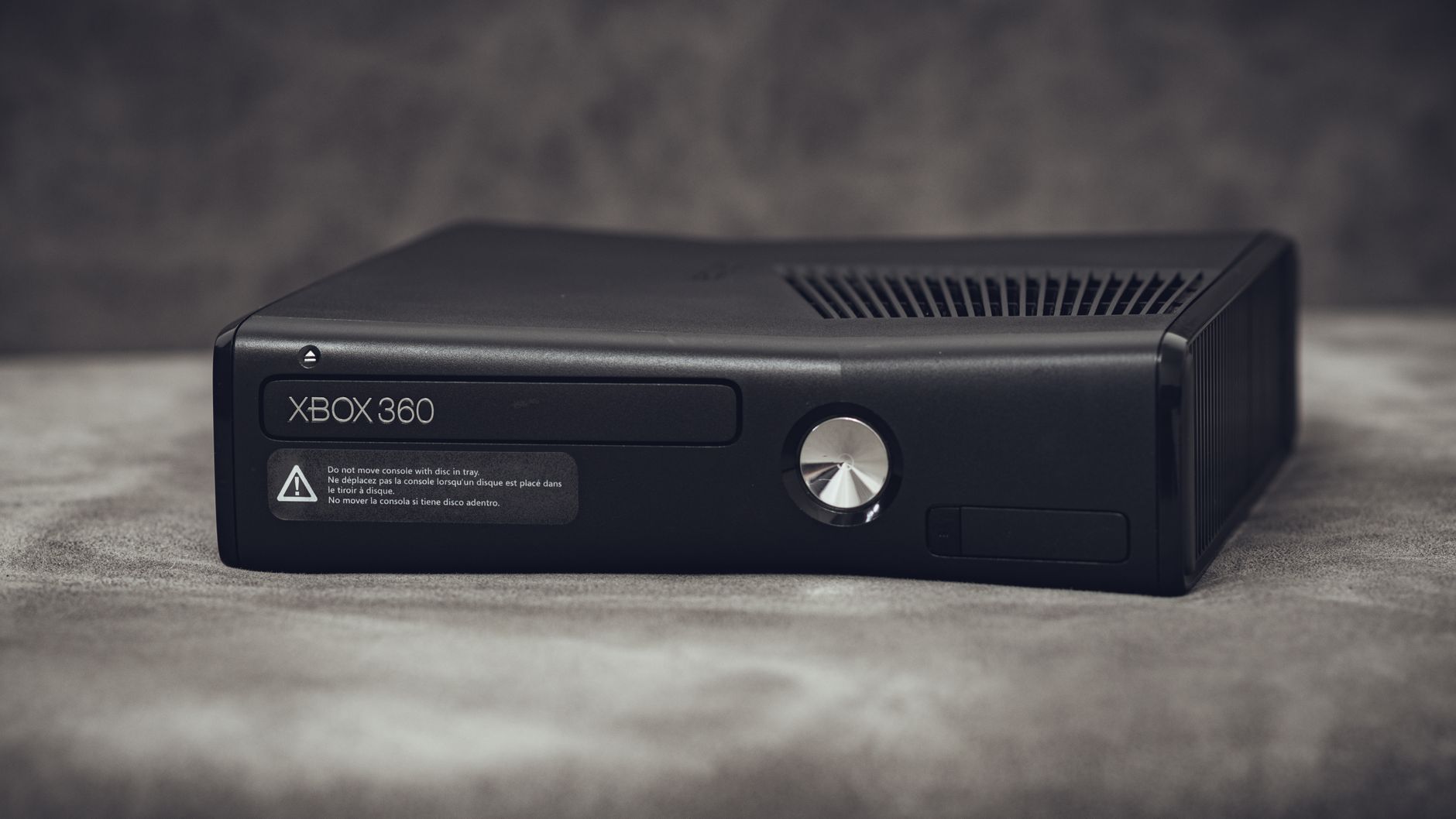
If you have the cash, I would recommend investing in, at the very least, an Xbox 360. This platform has a vast library of excellent games available, many of which can be bought for not very much money at all, and doesn't require any faffing around to get working on a modern TV. You may also wish to consider a PlayStation 3, as there are a number of exclusives on both platforms — plus a few cases where either the 360 or PS3 version is just plain better for one reason or another.
After that, a Nintendo Wii or Wii U is well worth considering. The Wii U, while mocked in its lifetime for its small library of games, has some absolute bangers, plus it is backwards compatible with the Wii, which has a vast library of excellent games, many of which can, again, be picked up for not very much money at all. Wii U is an HD console that can be connected to a modern TV, but the original Wii is a standard-definition console, though it can still be hooked up to a modern TV via component cables for a 480p "Enhanced Definition" picture. If you don't have component inputs on your TV, you will probably want to run an original Wii through a scaler, as composite or SCART inputs on modern HDTVs — if they even have them any more, which I'm sure some models don't — are complete cack.
Speaking of standard definition, this brings us onto the other worthwhile investment: a PlayStation 2. Again, you can actually run one of these through component cables — and even get an actual high-definition signal with a few very specific games — but you will probably want to also grab yourself a scaler if you take your PS2 gaming seriously. And you should take your PS2 gaming seriously, as the system plays host to one of the richest, most diverse libraries of any system ever released, with titles ranging from bargain bin puzzlers to sprawling epic, cinematic affairs — and some of the best RPGs ever created. While the latter can command high prices these days, many PS2 games — and good ones! — can be picked up for not very much money, making it easy to build a library of stuff that will keep you busy for a good long while.
If you're feeling flush, an original Xbox and Nintendo Gamecube are worthwhile investments, as both have some nice exclusives and in the case of multiplatform games, Xbox and/or Gamecube versions are often superior to their PS2 counterparts. Do note, however, that original Xboxes sometimes need a bit of maintenance, and Gamecube games tend to be significantly more expensive than equivalent games on other platforms from the same period. Also be aware that the earlier models of Wii also play Gamecube games, so you may not even need to buy a separate Gamecube if you're lucky enough to track down one of those. (You can tell if you have one of those by if it has a removable panel with Gamecube controller ports underneath.)
Let's price a starter setup as outlined above from a hardware perspective:
£ 89.99 - Evercade VS-R
£264.00 - MiSTer Multisystem 2 (analogue-compatible model)
£ 47.99 - 512GB microSD card (price from Amazon 22/6/2026)
£110.00 - Xbox 360 250GB "E" model (unboxed from CEX 22/6/2026)
£ 65.00 - Nintendo Wii (unboxed from CEX 22/6/2026)
=======
£576.98
About half the price of the top-end Steam Machine, and between that lot, you should have access to more than enough games to keep you busy for a very long time indeed — and no need to spend half your life complaining about derivative triple-A trend-chasing, microtransactions, mandatory 50GB updates, lengthy install processes and shoehorned-in multiplayer modes.
Plus if you have friends over, they'll think your setup is super cool. And if they don't, question whether they really were your friends in the first place.
Want to read my thoughts on various video games, visual novels and other popular culture things? Stop by MoeGamer.net, my site for all things fun where I am generally a lot more cheerful. And if you fancy watching some vids on classic games, drop by my YouTube channel.
If you want this nonsense in your inbox every day, please feel free to subscribe via email. Your email address won't be used for anything else.
I am trying so hard to hang onto hope that we will find Oliver, or that he will just wander back in one day as if nothing happened, but with him being gone for three weeks from today, it is getting tougher and tougher to maintain that hope — and it's all the harder seeing other people on platforms like Facebook who have been going through the same thing ending up getting safely reunited with their beloved pets. I don't like feeling jealousy about such things, but I can't deny I have felt that way to a certain extent. I have done all the same things they have; why hasn't it brought our boy home yet?
That's not to say we're giving up on him — we had a single possible but completely unconfirmed sighting of a cat that may or may not have been him in the woods some distance from our house (but within a plausible radius of where he might have roamed over the course of three weeks) and thus have spent several sessions combing that section of woods at various times of day to no avail; I went yesterday afternoon after we got the comment; we got up early and went at dawn this morning; and I walked all the way from our house to this part of the woods this evening. There was no sign of him at any point.
I don't even know if we're looking in the right place. There are so many potential places he could have gone. The thing with the area we live in, known as Lordswood, is that there's a fucking great wood covering a lot of it, and thus if he found his way into there, which is entirely possible, heaven only knows how we're ever going to track him down and bring him home.
The one thing I am trying to tell myself is that when I make an excursion like this evening, I am hopefully leaving some sort of scent trail that might help him to find his way home. Lord knows I was sweating enough to leave a stink trail by the time I finished my wanderings this evening, but who knows if that's enough? I certainly don't, because as I've said, we've seen absolutely no sign of him anywhere for the last three weeks, meaning we have no idea if we're looking in even the right direction. That said, given how we believe he escaped and the fact he did not appear on the cameras mounted on the front of our house when he did so, we have an instinctive feeling as to which way he went, but no actual proof.
I haven't ruled out the possibility that he has been taken in by someone, either. And if that has happened, I have no idea how we'll find him, because if the people who take him in never take him to the vet or a shelter or get his microchip scanned by a volunteer, he won't get flagged up as his home being here, and the fact he is away from a family who love and miss him very much. If this is what has happened, I just hope that they will do the decent thing.
If that is not what has happened, I am at something of a loss as to what else I can do at this point.
Want to read my thoughts on various video games, visual novels and other popular culture things? Stop by MoeGamer.net, my site for all things fun where I am generally a lot more cheerful. And if you fancy watching some vids on classic games, drop by my YouTube channel.
If you want this nonsense in your inbox every day, please feel free to subscribe via email. Your email address won't be used for anything else.
I've alluded to it a bit recently, but I thought I'd talk specifically about it today. For the last little while, I have been attending talk therapy. I have been meaning to do this for a long time, because there are lots of people I know and trust who have made use of it, but I always found the prospect of choosing a therapist and actually getting started on the whole process to be extremely daunting. How do you pick the "right" one for you? What do all the different "approaches" mean? Can I really afford to do this?
Not an image of either my therapist or me. Photo by Timur Weber on Pexels.com
Well, the answer to the last one was easy; at some point in the last couple of years, I feel like I've got to a point where I'm in a relatively comfortable position in terms of finances — after many years of finding money an absolutely panic-inducing but unavoidable aspect of life, this is good — and thus I didn't feel that making what is a fairly substantial financial commitment to my own wellbeing was something that would be inadvisable.
Technically, you can get talk therapy on the NHS, of course, but my past experiences with that haven't been great — because yes, I've tried. In practice, what happened was that I got referred to a scheme by my GP, but left to my own devices to follow it up — something which I found very difficult to do — and when I finally mustered the courage to join said scheme, I found it absolutely, definitely did not fit my needs at all, as it was a group therapy session, and that was not a situation where I felt, in any way, comfortable.
I'd stumbled across a local organisation known as The Empathy Project a few times during past sessions of research, so this time around I decided to actually be proactive and contact them directly. Their therapists aren't the cheapest around — though they do have a scheme where those on more limited incomes can take advantage of semi-subsidised sessions — but they seemed like a legitimate organisation, and as good a place as any to actually see if Getting Some Professional Help was actually, well, helpful.
I will add that I started attending therapy sessions well before my current situation with Oliver, so thankfully I was in a somewhat more coherent, clear-headed place than I am right now — and I am glad that I already had everything sorted out well before I, as you might look at it, really needed this kind of support.
Anyway, to those of you considering starting some sort of talk therapy: I recommend it. It is Very Good to have a place where you feel like you can say the things that perhaps on a day-to-day basis you don't feel you get the opportunity to say under normal circumstances — or which, for one reason or another, you don't feel comfortable expressing. It is Very Good to have a place you can go where someone will listen to whatever you have to say, however much difficulty you might have explaining it, or however worried you might be about people not taking it seriously. It is Very Good to have a place where, if necessary, you can burst into tears and the only other person present there knows how to handle that.
Therapy is not a magic bullet solution to all the things that ail your mind. Mental health is complicated, and many of the things you struggle with are likely to be ingrained over the course of years, even decades. You will have times where you feel like you make progress, and times where you feel like things have gone a bit backwards. But it is a place where there are no wrong answers to difficult, abstract questions, and where, if you allow yourself to let go of many of the usual social restraints you might place upon yourself when around family and friends, you can freely express things that have been bothering you — and perhaps come to realise quite how much some of them have actually been affecting you. At the other end of the spectrum, it is also sometimes the case that things which have felt like they have taken over your entire life for a certain period sometimes just need you to be able to talk about them in a safe, non-confrontational and non-judgemental environment.
All this is to say that in the time I've spent in therapy so far, I've found it very helpful. I still have a lot of work to do on a lot of things about my life and my mental health, but already I have found myself able to acknowledge a bunch of things that are perhaps difficult to contemplate independently, to say the least — and I'm sure I will continue to discover things in subsequent sessions. I just need to get through this current particularly bleak episode in the saga of my life to be able to move forwards.
Want to read my thoughts on various video games, visual novels and other popular culture things? Stop by MoeGamer.net, my site for all things fun where I am generally a lot more cheerful. And if you fancy watching some vids on classic games, drop by my YouTube channel.
If you want this nonsense in your inbox every day, please feel free to subscribe via email. Your email address won't be used for anything else.
There is increasing talk of the video games industry staring down an honest-to-goodness crash — and this time around, unlike the notorious Great Global Video Game Crash of North America from 1983, it looks very much like it could be one that will happen across the world. All this said, I feel like, at this point, there is enough disparity between the bit that will be affected by it and the bit that will be able to continue on regardless for the latter to be able to survive comfortably.
This will, in its own curious way, reflect what happened in 1983, where a significant portion of the game-playing world — the UK and Europe, notably — were blissfully unaware of the problems the broader games business were suffering, because they were enjoying the fruits of a thriving cottage games industry. Here in the UK, we had no idea a "crash" was happening across the pond because we were all cheerfully buying £1.99 Mastertronic tapes from our local corner shop.
Something's gotta give, though, because the relentless torrent of shit that is coming out from shareholder-beholden companies — particularly with regard to the odiousness that is generative AI — is completely unsustainable. And we've reached a point where all but the most ardent bootlickers are feeling more and more emboldened to criticise what's going on — though sadly this also coincides with a period where thousands of people are being laid off and games aren't actually getting any better.
Take this statement attributed to Sony, posted on Bluesky earlier today:
This is a complete nothing of a statement! It says nothing! It gives precisely no examples of how AI "improves productivity", "drives efficiency, personalisation and customer value at scale" and "unleashes the creativity of Sony Interactive Entertainment's studios"! It is five paragraphs that explain nothing and say nothing, but which exist purely to, supposedly, placate shareholders who, apparently, have absolutely no functioning brain cells between them and desire nothing more than every stupid fucking company to follow every stupid fucking trend in existence, even when they are demonstrably, actively harmful and just plain shit!
I am mildly heartened that a number of developers are starting to speak up a bit more about this. There's a good piece on Aftermath on the subject, and another on gamesindustry.biz. There are still the annoying sycophants in every single comments section who all parrot the exact same lines about "the genie being out of the bottle" and "get used to AI or get left behind", but there is, I feel, increasing resistance to that side of things. A lot of smaller-scale developers are also making a good name for themselves by saying, out loud, and prominently, that they do not use generative AI at any point in their development process. Good!
The utterly dumbshit thing about corpos like Sony sucking Sam Altman and Wario Amodei's robophalluses is that there is not a single documented instance of a project involving generative AI being well-received by either press or public. I'm not even convinced that it's actually what shareholders want to see. The otherwise excellent Clair Obscur: Expedition 33 was soured for a lot of folks (including me) when it was found that they had used generative AI for "placeholder" (sure) assets, and likewise for the apparently also very good The Alters. New projects coming out that are revealed to be using generative AI are subject to mass shunnings and censure from press and public alike — and rightly so. It is starting to feel less and less desirable to have any involvement whatsoever in the top end of today's games industry — a once-exciting, vibrant place — and more and more understandable when people choose to focus their time and attention on both small, independent projects and retro titles.
On top of that, the very generative AI that all these shareholder-appeasing corpos are rushing to use for no real specified purpose is becoming increasingly responsible for pricing people out of games and tech! No good having "volume and diversity of content" (ugh) if no-one can fucking afford the devices to play it on, is there?
All this can easily be avoided! We have been making games for a very long time without the use of a glorified Autocorrect trained on stolen data! I find it near-impossible to believe that every game developer has suddenly completely forgotten how to do things the way we've been doing them for many years at this point, just because you can tell "Claude" to churn you out some spaghetti code using conversational English. And yet. And yet.
I don't know exactly what a "crash" is going to look like in this instance, but I feel like it's not going to be pretty — and the potential knock-on effects concern me somewhat. Like, if games consoles go away — and with the current tech pricing situation, that's a real risk — what does that then mean for people who like to collect games, and for the long-term archival of games using physical media? There are so many potentially terrible things that could happen that I don't feel like the world of video games has adequately prepared for, and it's really quite worrying.
Still, if the worst comes to the worst, I have shelves full of games, many of which are complete-on-disc or complete-on-cart, and a fully-loaded MiSTer. I could, at this point, duck out of "modern gaming" at any time — and with each passing month, it feels more and more like I might end up doing that.
To pre-empt the inevitable comments from weirdly aggressive generative AI-boosting corpo bootlickers: fuck off; you are not welcome here, if the above doesn't make that abundantly clear already, and your comments will just be deleted, so you may as well just not bother. Hope that helps!
Want to read my thoughts on various video games, visual novels and other popular culture things? Stop by MoeGamer.net, my site for all things fun where I am generally a lot more cheerful. And if you fancy watching some vids on classic games, drop by my YouTube channel.
If you want this nonsense in your inbox every day, please feel free to subscribe via email. Your email address won't be used for anything else.
The thing people who have been fortunate enough to have never been afflicted with debilitating depression don't always understand is that the whole experience is more than just being "a bit sad", and thus it's not something you can just "snap out of" or "cheer up" from. (To be clear, those scare quotes are purely hypothetical; no-one has actually been disrespectful enough to declare my current feelings non-valid.) I suspect it's something that is different for everyone who experiences it, so today I thought I'd talk a bit about how I feel when I get like this.
For me, it's like being inside a bubble of sorts. I can see the world going on around me; I can hear it; I can even interact with it. But I feel an almost total disconnect from it. It's like I'm on a slightly different plane of existence; reality kept at arm's length. Close enough to be familiar and still just about within reach, under most circumstances, but far enough away to making going about normal, everyday things varying degrees of "challenging", ranging from "begrudging reluctance" all the way up to "this feels like a completely insurmountable task that I will never be capable of". And the challenge factor doesn't necessarily relate directly to how difficult the actual task is; as an example, the simple act of talking to people I know and like right now feels very much like it's up around the "insurmountable" end of the scale. Not quite there, because I can just about carry on a conversation right now, but not something I am deliberately seeking out if I absolutely do not have to.
It can be disconcerting, and the description of it as a "bubble" is perhaps not the best one; bubbles, after all, are fragile, delicate things that can be popped at a moment's notice, while whatever encloses my mind at times like this is much more… solid-seeming. And it weighs you down; it drains the energy and vitality from your mind and body, and makes, as I say, just going about your regular, everyday business feel like an enormous effort; a toil that never ends.
And the worst thing is that being in this state is weirdly addictive. I recognise this about myself. I recognise that when I get into a state like this, something in my brain almost wants to remain this way, even though another little voice in my brain knows that it's unproductive and unhelpful, both to myself and to the people around me. It becomes a battle between different aspects of my consciousness, I guess; the more primal, emotional part of myself wants to continue to wallow in the darkness because there's a strange sort of comfort there, while what I would probably describe as the more high-functioning, pragmatic part of myself wants to tell me to… just do something, whether that's a simple thing like doing something enjoyable that might take my mind off things, or something more complex and long-term that might lead to some sort of solution (or at least resolution) to the problem I'm experiencing.
At the moment, the primal part is winning. I am right in the depths of that bubble, and normality feels a very long way away. I don't know if it's slipping further away or getting closer, either; the feeling changes from moment to moment. Sometimes I feel like I am just going to have to accept that Something Bad has happened and try to move on from it; at others, I feel like I described the other day, like everything has come to a screeching halt until this particular "episode" of my life has concluded in some fashion.
This is all very abstract I know, and I'm almost certainly mixing metaphors and whatnot. But this also just happens to be the sort of musings that dribble forth from my brain at times like this, as particularly longstanding readers of this blog will be well aware, I'm sure.
I have little doubt that I will eventually manage to make it through this particularly bleak period of my life one way or another; I have survived plenty of other episodes like this in the past, and I'm sure there are plenty more to come in the future. But right now, if I seem a bit off, or if I don't really want to talk, or you get the distinct impression I just want to be left alone… well, as I said the other day, it's probably not you, and it is most definitely me.
Want to read my thoughts on various video games, visual novels and other popular culture things? Stop by MoeGamer.net, my site for all things fun where I am generally a lot more cheerful. And if you fancy watching some vids on classic games, drop by my YouTube channel.
If you want this nonsense in your inbox every day, please feel free to subscribe via email. Your email address won't be used for anything else.
I am absolutely exhausted. We stayed up late last night to go on another night-time look for Oliver, and once again found absolutely no sign of him whatsoever. At this point I really am at a loss as to what I can possibly do. I bought bright head-mounted torches and an infra-red heat-sensing camera in the hopes that they will make it easier to see a cat hiding, but given that we have no idea which way he went or how far he's gone in the last two and a half weeks, it feels very much like finding a needle in a haystack, and the emotional exhaustion of simply not knowing if anything we are doing is actually worthwhile is very much manifesting itself as physical exhaustion.
This is one of those times where I feel like I need to have a word with my inner self, and say that it's okay to look after me. Oliver is important, and we desperately want to find him, but if the process of searching for him, worrying about him and generally running ourselves completely ragged is having an impact on our physical wellbeing, it's probably time to take a little break, at least for one evening. Patti is also sad, upset and clearly worried about us.
We have done everything that the people who copy-paste the exact same comments onto every single "missing pet" Facebook post suggest. We have put things that he likes and things that smell of him outside, we have put food outside (which, on separate occasions, got eaten by another neighbourhood cat, and attracted a fox), we have left open the window that we believe he escaped through, we have been out calling softly for him, we have sat out in the garden having a normal conversation so he can hear us, we have motion sensors on our security cameras set to notify us the moment they see an animal.
At this point my only real possible conclusions are that he is locked in somewhere and hasn't been found yet — which, with every passing day, makes me very concerned for his wellbeing; that he has been taken by someone, either because they saw a lovely cat looking lost and thought they'd take care of it, or because of more nefarious purposes, which I don't like to think about (but also feel is probably quite unlikely); or that he is no longer with us, in which case I feel like he probably would have been found by now.
I know I keep repeating myself, but hopefully my post yesterday makes it clear why. I do not feel like I can "continue" with my life while I don't know what has happened to my precious boy. And I'm worried that I am going to be left feeling like this for a long time. What if we just… don't hear anything at all? What then? Are we stuck in a perpetual limbo of hoping that he'll just make it home somehow, seemingly against all odds? Or do we attempt to make our peace with the situation, try and say as best a goodbye as we can in his absence, and try to move on?
I can't bring myself to do the last one. Not yet, anyway. I still feel like one evening, we're just going to see him saunter around the corner as if nothing happened. It does sometimes end up like this, and I am hoping that this is one of those situations. But with every passing day, it's harder to hold on to that hope.
I'm off to try and distract myself. Tonight I will be having a go at Adventure of Samsara, Atari's exploratory platformer that apparently has some connections to the 2600 version of Adventure. Hopefully it takes my mind off things for a bit at least.
Want to read my thoughts on various video games, visual novels and other popular culture things? Stop by MoeGamer.net, my site for all things fun where I am generally a lot more cheerful. And if you fancy watching some vids on classic games, drop by my YouTube channel.
If you want this nonsense in your inbox every day, please feel free to subscribe via email. Your email address won't be used for anything else.
If you're anything like me, when you encounter a period of great uncertainty or emotional turmoil in your life, it can feel like your brain has pressed a big old "pause" button, making it near-impossible to even contemplate going about your life as normal. Your job feels like the least important thing in the world, you feel like interacting with people in the way you usually would is the most tiring and difficult thing imaginable, and it somehow feels "wrong" to simply continue on with the things that you were doing prior to the aforementioned period of great uncertainty or emotional turmoil.
This is, inevitably, not particularly convenient or helpful, either for yourself or for people who are, for one reason or another, depending on you and your input into various aspects of their own lives, be it personal, professional or a bit of both. I unfortunately do not have a good answer for how to just "get over it" at times like this, since, as you have probably noticed from recent posts, I am slap bang in the middle of one such period right now. And I will doubtless continue to be so for quite some time. I apologise in advance to anyone I don't reply to, am rude to, have no patience for or for whom I am unable to complete a requested task. It's not you, it's very much me, but I do at least hope you have some understanding for what I am contending with.
One of the things I find most difficult about times like this is, as I talked about the other day, getting other people to understand the sheer depth of the things you are feeling, and how all-encompassing they can feel. I feel like not everyone's brain presses that big tempting "pause" button when something like this happens; some folks can, I suspect, handle things a lot better than I can. Or, no, that's perhaps not fair to myself. Some folks, I suspect, handle things differently to how I do. Regardless of self-deprecation, I envy them somewhat; the way in which they can allow their life to continue moving forward during times of great uncertainty and emotional turmoil.
Or perhaps they're just better at hiding it than I am. Perhaps they're feeling exactly the same as I do in private, but are better at "masking" the way they feel when they are around others. Putting on a brave face, stiff upper lip, that sort of thing — but breaking down in tears when they're off the clock, staring into space, feeling despair at simply not knowing what to do or how to feel.
At times like this, as I say, it can be difficult to engage with the things that would normally bring you joy, because sometimes it can feel like taking hold of a feeling of transient joy is somehow "wrong" or "disrespectful" to the thing you are uncertain, upset, sad or angry about — even if you know that it's a momentary distraction that you probably need for the sake of your own mental health. The other side of this is that when you're experiencing those feelings of great uncertainty and emotional turmoil, it can simply be difficult to focus on something that, under normal circumstances, would bring you joy, but requires a certain amount of concentration and engagement.
This is an exceedingly long-winded way of saying that I have not gone back to Final Fantasy XI since Oliver's disappearance, despite the fact that it was bringing me great joy, and would probably be an excellent distraction right now. But it just doesn't feel quite right to be going back to that just yet, which is what led me to reach for something from my shelf this evening that does not particularly require continuous concentration, focus and engagement — or, perhaps more accurately, demands a different kind of continuous concentration, focus and engagement; a kind that, when your brain is all a-churnin' with great uncertainty and emotional turmoil, you can still get along with.
For me, this is where video games that are entirely mechanics-focused come in. I am generally someone who prefers playing things with strong stories, but there are times when something that is pure mechanics is exactly what the doctor ordered. These types of experiences demand a different kind of focus to works that want you to concentrate on narrative, themes and characterisation, and they can make excellent distractions from periods of great uncertainty and emotional turmoil.
The absolute ideal form of this type of experience is something that, when you reach a "fail" state, you can jump right back into with minimal fuss, ad infinitum if necessary. In technical video game terms, the best implementation of this is a game where, when you hit a "Game Over" or equivalent, you can just press a button and be immediately playing again, ideally without any waiting around for load times or anything like that.
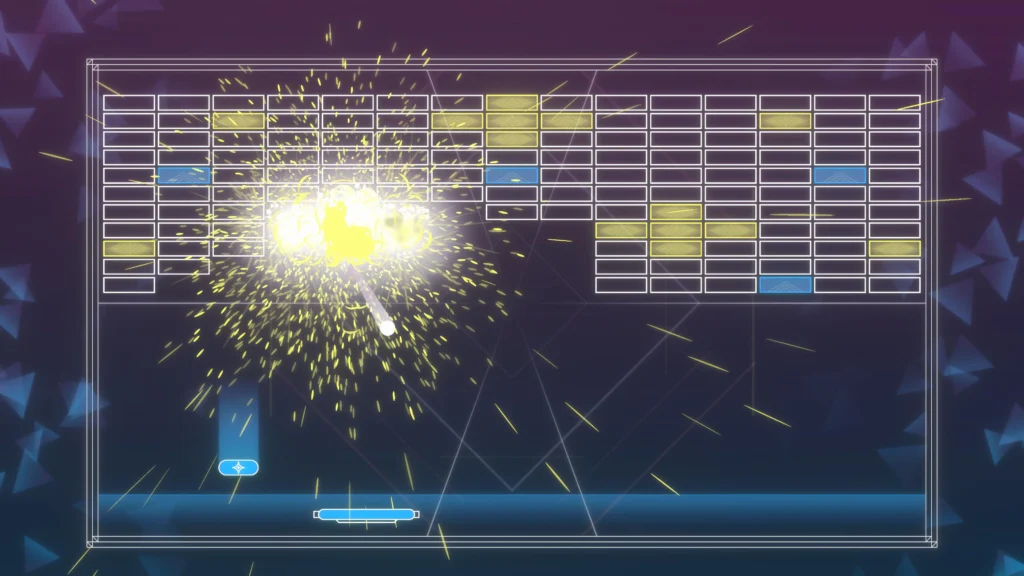
This evening, I have been playing some of the Atari Recharged games, which fit the bill perfectly for this sort of thing. I've had lovely boxed versions of these on my shelves for ages, but still haven't yet got around to exploring all of them fully. This evening, I have been playing Asteroids Recharged and Breakout Recharged, and they have very much been having the desired effect.
For the unfamiliar, the Atari Recharged games are modern reimaginings of classic Atari arcade games. The ones I have played all have the same structure: they have an infinite "arcade" mode, where you simply play to survive as long as possible and attain a high score, and a "challenge" mode, which consists of a large number of predefined, standalone, self-contained levels, each of which challenges you to accomplish a particular objective, often under difficult circumstances.
Both of these are excellent for calming the storm of a turbulent mind, as both function as I describe above: they demand concentration and focus without having to engage the part of your brain that deals with pesky things like words, subtext, narrative themes and characterisation, and they allow you to quickly and easily try again if you mess up. And you will mess up a lot more than you win — particularly in the arcade mode, where there is literally no way to win other than beating your own high scores, or those of people you have set your sights on from the online leaderboards.
In a way, they are "mindless", but I don't mean that in a denigratory way. There's something primal and instinctual that happens to you when you play games like this, and it leaves no room for abstract emotions. You'll feel enjoyment, satisfaction, frustration and even anger, but allow yourself to become one with the experience and you will, at least for an hour or two, forget about those feelings of great uncertainty and emotional turmoil.
It is important to give yourself an escape hatch; a lifeline. When your brain decides to put your life on pause, it often isn't healthy. It might cause you to not take as good care of yourself as you should. You might not eat properly. You might find yourself pushing away people who want to help — or at the very least want you to open up about what's wrong. It can be easy to immerse yourself in those feelings of great uncertainty and emotional turmoil; an all-encompassing, opaque black bubble of misery from which it can be very difficult to escape if you allow it to form completely.
So take those moments, as little and fleeting as they might be, and step out of that darkness for a moment. It's not a betrayal of the things you are upset about; it is allowing yourself a moment's peace, preventing you from being consumed completely, and perhaps giving you the strength to be able to pull yourself out of the mire, little by little.
Want to read my thoughts on various video games, visual novels and other popular culture things? Stop by MoeGamer.net, my site for all things fun where I am generally a lot more cheerful. And if you fancy watching some vids on classic games, drop by my YouTube channel.
If you want this nonsense in your inbox every day, please feel free to subscribe via email. Your email address won't be used for anything else.
Any time something bad happens involving a family member — and cats are family members, I will brook absolutely no argument on this front — it is easy to focus on that one member who is the focal point of whatever The Bad Thing is. In this case, the majority of our attention has, of course, been on Oliver, because we want nothing more than to see him back. But upon our return, we have been making a special effort to spoil our other cat, Patti, because not only has she had to deal with us being away for a week — and she doesn't like it when we go down to the shops, let alone go away for a whole week — she's had to do it with the disruption to her usual routine that comes with Oliver's absence. And Patti is very much a creature of habit.
Thankfully, as discovered by my mother-in-law, Agnes, who was looking after her while we were away (as well as looking out for Oliver on the chance he would return of his own accord), it is possible to establish a new Routine with Patti quite easily. It takes her a few days to become accustomed to the presence of Agnes — a process which always leads to initially begrudging and eventually enthusiastic acceptance of her as the temporary primary cat-caregiver — but by the time we come back they are always the best of friends.
This time around, Agnes was delighted to describe that she and Patti had established a new Routine for each day: Patti would spend each day either sitting on our bed or the windowsill, while Agnes would potter around in the garden and do all the tidying up we told her not to do while we were away, because she should be taking it easy. Then, when the evening came, Agnes would sit in my customary spot on the sofa in the living room, Patti would jump up, and Agnes would brush Patti. This became such an established Routine over the course of the last week that apparently on the one evening where Agnes did not follow this Routine, Patti went and fetched her from the other room until she got her nightly brushing to her satisfaction.
Patti is spoiled. She has been ever since we got her. She didn't have the best start in life, as she was apparently abandoned by her previous owners, and this led to her being a somewhat nervous, timid girl, especially around strangers. This, of course, led to us wanting to create the happiest, most safe-feeling home she could possibly have. She deserves it, we figured. Our hearts melted the moment we met her, and she has been the most wonderful companion ever since.
She will habitually run and hide whenever someone unfamiliar (or someone who simply hasn't been here for a while) comes into the house, but she is loving, tactile and very vocal with the pair of us. When we first met her at the local shelter, she was described as a "lovely girl" but "shy". What they didn't tell us — or they didn't know — was that those two things were not simple descriptors of her personality, but rather her two different, distinct modes. She is a lovely girl sometimes (with us), but she is shy at others (around strangers). I see the fact that her lovely girl side has only flourished over the years she has been with us as reflecting well on us as her caregivers — something which we would probably both do well to remember while we keep blaming ourselves for Oliver's disappearance.
So yes, although Agnes has gone home this evening, Patti has had her brush on the sofa. She knows something is wrong — how could she not, with Oliver's sudden absence, because Oliver absolutely adores Patti to a degree that she would sometimes rather he tone down a bit — but she has seemingly already come to the understanding that we are doing our very best to return things to normality as much as we can. I hope and pray that means we can return Oliver to her as soon as we can — but regardless of what happens, she is going to get even more love, care and attention than she already does. She is our little princess, and she deserves all the happiness in the world. I just want, more than anything, to reunite her with her annoying little brother, and for our family to be whole again.
Want to read my thoughts on various video games, visual novels and other popular culture things? Stop by MoeGamer.net, my site for all things fun where I am generally a lot more cheerful. And if you fancy watching some vids on classic games, drop by my YouTube channel.
If you want this nonsense in your inbox every day, please feel free to subscribe via email. Your email address won't be used for anything else.