I've been using our new toy, the iPad 2, for a little while now, and I have to say it is a most wonderful device of much majesty. Like many others, when the original model iPad was first announced, I was skeptical as to whether such a device could be useful when we already had smartphones. No one seemed quite sure who needed a tablet device, and it didn't look like Apple did either.
That's because, as it turns out, pretty much anyone can get something out of a tablet device. My experience with this particular breed of tech is, at this time, limited to Apple's entry to the market along with my Kindle (not exactly the same breed of device, but does what it does very well and is making me read more — always a good thing) but I can imagine there are similar benefits to Android tablets, albeit without the robust infrastructure that is the App Store.
Let's consider what I have used this device for today. I have browsed the Internet on it. I have looked at Twitter on it. I have shared images using it. I have played games on it — both five-minute diversions and deep RPG experiences. And right now I am writing a blog post on it, the cack-handed image you see at the top of which was also created on the iPad.
In short, I'm rather in love with it. In fact, the only thing I can't completely do with it is my job, since the sites I currently write for use self-hosted WordPress that isn't set up to work with the iOS app, and this means I can't upload images via the Web interface. A bit of a pain, sure, but at least I can write the posts on the go and put the images in later should I need to.
I've been impressed with what an all round entertainment device it is, particularly now we finally have Netflix in the UK. Should I find myself wanting to watch Twin Peaks while on the toilet, I can. We really are living in the future.
I'm sure the novelty will wear off soon, but the fact that since I've come home from Americai haven't played a single PC or console game as yet is somewhat telling, and the videos I've watched on the big TV were simply to have them on the big screen — if I wanted a more personal experience, it'd be no big deal to transfer them to the iPad, particularly now you can do it over Wi-Fi.
A sound purchase, then, and not a hint of buyer's remorse. I may be done with Apple as an employer, but it's hard to deny that they make damn good products through that gradual process of refinement they go through over the years. I'm intrigued to see what the third iPad may have to offer, should the rumours of its release in March of this year turn out to have any validity whatsoever.
Inspired by my good buddy AJ's recent post on this very subject, I thought I, too, would share why I'm so loyal to my Apple devices, particularly in the smartphone sphere.
In simple terms, it comes down to "it got to me first, so I've stuck with it." It's as straightforward as that. The first bona fide "smartphone" I ever had was my original iPhone, and since acquiring that I've been through a 3G, a 4 and now a 4S. I have no desire whatsoever to switch to Android because my iOS devices have done everything I needed them to. And it's not as if I'm a "casual" user — I know my stuff about tech, and my iPhone is in almost constant use nearly every day. And yet in all that time, I have never once banged my head against the supposed restrictiveness of the platform which supporters of Android do so love to point out.
Now, this isn't an anti-Android rant. I'm very aware that Android works as a platform for those who have chosen to be loyal to it. But I have never used an Android phone. Perhaps I'd like it if I did. Perhaps I'd change my opinion on iOS if I did. But the thing is, I don't feel like I need to. Because to me, personally, Android sounds like a giant pain in the arse. Homescreen widgets? Battery life management? Flashing ROMs? Rooting? No thanks. For me, all I need is a phone which neatly displays my apps on my homescreen, allows me to access my personal data, email, the Web, Twitter, Facebook, G+, WordPress and all that gubbins, and occasionally play games. I'm not sure what benefit I'd get from the openness that Android offers. Customisability? Perhaps — but again, not something I feel is necessary for the way I use the phone. A fancy homescreen is all very well, but the neat and ordered rows that iOS' Springboard offers mean that I can always quickly find what I'm looking for. My time isn't so precious that I need to see the weather at all times on the home screen — I'm quite happy to open up the Weather app.
You see, perhaps partly as a result of my upbringing, constantly surrounded by computers and technology, I've grown to take the attitude that as a user, I'm the one that can adapt to new platforms and new combinations of features. If something comes along and has a new feature, I learn how to use it. If something else comes along and has a different feature set, including some absences from the first device, I adapt, and find alternative ways to do things — or, in some cases, consider whether I really needed that functionality in the first place. For just one example: MIDI ringtones on old Nokias? Fun for a little while, until I realised that any time I was in public I would typically mute the phone anyway, making them largely redundant. I haven't missed them since entering the iPhone age. Likewise, when the iPhone drew criticism for not offering copy and paste functionality, I couldn't see what the fuss was about. Past phones that I had used featured limited copy and paste capabilities, but I rarely, if ever, used it. As such, it was another feature I didn't miss on the iPhone. Now it's there, I do occasionally use it, but I could certainly live without it if necessary.
This isn't making excuses for Apple — it's explaining the way I think. For some people, features the iPhone doesn't have are deal-breakers. And that's fine — Android's out there to give you what you're looking for, as is BlackBerry and any number of feature phones. But for me? I'm comfortable with iOS, and happy to stay where I am. It does what I need, it adds new features at a regular enough rate to keep things interesting and exciting, and I'm never short of something new to experiment with thanks to the popularity of the App Store.
[Apologies for the interruption to the ongoing story — it will end tomorrow. This needed to be said today, though.]
Today, an era came to an end, as the announcement came that GamePro in its current form would be no more as of December 5, 2011. Both the website and the new quarterly magazine have been shuttered, and all of us on staff suddenly find ourselves without a job. The GamePro brand itself will be folded into PC World, where it will most likely die a quiet death, unnoticed.
This is, of course, suckitude of the highest magnitude, but it wasn't entirely unexpected. It is tough times in the super-competitive publishing industry, particularly in the overcrowded video games market. I shan't pretend to understand the business reasons behind the closure of GamePro when we were enjoying viewing figures the likes of which the site had never seen — but it seems to be something of a sad truth in today's games journalism industry that nothing lasts forever. If you want job security, it ain't the sector you should get yourself into.
What has been touching is the amount of support people have shown for GamePro on Twitter and various other social networks today. The magazine and site was a lot more widely-known than I thought — at times I'd wondered if UK journos and industry types were even aware of it — and everyone, it seems, was sorry to see the back of what had, after all, been a fixture in gamer culture for many, many years, particularly in the U.S.
GamePro, of course, has personal meaning to me, too. My brother spent ten months giving both the magazine and its web presence a much-needed shakeup (see his blog post today for more) and made it something that was interesting and relevant to the modern gamer. And once he left and I had the opportunity to jump in on news reporting duties, I know my contributions played a part in the site's growing success — growth that has been sadly cut short by today's news.
While I'd never met many of the GamePro team face to face, it was a close-knit bunch of people who got on well together, from what I could make out, anyway! I felt like a valuable member of the team despite being halfway across the world, and I always felt like my hard work was appreciated — which is why I continued to work so hard and contribute as much quality content as I could to the site. I made a distinct effort to not cover the same stories that all the big news blogs did — that's counter-productive. Rather, I took inspiration from sources such as GameSetWatch (which, coincidentally, also died today), Kill/Screen and numerous others to dig up interesting nuggets of information on fascinating indie titles, peculiar happenings in gamer culture and opportunities for discussion and debate. I was happy with the approach; I feel it gave GamePro a unique take on the news which wasn't just a case of rewriting press releases and rewording stories from other sites. And on the occasions where I did write stories based on press releases, I made a conscious effort to actually write a story rather than just reword the press release. I'd read up on the background of the companies involved, find out precedents for interesting events and throw in some interesting trivia if I had some to hand.
And now it's all over. I'm sorry to see GamePro go, but I'm hopeful that the staff will be able to find themselves suitably awesome positions to move on to. As for me? I couldn't say. Working for an American site has been a great deal of fun but it's had the side-effect that I'm known more in the States than I am in my own country. While I'd hope my experience and output would speak for itself regardless of the geographical location of the site on which it was published, I do wonder which side of the pond any future writing gigs might come from.
With that, then, ladies and gentlemen, please raise your glasses and toast the late GamePro. You'll be missed.
I've been playing with my shiny new iPhone 4S for a day and a bit now and I have to say it's rather nice. While fundamentally pretty similar to the 4, as you might expect, the speed boost is nice and having a Home button that works made the whole upgrade process worthwhile, too — let's hope that whatever "known issue" plagued iPhone 4 Home buttons is a thing of the past with the new model ones, because having to take 4 or 5 attempts to pop up the multitasking bar was rather annoying.
iOS 5 is the star of the show and, unlike when iOS 4 hit the iPhone 3G, older phones can benefit from most of the features. (For the unfamiliar, iOS 4 not only brought the 3G to a near-standstill, it for some reason couldn't handle functionality as basic as Home screen wallpaper — and certainly no multitasking.) I spent a couple of days with my 4 running iOS 5 and didn't have any issues — not heard from anyone who installed it on a 3GS, however.
The best change is to notifications. No longer do we suffer session-interrupting popups that monopolise the entire system. Instead, we have discreet banners at the top of the screen, or multiple messages with app icons on the Lock screen. Not only that, we have a pleasant pull down place to see all our recent notifications and jump straight to the app that sent them. Big improvement, particularly as this also integrates with the new Reminders app, displaying all your most important Reminders first. You can also turn off the OCD-nightmare badge counts — even for incoming emails — and set anything you like (that notifies you, obviously) to pop up with a banner. You can switch back to the obtrusive messages if you want, but if you do you're a big silly.
Then comes all the voice recognition business. For starters, most apps that include the default soft keyboard now have a microphone button for dictation. Accuracy is generally pretty good, and it knows contextually which homophones you might be using, though if you talk a little too quickly or don't say your words with perfect diction it occasionally struggles. (For the record, it dictated me saying "penis penis penis penis penis penis penis" at it perfectly earlier, but failed on a similar test using the word "buttocks".)
With the voice recognition, of course, comes Siri, your personal assistant. While a lot of attention has been given to the numerous Easter eggs built into Siri's responses — proving that Apple does have a sense of humour after all — the practical uses of the system are more impressive. "Remind me about my gym induction tomorrow at 11am," I said. Siri responded by setting up a reminder at the correct time. "Set an alarm for tomorrow morning at 10.30 with the label 'gym induction'," I added. Siri complied, even adding the requested label and activating the alarm. Okay, belching at Siri twice did inadvertently dial my friend Holly's phone number, but I wasn't expecting a "pardon you". That really would be impressive.
In terms of software, the speed increase of the new tech is very much noticeable in games — particularly those which even caused the 4 to struggle. Final Fantasy Tactics and Dungeon Defenders both run beautifully on the 4S, making me think that this phone, if any, is going to be the one to make big developer think "hmmm… yes." We've already seen a couple of iPad 2/iPhone 4S exclusive titles appear — Machinarium only runs on iPad, for example, while Rockstar's reissue of Grand Theft Auto III later this year will only run on 4S or iPad 2. We're also seeing titles like Real Racing 2 offering enhanced graphics for the newer hardware, coupled with the AirPlay feature which effectively turns an Apple TV and iPad/4S combo into a Wii U, albeit one with no buttons.
So if you're on the fence about the 4S and thinking "hmm, I'll wait for the 5" first of all, stop it, the thing just came out — and secondly, don't hesitate. The most accessible smartphone on the market just got a whole lot better. Sure, Android can do more — but iOS does it with grace, no need for rooting and you know that, as I said yesterday, any new features Apple have implemented are in there because they think — and are usually right about these things, given past performance — that the time is right for them to become "mainstream".
In other words, you may feel like a dick talking to your phone now, but when everyone realises that we're actually a step closer to Star Trek, shit's gonna get real, yo.
Siri, publish this post. No, publish. What are you doing? No, don't phone them! Damn you!
I'm queuing for the iPhone 4S. Yes, I am That Guy, though I wasn't the first here by a long shot. The fortunate thing about not living in a particularly huge town is that queues on days like this don't tend to be huge. Even so, I still might be waiting for an hour or more — without, necessarily, any guarantee of a new phone at the other end. But… shiny new tech. Why not? I can even cover the upgrade cost by recycling my 4, so no real loss (beside o2's contracts, which get worse each year, of course).
The feature which most people seem to be talking about with the 4S is Siri, the voice activated assistant app. Some have pointed out that this perhaps isn't quite as revolutionary as Apple would like you to think, but the key difference here is that Apple is building it in to all the new phones (4Ses, anyway) and thus making it a standard(ish) feature rather than an optional app. It remains to be seen if Siri is as good as its demonstrations seem to indicate, but the fact it'll be in the hands of all new customers who take the plunge for a 4S is notable.
Apple do this a lot. They keep an eye on competitors' tech and apps, see what works and what doesn't, then cherry-pick the best bits to include into their own OS. This leaves them open to regular accusations of being derivative, and of Android doing it better. But the important difference when Apple adopts a new feature is that it's effectively "standardising" it, putting it in the hands of all customers rather than just those who know how to root their phone.
Given the appeal of iOS devices to otherwise tech-phobic people, this is a good thing. You just have to look at how much people complain every time Facebook changes its interface to see that People Do Not Like Change. And yet I can't remember hearing people complain about the changes and additions to iOS in the same way. Features are introduced slowly and gradually, and given enough time to become firmly entrenched as an integral part of the experience. This is done at such a pace as to not frighten those who are less confident with tech, while still allowing geeky geeks the features they desire.
In short, Apple have their head screwed on right. For all the shit Android users give them, there's a lot to be said for Apple's conscious desire to appeal to the widest possible mainstream audience — not just geeks — and make the smartphone an important part of 21st century living.
"Your work is going to fill a large part of your life, and the only way to be truly satisfied is to do what you believe is great work. And the only way to do great work is to love what you do," said Steve Jobs to a group of Stanford University graduates during a commencement speech in 2005. "If you haven't found it yet, keep looking. Don't settle. As with all matters of the heart, you'll know when you find it. And, like any great relationship, it just gets better and better as the years roll on."
Wise words from a great man — who sadly passed away yesterday, aged just 56. I'm actually quite sad about this because, although I obviously didn't know the man personally, he's had a profound impact on my life. I'm not the only one, either — this morning various social networks are filling up with tributes to Jobs, his life and the influence that his company Apple's products have had on their lives. My good buddy AJ Minotti, for example, noted that he's been podcasting with his brother for four years now — and this is longer than anything else he's ever committed himself to in his life, whether that's work, school or relationships. Podcasting defines him, and although podcasting may well have come along in a different form with a different name had Apple not pushed it as a publishing medium, in his mind it's inextricably associated with Jobs and Apple as a whole.
For me, my exposure to Apple products began with an early stint as a freelance writer for the Official Nintendo Magazine in the UK. I was putting together walkthroughs for Turok 2, Star Wars: Battle for Naboo and Banjo-Tooie. To take screen grabs from these titles, I had to play the game through a video capture card linked to a Mac and take shots from the video feed as I played through. I'm not sure exactly why they used the (then-OS 9 sporting) Macs for their office work, but I guess it was due to the supposedly common knowledge that Mac software was good for creative and design work.
Subsequently, I got myself an iPod with a 20GB hard drive. At the time, I couldn't imagine ever being able to fill it — but having graduated to it from a 32MB (yes, really) MP3 player it was a revelation to be able to carry that much music around with me in my pocket. I took it everywhere with me, and it lasted a good few years, too. It moved house with me several times, remained an almost permanent attachment to my car stereo and joined me at the gym on many occasions. I came to know and love the music on it and, to this day, that first iPod is one of my favourite pieces of technology I've ever owned.
After joining Apple back in 2007, I got my first exposure to the modern OSX Mac, and I was instantly smitten. Here was a system that ran smoothly and efficiently, did what I wanted it to do with minimum fuss and yet still remained powerful enough to let you tweak it as you saw fit. The online community agreed, too, and Macs remain a great platform for independent publishers to release awesome and useful applications, utilities and — to a lesser extent, admittedly — games.
It was the creativity side of things that really grabbed me though. Apple's iLife suite was excellent, allowing you to do things that many inexperienced users who came through the doors of the store assumed to be difficult, challenging or demanding on their computers. Things like editing and organising photos; editing video; making a DVD; or producing professional sounding music — all of it was within reach of the average user, and all of those applications gave users a firm understanding of the concepts they'd need to be familiar with prior to graduating on to more advanced, professional software.
When my role changed from the in-store "Mac Specialist" salesperson position to the in-store "Creative" personal trainer position, I got to spend all day every day working with these applications, teaching people how to use them, presenting workshops and tutorials on them with genuine enthusiasm — I believed in these products because I'd used them extensively myself — and even training new members of staff on what they needed to know about the computers and their applications. It was, for a very long time, absolutely the best job I ever had, and I felt very much what Steve described when he was addressing those Stanford graduates in 2005. I'm sorry that I had to leave — but, without going into too many details, poor in-store leadership that seemingly rejected many of the core values of the Apple credo meant that I, and several others, saw little choice but to move on to pastures new. In my case, this pretty much marked the "beginning of the end" for me, as from that point I was to only have one more short-term teaching job before a year of unemployment and the collapse of my marriage — along with my life as I knew it, of course. I won't lie — I regret some of the choices I made back then, but what's passed is passed, and you can't change what's already gone by.
Besides, nowadays things are seemingly back on track, of course. In Apple terms, I still use my Mac every day for work. While it's getting on in years a bit and, like a faithful old dog, is a little sickly and decides not to do what it's told at times — Apple products don't break, you know, yeah, right — it's still my weapon of choice for all sorts of things: browsing the web, working on documents, working with photos, making music. While I have my PC for gaming, now, Macs will always be a part of my life, as will my trusty iPhone, which never leaves my side.
In short, Steve Jobs has — at least indirectly — had a profound impact on my life. As an employee, he was an inspirational leader with an obvious vision for where he wanted the company to go, and even for those who aren't Apple "fanboys" it's difficult to deny that he was a figure in the tech industry who commanded — demanded — respect. He will be greatly missed by all — whether they knew him personally or not.
Farewell, Mr Jobs — and thank you for the good times.
There was no comic when this post was written due to the fact my Mac's power lead is 120 miles away from where I am, so I'm currently writing this on my phone. Due to the WordPress app's lack of word count facility, this may also be a bit shorter than usual. But I'm sure you'll survive.
I could, of course, use another kettle lead to run my Mac off until mine comes back from its little holiday that it's currently having. But that would involve delving into the Box of Cables.
The Box of Cables is a phenomenon that has grown somewhat over the course of the last twenty years or so. As consumer electronics has become more and more sophisticated, thus has the need for cables increased by a factor of approximately one bajillion. (Interestingly, my iPhone wanted to correct that to "bakillion", which is presumably bigger than a bajillion.) Ironic, really, considering we supposedly live in some sort of wireless age. My phone doesn't have any wires attached to it right now as I write this, but it sure as hell needs wires every night to charge itself, not to mention to transfer stuff to and from the computer. (The computer which is currently sleeping thanks to the absence of a power cable. Not that I'm bitter.)
But anyway; the Box of Cables. Everyone has one, but gentlemen who are prone to gadget-hoarding are particularly prone to developing fine specimens. In an ideal world, the Box of Cables would simply contain cables that you might actually need. In practice, however, you'll find it provides an interesting history of your own computing habits.
In my Box of Cables I have a serial-port sync cradle for a Palm III organiser. The colour Palm I got later used a cable, not a cradle. And the Palm Tungsten I got even later used a USB cable, which made the whole sync process rather quicker. I still have all three Palms, incidentally, though I have no idea how to charge any of them any more.
I also have a wide selection of audio cables, some of which are for an amp setup I don't own any more. Audio cables are the one kind of cable you're likely to have about fifteen of and only one will work. You'll swear every time that you'll clean them out but you never will. And thus every time you come to need one, the same profanities emerge from betwixt your lips, and you wish you'd take your own advice.
Old games consoles video cables are also a perennial favourite. With the widespread adoption of HDMI by many devices, however, proprietary cables are thankfully a thing of the past. I do, however, still have an N64 SCART cable, PS2 stereo SCART cable, Xbox composite cable, Xbox Advanced SCART cable with optical out, Xbox 360 VGA cable, Xbox 360 component cable and all manner of other crap. That I don't need.
Can I find a spare kettle lead to run my computer off until mine comes back though? Can I bollocks. Looks like I'm working on my netbook for the next few days!
[EDIT: As you can see from the presence of the comic, I have now found a power lead. Yay.]
So the new Xbox Dashboard went live today. Pretty neat, isn't it? Lots of new sound effects, a clean white aesthetic, Kinect compatibility and all manner of other goodies. In fact, let's take a look at the list of new features, shall we?
Kinect Integration
ESPN on Xbox LIVE
Zune Music
Netflix Search
Improved voice chat quality
Improved Gamertag creation
Streamlined virtual keyboard
Improved wireless networking
Improved family settings
Pretty nice, I'm sure you'll agree. Particularly if you're an American, because here's the list of new features I got in the email today:
Kinect Integration
Zune Music
Granted, some of the features that weren't mentioned were fairly minor ones. But it's still pretty clear that if you're a European Xbox gamer, you're missing out quite a bit on some of the things that make the Xbox and its LIVE service particularly appealing.
One of the biggest things us poor Europeans are missing out on is Netflix. I don't watch many movies and thus feel rather ill-equipped to contribute to conversations that start with the words "Have you seen…". The reason I don't watch that many movies is that I have it in my mind that buying DVDs with movies on is a bit more of a waste of money than buying box sets of TV series that I'm more likely to watch several times. Once I've seen a movie, I tend not to watch it again unless I really, really loved it. As such, I don't own many movies on DVD or Blu-Ray, and I rarely remember to get to the cinema in time to see movies while they're on the big screen.
If I had access to a service like Netflix, however, I'd be more inclined to watch more movies, since paying a monthly fee for access to whatever I wanted seems like less like a waste of money than purchasing a DVD or Blu-Ray I might never watch ever again.
So then, Points of View, I ask why oh why oh why don't we have a Netflix-like service here in the UK? The company LOVEFiLM (or however the hell they capitalise it) already offer a similar DVD rental-by-post system, as well as a streaming service via web browser. So isn't it about time they pulled their fingers out of their celluloid arseholes and got on with integrating their service with the Xbox 360, PS3 and Wii? A huge number of households now have one or more of these devices hooked up to their fancy-pants HDTVs. So LoVeFILm would probably stand to make an absolute fortune from new subscriptions if they got on with integrating their service with various devices.
I'd go off on a similar rant about ESPN's lack of appearance on the 360 in the UK too, but for me watching sport on TV is an experience only mildly less appealing than having my eyes pulled out through my bellend.
So… Netflix-or-UK-equivalent YES PLZ. I'm sure it'll happen. Eventually. It's just a shame we get it years behind you pesky Americans. YES, YOU. You are pesky. You may gloat in the fact that while we have the greatest condiment in the world (HP Sauce) you have an awesome streaming movie service available via your Xbox.
Hmm. I'm actually not sure which one I'd rather have, thinking about it…
I love gadgets. Anyone who knows me in "real life" will not be surprised by this revelation. But I'm always impressed by quite how much we can do with various little portable implements these days. And even not quite so recently, too.
The most recent mind-blowing moment I had was during this last week when I had my little expedition to the woods. I was standing in the middle of a forest with absolutely no trace of civilisation except a little crude wooden bench by the side of the muddy path. And somehow I had better mobile signal than I do in the house I'm sitting right now. So, without thinking, I popped out my iPhone and fired up eBuddy to say hello to my buddy Chris in California. He responded back and we had a nice discussion about music.
Let's just think about that a minute. I was in the middle of a wood in Cambridgeshire, England. Chris was somewhere in sunny California. And yet there we were, chatting away like this was a perfectly normal thing to do. That's awesome.
One of my favourite gadget moments, though, was a good few years back now. I was up in Edinburgh at the Fringe with the Southampton University Theatre Group, or "Rattlesnake!" as we'd inexplicably decided to call ourselves. At the time, I had somehow managed to end up with the responsibility of keeping the Theatre Group website up to date. I'd prepared a special Edinburgh page and everything, and I decided that it would be pretty awesome to keep an online diary. The concept of "blogging" was but a pipe dream for all but the biggest nerds (even bigger than me) at this point. And doing so via a mobile device was absolutely out of the question.
I did, however, have my Palm Tungsten with me, to date my second-favourite gadget after my iPhone. You could play Shining Force on it, for heaven's sake. That's awesome, if beside the point. No, the reason my Palm came in handy was that I could type up my diary entries into the Notes application on it and then use the handily-provided SD card (32MB!) to transfer said material to a computer in the conveniently-located Internet café we found one day.
One may ask why I didn't just type said diary entries straight into the computers. Well, the advantage of doing it on the Palm was that I could write things as they happened. I could write a rehearsal report. I could write what we were up to in the park. I could write about flyering the Royal Mile. The Frankenstein pub. (AMAZING) Being on top of Arthur's Seat drinking sake as the sun rose. (DOUBLEPLUSAMAZING)
Sure, I could have written about these things after the fact. But the immediacy of being able to write about it there and then was pretty damn cool. Each new generation of gadgets makes this sort of thing easier and easier to do. And while it has its downsides—the sea of people filming concerts on their mobile phones instead of actually watching the damn things being one—on the whole I think it's really great to be able to share life's exciting little moments (or, in the case of some of you out there, the details of your latest bowel movements) with people that you care about it. Of course some of this is vanity. But the other side of it is being able to share things with people that you don't get to hang out with as often as you like.
So gadgets are awesome. For everyone. Not just nerds.
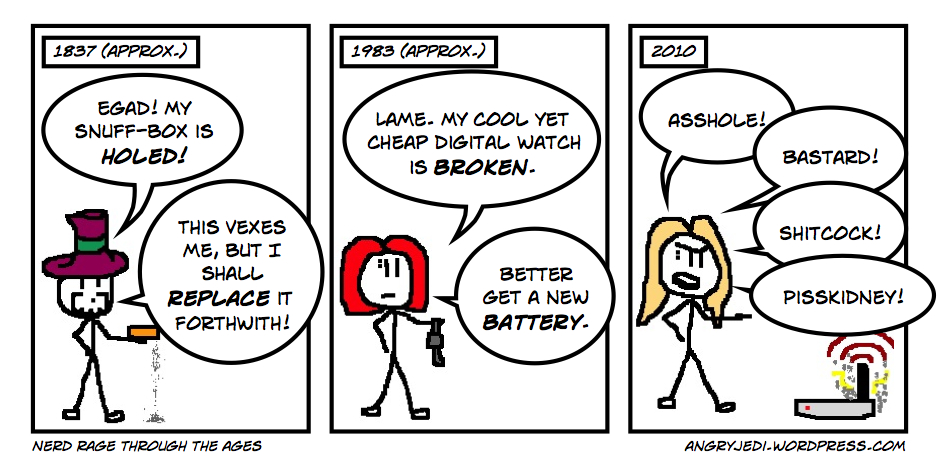
As a new acquaintance from Twitter would say, nerd rage is one of the most formidable forces known to Man. It is a dreadful and terrible force, both specific and unfocused at the same time, often showing itself via the personification of inanimate objects who really don't know any better and are just attempting to do their job and failing. Raging at said inanimate objects or poorly-constructed pieces of software rarely does any good, but it is commonly assumed that it makes one "feel better".
As the years have passed, though, everyone's bullshit-tolerance threshold has lowered significantly to the stage we're at now, where if something doesn't work immediately and instantly and then remain working 100% of the time, people blow their top and spew their vitriol to whoever will listen, which is usually the Internet. Assuming the Internet connection isn't the thing which is causing the nerd rage, in which case alternative outlets have to be explored.
This is why issues such as the Xbox 360's infamous "red ring of death" smart so much. Not only is it a shoddy flaw in the system which should never happen in the first place, but people's tolerance for such shoddiness is far lower now than it would have been, say, twenty or thirty years ago. Hell, in the days of the NES, everyone was quite happy to accept the fact that if a game didn't boot up first time, it clearly and obviously meant that you had to blow in it to "get the dust out" despite no actual evidence that it was actually dust causing the game not to work correctly. And no evidence that those tiny flecks of gob that probably got into the cartridge circuitry while you were blowing in it actually helped matters, either.
It's also why we get such whingers in places such as Apple's App Store. "OMG 1 STAR COZ IT DIDNT WORK ONCE THIS IS A DIGSRACE REFUND PLZ". "Is it working now?" "Yes, but…" (etc.)
It's fair enough to want things to "just work". Apple in particular like to pride themselves on the fact that their products "just work" (which they do approximately 95% of the time, which means the remaining 5% incites nerd rage of a degree you've never seen before, particularly amongst recent converts and/or Android users). But it's worth remembering a time not so long ago when we enjoyed tape load errors, boot errors, numerical error codes you had to look up in a book, garbled graphics, tape decks that chewed up tapes and then spat them out, CD players that seemed to deliberately wait for you to insert your favourite disc then sprout internal blades to scratch the crap out of it and dial-up network connections where it was possible to get a "busy" signal for hours at a time. And there was no Internet to spew your vitriol over back then.
Nowadays we have complicated devices and software that no-one except superhumans understand really, and established solutions such as blowing on it, shaking it, hitting it, shouting at it, turning it off and back on again and setting fire to it don't work. So the only thing left to do is get frustrated. And possibly call up one of those superhumans. Because everybody knows at least one. (Note: If you don't know a superhuman nerd or don't want to bother them, you can save yourself a lot of time by referring to this chart.)
In other news, the router here is rubbish and crap and I hate it and it disconnects Xbox LIVE every five minutes when I'm playing Fable II and it doesn't like WordPress and SRSLY who uses AOL nowadays anyway and… (repeat to fade)

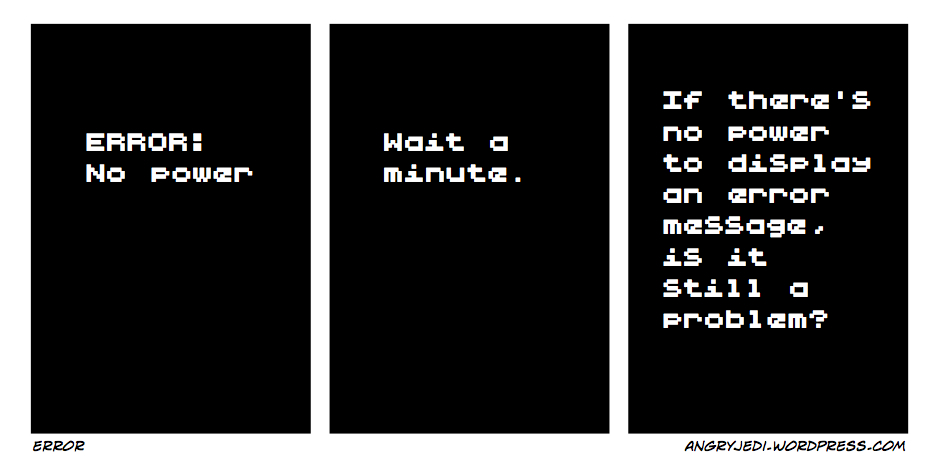 There was no comic when this post was written due to the fact my Mac's power lead is 120 miles away from where I am, so I'm currently writing this on my phone. Due to the WordPress app's lack of word count facility, this may also be a bit shorter than usual. But I'm sure you'll survive.
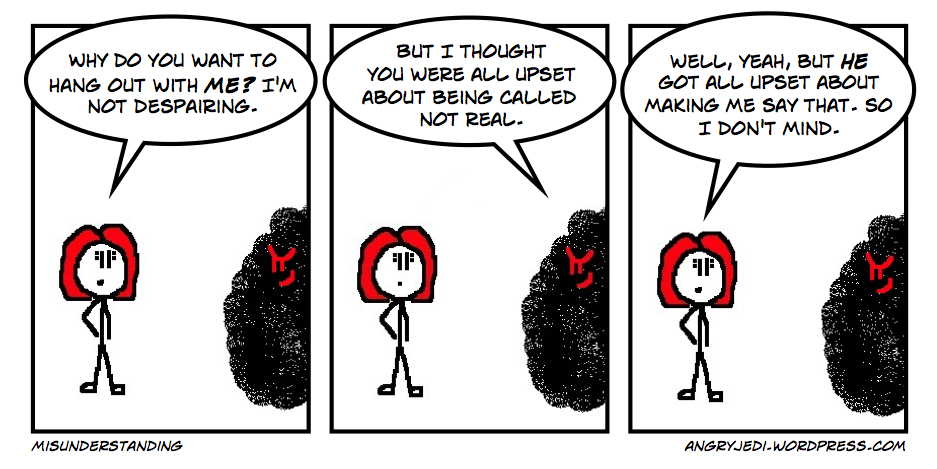 So the new Xbox Dashboard went live today. Pretty neat, isn't it? Lots of new sound effects, a clean white aesthetic, Kinect compatibility and all manner of other goodies. In fact, let's take a look at the list of new features, shall we?
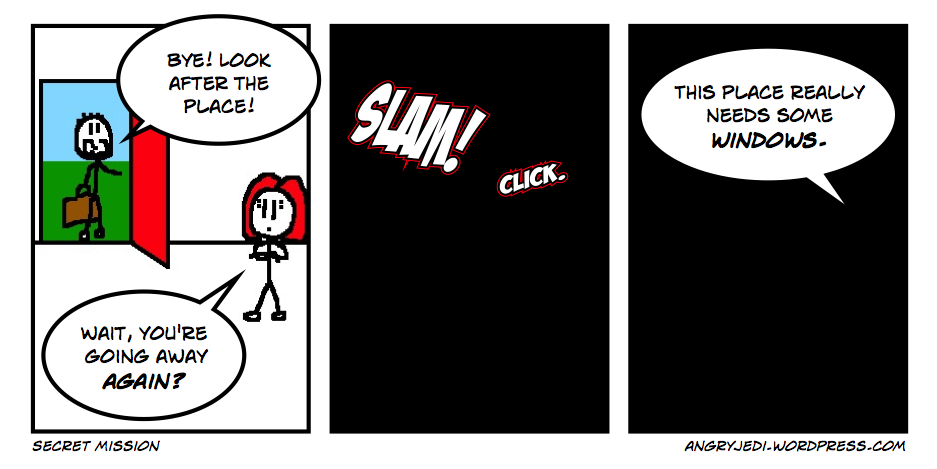 I love gadgets. Anyone who knows me in "real life" will not be surprised by this revelation. But I'm always impressed by quite how much we can do with various little portable implements these days. And even not quite so recently, too.