In response to The Daily Post's writing prompt: "A Storybook Day."
You have to spend one day as or with your favorite fictional character. Which one would it be and what would you do?
[NB: I am aware this is dangerously close to fanfiction territory, but whatever. Deal with it.]
Sometimes, you know before anything has happened that it's going to be a peculiar day.
As odd circumstances go, suddenly waking up face-down on a hard floor, the sounds of civilisation and industry mingling somewhere in the distance, is probably near the top of the "most peculiar" list. And this is how my day began.
I open my eyes and groggily get to my knees. I seem to be in an alleyway, and there's no-one else around. That would explain why no-one had come to my aid, then; I would have thought that a grown man lying face-down in the street would attract at least a little attention, but this makes a certain degree of sense. Not much, but a little, anyway.
My muscles expressing their displeasure at being disturbed from their slumber, I unsteadily brace myself against one of the alley's walls and get to my feet. I seem to be facing a dead end of some sort; the alley doesn't have much in the way of distinguishing features, aside from a couple of doors that look like fire escapes, and a dumpster or two towards the end. The alley itself abruptly ends at a strangely metallic wall.
"Stop right there!"
A feminine, assertive voice comes from somewhere behind me. I jerk upright, suddenly feeling a lot more awake than I was just seconds ago.
"Don't move!"
I want to look over my shoulder. There's something familiar about that voice.
"Um," is all I can say. Somehow words seem to be failing me.
"Oooh!" comes another feminine voice, this one energetic and somewhat childish, from somewhere behind me. "Wassat?"
"My, my," comes yet another woman's voice, this one sounding somewhat more… regal, distinguished? "Isn't this peculiar?"
I clear my throat and try, once again, to speak.
"I'm, uh," I begin. "I'm not going to hurt anyone. I don't think I'm really in a position to do so, from the sound of things."
"Turn around," says the first voice. It seems to be quavering slightly, but it's only barely perceptible. "Slowly!"
I comply with the order and turn to face the ones who discovered me. I give a start as I see who I'm confronted with.
One young woman, clad in a short blue skirt, cropped top and stockings, is pointing at me with an aggressive look on her face. Her twin black ponytails are flapping in the slight breeze. Behind her is a tall, older-looking blonde woman with a calm, gentle expression on her face. And standing at her side, fists clenched and knees slightly bent in a stereotypical expression of excitement and curiosity, is a young-looking purple-haired girl who appears to be wearing a hoodie as a dress, paired with striped thigh-high socks and sneakers. I know without looking closely that her hoodie is tied up with HDMI cables.
I instinctively bow my head, because it feels like the right thing to do.
"Goddesses," I say, trying to sound humble. "It's an honour to meet you."
"Nice to meet you too, buddy boy!" pipes up the purple-haired young girl before the twintailed girl has a chance to respond. "Whatcha doin'?"
"I wish I knew," I say. "I just sort of woke up here."
The twintailed girl is still pointing at me and looks like she's about to speak, but this time she's interrupted by the blonde woman's gentle tones.
"Hmm, we did wonder what had happened," she says. "Histoire mentioned some sort of strange energy from this region, and here you are."
I couldn't even begin to guess why I would be the source of a "strange energy", but given that I'm standing face-to-face with three women I've only previously seen through a computer screen, I feel something very odd may have happened.
This time I'm the one to interrupt the twintailed girl just before she gets something out of her mouth.
"Lady Noire," I say. "Lady Black Heart," I correct myself. "I'm not sure what I'm doing here, but I'm kind of at your mercy here."
Noire seems to shiver and then falter slightly, still pointing at me. I swear her cheeks blush slightly. Neptune, the purple-haired girl, gives a slight snicker and digs the blonde woman Vert in the ribs with her elbow.
"Here it comes," she says in a stage whisper just loud enough for everyone to hear. Noire apparently ignores her.
"W-well," she says. "Perhaps you'd better come back to the Basilicom and we can figure this out. But don't misunderstand! I-it's not like I'm doing this for you or anything! I just want to find out why a stranger suddenly appeared in my city!"
Giving Neptune a knowing smile and a nod, Vert moves aside to make room for me to pass, and I step out onto the streets of Lastation.
"So that is the long and short of it," says the tiny girl perched precariously on a floating book. "It will take about three days to make the preparations." Her facial expression doesn't change, but for some reason I find myself thinking of an exaggerated emote as she speaks.
"Three days?" says Noire.
"Yes," says Histoire, the tiny girl, whom I already know is a "tome". "Although this individual has brought a substantial quantity of Shares into this dimension, it will still take time for the–"
"Yada, yada, yada," says Neptune. "We got three days to go out and play!" She grabs me forcefully by the hand and starts to drag me out of the Basilicom, a large church-like structure that acts as Noire's home, office and base of operations.
"W-wait!" says Noire, her voice oddly high-pitched. "We still don't know anything about him! You shouldn't just go off with him by yourself!"
"Who said anything about going on my lonesome?" says Neptune. "You're coming out to play, too, Lonely Heart. It's about time you had a break! I swear, you'd be working through the night if your body didn't shut itself down every so often!"
"I concur," replies Vert. "After all the strange happenings recently, I feel we could all do with some rest and relaxation."
Noire puts her hands on her hips and looks like she's about to object, but thinks better of it at the last moment.
"F-fine," she says. "I can take a little time off, I guess. You are all visiting, after all."
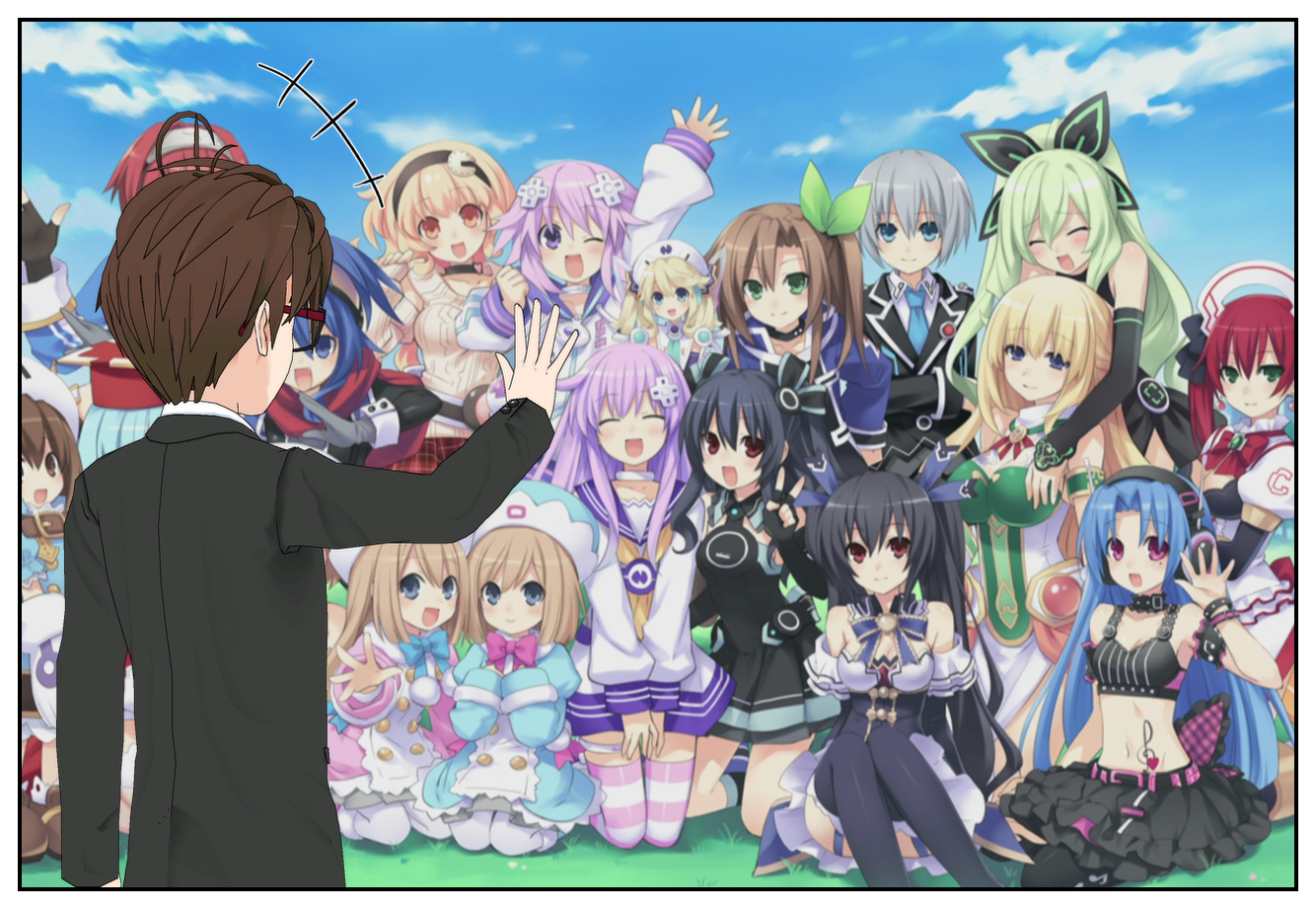
An hour later, I'm sitting at the head of a table with an array of colourful women. Noire is sitting to my left, Neptune to my right. Then, moving around the table, there's Neptune's little sister Nepgear; the sullen face — currently buried in a book, ignoring the situation — of Blanc; Blanc's twin sisters Rom and Ram, the former of whom is looking very uncomfortable indeed; then Vert, who is wearing a borderline-indecent dress that shows off her considerable cleavage to great effect; and finally Noire's sister Uni, who keeps giving her older sibling and Neptune furtive glances.
"I don't understand what's going on really," bellows Neptune in what she clearly thinks is an authoritative tone, before indicating me with a wave of her hand, "but Mr. Dude here is our guest! So let's show him how we have a good time! And you know what that means — pudding!"
On cue, several waiters — whose faces I, strangely, seem to forget the moment I look away from them — put a selection of large dishes on the table, each full of a colourful pudding of some description.
"I-is this all pudding…?" says Noire slightly uneasily.
"Yes!" cries Neptune, throwing her hands in the air and accidentally tossing the spoon she'd picked up so hard into the air that it embeds into the ceiling. "We've got strawberry, vanilla, chocolate, dogoo and lamb with rosemary!"
Noire doesn't look convinced of the nutritional value of our dinner, but chooses to say nothing further. Neptune, meanwhile is clearly excited about it, and it's hard not to go along with the sheer amount of energy she seems to exude at all times.
"Dig in!" she cries.
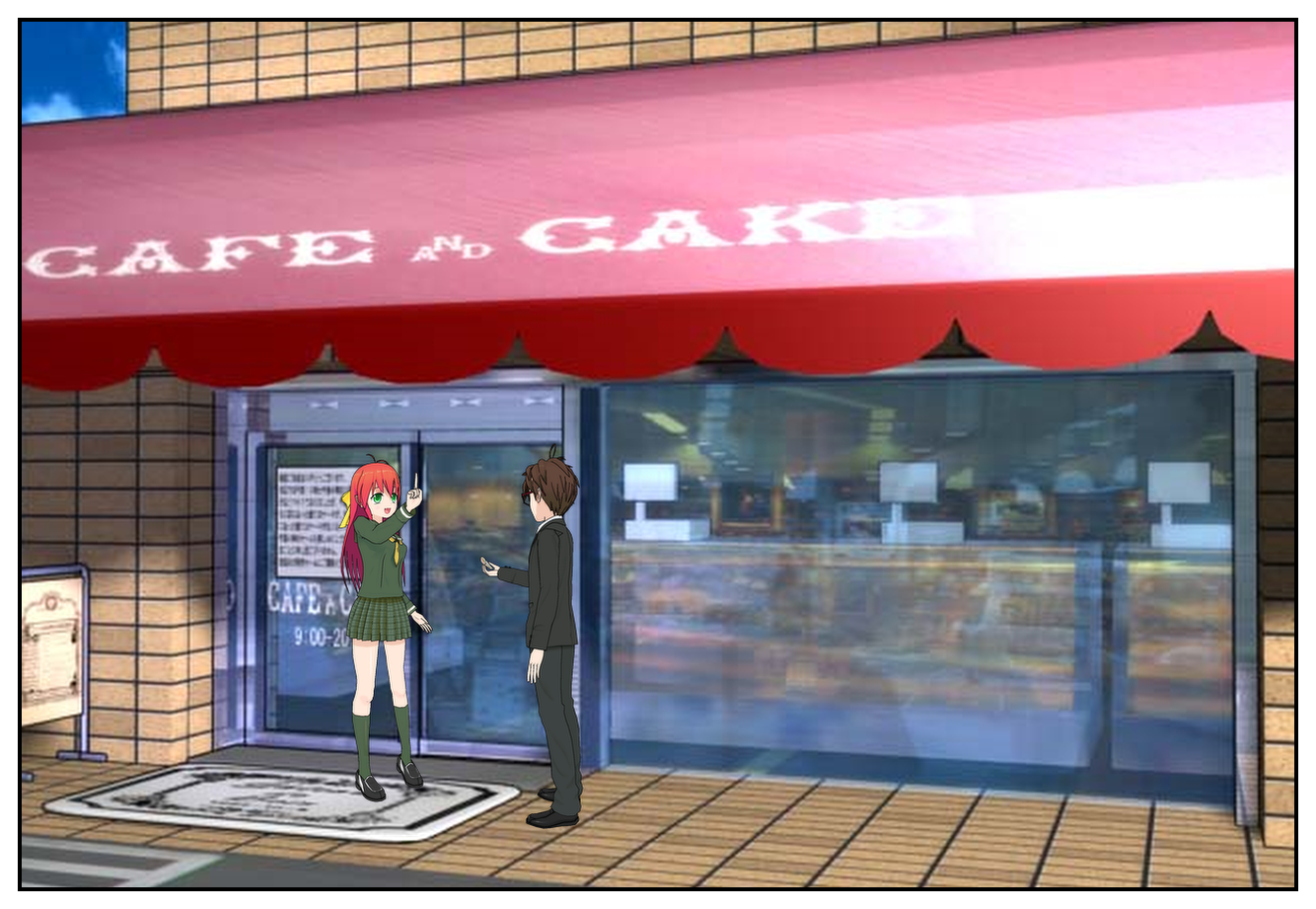
The three days pass far too quickly for my liking; a blur of pudding meals, trips to the local chocolate cake shop, multiplayer tournaments on slightly twisted versions of video games I recognise from my own dimension and some truly baffling conversations with the goddesses.
"I wish I could stay here," I say to Noire as we both look out over Lastation from the balcony of her Basilicom. We'd both stepped out for a little air — and to get away from Neptune's vacillations over what we should all do next, to be honest.
"Hm," she says quietly, not turning in my direction. Her attitude towards me seems to have softened somewhat in the last few days; gone is the prickly, defensive young woman who confronted me in the alleyway, and taking her place is someone who seems to be strong, but carrying around a faint air of melancholy.
It's silent for a moment; all I can hear is the faint throb of industrial machinery off in the distance. Then Noire turns to me.
"I think you'd like it here," she says to me with a gentle smile, a slight flush in her cheeks. "And believe me, we're all truly grateful for your faith in all of us. We get really competitive over the Shares, but it's rare to find someone who has such value for all of us."
I smile wryly.
"Is that all I am to you, Lady Noire?" I ask. "A fountain of Shares?"
"N-no!" she says hastily, her cheeks blushing even redder. "Y-yes! No! I…"
Her shoulders slump slightly and she closes her eyes for a moment. After a moment's quiet, she begins to speak, her eyes still closed.
"You don't belong here," she says. "I… kind of wish you did, but you don't. There are people waiting for you, aren't there…?"
"Yes," I admit.
"Then you should go back to them," she says, opening her eyes and smiling softly. "We'll always be here for you, even if we're not standing right in front of you."
I smile back at Noire.
"And I'll be here for you," I say. "You'll always have my Shares." Hesitantly, I reach out my hand and pat Noire on the head, ruffling her hair slightly. She doesn't object, thankfully.
I turn around from the balcony to go back indoors and am unsurprised to see Vert, Neptune and Blanc crowding around the doorframe, clearly watching what has been unfolding with great interest. Neptune gives me a thumbs-up and an enthusiastic nod of the head. Noire doesn't appear to have noticed her observers yet, and I feel I probably shouldn't point it out to them.
I turn back to Noire.
"Lady Noire?" I say.
"Hm?" she says absently.
"I'll miss you," I reply. In an uncharacteristically assertive display of affection, I take her in my arms and hug her.
"Wh-what are you…" she objects initially, but after a moment I feel her shoulders relax and her own arms reach around my back. We stay like that for a moment. I glance over to the doorframe and see Neptune giving Vert a silent high-five. I can't help but smile.
"Thank you," says Noire. "Don't forget us,"
"I don't think you have to worry about that," I say. And I mean it.
The journey back was surprisingly simple. Histoire gave a technical explanation that Nepgear did her best to expand upon, but it frankly went in one ear and out the other. All I really had to do was stand before the Sharicite crystal and wait for Histoire to do her thing; she was waiting for "dimensional alignment" or something.
I faced my friends, who had assembled in the doorway to see me off. It was strange; these people had been "friends" to me long before I'd ever met them face-to-face, and so parting from them now, while sad, didn't hurt as much as it could have done. I knew that when I got home I could see them again any time I wanted; it wouldn't quite be the same as the experience I'd just been through, of course, but it was good enough for me. And I had a strange feeling that even if dimensions of time and space separated us, they'd all be able to make good use of the Shares I contributed.
As the Sharicite chamber fills with a brilliant white light, I raise my hand in farewell.
"Bye," I say. It doesn't feel quite like enough, but it also doesn't really feel like goodbye.
"Bye-bye!" cries Neptune, followed by a slightly subdued chorus of farewells from the other goddesses and Candidates.
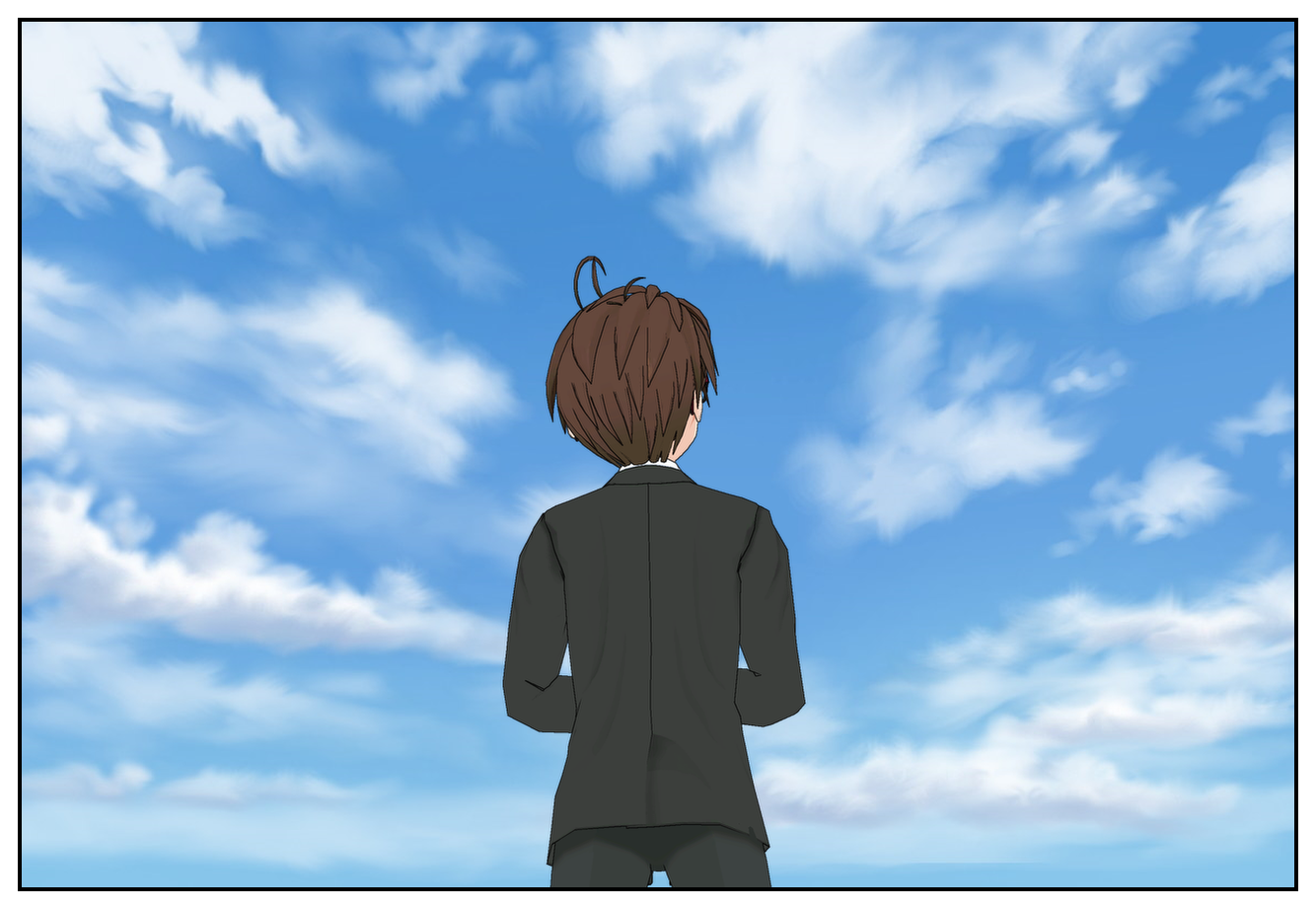
The light intensifies until I can't see anything any more. I close my eyes. Then, I feel the light replaced by blackness.
There's a strange chiming noise. I open my eyes again. I'm sitting up. Wherever I am, it's dark, save for a small sign up in the upper-right field of my vision.
"You have earned a trophy!" it says.

 There are times when I wonder whether this blog is the best way to handle getting thoughts out of my head in some form or another.
 As I've mentioned a couple of times recently, I've been reading the Monster Musume manga as well as keeping up with the anime adaptation, and I've been enjoying both a great deal.


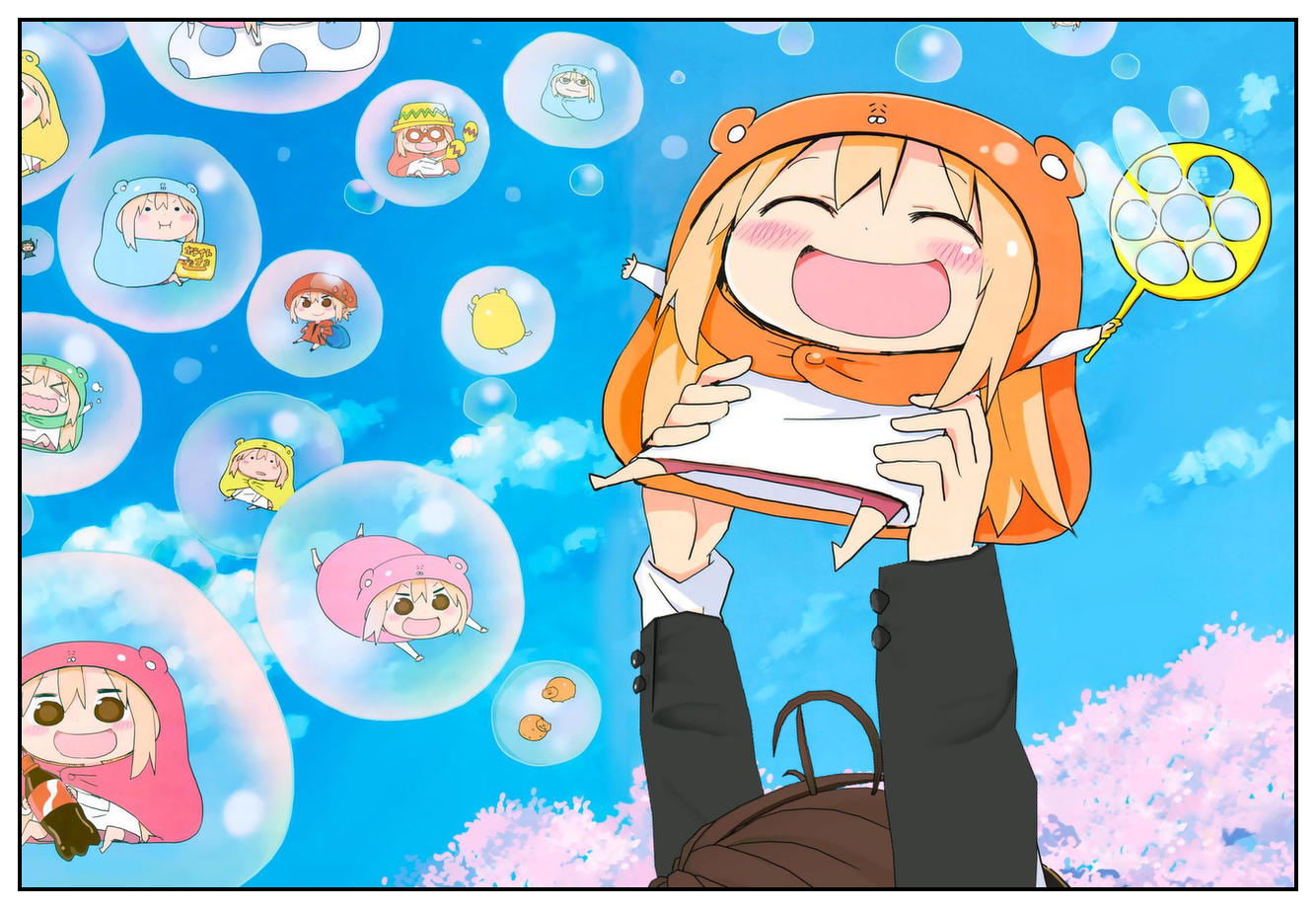 One of the highlights of the current anime season is Himouto! Umaru-chan, a rather odd little show that takes the Squid Girl approach of splitting each "episode" up into several shorter little vignettes in which nothing really happens, but it's entertaining nonetheless.