#oneaday, Day 260: In Between

I don't watch much TV, unless you count DVD box sets of favourite series like Buffy the Vampire Slayer and Angel. British TV has three main types: utterly terrible (Last of the Summer Wine, Dad's Army, anything involving Eamon Holmes), moderately inoffensive (usually involving people wandering around houses going "hmm, it's got character") and bloody brilliant (Spaced, Black Books, The IT Crowd, QI). One of the latter category I will always make an effort to watch is The Inbetweeners from Channel 4.

For the uninitiated, The Inbetweeners is a show about a group of four sixth formers (college-age 16-18 year olds, to the Americans among you). And it doesn't pull any punches whatsoever. Rather than being the sanitised view of school/college life that you see in most shows, this show is how it is. At least if you grew up in the late 90s or beyond. Possibly before; I couldn't say, since I only went through my late teens once and did so in the late 90s.

By "realistic", I mean "foul-mouthed, disgusting and sex-obsessed". And yet the characters involved are somehow likeable despite being, in many cases, terrible human beings. It's the contrasts that work well; there's Will the "specky twat", Simon, who is relatively normal despite stropping at his parents every five seconds, Jay the sex-obsessed, lying arsehole and Neil who is so very, painfully stupid. They're the perfect comic foils to each other, and the best thing about the show is that I know (or have at least met) all four of them at some points in my life. And no, I shan't be sharing who each one of them reminds me of!

The other thing that works so well is the variety of scrapes that they all get into. They're all situations that will be familiar to anyone who remembers being a sixth former. Getting your first car and it being crap. Panicking over sexual encounters. Taking advice from your friends even when you know they're a bunch of complete fucking idiots. And finding your place in the world.

I'm probably making this sound deeper than it actually is; mostly it's a comedy show with a wide variety of gross-out humour and a foul mouth. But despite its extremeness at times, it remains consistently entertaining, hilarious and, at times, horrifically uncomfortable.

If I didn't know so many people who loved watching it, I'd say it was perfect viewing for an exclusive audience of teenage boys… or at least those who remember being teenage boys. But judging from my Twitter feed there are a wide variety of people who love the show and feel much like I do; they'll make a specific effort to watch it and will happily quote it at every opportunity.

Channel 4, despite being the home of Big Brother for so long, has long been the home of awesome shows like this. Let's hope there are many more like it in the future; and that audiences around the world get to enjoy them too. With the content as it is, I couldn't say if it would ever make it onto American TV (tonight's episode featured Simon punching himself in the dick whilst shouting "GET BIG, YOU CUNT!" for example) but for those of you across the pond who like the idea of "kids talking like kids" and doing things that kids do, be sure to check it out.
#oneaday, Day 259: Home Again

I prepared the above comic in advance just in case I was too knackered to do a proper one upon returning from London. And I am pretty knackered. But I managed to get my ass outside and go running tonight. At 9pm. In the dark. In a country village. At least I remembered to take a torch with me this time; less stumbling wildly into darkness and a little more Alan Wake. Though with less of whatever that game has in it (because I still, to my shame, haven't played it yet. I KNOW, I KNOW, all right?) and a little more… well, just running. And walking.

I'm following the Couch to 5K programme (again… I started once before) that was originally introduced to me by the fine gentleman that is Mr Calin Grajko. Given that I'm presently in the middle of nowhere (well… the nearest gym is seven miles away) running seems like a safe, easy option to get some exercise without needing any 1) expense and 2) travel. The thing with gyms is, they're cool and all, but if you're already feeling lethargic and not wanting to leave the house, then travelling somewhere that is going to cause you to be grunting, breathless and possibly in pain is likely not high on your agenda. Unless you have a favourite hooker at that classy brothel you like so much.

But with running, yes you still have to leave your house, but you don't have to go anywhere to get started. The world is your gym. And rather than staring at your sweaty, gasping self for half an hour in those mirrors that gyms insist on putting absolutely bloody everywhere, you can take in the scenery. You can take different routes for variety and challenges. You can run in the dark. You can run in the middle of the day. In the cold. In the warm. In the wet. And you can use fancy-pants iPhone gadgetry to analyse your runs in a level of detail that you really don't need to. Or, possibly, attempt to run a route which lets you draw a giant cock on Google Maps. (I haven't done this. But having just thought of it, now I think I pretty much have to.)

So far I've completed Week 2, Day 1 of the programme. This meant that tonight was the first time I was running for a bit longer, but also walking for a bit longer too. The pattern for this week is run for 90 seconds, walk for 2 minutes, 6 times. Last week it was run for 60 seconds, walk for 90 seconds, 8 times. This week sounded like it should be easier. It isn't! Although as I've found previously with exercising, it's actually surprisingly quick to build up a little bit of stamina. I'm obviously not at the stage where I could even think about running a 5k without collapsing dead yet, but I've noticed a marginal difference between how easy it is to keep going since the first day I started.

Just gotta keep it up! Fortunately, there's a good iPhone app to keep the motivation up. It's called Get Running and it's really very simple; it's basically a glorified timer with vocal feedback telling you when to start and stop running, walking and so forth. It also tracks how far you are through the programme and suggests which day you should do next, as well as allowing you to tweet your progress. The nice thing about the vocal feedback is that it's recorded by a real person, which makes it infinitely more motivational than some robot going "You have… RUN… One. point? SIX! Miles."

Anyway. I have a bed to get to very shortly. And then lots and lots of things to write in this coming week. Adieu.

#oneaday, Day 256: Writer's Block

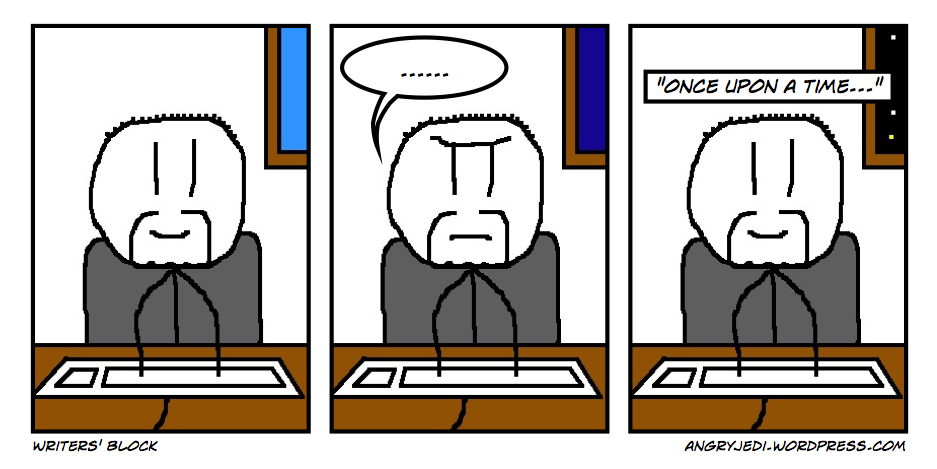
I'm actually surprised I've managed to go for 256 days without running out of things to write. Whenever I consider pitching an article idea to somebody, you know, "proper", it concerns me greatly that my brain will just zone out and forget how to be creative. But if this blog has proven one thing, it's that it's possible to come up with something that is at least readable every day.
Different people take very different approaches to writing. I remember back in school and at university, being encouraged to write detailed plans for any piece of writing. Including while under exam conditions. Being someone who never had trouble sitting down with a pen and piece of paper (or indeed in front of a computer) and letting the words flow naturally, it always struck me as something of a waste of time. For me, anyway. When I write, I tend to let my brain run several steps ahead of what my hands are writing. Thus, I find myself developing organic, natural arguments in the same way I would if I was talking to someone face-to-face. Perhaps more well-considered, since face-to-face conversations don't have the opportunity to go back and delete something stupid that you just said. Like the sentence I just deleted that you'll now never get to read. Hah. It might have been about you. How does that make you feel?

No, I can honestly say that I have never sat down and actually written down a plan of what I'm about to write. Thinking about it, though, I do go through the process. I make a plan in my head. I just don't commit it to paper, Word document or draft post. I've certainly never used Outline Mode in a word processor, which made it rather hard to explain the benefits of said mode when attempting to sell copies of iWork '09 to customers.

Once I've written the whole thing, depending on the "importance" of what I'm writing (i.e. whether it's a strictly personal thing, something I want to impress people with or something that I'm doing professionally) I'll go back and read over what I've written again. Sometimes I'll come to the conclusion that I was talking complete nonsense and delete huge chunks of work that will never be seen again. Such as that other paragraph all about your sister that I just deleted. (It wasn't really relevant to the matter at hand.) Other times I'll rearrange paragraphs and make them flow more naturally. And sometimes, just sometimes, I'll start all over again in the electronic equivalent of screwing up the piece of paper and flinging it in the bin. (Cmd-W, Cmd-N… yes, I'm a Mac user, deal with it.)

Eventually, I'll end up with something like this that, as I say, is at least readable if not necessarily the most interesting thing in the world. And then I do the same again tomorrow. And again the day after. And the following day. And… You get the idea.

I've done this process so often now that I use it on everything, from blog posts like this to feature-length articles on websites to comments on Facebook (seriously). It's pretty rare you'll catch me responding to something with nothing but a simple "lol" (actually, never on that one) or a smiley.

And that, everyone, is how you keep the creative juices flowing. Like anything, practice makes perfect, and the more consistently you do it, the more naturally it'll happen.

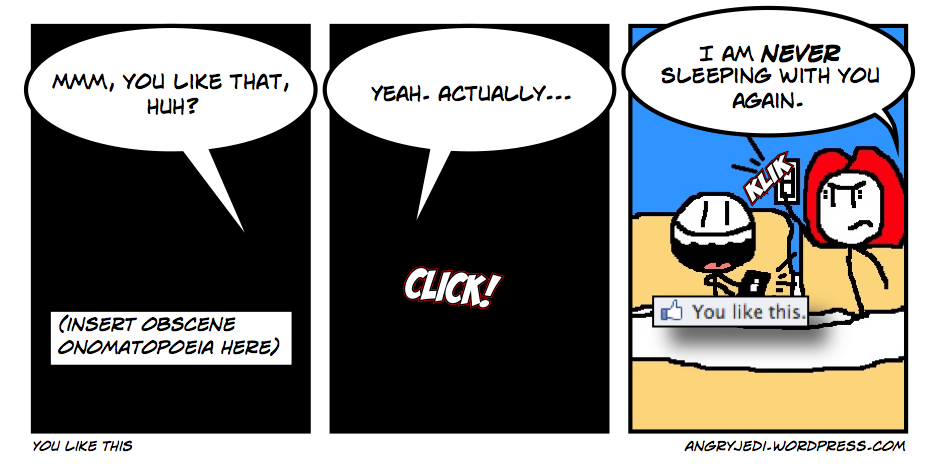
#oneaday, Day 254: Be The First Of Your Friends To Like This

I remember back in primary school we were encouraged to never use the words "nice" or "said" because they were boring. There are always better words to use, we were told, so we should be creative and extend our vocabularies.

Fast forward to today and we have much the same issue with the word "like", a word which is rapidly losing all meaning thanks to its total domination over the social networking space. Every day on Facebook, it's a fair bet that there is at least one entry in everyone's news feed that says "Amber likes OMG!! Where did you get you're shoes LOL! on ♥." or "Bob likes I hate it when your trying 2 go 2 sleep and u cant on Likebook." Not only do these sentences make no sense, they're a symbol of a peculiar shift in communication styles that has taken place in recent years, particularly amongst teens and tweens.

Essentially, rather than just typing "I hate it when you're trying to go to sleep and you can't" and sharing that particular inanity with the world (not to mention spelling it correctly), it seems that it's now much more the done thing to go and find a website which lists hundreds of said inanities for the sole purpose of allowing people to Like them on Facebook. There's a kind of "distancing" involved. Anyone can click "Like" on something. As soon as you write it yourself, it becomes more personal, and harder to do.

Trouble is, the word "Like" is being used so much that it stops making sense sometimes. Or its context is completely inappropriate. Take the latest "check-in" craze, GetGlue, which is actually a pretty neat idea. Users tag the things that they, yes, like as well as the things that they dislike and can then get suggestions of other things they might like based on other users' tastes. Fair enough. However, when a site offers you the opportunity to not only "Like" ebola but also check into it, you have to question if the correct terminology is really being used in this instance.

And where's the opportunity to dislike things? GetGlue is unusual in that it does specifically allow people to say "I don't like this". There's no opportunity to do that on Facebook. If a friend posts a status update that informs everyone that, say, their leg has fallen off and their family are dead and not only that, someone posted a bag of poo through their letterbox then the only things to do are to "Like" it, which seems rather tactless and inappropriate, or to actually leave a comment which will probably start with "I wish there was a Dislike button" and end with too many exclamation marks.

Perhaps Facebook is attempting to make us all more positive. Instead of writing "I'm so sad. My family are dead, my leg has fallen off and someone posted a bag of poo through my letterbox" which, let's face it, no-one is going to click "Like" on, perhaps you should put a positive spin on it. "My family are dead, my leg has fallen off and someone posted a bag of poo through my letterbox. But at least I found 76p in small change in my jacket pocket, Snickers later ftw!!!"

aplenty from there on, I feel.

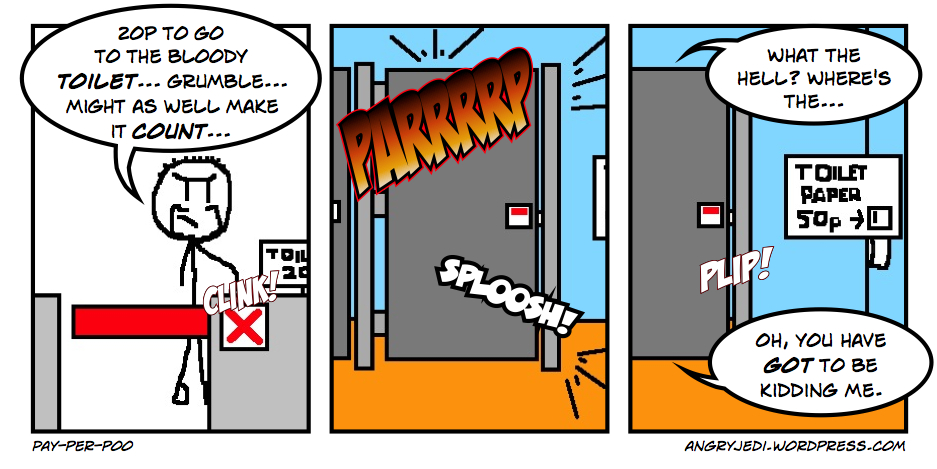
#oneaday, Day 253: Pay-Per-Everything

I came to a realisation today. I have a thing about the word "monetize" (or, arguably, "monetise" if you want to be English about it, although the latter is not recognised by a British English spellchecker). This is not news to those of you who have been following this blog for some time. Some of you may even recall the Money Robot, star of Day 128 on this blog, and, of course, the thing that goes around monetizing everything in sight by applying green electricity to their genital areas, assuming they have genitals.
But, as I say, I came to a realisation today. And my problem is not with the word itself as it is with the fact that we even need a word for this concept at all. "Monetize", after all, pretty much means "convince people that it is acceptable to pay money for". And sure. There are some things out there that could stand to be charged for—certain content online, for example, could be charged for in order to make sure that writers could actually get paid for once. The iPad, Kindle and other devices like them are doing a lot to help people think about how they consume content—a move away from the whole "EVERYTHING SHOULD BE FREE!" philosophy that the Internet has embraced for so long and a move towards "most things should be free, but really good stuff should be an appropriate price".

At least that's the theory of how it should work. How monetization works in practice is that you get people charging you to go to the toilet at railway stations. You get a 30p "convenience charge" for paying your parking fees via phone instead of via small change in a machine—change which some poor sod will have to come and collect at some point rather than an automated robot who steals your credit card numbers over the phone, I might add. You get charged £30 to disconnect your broadband (at least you do if you go with Orange Home, fuckers). And Endsleigh Insurance (also fuckers) wanted to charge me £85 for the privilege of cancelling my home insurance, all because I had moved house just after the policy had renewed, ignoring the fact I'd been paying them for the last ten years. Let's not even get started on bank charges, where they take the money you haven't got in order to punish you for not having any money.

You get the picture. Not everything being monetized is good. And that's why I think the fact it's happening so much that we need a new word to describe the concept is very much a bad thing. We don't need to pay for everything. I pay a bloody fortune to travel by train in rubbish, smelly, drunk-infested conditions so the least I should be able to expect is the opportunity to have a piss for free at the other end. Conversely, I'd be more than happy to pay for some exclusive content, eBooks or virtual magazines delivered to the iPad I don't have. It's all a question of value.

You may argue that the ability to have a piss is inherently more essential and therefore valuable than an eBook. But technically I can have a piss anywhere. The charge on the toilet is not stopping me from, say, pissing myself. The nice policeman standing on the corner might, however.

The eBook or virtual magazine, however, has had love, care and attention ploughed into it and therefore, it's only fair that the writers and producers should receive some recompense for that. So more premium, high-quality content, please, and less in the way of "convenience charges".

THANKS.

#oneaday, Day 252: 5 Social Norms That Need To Die The Hell Out

There are some things which have become so firmly entrenched in normal society that we just don't question them. We don't necessarily like them, but we certainly don't question them if someone happens to bring them up. They're so well-known that countless comedy routines have drawn attention to them over the years; so much so that many of them are now clichés. That doesn't stop people writing about them and perpetuating said clichés, though, as I'm about to do right now.

So without further ado, let me present Five Inexplicable Social Norms that the World can Really Do Without™.

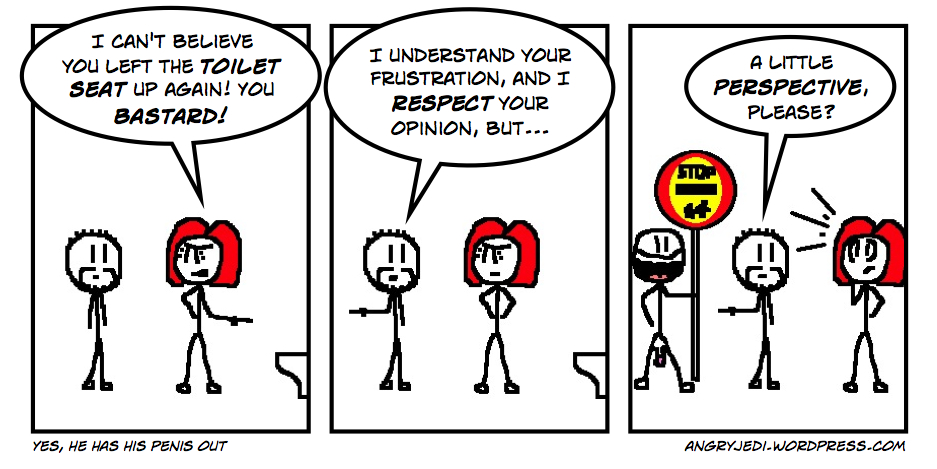
The toilet seat thing

Alluded to above. Roughly 50% of the world's population, give or take, have to take a piss standing up. Well, they don't have to. But gentlemen who choose to urinate whilst in a seated position are generally scorned and looked upon as some sort of weirdo. For a chap, sitting is for pooing and standing is for pissing. Would the ladies out there who whinge about toilet seats being left up prefer it if said gentlemen just left it down all the time and pissed all over it instead? No? Then consider this: the seat has a hinge on it so it can be lifted up and put down. If it is in the incorrect position for one's desired toilet activity, one need simply use one's hand to move said seat to the correct position.

While we're on, those toilets whose seats don't stay up can die in a fire. Having to hold on to the toilet seat with one hand and directing one's flow with the other often feels rather precarious and I feel that anyone who inadvertently spills in a place they shouldn't whilst under such arduous pissing conditions should not be held responsible.

Man flu

Apparently, guys aren't allowed to get ill any more. Whether it's a tickly cough, some form of debilitating brain cancer, ebola or itchy scrot, it seems that everyone is quick to cry "Man flu!" at the first opportunity. The zombie apocalypse will not come from some sort of biohazard outbreak at a local lab. No, it will come from the man who caught zombie disease, went to hospital, was accused of just having "man flu" and sent on his way.

Overenthusiastic use of the word "random"

"OMG! I'm such a random person really. We went out and had a drink and it was like OMG! Random!"

No. "Random" means… well… random. Completely by chance. Out of all the possibilities that are there, everything has an equal possibility of happening. It is not "random" that you met that hot girl at The Dungeon one night, because you knew she was there. Your night out was not "so random", because you'd planned it weeks in advance with your compadres. You are not a "random" person, because otherwise your conversations would run something along the lines of "Cabbage! 352! Cocks. Horatio! England. Belching squirrel. 976!"

Settling for second-best

This could be applied to so, so many things but I'd like to particularly refer to the world of employment. How many people do you (yes, you!) know personally who regularly bitch and moan about their job, their colleagues, how much they hate what they're doing, how they "wish" they could do something "better" and then never do a damn thing about it? Some people don't have a clue what it is what they want to do. To those people I say: think harder. If you are sitting in an office surrounded by other people who clearly want to slit their wrists or take far more regular toilet breaks than a normal person because they're actually going there to cry for five minutes at a time, then you are probably in The Wrong Job.

Being unemployed has been a festival of suckitude, but I just know that if I was in that aforementioned office, while money might be coming in the way I'd be feeling would be ten times worse, because I'd feel trapped and unable to pursue the things I really do want to do. (Talking of which, I have a job interview for a job I really do want tomorrow. Wish me luck.)

Embarrassment over bettering oneself

I went out for a run today, but felt the familiar pang of anyone who is unfit going out in public to exercise: "what if anyone sees me?" This immediately jumps up to something doubly worthy of panic if you are doing some form of exercise which has the potential to hold up traffic, such as cycling along country lanes. But running! People will see you doing exercise, and they will laugh at you. Because going out and doing something about your own fitness is inexplicably somehow more shameful than just walking down the street gasping and wheezing after climbing a flight of five steps.

This whole thing also seems to apply to kids in school, many of whom seem to see success as being somehow shameful. But that, of course, is a topic I have waxed upon at great detail many times in the past.

So I know I certainly wouldn't shed any tears if any of the above norms disappeared overnight. Perhaps they're uniquely British things. In which case… anyone want to help me get a visa?

#oneaday, Day 251: Teamwork, Do It Together

I'm going to quote a LazyTown song at you and there is nothing you can damn well do about it.
Links in a chain
Tracks for a train
They're always better together.
A cocoa in a mug
A kiss and a hug
They're always better together.
When nothing seems to fit
And you just want to quit
Teamwork, do it together
Teamwork, friends forever
We're all for one and one for all, we'll—

Okay, enough already. Even I'm feeling a little nauseous*. But it's an apt introduction to the matter I would like to talk about today, which is collaborating, working together, being a team player, whatever you want to call it.

In life, teamwork is essential, even for the most inept recluse there is. At some point, they're going to have to deal with other people. So it may as well be a pleasant experience for everyone involved.

The thing I don't understand is why so many people don't seem to get this. For example, I was talking to a friend the other day and it seems that a work colleague had gone behind her back and caused an unpleasant, tense situation when in fact all that was needed was a quiet, friendly word. In fact, given the situation in question, even that wasn't warranted at all, but this isn't the time or place to discuss that.

But it seems to happen over and over again; I've lost count of the number of times I've heard friends comment about the stresses of working with other people, either because they don't pull their weight, or because they're the sort of person described above, who is only concerned with making themselves look good and balls to how everyone else feels.

If you'll indulge me a moment, here is something which truly can be learned from the world of video games. I was enjoying a friendly game of Halo: Reach with some friends earlier, and we were playing Team Slayer. For the benefit of my readers out there who don't play games at all, an explanation: this mode splits eight players into two teams of four and tasks each team with blowing seven shades of snot out of each other until one team or the other has scored fifty kills. Very simple. And yet what many people who play it don't seem to realise is that by working together—simply a case of sticking with someone else and protecting them, and occasionally telling other team members where opponents are—success can be pretty much guaranteed, at least until the other team figures out the same thing. Which often doesn't happen.

It's the same in reality, only with less shooting each other in the face with rocket launchers. Usually. Rather than striking out as a "lone wolf" that just happens to be part of a larger venture, working together with others is a far more sure-fire way to get things done. Things get done a lot quicker and everyone is a lot happier as a result. So I have to wonder why so many people try and put up barriers to this sort of collaboration. Whether it's wilfully ignoring things that they're told, making themselves inaccessible, refusing to listen to feedback or simply not chipping in their bit of effort at crunch time, it makes life unpleasant for everyone. Those who are spurned by the git who isn't helping end up feeling bitterness and resentment. And said git often starts to feel superior, like they don't "need" to get involved.

I'm very fortunate in that all the ventures I'm currently involved with are very much team efforts run by people who are friends with mutual respect for one another, and people who talk to each other. There's no bitchiness, no backstabbing, no resentment. I think. Unless I'm causing it.

Oh God, am I the git?

* inserted to draw attention away from the fact that I have listened to the LazyTown soundtrack on Spotify far more times than is really healthy. This is just between you and me.

#oneaday, Day 250: No!

The most difficult word to pronounce in the English language is not the one with the most syllables. For starters, opinion differs on exactly which word is the longest and most complicated one. "Floccinaucinihilipilification" is right up there, for one, but then "guar hydroxypropyltrimonium chloride" is pretty long too, but it is a shampoo ingredient and technically three words. Then there's some weird science thing called "pneumonoultramicroscopicsilicovolcanoconiosis" which picky Scrabble players reject because it doesn't fit on the board and is also a word made up by SCIENCE! which therefore doesn't count.
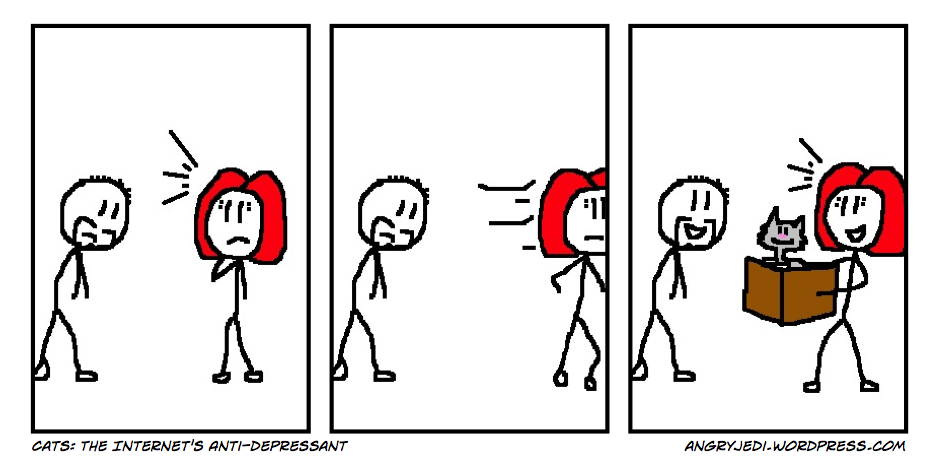
In fact, the most difficult word to pronounce in the English language is "no". One of the shortest words there is. You can't get much shorter than one syllable really. You could say nothing, but then you're, well, not saying anything. So we can establish that "no" is one of the shortest words out there. There are ones with less phonemes or whatever that nonsense they teach in primary schools is now, but… just no, okay?

The reason "no" is a difficult word to pronounce is not because of its complexity. It is because of the emotional connotations. No is a negative, and using it often implies some sort of negative consequences.

Interactive Thought Exercise™ time! Consider how you would feel if you asked any of the following questions and the answer was "no":

  • Will you marry me?
  • Do you like me?
  • Is this picture I've drawn you the best thing you've ever seen?
  • Would you like to play Scrabble with me?
  • I know we've only known each other a little while, but I really like you so I thought it'd be kind of cool if we could go and, you know, grab some coffee sometime or whatever and then see what happens—what do you say?

But then what everyone forgets is that, paradoxically, "no" can actually have positive connotations too.

Interactive Thought Exercise™ time again! Consider how you would feel if you asked any of the following questions and the answer was "no":

  • Is it cancer, Doctor?
  • Do I look fat in this dress?
  • Have you ever been to bed with a better lover than me?
  • Have you ever seen anything more impressive than that awesome thing I just did?
  • Is there ever going to be another series of The X-Factor?

The thing is, though, it's easier to focus on negative things than positive things. Who knows why this is? It appears to be one of those things that is bundled under the heading of "human nature" when neither the scientists or the psychologists can be arsed to work out exactly why it happens. But it happens, regardless. Sometimes we want to say "no" to something because we don't want to do it, because it makes us uncomfortable or perhaps because the prospect of it terrifies us. But we don't. Because we put ourselves in the shoes of the person who is asking us something and we imagine how they'd feel or react if we said "no" to them. We don't want to hurt their feelings or look like a dick.

Chances are, of course, they wouldn't react in the way we were thinking. And a key part of learning to be assertive is learning how to say "no" to these things. But it's still difficult.

Of course, some people have absolutely no problem saying "no" to anything and everything. And, like their brothers and sisters who argue with everything, regardless of context? We also call these people assholes.

#oneaday, Day 248: All Change! Again

It's been a curious few days for some people and things that are very dear to me. First up, you may have read my impassioned mourning of the apparent loss of Good Old Games the other day. Turns out that, as some suspected all along, the site was simply coming out of beta and relaunching. Not only that, but awesome WRPG Baldur's Gate is coming to the site, with more to follow. This, hopefully, means that Planescape: Torment can't be far behind. Because the one loaning incident I regret more than anything else is loaning that game to someone and never getting it back. I'm not even sure I know who borrowed it. So if you have my copy of Planescape: Torment, please return it to me. Or at least buy me a copy on GOG if/when it appears.
So that was sad and became happy, although some are still ranting and raving about GOG's handling of the situation. Okay, it perhaps wasn't the best PR stunt ever (some blaming that famous Polish sense of humour) but it got people talking about GOG, and it turns out that what they were planning was actually awesome. This isn't the place for that debate, though.

The really bad news, though, is that the gaming site I've written daily news for and called home since March of this year, Kombo.com, is folding. This is terribly sad news as the team at Kombo are some truly talented people who worked their hardest to provide awesome content every day, whether it was opinionated twists on news coverage or original content.

Former Assistant Director of Reviews Matt Green sums the situation up over at his blog, so pay it a visit and feel free to offer commiserations either there or indeed here. I sincerely hope that everyone who was involved with Kombo lands on their feet and gets the awesome writing gig (with appropriately awesome pay) that they deserve. Note: This includes me. So if you know anywhere who needs an awesome writer who is also British (which apparently adds +1000 awesome points) then let me know. You can feel free to point them to this site—I have links to samples of my work on the menu bar above—or to http://pjedi.co.uk/links, which also has said links.

So, with that said, I think it's time for a little light relief. The Internet provides many means of light relief, not all of which are appropriate for public consumption. (Hey, what you look at in your own time is your business. You pervert.)

By far my favourite means of light relief that the Internet provides is cat, monkey and/or dog videos, however, so I shall now share a few of my favourites. Thanks in part to Alex Connolly and Chris Person for having a link war on my Facebook profile earlier.

May I firstly present to you, courtesy of Dave Gorman on Twitter, an elephant playing darts:

Followed by the charmingly literal "A Monkey Washing A Cat."

And then… er… this.

How about THIS?!

Andross's enemy is my enemy!

And finishing with indisputably the best cat video on the Internet.

I thank you. For those who have had a nightmarish, difficult or stressful few days, I sincerely hope the sight of the above has cheered you, if only slightly. May tomorrow be a better day.

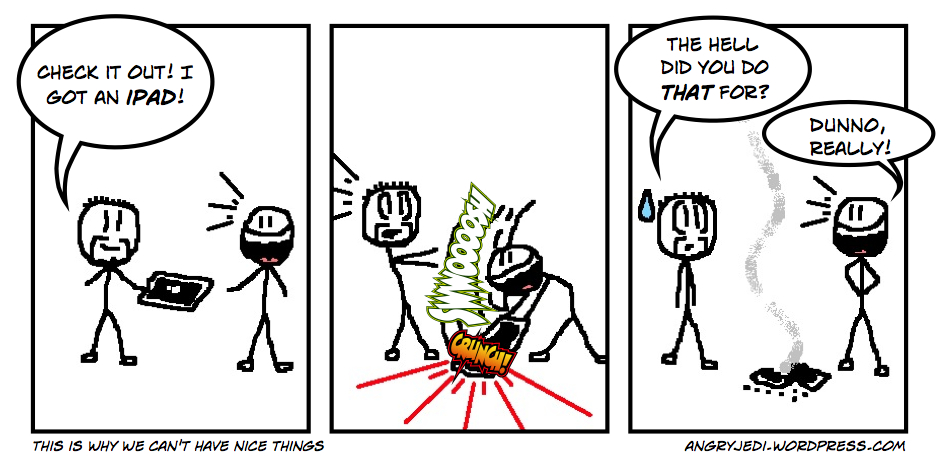
#oneaday, Day 247: This Is Why We Can't Have Nice Things

Twitter broke earlier today. This in itself is nothing unusual, as the existence of the term "failwhale" will attest. But this time it was partly a result of some new changes that the service made, particularly with regard to posting links.

Twitter recently launched its own link-shortening service, called "t.co". This is one of the shortest link-shorteners out there, and when characters are a precious commodity as they are on Twitter, that's really important.

Unfortunately, some clever young person discovered that by using t.co it was, in fact, possible to embed HTML code and, worse, JavaScript in these links. It was also possible to format tweets, change their colour and black them out.

Said exploiter quickly discovered that by blacking out a tweet and adding a "mouseover" JavaScript event to automatically retweet the exploit, post giant text on the screen or in some cases, redirect to websites you wouldn't want anyone to catch you on ever whenever a user moved their cursor over the blocked text, they could cause absolute chaos. Thankfully, most people got wise to the exploit pretty quickly and retreated to the safety of Twitter client apps, as it only affected users on the website itself. Of course, there were a few people who started screaming "OMG VIRUS!!!" and panicking, but most of them were put in their place pretty quickly with a simple, calm explanation (hah, right) that an exploit and a virus are two very different things. And Twitter stepped in to plug the security hole reasonably quickly, too. So the whole thing was over within a matter of hours.

The main point of this, though, is that it wouldn't have happened at all without the new functionality that Twitter was offering. It seems that every single time something new and potentially awesome appears, there is at least one person out there who wants… no, seemingly needs to break it. Why? Because they can.

This explains the existence of "glitchers", people who deliberately play video games in order to break them. It explains the existence of software pirates, who are out to break copy protection and DRM on software. It explains the existence of hackers, people who write viruses and spammers. And, indirectly, it's the reason why every single time you turn on Windows you have fifteen bajillion updates to install.

This is all getting a bit tiresome now. It's such a shame that things that are new must seemingly go through the "initiation" of being broken by some idiot sitting in his pants in his basement, probably masturbating furiously as he watches the chaos unfold before his eyes. Because you just know it's a "he", too. (I'm all for equality, but when it comes to stupid, pointless and inconvenient things to do with computers, it's always a guy.)

Thankfully, the world seems adequately set up to deal with such dribbling idiots these days. We have spam filters, virus scanners, scripts to clean out malicious code from websites. Companies have teams to fix broken functionality like we've seen here. And of course, it's easy to say that things should be tested more thoroughly before release. But there's no way you can predict every single possible stupid thing that some member of the human race will try and do. If we could, no-one would ever go outside and the world and everything in it would be covered in sponge just in case we fell over and hurt ourselves and/or tried to kill someone else with something.

So if you know anyone who's ever come up with one of these exploits, or anyone who's ever ruined a Nice Thing for anyone else, do the world a favour and go and punch them really, really hard in the testicles.