1011: Sigh... Another Shitstorm

Boy, it all kicked off earlier. Again.

For those who missed the whole shebang, basically, this is the flow of events over the last two days to the best of my knowledge.

Yesterday:

  • Twitter "debate" erupts over whether or not it was ethical for UK games journalists attending the annual "Games Media Awards" ceremony to be tweeting promotional hashtags in the hope of winning a PS3.
  • Winners of said competition name-checked by several Twitter users.
  • Several of said winners speak up and say they are giving away their PS3s.
  • Eurogamer publishes this article by Robert Florence (now recreated on GAF because the Eurogamer-hosted one has been edited) in which he notes that journalists defending such a competition could be seen as corrupt. He quotes tweets from several public sources (mostly Twitter) in said article.
  • MCV staff writer Lauren Wainwright, who was originally quoted in Florence's article, posts on Facebook "Yes, I've seen it. Yes, it's slander. No, it's not being taken lightly." and quickly makes it clear that she is referring to Florence's article.

Today:

Most of the salient points surrounding this issue have probably already been addressed far better than I will do in this post, but since this is my personal blog I thought I would give my take on the matter, as something of an "outsider" to the UK games industry. (It's true; despite living in the UK, pretty much all games/tech journalism work I've done in the last few years has been for American outlets — the last UK publication I wrote for was the UK Official Nintendo Magazine, and that was back when the N64 was one of the current-generation consoles.)

I have come to the conclusion, not just as a result of this shitstorm, that I am Not A Fan of the UK games journalism industry.

Actually, that's not quite true — there are plenty of people in the UK industry with a considerable degree of integrity who sadly toil away in relative obscurity. People like Lewis Denby over at Beefjack, Ashton Raze and Tom Hoggins over at The Telegraph's games column, and itinerant freelancer Chris Schilling — and scores of others, too, most of whom I follow on Twitter. These are all people that I may not have had the pleasure of actually meeting in most cases (though I met Denby at the Houses of Parliament one day) but whom I have interacted with and have grown to trust the opinions of. I have no issue with these people.

However, what I do have an issue with is the "old boys' club" that is at the core of the UK games journo industry; a toxic heart beating away and infecting all around it with its bitterness and vitriol. In this inner circle, most people seem to actively hate their job, mocking it at every opportunity and deriding genuinely interesting ventures such as a games journalism introductory session that IGN attempted to host in London a short while back. The apparent priority for a number of these individuals — from what I can tell from their public output, anyway — is getting drunk and taking the piss out of the medium they're supposed to be representing. "VIDEOGAMES," they'll say (and misspell), deriding something that everyone is already aware of and completely ignoring the more interesting things going on in the business.

The focal point of all this vitriol is surely the Games Media Awards, an odious annual event hosted by Intent Media, the parent company of Wainwright's employer MCV. Now, you might not think that celebrating the achievements of hardworking journalists is a bad thing, and for the record, I don't either — but for the last two years I have seen nothing but obnoxious behaviour surrounding this event. I don't know about you, but for a professional industry awards ceremony, I expect a certain level of professionalism, formality and decorum — none of which are readily apparent in the slightest when looking at the GMAs, which are little more than a pissup for journalists organised by PR staff and publishers.

I knew that something was up when the "humorous" Twitter account promoting the event last year was publicly lambasting anyone (including me) who took umbrage with its less-than-professional tone. These suspicions were only confirmed when the sponsors for the event showed up brandishing about a million free condoms and with an army of dwarfs in tow. The event was a complete debacle and many of the journos present did decry the sponsor Grainger Games' behaviour as abhorrent, to be fair — but equally, there were plenty of "oh man, I was so drunk" stories circulating.

This year, it was a different controversy — specifically, a whole lot of behaviour which Florence quite accurately pointed out could be interpreted as shilling. Journos were getting their photograph taken with the dude from Far Cry 3 and tweeting about some game I've never heard of called Defiance, and publicly sharing both on Twitter. Some people quite rightly criticised this, and that's what kicked off this whole debacle. Specifically, it was Intent Media and various other members of the "inner circle" defending their behaviour that kicked off this whole debacle.

You see, part of the problem with the "inner circle" is that it believes itself superior and immune to criticism. At no point were those who had been "caught in the act" willing to discuss the possibilities that their actions might be misinterpreted, whatever the actual intentions behind them. Wainwright's "complaint" and possible threat of legal action is just one of many silencing tactics that have been used surrounding this issue, with the others being the old favourite "remember when we just talked about games? Games were fun!" and "get back to work" arguments.

Well, yes, games are fun, and it would be nice to get back to talking about them. But these conversations that we're having here are important, too. This whole ridiculous situation came about for a reason, after all, and it's something that the industry should learn from. Specifically, outlets should begin getting their staff better acquainted with media law, and they should also instill in their employees a culture that criticism is not always a negative thing; sometimes it is an opportunity to grow, change and improve.

Will the industry actually learn from this, though? Probably not, sadly. I would, however, like to state for the record that I have never seen this level of ridiculously shameful behaviour from the American games press. Sure, there's been plenty of public spats — particularly surrounding high-profile figures such as Destructoid's Jim Sterling and the Polygon crew — but nothing that's actually left me feeling as ashamed of the industry I've worked so hard to be a part of as the last 48 hours have.

I'll leave you with this excellent piece by Jeff Grubb from back in the early days of Bitmob. I agree with everything my hirsute honey says. And that's the last I will say on the matter!
1010: Connected Hearts

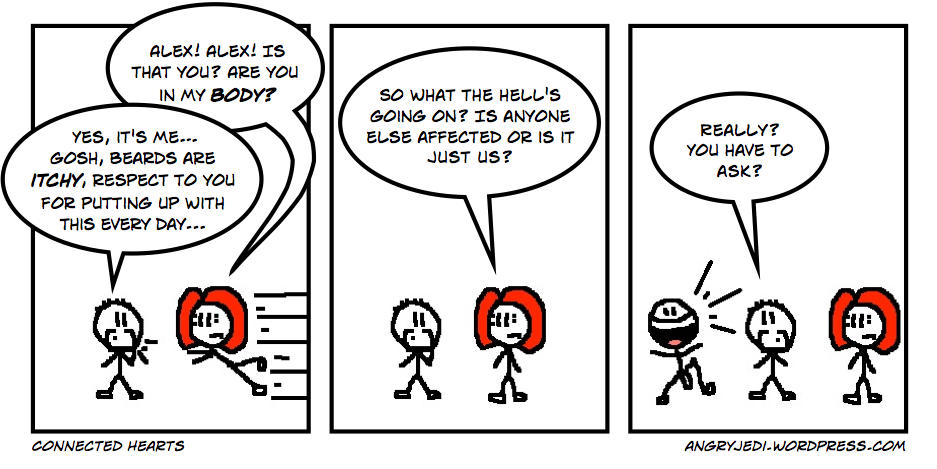
I finished watching another new anime tonight specifically so I could write about it for today's post. Oh, don't worry (as if you were) — I was enjoying it a lot, so I was more than happy to zip through it and see how it concluded.

Kokoro Connect is its name, and it's an interesting one. It's also not at all what it makes itself out to be initially, which I can't help but feel is perhaps not to its benefit. But that aside, it's worth a watch, and here's why.

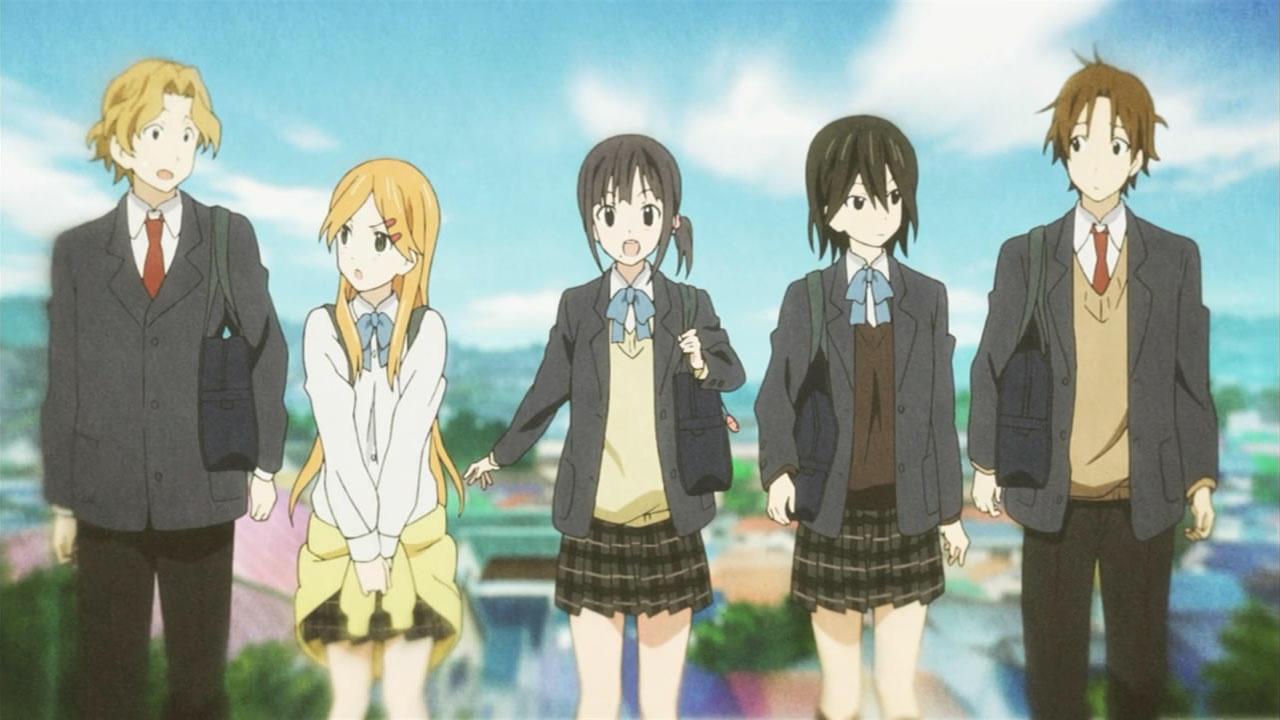
The elevator pitch of Kokoro Connect is as follows: five high school students have escaped their school's You Must Join A Club rule by establishing the Student Cultural Society, or StuCS for short. Ostensibly, StuCS is responsible for putting together a school newspaper, but in actuality they spend most of their time hanging out in their club room in relative privacy, talking to one another.

Everything is shaken up one morning when two of the group show up visibly shaken by what appeared to be a strange dream they both had at the same time. For half an hour, they believe that they had switched personalities, with their respective consciousnesses swapping places and then shooting back with no explanation. The others are understandably skeptical of this bizarre story… until it happens again while everyone is watching. Thus begins a rather peculiar tale.

That's how Kokoro Connect sells itself, anyway. The reality is, in fact, much more interesting, as while the whole "body-swapping thing" is cool, it's a difficult concept to sustain over a long period. Consequently, the supernatural "hook" of Kokoro Connect actually ends up taking a back-seat to the real reason to watch it — its five characters and their growth over the course of the show's 13 episodes.

Kokoro Connect's cast is a relatively diverse one, initially appearing to cover a selection of predictable tropes. We have Taichi, who is the relatively "blank slate" male character; Aoki, who is the jocular "best friend" character; Yui, who looks (presumably unintentionally) identical to Asuna from Sword Art Online and is the "quiet girl"; Iori, who is the "loud, immature girl"; and Himeko, who is the "cold, aloof, mature girl".
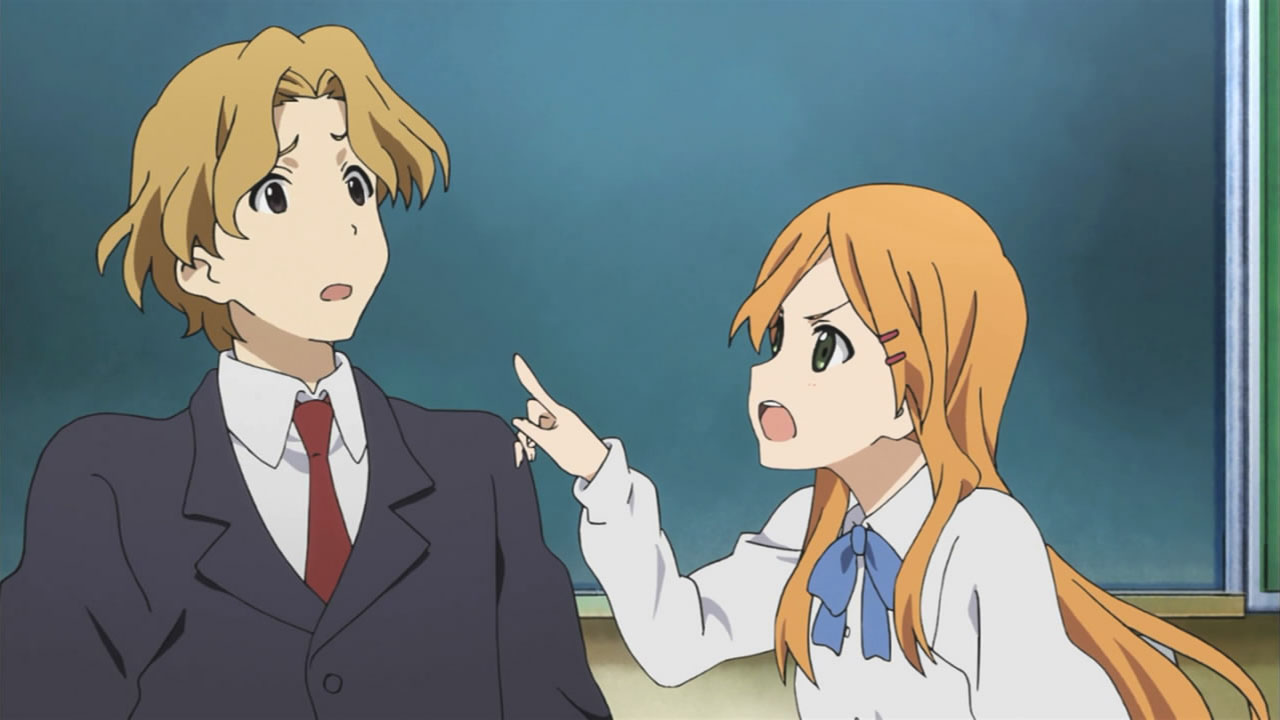
As you might expect from modern anime, however, none of these characters are quite what they appear to be at first glance. I shall resist spoiling exactly what's up with each of them — because there is something "up" with all of them — but suffice to say that they all have plenty of hidden depth that is explored throughout the course of the series. The various supernatural happenings (which eventually extend beyond body-swapping) serve as a trigger for each of them to confront their various issues and discover their "true" selves — sometimes independently, but more often than not with the help of their friends.

Kokoro Connect is, at its core, a show about friendship and the way people can and/or should help each other through hardships. A key theme is whether or not you should always help someone when they're hurting, or whether or not it would be more beneficial to let them work things out themselves in the long run. A question that is asked explicitly partway through the run, in fact, is whether or not you should hide from your problems (both individual and collective) or face them head-on, knowing full well that doing so will probably hurt both you and those around you.

It's actually quite Persona-ish in many ways — specifically, it's a lot like Persona 4, which is about people accepting themselves, including the parts they might not want to acknowledge. The supernatural aspect of Kokoro Connect is significantly toned down compared to Persona 4 and is never really adequately explained — a situation which may well be resolved in the four new episodes set to be released next year — but it doesn't really matter. If it wasn't there at all, these would still be interesting characters and interesting stories. (This does, of course, raise the question of why it's there in the first place, but it does serve as a good catalyst for a number of subplots throughout the show's run.)

If I had to critique the show specifically, I'd say that a couple of the characters' "issues" are resolved a little too quickly and I would have liked to see some more time spent exploring them, but to be fair, no-one ever comes out and suggests that they've been magically "fixed" — the resolution of said issues tends to be of the "I think I know how I might be able to deal with this now" variety rather than anyone having a "magic bullet" to administer.

This aside, it's a great watch with some very likeable characters who make up a good ensemble cast. There's a nice balance of light-hearted comedy alongside the fairly serious issues the story tackles, and it isn't afraid to depict high school kids like how high school kids actually are rather than the squeaky-clean paragons of virtue they're sometimes portrayed as. (There's a particularly toe-curling exchange of "secrets" between Taichi and Himeko at one point, but I'll spare you the details.) This latter aspect is another thing that the Persona series was particularly good at, and it's a big draw here, too.

All round, then, if you like character-driven stories that tackle personal issues with just a dash of the supernatural, then you should give it a shot. If you can get Crunchyroll where you are, you can do just that right here.

1009: Some Favourite Characters

One of the things I always find most memorable about any story I experience, be it a book, TV show, movie, anime or game, is the characters. If the characters aren't interesting, chances are I'm not going to get hooked in. It's the reason I usually cite as to why I loved the open-world adventuring of Xenoblade Chronicles but find Bethesda role-playing games and most MMOs rather tiresome after a while, but it applies to pretty much any medium.

As such, I would like to present to you a randomly-chosen selection of five of my favourite characters that have popped into my head immediately upon attempting to think of my favourite characters. If that makes sense. I make no apologies for the fact that some or all of these are likely to be big-eyed anime or computer game people.

Grace (Gabriel Knight)

Most people cite Tim Curry's memorable portrayal of the lewd, womanising bookshop owner in Gabriel Knight: Sins of the Fathers as the highlight of that game, but the unsung heroine of the piece is most definitely Grace Nakamura, his long-suffering assistant.

Grace is a realistic female character in that she's not there to be eye candy, she's not there to be a useless sidekick hanging on everything the hero does and she actually has a personality. She doesn't take any shit from Gabriel, and you'd better believe that he regularly gives her shit — his always-rejected advances are a highlight of their interactions, and yet it's clear that the pair of them do, in fact, care deeply for one another, otherwise Grace would have been out the door long ago.

The exact nature of Grace and Gabriel's relationship, at least in the first game, is kept deliberately rather ambiguous. Grace often acts as something of a mother figure towards Gabriel, though it's never quite clear if she actually wants to "tame" him or simply sand down a few of his rough edges. Gabriel is certainly receptive to the things she says and appreciates the hard work she puts in for him — and yet the clear sexual tension between the two of them goes unresolved. Proof that you can have two characters of the opposite sex to one another without them ending up in a predictable love scene.

Angel (Buffy, Angel)

Buffy the Vampire Slayer and its spin-off series Angel remain two of my favourite TV shows of all time. David Boreanaz's brooding vampire Angel appears in both, but really comes into his own when he gets his own series.

It would have been easy for Whedon and the gang to leave Angel as your stereotypical brooding vampire, haunted by his past and trying to make amends for deeds that can never be forgiven. And indeed for many of his appearances early in Buffy, he's little more than that, providing a convenient "forbidden love" interest for Buffy while allowing the show to explore some traditional vampire themes.

In Angel, however, he cuts loose and we get to see him for who he really is. Sure, he broods and spends a lot of time sitting in the dark — something that is regularly commented upon by his companions — but he also does a fine line in completely deadpan one-liners.

Also, this.

Incidentally, a comment on that YouTube video reads thus: "I always thought Angel was a ponce in the first three season of Buffy…then He moved to L.A. L.A. changes people."

Damn right.

Toshino Kyouko (Yuru Yuri)

If there's one reason to watch Yuru Yuri, which I believe I have already extolled the virtues of on several occasions, it is Toshino Kyoko.

Kyoko, as you can probably tell from the image above, does not give a shit what people think of her, and she's immensely entertaining as a result. She's often the instigator of the various scrapes the group gets into, and her hyperactivity is a big part of what gives the show so much energy. Part of her appeal comes from the fact that her blonde-haired, blue-eyed appearance sets her up to be "the pretty one" and she then subverts stereotypical expectations completely with her wild and crazy behaviour.

At the same time, though, she's a dedicated friend and companion, and the whole "possibly unrequited love" thing going on between her and the huggably tsundere student council vice president Ayano (whom I also considered including on this list, but settled on making her my Facebook avatar instead) is another big draw for those who enjoy seeing blushing anime girls simpering at one another and then denying their feelings vehemently. I-It's not like Ayano wants to spend every waking moment with Kyoko or anything, after all! Idiot!

Seiko (Corpse Party)

Seiko was one of my favourite characters from Corpse Party, a game with an incredibly well-defined and interesting cast all round. The best thing about Seiko, though, was how self-consciously "not girly" she was. She's open, honest, brash, crass and, a bit like Kyoko, does not give a damn what people think of her. At the same time, she's cheerful and does her best to keep the people around her in high spirits, even as they are trapped in a horrifying, terrifying situation from which there appears to be no escape.

It becomes clear after only spending a short amount of time with her in the game that she has a number of deep bonds with her friends — particularly with the character Naomi, for whom it's rather strongly implied that she's harbouring romantic and/or sexual feelings.

To say too much more about Seiko would probably be to spoil Corpse Party more than I'm willing to, but suffice to say that she's a definite highlight of the game. And, oh look! Corpse Party is half-price on the PlayStation Store (PSP and Vita) right now. You should go and buy it if you have a Sony handheld, otherwise I'm not sure we can be friends any more.

Polgara (Belgariad, Malloreon)

David Eddings' Belgariad and Malloreon series are rather traditional pulp fantasy novels in many ways, but a few aspects of them cause me to remember them fondly — and I've even re-read the whole set of books several times, which is not something I normally do.

One of these aspects is Polgara the sorceress. For those unfamiliar with Eddings' epics, they follow a relatively traditional pattern in which an unassuming young farmhand named Garion gradually gathers a party of various ne'er-do-wells and, through various combinations of circumstances — spoiler! — becomes incredibly powerful, battles against an evil god and wins.

One of Garion's constant companions throughout the entire series is his "Aunt Pol," who has been a constant presence in his life since childhood. It transpires that "Pol" is actually Polgara, a four thousand year old sorceress and daughter of Belgarath, sorcerer of legend and he who recovered the mystical artifact The Orb of Aldur from — look, let's just say he's Kind of a Big Deal, all right?

The reason Polgara is interesting is not because she's a kick-ass sorceress, though, it's the fact that she's a very well fleshed-out character with a hell of a lot of hidden depth. Garion learning the truth behind her heritage in the Belgariad is just the tip of the iceberg — Eddings went on to publish two additional books known as Belgarath the Sorcerer and Polgara the Sorceress which explained the ancient magicians' history in exhaustive detail, giving the entire world in which the two series were set an extremely strong feeling of being a "real" — or at least believable — place. Polgara and Belgarath's constant presence throughout the world's history give you something to latch on to as millenia tick by in the pages of the books — and yet both of them remain entertainingly "human" despite their obvious… non-humanness.

____

That was fun. I'll do this again sometimes soon. I won't ask what your favourite characters are, because no-one ever replies when I end a blog post with a question. I'll just say good night and leave it at that!


1008: Three Wishes

My mind regularly wanders, particularly when I'm trying to get to sleep, and often delves into the territory of rather predictable fantasies. No, not that kind of fantasy — well, not all the time, anyway — but rather the sort of fantasies that tend to provoke conversations in the pub or at the end of a house party. Things like "what superpowers would you like to have?" or "what would you do if you had three wishes?"

I've always found the idea of three wishes a fascinating one, ever since I first heard various genie-toting tales from the Arabian Nights and the subsequent primary school "I wish I had three more wishes" jokes. I've never quite managed to come up with a definitive answer as to what my three would be. The closest I've come is determining that I'd probably have two "practical" ones, one of which is usually ensuring that my body is in perfect physical condition — because, well, if you have the opportunity, you might as well ensure you're in full working order, right? (And also I'm fed up with having an itchy scalp. TMI? Fuck off.) The second practical one is often ensuring I'm in a situation where I don't have to worry about money. (This fantasy came up considerably more frequently while I was out of work, as you might expect.)

It's the third wish I often spend a long time pondering, though. I figure once I've done the vaguely responsible thing and wished for things that ensure my affairs are in order, I can cut loose with the third one. (Of course, I could also set the genie free with my third wish, but where's the fun in that?)

Several recurring possibilities usually enter my mind for this third wish. They probably say something about me. Please do not read too much into them. (Or do. I don't care. You can do what you want.)

My first possible third wish (you're following, right?) is the ability to "do magic". Perhaps as a side-effect of my love of role-playing games, every time I imagine requesting this wish I picture the genie bringing up what essentially amounts to a character creation interface and inviting me to pick my spells. The magic I end up choosing usually ends up being of the elemental variety. Thinking about it, I'm not entirely sure why I pick this, because if there's one thing that probably isn't that useful in everyday modern society, it's elemental magic. Whatever role-playing games might tell us, there are not monsters wandering around outside every town, problems cannot always be solved by setting fire to people who disagree with you and broken machinery cannot be repaired simply by calling down a thunderbolt on it. (In fact, some might say that usually has the opposite effect to repairing it.)

My second possible third wish is that my car would become a VTOL flying vehicle powered by anti-gravity technology which is physically impossible — so far as we know, anyway. Or it might be magic, given that said car doesn't usually require any fuel. This is a fairly self-explanatory wish usually provoked by the fact I've been stuck in a traffic jam at some point during the day and inevitably found myself picturing what it might be like if my car could just rise up off the ground and fly over all the frustrated motorists beneath me. It would be awesome. Don't say it wouldn't be, because you would be wrong.

My third possible third wish is the ability to switch bodies with someone — usually a person of the opposite sex who has absolutely nothing to do with my normal life and who possibly exists outside of normal space and time. This is pure curiosity, and come on, who hasn't wondered about how "the other side" lives? Different times I've had this particular fantasy have varied slightly — sometimes the other person simply ceases to exist when my consciousness isn't present in her; other times she goes about her normal life and simply switches places with me willingly; sometimes she's an empty vessel (like a robot body) built to hold my consciousness; other times, she is me in a parallel dimension and I am actually both people, I'm simply only aware of one at a time; other times still, the change comes without warning at unexpected moments. (The latter situation, I've recently discovered, is the plot hook of the anime Kokoro Connect, so naturally I've immediately started watching it.) My motivation for this wish is simply to see what it would be like living another life that is completely different to my own — opposite in almost every respect.

A variation on that third possible wish is to gain the ability to shapeshift. When I picture this wish, my imagination usually puts some surprisingly conservative limitations on my power. I can usually only shapeshift for a limited amount of time, meaning that I can't just stick in another form — I'll just change back to my real self after a set period of time has elapsed. I'm usually only limited to changing into other human forms, as well — no turning into, say, a xylophone or a fridge for me. It's enough to have a similar experience to the "body-swapping" wish, though — I get to try out what it's like to be someone completely different for a little while.

Obviously, I know all of these will never come true so it's a completely moot point. But I wonder, if the opportunity did arise, which one I'd actually choose when the time came?

1006: Far, Far Away

It may be shocking to some to hear this given how much of a massive nerd I am in almost every other respect, but I'll just come out and say it: I've come to the conclusion that I've never really cared for Star Wars.

I'm sorry. I just don't. I've seen all of them several times — including the original trilogy in their original, un-messed-around-with incarnations — and I just struggle to get excited about it. I never wanted to be Luke Skywalker, I don't give a shit whether Han shot first or not and I always preferred Wing Commander over X-Wing.

Of course, these days it's not uncommon to not give a shit about Star Wars due to the massive oversaturation of the market perpetuated by the Lucas empire, but I'm pretty sure I've felt this way even since before the prequels came out. I'm not sure what it is — whether it's just the fact that it's so pervasive in geek culture that I'm just sick of it, or if I actively dislike it. For what it's worth, I don't think it's the latter; I think it's more a sense of indifference and not really feeling like it's worth all the fuss.

Oh, I get why it was a big deal on its original release, of course. I can appreciate that the original trilogy are good films — they're well-structured, reasonably well-paced (they are quite long, though) and stuffed with memorable characters — and I can see what an impact it's had on modern sci-fi. I just can't get excited about the prospect of anything Star Wars-related these days.

It doesn't help, of course, that aspects of the franchise get continually co-opted for completely inappropriate purposes. I knew that I was completely over Star Wars when Yoda started advertising for Vodafone, though I had my suspicions when he appeared in one of the Soul Calibur games. The moment that the marketing people get hold of something that enjoys mainstream (or even niche) popularity, it dies a death. Whatever soul it once had is gone, replaced by that cold-hearted capitalist desire to make cash.

In fact, my only really fond memories of Star Wars include the amateur video production called Yoda's Bar my school friends made with a bunch of Star Wars figures, and the drunken evening I spent after one of our school leaving days sleeping on the floor next to my friend Woody, who was doing what he called "Emperor Farts", which consisted of him doing an impression of Emperor Palpatine and then letting rip with some of the most thunderous flatulence I'd ever heard. (He managed to keep this up for well over an hour; I am still surprised to this day that he didn't shit himself.)

I digress.

I think it's largely the oversaturation issue that gets to me in situations like this, because it's not just Star Wars that I feel this way about. I find myself instinctively starting to dislike anything which I'm constantly bombarded with. It's an automatic response now — I start to see so much of something that I just feel utterly sick of the sight of it, and thus want to take myself as far away as possible from it. Recent things I have felt this way about include Call Me Maybe, Gangnam Style, anything to do with Batman, and the video game Dishonored. The more I see of a thing, the less I want to see of it. Marketing through constant "brand visibility" evidently doesn't work on me.

This instinctive behaviour that I have picked up from somewhere probably accounts for my changing tastes in media consumption — my present fascination with anime, Japanese games and related media falls firmly into the "niche interests" category and consequently is not prone to the "JUST SHUT UP ABOUT IT FOR FIVE MINUTES!" problem that I'm describing here. Ironically, of course, I'm happy to talk about all of the above things with like-minded people for hours on end and never get sick of them.

I don't particularly think that feeling this way is a problem per se — everyone should be free to pursue their own tastes and interests — but as I posted the other day, it can sometimes lead to feelings of isolation. I occasionally think I should make more of an effort to try and engage with things that are otherwise popular, but then I just think to myself "no, why should I? I have plenty of things that I'm interested in to keep me busy and entertained; I don't need the stuff that everyone else is talking about."

I just end up with fewer people to talk about my interests with. But eh. 'Twas ever thus for those mysterious creatures known as geeks, nerds, whatever you want to call us. And the fortunate side-effect of the smaller numbers of people who are into more "niche" things is that the people who are into those things are, more often than not, infinitely more passionate about their interests than those who are following the herd. I'll take passion and enthusiasm over conformity any day.

1005: Easygoing Lilies

Well, as I suspected might happen when I wrote my first post on the subject of Yuru YuriI appear to have become mildly addicted to the thoroughly silly adventures of the Amusement Club.

For those who missed aforementioned post and are too lazy to click on the link and see what I'm talking about, Yuru Yuri is a show about lesbian schoolgirls. No, not like that. That is basically what it is, though. (A show about lesbian schoolgirls, not porn.) It's a show that features an all-girl cast where homosexual feelings towards one another are the norm rather than the exception — rather refreshingly, the show regards same-sex feelings of attraction and love as just something that happens rather than something that is in any way "shocking" or out of the ordinary. It's not a show that's trying to push a particular agenda on its viewers, in short — certain members of the cast feel certain ways towards one another, and they just happen to be girls. Which is cool with me.

After a little while, this simply becomes something you accept in the world of Yuru Yuri, and you are then able to focus on the real highlight of the show — the characters. This is not a show where anything earth-shatteringly important happens, you see; no-one is struggling with Big Issues, no-one is feeling a sense of guilt over their sexuality, no-one suffers anything other than the most temporary setbacks (and then usually only for laughs) and no-one gets hurt in anything more than the most ridiculous slapstick fashion — we're in the territory of comedy "bumps" popping out of people's heads here, which is something I don't think I've seen since I was a kid.

But no; there are no Big Issues to come to terms with, which lets the characters shine simply by being themselves. It's an excellent and diverse cast made up of an interesting mix of established tropes and characters who subvert said tropes nicely.

Chinatsu, Akari, Yui and Kyoko, the four girls who make up the school's "Amusement Club" pictured above, are the main stars, with Akari ostensibly being the "protagonist". Akari's main distinguishing feature is that there is absolutely nothing remarkable about her whatsoever, however, which tends to lead her being the butt of many episodes' jokes as she gets left behind entirely or, in some cases, ends up turning completely invisible due to her lack of presence. She is endearing and entertaining in her own right, however, and despite the show's joking insistence that she is not worth focusing on, she's sweet and cute. She also has the most terrifyingly creepy siscon older sister I've ever seen, too — in one particularly hilarious and memorable (if weird as fuck) scene, said sister settles in for a comfortable evening home alone, clutching her Akari body pillow which she's dressed in one of Akari's uniforms, and wearing a pair of Akari's knickers on her head. It's a gloriously uncomfortable scene, particularly when Akari comes home early and her sister only just manages to hide the evidence of her misdeeds.

Yui, meanwhile, is "the sensible one", and a bit of a tomboy. She's the sort of character who rarely smiles and is quite softly-spoken. In many ways, she's the mother figure of the group, as she lives by herself and puts up with the others — particularly Kyoko — invading her home and demanding food. Yui sometimes seems to be a bit of a "blank slate", but occasionally we get a glimpse of her humanity through her getting into a video game or playing with her younger relative Mari. Yui is also particularly skilled in dealing with Kyoko, regularly shutting down her often-incoherent hyperactive rants with just a single word.

Chinatsu is the exact opposite of Yui. A lively, energetic young girl with bright pink frizzy hair in bunches, Chinatsu is carrying a rather large torch for Yui and will do anything to try and get closer to her. While she is initially presented as a sweet, innocent, shy girl, it becomes very apparent very quickly that Chinatsu can be aggressive, grumpy, mean and a bit of a bully at times — though she's not particularly good at any of those things, often leaving her looking rather ridiculous. She's also terrible at drawing, creating pictures that look like something out of a particularly unpleasant horror movie.

Kyoko is the clear highlight of the show, however. Kyoko does not give a shit what anyone thinks and just does what she feels like. She clearly has some sort of attention-deficit disorder, and is usually hyperactive. Despite this, however, she is fiercely loyal to her friends and clearly values her time with the group. She's also caring and considerate, and is also the most obviously "gifted" of the group — not only is she a talented (and respected) doujinshi manga artist, but she's also able to score full marks on almost every test she takes with minimum effort, much to the chagrin of her rival Ayano. She's also mildly obsessed with Chinatsu's unbearable cuteness, and takes every opportunity to find an excuse to make her cosplay as "Witch Girl Mirakurun", to whom Chinatsu bears an uncanny resemblance even when out of costume.

Although these four make up the main cast, the secondary characters are all interesting and entertaining too, particularly in the second season, where they each get much more of a chance to shine. We have the aforementioned tsundere student council vice-president Ayano, who likes Kyoko but would never admit it; her best friend Chitose, who has a habit of getting nosebleeds as a result of perverted thoughts about Ayano and Kyoko getting together every time she takes her glasses off — and also goes on a kissing rampage any time she ingests chocolate; and the ever-entertaining duo of rivals Sakurako and Himawari who are absolute polar opposites in almost every way but clearly care deeply for one another. Sakurako is extremely childish, aggressive, demanding, hot-headed and flat-chested; Himawari is mature, motherly, firm but fair and in possession of a fine pair of breasts which Sakurako is quite understandably very jealous of.

The way these girls interact with one another and play together is the reason to watch Yuru Yuri. You can get to the end of an episode and realise that absolutely nothing happened beyond "some girls hung out together" — but that despite this, you still had an entertaining experience. It's one of those experiences where you feel like you're "friends" with the characters and that you're getting the opportunity to just chill out and hang around with them. It's not a show that's going to slap you around the face with The Feels on a regular basis, nor does it ever claim it's going to be, but for something that's just plain fun to watch, I think it's going to be hard to beat.

1003: Isolation Chamber

Last night I spent a thoroughly pleasant evening in the company of the few "real-life" friends I see on a regular basis. We played Descent, I made some poor tactical decisions and lost yet another quest (seriously, I am the most incompetent evil overlord of all time) and we had fun.

As always, though the experience was, for me, tinged with a certain hint of bittersweetness. Said friends, you see, all live back in the Southampton/Winchester area, which is where I used to live before the rather inconvenient and upsetting collapse of almost my entire existence over two years ago. I, however, am not located there; instead, I am nearly two hours' drive away in Chippenham, Wiltshire. It's not a difficult drive, to be sure, but it isn't something I can particularly do on a sudden whim. Well, I can, but I do need to have plenty of time on my hands before I do it, and there are other considerations as well.

It's frustrating, though. Regular readers will know that I am not an especially "social" person a lot of the time, but I do appreciate and enjoy the time I get to spend with these friends. We've built a strong Social Link as a group together in recent years, and most of us have had to take on some difficult challenges in that time. Although in a lot of cases, said group of friends didn't necessarily help and support directlythe fact that they were simply there was often enough. I know I certainly felt that way, though naturally I can't speak for the others.

It's hard to feel that way when you're two hours away, though; when you have to make full on capital-P Plans to see them rather than just sending a text and asking if people are up for something. I miss being able to do that, and not just with the particular group of friends I saw last night, either; there are ex-colleagues still in the area whom I used to love being able to just call up (well, text up) and hang out with.

I feel more than a tad isolated, in short.

And in more ways than one, if I'm honest. Leaving aside the geographical issue that gets in the way of seeing "real life" friends for a moment, there's also the whole issue of having like-minded friends who are into similar things that you are. I have a number of interests that I am perfectly willing to describe as "niche", and at times it can be difficult and frustrating to be a fan of these things when there's no-one nearby to share the experience and enjoyment of them with. It's not as if I have absolutely no-one, obviously — Andie is good at taking an interest in the things I like (for the most part, anyway!) and aforementioned friends share at least some of my interests.

The "simple" solution seems obvious — take an interest in more "mainstream" things so you can more easily share the enjoyment of things that everyone enjoys. But it's not that simple. I have tried on a number of occasions to engage with things I know various friends and acquaintances are interested in — everything from football to The X-Factor — and every time I have come away feeling like I'm forcing myself to try and enjoy something I dislike immensely, and it just doesn't seem worth it. Apparently your tastes are hard-wired into your head somewhere, and it is very difficult to change them. I am predisposed to like the things I like (board games, video games, anime, soundtracks, music, writing, The Internet, My Little Pony) and similarly to dislike the things I despise (too many to list).

Knowing that doesn't help with those feelings of isolation, though. Knowing that the things I enjoy are only appreciated by certain specific subcultures can be a difficult pill to swallow at times, but it's the situation that my own tastes have gotten me into. Don't get me wrong, I don't regret or feel embarrassed about anything that I enjoy; it'd just be nice to be able to enthuse about it with people who are a bit closer sometimes.

But at least I can enthuse about it with people thanks to the trappings of modern society. I can chat with my friend in Canada about anime; I can discuss strategies for failing to beat the hideously difficult secret boss in Persona 3 with another friend in the States. I can rant and rave in private about the things that are getting my goat to someone in yet another disparate geographical location; I can share my pride in something I have achieved with yet someone else entirely.

Things could be worse, in short — but it doesn't stop those occasional feelings of loneliness and isolation. I've been having more than a few of them recently, and it's getting me down a bit, so apologies if the tone of these posts may be a bit on the melancholy side at times.

Oh well. I'll deal. I always do.

1001: Yuriyurarararayuruyuri

Hello! And welcome to the first post-1,000 post on this blog. I hope you like the "New Game+" redesign I've done. I figured it was worth doing something noticeable to highlight my achievement. And now I'll stop blowing my own trumpet. Back to business as usual.

I've been continuing my journey through the strange and bizarre world of anime recently. I finished watching The World God Only Knows a while back, so I was looking for something new to explore. I have a few DVDs of recommendations from my friend Lynette on the way, but I was interested in trying something a little bit different while I waited for them to arrive.

So it was that while browsing Crunchyroll I came across Yuru Yuri, an anime that I'd seen mentioned by a few people around the place. I didn't really know anything about it save for the fact that "yuri" is a term often used to refer to "girls love" or, to be less euphemistic about it, material with lesbian themes. I had no idea whether Yuru Yuri's title actually had anything to do with yuri as a genre, or whether it was just part of the name. "Yuri", after all, is also a fairly common Japanese name that means "lily".

As it turns out, Yuru Yuri (literally "easygoing yuri") is most certainly a yuri work, though more in a sense that it focuses on close personal relationships between a group of girls rather than having sexual overtones at its core.

Yuru Yuri centers around a group of middle-school girls who start an "amusement club" in the defunct Tea Club's premises at their school. They essentially use this as an excuse to goof off and avoid doing anything that would actually require effort, and over the course of the series, their relationships with one another (and with a small cast of supporting characters outside the main four) grow and change — in some cases into love; in others into fantasies about one another that will (probably) never be fulfilled; in others still into close friendship. The show doesn't make a big deal of the fact that seemingly almost everyone at the all-girls school they attend is homosexual; instead, it's simply treated as the way things are. People can like each other, regardless of gender, and this can lead to exactly the same sort of awkwardness and confused feelings as in heterosexual relationships. Just like real life! Who'd have thought it.

All this perhaps makes Yuru Yuri sound a bit more serious than it actually is. The girls' relationships and feelings for one another are an important part of the show, sure, but for the most part it's very much a "slice of life" anime in which the cast get into various amusing scrapes that are usually resolved by the end of the episode. It's very lightweight and cheerful in tone throughout, and the characters are all very distinctive and exaggerated in terms of their appearances, personalities and iconic behaviours — though the show isn't above subverting its own tropes at times if the opportunity to play something for laughs exists.

One amusing aspect of the show is that Akari, the character set up to be the series' "protagonist" in the first episode, gets some fairly harsh treatment throughout. Not necessarily in terms of the things that actually happen to her, mind — this isn't a show that does nasty things to its characters — but in the fact that more often than not an episode ends up focusing on the other characters to her exclusion. On more than one occasion she gets sidelined in favour of seemingly incidental plotlines, and in some episodes she's not even present at all. This particular aspect of the show is lampshaded continually, with the "next episode" previews often consisting of the characters arguing over who is actually the protagonist, regular references to Akari's lack of presence (often represented by her literally turning invisible) and the pre-credits "Yuru Yuri is starting!" sequence (hosted by Akari) getting increasingly ridiculous as the series progresses. It's a fun commentary on the "blank slate" nature of a lot of anime protagonists.

There are also plenty of silly things that happen in almost every episode, too. For example, Chitose, one of the supporting cast members, is obsessed with her best friend Ayano the student council vice-president getting together with Kyouko, one of the main four cast members. Every time Chitose takes her glasses off, she "tunes out" of reality because she can't see and ends up fantasising about what Ayano and Kyouko would get up to if they ever admitted their feelings to one another. These fantasies are usually rather suggestive, but always stop before anything actually happens, usually because Chitose has a near-fatal nosebleed as a result of her pervy thoughts.

It's a strange show, to be sure, and an acquired taste. It's one of those things where nothing of any particular note happens in any episode, but the comfortable familiarity of the characters and the gentle sense of slightly suggestive humour that pervades it gives it a very endearing feel, assuming you can stomach its unrelenting moe cuteness. The whole cast — main and supporting — is likable and distinctive, and it's just a very pleasant watch if you don't want to have to concentrate too hard or be bombarded with The Feels at every opportunity.

You can watch Yuru Yuri on Crunchyroll.

This is my 1,000th daily post on this blog

Well, there we are. 1,000 days of non-stop daily blogging. I am the best, I win, etc. Sorry this post is so late, but once you've read it you'll hopefully appreciate that it took a bit of time to put together. I felt I should make the effort, you know. Special occasion and all that.

Of course, I'm well aware that I'm not the first person to reach a thousand days — as I mentioned a few days back, Mr Ian Dransfield got there first due to… well, starting before me. I joined the initial #oneaday crowd a little late, on January 19, 2010, whereas the people who actually started the whole thing off began closer to New Year's Day. As I noted in that post I just linked to, however, I am officially the Last Man Standing and I don't mind admitting that I feel more than a little proud of that fact. Through thick and thin, I've stuck by this self-imposed project with no end and no goal, and I have enjoyed the experience immensely.

And, more importantly, I plan to continue enjoying it from this point onwards. Post number 1,000 — that's this one — is most certainly not a fond farewell and a hanging up of the… whatever implement best exemplifies blogging. (My computer keyboard, I guess.) No; it's a significant milestone, for sure, but I see no reason to stop. There are plenty of things to write about. And while they may not always be the most interesting or universally appealing, as I've noted on this blog a number of times before, the original intention of #oneaday was not to be interesting or universally appealing. It was simply a kick up the bum to get those of us who enjoyed writing to do more writing. Writing for ourselves, rather than for someone else. Writing without limits, without the necessity of sticking to a style (though those of us in it for the long haul naturally developed our own personal styles), without word counts, without anyone deciding whether or not the thing we were writing about was worth writing about. And, of course writing without editing.

Yes, these are the pure, unexpurgated contents of my brain you're reading every day. Unfiltered, uncensored, completely truthful. (Well, okay, regarding the latter, I might omit to mention a few things, but that's not exactly the same as lying.) A couple of people have commented to me over the course of the past thousand days that they're impressed by my ability to just lay my soul bare on the page like that, to confess to things that others might find difficult to talk about. For me, though, it's actually something of a relief to be able to talk about a lot of these things, be it my depression and social anxiety or my enjoyment of visual novels that, in many cases, have bonking in them. This blog has been a good "friend", as it were, providing me with a place to empty my brain of all the thoughts that have been floating around with it over the course of each day, and in the process I have made a few actual friends who have either related to the things I've written or just found them interesting. Which is, you know, nice.

More after the jump — it's a long one. (That's what she said, etc.)

Continue reading "This is my 1,000th daily post on this blog"

#oneaday Day 999: Appeal Elements

I think I might have nailed down one of the big reasons that Japanese games and anime appeal to me quite so much. It's actually a relatively obvious conclusion, now that I think about it, but watching several different types of anime and playing several different types of Japanese game recently has pretty much confirmed what I suspected.

The thing I find most appealing about these forms of media is that they consciously and obviously divorce themselves from reality while retaining just enough that is relatable to make it still feel "relevant" to the viewer. I'm not just talking about the obviously outlandish storylines of titles like JRPGs and My Girlfriend is the President here, I'm talking about the heavily stylised way in which characters are represented, emotions are depicted visually and how character traits are often exaggerated to make individual cast members obviously distinctive from one another.

As I gradually get deeper in to the world of anime in particular, a lot of conventions are starting to make themselves apparent. One of the most obvious breaks from reality is the use of "emoticons" to depict how characters are feeling. (There may be a proper name for them, but I'm not sure what it is, if so.) Things like the throbbing red "vein" when someone's angry; the physically-impossible shadow being cast over someone's face when they're disappointed or scared; characters who literally catch fire or become engulfed in dark mists when they're feeling particularly strongly about something; the fact that anyone having pervy thoughts immediately gets a nosebleed. They're crazy and completely physically implausible, of course, but they create a handy visual shorthand for emotional reactions that might be otherwise difficult to depict in the relatively simplistic imagery of animation. For as much as anime characters (particularly of the moe variety) are designed to elicit emotional responses from the viewer, there's only so much you can do when you're not working with a real person who doesn't have all those muscles in their face to work with.

Actually, that's not true at all — when you're dealing with a drawing of someone, you can do absolutely anything with them, even things that are physically impossibleWhat you can't really do quite so easily, though, is show subtle nuances of emotion, which may account for the fact that an awful lot of anime features not only heavily-exaggerated characters, but also strongly-exaggerated emotional responses to situations too. Everything from the embarrassed "arm-flap" of a teenage girl having her crush revealed to a heroic protagonist running towards his rival engulfed in flames — these exaggerated, symbolic responses make it abundantly clear to the viewer what these characters are thinking and feeling.

At the same time, as I said at the start, they divorce the work from reality. They make a statement — this is not real — and encourage the viewer to suspend their disbelief. And that, for me, is one of the more appealing things about this type of media. I indulge in video games and watching anime as a means of escaping from the doldrums of everyday life which is, let's face it, rather tedious and dull at the best of times. At the same time, though, I like to maintain a connection to something relatable — usually characters — and I've found that anime and Japanese games have often provided a good balance between those two considerations for my tastes.

Obviously I don't expect everyone to agree with me — it'd be easy to see anime's exaggerated reactions as overly-comic, silly or childish, for example, sometimes making light of serious situations — but it works for me. Perhaps I just like having emotional responses clearly telegraphed to me rather than being expected to read the often-inscrutable faces of real human beings.

As a vaguely-related contrast to this, we went to see the Lion King stage show last night in Bristol. I did not enjoy it that much, and while I was sitting there a bit bored I found myself wondering exactly why I could suspend my disbelief for an anime about schoolgirls who have perverted fantasies about their classmates (and subsequent nosebleeds) every time they take their glasses off, but not for a bunch of people dressed as savannah animals leaping and cavorting around on stage. I found this a particularly interesting question to ponder given that I normally have a lot of patience for musicals.

The conclusion I came to is somewhat difficult to describe, but it's largely the fact that I found The Lion King difficult to relate to. I enjoyed the original Disney movie, but the stage show focused, for me, far too much on visual spectacle rather than making the characters relatable in any way. I didn't give a toss about young Simba (who was not portrayed particularly well by the child actor, which didn't help) and was painfully aware that these were just people wearing masks and weird costumes throughout. I couldn't suspend my disbelief and think of them as their characters. It went too far off the edge of reality and deep into the realm of "this is pretentious arty wank" for me, not helped by the amount of frankly unnecessary prancing around from certain members of the cast.

I was somewhat in the minority, though, as the show got a standing ovation at the end. Oh well. This certainly isn't the first time something with mainstream popularity has left me somewhat cold, as this blog will attest on a number of occasions!