1947: Some Great Anime Soundtracks

Writing in the comments of yesterday's post, Mr Heaslip reminded me that I've been continually impressed with the quality of soundtracks in modern anime.

I tend to listen to a lot of soundtracks when I'm doing other things — particularly when I'm doing work of some description. I prefer soundtracks in this context because lyrics can be distracting — particularly if you're trying to write something — plus, given the right one, they can lend a certain air of drama to proceedings. And it doesn't have to be work, either; there's nothing that livens up a tedious motorway drive like a storming, over-the-top soundtrack.

The majority of my soundtracks come from games, unsurprisingly, but since I started really getting into anime a year or two ago, I've begun tracking down soundtracks for various anime series, too. So I thought I'd share a few favourites today.

This is Swordland from Sword Art Online, the "trapped in an MMO" show that was popular but somewhat divisive. I enjoyed it a great deal — at least partly because it reminded me of .hack, a series of games and anime that I love the idea of but am yet to actually work my way through — but I will acknowledge the arguments that it was cheesy as hell and moved way too fast for its own good. Those things didn't put me off as much as some other people, but as I think we've established over the course of the last 1947 days, I have a much higher tolerance for bullshit than many other people.

Anyway, I'm a fan of this piece because it sounds authentically "gamey" — plus, for all the series' faults, it knew exactly how to give a sense of drama to a big fight scene, and that included having a suitably epic soundtrack.

Contrasting completely with the above, this music is… well, I don't know what it's called as my Japanese reading comprehension isn't quite up to the task, but it's the music that plays during the "Previously on Love Live!" bit at the beginning of each Love Live! episode.

Not a lot to say about it really, other than the fact that it nicely captures the feeling of sheer joy that Love Live! encapsulates; it's happy, cheerful, summery, uplifting and heartwarming, just like the show as a whole.

KissXSis was pretty dumb all round — it was thinly-veiled… no, completely unveiled fanservice for the most part, but it had some entertaining moments and some fun characters. The two titular sisters were an enjoyable study in contrasts, and the supporting cast made for an enjoyable ensemble to spend some time with.

The thing that stuck with me long after finishing watching the show, though, was the ending theme — and this adorable dance animation that was shown in partial form during the closing credits, and which was rendered in its full glory for, I believe, the Blu-Ray release.

Yuru Yuri was an odd show in which pretty much nothing happened for its entire run, but it was immensely endearing purely for its characters. It was one of those shows where you feel like you're "friends" with the cast by the end of it, and for that I'll always think of it rather fondly.

I can't actually remember the context of this song in the series — or indeed if it actually appeared in the series at all, or if it's just a character song from a soundtrack album — but either way, it's a nice little song that I like a lot.

DanMachi, also known as Is It Wrong to Try to Pick Up Girls in a Dungeon? thanks to questionable transliteration, is the current hotness in anime, with many calling it this year's Sword Art Online. It seems to be overall a bit more consistently well-received than Sword Art Online, however, thanks in part to its main heroine Hestia being a much more interesting and fun character than SAO's Asuna.

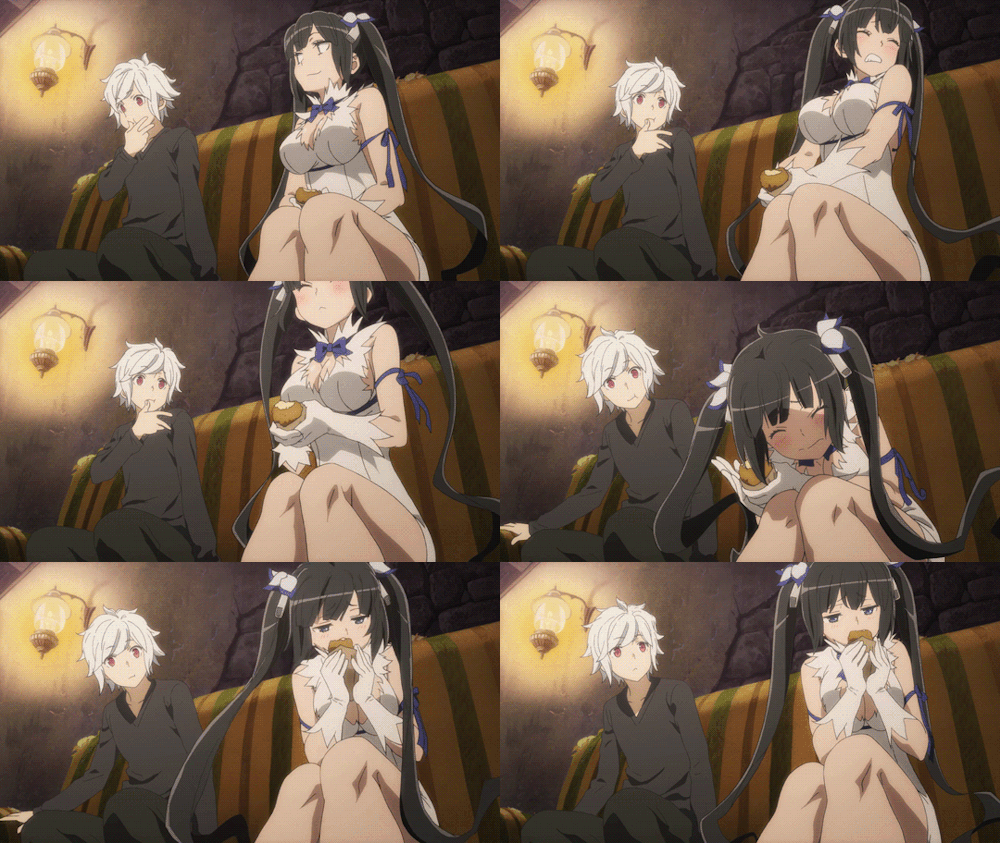
Like Sword Art Online, DanMachi has a gorgeous incidental soundtrack accompanying the action. There are some awesome battle themes, but in the interest of a bit of variety, here's a lovely, more pensive piece reflecting the affection between Hestia and protagonist Bell.

To Love-Ru is another show that was pretty dumb and mostly fanservice, but I still really enjoyed my time with it. I found it particularly interesting in that it changed format significantly over the course of its three distinct seasons, with the main heroine from the first season being largely relegated to occasional background roles by the third. (I wasn't super-happy about this, as I adored Lala, but the new "main" characters made up for her relative absence somewhat.)

To Love-Ru was another of those shows that was unrelentingly cheerful throughout. It knew exactly what it was — silly, lightweight, occasionally (all right, frequently) pervy fun that had no intention of making you think too hard. This particular track, known just as "Good Morning!" reflects the show's character pretty nicely.

Welcome to the NHK was an awesome show with a wonderful streak of honesty and bitterness at its core. Contrasting starkly with the relative darkness of the protagonist's hikikomori lifestyle was the fictional anime show many of the characters were obsessed with, whose theme tune ran something like this.

Purupurupururin…

Oh, Lord, Clannad. So many feels. Anyone who's seen the show probably doesn't need any further words when they hear this piece of music. And if you haven't seen the show, rectify that right now. Bring tissues. Not for that. For all the crying. Because there will be lots of crying.

1946: Hey, Hey, Hey Start-Dash

Love_Live!_promotional_imageI feel I should probably address something before continuing onwards in my life: I started watching Love Live! School Idol Project a little while back having left it stewing in my Crunchyroll queue for months, and I'm having an absolute blast watching it.

For the unfamiliar, Love Live! is a show about a group of girls who decide to form a "school idol" group in order to raise the profile of the school they love so much and save it from closure. In many ways, Love Live! is essentially K-On!: The Next Generation, in that it features an all-female cast with a broad spectrum of personality types, has music as its main theme and centres around a low-key but nonetheless meaningful "conflict" — in K-On!'s case, this was the disbanding of the school's light music club; in Love Live!'s case, it's the closure of the whole school.

Love Live! also possesses the same sort of heartwarming but occasionally manic energy that K-On! did, with very little in the way of conflict between the core cast members. There's a little as the cast is gradually assembled over the course of the first seven or eight episodes, but this is generally quickly resolved in favour of more light-hearted banter, inspirational training montages and the occasional boob-squishing when Nozomi is around and wants something.

Love Live! is an unashamedly happy, positive, colourful and cheerful show, then, and it is by no means particularly deep or thought-provoking. Despite having the opportunity to critique idol culture, too, it doesn't appear to particularly run with this, instead presenting a somewhat more idealised (or should that be idolised?) view of the girls' journey to stardom. That said, it doesn't skimp on representing the fact that the girls work hard to achieve their dream, and acknowledges the fact that different people come at this sort of thing in different ways — and in order to work well as part of a team, you sometimes have to make compromises or take on challenges you might not otherwise have done by yourself.

img_mainIt's an appealing cast of characters all round, though since I'm partway through the series I am hesitant to declare anyone "best girl" and potentially call down the wrath of the Internet on me for picking the "wrong" one.
Honoka makes for a good "protagonist" of sorts, though really this is a show about the ensemble cast rather than a single protagonist as such. She's ditzy, silly, cute and fun, and she complements her permanent companions Kotori and Umi nicely.

Kotori is certainly a highlight for me — primarily for Umi-chan… onegai! — while Umi represents the rather sensible "class rep" type that I find rather appealing. Elsewhere in the cast, Nico is endearingly chaotic and rather tsun, and is wonderfully set off against her fellow third-year, school council president Eli. Nozomi, meanwhile, is an enjoyable study in contrasts, initially appearing to be the demure, quiet, shy "shrine maiden" type, but occasionally letting this facade slip somewhat as she goes full-on Katsuragi and starts feeling up her bandmates. Maki is super-cute — I have a thing for redheads, as many of you know — and arguably the character I find most appealing on a shallow, superficial level — plus she plays the piano, which is cool.

Of all the cast, I feel like I know the least about Hanayo and Rin — though Rin's "-nya"-ing at the end of sentences is a character trait I find adorable whenever any character does it — but since, as previously mentioned, I'm only partway through the complete run so far, there's still scope to find out a bit more about them.

I'm enjoying it, then. And I'm pleased that I'm finally in a position where I understand what's going on when people go "Nico-Nico-Ni!" — although your own feelings on that matter may vary, of course.

1925: Tiger and Dragon

I finished watching Toradora! last night — I also forgot the time we normally raid in Final Fantasy XIV on Monday nights, so I had to split the last episode in half — and I have to say, I'm very much a fan.

I knew nothing at all about the show going into it, aside from what a few of the characters looked like and that it was by the same person who did Golden Time, which those of you who have been reading for a while will recall was the last show I watched all the way through. I enjoy jumping into things like this, whether they're books, movies, TV shows, anime or games. It means that you can start watching/playing/reading/whatever with no preconceptions, and it also means you have that genuinely pleasurable sensation of not knowing what is going to happen next — and the equally fun ability to play "Wouldn't it be cool if…"

Toradora!, as it turns out, ended up pretty much where I expected it to end up, albeit with a bit of a twist in the latter half of the last episode. It was an enjoyably unpredictable ride along the way, however, featuring some extremely complicated interpersonal relationships between the main cast members — who were, in turn, complicated individuals in their own right.

Ryuji was a good protagonist. Eschewing the frequently-seen blank-slate or self-insert protagonist found in a lot of anime — particularly slice of life, romance or harem anime — he was an interesting character whom we gradually came to understand fully over the course of the whole show. The show sensibly didn't batter us over the head with his personality traits or angst; a lot of his characterisation was quite subtle, with the things he didn't say often being as important as the things he did say.

Taiga, meanwhile, was an exciting leading lady. Brash, unpredictable and quick to anger without relying completely on the tsundere trope, much of the show's "point" — if indeed it had one — concerned the audience and Ryuji alike coming to understand exactly why she seemed so angry at the world. Again, though, the show didn't fall into the trap of having her make overly melodramatic gestures of angst throughout; the things that caused her pain were real and relatable, and her relationship with Ryuji was believable and heartwarming to watch grow.

The other cast members all had their interesting elements, too. Minori, for example, lets her genki girl attitude slip more and more as the show progresses and reveals that her feelings for both Taiga and Ryuji are complex, conflicting and difficult to know what to do with. Ami, meanwhile, underwent some interesting development from being a simple two-faced bitch to someone with depth and not always entirely clear motivations. I did find Ami's falling in love with Ryuji to be a little hard to swallow — it felt a little like drama for the sake of drama — but it added an interesting twist on proceedings.

I was surprised that the show had two surprisingly brutal fight scenes, too; these weren't sexualised catfights that were intended to be arousing rather than shocking, as sometimes seen in more fanservicey anime, and nor were they overdramatic, exaggerated conflicts that, while stylish, were out of place with the rest of the setting and characters. They were gritty, believable, brutal and genuinely quite upsetting outbursts of anger from people who had been bottling things up for way too long. (As a fellow "bottler", I could relate very much to the feelings in these scenes, although I have thankfully never come to blows with anyone over this sort of thing.)

Ultimately, everything wrapped up fairly neatly, but there was a pleasing tang of bittersweetness to the ending; the understanding that, despite your best intentions and grand plans, things don't always go exactly as you expect them to — and that in a complicated situation of personal relationships, you need to know when to let go, otherwise somebody is going to get hurt.

I very much enjoyed the show as a whole, and understand now why it's such a well-regarded anime. I think some lighter fare is on the table for my next show to watch, however; after an hour or so of several people I follow on Twitter exchanging a series of rather racy pics earlier, I'm strongly considering checking out High School DxD, because who doesn't love a bit of fanservicey nonsense? Boring people, that's who.

1919: #WaifuWednesday - Shin (Criminal Girls)

The temptation to pick another Senran Kagura girl this week was very high indeed — I've just finished the main story of Shinovi Versus and there are, after all, 25 very interesting female characters in that game. But since I'm planning on doing a more comprehensive Senran Kagura writeup over at MoeGamer later this week when I've finished all the side stories in Shinovi Versus, I thought I'd mix things up a bit and show a bit of appreciation for the girl who currently graces my Windows wallpaper on my living room PC: Shin, from Criminal Girls on Vita, which I beat a few weeks back.

Spoilers ahead.

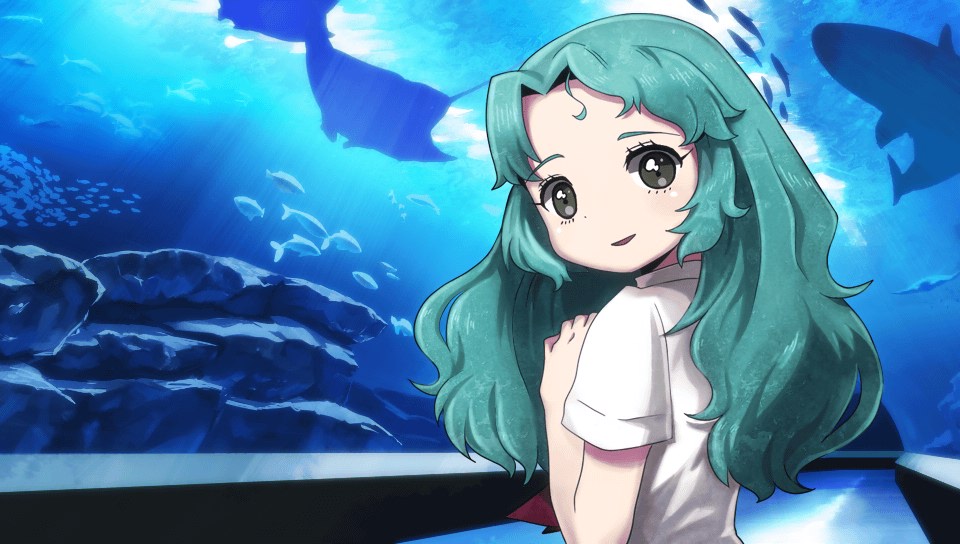
2015-03-22-001444Shin, real name Makoto, is based primarily around the commonly used anime trope of the hikikomori, or shut-in. A renowned, well-known and somewhat notorious MMO player who was viciously bullied in real life for her interests and passions, Shin had, over time, retreated from society to live in her own private world where she felt safe. She'd done this to the exclusion of everyone around her — going so far as to lock herself inside her room and only eat whatever food had been left outside for her.
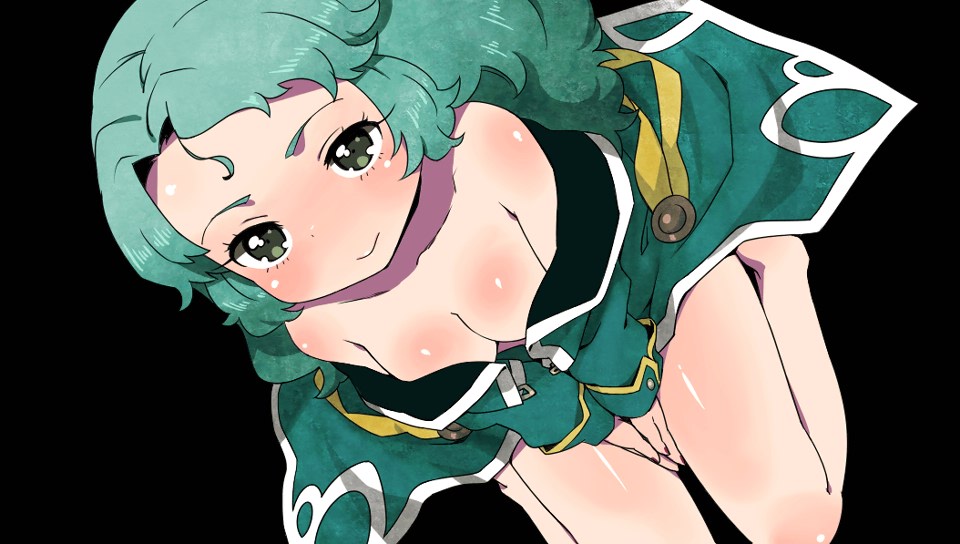
When you encounter Shin for the first time in Criminal Girls, none of this is apparent. She simply seems like an overconfident "leader type", wanting to boss everyone around and, as the oldest member of the group, believing that her opinion carries a considerable degree of weight. Her "leader type" personality is even reflected in her game mechanics; by herself, she's not very formidable, but most of her power comes from her "Operation" skills, which partner with at least one other party member to effectively deliver multiple special attacks in the space of a single turn.

Over time, her facade slips, however; she continually makes poor decisions that put the group in danger, and throwaway comments she makes gradually reveal her otaku side. It eventually becomes very apparent that she's trying desperately to be someone that she isn't, and that by hiding herself away she's hurting the people around her.

The main thrust of Criminal Girls' story surrounds the player's attempts to "redeem" the titular girls from their past sins, to prevent them being incarcerated in Hell and giving them another chance at life. Shin's sin, then, is that of neglecting others; she personifies the Deadly Sin of Envy. She envies those who have a normal life and is embittered by her drop-out, shut-in existence; the arrogant persona she initially displays is both a reflection of the character she played online and of who she thinks she "ought" to be — a persona she believes to be more likeable.

As the girls and the player character come to trust one another more, though, Shin starts to open up. She's more honest and less confrontational, though she still bickers with the rather spoiled Kisaragi; the two are more similar than either of them would care to admit. Most importantly, she learns through others accepting her that it is also possible to accept herself without being ashamed; there's no need for her to cut herself off from her problems and hide away. In doing so, in fact, she had simply made matters worse; the longer she was alone, the more she believed she needed to be alone, and so her resentment and envy towards "normal" people grew.

2015-03-22-001406

Those of you who know me well will surely not be surprised to hear that I found Shin to be one of the most relatable characters in Criminal Girls. While I haven't gone to the lengths she has — I'm fortunate enough to have a good circle of friends (both online and off) and a wonderful fiancee who tolerate, understand and accept the things I'm interested in — I can very much empathise with her feelings of isolation, the suffering she endured while she was being bullied and her envy for people who seem to be able to go about their business "normally". I've been through some of the things Shin has been through — though fortunately in my case it didn't involve a literal trip to Hell and back — and as such she occupies a special place in my heart.

A toast to you, then, Shin; you were one of numerous reasons I'm glad I made that journey through Hell.


1907: Is It Wrong to Try to Pick Up Girls in a Dungeon?

dungeon-girl-newsI have a large backlog of TV, games and anime to plough through, so it's pretty rare that I will come to something the moment it's released, particularly if I have to wait a week between new episodes. The last time I did it was for the first season of the anime Sword Art Online which I don't care what anyone says, I enjoyed a whole lot.
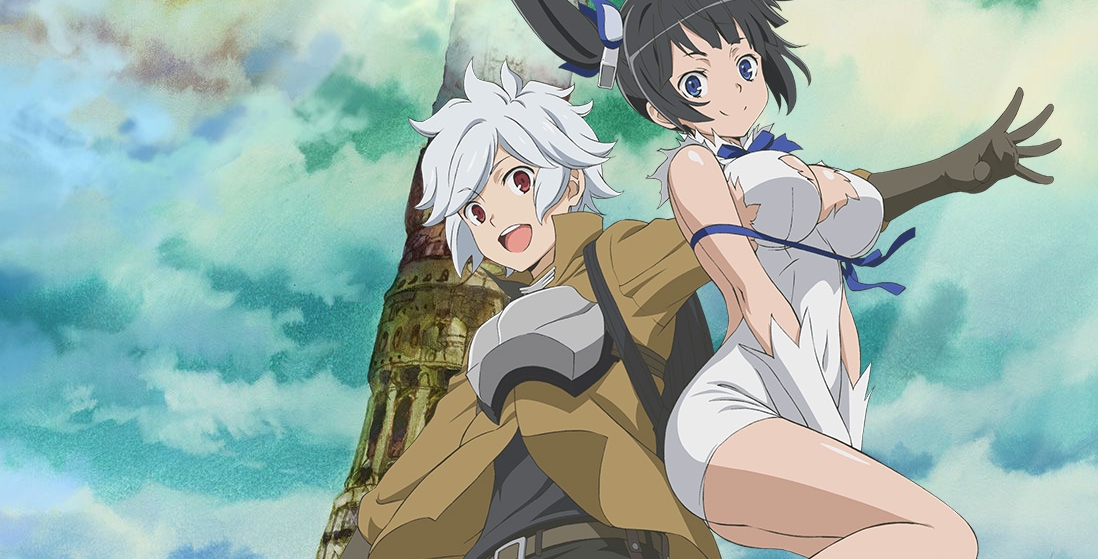
Appropriately enough, it's another anime that's got me doing it again this time: the somewhat cumbersomely titled Is It Wrong to Try to Pick Up Girls in a Dungeon?, also known as Danjon ni Deai o Motomeru no wa Machigatteiru Darō ka or DanMachi for short. (I shall refer to it as DanMachi hereafter for the sake of brevity.)

DanMachi is, like many anime, based on a light novel series, and the first episode of its anime adaptation recently aired. It seems to be picking up a lot of buzz already (some of which is admittedly due to little more than the physical appearance of heroine Hestia) and is looking like it will be one of the "biggies" this season if the early enthusiasm is anything to go by — and judging by the first episode, it looks like being a lot of fun, too.

It's a premise and setting that appeals greatly to me. Set in what appears to be a typical Japanese role-playing game world — complete with various humanoid races including the obligatory catgirls — DanMachi's protagonist is a young man named Bell, a level 1 adventurer and the sole member of the "Hestia Familia". The "Familia" business involves the gods having come down to the mortal realm to give up their powers and live among their people; adventurers pledge allegiance to a particular god or goddess' familia in order to receive special powers to fight monsters and grow stronger through their experiences. Levelling up, in other words.

Young Bell, as previously mentioned, is the sole member of the goddess Hestia's familia. It's not yet clear after one episode why Hestia only has Bell, but she doesn't seem too upset about it; in fact, she seems rather taken with him. Hestia herself is an energetic, impetuous tsundere of a goddess who so far seems to be pretty open about most things but quick to anger, somewhat jealous and rather possessive of Bell.

Hestia is kind of adorable, to be fair; she seems to be the main reason a lot of people have been drawn to the show.

As you might expect, this sets things up nicely for some tension. In the opening moments of the show, Bell is rescued from the fifth level of "the dungeon" — far too difficult for an adventurer of his calibre — by an experienced female warrior named Aiz Wallenstein, whom he is immediately smitten with. His rather hasty obsession with her manifests itself as his first ever "skill", which Hestia immediately does her best to try and conceal the presence of: it allows him to grow in strength considerably more rapidly than other adventurers, so long as his feelings remain strong. Wanting Bell to succeed, Hestia encourages him to do his best, but is somewhat hurt when the huge amount his "stats" jump up by reflect seemingly very strong feelings for Aiz.

Late in the episode, Bell is sitting in a pub enjoying a meal, when Aiz's adventuring party comes in. They don't notice him, but they knew of his initial encounter with Aiz, and one particularly obnoxious member mocks and insults him for being "too weak" for Aiz. While DanMachi isn't explicitly intended to be a reflection of modern online games like Sword Art Online was, it's difficult not to read this as a reference to overconfident elitist players of games like Final Fantasy XIV who see themselves as "superior" to newcomers, even when it's not a fair comparison. I don't doubt that Bell will see this obnoxious scrote of a catboy get his comeuppance before the series is out, and I already know it will be a satisfying moment.

I'm glad I checked out the first episode, then. So far, despite the inane-sounding title (particularly when it's in English, as Crunchyroll has it) it's shaping up to be a really interesting show, and I'm already looking forward to seeing how it develops. Oh, and I want a game of it already.

1906: Waifu Wednesday

There's a sort of tradition among anime and game fans on Twitter — well, game fans who are into the Japanese end of the spectrum, anyway — called Waifu Wednesday, which is often used as a simple excuse to post lots of pictures of anime girls the posters in question find attractive, but sometimes also used as a means of celebrating a favourite character for more than just their physical appearance. Perhaps their story arc resonated with the person who posted it. Perhaps they simply liked them as a person. Perhaps they represented an ideal they wanted to aspire to. Whatever the reasons, Waifu Wednesday is a thing, and, well, why not here too?

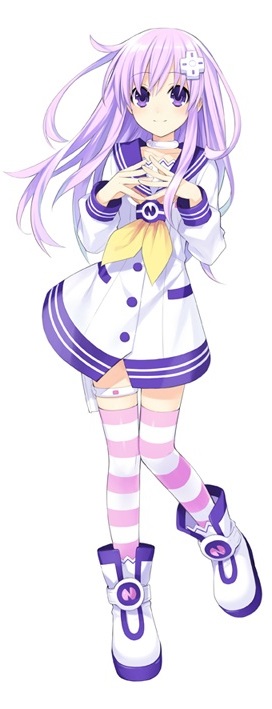
Nepgear-mk2For today's Waifu Wednesday, then, I think I want to talk about Nepgear, pictured to the right.
Nepgear, as those of you paying attention to my deviant, disgraceful taste in video games will already know, is the protagonist of Hyperdimension Neptunia mk2 (and its recent remake Hyperdimension Neptunia Re;Birth2) and the sister of series protagonist Neptune. Specifically, she's Neptune's younger sister; in the series' tradition, she is the personification of a specific game platform, in this case the Sega Game Gear to Neptune's… well, Sega Neptune.

Nepgear isn't the only younger sister character to make an appearance in the series. Sony PlayStation personification Noire — who you better believe will be the subject of a future post like this, because she's one of my favourite characters in the series aside from Nepgear here — has a younger sister called Uni, who represents Sony's handhelds the PSP and Vita. Nintendo Wii personification Blanc, meanwhile, has two younger twin sisters called Rom and Ram, who between them represent the two screens of Nintendo's handhelds the DS and 3DS.

The fact that these characters are personifications of well-known brands and platforms is one of the most well-known things about the Hyperdimension Neptunia series, but it's also one of the least important things about them; it makes up little more than their concept and, in some cases, influences aspects of their design or basic personality type.

The reason I like Nepgear so much is because I can see a certain amount of myself in her. Obviously I'm not a young, pretty, skinny girl — I'm pretty much the exact opposite of her in that regard — but I find her personality and the way she goes about her business to be eminently relatable. Why? She's awkward, she's nerdy, she's lacking in self-confidence and often finds herself the butt of jokes: these are all traits I became aware of in myself when I was younger, and which persist to this day.

It's not just about "negative" traits, though. Although often doubting her own abilities, for example, Nepgear is someone who will try her very best and follow through on a plan when she makes it, even if things don't go entirely as envisioned. She tries hard to do the right thing in all situations — though doesn't always succeed — and makes an effort to bring people together and ensure they are getting along with one another. Obviously she then goes on to fight giant robots and evil goddesses and whatnot, which are parts of my life that haven't happened as yet, but, without wanting to sound too arrogant, for the most part she represents some of the aspects of myself that I actually quite like.

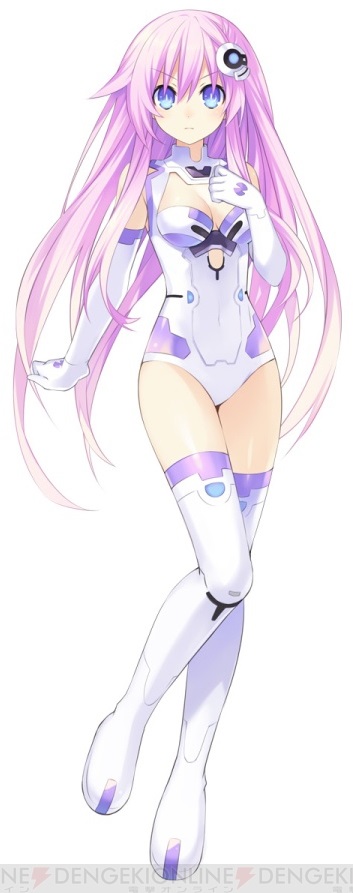
Nepgear-full_form-transform_formAside from the relatable aspects, Nepgear is just an altogether pleasingly wholesome character; she's cute, sure, and in her transformed "Purple Sister" form (left) she ups the sexy quotient considerably, but she has never been a character that attempts to take advantage of either her cute or sexy aspects.

Instead, well, I've already used the word wholesome above, but it really is the best way to describe her. She's someone who is very pleasant to spend time in the virtual company of, and she's just plain nice. The kind of person who would always have tea and cake for you if you stopped by; the kind of person who remembers your birthday; the kind of person who does random acts of kindness without any expectation of reward — and who often doesn't receive any kind of reward for her hard work.

In many ways, poor old Nepgear is one of the most "normal" people in the entirety of Hyperdimension Neptunia, and she suffers a bit for it. There's a running gag in the games that followed her starring role in mk2 where she's paranoid about everyone thinking that she's "boring" and, when you compare her to the other characters in the series — particularly the pure, unbridled chaos that her sister Neptune tends to create in her wake — it's perhaps easy to see why she worries.

But even if she goes unappreciated in her own dimension(s), certainly appreciate Nepgear, and thus it's with pleasure that I give her the dubious honour of a Waifu Wednesday post on this little backwater blog.

1904: 21st Century TV

The Internet has brought with it many things both good and bad, but by far my favourite thing about it is to do with video.

No, I'm not talking about YouTube generally — the whole "anyone with a webcam can make videos!" culture it promotes feeds into modern youth's unhealthy obsession with "being famous" — but rather the fact that, between the various streaming services out there, both legitimate and… less legitimate, there is probably some way of watching all those programmes/adverts/movies you wish you still had 1) the VHS tapes for and 2) something to play them with.

This last week, for example, Andie and I have watched Police Squad!, the TV-based precursor to the Naked Gun movies. Only six episodes were made, and back at university, when I "discovered" the show for the first time, I had a VHS cassette with two of them on it, so I had only ever seen those two episodes. Now, however, some helpful Polish person has kindly uploaded the whole lot onto YouTube for anyone to enjoy at their leisure. No waiting for TV networks to license them and show them again. No tracking down video tapes and VCRs. Just click and go.

The ability to rediscover old favourites is one of the best things about streaming video, then, as my rewatch of Star Trek: The Next Generation for the first time in about ten years will attest. But the fact that streaming services makes new favourites easier than ever to discover, too, is rather wonderful. I doubt I'd have become so interested in anime without my Crunchyroll subscription, for example; prior to widespread streaming video, the only real way to get into anime was to buy VHS tapes or DVDs, and with anime being niche-interest and somewhat "exotic", particularly when it first hit these shores in the mid-90s, it was a rather expensive hobby. Anime DVDs and Blu-Rays still cost up to twice as much as a regular ol' Western film even today, making online services like Crunchyroll much better value.

This is the TV of the 21st century, then; it really is the vision of the future we had twenty, thirty years ago: decide what you want to watch, then just watch it. In most cases, that's possible to do, even if you have strange, bizarre and peculiar tastes. And even if you're more fucked up than most, I can almost guarantee that there's some dark corner of the Internet out there somewhere more than willing to cater to your particular interests, whatever they might be… for better or worse.

In these days of people seemingly constantly yelling at one another on social media and comments sections on large sites being widely (and, sometimes, justifiably) regarded as fetid cesspits, it's easy to forget the great and wonderful things that the Internet has brought to modern life. I'm a strong believer that its ability to "archive" — for future generations to be able to enjoy movies, TV shows, animations and other videos from years ago — is one of the best things about it. And as technology improves and we find more and more ways to interact with this world-wide network, I hope we never lose sight of these simple pleasures that it's allowed us to enjoy like never before.

1893: Sweet Vanilla Salt

I started watching Toradora! after finishing Golden Time because it's an earlier work by the latter's writer, and as my posts from a short while back will attest, I enjoyed the latter very much indeed.

I knew nothing about Toradora! going in save for the fact that it was well-regarded by quite a few people (the exception being Andie's sister, who thought it was "tripe", but conceded that she was not the target audience) and it had even been a "jumping-on" point to anime for a lot of people. So I was confident it would at least be an entertaining watch if nothing else.

Toradora! tells the story of the relationship between the "Dragon" and the "Tiger", better known as protagonist Ryuji and leading lady Taiga. Neither of these are typical leads according to slice-of-life/romance anime tropes: Ryuji is (at least initially) feared by his classmates for his sour-faced, intimidating appearance — a genetic inheritance from his father, whom it seems is no longer around thanks to seemingly being involved in some questionable activities — while Taiga is… well, she's very short, and not at all happy about it, particularly as the combination of her height, slight figure and somewhat petulant tendencies tend to make her come across as considerably younger than she actually is.

Ryuji and Taiga are brought together by their attraction to each other's friends; Ryuji likes Taiga's friend Kushieda who, as a spunky, loud genki girl is the polar opposite of Taiga in terms of personality, while Taiga likes Ryuji's friend Kitamura. Ryuji discovers Taiga is living a somewhat lonely existence in the apartment building next to his house: she's living all alone in an apartment too big for her, and clearly doesn't know how to take care of herself. Ryuji, having had to be the "man of the house" for some time thanks to his departed father and his dirty stop-out of a mother, takes it upon himself to look after her, cooking her meals and helping her out with all sorts of domestic chores.

Unfortunately, this, of course, leads to misunderstandings when people see them together, and this in turn makes their pursuit of their prospective paramours somewhat more challenging. I have little doubt that the two of them will end up with one another by the end of the series — though I will be pleasantly surprised if the show goes another route — because they complement one another nicely. Taiga doesn't show any fear towards Ryuji and sees him for who he is; at the same time, Ryuji manages to bring out a side of Taiga she doesn't show many people: an honest, frank and vulnerable side. It's a rocky relationship, to be sure, but it has the makings of an entertaining watch indeed.

As I said above, I'm only four episodes in so far, but I'm enjoying it a lot. It's sharply written, with some genuinely funny moments, and the cast of characters all have their own little surprises that defy the initial impressions they might make. I'm intrigued to see where it goes and how the relationships depicted in the show develop over time, and can already appreciate why this is such a well-regarded series.

1887: Fading Gold

Finished watching the romance anime Golden Time today. It was a quiet day, so I marathoned the last few episodes — though at a little over 20 minutes apiece, it wasn't really much of a "marathon", I guess. Still, I have now watched the entire series and feel a little more qualified to comment on the whole thing.

I enjoyed it a lot overall. Its biggest strengths come from its more unconventional characteristics: a protagonist (Banri) that's a little more fleshed out than your average self-insert leading man found in a lot of other romantic anime and visual novels; a heroine (Koko) who, although certainly physically attractive, is presented from the outset to be a little, to put it politely, "difficult" (and consequently, perhaps, to some, a little less desirable than she perhaps might have otherwise been); an amnesia backstory that isn't used as a crutch for the whole show, but instead as an interesting source of conflict; and a fast-moving, pacy plot in which something of significance happens in every episode.

The last few episodes do meander a bit more than those that had come previously, as it becomes time to finally resolve the amnesia plot. The meandering comes from said plot being wrapped up fairly comprehensively, however; the payoff is very much worth it, with some emotional final scenes and a satisfying conclusion to the whole run that gives everything a pleasing sense of closure.

I wasn't quite sure what to expect from the end, as it happened. The tone of the show is interesting; comedic one minute, very serious the next. It's effective in making the situations depicted feel fairly down to earth and realistic, and a probably intentional side effect was that I spent the entire run wondering if things would end neatly or very, very badly, because there was the potential for it to go either way right up until the last moments. You've probably already inferred which way it went from my comments above, but just in case you haven't, I'll refrain from spoiling how it all ends for now.

There are some great side characters supporting the main cast. Protagonist Banri's childhood friend Linda is a very likeable "other woman" throughout, for example, but the potential angst she could have generated is kept on a tight leash: it's explored, and features a number of touching scenes (and one surprisingly sexy one), but it doesn't force the show into a cliched love triangle situation. Instead, Linda is depicted as an interesting, sympathetic character in her own right who plays her role in the story of Banri and Koko's love without derailing it.

Probably the highlight of the supporting cast is "2D-kun", though. Initially introduced as the stereotypical glasses-wearing otaku character, 2D-kun repeatedly proves himself throughout the series to be a true friend for Banri, as well as exhibiting considerably more character depth than the usual "hurr, hurr, I like 2D girls" this type of character is often limited to. Indeed, he plays an absolutely crucial role in the final moments of the series, and his contribution here makes him a worthwhile — and, judging by comments on Crunchyroll, beloved — addition to the cast.

Overall, I enjoyed it a great deal, then, and thoroughly recommend it to anyone looking for an enjoyable anime series with interesting, realistically flawed characters and a somewhat unconventional take on the usual romance formula. Well worth your time.

1882: More Golden Time

I've watched a few more episodes of Golden Time this evening. I was planning on only watching one, but, well, they got interesting and exciting and, at the time of writing, I've watched three in succession and am very much considering watching another one before I go to bed.

For those who missed my previous post on the subject, Golden Time is an interesting slice-of-life anime focused on the relationship between amnesiac protagonist Tada Banri and heroine Kaga Koko. I suppose technically it's a "romance" anime, but there are elements of comedy and ghost stories in there, too, and so far it's been a thoroughly compelling watch.

There are a number of elements contributing to this. Firstly, Banri is an interesting protagonist. While visually very much fitting in to the usual generic floppy-haired anime protagonist mould, his amnesia, while something of a narrative cliche, makes for a compelling hook. As snippets of his past are revealed over the course of the show's run — both through him remembering them and through the explicit depiction of the "ghost" of his past life — we start to get a picture of who he really is, what he's really feeling and, this being a show that very much enjoys a bit of drama, how these feelings conflict with how his current self is living its life.

Koko is the more fascinating of the two central characters, however. Far from being a typical tropetacular anime heroine, she's a deeply complex character who is initially introduced as being a possibly unstable stalker-type whom Banri's friend Mitsuo just can't seem to shake off. As she and Banri get together, though, we start to discover more about her. The word "unstable" still applies somewhat, given her violent mood swings and occasional inability to deal with the world in a rational manner, but it becomes apparent over time that she's not unstable just for the sake of it: it's not her defining characteristic. Rather, it's a symptom of something that runs a little deeper: her dissatisfaction with her life and her place in the world, and her difficulty coming to terms with living as an "adult".

With two characters as complex as this making up the central couple of the story, you'd expect their relationship to be somewhat troubled, and indeed it is. This isn't your standard, neat anime romance by any means; it's not even the apparently-rocky-but-actually-still-pretty-solid tsundere romance you get with some heroines. No; Banri and Koko have a rocky path ahead of them, and things frequently comer to rather violent heads whenever Koko's stress over her existence becomes too much to bear, or when Banri starts recalling things that are fundamentally incompatible with his new life. They have, so far, managed to stay strong, however, though not without some heartbreaking scenes along the way.

I'm about seven or eight episodes off the end of the run now, and I'm thoroughly hooked. I'm interested to see where it goes; despite its often light-hearted nature, it's the kind of show that I can see ending with heartbreaking tragedy, though being unfamiliar with the source material — the original manga — I can't say for sure whether or not that will be the case. I'm looking forward to finding out, though, and feel I can pretty confidently recommend the show to anyone looking for an interesting, enjoyable and emotionally engaging drama.