2017: Quest for the Crown

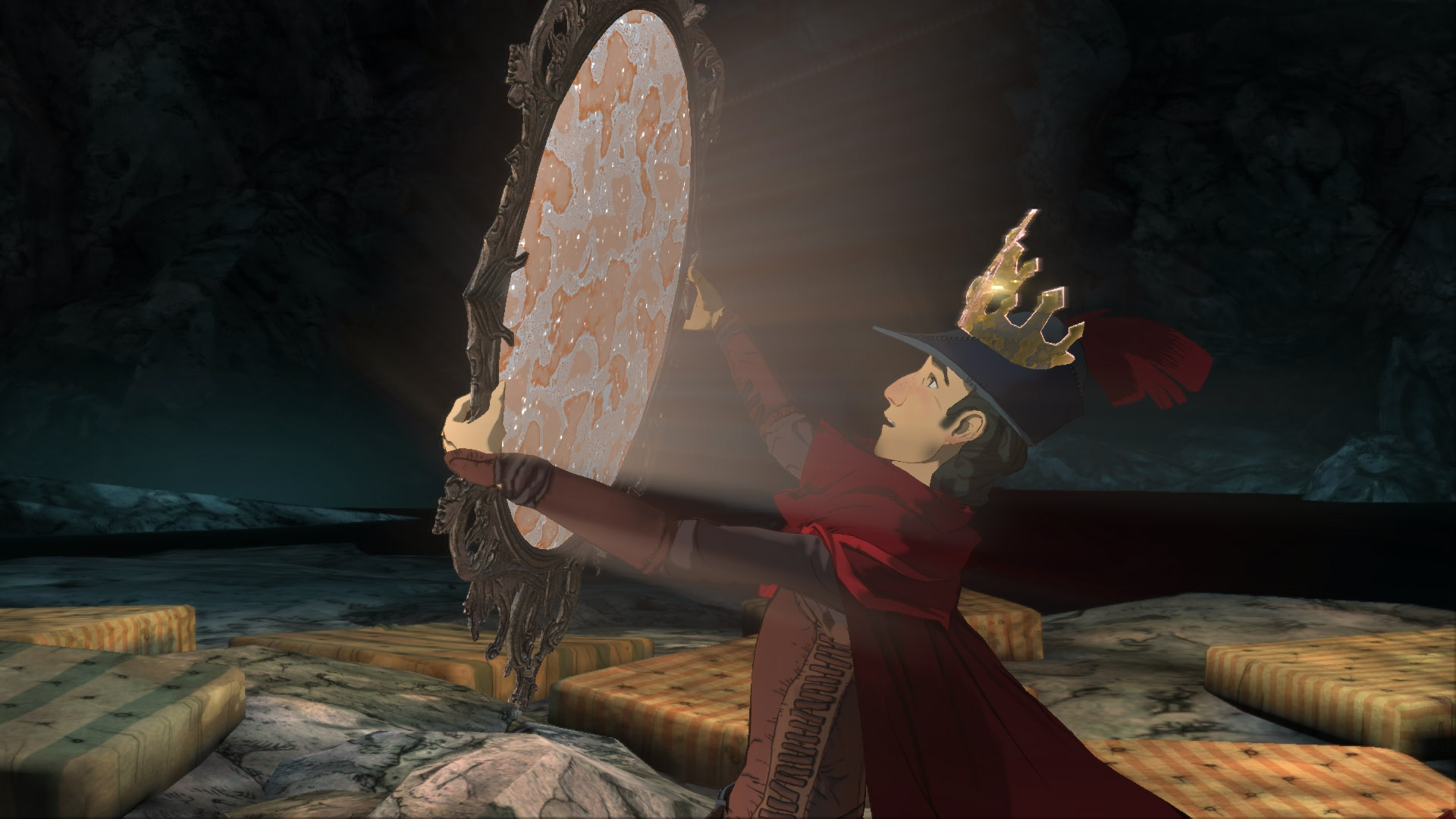
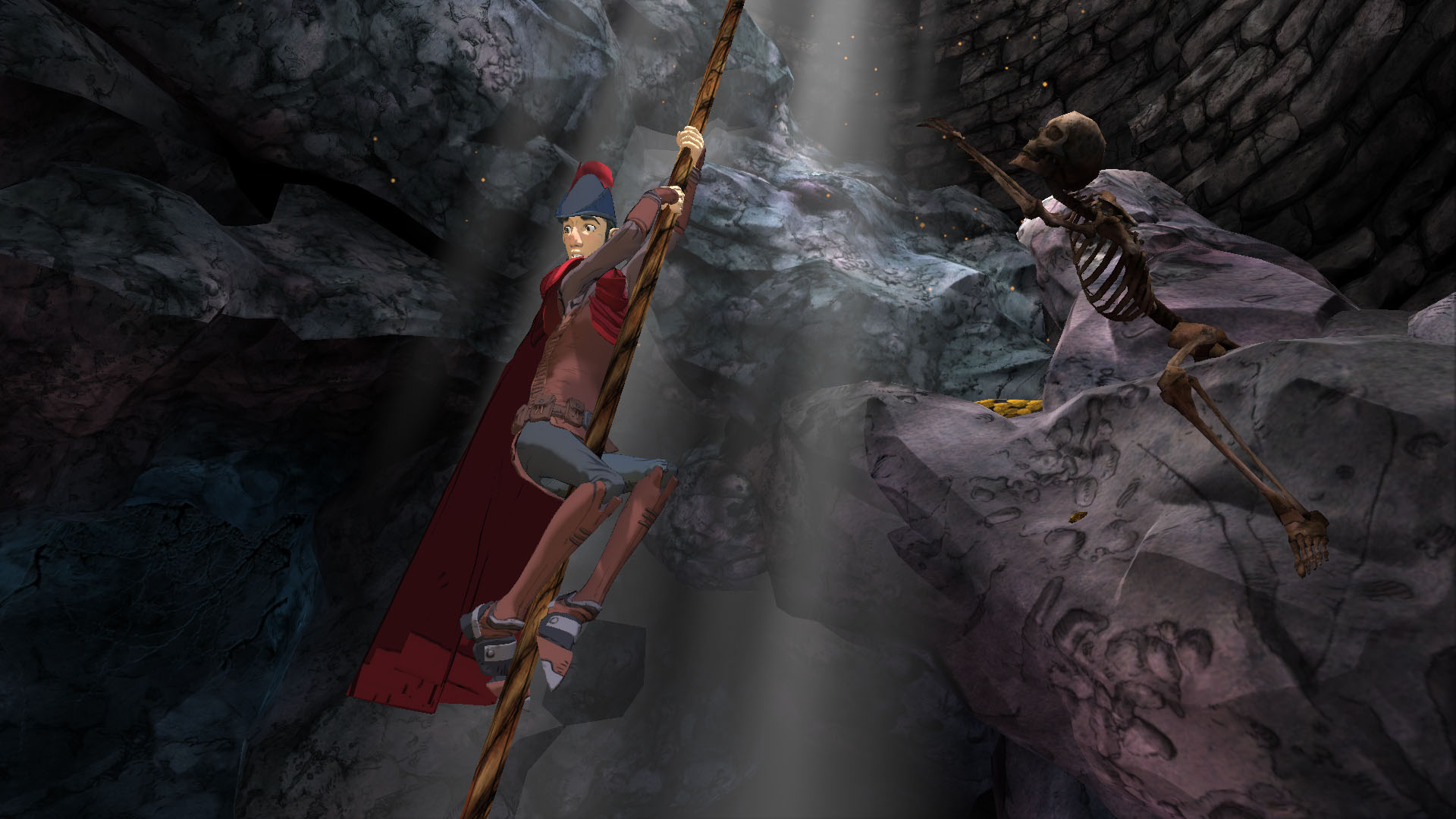
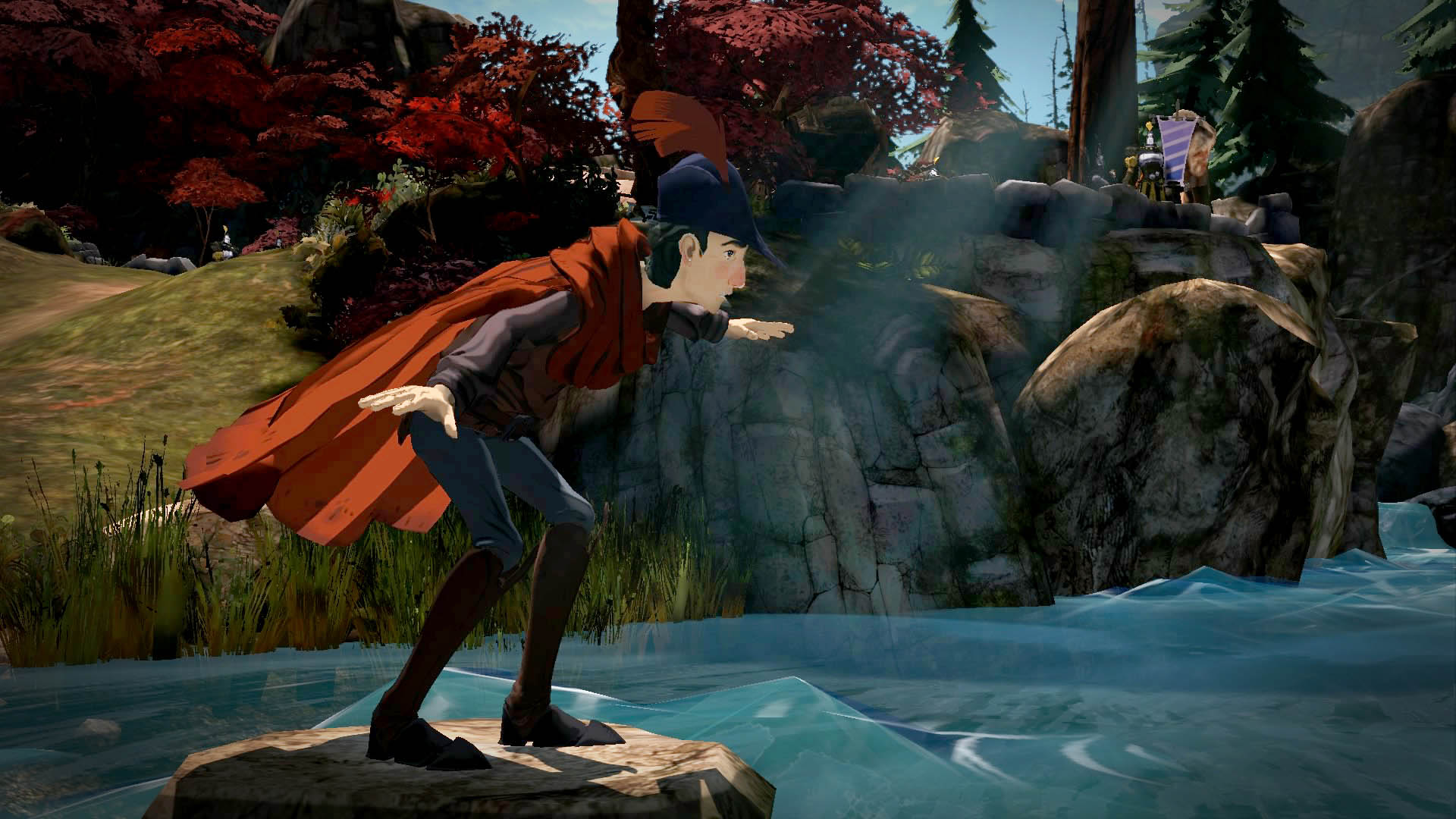
0018_001It's weird to see a new King's Quest game on sale. I haven't tried it myself yet — I'm probably going to — but the early buzz surrounding it is very positive indeed, even sans involvement from series creators Roberta and Ken Williams.

For those not quite as old and jaded a gamer as me, King's Quest was one of the very first graphical adventure games. I hesitate to call it a "point and click" adventure, because although it supported mouse control, you actually had to type things in to a text parser in order to actually do anything. As the series progressed, it gradually and noticeably improved; by the fifth installment, it had made the full transition to a more conventional point-and-click interface as well as offering a "talkie" CD-ROM version; the seventh installment abandoned traditional pixel art in favour of some distinctly Disney-esque animation, and the eighth… well, most people don't talk about that one.

For me, King's Quest as a whole is an important series to me. It represents one of the earliest game series I played, and also some of the earliest games I actually played to completion. They also represent an early form of using the video games medium as a means of telling a story — albeit a very simple one in the case of the first couple of games; from the third game onwards it started to get quite ambitious — as well as a wonderfully vivid realisation of the world of fairy tales.

Back in the days when King's Quest first appeared, it wasn't at all unusual for games to take heavy inspiration from existing works of art. Numerous games made use of famous classical tunes for their "themes", for example, and others drew liberally from popular mythology for inspiration. The original King's Quest games were no exception, as they saw you running into everyone from Rumplestiltskin to the Big Bad Wolf — and, in many cases, dying horribly at the hands of fairy tale monsters.

Despite the fact that it drew heavily on popular mythology, though, King's Quest had a feel and an atmosphere all of its own. Like the best fairy tales, it presented a world that appeared colourful, happy and vibrant on the surface, but which was mean, horrible and out to get you underneath. The King's Quest games were notorious for having a wide variety of means for the protagonists to die throughout them, ranging from being eaten by a giant to tripping over your wizard master's cat while being too far up the stairs, and subsequently breaking your neck when you hit the ground. So frequent (and frustrating) were the death scenes in King's Quest and other adventures from the same stable Sierra that main rival LucasArts made a specific marketing point of the fact that it was impossible to die or get stuck in most of their games — with the Indiana Jones games being the only real exceptions, and even there it was pretty difficult to die.

But as frustrating and irritating and, at times, downright illogical as the old-school King's Quest games could be, they represent one of my formative experiences. They're something that helped me understand a medium that, as you'll know, is very important to me. They're something I shared with my family, since many of us used to play them together and try to solve them. And they're something that I will always have fond memories of.

It's for this reason that I'm really happy to see King's Quest making a comeback — and, moreover, to see that it's being received very well so far. I'm excited to give it a try for myself very soon, and I look forward to seeing how the subsequent episodes develop over the course of the series.

2016: What an Achievement

0017_001I was chatting with my friends earlier this evening about the matter of achievements and trophies in games. As long-term readers will know, my opinions on these metagame awards that were introduced with the last generation of games consoles have gone back and forth somewhat, but on the whole I feel I'm starting to come down on the side of liking them.

The reason for this is simple: after nearly 10 years of them being A Thing in gaming, a lot of developers are getting the hang of how to use them effectively — and the reasons for using them.

There are, in fact, several reasons for the existence of achievements. From a developer perspective, they provide feedback on just how much people are playing games and what they're doing. This is why so many games have a "started the game" achievement — look at the rarity statistics on PSN and you'll see that there are a surprising number of people who have booted a game up for long enough to add the trophy list to their profile, but not actually started to play it. I couldn't even begin to contemplate what the reasons for doing this might be, but it happens; as an example, the wonderful shoot 'em up Astebreed gives you a trophy for completing the interactive prologue sequence — something you have to do before you can even access the game's main menu — and yet only 91% of players have accomplished this, suggesting either that 9% of players simply turned the game off for some reason or other during the prologue, or were unable to complete it. And I'm not sure that last option is even possible.

CJex_cVXAAAFJlV

From a player perspective, a well-designed trophy list provides a metagame to layer on top of the existing game structure. They can provide challenges for players to complete and encourage them to explore a game in full rather than simply making a beeline for the credits — and, again, those rarity statistics suggest that relatively few people who pick up any game, regardless of length and quality, make it to the end, which is kind of sad — or suggest new ways to play.

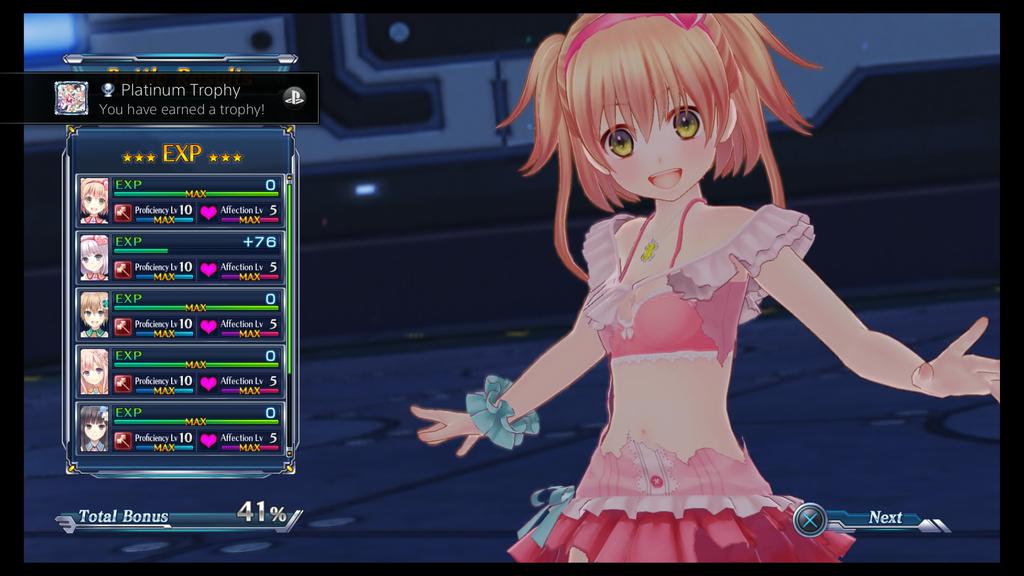
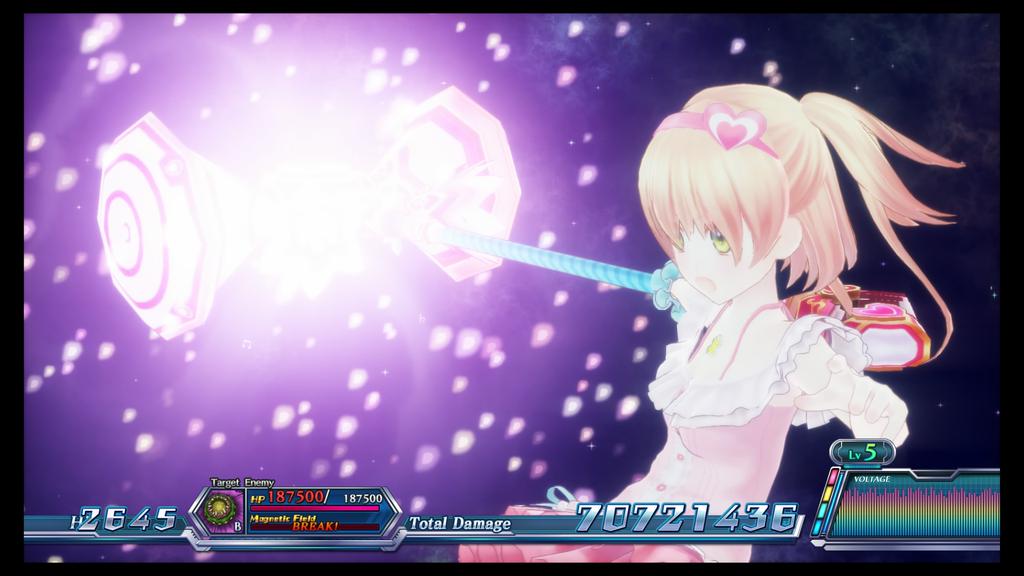
A good example from recent memory that I'm still engaged with is Compile Heart's PS4 RPG Omega Quintet. I have gone for the Platinum trophy in most of Compile Heart's games to date (largely the Neptunia games) because I have a keen awareness of how the developers probably use them for statistics, as mentioned above. I see attaining a Platinum trophy — which for those unfamiliar with PSN is the trophy you acquire when you have achieved all of the other trophies in a game — as a mark of support for the developer; a sign that someone out there cared enough about a game to play it to absolute death. (Omega Quintet's Platinum trophy, incidentally, has a 1.1% rarity rating, which is not altogether surprising as going by my own experiences it's something of a beast to attain.)

CKys-zPWUAES5s7

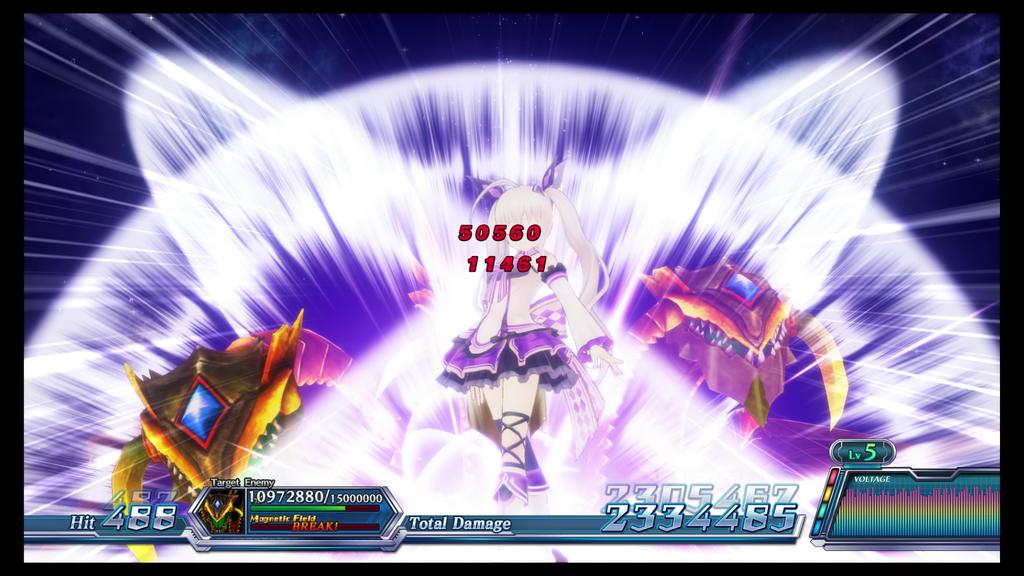
And in Omega Quintet's case, that Platinum trophy really is a sign that you have explored everything the game has to offer, because it's a good trophy list that runs the gamut from "deal 1 million points of damage in a single combination attack" (something that gets significantly easier the further in the game you go) via "complete all the quests" (something which you can miss in a single playthrough if you're not fastidious about cleaning up quests before advancing the story) and "see the True Ending on Advanced difficulty" (having figured out the conditions to do so, of course — hint: get Aria and Otoha's affection levels to 4 to guarantee this) to "defeat Double X" (a superboss who sits at the bottom level of the optional Training Facility dungeon and provides one of the stiffest challenges the entire game has to offer)

The interesting thing about Omega Quintet's trophy list is that by the time I finished my second playthrough (during which I achieved the True Ending on Advanced difficulty) I had only accomplished about 50% of the available trophies. Deciding early on that I wanted to go for the Platinum, I jumped into the post-game (the ability to keep playing the game after you've beaten the final boss and seen the end of the story) to explore what these additional challenges might be.

CKw_OBRWcAIOjoj

Nearly 50 hours of gameplay later, I'm still playing, though the end is finally in sight. In those 50 hours, I've beaten the 13-floor Training Facility dungeon, pretty much mastered the game's combat system — the extreme difficulty of the Training Facility encounters, including Double X, demands that you know what you are doing, otherwise you will get your ass kicked, even if you grind all the way up to the level cap of 999 — maxed out the affection values for all my party members, mastered all the weapon proficiencies with Kyouka and have come pretty close with a couple of the others, completed all the sidequests and recovered all the hidden archives. This latter one is particularly interesting, as the archives reveal an absolute ton of story context that isn't made explicit in the main narrative, largely because it's not directly relevant to the main cast's personal stories, but instead provides some interesting background lore and worldbuilding context. You stumble across some of these as you simply explore the main game, but quite a few of them are hidden in post-game content.

In other words, without the trophies to give me a nudge in the direction of this additional content, I might not have gone looking for it. One might argue that the game not necessarily signposting this sort of thing is a problem, but if the trophy system is there — and it's compulsory to use on both Xbox and PlayStation  — it may as well be used to push people on to explore things further. Combine that with PSN's "rarity" feature and there's a really nice sense of… well, achievement when you know that you're one of the 1.1% who has seen everything Omega Quintet has to offer.

CLBJINSWoAASbZh

(Just two more trophies left to go: kill 10,000 enemies and get 1 billion approval rating points. I sense that the challenging DLC dungeons and bosses — including the fearsome Banana Demon pictured above — will be my main means of achieving this!)

2015: Ziggurat Vertigo

0016_001One of the best — or worst, depending on your perspective — things about PlayStation Plus is that there are regular deals on a wide variety of games, seemingly almost at random. During these sale periods, games drop to Steam sale-tier prices (i.e. £2-3 for a typical indie game) and consequently make trying some new things out a rather more appealing prospect than it might be under other circumstances.

So it was that I came across a PS4 game called Ziggurat the other day. I didn't know much about it, but it sounded like it might be fun, so I grabbed it for £3 and gave it a shot. Turns out it is a lot of fun — and nothing to do with a not-particularly-good iOS game by the same name that I played a while back. (Thankfully.)

bannerZiggurat is the latest in the interminable line of "roguelites" out there; that offshoot of the roguelike genre that keeps the "permadeath" and "procedurally generated" parts and ditches the heavy-duty stat crunching and turn-based exploration in favour of something a bit more immediate, accessible and, in many cases, action-packed. Sometimes it works better than others; procedural generation is something that is very impressive on paper, but in practice it can often lead to levels that are chaotic messes with no real sense of "design" about them, just some tiles splattered around the map at random. This sort of thing is fine in an ASCII roguelike, but less fine in a game with actual visuals.

Thankfully, Ziggurat eschews the totally random approach and instead constructs its levels in a modular manner, somewhat similar to how board games like Advanced Heroquest and Descent construct their dungeons. Rooms are linked together by corridors to make an enclosed map; you start in one place, have to find a "portal key" somewhere in the level, then take it to the boss room, fight the boss and continue to the next level. It's a simple, tried but true structure and fits well in the context of the game.

ziggurat-03

There is a sort of plot to Ziggurat, but it's of the "back of a napkin" tier from old-school arcadey games from the 8- and 16-bit era. You're some sort of wizard, and every so often the opportunity arises to fight your way through the eponymous Ziggurat to become a super-awesome elite wizard. It's more likely that you will die, though, which is okay, because the "sacrifices" of unworthy novices pay tribute to the old gods, or something like that. It doesn't really matter.

What you do need to know is that Ziggurat is pretty much a spiritual successor to Heretic and Hexen, two games that came out back in the golden age of 2.5D sprite-based first-person shooters. Heretic and Hexen were noteworthy in that they were first-person shooters that opted for a fantasy setting rather than the (then) more common space marine situation. (Military shooters were still somewhat niche interest at this point, and multiplayer was something that was only really played by people who had IPX networks at their workplace.) Despite the fantasy setting, though, neither Heretic nor Hexen were role-playing games; they were action games through and through, with most of the weaponry on offer having clear analogues in more conventional modern and futuristic weaponry.

Ziggurat follows this pattern nicely. You start with a basic magic wand that is a rough analogue to the peashooter pistol that was the default weapon in games like Doom and its ilk. As you progress, you'll acquire spellbooks (shotguns), magic staves (machine guns) and alchemical weapons (rocket/grenade launchers). Each of these weapons requires a different colour mana (ammo type) to power, with the exception of the pistol… sorry, wand, which recharges its mana over time if you stop firing.

maxresdefault

The interesting addition to the Heretic/Hexen formula — and something that Hexen II touched on — is a progression system. As you defeat enemies, they drop "knowledge crystals" which provide experience points. Filling your experience bar causes you to level up and be able to pick from cards that depict "perks" of various descriptions. These are randomly drawn each game and range from immediate benefit (heal life, regain mana) to ongoing buffs (recover health when you enter a new room, increase the amount of mana you can hold for a particular weapon) to temporary buffs (magic wand does double damage in your next combat). Once you've picked one, on subsequent level ups you generally get the option to buff up a perk you've already taken or add a new one to your collection. There are even some perks that allow you to choose from a wider selection of perks on subsequent level ups, so there's a fair bit of variety.

Structurally, Ziggurat isn't quite as freeform as Heretic and Hexen. Rather than fighting your way through a linear-ish level, you freely explore the level, uncovering rooms one at a time. Rooms will generally be either a "special" room of some description — perhaps with traps, treasure or the portal key — or a standard room with a swarm of enemies to defeat. If you encounter enemies, you're deemed to have started "a battle" and are locked in the room until you defeat all of them. There's a decent mix of enemies, ranging from carrots that charge at you screaming to ghostly maidens that fling some description of otherworldly shit at you. Like the classic first-person shooters of yore, different weapons are more or less practical against different enemy types, though a generous auto-aim facility makes aiming and shooting with the controller less of a chore than it is in some games.

A pleasantly old-school throwback in Ziggurat's overall structure is the fact that you have a score, though you don't find out what it is until the end of a level or the end of your game. You score points for all sorts of things, ranging from collecting items to clearing rooms — and, obviously, the longer you survive, the higher your score will be. There's even an "Endless" mode to challenge for those who are gluttons for punishment — though I'm yet to make it past the second level on normal mode!

Ziggurat is a lot of fun, then, and if you're looking for something relatively quick and throwaway to play — and you miss the '90s era of first-person shooters — then you could do far worse than give it a shot, if you'll pardon the pun.

2013: Starchaser

0014_001Interesting indie game time? Interesting indie game time.

I'm a big fan of the doujin (independently-developed) games that Playism brings to the West. Japanese indie games have a very distinctive character about them; they're rarely the most technically impressive games in the world (though there are exceptions, like wonderfully gorgeous shoot 'em up Astebreed) but it's rare to find one that doesn't feel like it's been infused with heart, soul and love. The doujin culture in Japan breeds people who are passionate and enthusiastic about their work; these aren't people who are making games to prove a point, these are people who are making games because they love making games.

starchaser1

One of Playism's most recent releases is a peculiar little platformer called Starchaser: Priestess of the Night Sky. This is the work of a doujin circle called Nonlinear, and the designer's philosophy behind the game is an interesting one: he wanted to make a 3D game where the concept of 3D actually mattered. He has a point; there's a lot of games out there that are presented in 3D, but which actually only practically play in two dimensions at once. Even renowned games like Super Mario 3D Land/World tend to only have the player worrying about two dimensions at a time for the most part; it's rare you have to worry about the width, length and height of an environment at the same time in a Mario game, and that format works well for its accessible, family-friendly formula.

Starchaser, then, takes a slightly different approach to 3D platforming. Unfolding through a series of levels on both the inside and outside faces of a series of cubes, you control a young girl as she learns to commune with the stars by navigating through several perilous labyrinths of these cubes. The game starts very simple, but it's not long before it introduces one of its core mechanics: gravity floors. These checkerboard cubes have their own gravitational pull, so if you're airborne (through jumping, falling or walking off the side of something) you'll be sucked towards the nearest one if you're within its zone of influence. This may well be at a completely different angle to where you were standing a moment ago; Starchaser's levels unfold making full use of all three dimensions, and you'll have to look around in every direction carefully to negotiate a pathway towards your destination, making quick-witted use of the gravity mechanic and more conventional platform skills in order to survive.

starchaser2

It's actually a really delightful game to play. It reminds me somewhat of PS1-era puzzlers like Kula World, Kurushi Final and the like. At least part of this is due to its somewhat… functional presentation (it won't run in 1920×1080, and it won't exceed 30 frames per second) but even with its (apparently deliberate) technical limitations, it's a joy to play, once you get used to the peculiar control scheme. It's a very distinctive, original take on the 3D platformer, and a great game to dip in and out of when you fancy banging your brain against some fiendish environmental puzzles and enjoyable boss fights.

Starchaser is available now either direct from Playism or on Steam — buy on Playism and you get a Steam key for free.

2009: Into the Nexus

0010_001

Up until a few days ago, I thought I hated MOBAs1. Turns out I just hated Dota 2.

Actually, let me qualify that. I hate playing Dota 2, but I don't hate it. It's one of those games that, like Dark Souls or any fighting game released after the original Street Fighter II on Super NES, I feel like I'm doomed to never be any good at, and consequently have reached a point of acceptance where I feel I can and should respect it from afar, but not even attempt to get into it. And that's fine by me.

Let me qualify that further by saying that I feel there are way too many MOBAs on the market these days, as many developers appear to be seeing it as the new2 fad to latch onto in the (usually vain) hope that they will attract a large, world-beating multiplayer community.

With all that in mind, well, Blizzard's Heroes of the Storm is really good.

heroes-storm1

Heroes of the Storm is a MOBA that brings together a series of characters from Blizzard's various games from over the years — primarily Warcraft, StarCraft3 and Diablo, with a guest appearance from The Lost Vikings — and throws them into battle against one another in the usual 5v5, destroy-the-other-team's-base-before-they-destroy-yours MOBA gameplay.

Heroes of the Storm has a few little twists on the formula, though. For starters, individual players on your team don't level up independently of one another; you have a collective pool of experience that you share, so you all level up at the same time. You still need to do your part to make sure your team levels up faster than your opponents, particularly in the early stages of a match, but there's less feeling "left behind" than there is in stuff like Dota and League of Legends, in my experience anyway.

Tied in with this is the fact that a lot of the stupid arbitrary maybe-skill-maybe-luck-based bullshit that Dota includes — "Last Hit"4 being the one that always wound me up the most — is conspicuously absent from Heroes of the Storm, and it's much more fun as a result. It means you can focus on the overall team strategy rather than micromanaging your character to such a degree that it can become very distracting — if you're a newcomer, anyway; I'm sure veteran Dota players can Last Hit pretty much at will.

Then there's the fact that there's more than one map, and each map has its own little quirks. Some have two lanes to attack down, some have three. Some have objectives you need to defend to gain a temporary advantage, some have special enemies you need to defeat. Some have collectible items to unleash powerful attacks, and one even has an entirely separate "dungeon" map for you to descend into when the time is right. The objectives and the rewards you get from them don't necessarily make or break a whole battle, but they can make things swing one way or the other — and even provide a means for a struggling team to make a spectacular comeback, rather than being stomped into the ground.

HoSClasses

All of this is wrapped up in matches that generally don't take any longer than twenty minutes to play, as compared to the 30-90 minute slugfests that games of Dota can easily become. It's simple to understand, accessible and actually enjoyable to me, even as a newcomer and someone who is not generally very good at strategy games.

I haven't yet dared play a game against human opponents, but I feel much more inclined to give it a shot in this than in the notoriously elitist and short-tempered communities that play a lot of Dota and League of Legends. If you, like me, have been skeptical about MOBAs but like the idea of them, give Heroes of the Storm a shot. It is free, after all.


1 MOBA: Multiplayer Online Battle Arena, a team-based game where two teams compete for dominance of a map by attempting to destroy the other team's "core" by infiltrating their base.

2 Well, not that new any more, I guess.

3 The way they're capitalised differently has bugged me for years now.

4 Last Hit: a mechanic whereby you only get experience points for a kill if you were the last person to deal damage to it. Satisfying to veterans, the most fucking annoying thing in the world for newbies.

2008: The Wheels Are in Motion

0009_001

Had some exciting conversations today, and I think it's probably all right if I tease a few details of what I've been up to… and what I'm going to be up to.

After my post the other day regarding game criticism, the modern games press and ways that we might all do things a bit better, I got to talking with a few people, one of whom was Mr Matt Sainsbury over at Digitally Downloaded. Matt and I have been trying to find an opportunity to work together for quite some time, but the whole thing of there really not being much money in the enthusiast press scene made me hesitant. I didn't want to get myself into a situation where I was working my ass off and creating work I was really pleased with and not being able to be appropriately compensated for it, in other words. (This isn't anything against Matt or Digitally Downloaded, I might add; rare indeed is the enthusiast gaming site that actually pulls in enough money to pay its staff, which is one of the big problems with the ad-based revenue model I talked about.)

Anyway, long story short: our conversations about magazines attracted a decent amount of interest, and so we decided to discuss things further. And then we decided to act on these discussions by attempting to put together an honest-to-goodness magazine about games, providing the sort of coverage that we want to read, and covering the sorts of games that could really do with a bit more love from the press in general.

Our approach is going to be to take a different "topic" or "genre" (the latter inspired by literary criticism rather than game mechanics) for each issue, and then focus the whole issue around it. We're nailing down the specifics of the complete format, but this will allow us the flexibility to write some long-form essays about topics that interest us, as well as shorter reviews for games that fit in with the topic. Crucially, going with a topic-based approach rather than keeping things tied to whatever has come out recently means that each issue can effectively be "timeless" and collectible, remaining constantly relevant rather than only being relevant for the month of release. The traditional periodical model of games magazines is of no use whatsoever in the age of instant information on the Internet, so it's much better to use the print medium for things it's particularly suited for — in this case, long-form writing presented in a visually attractive manner. (Hopefully, anyway; it'll be my first time flexing my DTP muscles for quite some time!)

Here's a couple of cover mockups I and another Digitally Downloaded staffer put together earlier; that should give you a nice little teaser!

Issue 1 draft cover

draft_2

If you think all this sounds quite similar to what we were doing with the Squadron of Shame SquadCast during the period where we experimented with topic-based shows, you'd be absolutely right — though the nature of print means that the approach is somewhat different. Regrettably, we've really struggled to get people together and/or fired up for recording further podcasts, so that's been on the back-burner for a while. In the meantime, then, there is this project, and I'm really excited about it.

I've written a lot of things over the past few years — not just on this blog, but professionally, and in other personal places, too — but there's something that will always be magical and wonderful about print media to me. The prospect of being involved in print media always makes me far more excited than the possibility of getting my words on a website — and always has done. I think it's to do with the potential for having a tangible, physical object in your hands at the end of it all as the fruits of your labours rather than "just" words on a website. I mean, in both cases the important thing is still the words that you've written, but there's something I just love about being able to hold something I've written, pick it up, show it to people, read it on the toilet and whatever.

So yes. That's what I'm going to be up to alongside the other work I'm doing at the moment. We're aiming for our first issue to release around the end of next month (probably just digitally initially, we'll look at genuine physical print options later), so please watch out for it and consider grabbing a copy! Also, if you're interested in participating and contributing, let me know, privately if need be!

2006: Interstellaria

0007_001

I'd made a promise to myself not to get suckered into trying any more endearingly retro-styled 2D pixel-art exploration-centric games, because the last few I've tried (Terraria and Starbound spring immediately to mind) ended up being enormously disappointing and pretty boring to me. (I'm not necessarily saying they're bad, mind, more that the Minecraft model of "here's a world, do stuff in it" just doesn't really appeal to me any more.)

However, I happened to see Interstellaria on Steam earlier today, and for just £7 I felt I had to take a look at it. And, for once — so far, anyway — I wasn't disappointed.

Interstellaria is perhaps best described as a successor to the old late-'80s/early-'90s space exploration games like StarflightStar Control II and Space Rogue. You get a ship, you recruit a crew, you upgrade your ship, you explore the galaxy, you fight things, you discover treasures, you uncover a galaxy-spanning mystery and (perhaps) save the universe in the process.

interstellaria1

Interstellaria throws you straight in to its world from the outset. Thrown out of your erstwhile home by your flatmate who is no longer content to have a scrounging, unemployed wastrel living rent-free under their roof, you take to the streets in search of gainful employment. After dismantling a robot for the nice man who lives just over the road from you, you find yourself recruited into the slightly shady-seeming crew of a starship that is about to take off. The starship begins its grand adventure and fends off a pirate attack in a thinly-veiled combat tutorial, then is ripped to pieces by an unknown enemy craft, but not before your former captain runs away, leaving you in charge of the crash landing from which you are ultimately the only survivor.

Fortunately, it seems, you've crash landed on a planet where there's another starship that's almost in working order. You come across a fellow survivor and team up to get the elderly ship back into space again, and from there it's up to you to start discovering the truth behind the mystery of the "Abductors", a race of aliens who appear to be giving the galaxy a certain degree of grief.

interstellaria2

From here on, you have freedom to explore and do stuff around the galaxy, though you're nudged pretty strongly in the direction of following the plot. Gameplay is split into a few different areas: managing your ship, space combat and planetary exploration.

Managing your ship is a little like FTL: Faster Than Light in that you have to assign crew members to stations according to their skills (which develop over time). You also have to take care of your crew's needs — hunger, boredom and fatigue — by providing them with facilities to relieve these issues whenever necessary. The ship you start with has both limited space to include modules — there's pretty much room for basic navigation, sensors, engineering and tactical stations and one of each of the "needs" modules and not much else — and power to devote to them, so you have to juggle power around according to your ship's needs at any given moment.

Get into combat and you'd better hope you remembered to put some power into the weapons systems and charge them up, because you'll need them. Unfolding on a small tactical display (which provides more information if you have someone manning the sensors) you can move your ship around in real time as well as see incoming missiles, cannon fire and other projectiles. In this way, you can dodge and avoid enemy fire while attacking your foe; it's an interesting, slow-paced take on "bullet hell" in some ways, and it's a nicely unconventional take on space combat that is in keeping with the 2D pixel art aesthetic.

interstellaria3

Head down onto a planet and you'll have the option of visiting one or more different landing sites, assuming the planet has a breathable atmosphere. Each landing site is a few screens wide (rather than a never-ending procedurally generated world) and usually features some enemies, some resources to harvest and, occasionally, interesting artifacts, characters and plot-related shenanigans. Controlling each of your crew members independently (or as a group) you can direct them to explore, harvest materials, enter into combat with enemies and interact with the locals. Each planet has a distinctive look, feel and soundtrack (the music is by chiptune artist Chipzel and is really rather good) and manage to feel relatively "organic" without falling back on random procedural generation. (At least I don't think so.)

The game's not without its flaws — the interface is a bit clunky in places, the keyboard inputs aren't as responsive as they could be, camera controls on ground missions are bugged and combat is… lacking in depth, to say the least — but all these issues are more than made up for by the fact that it's the first game in a very long time that I feel has proven to be an adequate successor to the classic space exploration sims I mentioned earlier. It has a lot of potential to improve over time, and is already an interesting, charming game that is well worth your time, particularly if you're feeling nostalgic.

2005: Dan's List of Vita RPGs

0006_001This is one of those posts I write specifically to respond to something someone asked me recently where Twitter or chat messages aren't a particularly ideal solution to give an answer. In most cases, though, people other than the original person who asked can also get something out of my response, so I post it here.

In this case, my good friend Dan Lipscombe enquired as to whether I could give him any Vita RPG recommendations.

Well, of course I can!

Here goes, then. Some Vita RPGs that are either well-regarded or that I have personally enjoyed. This isn't an exhaustive list by any means!

Persona 4 Golden

p4g_screens_adayinthelife_withmarie

This is the one everyone recommends, and with good reason; it's great. Even if you played the original Persona 4 on PlayStation 2, Golden is worth playing due to its amount of additional content and tweaked gameplay.

If you're unfamiliar with Persona 4, it's a combination of murder mystery, school life simulator, dungeon crawler and Pokemon. Taking on the role of a transfer student to a school out in the sticks of Japan, you start investigating a spate of strange murders that sees people disappearing then showing up a few days later hung upside down from television aerials. It's up to you and your school friends to discover the truth behind what is going on, which is far stranger than you might expect.

Persona 4 Golden is an excellent game that has transcended its originally niche appeal to become a truly mainstream title that most people have heard of by now. It's well worth playing through to completion — though be warned, it is long. Like, 80+ hours long, even if you don't do much of the optional side content. It's a journey well worth taking, though, and the lengthy slog makes the characters' personal journeys all that more meaningful.

Hyperdimension Neptunia Re;Birth
neprebirth

There are three Hyperdimension Neptunia Re;Birth games on Vita. There's no real requirement to play them in order, since they're self-contained stories that don't really have anything to do with each other, but playing them in order will give you a better understanding of the characters — plus an appreciation for how the series has continually grown, developed and changed for the better over time.

Neptunia's concept is based on anthropomorphised game consoles going about their business in the land of Gamindustri. The three games' stories veer off in different directions, but there are usually strong anti-piracy messages involved, along with commentary on not forgetting the past, the futility of fanboyism and general satire of both games industry and anime culture.

The Neptunia games are occasionally clunky, sometimes balanced questionably and not the most technically impressive games you will ever see — but my God, are they ever charming and delightful, not to mention rare examples of comedy and satire in games actually working well.

Hyperdevotion Noire

scr15

A spinoff of the main Neptunia series, Hyperdevotion Noire focuses on PlayStation personification Noire and gives the tsundere princess her own personal story. Unlike the regular Neptunia series, Noire is a strategy RPG a la Fire Emblem and Final Fantasy Tactics. A wide cast of characters, each of whom personify a well-known Japanese game series (such as Final Fantasy, Dragon Quest and Resident Evil) all have unique abilities, strengths and weaknesses, and "gimmicks" in each stage force you to think a lot more strategically than "charge at the enemy and cut them down in order".

I'm not normally very good at strategy RPGs, but Noire is accessible, fun and enjoyable — plus it continues the series tradition of good humour, charm and satire, and Noire is absolutely a strong enough character to carry her own game.

Demon Gaze

demon-gaze-prometh

If you liked old-school dungeon-crawlers on PC — I'm talking stuff like Wizardry, Lands of Lore and Might & Magic — then you might want to give Demon Gaze a shot. Creating your own custom party of adventurers, you venture forth into an array of dungeons to battle terrible demons, capture them and make use of their power.

In between your adventures, there's a delightful little soap opera going on in the inn that you and your party call your home, with a cast of colourful characters getting up to all manner of mischief. It's a lovely blend of the narrative-centric approach that more conventional Japanese RPGs tend to take, and the mechanics-centric, challenge-heavy nature of first-person "gridder" dungeon crawlers. It also has absolutely gorgeous artwork, and an unconventional but enormously catchy soundtrack that makes use of Vocaloid voice synthesisers.

Operation Abyss

operation-abyss-new-tokyo-legacy

I haven't actually played this one yet, but it's on my shelf; given that it's from the same folks who made Demon Gaze, though, it's a fair bet that it will be similarly good, and the people I know who have played it have enjoyed it a whole lot.

Trails in the Sky

Technically a PSP game, this is downloadable and playable on Vita, and well worth your time. Following the adventures of Estelle and her adoptive brother Joshua as they attempt to become full-fledged "Bracers" — essentially state-supported mercenaries — Trails in the Sky is a sprawling adventure with a beautifully crafted world, some wonderful writing and a fun battle system.

The game blends the sidequest-centric nature of Western RPGs with the more linear storytelling typically found in Japanese RPGs to great effect. The sidequests each have their own little stories and characters to explore, and really help the world to feel truly alive.

Criminal Girls

This one won't be for everyone due to its relatively explicit sexuality, particularly exploration of sadomasochistic themes. If you can deal with that sort of content, though — along with the fact it's very obviously a PSP port — Criminal Girls tells a fascinating tale of personal redemption for a colourful cast of characters as they come to terms with traumatic experiences from their past and attempt to move beyond them.

Criminal Girls is noteworthy for its exploration of "trust" through both its narrative and its mechanics — I wrote in more detail on this topic here.

Akiba's Trip

Not an RPG in the typical sense, Akiba's Trip is most akin to Sega's Yakuza series in that it provides an open world that covers a relatively small geographical area — in this case, Tokyo's Akihabara district — and a ton of things to do, plus a nigh-unparalleled sense of atmosphere thanks to its detailed world.

Thrown into the underworld by your discovery of — and recruitment into — the ranks of the "Synthisters" (essentially synthetic vampires), it's your job to find out where this scourge has come from and put a stop to it — while simultaneously keeping your little sister happy, taking photos for tourists and attempting to end up in the arms of one of the game's lovely leading ladies.

Akiba's Trip has fun brawler-style combat with a huge selection of upgradeable weapons ranging from baseball bats to bus stop signs and computer monitors. Combat involves smacking Synthisters around a bit until they're in a position where you can grab their clothes and rip them off them, which exposes them to sunlight and, in true vampire tradition, causes them to combust.

Steins;Gate

This isn't an RPG at all, but if you own a Vita (or PS3… or PC) and haven't read this extraordinary visual novel, you need to right now. Blending real-world urban myths (such as the legend of John Titor and questions of what CERN are really up to with that big underground particle accelerator) with a creative yet plausible interpretation of how time travel and parallel worlds might work, Steins;Gate follow the adventures of an impressively unreliable narrator as he tries his best to stop something horrible happening to someone he cares about.

Here's a full review of it.


There are tons more great RPGs and visual novels available on Vita, but I've rambled on for over 1,200 words now, so that should be enough to get you started. Hope you enjoy at least some of these!

2002: Arcade Games are Alive and Well

0003_001

We live in an age where the default assumption about video games is that they will be big-budget affairs with star-studded voice casts, more pyrotechnics than a Michael Bay movie and, indeed, a budget to match. The reason for this is that many of the games that become household names — Call of Duty, Assassin's Creed, Grand Theft Auto — very much fall into this category, at least partly due to their marketing budget, but also due to their perceived "quality". Games have moved on since their roots in the '70s and '80s, or so the popular theory seems to go, and we should be looking to our interactive entertainment for challenging creative works that offer interesting new spins on social themes; deep emotional narratives; and innovative play mechanics.

As someone who grew up roughly alongside the birth of gaming (give or take a few years; I wasn't quite around for Pong) I think I speak for many other members of my cohort when I say that the above is all very well and good and should be celebrated when it's done well, but sometimes all you want to do is shoot or punch the shit out of some things without having to think about anything too complicated.

Astebreed is a great shooter with a ton of immediacy but a rewarding amount of depth for those willing to learn its intricacies.

One of the things I've been gratified to discover about the PlayStation 4 as a gaming platform is that it appears to be becoming an excellent home to a wide variety of arcade-style experiences as well as the big-budget, big-name games of today. The PC has been happily championing this sort of thing for a while thanks to its well-established digital distribution systems, and the Xbox 360 looked for a while like it might be assisting in the revitalisation of the "arcade-style" experience thanks to Xbox Live Arcade (which started to disappear up its own arse once things stopped costing 400 or 800 Microsoft Spacebux and instead took 1200 as the "default") but I feel like this is a field where the PlayStation 4 in particular is really starting to come into its own.

While I'm still ploughing through Omega Quintet on PlayStation 4 (I'm approaching the Platinum trophy now, at last!), the last few games that I've bought and really enjoyed on the platform are all short, arcade-style, score attack-type titles that are just plain fun. None of them are trying to say anything particularly deep and meaningful (with the possible exception of Astebreed, which has one of the densest half-hour narratives I think you'll ever find in a video game) and are instead focused on the simple joy of play: the thrill of taking on seemingly insurmountable odds, the fun of seeing scores climb into the millions, the satisfaction of beating your friends.

Blue Estate is pretty much a PS1/Dreamcast-era lightgun shooter, making good use of motion controls to approximate the arcade experience.

The games in question — and doubtless there are more, but these are the ones I've been particularly enjoying — include cinematic Japanese shoot 'em up Astebreed, Western bullet-hell shooter Jamestown+, the Defender-inspired Resogun, the inordinately satisfying rock-bursting shmup Super Stardust and lightgun-style rail shooter (a genre I thought was dead) Blue Estate. If you're looking for a quick fix of gaming and don't have the time or inclination to sit down and start chipping away at something more substantial like an RPG, I can happily and confidently recommend all of the above; they're fun, they have a ton of immediate appeal but a lot of hidden depth, they're easy to understand and teach to others (and, in most cases, have some form of multiplayer mode) and, for those concerned about such things, they're cheap.

Smoky, beer-scented arcades may well be fast becoming a thing of the past, but the arcade-style experience still very much lives on at home on PS4… and on Vita too, for that matter, but that's probably a whole other day's post, so we'll leave that for another day!

1999: Sowing Discord

I'm always interested to find alternative ways to do things when it comes to technology, particularly if a once-reliable tool has become a messy piece of bloated crap.

Such is my feeling towards Skype, the well-known piece of messaging software that old people think is the only means of talking to people in other countries via the Internet.

Skype used to be great. It used to be simple, efficient, easy to use and easy to understand. It was intuitive and worked well. Then Microsoft got hold of it, and the entire application was redesigned from top to bottom and made almost the exact opposite of all the above adjectives. It's now a cluttered, inefficient, clunky and unintuitive pile of hot garbage — and, for many users, a hog on system resources, too. It still does the job — just about — but its frustrating aspects far outweigh its benefits for me these days, particularly when all I really use it for is in-game chat for games that don't directly support voice chat.

I was switched on to an app called Discord by a part-time member of our raid group in Final Fantasy XIV. I've never really looked into gaming-centric VOIP solutions like TeamSpeak or Mumble before, largely because they sounded complicated (and sometimes expensive) to set up. But Discord promised to be free, easy to set up and intuitive.

And what do you know? It really is.

Discord works similarly to services like TeamSpeak and Mumble in that you set up "servers", which are private collections of text and voice channels that can each have their own permissions set. People then join the server's public channels and, where applicable, are invited to private channels as necessary. From there, it's a nicely self-contained system that means you can keep all your in-game friends in one easy-to-manage place, and you can make use of voice chat with them without having to dick around with "calling" each other — you just all join the same communal channel.

Best of all, it's cross-platform, and even works in your web browser if you're on a public computer or don't want to download anything. It has game auto-detection systems that let your friends know what you're playing and if you're online, and some highly customisable notifications and text-to-speech options for true flexibility. In short, it seems like a really great piece of software that is an ideal solution for those who want a means of chatting with one another both in-game and out of the game, and it's certainly a lot better than the big bag of dicks Skype has become over the course of the last couple of years or so.

I'm conscious I sound like an advert here, but, well, if you're looking for something that fits the description I've given above, give it a shot. (If, on the other hand, you're an elderly person looking to talk to your children who live abroad, as the stereotype goes, Skype  probably still fits your needs just fine.)

Find out more here.