2108: Heavensward Dungeon Boss Guides (For My Own Reference)

0108_001

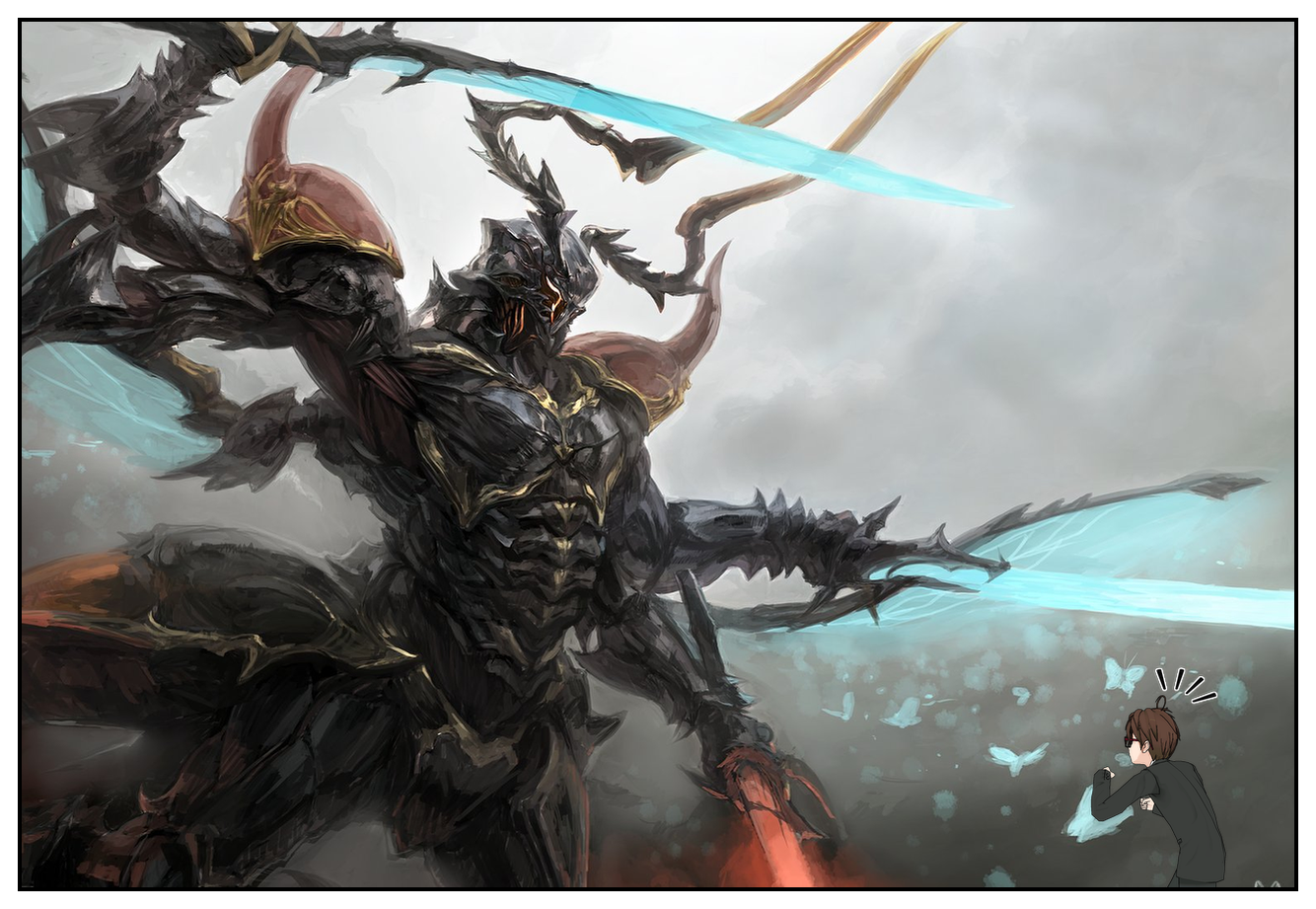
I ran The Aery for the first time in months earlier tonight, and I realised that, having not run it for months owing to being at the level cap, I had forgotten almost everything about it. So in an attempt to brush up on my Heavensward dungeons as I continue to level Dark Knight — and also to provide an excuse to write a guide, which is something I enjoy doing — I present to you some information on how to beat the dungeon bosses in Final Fantasy XIV: Heavensward. Largely for my own reference.

The Dusk Vigil

Level: 51-52

Boss 1: Towering Oliphaunt

Towering Oliphaunt has a few abilities to watch out for. Firstly, there's Rear, which is an easily dodged area-effect attack around himself, and Prehistoric Trumpet, which hits the whole room.

You should also be aware of his other abilities: Rock of Ages will stun a non-tank player, Wooly Inspiration is a conal pull attack, and Rout is a charge attack. Similar to Wild Charge in The Final Coil of Bahamut, Turn 1, Rout's damage can be split between a party member and the targeted player. It's a good idea for the tank to get in between Oliphaunt and the targeted player when this happens.

Tank tank, healer heal, DPS DPS and this shouldn't present too much difficulty.

Boss 2: Ser Yuhelmeric

Tons of adds appear in this fight. There are two main types: melee adds have a few area-effect attacks, while caster adds have the ability to buff everyone around themselves, including the boss. The tank should try to keep the boss away from the adds.

The only real ability Yuhelmeric has that you need to be aware of is Death Spiral, an attack somewhat similar to Nael's Lunar Dynamo in The Second Coil of Bahamut, Turn 4. In other words, it's a doughnut-shaped attack that you can avoid completely by ensuring you're in melee range when it goes off.

Boss 3: Opinicus

This is the most complex fight in Dusk Vigil. Opinicus has several different abilities, some of which are easier to deal with than others.

Alpine Draft is a simple line attack that can be avoided without too much difficulty.

Freefall is an attack where Opinicus jumps at a player, destroying any piles of rubble they're standing near. These piles of rubble are important, so try and stay clear of them when you don't need them.

Whirling Gaol is a room-wide ability that causes you to be repeatedly "pushed" towards the middle. If you reach the middle, you'll be stunned and hit. To prevent being dragged in, hide behind one of the piles of rubble.

Winds of Winter is an ability that covers a reasonable area and stacks Wind Vulnerability Up on anyone hit, making Opinicus' other abilities more dangerous. This attack also destroys all current piles of rubble and causes new ones to drop from the ceiling.

Sohm Al

Level: 53-54

Boss 1: Raskovnik

This is a considerably more forgiving version of the Rafflesia fight from The Second Coil of Bahamut, Turn 1. If you've completed that, you'll know what to do here.

Acid Rain is a circular area-effect ability that takes aim for all players.

Sweet Scent causes Dravanian Hornets to spawn and slowly move towards the boss. These deal no damage, but should be killed if your party has low DPS, since they buff the boss if they're in range of Devour.

Devour is an ability that goes off after a player is marked and stunned for two seconds. It's a circular AoE attack, and any hornets in range will give Raskovnik a stacking damage increase.

Finally, Spit is a room-wide attack to simply be healed through.

Boss 2: Myath

Myath will periodically spawn jelly adds around the room, and use attacks based on which ones he consumes. When he consumes a blue add, move away from the party member with a blue marker. When he consumes a red add, stack up on the party member with the red arrow. Remember, blue is poo, red gives head. Or something.

The only other thing to be aware of here is the big green snot add. Kill this as a priority when it appears.

Boss 3: Tioman

Sohm Al's final boss has a number of different mechanics.

To minimise damage from the frontal cone attack Abyssic Buster, tanks should ensure that Tioman is facing away from the party.

Chaos Blast places AoE markers on each player, so avoid these.

Comet is the main ability to be aware of here. Two players will be marked and AoE circles will appear on the ground. When the marks fade, comets will fall where the players were standing, dealing room-wide damage to everyone based on how close they were to where the comets fall. To minimise damage from this, marked players should move away from the party — ideally to an edge — while the rest of the party keeps their distance too.

At around 45%, Tioman will become invincible and you must destroy her wings to continue damaging her. During this time, she will use Heavensfall, which marks a player and then spawns a cluster of circular AoEs on top of them. The marked player should move away from the rest of the party to minimise damage.

Finally, Dark Star is a room-wide AoE that you need to heal through.

After the wings are destroyed, the fight continues as before.

The Aery

Level: 55-56

Boss 1: Rangda

Rangda only has two main abilities to concern yourself with. To avoid being hit with Electric Cachexis, move into melee range with Rangda, similar to avoiding Nael's Lunar Dynamo or Chimera's The Dragon's Voice.

If you get marked with Prey, move to one of the tall pillars at the outside of the room to transfer it and stay safe.

You should also kill adds as they spawn; none of them are particularly tough. Rangda also has a few other AoE attacks, but none of them hit particularly hard, so just heal through them.

Boss 2: Gyascutus

Gyascutus will gain a damage-up buff for every cloud of poison it farts out around the room. To get rid of these, use the Mustard Gas bombs that spawn occasionally to eat one or two of the clouds, then kill them. If the bombs eat four clouds, they will self-destruct, deal damage to the whole room and poison everyone four times. Don't do this.

Boss 3: Nidhogg

Nidhogg's go-to attack is The Crimson Price, which shits out fiery orbs at you. These burn for a few seconds, then blast a line AoE. If Nidhogg faces you and you're not the tank, he's going to cast one of these at you. Step aside to avoid damage.

The Sable Price is Nidhogg's jailing ability. One player will get trapped, and the remaining party members must destroy it before Sable Weave casts, otherwise the trapped player will die.

At about 30% HP, Nidhogg will retreat to prepare his ultimate attack. During this time, you must defeat all the adds and ensure that Estinien remains standing. Tanks should grab the adds as quickly as possible, and healers should divide their attention between the party and Estinien to ensure he stays healthy. When the final add falls, Estinien will put up a shield, which you should dive inside to protect yourself from Nidhogg's ultimate.

After this, the earlier mechanics simply repeat.

The Vault

Level: 57-58

Boss 1: Ser Adelphel Brightblade

The first phase of this fight is a simple tank-and-spank — kill Adelphel's companions first, then knock him down. He'll change form and the fight proper will begin.

When Adelphel casts Holy Shield Bash, he'll jump to a player, stun and hit them. Paladins can Cover this.

Holiest of Holy deals damage to the whole room. Heal through this.

Finally, Adelphel will occasionally charge around the room and leave big explodey balls behind. Do not be near his balls when they explode, otherwise you'll be very sorry indeed. (Huehuehue.)

Boss 2: Ser Grinnaux the Bull

Like Adelphel, Grinnaux has a trash phase first. Batter him down to start the fight proper.

Most of this fight is about dodging the various ground AoEs that Grinnaux applies around the room, but there are a couple of specific abilities to watch out for.

Hyperdimensional Slash lays a red AoE in front of Grinnaux in the direction of a random player. When this goes off, anyone in the way will take damage, and an Aetherial Tear will appear where the attack hits the wall. These Tears will tether to anyone near them and damage them, so ideally bait them all to the same part of the room.

After two Hyperdimension Slash attacks, Grinnaux will cast Faith Unmoving, which will knock everyone directly backwards when it finishes casting. Make sure your back is to part of the wall that is free from Aetherial Tears to stay safe.

Boss 3: Ser Charibert

Filthy rats! Charibert has a bunch of nasty abilities that you need to watch out for. It's a good idea to tank him near the entrance to his arena rather than in the middle.

Altar Pyre is a simple room-wide damage attack. Heal through it.

Holy Chain tethers two players together — run apart to break it, otherwise you'll both take damage.

Heavensflame causes flame rings to appear on the ground. Avoid them.

Charibert's most annoying ability is to summon a row of knights, who will march across the arena and Slow anyone they trample over. Each row will always have a gap in it, so position yourself so they'll pass you by safely or run through the gap to avoid this.

At about 50% HP, Charibert will disappear, then reappear with a bunch of Holy Flames around the room. Kill as many of these as possible, because Charibert's next attack deals more damage the more Holy Flames are left. You can leave one or two Flames up and still be safe when this happens.

After this attack, the cycle repeats, though both Heavensflame and Charibert's knight-summoning become more dangerous: Heavensflame has two sets of flame rings, and two rows of knights appear instead of one.

The Great Gubal Library

Level: 59-60

Boss 1: Demon Tome

This is very similar to Demon Wall in Amdapor Keep, albeit without the time limit. Instead, there are some new abilities to watch out for, including an instant-kill.

The first thing to do is avoid Demon Tome's line AoEs, since these apply a Slow effect. The lines will come down the middle of the room first, then the sides. Position yourself ahead of time to avoid these.

Dark Blizzard III is a circle AoE that targets a random player during the line attacks. Avoid this.

Disclosure is Demon Tome's instakill ability. When it starts to glow, run around the side until you're behind Demon Tome to stay safe. If you're in front of Demon Tome when Disclosure finishes casting, you'll die.

Finally, Words of Winter is a ground freeze attack that causes you to slide while it is in effect. Plan your moves carefully, particularly when Disclosure is casting, and only move when necessary.

Boss 2: Byblos

When Byblos runs to the centre of the room, two books will spawn, with the ability to cast Death Ray at you, a line AoE that, despite the name, doesn't do all that much damage.

When they die, orbs will tether to players. Tethered players need to position themselves so the orb hits Byblos to break his invulnerability period.

In subsequent phases, Byblos will spawn clouds of fumes. Party members should take it in turns to disperse these by running through them, since this causes damage. It's important to manage them, though, as they can interfere with the orbs.

When Byblos isn't invincible, he'll perform Gale Cut on the tank. When this is being cast, the tank should run through Byblos or to the side to avoid it. He also has a Tail Swipe attack on anyone behind him.

Finally, Head Down is a charge attack similar to the one seen in Amdapor Keep (Hard). The targeted player should ensure the line AoE doesn't intersect with any other players to minimise damage. The easiest way to deal with this is simply to run straight at Byblos.

Boss 3: The Everliving Bibliotaph

Three times during the fight, The Everliving Bibliotaph will use Void Summon as a supernatural "Help Wanted" advertisement. In order to prevent his questionable hiring practices, you need to stand on the glowing platforms on the ground. The number of players who need to stand on a platform is indicated by how many lights are lit up on the platform in question. Multiple platforms will highlight at once, so be ready to spread out.

If you get targeted by Bibliotaph, run away from the party to bait the AoE he's preparing for you. Everyone should keep away from this, as it pulses several times, applying damage and Vulnerability Up in the process.

At around 55% HP, Bibliotaph will cast some combination of Deep Darkness and Magic BurstDeep Darkness covers the outside of the arena and causes a Heavy debuff for about 30 seconds. Magic Burst, meanwhile, deals damage and knockback. Neither are pleasant.


If you're new to Final Fantasy XIV and want some more help, I wrote a bunch of guides during my time at USgamer; some of this information is a little out of date now, but the basic boss strategies and suchlike are still valid.


2107: Dark Knight Chronicles

0107_001

Continuing to level Dark Knight in Final Fantasy XIV, and I'm having a lot of fun with it. I wasn't quite prepared for how much more powerful it feels than Paladin, but I'm really enjoying the overall feel of it a whole lot — much more than Warrior, which seemed enjoyable enough, but didn't quite "click" with me for some reason.

I think the reason I like Dark Knight so much is that it appears to be a little less dependent on strict rotations to perform its job most effectively — or, rather, there's more than one rotation to play around with. I particularly enjoy the fact that when playing Dark Knight it's absolutely okay — even encouraged — to drop out of Grit, the main "tank stance", in order to do some additional damage. This appears to be of particular benefit when fighting single-target bosses, since taking fewer overall hits means that Blood Weapon (increase attack speed, drain MP from enemy with every hit, only available when not in Grit) becomes a more efficient means of restoring MP than Blood Price (gain MP when taking damage).

Even though many of the abilities are somewhat similar in function to those found in Paladin, they somehow feel more satisfying to use. Dark Knight has an area-of-effect damage over time skill called Salted Earth, for example, that bathes an area in black and red lightning, whereas Paladin's nearest equivalent is Circle of Scorn, which has its own little pyrotechnics display but somehow doesn't feel quite as enjoyable to use. Dark Knight also has Scourge, which is a damage over time that can be immediately applied rather than only used at the end of a three-hit combo like Paladin's Goring Blade. When everything lines up nicely and you can apply Scourge and Salted Earth to an enemy before letting rip with a non-Grit Dark Arts Souleater combo for a significant amount of damage, it's a great deal of fun.

Learning my way around Dark Knight has been enjoyable, and it's helping me rediscover my respect for Final Fantasy XIV's combat system. People who come to FFXIV from more traditional, customisable role-playing games are sometimes a bit put out at the relative lack of personalisation FFXIV offers in terms of abilities — everyone gets the same abilities at the same levels, and the only real flexibility is in any cross-class skills you choose to use, but even here there are only certain ones that are particularly useful — but in practice it works enormously well, behaving, of all things, more like a fighting game than anything else. A slow-paced fighting game, admittedly, but a fighting game nonetheless.

Allow me to clarify. Modern fighting games demand that players learn specific button and directional inputs to perform various special moves. In order to get good at a fighting game, you need to develop a certain degree of muscle memory to be able to pull these moves off automatically. Once you've done that, you need to master the timing of these moves to chain them together into effective combos, and then you need to understand what the most appropriate situations to use these individual combos are.

Final Fantasy XIV is exactly the same, just at a fraction of the pace of your average fighting game. Positioning is important; responding to your enemy's moves is important; using the right ability at the right time is important. Even muscle memory is important, particularly if you're playing on controller — while you're not doing Hadoken button inputs to throw a fireball at someone, you do need to be able to remember where you put all your most important abilities and be able to practically automatically perform combos with no gaps for the most efficient possible damage output. For example, on Dark Knight, my average combo runs something along the lines of LT+Y, RT+Y, LT+A, LT+RT+X, A, LT+RT+B, LT+X, RT+B, RT+X, RT+A, RT+LT+B, RT+LT+X, RT+LT+up, RT+LT+A. This pulls an enemy with Unmend, cements aggro with Unleash, kicks them in the bollocks to stun them for a few seconds, drops a Salted Earth on the ground, applies Scourge, blasts them and anything near them with Dark Passenger, does my three-hit aggro combo then my three-hit, Dark Arts-buffed Souleater combo for a nice chunk of damage. And this isn't even getting into the situational weaving in of various defensive cooldowns to ensure that I don't take too much damage, or other skills to support the battle.

That may all sound exceedingly complicated, but I've done it so many times now that it feels "automatic" to be able to perform these abilities in the order that seems to work most effectively at my level. I'm sure I'll have to shake things up a bit as I get closer to 60 and challenging more difficult content, but for now it's extremely satisfying to nimbly pull off these combos without breaking a sweat.

Onwards to 60 then… I should hit 54 tonight, all being well.

2106: Sex and Games Make Sexy Games...?

0106_001

I penned a lengthy article about The Fruit of Grisaia for my good buddy Matt Sainsbury over at Digitally Downloaded, and it was published today. Please go and read it (it's spoiler-free!); I was really pleased with how it came out.

In the piece, I noted that I believe the 18+ version of The Fruit of Grisaia to be the definitive version, and I stand by this statement, even with the all-ages version on Steam incorporating a few new scenes from the (also all-ages) Vita version to make up for the lack of rude bits. The story is mature and adult, after all, sex aside, so there's really no reason to read a version that is neutered in any way when a version more true to the writers' original vision exists.

This prompted an interesting discussion on Twitter after the fact, not directly related to Grisaia, but to sexual content in games and visual novels in general. We're still in a situation where a visual novel featuring explicit sexual activity — such as Grisaia, or numerous others like it — isn't able to be featured on high-profile storefronts like Steam on PC, the PlayStation Store on PS3, PS4 and Vita, and the Xbox Live Marketplace on Microsoft platforms. And I'm not talking about nukige (the visual novel equivalent of a "gonzo" porn movie, where the sexual content is pretty much the sole reason for its existence) — I'm talking about eroge, which are visual novels that incorporate sexual content as part of their narrative.

The Fruit of Grisaia features a number of scenes where the sexually explicit situations are integral to the overall narrative. I won't give specifics to protect those who intend to read it against spoilers, but suffice to say that in each and every case, the sex scenes serve a purpose, whether it's to reflect the deepening relationship between the protagonist and the heroines, to provide a tragic juxtaposition between pathos and eroticism, or simply to demonstrate another aspect of the characters' personalities. In Amane's route in particular, the sex scenes are very much front-loaded towards the start of her individual path, with the remainder exploring exactly why she is, in her own words, such a slut. And boy does she have some interesting and compelling reasons. But I digress.

The unfortunate thing with this topic is that there's a curious double-standard applied between Western and Eastern publishers in particular. Western publishers such as Rockstar and CD Projekt can get away with depicting explicit sex acts in their games such as Grand Theft Auto and The Witcher, but if a Japanese game dares to show a little skin, it makes the collected prudes of the world clutch at their pearl necklaces (not that kind of pearl necklace) and faint onto their chaise-longues. At best, we get "minor edits" to cover things up and make things a bit less explicitly sexual — Dungeon Travelers 2 on Vita, for example, had an image that depicted a monster girl apparently fellating a ghost changed so that she was just writhing around a bit instead — while at worst we end up with butchered "all-ages" releases cutting out entire scenes.

All-ages releases aren't always bad if they're done well, of course; one of my favourite visual novels, Aselia the Eternal, began life as an eroge but subsequently got expanded to such a degree in its all-ages console format (which was subsequently backported to PC, and this was the version that got localised) that the non-dirty version is now considered to be the definitive way to enjoy that particular tale. But there are cases such as The Fruit of Grisaia where I simply can't imagine them quite working in the same way without the erotic scenes.

The discussion on Twitter turned to localisation specialists Sekai Project, who Kickstarted the Grisaia trilogy and were originally intending to only bring us an all-ages release. After considerable feedback from fans, they eventually relented and agreed to publish a localised 18+ version of Grisaia via their Denpasoft imprint, even going so far as to allow Kickstarter pledges (like me!) to upgrade their donation and get digital copies of the 18+ versions as well as the physical, packaged and digital Steam releases of the all-ages versions.

In my experience so far, Sekai Project know their craft and they understand the art form that is the visual novel. They recognise that eroticism is an important part of many of these works, hence the existence of Denpasoft in the first place. But the concerning thing for some people is that the 18+ releases don't seem to get much attention, even from Sekai Project themselves. Denpasoft's website is a pretty bare-bones affair, and its Twitter account isn't particularly active, whereas Sekai Project is always tweeting about something or other, launching new Kickstarters and generally enthusing about their work — and with good reason.

Why, though, are the 18+ releases dirty little secrets rather than celebrated and promoted alongside the all-ages versions? I don't have a definitive answer for that, only theories, but I wonder how close to the mark I am.

In short, Sekai Project as a brand is keen to promote the Japanese visual novel as a valid art form and type of game to be celebrated by as many people as possible. Their keenness to get their work on Steam shows a keenness to get these titles in front of as many people as possible, since Steam is an enormous market to tap into. Unfortunately, Steam doesn't allow adult content — aside from the aforementioned exceptions for Western games — and so any originally 18+ visual novels that come to steam will have been necessarily neutered. Sometimes there are fan patches available to restore the cut content, though in situations like The Fruit of Grisaia, the all-ages and 18+ versions are completely different base games — the 18+ version is based on the PC original, the all-ages version on the Vita version — and cannot be easily patched.

Sekai Project, as a brand keen to get their stuff noticed, is probably aware of the way the games press has been in the last few years with regard to anything even remotely sexual. As such, their apparent unwillingness to promote the explicitly sexual versions of their games is probably less to do with them being "ashamed" of the content itself, and more an attempt to enjoy a quiet life without enraging the massed heavenly hosts of Anita Sarkeesian's 43rd Puritan Squadron (Polygon Division). Can you imagine what those narrow-minded, sex-negative fun vacuums would make of your average visual novel sex scene? It wouldn't be pretty. Fuck Anita Sarkeesian, and fuck what she has done to intellectual discourse about games as art. (I'm aware it's not entirely her fault, of course, but the members of the press who endlessly bleat on about feminism and the like are pretty much following her cultish teachings to the letter.)

I'm not saying that all visual novels have to have sex in them to be good, of course. But sex is an important part of art, which visual novels are, and sex is also an important part of relationships, which visual novels tend to depict with a strong degree of intimacy. Sex is a basic fact of life, of humanity, and the fact that there are so many roadblocks to exploring it effectively in video games and visual novels is kind of sad, really; thankfully, we're not (yet) in a situation where publishers like JAST, MangaGamer and Sekai Project are giving up on publishing erotic content in the West completely, but we're also sure as hell not (yet) in a situation where a mainstream press site would be able to publish something about a work of The Fruit of Grisaia's ilk without getting a massive hate-boner and then spunking vitriol all over the page, completely missing the point of the "controversial" content in the process; I vividly remember just mentioning Kana Little Sister in one piece on USgamer, and getting attacked by one particularly puritanical reader for "promoting a pedophilic incest simulator".

It's difficult to know how this situation can be improved — or even if it needs to be improved. Could there be scope for a Steam-esque platform that allows adult games to be released and promoted, rather than relying on Web stores that many people have understandable hesitancy trusting? I wonder. In the meantime, I'll keep banging my drum about the most interesting, compelling eroge — and, hell, nukige, since there's plenty of interesting stuff there, too — and hope that at least a few people will listen.

2105: Into Darkness

0105_001

The official trailer for Final Fantasy XIV patch 3.1 came out recently, and it's looking simply marvellous. I am happy about this, because although I feel like I've got over my "rut" with the game, I'd still love to see something new at last. It's been a long time coming, after all.

My initial reaction to the announcement of 3.1 was slight disappointment, but in retrospect this was rather silly. I'll tell you my thinking, though: previous content patches for the game tended to include three new dungeons, a new raid (either a 24-player casual raid of the Crystal Tower ilk, or an 8-player hardcore raid of the Coil ilk) and maybe some new quests and minor mechanics here and there. And gear, of course. 3.1, meanwhile, only includes two new dungeons, one of which is a "Hard Mode" version of an existing dungeon — Pharos Sirius — which immediately made me feel a bit let down that we weren't getting as much new stuff as we had in the past.

But then I considered things a bit more, and there are plenty of interesting things happening outside the dungeons, because dungeons aren't the only interesting thing you can do in the game. They're cool, sure, but I get the impression that Yoshi-P and the FFXIV team very much want to try and shake up the basic formula of the game a little bit having got it where they want to be over the course of A Realm Reborn and vanilla Heavensward. In other words, that means getting people out of the "grind the same thing over and over" mentality and into doing more varied things.

Perhaps the thing I'm most intrigued by — and most mystified by — is the new Exploratory Missions system, whereby individual players, parties, alliances and Free Companies can fly off into the Sea of Clouds with their airship(s), explore a region for 90 minutes, kick the shit out of some monsters, find treasure, complete objectives and gather stuff. This has the most potential to shake up the basic structure of the game, and I really hope it turns out well.

Details are still a bit thin on the ground as yet, but it seems like there will be three difficulty levels for these exploratory missions, with the hardest level being pitched towards Free Companies with their own airships. Monsters will have difficulty ranks between 1 and 6 instead of conventional levels, and there are apparently Hunt-esque "marks" to defeat as well as regular monsters. There will be objectives to complete that will allow players to earn the all-important Tomestones to upgrade their equipment, and treasure chests that contain new Aetherial equipment with randomised stats.

The randomised element of the Exploratory missions is the thing I'm looking forward to the most, to be honest. Exactly how random it is I'm not entirely sure as yet, but I know at the very least there will be several different areas that you can fly to when you start one of these missions — it seems you won't be able to explicitly pick where you want to go and will instead be assigned a random landing point in a random region. The equipment you can find will be scattered in bronze, silver and gold chests, and presumably tracking these chests down will involve actual exploration of the area rather than the current situation in dungeons, where equipment can be found in boss chests and stuff in all the other chests is fairly underwhelming in its awesomeness, usually consisting of either potions or crafting materials.

Aside from the Exploratory Missions, the thing I'm looking forward to the most is the new Minstrel's Ballad trial, which is a considerably expanded version of the final boss fight from the Heavensward story quests. This was an absolutely spectacular fight, albeit not particularly difficult, so it will be exciting to have the opportunity to see this realised as something closer to what the creators apparently originally intended. It will be a ten-phase fight — they stopped short of going for thirteen phases to match the thirteen Knights of the Round — and will apparently be on par difficulty-wise with Extreme-level primal fights and the first area of Alexander (Savage). Hopefully this doesn't mean it will be a glorified DPS check like Alexander is, but from the little I've seen of it so far, it looks like there's going to be some interesting mechanics at play.

Anyway. Patch 3.1 is coming in early November, which isn't far away now. I'm really looking forward to seeing what it has to offer, and actually a little bit thankful that the new Relic weapons — which are apparently known as "Anima Weapons" — aren't coming immediately, instead inviting us to grind ourselves into oblivion from patch 3.15 onwards.

In the meantime, I've got Dark Knight to level 50 today, so only ten levels to go before I can officially retire Paladin for the most part and start playing a tank class with a bit more damage output at high level! Darksiiiiiiide!

2103: Amane, the Girl Who Learned to Say Thank You

0103_001

I finished Amane's route in The Fruit of Grisaia tonight, bringing my time with this absolutely incredible visual novel to a close, and frankly I'm a bit of an emotional wreck right now, but I will do my best to try and collect my thoughts and post something reasonably meaningful.

One thing I will say before I jump into spoiler territory after the "More" tag is that I'm really glad I saved Amane's route for last. Not just because she was immediately my favourite girl — and still is after playing through her route — but because her route acts as a rather wonderful way to wrap up the entire experience. Her good ending is particularly "conclusive", and as the last thing I saw in the whole work, it feels like I've had a great sense of closure — although, as always with this sort of thing, I'm going to miss these characters very much. At least I have two more games in the series to look forward to!

All right. Let's get spoilery.

Continue reading "2103: Amane, the Girl Who Learned to Say Thank You"

2100: Mobile Games that Don't Suck

0100_001

Occasionally, I take a peek into the murky waters that is mobile gaming because among all the crap you occasionally find some good things. There's a lot of derivative stuff, which can make it difficult to determine which games are worth spending your time and/or money on, and some of them do a better job of iterating on existing formulae than others.

Two games in particular spring to mind as having been casually keeping my attention lately; neither are fantastic games, but they're good for a few minutes on the toilet or in bed or waiting for the kettle to boil or something.

I Love Pasta

I downloaded this for two reasons: the endearing name, and the cute artwork. Turns out it's actually quite a nifty little restaurant management game that initially looks like a Zynga-esque "tap and wait" game, but which actually opens up and has an intriguing amount of depth the more time you spend with it.

The game opens with your father buggering off and leaving you with a pasta restaurant to take care of, and little in the way of training. Fortunately, a local chef comes to your aid and starts giving you some advice, and from here it's up to you to make your own pasta, develop a range of dishes to serve on the menu, keep your customers happy, make as much money as possible and ultimately help build up the area of town around your shop.

As I said, the basic gameplay is rather Farmville-esque — you tap on a pasta machine or cooker, choose something for it to produce, then wait, either for the machine to make the pasta or the food on the cooker to sell out. Then you repeat. This is the basic activity you'll be doing all the time, because it earns you money and experience points. From here, though, things get a little more interesting.

Rather than always serving the best meal you possibly can, for example, you might want to consider mixing things around a bit. Dishes each have their own experience level that rises as you make them more times, and levelling up a dish not only improves its quality, it allows you to add items to its "set menu", which confer various bonuses when the dish is sold. Some dishes also have prerequisite experience levels in other dishes before you can learn them, too.

Learning a new dish sees you playing two minigames: firstly, a game of Concentration with the main ingredients, followed by an inexplicable but fun rhythm game in which you fend off ingredients being hurled at you with a frying pan in time to some delightfully upbeat music. After this, you're able to sell the dish whenever you have cooker space available, though you'll also need to manage your inventory of ingredients, as you can't make a bolognese without tomatoes, for example.

Other activities include sending your employees into town to shop — they can do this a certain number of times according to their HP value and become exhausted after a while, but while they have the energy they'll bring you stuff back from the market for free. Alternatively, you can order specific items, but these take varying amounts of real time and money to arrive at your restaurant.

There's also an obligatory gacha component to the game, though it's not immediately obvious: each of your employees have various equippable items which contribute to their HP, cooking and attractiveness stats, each of which allow them to perform more efficiently for you. As with most games of this type, you can fuse items together to increase their effectiveness, and draw new ones using in-game currency, the "friendship currency" of puzzle pieces or the hard currency that you buy with real money — naturally, the best items are more likely to appear if you spend real money, though I've still nabbed an A-rank top from a puzzle draw.

The game dribbles out new mechanics at a nice rate as you level up; initially it's very simple, but later you'll be catering to specific characters to raise their affection levels, building up a separate Market Town area, hiring people to staff the shops in the square around your pasta restaurant, and serving food to people on the street according to clues they give you. It's a fun little game with adorable artwork and a surprising amount of depth; it's no true simulation, of course, but as something to while away a few minutes with it's worth a look.

Mabinogi Duel

mabinogiI was introduced to this game by someone over on the new Niche Gamer Forums, who said it was a genuinely good game. And it is! It's a card game, but unlike most mobile card games, it's an actual card game rather than a collectathon. It most closely resembles Blizzard's Hearthstone in execution, but it has plenty of unique mechanics of its own that distinguish it — plus, for what it's worth, I much prefer the art style to that seen in Hearthstone, but that might just be me.

The basic gameplay involves using collected mana points of various elements to summon creatures and cast spells. So far so Magic, and indeed the game wears its inspiration on its sleeve. It works well, though, with nicely streamlined game systems and one or two things that would be difficult to implement with physical cards. While in a fight, you can "level up" up to twice, for example, with a higher level making all your cards more effective and allowing you to take multiple actions per turn.

The game features a fun tutorial with an overwrought but surprisingly humorous tale about a half-elf suffering racism and wanting to turn himself fully human. His journey provides a convenient excuse for you to be presented with an array of different opponents who provide a good means of teaching you various different mechanics. By the time you've cleared the scenario, you'll be ready to play more freeform games, and that's where what looks to be an interesting metagame comes into play.

Unlike many games of this type, you can actually trade cards with other people in this one, as well as purchasing booster packs to bolster your virtual ranks. You can also use "rental decks" until you collect enough cards of your own to be competitive, and there are various Mission and Arena modes that allow you to participate with various restrictions and special conditions in place, for those who enjoy that sort of thing.

For a game I'd never heard of before the other day, Mabinogi Duel is one of the most impressive mobile games I've seen for a long time, and I'm looking forward to learning a bit more about its meta. If you're a fan of Magic-style card battling, it's well worth a go.

2099: Further Travels in the Dungeons

0099_001

I've played about twelve hours or so of Dungeon Travelers 2 so far, and despite my relative inexperience with the genre, I'm inclined to agree with those people who describe it as one of the best dungeon crawlers on the Vita. The really exciting thing about it is that I know I haven't seen everything the game has to offer, and that it's gradually increasing in depth and complexity as I progress.

This is a good structure: it keeps a challenging game accessible and easy to understand, and allows the player to spread their wings a bit as they become more confident with the various systems.

A case in point is the party formation and progression systems, which gradually introduce you to core concepts of the game a little bit at a time, then present you with more and more unusual cases, then open up progression a bit, then a lot, then give you more party members, and so on.

You start the game with just two characters: a Fighter (tank) and Magic User (damage dealer/healer). Shortly afterwards you're joined by a Spieler (essentially a damage dealer, but with many skills relying on RNG), then later by a Maid (a support class that doesn't use "TP" to power her skills) and a Scout (a high-speed damage dealer that can either be a melee or ranged combatant).

Once each of these characters hits level 15, they can move up a tier of classes, with each class splitting into two or three alternatives, then each of those splitting into another two possibilities further down the levelling track. Fighter can become either Paladin (damage-soaking tank) or Berserker (damage-dealing tank), for example; Magic User can become a Sorceress (straight damage dealer), Enchantress (buffer) or Priestess (healer). The interesting thing is that changing class in this way doesn't prevent you from accessing the skill tree of the old class; it simply adds a new skill tree, offering you more choices to spend your skill points on with each level up. In this way, you can customise each character significantly — and, importantly, there's the opportunity to undo things if you made a mistake, though this does involve resetting their level to one of the significant milestones (level 1, level 15 and so forth) and levelling them again.

I like this approach; it's a little different from the Demon Gaze/Etrian Odyssey approach of allowing you to create your own party completely, because it means that you're eased into the game's systems with a proven, workable party lineup that you get more and more freedom to play with as the game progresses. The drip-feed of new characters into your party is entirely deliberate, too; in total, there are 16 different playable characters in the game, but rather than overwhelming you with endless possibilities from the outset, you're introduced to these characters and their classes one at a time, giving you the opportunity to get a feel for how they work in a party situation, then by the end of the game you'll have a complete lineup of available characters to pick and choose for your active party as you see fit. Given the apparent complexity of the game's systems, this seems like an eminently sensible way to do things, striking a good balance between accessibility for genre newcomers and flexibility for veterans. True dungeon crawler vets will doubtless be most interested in the "endgame" dungeons, anyway, by which point any frustration they might have felt at the artificial limitations imposed on them in the early game will have been removed entirely.

So the systems are good, then — at least, they certainly appear to be from my experience thus far. What I've been pleasantly surprised to see alongside these solid mechanics is some decent writing, story and characterisation. Dungeon crawlers are often designed in such a way that the story just sort of happens with or without the player character(s) having an active role in the unfolding narrative, but Dungeon Travelers 2 makes a point of making each and every party member — including your protagonist — into a human being rather than a set of stats and abilities. This is achieved in a variety of ways: interactions and conversations in the story scenes between dungeon missions; one-liner comments as you explore the dungeons; and "sub-events" that are triggered by the actions you've taken in the dungeon and in battle. This latter aspect is particularly impressive; there are sub-events for a wide variety of different situations and events, ranging from equipping a particular item to a character getting knocked out in battle, and as well as being entertaining and amusing, they can also help you figure out things about the game systems for yourself. When Melvy the Magic User complains that her spells were being interrupted by heavy hits, for example, you then become aware that you, too, can interrupt enemy spells if you hit them hard enough — and that you need to shield Melvy from attack when she's chanting.

The other good thing about this part of the game is that it gives a strong sense that the game world is bigger than the part of it that you see. As the name suggests, Dungeon Travelers 2 unfolds almost entirely in dungeons, with story scenes confined to menu screens and visual novel-style talking head segments. Despite the lack of an "overworld" and "towns" to explore, you get a very clear sense that the writers have thought about the game's overall context, including off-screen characters, how society works, events that occurred prior to (and during) the game's narrative and relationships between characters. You see all this through the eyes of just one individual, but there's a strong feeling that you're part of a much bigger world, even if you won't see most of it in the game itself. This is good; it gives your actions in the game context and meaning, and helps provide some impetus to keep pushing forwards. It's no good being told to save the realm if you don't know anything about the realm in question, after all.

As you can tell, then, I'm having a real blast with the game so far. After my initial embarrassing death in just my third fight, the game hasn't kicked my ass too severely, though it is pretty good at sending clear signals that Now Would Probably Be A Good Time to End This Expedition and Go Back to Town, usually by flattening one or more party members unexpectedly. It never feels cheap, though; any and all character KO's are usually the result of overextending yourself and getting a bit ambitious, and as I recall from my tentative first steps into Demon Gaze, dungeon crawlers are all about being cautious as well as killing things and taking their stuff.

I've no idea how long the game is or indeed how large the dungeons get. I'm hoping this is a game that's going to last me a while, though; I have every intention of trying to see everything it has to offer.

2098: Makina, the Girl in the Wrong Place at the Wrong Time

0098_001

I finished Makina's route in The Fruit of Grisaia at last. It's a long route with a noticeably different tone to the previous three I've completed, but it was just as enjoyable.

Spoilers ahead, so I'll put the rest behind a More tag for the convenience of those browsing my front page.

Continue reading "2098: Makina, the Girl in the Wrong Place at the Wrong Time"

2097: Dungeon Travelers 2: Some Initial Impressions

0097_001

Dungeon Travelers 2 came out on PlayStation Vita yesterday. To say I've been eagerly anticipating this game is something of an understatement; I've been deliberately holding off playing anything else "big" until it came out, because I was keen to be able to devote some time to it. And, after a good few hours with it today, I'm not at all disappointed with my decision to do so.

For the unfamiliar, Dungeon Travelers 2 is a first-person perspective dungeon crawler RPG (of the Wizardry mould that Japan loves so) created as a collaborative effort between visual novel producers Aquaplus, weird-but-cool RPG specialists Sting and That Company People Mostly Know The Name Of Because of Persona, Atlus. It has a somewhat convoluted history: its Japan-only predecessor Dungeon Travelers was a fleshed-out remake of a dungeon crawler that was part of a fandisc for Aquaplus' visual novel ToHeart 2, though Dungeon Travelers 2 itself doesn't have anything to do with either the first game or ToHeart 2simply sharing some aesthetic sensibilities and mechanics.

Dungeon Travelers 2 shot to notoriety a few months back when Polygon's Phil Kollar berated publisher Atlus for localising the game, which he referred to as a "creepy, porn-lite dungeon crawler". I responded in some detail to Kollar's nonsense back when he first blurted it out over at MoeGamer; take a lookIronically, Kollar's condemnation of the game actually made a lot of people — me included — who had never heard of it before aware of its existence, and I can't help feeling that the game has been a bigger success than it probably would have been if he'd just kept his mouth shut. In that sense, I'm not complaining; it's just a little frustrating to know that he almost certainly won't have given it any time and attention since that initial piece, having written it off as the usual pervy nonsense.

DT2-1

Dungeon Travelers 2 is an ecchi game, though, make no mistake, if you hadn't already noticed from the artwork that peppers this post; within five minutes of starting the first dungeon, you're presented with a rather fetching view of one of the heroines' panties-clad buttocks, and every boss fight is followed by some rather beautifully drawn artwork of said boss in a somewhat disheveled, suggestive state. Not only that, but the vast majority of enemies are scantily clad cute female characters (the rest are, inexplicably, sentient fruit) that draw a certain degree of inspiration from the popular "monster girl" aesthetic, albeit in a less overt way than something like the anime Monster Musume.

Here's the thing, though; the ecchi content of Dungeon Travelers 2 works because, like other games that fully embrace their ecchi (or even hentai) side, it's consistent in its use and it thus becomes part of the overall aesthetic. It's a sexy game; it's not about sex as such, mind you, but beautiful girls in sexy poses are very much part of the way it looks, and it is not at all ashamed of that fact. In order to fully enjoy it, you absolutely can't be ashamed of it, either.

But the ecchi content is the least interesting thing to talk about when it comes to Dungeon Travelers 2, because it's a really solid game with some interesting mechanics. Of particular note is the game's approach to teaching you how to play; the electronic manual provided with the software gives you only a bare-bones outline of the interface, but through a combination of in-game lectures (delivered by the deliciously sarcastic Maid-Sensei) and in-context, in-character sub-events that are triggered by your various actions in the dungeon and in battle, the game teaches you how to play and things to watch out for without resorting to insulting your intelligence. Maid-Sensei's lectures are the nearest thing to an outright tutorial, but those are skippable; the sub-events, meanwhile, are short, snappy, humorous and get their point across without being dull.

DT2-2

There are some interesting systems at play. The concept of the game revolves around "Libras", who are individuals that are able to seal away monsters in books. The protagonist character is one of these Libras, but he doesn't take an active role in battle; instead, the game is presented as you, playing the role of Fried the Libra, issuing orders to your gradually expanding party of pretty girl bodyguards and performing the important task of sealing away the monsters when they've been defeated.

It doesn't stop there, though; the Libra concept is a core system of the game. By defeating enough monsters, you can create "Sealbooks" which have two main functions: firstly, they represent the fact that you have researched the monster sufficiently to understand their behaviour and characteristics, depicted in game as revealing their full stats, and secondly, they can be used as a piece of equipment, with each individual monster's Sealbook having a different special effect. Thanks to a "completion percentage" figure in the game, there's a definite element of "gotta catch 'em all" going on that I anticipate is going to cause me some issues in the future.

Alongside this is a detailed class system for all your party members, with each character able to level up a number of different classes and learn skills using earned skill points. It's possible to build and specialise characters in a variety of different ways, and the early game introduces you to a selection of interesting classes, beginning with a fairly straightforward tank and DPS combo — pleasingly, the tank class is able to provoke enemies and increase the likelihood that they'll be hit in favour of squishy mages — before giving you the peculiar "Spieler" class, which so far appears to be heavily based on luck and random chance, and the "Maid" class, which plays a supportive role that is very distinct from a dedicated healer by buffing and allowing characters to restore the points they use on skills as well as their all-important HP.

DT2-4

I'm not particularly deep into the game as yet, so the dungeons haven't got especially complicated so far. There have already been some challenging fights, though, and the game is not afraid to slap you about a bit until you remember that you have to play dungeon crawlers a little differently to more conventional RPGs. I got a Game Over in the third fight I had in the whole game, for example, because I overextended myself and forgot that it's perfectly acceptable in this type of game to advance a bit then run screaming for the exit to lick your wounds and restock; compare and contrast to your more typical JRPG, meanwhile, in which you tend to always be moving forwards rather than backtracking or making multiple expeditions.

In fact, what Dungeon Travelers 2 reminded me of, of all things, is a board game of the Advanced Heroquest ilk. The basic structure is the same: get overarching quest, go into dungeon, come back out if things get hairy, go back in, find treasure, go back out, resupply, go back in, fight a bit further… and so on. The "multiple expeditions" nature of exploration in the game is inherently satisfying, since you can easily see on the convenient automap when you're making progress, because you'll be revealing new areas. Discovering new monsters is enjoyable, too, since they're all depicted with some truly lovely artwork, and the juxtaposition between the "pretty girl" monsters and the "sentient fruit" monsters is bizarre and hilarious.

I'm enjoying it a great deal so far, then, and I'm looking forward to spending a lot of time with it. I'm a relative newbie to the dungeon crawler subgenre of RPGs as a whole, but between Demon Gaze (which was my first real hardcore dungeon-crawling experience) and what I've experienced of this so far, I'm very much a believer already.

To the dungeons, then, where pretty girls await!

2096: Sod Off, McIntosh

0096_001

I have, to date, resisted taking the bait of the one and only Jonathan McIntosh, the complete tool who is responsible for the majority of the garbage that Anita Sarkeesian spouts on a regular basis, but witnessing his whining today that tabletop gaming is heavily steeped in colonial themes and mechanics, and that this leads to it being an overwhelmingly white hobby — this somehow being a bad thing, even if it were true (which I somehow doubt, since he failed to show any actual data to back up his assertion) — just proved to be a little too much for me. First he attacks video games; now, it seems, he's starting on other forms of entertainment, too.

I honestly pity him a little bit. I don't really understand what could have possibly happened in his life to make him such a malodorous thundercunt, but it can't be a particularly pleasant life looking at the world through such an utterly joyless lens. Video games and tabletop games — not to mention all the other forms of entertainment media he's doubtless had a pop at — are designed to bring joy to people, and in the latter case in particular, they're designed to bring people closer together to share an experience in a face-to-face, social environment.

I'm not denying that there are plenty of games — particularly of European origin — that have colonial themes. But the reason for this is not anything to do with living out white supremacy fantasies or anything like that; it just so happens that the very concept of building up a civilisation or colonising an unexplored land makes for compelling, competitive gameplay.

And McIntosh's assertion that the heavy use of colonial themes leads to it being a white hobby is absurd, anyhow; tabletop gaming is one of the most inclusive hobbies in the world. Thanks to its heavy reliance on abstract rather than literal representations, you can imagine whatever you like unfolding on the board in front of you. Who's to say that the colonists in The Settlers of Catan are white, since you never see them? The meeples of Carcassonne have neither gender nor race. Agricola features a completely egalitarian society where both men and women do their part for the greater good as much as each other. Terra Mystica's "human" characters are of a variety of ethnic origins. (Sorry, they're "People of Colour"; God, I fucking hate that obnoxious phrase.)

Not only that, but his assertion that there are a "staggering number" of board games that focus on colonialism is likewise absurd. Looking over at my game shelf, it's clear that this is just plain bollocks. Just on the top part of my shelf, I have a game based around King Arthur and the Knights of the Round Table; one about medieval monks solving a murder; another about 1920s high society solving a murder on a train; another about Egyptians building a palace for Cleopatra; another about Middle Eastern-inspired nomads attempting to take control of a desert region and the genies that live there; one about driving cars very fast; one about the whole world coming together to fend off an alien invasion; and a dungeon crawler whose main character is a dark-skinned elf.

So fuck the fuck off, Jonathan McIntosh. Your views are utterly poisonous to the sanity of people who just want to enjoy their hobbies. If these things bother you so much, then perhaps you should find something more enjoyable to do with your time. Go and help starving children in Africa or something if you really want to make the world a better place. But no; that would involve getting off your pasty white arse and actually doing something rather than indulging in constant armchair slacktivism on the Internet, wouldn't it? And we couldn't possibly have that; far better to keep scripting nonsense for that pet hoop-eared cretin of yours to keep regurgitating just as everyone is starting to forget about you and enjoy the things they love again.

Get some joy in your life. And allow those of us who already have some joy in our life to enjoy it in peace, you absolute bellend.

I thank you.