2356: Packing a LaunchBox

0356_001

I'm a big fan of emulating old systems. There's no substitute for playing on original hardware and having original packaging, of course, but emulation is a relatively straightforward and cost-effective means of enjoying older games without having to brave eBay, thrift stores or exorbitant "collector's" prices.

The legality of emulation is something that has been discussed to death online, so I will sidestep that particular issue for the moment and instead bring your attention to a wonderful tool I've started using recently.

One of the biggest pains with emulation of older systems, particularly if you have a lot of ROM files, is managing and organising all these files, and indeed even knowing what you have available to play. This is a particular issue with old computers, whose disk images tend to contain multiple titles much like the pirated disks "computer clubs" would exchange freely in the '80s and '90s, but given the sheer number of games that have been released for various console platforms over the years, it can be an issue finding what you're looking for even on systems that use media that only contains a single title.

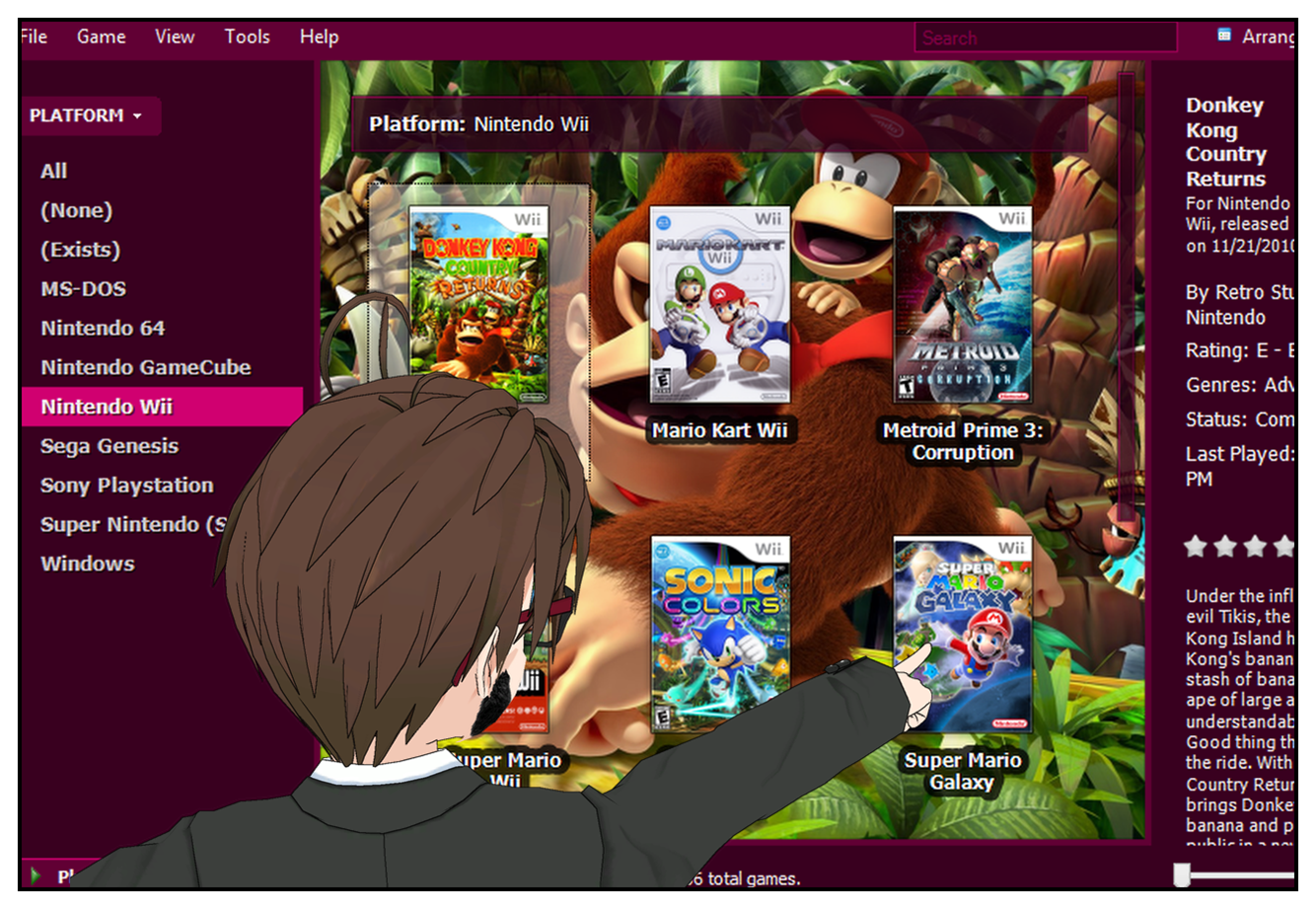
Enter LaunchBox, then, a thoroughly pleasant and well put together front-end for all your emulation… well, no, all your PC-based gaming needs, with a particular emphasis on the emulation of old platforms and operating systems.

Launchbox is, at its heart, a database designed to be filled with records of games with related media files — including ROMs and disk images — attached. It organises software by platform and allows the automatic launching of a particular emulator when selecting a game.

Perhaps its best feature, though, is its online connectivity, which allows it to connect to various online services, including its own online database, Wikipedia and Emumovies, and download all manner of supporting media for each game, where available. This supporting media ranges from simple box art and PDFs of the original manuals to music, movies and fanart of the games. By importing all your ROM files into LaunchBox, you can quickly and easily build up a full gaming database and automatically populate it with relevant information about pretty much any game you'd care to name; any game that doesn't get automatically populated with information can either be corrected yourself or manually searched in case it was stored online under different details.

This makes LaunchBox an excellent resource both for organising your collection and learning about titles you might not be familiar with — particularly those from other territories. The brief blurb LaunchBox provides for supported titles gives a good synopsis of what the game is all about and what to expect from it, and from there it's a simple matter to double-click the game in your collection and be playing it in a suitable emulator almost immediately. LaunchBox even recommends and provides download links to emulators for the most popular platforms and can automatically set them up for you; it also comes bundled with the wonderful DOSBox, which enables you to play old DOS-based games on modern Windows computers.

While I'd still prefer to have a wall full of original packaging and games playable on their original systems, that's not an especially cost-effective thing for me to do right now. So LaunchBox is very much scratching my "collector's" itch until I'm in a position to put together an actual physical collection. And in the meantime, it's turned my PC into pretty much the ultimate games console ever.

2355: Playing God

0355_001

After reading up on their work a bit over on Hardcore Gaming 101, I've become interested in the Super NES games of a developer called Quintet. Their work consists of several games that I've heard of but never actually played, plus one PS1 game that I did enjoy and feel to this day is rather underappreciated: the unusual and interesting action RPG The Granstream Saga.

Quintet are perhaps best known for early SNES game ActRaiser and their subsequent Heaven and Earth trilogy, consisting of Soul Blazer, Illusion of Gaia and Terranigma. (The Granstream Saga is kinda sorta also part of this series, too, though in an unofficial-ish capacity and on a different platform to its three predecessors.)

I decided to start with ActRaiser, since when exploring a developer's work like this I like to start with their early titles and work my way forward through them to see how they developed over time. ActRaiser has primitive elements, for sure — most notably an almost total lack of narrative development, though there are some interesting events that come and go as you play — but by God it's an interesting game, the likes of which I've only ever seen on one (two?) other occasion(s) in the form of Arcen Games' similarly unusual and fascinating A Valley Without Wind.

ActRaiser casts you in the role of God. (Due to the SNES era being the dawn of Nintendo of America's prudishness that persists to this day, He is known as "The Master" in the localisation.) Your job is to deal with Satan. (Likewise, everyone's favourite Ultimate Evil is known as Tanzra in the English version.)

Satan has been up to no good, you see; taking advantage of God having a much-needed rest after Ultimate Good and Ultimate Evil had their last showdown, Satan decided that he should wipe out all of humanity, taint the land to make it uninhabitable by humans should God decide to try and repopulate the world, and then ensconce some of his most trusted lieutenants to make doubly sure that those pesky white-winged types didn't try and undo all their hard work. God isn't standing for this, of course, and so begins your unusual quest.

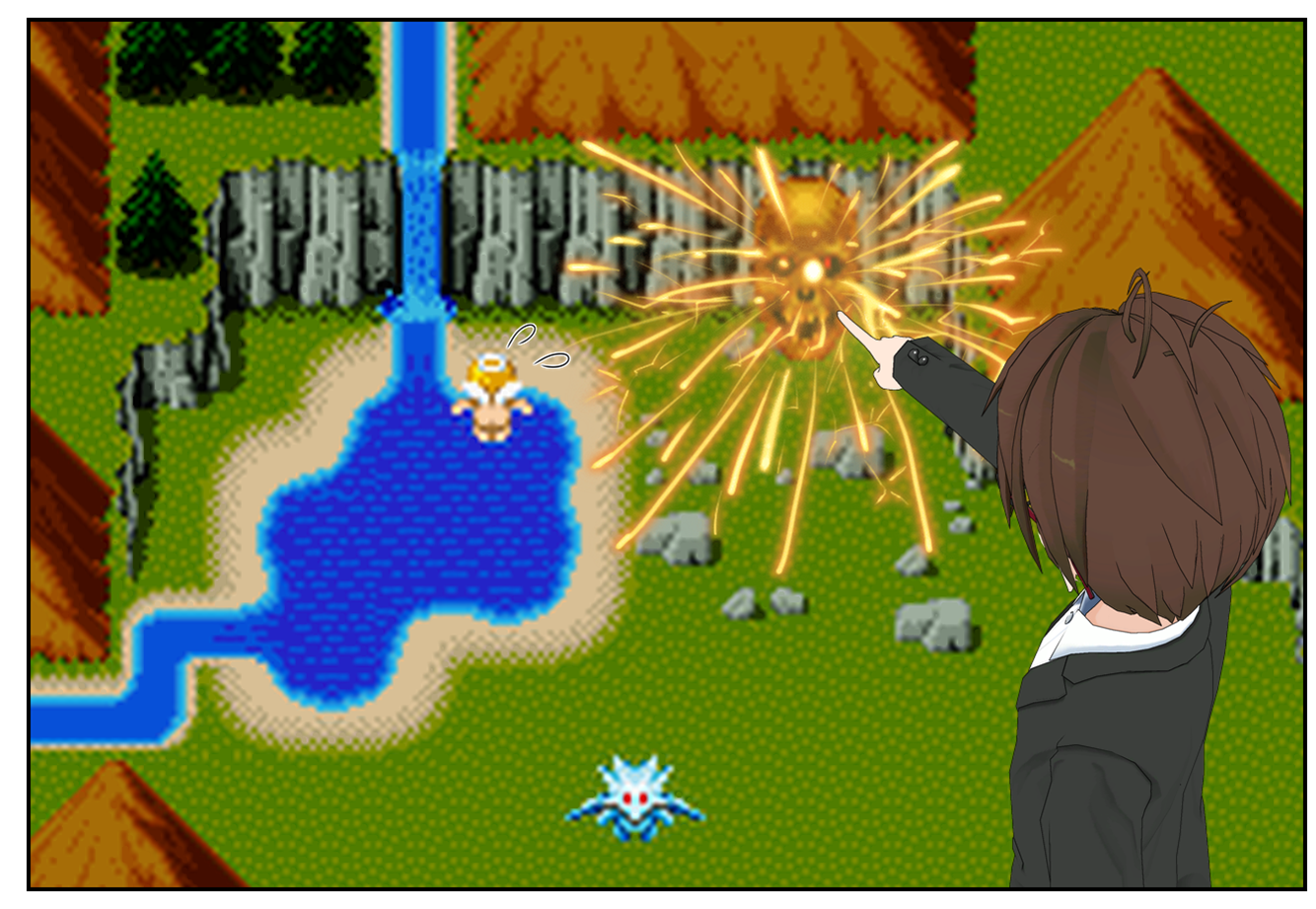
ActRaiser is split into two very different sections. When you first arrive in a realm tainted by Satan's machinations, your first order of business is to clear out the monsters roaming freely over the land. You do this by descending to the surface and possessing a conveniently placed warrior statue, which comes to life with God's holy power and proceeds to dish out some righteous justice on anyone who dares come in range of its blade. Fight your way through a distinctly Castlevania-esque level to a boss, kill the boss and you're ready for the next phase.

Once you've cleared out the monsters, God has enough power to create two followers, who immediately start shagging and pumping out new population for you, so long as you tell them to build some nice streets to put their houses on in a completely different mode that is somewhat like SimCity "Lite". The town then proceeds to repeatedly inbreed with each other as you direct their expansion efforts, with your ultimate aim being for them to build over the top of the inconveniently placed monster lairs around the land, each of which spit out annoying creatures that steal your population or set fire to your buildings at inconvenient moments. Once you've successfully redeveloped the monsters' areas of outstanding natural beauty, you then unlock the second action-platforming stage of the region, which is different and harder, with a different boss at the end. Once this boss is defeated, the region is at complete peace and you can then continue developing it or move on to a new region.

While these two elements of the game are obviously very disparate, they do feed into one another. Your performance in the initial action phase, for example, partly determines the maximum possible population the region will be able to sustain when you start developing it — score more points and you'll have a higher (unseen) cap on your population. Conversely, the more your population expands in the building phase, the stronger the warrior statue gets in the action phases and the more "SP" God has to spend on Miracles.

Oh yes, Miracles; these are a rather integral part of the building phase, and obviously the most fun, too. Beginning with a lightning bolt that burns down most things on a single tile (including houses) and working up to an earthquake that knocks down all low-level structures in a region, your Miracles are used to both direct development of the towns and clear obstacles out of the way. You have to force yourself to feel a certain amount of detachment when doing this, since as the tech level of each region increases and it becomes able to support houses that hold more occupants, it becomes necessary to demolish low-tech houses to make way for denser developments. And, being God, you don't use a bulldozer; you use natural disasters, which is far more fun. It's hard not to feel a little pang of guilt when you watch the little counter of "total population" in the upper-right corner of the screen plummet after you unleash an earthquake, though.

ActRaiser is a really interesting game. Both elements are solid, though neither of them are especially complicated. This is probably for the best; it keeps things reasonably accessible for those who tend to gravitate more towards one of the two styles of gameplay than another, though the difficulty of the action phases in particular is a little on the high side if you're not accustomed to how unforgiving old-school games are.

Ultimately it's a satisfying experience to descend to Earth and smite Evil before watching your little minions gradually spread out to cover the entire continent. You really do get the feeling that your people are relying on your divine powers, too; they pray to you every so often and ask you to help make things happen, and they'll reward you with offerings if you fulfil their requests. Many offerings can then be used in other regions to spread various innovations or culture, making the whole world work a bit better; for example, as soon as the second region discovers that wheat is a more productive crop than corn, you can then export wheat from this region to everywhere else so they can all take advantage of this improved efficiency. Likewise, when your followers reach a man lost in the desert a little too late, a distraught artist discovers the secrets of music, which you can then take to another region and use it to lift their spirits after they've been feeling a bit bleak. In this way, the world of ActRaiser feels very much alive, even if you're not dealing directly with named characters or a rigid, ongoing plot.

I like it a lot, in other words, and it makes me excited to check out Quintet's other work. You can count on a full report when I get to them.

2354: They're Both for Monsters

0354_001

(yes, I found a way to put a beard on my model in ComiPo! Woo!)

I've been playing a bit of The Witcher 3: Wild Hunt lately. I've been meaning to give it a go for ages, but it's never quite dropped in price enough for me to want to jump on board; thankfully, the combination of the Steam Summer Sale and Andie generously buying me a copy as an anniversary present means that I can now explore this game to my heart's content.

Playing Witcher 3 alongside Ys: Memories of Celceta is an interesting experience, because it's a study in contrasts between Western and Eastern game design philosophy. Both of them have a surprising number of elements in common: they're both action RPGs, they both involve exploring a large overworld, fighting monsters and completing quests, they both feature a muscle-bound man with white hair tied back in a ponytail (though he's not the protagonist in Celceta, instead acting as a Dogi-substitute and cipher for the ever-mute Adol) and they're both very good. But they're both very different.

Celceta is fast-paced and action-packed. Its combat is very arcadey, with lots of flashy special effects, overblown sound effects, rockin' music and celebratory messages flashing up on the screen as you do things like use the right attack type to take advantage of enemy weaknesses. In contrast, Witcher 3 feels almost sedate in its pacing, even in combat, which, thanks to its excellent animations and fluid movement, has an almost dance-like feeling about it as opposed to the frenetic leaping around of Celceta.

The upshot of this is that Witcher 3 is a surprisingly relaxing game to play. This might sound strange, given that the setting for the Witcher series is one of the darkest, bleakest takes on Western fantasy out there, but I've absolutely found it to be the case. While in Celceta you can't relax for a moment when you're out in the overworld because everything is trying to kill you, in Witcher 3 there's plenty of opportunity to explore, wander off the path into the bushes and just start walking in a direction to see what's there. Worthwhile things are marked on the map so you're not wandering completely aimlessly — unless you want to — but for the most part the game's rather sedate pacing has the pleasant feeling of a walk in the countryside or the woods rather than constantly fighting for your life, even though the countrysides and woods of Witcher 3's world are far more dangerous than what your average rambler might have to contend with.

Both games have their place, then, and I'm enjoying them both a great deal. I feel like on the whole, I tend to enjoy the more frenetic, chaotic, joyful pace and tone of the Japanese approach to RPGs more — they cheer me up with their sheer energy — but there's most definitely something very appealing and oddly relaxing about the more sedate pacing and carefully crafted periods of solitude in games like The Witcher 3.

2353: Be a Better Sportsman, Online or On the Field

0353_001

One thing that I don't think school P.E. lessons focused on enough was good sportsmanship. The people who were good at sports did well and enjoyed themselves; the people who were bad at sports (like me) got picked last for teams and put in places where they didn't have to do much, like goalkeeping. (Which always seemed a bit weird to me, given that the goalkeeper is the last line of defense in a football match and consequently should probably be quite good at protecting the goal. I was not.)

The upshot of this unfortunate tendency was the reinforcement of these positions: the people who were good at sports continued to be good at sports and grew to expect everyone on their team to be on their level and would sometimes even become abusive towards those who they perceived to be not pulling their weight; the people who were bad at sports grew increasingly bitter and resentful of games that, while competitive, should be fun.

Bad sportsmanship hurts everyone. It means the good players don't get to nurture up and coming talent, help people improve and introduce new players to the activity they love, making them more likely to be able to get a good game. And it means the less skilled players feel ostracised and like they will never have an opportunity to learn more about something they might actually be quite interested in.

It's unfortunate that this happens in online games, too. I don't play a lot of competitive multiplayer games, but I can comment on it a bit with regard to Blizzard's new title Overwatch, whose ranked competitive mode launched late last night.

For the most part, the Overwatch community actually seems pretty good; the game is a team game with variable character skills and statistics, so everyone needs to cooperate to achieve a common goal. If you don't, you lose; it's pretty simple. Unfortunately, there are players out there who seem to believe that if they just make unhelpful comments and call the rest of their team "noobs" that they somehow have the moral high ground and are justified in complaining and whining.

The trouble, I think, is that this particular type of player doesn't like to lose. It's more than that, even: this particular type of player thinks that they have a right to win every game they play. Whether this is due to overconfidence in their own abilities, a misplaced sense of entitlement or having grown up in the obnoxious "everyone's a winner!" culture of many educational establishments these days, I don't know, but it's not a helpful way to be.

A competitive, two-team game by its very nature has a winner and a loser. Every time. You cannot rely on always being the winner — more than anything, that would make the game itself pretty pointless if the outcome was already known before you started. And being on the losing side doesn't make that game a bad experience, either; some of the most interesting, exciting Overwatch matches I've had to date have come when I've lost, but it's been close. And in those matches where it wasn't close, I can usually learn something from the experience. You take it on the chin, you try again, you get better — perhaps you even help out people you were playing with that you know could do something differently.

What you don't do is rage and piss and moan at the rest of your team (or worse, just say "………", which is pretty much the least helpful thing you can possibly say — literally saying nothing is more helpful than that) because that sure as hell isn't going to make them want to play with you again.

And what you absolutely shouldn't do is go off in a strop because you're not absolutely dominating the other team, which is what happened to me in one game I played earlier today. Said player decided he had the "perfect" way to play and wanted everyone to fall into line with him, regardless of where his teammates skills' and expertise lay. The match was pretty even — our opponents scored 2 points on offense, then we scored 2 points on offense, then our opponents scored another 1 point on their final round of offense, meaning we still had the potential to win, or at least draw and push the match into Sudden Death… and Salty McSaltyson decided that no, he wasn't going to stand for having to actually put in some work to winning, he would, instead, leave the match altogether, leaving us down a team member and thereby at a significant disadvantage. Shortly afterwards, another player left in frustration, putting us two people down and therefore completely unable to be competitive at all. The rest of us, to our credit, carried on playing until the "you can leave without penalty when this timer expires" timer expired, but then it fell apart, leaving our team with a loss that could have been avoided. It was a shame, since it had been a great match up until then; our opponents were gracious and apologetic about it, so at least it wasn't a completely negative experience, but still.

That one player being a twat spoiled the match for eleven other people. I doubt he even thought about that when he clicked "leave game" and accepted the penalty the game gives you for leaving Competitive games early — but it really did spoil the whole match which, like I say, could have gone either way in that last round.

Be a better sportsman. Accept that sometimes you win and sometimes you lose. And if you think you're better than other people — you might well be! — how about actually offering them some advice and help to get better rather than just being a dickhead? Everyone benefits in the long term.

2349: Arcade Golf...?

0349_001

To my surprise, the game I'm enjoying most out of the Neo Geo collection I got recently is Neo Turf Masters, a golf game. Now, I'm not averse to a good golf game at the best of times, but I'm really surprised and impressed with how well Neo Turf Masters adapts the standard golf game format to a (relatively) fast-paced, challenging arcade format. It really works!

Neo Turf Masters is pretty simple and straightforward as far as golf games go. You don't have to worry about things like elevation when driving your way up the fairway, just smack the ball in the right direction and make sure it doesn't land in places it shouldn't. When it's on the green, line up with the hole and hit the button when your power meter is around the same point as the handy mark showing where you should hit it. Repeat.

It's refreshingly simple, even as the more cartoony golf games (such as Sony's Everybody's Golf series) adopt more complex mechanics, and it works really well for a quick game of golf. Despite the simplicity of the basic mechanics, the game instead provides most of its challenge through some surprisingly fiendish course designs and an extremely unforgiving structure designed to keep you pumping coins into the arcade original version. (Of course, on the port you can simply continue as many times as you like, but this isn't really in the spirit of playing arcade games.)

No, Neo Turf Masters' biggest challenge comes from its unusual "lives" system. You begin the game with 3 lives or "holes" and spend one of these lives any time you get a Par. (For the non golfing-literate, this means putting the ball in the hole in the exact number of shots the hole's Par says.) If you get a Bogey (one more shot than the Par) you spend an extra hole on top of this. But if you get a Birdie (one fewer shot than the Par) you not only don't lose the hole, you get an extra one to add to your stock. I haven't seen what happens if you do worse than a Bogey or better than a Birdie because my skills at Neo Turf Masters are thoroughly average.

I really like this system, though. It has the arcadey addictive quality of wanting to "1cc" (1 Credit Clear) it without using the Continue function, but considering I can only make it to about hole 4 or so before getting a Game Over, I feel it may be a while before I can manage a full round yet. Still, this is a game designed very much in the old-school mould, where you couldn't just plough through it from start to finish — you had to get good at it. And that's fine! If you could just hammer straight through it would be back on the shelf in less than a couple of hours; with only four courses on offer, there's not a lot of "content" (as modern gamers like to say) here, but it will sure as hell take you a while to master the game and its courses enough to be able to clear each of them.

Easy to pick up, difficult to master, then; something of a mantra for retro games, arcade games in particular, and I can see that the Neo Geo library, regardless of genre, very much seems to be designed around this particular philosophy. And I like it!

2348: I Beat Ys Seven

0348_001

I beat Ys Seven tonight. That leaves just one more Ys game to play through before I've beaten every one of the currently available games in the series, making me eminently ready for Ys VIII, whenever that makes its way West, because it almost certainly (hopefully) will.

Ys Seven is an interesting change after the three games built on the Ys VI engine — Ys VI, Oath in Felghana and Ys Origin. I kind of miss some of the defining aspects of those three games — most notably the platforming elements, which are completely absent from Seven — but Seven very much does its own thing and takes ownership of it, creating an experience that is satisfying in its own right, even if it's a slightly jarring change of pace initially.

The first thing to note about Ys Seven is that it's at least twice the length of previous Ys games. This still puts it at well under the average length of a typical JRPG these days — it took me 24 hours to beat on Normal — but makes it feel significantly longer than the previous titles. This isn't a bad thing, though; along with the greater length comes greater scope: Ys Seven's narrative feels more ambitious and, for want of a better word, epic than its predecessors; while past Ys games felt very much like you were taking care of business in a small, localised area, Ys Seven does a good job of making you feel like the fate of a whole country is at stake. There's a sprawling overworld to explore, and several villages, each with their own unique aesthetic.

This rather more sprawling scale comes at a slight cost: while past Ys games' small geographical area meant that pretty much every character in the game had a name and a story to tell, Ys Seven's NPCs, for the most part, feel quite a bit more generic. This is partly due to the fact that none of them have names, instead being called things like "Obliging Maid" and suchlike — with the curious exception of questgivers, who all have very Western names like "Kevin Lassiter" — but I suppose it does help keep the focus on the main cast, which, in keeping with the rest of the experience, is significantly bigger than previous Ys games.

Even your party is bigger. Adol is no longer alone, bringing up to two companions in tow this time, and there's a reason for this: enemies now have various resistances, meaning you need a balanced party that can cover all types of damage, otherwise you simply won't be able to kill some enemies. For most of the game, there's little reason to switch out from the default party of Adol, longtime companion (but first time playable) Dogi and whoever fills the third slot at that point in the party, but upon reaching the final boss the reason for the total squad size being seven members becomes clear. Be sure to keep everyone's equipment up to date — thankfully, inactive characters gain experience at the same rate as the front line, so there's no need to go out of your way to grind too much.

One aspect of the game that feels very different comes when you're fighting a boss. Whereas in past Ys games boss fights were almost puzzles and dexterity challenges, where you'd have to dodge incoming attacks and take advantage of openings, Ys Seven's bosses are often damage sponges that, at least on Normal difficulty, feel like they can be beaten more through brute force than anything. On the harder difficulty levels I can see them being stiffer challenges, because you're more limited in the healing items you can carry, but certainly on Normal, I could get through most bosses without too much difficulty by just making sure I had enough potions on hand. It wasn't until the final boss, which has significantly more complex mechanics than any of the other fights in the game, that I found myself having to be a bit more careful with what I was doing.

This isn't necessarily a bad thing; Ys Seven's boss fights are enjoyably hard work and feel like you're struggling against a powerful opponent. Like a lot of other things in the game, though, coming straight off Oath in FelghanaOrigin and Ark of Napishtim, it's a bit of an adjustment for sure.

Above all, though, Ys Seven keeps the heart of Ys firmly intact. It's wonderfully sincere about everything, but isn't afraid to show a sense of humour now and again. That said, it's overall considerably darker than any of the previous installments, particularly around the middle of the story, giving it a distinctive feel. It's not overly grimdark or anything — it's still a bright, colourful, earnest quest featuring a silent protagonist who quite literally lives for adventure — but it was a little surprising to see things like a shirtless Adol getting tortured in a jail cell after a particularly dramatic revelation partway through.

I enjoyed it a lot, in other words. Now I just have Memories of Celceta to go and I'm up to date. And then I will have to physically restrain myself from going back to the beginning and doing a Nightmare run, I feel…

2347: Discovering the Neo Geo

0347_001

To date, my knowledge of the Neo Geo platform has largely been limited to "it was that one where games cost over £100". Thanks to a recent Humble Bundle, though (running for another 16 hours at the time of writing) I've had the opportunity to have a go at what my friend Chris assures me are a pretty classic selection of games from the platform.

I'm kind of sorry I haven't checked out Neo Geo games earlier, because they fulfil every criteria I have in my head for what I think an "arcade game" should look, sound and feel like. This is largely because as well as being a home console, the Neo Geo also powered plenty of arcade machines in its time, and the versions you played on the console were exactly the same as you'd play in the arcade. Very few other consoles at the time could boast arcade perfect gameplay and presentation.

But what do I mean by what an arcade game should look, sound and feel like? Well, it's largely a nostalgia thing. When I think of arcade games, I think of childhood trips to the seaside — primarily either Hunstanton if we were going for a day trip, or Newquay if we'd gone on holiday to Devon and/or Cornwall — which always involved a trip to the arcades. To Americans, this might sound like a strange thing to get excited about, but here in the UK, we never really had much of an arcade culture — except, for some reason, at the seaside. In other words, an arcade was a rather unusual sight unless you happened to live on the waterfront, so it was a rare treat to be able to pump some small change into these games, many of which either didn't see home ports at all, or saw vastly inferior ports to home computer and console hardware that couldn't keep up with the specialised, dedicated arcade hardware.

When I think of these trips to the arcade, I think of several things. I think of the feeling of putting a coin in. I think of the sound the machines would make when it accepted your credits. I think of the sounds they'd make when you'd press the Start button, and the dramatic presentation of a new player joining or the Game Over screen.

I think of beautifully defined pixel art, far sharper and more detailed than anything I'd see on a system connected to the TV. I think of impressive animation. I think of sprite scaling and rotation. I think of specialised controls.

When I boot up a Neo Geo game, all of these feelings come flooding back to me. Individually, these elements aren't much, but they add up to the "arcade experience" for me, and said experience carries some fond memories.

I'll talk a bit more about the specific games I've had a go with in a later post, but for now I'll just say that, in terms of gameplay, the Neo Geo games are a reminder of a time when gameplay was first and foremost, and "gitting gud" wasn't something seen as elitist or exclusionary — if you wanted to see the end of the game, you either had to git gud at the game, or you had to keep throwing those coins into the machine. (Of course, when playing at home, you have the option to keep putting virtual credits in indefinitely — though as any shmup fan will tell you, the real challenge in these games is going for a 1CC, or 1 Credit Clear — beating the game without ever using the Continue feature.)

I like them a lot, in other words, and I'm looking forward to exploring the rest of these interesting, unusual and extremely addictive games further in the near future.

2346: Please Buy VA-11 HALL-A

0346_001

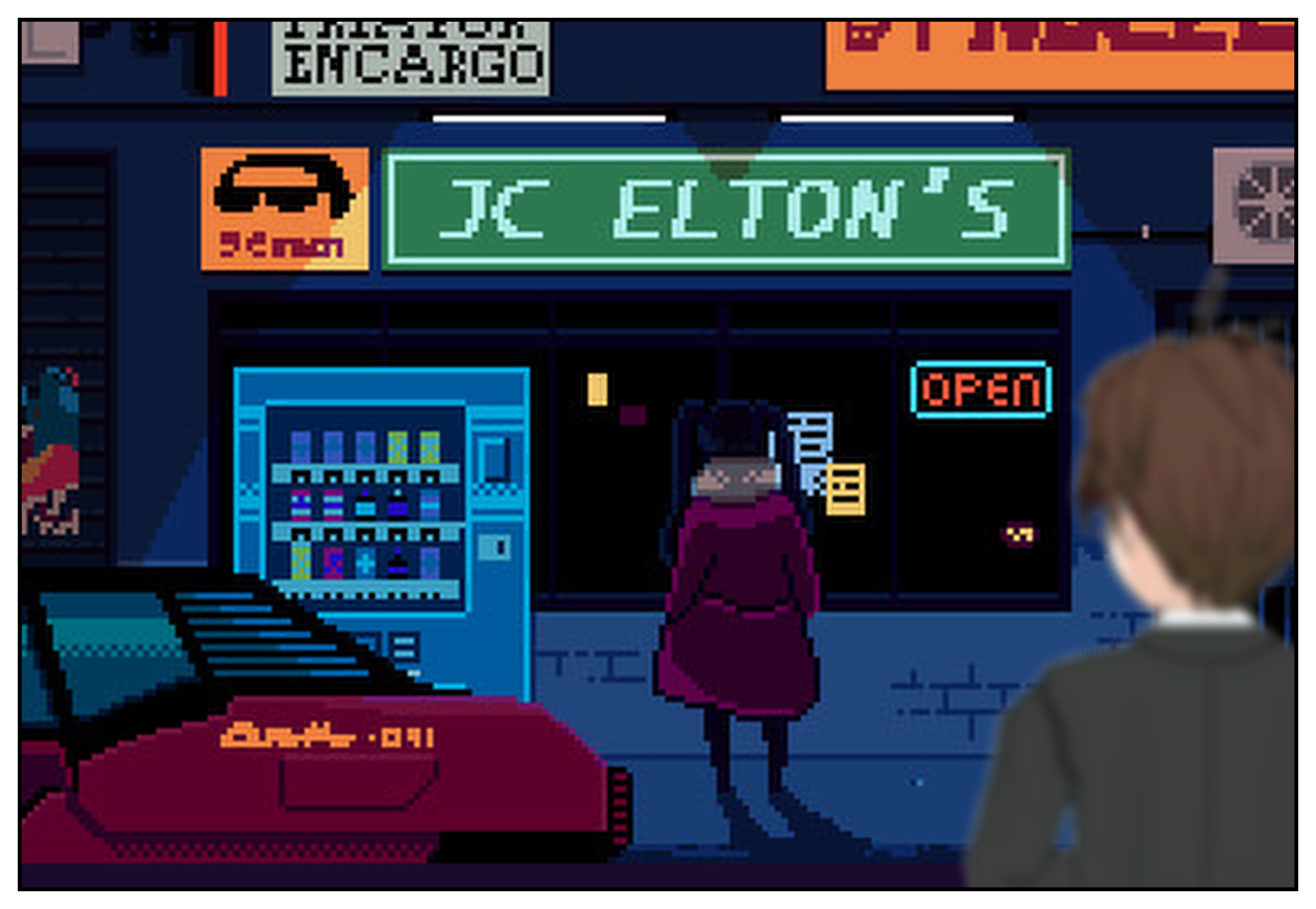
I've been playing a bunch of VA-11 HALL-A over the last couple of days, and I adore it. You can see some random screenshots and thoughts over on my Pile of Shame microblog.

I also wrote a review on Steam for it earlier, so I figured rather than spending time thinking of a different way to write the same enthusiastic words, I'd simply share it here, too.


I've been waiting to play the full version of this for quite some time now, ever since the very early demo enraptured me with its snappy writing, strong characterisation and wonderfully distinctive take on the dystopian future setting. And I'm delighted that the full version has, so far, surpassed all my expectations and hopes.

VA-11 Hall-A is kind of hard to pin down. At heart, it's basically a visual novel, but rather than making binary choices that filter you off down one of several discrete routes, the choices you make as protagonist Jill when going about her daily life at home and at work affect what happens next in the story, including the characters you encounter, how Jill gets along with her clients and co-workers and how everyone reacts to the events unfolding in the backdrop.

Interestingly, VA-11 Hall-A presents its overarching narrative almost entirely from the perspective of Jill behind the bar and in her apartment. Significant things happen in the world, but you don't see them directly; instead, you tend to see the people involved immediately before and/or after the events, or read about them on the news web pages and forums the morning after. Sometimes whether or not you dosed them up with alcohol before the event in which they were involved has an effect, too; prepare to feel guilty if that happens!

To give too many examples would be to spoil the experience, so I'll leave it at this: VA-11 Hall-A does a much better job of almost any visual novel I can name at making its world feel "alive" and like the actions you take actually matter, rather than simply picking a route through the story. There's nothing wrong with the latter approach, of course, but this way of doing things helps keep the people who expect a bit more in the way of traditional "gameplay" happy as well as those of us who are along for the ride primarily from a narrative perspective.

To sum up: great writing, wonderful characterisation, superb music and a glorious, beautiful PC-88 style aesthetic (with perfect pixel aspect ratio even scaled up to 1920×1080) makes for an absolutely lovely, unconventional and entirely memorable game.

I adore VA-11 Hall-A and pray with all my heart that it sees the success it deserves, both here on Steam and elsewhere on the Internet.


I haven't yet finished a playthrough, but you better believe when I do there will be some detailed thoughts and feelings about the whole thing going up either here or over on MoeGamer (from which my previous article on the game's demo is quoted on the Steam store page! Awesome!) — so watch out for those.

This is exactly the sort of highly creative, wonderfully inventive, beautifully presented and sharply written stuff I love to see from the indie scene. And I hope it becomes the sensation it sincerely deserves to be.

Find out more about the game and buy it — please, please, please buy it — on the official site.

2345: Keep Talking

0345_001

I went over to my friend Tim's house this evening for our semi-regular games and food event that we at least attempt to have on a fortnightly basis. Tonight it was just three out of our usual five members, so we spent the evening playing VR games on Tim's HTC Vive.

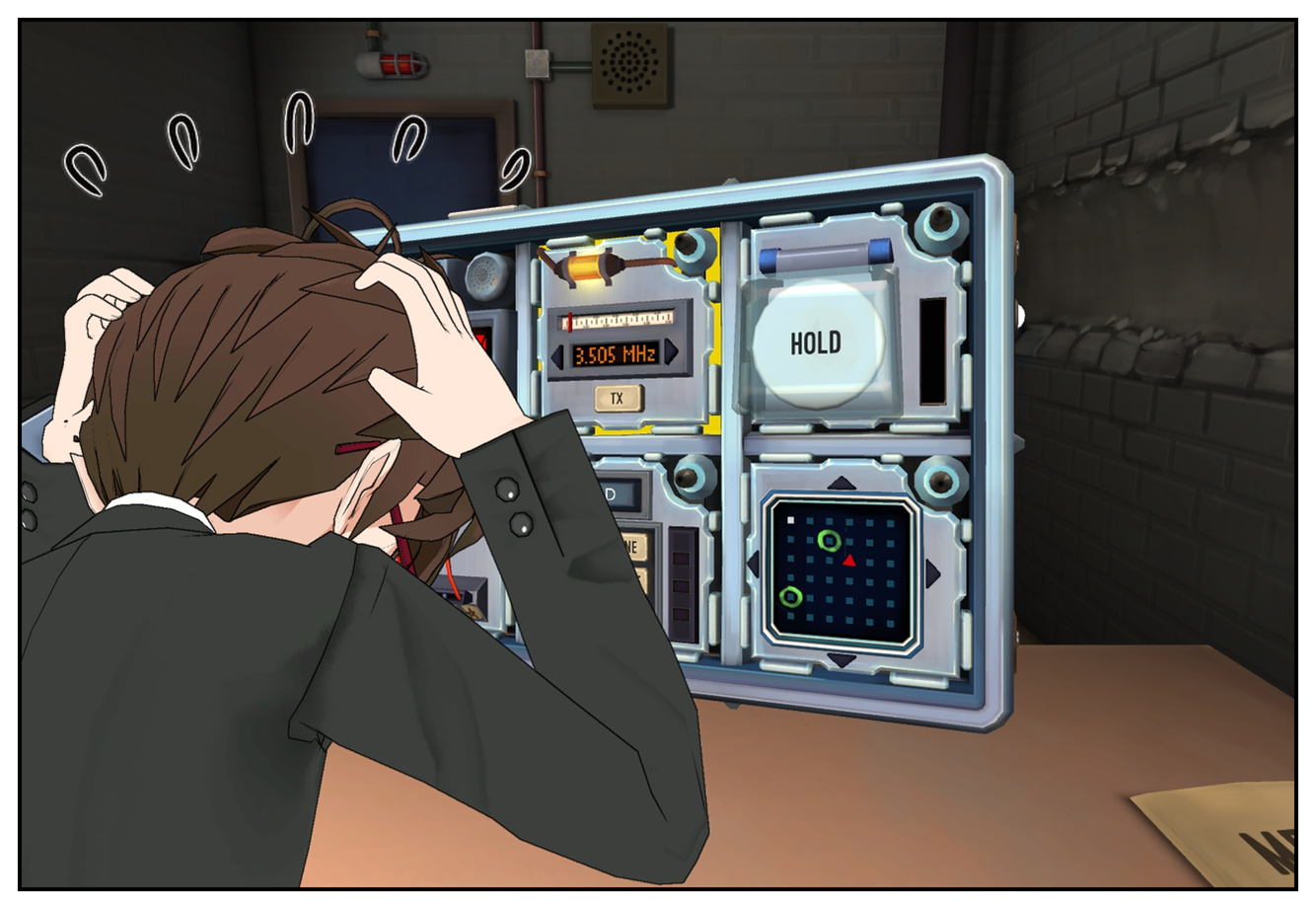
The most interesting experience we had was with a game called Keep Talking and Nobody Explodes, which I've been curious to try for a while. This is a game that doesn't actually need VR to play, but keeping one player quasi-isolated with a VR headset adds a great deal to the experience and makes it considerably more fun. It'll be even better when full support for the Vive controllers is added; at present, the room-scale movement works, but you have to interact with it using a standard gamepad.

Keep Talking and Nobody Explodes is a party puzzle game in the Spaceteam mould in that it's asymmetrical in terms of player roles and requires good communication in order to be successful. The player with the VR headset on is faced with a bomb consisting of a number of discrete modules, while all the other players (which can be literally as many as you want) are "experts" telling the VR player what to do. The twist? The "experts" can't see the bomb, so the VR player has to describe what they see in the hope that the experts can decipher the rather garbled instruction manual and make the correct decisions.

The bombs start off simple with modules such as collections of wires, which require you to read a sequence of logical statements and cut the appropriate wire according to which one is true. There are also buttons that require you to first of all determine a specific condition and then, in some cases, press and release the button with appropriate timing. These are pretty easy to work out and execute.

The more complicated modules range from a memory test that requires you to push buttons according to one of four logical statements, some of which refer to things you did in previous steps, to working out a five-letter password using the available letters in each position to determine what it's most likely to be from a list of possibilities. Then there's a more advanced wire-cutting exercise that requires deciphering a ridiculous Venn diagram according to the colour of the wire and whether or not lights and stars are lit up, and a maze that the VR player has to navigate without being able to see where the walls are.

After a little while, it's possible to "learn" how all these modules work, so at this point the game starts introducing distractions. Initially these are simple: the lights occasionally go off, meaning that you can't see the bomb (but can still interact with it if you remember what you're doing), or an alarm clock starts bleeping obtrusively. Later there are so-called "needy modules" on the bomb which can't be disabled and keep doing inconvenient things during your defusing attempts, so you have to divide your time between taking care of these persistent pests and making progress on the actual disposal effort.

I really liked it as a game. It's simple and intuitive to play, surprisingly immersive as both the "experts" and as the VR player, and has a real, genuine sense of tension to it all. Some of the modules are pretty difficult to work with — the Morse code one being the worst by far — but what's a game without challenge?

I'm glad we gave it a go, and I'm looking forward to playing it again sometime soon. If you're lucky enough to have a VR headset and at least one friend, I recommend grabbing a copy. Even if you don't have a VR headset, for that matter, it's worth a play — just make sure your "expert" players can't see your screen!

2342: A Belated Account of My First VR Experience

0342_001

It occurred to me a few days ago that I had a go in Virtual Reality recently and didn't write about it. Let's rectify that right now.

My friends Tim and Tom both grabbed the HTC Vive pretty much as soon as it became available, because both of them have disposable income and a gaming-related gadget fetish. Last week, I finally had the opportunity to give Tim's setup a go. And I came away rather more impressed with the whole thing than I was expecting to be.

The Vive headset itself is surprisingly comfortable and not ridiculously bulky like the Virtuality headsets of the '90s, which were my only previous experience with VR. The picture quality was reasonably good, too — certainly a far cry from the Virtuality screens, which felt like holding two Atari Lynxes up to your face — but I did find it a little tricky to position the headset absolutely perfectly so that everything on the display was in focus; I found stuff around the edges (particularly the lower edge) was difficult to remove the blurriness from, but I adjusted to it after a little while.

The first thing I tried was the Vive "training" setup, which gives you some examples of how to interact with virtual worlds using the headset and the two Vive controllers. It introduces you to the idea of "room scale" play — the ability to actually physically move around and have your body movements accurately reflected in your virtual viewpoint — and how the Vive controllers offer 1:1 motion tracking that is so accurate, even though you can't see your own hands while you have the headset on, you can still reach out, grab the controllers and press the buttons without any difficulty.

I think the most immediately striking thing about the Vive's VR is the room scale thing, which is, after all, that particular setup's unique gimmick. I was very surprised how natural it felt; there was no kind of input lag when moving my head around, nor when I moved my body; I could tell I wasn't actually in the location I was looking at, due to the lack of tactile feedback in the environment, but I could move around and interact with things as easily as I could in the real world. Particularly impressive in the training demo was the part where you inflate balloons using the controllers, and can then hit them around the room as if they were right there. Again, there was no tactile feedback, but the accuracy of the motion tracking was such that I could intuitively reach out to hit them with a controller, and they would react appropriately. Impressive.

The next thing I tried was Space Pirate Trainer, which is one of the first games to come out on the platform. It's a very simple affair that sees you standing on a platform wielding two pistols and having to shoot down waves of drones that pop up from all sides. The pistols can be switched to various different fire modes, and you can physically dodge the incoming laser bolts from the drones to avoid being hit.

This latter aspect was the thing I found most unusual and surprising to adjust to. I've played games that involve physical movement before — primarily on the Wii, but a couple of EyeToy and Kinect games, too — but I've never played a game where you can see a bullet flying at your face and actually lean out of the way of it. I mean, sometimes I instinctively do it when playing Overwatch (I can't help it!) but in Space Pirate Trainer you actually have to do it in order to survive. And it's not a Time Crisis-style situation where you can either be "hiding" or "shooting" — you can position yourself how you please. You can kneel down to crouch under the shots. You can sidestep them. You could probably even jump over them if you tried. It's kind of amazing, although the game itself is fairly bare-bones, to say the least.

Next up I tried Google's VR art package Tiltbrush. This is actually one of the things I was most interested to try, despite it being utterly "directionless" — it is what you make of it, in other words.

Essentially, Tiltbrush allows you to paint in 3D using various materials. The left Vive controller acts as an artist's palette with several sides, and the right Vive controller acts as your paintbrush and cursor to pick things from the palette. You can then paint with light, colour, fire and various other substances, then the truly impressive part is that you can physically walk around your creation in 3D to admire it from all angles. By extension, this also means that you can create 3D sculptures rather than just flat paintings, and indeed many of the example materials produced by both Google and the community are designed with this in mind. What's really nice about them, too, is that loading them up allows you to watch a recording of the exact strokes and steps they took to create the finished product; it can be fascinating to watch and, moreover, give you some ideas of your own on how to make some interesting designs.

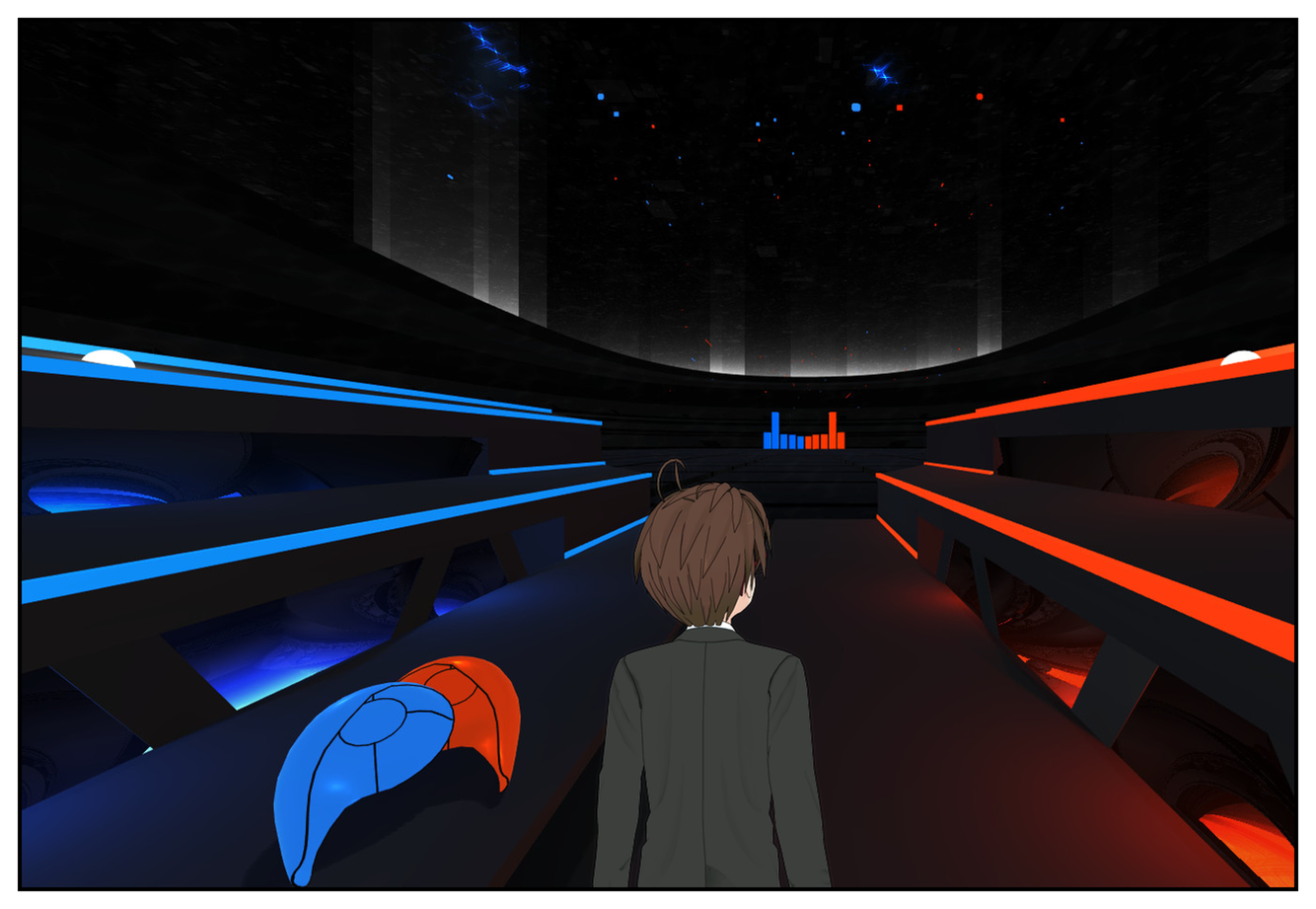
Last of all, I tried Audioshield, a game by the developer of the excellent Audiosurf, and a game designed in the same mould: create levels from your own music tracks or those pulled from Soundcloud, then play through them. In the case of Audioshield, you wield two different coloured shields, one in each hand, and have to block incoming coloured balls that reach you in time with the beats and sounds in the music. While there's less moving around than something like Space Pirate Trainer — the balls only come from one side, though you will have to look up and down — it's probably the most "physical"-feeling of the games I played, in that there was a very strong urge to "punch" the balls (hurr) as they arrived, rather than just blocking them. Indeed, the game rewards you for actually doing this, as well as moving around more than is necessary ("dancing", in the loosest possible sense of the word, in that convulsing like a spastic having an epileptic fit while in anaphylactic shock will also get you credit)  to actually block the incoming beats.

By the time I took the Vive headset off, I was actually sweating. The various games — particularly Audioshield — proved to be a surprisingly intense workout, although the foam thing on the headset that goes around your eye area also seems to just naturally get a bit sweaty. (That and Tim's flat is usually the temperature of the Sun.) I'd had a great time, and I came away much more convinced that VR is something that is going to be really cool in the near future than I had previously been. I'm still not necessarily convinced it's the future of gaming as some seem to think, but I'm certainly completely on board for experiences like Tiltbrush and its ilk.

I'm very interested to see how the launch of PlayStation VR in October of this year affects the VR landscape in general. I have a strong suspicion that it will help drive the technology into the "mainstream", and we'll start seeing a lot more interesting products than the current swathe of what are effectively tech demos that we have now. Very impressive, fun tech demos, admittedly — tech demos that make me kinda want a Vive of my own — but tech demos nonetheless.

So yes. VR looks like it's going to be around for a while yet; we finally have the technology that allows us to have fairly convincing experiences in our own home, which is considerably more than can be said for the last time VR tried to be a thing back in the '90s.