#oneaday Day 239: Two Quests in one day

I recorded some videos earlier. I really like doing adventure game playthroughs, so I decided to play through both King's Quest II (I've already done the first one) and Space Quest, the latter of which I've never played all the way through by myself, but which I've fallen asleep to Dan from Game Grumps playing on numerous occasions.

I was hoping to get The Dagger of Amon Ra done also, but it turns out playing and beating three adventure games in one day is just a little too ambitious, so I've settled for just the two mentioned. The Dagger of Amon Ra is still on the list, though; I found The Colonel's Bequest far too interesting to just leave Laura Bow hanging like that.

I mostly enjoyed the experience of these two games. King's Quest II is a game I have fond memories of playing as a kid, though I'm not sure I ever actually beat it when I was younger. Space Quest was mostly a pleasure, also, save for two truly awful and mandatory sequences you have to endure: a "skimmer" race where you have to dodge incoming rocks, and a slot machine sequence where you need to earn an obscene amount of money using a purely luck-based system. (If you're playing a later revision of the game, there is a cheat to bypass this sequence, but sadly, the ST version I was playing was not said later revision, so I had to do it "the hard way".)

I always find it fascinating to go back to adventure games, because when I was younger actually making it all the way through one seemed like a literal impossibility. Particularly if we're talking about Sierra games, which most certainly are not afraid to kill off the player regularly, or leave them in a situation where they forgot an item earlier in the game that is mandatory to progressing later. King's Quest is probably more notorious than Space Quest in this regard, but as it happens, of the two games I played today, King's Quest II was probably the gentler, fairer of the two, while Space Quest had several opportunities to miss important objects and completely screw your entire playthrough over.

But no. Those games that seemed impossibly huge and insurmountable as a child are almost laughable in their length today. Actually, no, I don't mean that; both King's Quest II and Space Quest (annoying bits aside) are just the right length to be satisfying, so far as I'm concerned, but I do feel like if a modern equivalent of both of these was released today, they would be quickly review-bombed by entitled Steam kiddies whinging about "lack of content" and "no updates, abandoned game".

For me, though, it's nice to be able to power through a game like this in the space of a couple of hours — possibly even quicker if you know exactly what to do and the best order to do it in. I certainly enjoyed recording these two videos today — and I'm looking forward to publishing them over on YouTube over the course of the next few days. Now, though, it's 1.15 in the morning and I should probably go to sleep. Adventure is calling, but an adventurer also needs his rest, to be sure!


Want to read my thoughts on various video games, visual novels and other popular culture things? Stop by MoeGamer.net, my site for all things fun where I am generally a lot more cheerful. And if you fancy watching some vids on classic games, drop by my YouTube channel.

If you want this nonsense in your inbox every day, please feel free to subscribe via email. Your email address won't be used for anything else.
#oneaday Day 238: The Sims is still good

The rumours were true! Just ahead of the series' 25th anniversary, EA dropped rereleases of The Sims and The Sims 2 on their own storefront and Steam earlier today, for the eminently reasonable price of £34.99 for the both of them. Considering they both come with all the expansions (well, I think The Sims 2 might be missing the IKEA "stuff" pack, but that's about it), I'm perfectly happy to pay up for them both, particularly considering The Sims has never had a digital release, and The Sims 2 has been unavailable for a long time.

"But you can get them both for free!" the entitled corners of the Internet shout. "They're abandonware, and that means you can legally download them for free!" Well, firstly, one, no it doesn't, because abandonware isn't actually a thing, legally speaking, and two, it is important to support official rereleases of stuff like this, because it gives a thumbs up to companies making a commitment to actually preserving their history and making it available to everyone, even those who weren't there for it first time around. It's no good carrying on about "preservation" if you don't support actual attempts to do that. Piracy is all well and good if there is no other way, but official preservation efforts should be supported. Yes, even if they're by EA.

Both rereleases have been updated so that they work just peachy on Windows 10 and 11, and The Sims is able to run in much higher resolutions than it ever has before, and in widescreen. Okay, the game could arguably do with a UI scale option when playing at 1080p or higher, but it's not unplayable by any means, particularly if you're playing on a big TV as I have been.

I've spent a few hours revisiting The Sims this evening by making a rough recreation of my original "Hartley Family" save file, which featured me and the other members of my hall of residence flat at university struggling to survive. I am reminded that the original The Sims is actually surprisingly challenging compared to some of its follow-ups; thus far, keeping on top of six people's needs has been quite difficult, particularly with a lack of substantial income. Things will get easier once some of them start getting promoted and bring in a bit more money each day, but for the moment it's very much in "scraping by" territory.

Also one of them has died already after burning down the kitchen, but I managed to "Plead" with the Grim Reaper quickly enough for him to be able to return as a zombie. I have made a promise to myself that I'm not going to save scum at all, I'm just going to deal with the consequences of everything that goes on as it happens. Emergent narrative and all that.

I'm interested to spend a bit more time with the original The Sims, as back when it was current, I had a lot of the expansion packs, but not all of them. I don't think I had Superstar, Unleashed or Makin' Magic, and those are three that have some substantial additions to the gameplay — the pursuit of fame, pets and the ability to cast spells using appropriate components respectively.

At present, I've got one of the six Hartley family members equipped with a magic wand and (thus far) the ability to turn someone into a toad, and another who keeps slipping off to the "Studio Town" area to go and sing karaoke badly (earning a whopping 5 Simoleons per performance at present) but so far, it's a struggle to keep their mood high enough to be able to truly take advantage of those features. Much as with real life, getting a solid and stable income stream is important if you want to start doing anything out of the ordinary.

So that's that. The Sims and The Sims 2 are both available on Steam and EA's own storefront right now, either separately or in a bundle together. You also get a "free" copy of The Sims 4 with them, but since that went free-to-play a while back anyway it's probably best ignored unless you want to get into DLC hell. The rereleases of both The Sims and The Sims 2 are complete, meanwhile (aside from the aforementioned Ikea pack for The Sims 2) and should keep you busy for a very long time indeed.

I'll probably write more about one or the other or both at some point, but for now, I'm happy. It's been a nice bit of nostalgia to revisit The Sims — and a reminder that as cynical as people got about the series over the years (not without good reason), it's still just a damned fine game at heart, too.


Want to read my thoughts on various video games, visual novels and other popular culture things? Stop by MoeGamer.net, my site for all things fun where I am generally a lot more cheerful. And if you fancy watching some vids on classic games, drop by my YouTube channel.

If you want this nonsense in your inbox every day, please feel free to subscribe via email. Your email address won't be used for anything else.

#oneaday Day 237: The library is open

A number of things occurred today that I could potentially talk about: some positive, some not so positive. In the interests of… (gesticulates at all this) everything I'll focus on probably the most positive one, because it's something I'm really excited and happy to see.

Those of you interested in video games as a medium may be aware of the work of the Video Game History Foundation. They've been working as a charitable organisation chronicling the history of the medium for some time now, and they're responsible for the figure you may have seen bandied around that "87% of classic games are not available".

Something they've been working on for a while is providing a means of public access to their library of materials, which includes not only old computer and gaming magazines, but also development and marketing materials as well as some thoroughly fascinating bits of miscellanea, such as a gamer's hand-drawn maps of two early Zelda games that found themselves among a donation of other bits and pieces.

Today, the organisation launched the library for "early access", presumably meaning that there might be some kinks to work out and that it will expand over time, but already it's clear that it's going to be both a valuable resource and something that is just interesting to explore.

There are two main components to the library. First of all is the main catalogue at library.gamehistory.org, which is a catalogue of the materials that the organisation holds. This is interesting to browse through and see what's in their collection, but isn't of that much use when researching things. For most, the real attraction will be the digital archives at archive.gamehistory.org, which include digitally preserved material — scans and other digitised content, in other words.

At present the archives only contain a fraction of what is listed in the main catalogue, and the organisation notes that there is some material that may never be digitised for public access via the Internet for one reason or another. But what's there already is plenty to get stuck into. There's a library of magazines, for example, including 33 publications at the time of writing, including complete or near-complete runs of well-known mags such as Game Informer, Electronic Gaming Monthly and GamePro, plus early attempts at gaming media like Electronic Games, a spinoff of Video magazine's Arcade Alley column.

Right now there is, unsurprisingly, a bit of a US bias to things (and as I type this, the site has crashed under the weight of day-one demand so I can't check what non-American stuff they have, if any!) but there's a significant chunk of gaming media history to explore here; the aforementioned publications all played an important part in shaping video game fandom at one point or another, and the digitally available collection will only continue to expand over time. I'm particularly excited to see the archive of Electronic Games there, as this is an incredible resource to see how early consoles (like the Atari 2600, Intellivision and suchlike) and 8-bit home computers were covered by a fledgling enthusiast press.

But it's not just about magazines. There's also stuff like an archive of the CDs GamePro had that contained press materials, from the days before press assets being distributed via the Internet. There's production materials from games, some of which never made it to market, like SimPeople (what would subsequently become The Sims). There's development materials from a wide variety of sources. And tons more.

I'm really looking forward to exploring this library of stuff and seeing how it expands over time. It's going to be an absolute boon to anyone researching the history of video games and how they were covered by the media of the day, and I can't wait to make use of all this material when composing videos and articles.


Want to read my thoughts on various video games, visual novels and other popular culture things? Stop by MoeGamer.net, my site for all things fun where I am generally a lot more cheerful. And if you fancy watching some vids on classic games, drop by my YouTube channel.

If you want this nonsense in your inbox every day, please feel free to subscribe via email. Your email address won't be used for anything else.
#oneaday Day 235: Being conscious of game design might make games less enjoyable

There are a few terms that are bandied around the gaming enthusiast sphere that I've really come to loathe: "gameplay loop" and "quality of life". The reason for this is that any time discussion involving these terms comes up, I find myself pulled right out of any sense of immersion I might have had in something, and start thinking of something purely in terms of its mechanical and structural features.

This isn't necessarily a bad thing in and of itself, of course, because the artistry of video game design isn't just about making pretty graphics, composing stirring music and writing a compelling story. Indeed, there are many games that completely lack a narrative element, making their mechanical and structural elements the important bit you should be looking at if attempting to analyse a title as a creative work in any level of detail.

But there are also times where it just sort of sucks to be aware of the man behind the curtain; of all the things that are going on that make something look interesting and compelling. By being aware of all the digital ropes and pulleys behind the scenes, it becomes harder to suspend your disbelief and treat something as a coherent, creative, artistic work.

I became particularly conscious of this in Final Fantasy XIV over the last couple of years. This is by no means the only example where I've felt this, but it's one where I have felt it particularly keenly, so I'm going to use it as a specific example.

When I started playing Final Fantasy XIV, I absolutely adored it, and it will always be special to me, not least because it's the medium through which I proposed to my wife. But over time, it's started to feel less like an immersive world in which to exist and live another life, and more like a series of buttons to push in order to make the next thing happen.

Part of this is down to predictability. Final Fantasy XIV's main scenario has a predictability problem — not in the narrative itself, but in the way that narrative is delivered. Essentially, it goes like this:

  • Arrive at new major location, unlock new fast-travel point
  • Do couple of story quests to introduce location
  • Map suddenly explodes with sidequest icons, all confined to the location you're in
  • Do sidequests (because if you're anything like me, unfinished sidequest icons are complete anathema)
  • Do next few story quests
  • Map suddenly explodes in sidequest icons again (it always does it twice)
  • Do sidequests (see above)
  • Do next few story quests
  • Do dungeon/trial
  • Move on to next major location
  • Repeat

I hate that I'm aware of this, and I can't "unsee" it. Because over the course of the last few expansions, I found myself reaching a new location and not thinking "cool, a new place to explore and get to know!" but instead just thinking "those sidequests are going to pop up any minute now, and I'm going to have to do them before I move the story on, even though I've already outlevelled the story by a considerable factor". The whole thing started to feel a bit like it was just doing things by rote precisely because it was so predictable; you never stumbled across someone in the wild who had a cool "secret" quest for you to do, for example.

Part of the reason for this ties in with those terms I used above: "gameplay loop" and "quality of life". The relevance of "gameplay loop" should already be self-evident: it's the predictable sequence of events you go through when you play the game. "Quality of life", though, bears a bit more discussion — and not just because when I hear that term I always think "making your beloved pet/family member comfortable before their imminent death" rather than "making the menus a bit nicer to navigate".

Modern gamers are obsessed with "quality of life improvements" in games. In short, ways to make playing the game more efficient and, supposedly, comfortable. "Quality of life" is why Final Fantasy XIV only ever gives you sidequests in populated areas in big, predictable chunks like this; it's so those who want to power through the story and get to the endgame — where "the real game" starts for many MMO players — can do that, while everyone else can, in theory, take their time over enjoying the story.

Except, as I've outlined above, it doesn't really work like that, because this structural element is so flagrantly transparent that it actively detracts from my feeling of immersion in the game world and whether or not I care about the various communities of non-player characters that I encounter over the course of the story. And it's really hampered my overall enjoyment of the game in recent years.

Some of this is, perhaps, a me problem. But I also think it's symptomatic of a broader problem with gaming in general. Both players and designers are seemingly obsessed with creating an experience that is as "frictionless" as possible, where everything you might want to do in a game is always within arm's reach, and while you might have to put in a bit of time to see everything, you probably won't have to work too hard for it.

In Final Fantasy XIV, this is visible not only through the game design itself, but in the way the western player base seemingly likes to play the game: all third-party externally hosted spreadsheets and timers designed to get each session being as "efficient" as possible rather than just enjoying the ride. I don't like it, and it's not as if I can just ignore it, either, because there are elements of the game — notably The Hunt and FATEs, which both involve things spawning semi-randomly around maps, and which are inevitably dominated by those with a spreadsheet on a second screen to tell them where to go next — that I simply can't engage with due to the way other people play; all because of their obsession with "efficiency" and "quality of life".

As I noted the other day, I'm replaying Xenoblade Chronicles right now. And while this is, to an extent, prone to the exact same problem I describe with Final Fantasy XIV above, it also isn't afraid to throw unexpected elements in your path such as questgivers hiding in an obscure corner of the map or who only appear under certain conditions, nor is it afraid to present you with an objective that you can't just quickly grind out in five minutes. I've had a quest in my log since near the beginning of the game challenging me to demonstrate friendship between two female party members, for example; you don't even get a second female party member to be potential friends with the first one until a good 25+ hours into the game.

Rather than that being annoying, I appreciate that. It's something I keep at the back of my mind while I'm playing and, while it does inform the way I play to a certain extent, I'm not just thinking "I need to do this for a mechanical benefit or to progress the story". It ultimately doesn't matter if I complete that quest or not, though the rewards are nice. But I want to, because Xenoblade Chronicles gets you in a mindset where it's enjoyable to help the virtual people, particularly if it requires some effort on your part. This is, of course, taken to an extreme by the "rebuild Colony 6" sidequest that pretty much lasts the duration of the game, whereby you'll need to find collectible items, enemy drops and recruitable NPCs to rebuild a ruined colony that suffered an attack from the game's main antagonists, the Mechon.

Again, though, because that objective is there as a long-term thing to engage with rather than a throwaway sidequest to power through just so I can see the next main scenario event, I actually give a shit about it. It's not trying to be part of a "gameplay loop" and it certainly doesn't care about your "quality of life" if the drop rate on some of these materials is anything to go by… but y'know what? I like it. I appreciate it. It doesn't feel like the game is pandering to my laziness.

Being aware of a game's structure can hurt the narrative in other ways, too. For example, it's extremely rare that playable characters in an RPG are put into any real peril, meaning that if you see a cutscene where they're suffering, they're probably going to be all right in the end. One could argue that this is a problem shared with serialised television, in which the contracted regular cast members will always be all right regardless of whatever scrapes they get into in each episode (unless their contract's up at the end of the season… RIP Jadzia Dax), but it somehow feels more pronounced in gaming.

There are, of course, rare exceptions to the rule — anyone who played Final Fantasy VII back in 1997 will be well aware of probably the textbook exception — but they don't come up often, particularly in games that go for a somewhat lighter tone. In short, game designers don't want to take away a playable character that people might have invested time and effort into customising and levelling up, because they'll see that as "poor quality of life". It's why you don't often see the "party member becomes the final boss" trope, either; people would be upset, and not because of the way the story went.

In talking about this, I'm reminded of the fuss there was over the ending of Fallout 3, which originally ended with your character selflessly doing… something or other (I forget what) in a heavily irradiated room, meaning the last thing you did in the game was die. I absolutely loved this when I first encountered it, because I thought it was an incredibly symbolic and ballsy thing for the developers to do — even if, when you stopped to think about it, it didn't make a ton of sense, because you were with a radiation-proof mutant at the time who could have quite happily done what you did with absolutely no risk to himself whatsoever.

But to me, that plot hole didn't matter. The ending was dramatic and symbolic. "This is my last act in this horrible world," that ending made you say. "I hope it makes life better for someone." But no. Because people wanted to keep playing after the ending, it got patched out, making the actual end of the story much more of a wet fart in comparison. I lost a lot of respect for Bethesda that day, and it was frustrating to see mechanical and structural elements win out over narrative, making the latter significantly weaker and less impactful than it was before.

Your mileage may vary with all this, and I'm sure it's possible to train your brain out of seeing all the metaphorical Oompa Loompas going about their business. But for me, I kind of long for the days when I was innocent and full of wonder; back then, I never found myself thinking "how did they do that within the constraints of the game engine and overall structure?", because I was too busy thinking "wow, that's cool". And, as I get older, I can't help but feel like that sense of starry-eyed wonderment was much more fun.


Want to read my thoughts on various video games, visual novels and other popular culture things? Stop by MoeGamer.net, my site for all things fun where I am generally a lot more cheerful. And if you fancy watching some vids on classic games, drop by my YouTube channel.

If you want this nonsense in your inbox every day, please feel free to subscribe via email. Your email address won't be used for anything else.
#oneaday Day 234: The return of The Sims?

Supposedly The Sims and The Sims 2 are getting the rerelease/remaster treatment at some time around the end of the month. It is the 25th anniversary of the series this year, and it appears that EA is actually listening to people for once and (supposedly) bringing back two of the most fondly regarded entries in the series, neither of which have been available for a very long time — and I don't believe the original The Sims has ever been available digitally, since it came from that dark and mysterious time where you had to go to a shop to buy PC games. (Yes, I miss it. I would be much more of a PC gamer if it was possible to have a physical PC game collection.)

I used to really enjoy The Sims. The original game came out at an absolutely perfect time for me: while I was at university. As someone who had previously enjoyed the SNES version of SimCity (aka the best version… apart from the bugs) and Sim City 2000, I was intrigued to see creator Will Wright doing something a little bit different. The idea of a "life simulator" was something that had captured my imagination from around the 16-bit age; Activision's Little Computer People existed, but I wondered what something with a bit more "game" to it might look like.

Something really enjoyable, as it happened. The Sims, just in its base form, was an absolute revelation. Not only did I have fun with it, but everyone in my flat at university enjoyed getting involved, too. I'd made virtual versions of all of us, and everyone liked to check in every so often to see how we were all getting along. Because I rather overdid the size of our house when I started playing, we all had to sleep in recliners in the large communal living area for a while, but as everyone got jobs and started bringing in the Simoleons, we were able to live a rather luxurious life.

The Sims is interesting to think back on, because it's from a time where you could release a "sandbox" game and it wasn't anything unusual. Moreover, these games didn't need anything like achievements, daily quests or other engagement-bait to get people to enjoy playing them. They were enjoyable just because… well, because they were good. I'm actually rather interested to revisit the original The Sims just to see how well it holds up today. Obviously the graphics will look a tad dated, but I bet the gameplay still has it where it counts.

The Sims 2 I remember owning, playing and enjoying, but I don't recall playing it quite as much as the original for one reason or another. It certainly wasn't because I didn't like it or anything — I recall picking up several of the expansions for it — but for some reason it doesn't stick in my mind quite as much as the original. I know it's an especially fondly regarded entry in the series, though, so it might be fun to have another look at.

I really enjoyed The Sims 3, even though that was really the point that EA started truly taking the piss with the number of expansions and "Stuff" packs — something which has been taken to a frankly obscene degree with The Sims 4, which I've never played. I had a lot of fun with the World Adventures expansion in particular; I really liked the "dungeon crawling" subgame that added to the mix, as it made you make use of the game's mechanics in a rather different way.

I'm normally loathe to give EA money, particularly as they seem all-in on the AI fad right now, but I might make an exception if they don't fuck up the ports of these games — which is, of course, a distinct possibility. But we'll see; sources seem to reckon we'll see them by the end of the month, and there ain't much left of the month. Further reports as events warrant!


Want to read my thoughts on various video games, visual novels and other popular culture things? Stop by MoeGamer.net, my site for all things fun where I am generally a lot more cheerful. And if you fancy watching some vids on classic games, drop by my YouTube channel.

If you want this nonsense in your inbox every day, please feel free to subscribe via email. Your email address won't be used for anything else.
#oneaday Day 233: Rearranging

This weekend has mostly been about Rearranging Things. I was getting to a point where I was out of room for new games in the living room, see, so something had to give at some point. And, this weekend, that something has well and truly given. I haven't quite finished the entire process, but the net result is that I will have a lot more room both in my study upstairs and in the living room, giving the game collection a bit of room to continue to grow in the near future. Assuming Switch 2 continues to be as good for physical releases as the current Switch, that will most certainly continue to happen.

Here's a rundown of what I've done, if you care:

  • Packed away the vintage computers (Atari ST, Atari 130XE). As much as I love them, whenever I'm "doing something" with either Atari 8-bit or ST, I'm doing it via emulation of some description, primarily so I can record the process. Recording the real ST and/or 8-bits isn't out of the question, but with stuff like The400 Mini and Hatari so readily available, there's really little reason to keep the old stuff out for the moment.
  • Packed away a significant chunk of Atari ST software. I've kept the games out because even if I'm emulating them for a video, it's nice to have the packaging and manuals available to use — plus those shelves make a nice backdrop for videos. The stuff I've packed away is all either educational, productivity or music/audio software — stuff that I really have very little reason to make use of.
  • Packed away all my big box PC games. Realistically, if I'm going to play one of these games, it's going to be via GOG.com/DOSBox or eXoDOS. It would be nice to have the boxes and manuals available on hand, but there are plenty of solutions available for doing that "virtually" if required.
  • Moved all the stuff that was just taking up space in the cupboard in my study into a "to go into the loft" pile. Most of that was vintage computer stuff, and if I'm packing the main vintage computers away there's little reason to have, say, an Atari ST monochrome monitor knocking around.
  • Moved a chunk of PlayStation 2 games from the living room to the cupboard in my study. There's a Billy bookcase in there that I can now reach now all the crap's been moved out of there, and I've put PS2 games that I don't want to get rid of or which won't be worth very much in there, keeping the PS2 shelves downstairs for stuff I might still want to play on the big TV. This has freed up a bunch of extra shelves for the collection down here to expand into.
  • Moved all the Evercade stuff into my study. Since I work up there, it makes sense to have it all up there — plus if I want to make videos on Evercade stuff, it's much more convenient to have them on a shelf next to me rather than downstairs, as much as I enjoyed displaying the collection with pride in the living room.

I have not yet rearranged the existing Switch games to fit the newly available space, but I basically have about four full shelves available to use that I didn't have before, which is nice. I'm glad I was able to do this without having to throw away or get rid of anything; while I know putting stuff in the loft can seem like a death sentence for some stuff, at least I know it is there if I do want to get it back for whatever reason — or if we eventually decide we want to move to a bigger place. (I'm still holding out for that lottery win… it hasn't happened yet.)

Anyway, all that's really left to do today is to get a binbag and clear all the crap away from my actual working desk in the study so I can use it for, y'know, working tomorrow. That can wait until after dinner, though. I need a sit down now!


Want to read my thoughts on various video games, visual novels and other popular culture things? Stop by MoeGamer.net, my site for all things fun where I am generally a lot more cheerful. And if you fancy watching some vids on classic games, drop by my YouTube channel.

If you want this nonsense in your inbox every day, please feel free to subscribe via email. Your email address won't be used for anything else.
#oneaday Day 227: Back on the Bionis

Having finished Fire Emblem Engage and entered my "waiting for Xenoblade Chronicles X" holding pattern in earnest, I couldn't resist any longer and started up Xenoblade Chronicles: Definitive Edition. It's a long time since I played the original Xenoblade Chronicles, and I feel like it will be good to revisit it before playing X, since X was actually the first "sequel" in the series; Xenoblade Chronicles 2 didn't come along until much later.

I'm not playing Xenoblade Chronicles 3, which I haven't played at all yet, because I will want to give that my full attention when I get to it, and I am reliably informed that with the way I play, I will likely take upwards of 150 hours to fully enjoy it. The original Xenoblade Chronicles, meanwhile, while still pretty massive, is a tad shorter, and I have faith I can get through it to my satisfaction before March 20, when X drops.

It's been thoroughly refreshing to go back to Xenoblade Chronicles, and I'm reminded of quite how much I like it. It really is a game that goes "what if the open-world bits of an MMO, but single-player?" and runs with it. This is a marked contrast from something like Final Fantasy XIV, where the open world stuff is fun while you're going through the story, but it pretty much ceases to be relevant once you get to endgame and spend the majority of your time in instanced multiplayer scenarios.

What do I mean by "MMO, but single-player?" A few things, really. Firstly, a big world to explore, based on roughly level-stratified zones — though each zone does have a few high-level surprises scattered around the place to make later revisits worthwhile. Secondly, a heavily quest-based structure. You probably can blast through the main story of a Xenoblade Chronicles game pretty quickly, but the appeal is in getting to know the world as a whole and all the incidental characters that populate it, so if you don't do a bit of questing, you're missing out on a significant part of the fun.

Sure, some of those quests may fall into the "kill [x] [y]s" or "get [x] drops from [y]s" territory, but what these quests do is encourage you to visit different areas of the world and discover what there is to see. And while you're doing that, you'll almost certainly feel a bit of that "I wonder what that thing over there is" wanderlust… and chances are, you'll find something interesting there. Xenoblade Chronicles' world is specifically designed to reward exploration, so it's worth your while to go poking your nose wherever you can.

The third way that Xenoblade Chronicles resembles an MMO — arguably more so than some of its follow-ups — is in its combat system, which uses a hotbar of abilities (or "Arts", as they're called), which each have a cooldown before you can use them again. The emphasis is less on finding a "rotation" as in some MMOs, however, since your auto-attacks are a lot more formidable than in something like Final Fantasy XIV, and instead on using your Arts as effectively as possible, ideally by meeting additional conditions that allow them to do more damage or inflict status effects on enemies.

Take protagonist Shulk, for example, who is a solid fighter, but not a tank by any means; that role is ably fulfilled by the first party member you get, Reyn. This leaves Shulk free to deal damage while Reyn attempts to keep aggro off him as much as possible, and to further support that, many of Shulk's Arts are positional, meaning that you need to be standing to the side or back of an enemy to make full use of them. Thus you end up taking a very similar approach to how a lot of MMO combat works: the tank stands with the enemy facing them, while the rest of the party stands behind or to the side of the enemy and pelts them from there.

Each playable character in Xenoblade Chronicles handles rather differently despite all using the same hotbar system. The aforementioned Reyn, for example, needs to focus on generating aggro as much as possible, but he's also able of dishing out some decent damage while he's doing so, too. Contrast with Sharla, the second party member you get, who is a ranged combatant with solid healing skills. Sharla is able to disengage from the main melee and hit enemies from afar with her rifle, as well as flinging out healing and buff Arts on her party members. She also has to manage the heat of her rifle; as well as dealing with time-based cooldowns, using her Arts also causes her rifle to overheat, so you have to make sure she takes the time to vent the heat every so often.

The nice thing about Xenoblade Chronicles is that you can play any one of these characters, or just stick with one for the duration, since the AI that controls the other two party members while you fight as the third is pretty solid. There's no need to "program" the AI like in Final Fantasy XII's Gambit system — although fans of that game will probably agree that programming Gambits is fun — as under most circumstances, assuming they have a decent hotbar of Arts, they will perform their role in the party admirably.

Xenoblade Chronicles: Definitive Edition does actually add a little wrinkle to this in the form of its "Time Attack" challenges that are scattered throughout the world. These are strange portals that take Shulk and company to a mysterious temple where a Nopon "sage" challenges them to fend off several waves of enemies as quickly as possible. A selection of these challenges see you having to fight with a fixed party — and with the challenge dictating which character you control. This means that even those who play Shulk for the entire main game will need to take a bit of time to get to grips with the other playable characters, which is nice. The Time Attack challenges are, of course, completely optional — as is a lot of Xenoblade Chronicles — but they do offer some nice rewards, so they are worth engaging with.

Anyway, I'm having a real good time with Xenoblade Chronicles: Definitive Edition. It's a pleasure to revisit this world after more than a decade, and with the enhancements the Switch version offers. The game still looks great, particularly with its landscapes; it was one of the finest looking games on Wii, and the subtle enhancements made to bring it into the HD age on Switch mean that it's still recognisable, but looks better than ever — with only a few slightly wooden animations here and there betraying its real age.

I'm fully intending to play through all of Xenoblade Chronicles before Xenoblade Chronicles X arrives in March, and I will, of course, be writing about both over on MoeGamer, as I think it will be fun to compare, contrast and reflect on the series' evolution. Perhaps I'll revisit Xenoblade Chronicles 2 before playing 3… I'm feeling like we might be in for a good few months of Xenoblade at this point, and I'm not complaining.


Want to read my thoughts on various video games, visual novels and other popular culture things? Stop by MoeGamer.net, my site for all things fun where I am generally a lot more cheerful. And if you fancy watching some vids on classic games, drop by my YouTube channel.

If you want this nonsense in your inbox every day, please feel free to subscribe via email. Your email address won't be used for anything else.
#oneaday Day 213: Knotwords is a Mobile Game That Isn't Shit

Mobile games are, to me, mostly absolute bobbins. I have no desire to engage in tap-and-wait non-gameplay, I don't want to play rigged puzzles designed to get me to cough up money for "boosts" and I absolutely want nothing to do with fucking gacha. On top of that, I have zero desire to play "console-quality" experiences on my phone because touchscreens fucking suck for games like that.

As a result of all of the above, there are very few mobile games that I will give any time to whatsoever. One of them is Take It Easy by Ravensburger, an adaptation of a tabletop game that I think works a lot better as a video game because you don't have to do any of the maths or checking for valid moves yourself, but that's not what we're here to talk about. (I talked about it at length here, and I am always pleased to note that it is still supported after originally being released in 2015, which is practically caveman days in smartphone gaming terms.)

No, today I want to talk about Knotwords, a simply presented game by Zach Gage and Jack Schlesinger. This is a game that is, for me, an ideal mobile game. It has short play sessions, it's easy to control using nothing more than the touchscreen, and perhaps most importantly, it's not trying to shake you down for your life savings or make you endure ads every ten minutes. No, in fact the game is ad-free, and simply monetised via either an optional subscription (£4.59 a year) or a one-off purchase (£11.49).

The free version of Knotwords allows you to play the daily "Mini" and "Classic" challenges (the difference simply being the size and complexity of the complete puzzle) as well as a monthly "Puzzlebook" (though I would add that at the time of writing, the Android version of the game has broken this feature, asking for an update that doesn't exist). Paying up allows you to access a mode called "Twist" (which I don't know anything about because I haven't paid) as well as the archived previous Puzzlebooks, plus a couple of extra benefits such as additional hints, if you need them.

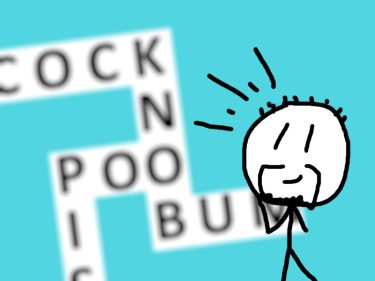
So what is Knotwords? It's a word puzzle based on crosswords, but also drawing influences from sudoku (or perhaps more accurately, kenken) and anagram puzzles. You're presented with a blank crossword divided into areas, with each region telling you which letters go in it, but not the order those letters should be in. Your job is to untangle these "knots" and solve the crossword using valid words, ideally as quickly as possible. That's it — at least for the Mini and Classic puzzles; I don't know if Twist is any different.

The pleasant thing about Knotwords is that it's simple to understand, but it gets you thinking. Supposedly the puzzles are easy on Mondays and ramp up in difficulty as each week approaches Sunday, but I haven't been playing the game regularly enough to notice the differences as yet.

I have been playing the game, though, which is more than I can say for pretty much any other mobile game released since… well, 2015, when Take It Easy came out. I appreciate a game that makes good use of the platform it's on, doesn't constantly bug me to pay up, and which is simply a fun little challenge. A Knotwords puzzle is the sort of thing you can do on the toilet or before going to bed; it doesn't demand a lot of commitment, but it does get your brain working in a way that doomscrolling the shitty end of the Internet absolutely does not.

The only thing I don't like about it is its use of "streaks", a la Wordle, because that's a shitty way to engage players and I dislike it intensely. But it's also easily ignored, so I'm not particularly mad about it. I do feel sorry for the people online who seem to have a genuine addiction to anything with a "streak" involved, though, including this. You should be playing things like Knotwords because you want to, not to Make Number Go Up.

Anyway, Knotwords is A Good, and I'm happy to have randomly stumbled across it the other day. If you're burnt out on Wordle (or just feel weird giving the New York Times any of your time and/or attention, regardless of reasons) then I highly recommend giving it a shot.


Want to read my thoughts on various video games, visual novels and other popular culture things? Stop by MoeGamer.net, my site for all things fun where I am generally a lot more cheerful. And if you fancy watching some vids on classic games, drop by my YouTube channel.

If you want this nonsense in your inbox every day, please feel free to subscribe via email. Your email address won't be used for anything else.
#oneaday Day 212: Engage!

I've been playing Fire Emblem Engage since I finished Paper Mario: The Thousand-Year Door and The Legend of Zelda: Echoes of Wisdom, and I've been having a lovely time. Fire Emblem is a series that has always passed me by despite it being, in theory kind of in my wheelhouse.

I say "kind of" rather than "completely", because while I absolutely love the high drama fantasy RPG side of the narrative, I've always had a bit of a rocky relationship with strategy games. I'm not good at them, see, and I've always had a hard time trying to determine how to get better at them. Because while there are plenty of guides out there for games like Fire Emblem, none of them simply sit you down and talk you through how to play them effectively. And that, for me, has always been a problem. It's why I bounced off Fire Emblem Awakening on 3DS, the last entry in the series that I tried, and why I have held off on playing the copy of Fire Emblem: Three Houses that's been on my shelf for several years at this point.

Why am I playing Fire Emblem Engage when Three Houses, a game almost universally considered to be superior in every way, is right there on my shelf? Well, because I had somehow got it in my head that Engage was a little more "straightforward" — and, perhaps more importantly, shorter. Three Houses is an absolute beast of a game, particularly if you do all the narrative routes (which I'm assured you should), whereas Engage is a once-and-done sort of affair, with replay value coming from the harder difficulty levels.

Mechanically, I don't think Engage is any more straightforward than what I know of Three Houses. There are elements where it's arguably more complicated, in fact — most notably with regard to the Emblem Bond and Skill Inheritance systems — but I wasn't to know that going in, and I'm about 25 hours in now, so, well, I guess I've dealt with it successfully.

I'm not ashamed to admit that I'm playing on Normal difficulty and Casual mode — i.e. the one without permadeath. I was having enough difficulty with the initial missions in the game that adding the opportunity to completely gimp my playthrough via poor performance seemed like an unwise choice. I am new to the series, I am still finding my feet in how it all works and how to play effectively, and thus I want minimal barriers to just enjoying myself. The options are there, so I'm using them.

With that "guardrail" in place, Fire Emblem Engage is still quite challenging. If you lose a unit during a mission, you still have to do the rest of the mission without that unit, and that can really fuck you over. It took me a few early-game missions to figure out what I was doing wrong, but then something interesting happened: I figured out what I was doing wrong.

This is not something that normally happens with strategy games. I normally end up being trounced by whoever I'm playing against, then never wanting to play it again as a result — or, in the case of tabletop affairs, not getting much opportunity to "practice". But with Fire Emblem Engage, I've ploughed on, and I've started to get a real feel for how the strategy works, and what is effective. I still make mistakes now and then — and the game's generous "Draconic Time Crystal" mechanic that allows you to undo stupid moves has been very helpful here — but I am definitely getting better at How To Play Fire Emblem. And that's a good feeling.

Because Being Able To Play Fire Emblem means that you can Enjoy Fire Emblem. And there is a lot to enjoy. The story of Engage, while relatively clichéd RPG fare — dark dragon long thought safely sealed away has come back, heroic band must gather a bunch of rings to summon enough power to drive the bastard back to the abyss — has been really compelling so far, and the character-centric nature of modern Fire Emblem is exactly what I like in this sort of game. I'm getting a real feeling that I'm getting to know the individual characters, both through the protagonist character's interactions with them and their interactions with one another.

For the unfamiliar, modern Fire Emblem features a relationship mechanic whereby units can "support" one another by fighting alongside each other in combat and doing activities together between battles, and your reward for reaching a new milestone in two characters' relationship with one another is a "support conversation", which depicts the two of them getting to know one another. There's not a Support mechanic in play for every pairing of characters in the game, but plenty that make logical sense, and it's lovely to see everyone getting to know one another, having comedic misunderstandings and deepening their feelings of friendship.

Anyway. I'm not sure how far through the game I am — I reckon probably about halfway maybe? — but I've been playing it all weekend and having a great time. I should almost certainly have it finished ahead of Xenoblade Chronicles X coming out on Switch in March — because you better believe I'm revisiting that game thoroughly having adored it on Wii U — but in the meantime I think I'm a convert to the series. I'm sure longstanding fans will scoff at me playing on non-permadeath mode, but I bet all of them reload a save the second anyone dies anyway. Also it doesn't matter how someone else enjoys a video game.

So yeah. Fire Emblem, pretty good. Who knew?


Want to read my thoughts on various video games, visual novels and other popular culture things? Stop by MoeGamer.net, my site for all things fun where I am generally a lot more cheerful. And if you fancy watching some vids on classic games, drop by my YouTube channel.

If you want this nonsense in your inbox every day, please feel free to subscribe via email. Your email address won't be used for anything else.
#oneaday Day 210: Making some video plans

I was hoping to make more videos over the course of December for "DOScember", but a nasty cold with a cough that's been lingering for a while (and still is a bit) put paid to those plans. I was really hoping to play through both The Dagger of Amon Ra and the spiritual successor to the Laura Bow series, The Crimson Diamond, but that hasn't happened. I did start trying to record a The Dagger of Amon Ra playthrough, but my throat gave out in less than ten minutes, so I abandoned that plan.

I mean, there's no reason they still can't happen, they just won't be "DOScember" features any more. And that's fine. So I think I may well still go ahead with those, 'cause doing adventure game playthroughs is always a lot of fun.

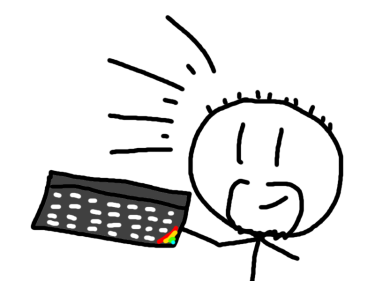
I've been pondering other things to do along the way, too. One thing I definitely want to do is spend some time exploring other microcomputer systems alongside the Atari stuff I've done a bunch of to date. There was some interesting discussion on Bluesky earlier today about how the overly "Americanised" canon of gaming history has a habit of erasing stuff like the European microcomputer scene, so I want to spend some time redressing the balance there a bit. I've obviously done a lot of Atari stuff already, and I intend to keep going that because it's a personal passion, but I also want to make some use of the C64 "Maxi", TheA500 Mini and The Spectrum that I have, because those are all thoroughly lovely machines.

As good a place as any to start with those would be to work through the built-in games on each, since that's actually not something I've done to date for anything other than The400 Mini. So a cautious plan I have is to spend a bit of time exploring each of those systems' built-in libraries, then onward into some other stuff on each of those platforms, just like I've done with the Atari 8-bit.

Assuming my voice holds out, then, I think that's what I'm going to try and make a start on this weekend, along with maybe a bit of The Dagger of Amon Ra.

I've also reached a conclusion I think I've known all along: I am absolutely not cut out for streaming. I just can't be arsed with it. It's a lot of setup and effort to get going, it's a pain to promote (particularly given my potential audience is all over the globe and thus there's no "good" timezone for it) and the number of viewers I get (both live and on the archived version on YouTube) is crap compared to my standard videos. I know that's something that improves with time, but this is supposed to be a hobby, not work, so I'm just going to stick with what I know and enjoy, and which works well — which is YouTube.

I'm not ruling out occasional "special" streams for events, charity drives and suchlike, or occasional chats with my buddy Chris in a quasi-podcast format. But I'm not going to make it a regular part of my routine. I know several people who want desperately to "make it" as a streamer, and they seem to spend a lot of their lives being miserable, and I have no desire to get into that situation. I do this for fun.

So, amid a bit of game room reorganisation that may be happening this weekend, I'm going to make a start on another year of retro computing fun. Broadening my remit will be an interesting journey for me to take, and it may well bring some new people to the channel, too. I know from previous times I've done this that there are a couple of people who get a bit sniffy when I cover non-Atari stuff, but y'know what? My channel, my rules. I am interested in gaming and microcomputer history, and while Atari stuff will always carry significant personal meaning for me, I want to know more about the other parts of this side of things, too.

So that means C64, Spectrum and Amiga stuff! There's a huge library of things for me to explore on all of those platforms, and still plenty of Atari material I haven't covered, either. So I certainly don't think I'm going to be short of things to play and talk about this year. Now I just need to make the dang videos!


Want to read my thoughts on various video games, visual novels and other popular culture things? Stop by MoeGamer.net, my site for all things fun where I am generally a lot more cheerful. And if you fancy watching some vids on classic games, drop by my YouTube channel.

If you want this nonsense in your inbox every day, please feel free to subscribe via email. Your email address won't be used for anything else.