#oneaday Day 328: Polygone

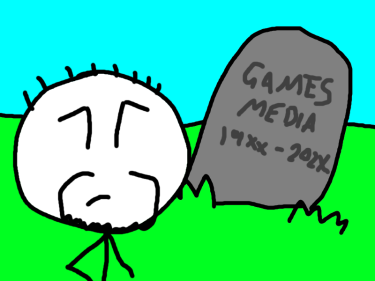
Well, another one bites the dust. Today, we learned that gaming site Polygon has been sold to Valnet, the sweatshop of online media, and that, as is standard practice in this situation, pretty much all the regular writing staff have been let go, to be replaced by contractors who will be paid absolute fucking peanuts to churn out SEO-baiting drivel and contribute nothing of any real value to the broader conversation about video games.

I was never a huge fan of Polygon, I'll confess. But this isn't about me. It's about yet another significant pillar of Video Games Journalism collapsing — because make no mistake, being sold to Valnet means that your brand is going to have very little value left afterwards — and the entire landscape of this section of the media getting just a little bit worse.

To make matters worse, it appears that Giant Bomb is circling the drain, too. I don't think anything "official" has been announced on that front yet, but from what some of the people involved have been saying publicly… yeah, that site isn't long for this world, either.

Why does this keep happening? Why are we allowing sites that are demonstrably good at what they do to get destroyed in this way? At this rate, we're going to have absolutely no "big names" in the games press left.

And perhaps that might, over the long-term, be a good thing. Because every time something like this happens, it feels like more and more worker/creator-owned outfits pop up and show that yes, it is possible to do things a bit differently; it is possible to put together an interesting and enjoyable site without resorting to SEO-baiting bilge and Guide Content; it is possible to build a sustainable publication that doesn't rely on ad-revenue and instead asks its most interested readers to pony up a couple of quid a month in exchange for stuff that is actually worth reading.

But will this successfully become the norm? We have to make that happen. We have to look beyond the search engine algorithms, start following the sites we actually care about… and support them. One of the worst things to ever happen to the press in general — not just in gaming — was to set the expectation that everything, everywhere, should be free, always. It's devalued the hard work of people working in the media, it's normalised paying people an absolute pittance for hard work, and it's actively making useful information and meaningful commentary harder to find. None of that seems the slightest bit desirable, but we keep heading down that path.

I already support a few folks I like via Patreon. I think it's probably about time I start ponying up for a subscription or two for sites I think are doing worthwhile work. Off the top of my head, I recommend Aftermath for gaming-related stuff, and 404 Media for tech journalism. Both are doing great work, and both are doing well through support from their audiences.

The issue, of course, is that if you end up supporting a lot of sites in this way, it can get pricy. But then think of it this way: did you buy every magazine that existed every month, or did you have a favourite? There you go. I guess the answer is to read fewer, better sites. And don't support the shittier behaviour of the sites that have already been fed to the Valnet monster, or which are in the process of sliding down that drain. You can solve today's Wordle by yourself, believe me. I believe in you!


Want to read my thoughts on various video games, visual novels and other popular culture things? Stop by MoeGamer.net, my site for all things fun where I am generally a lot more cheerful. And if you fancy watching some vids on classic games, drop by my YouTube channel.

If you want this nonsense in your inbox every day, please feel free to subscribe via email. Your email address won't be used for anything else.
#oneaday Day 326: It's officially my birthday

It is, as promised, Actually My Birthday now, since I have been to bed since last night's post and woken up since then. I have had today (and the days surrounding it) off work for reasons I've already outlined, so today has been mostly about playing more Clair Obscur: Expedition 33 and then going out for a nice pub dinner with Andie this evening. I have simple tastes.

One thing many of you will have doubtless discovered as you get older is that people inevitably find it harder and harder to buy presents for you. Gone are the days when you could circle things in the Argos catalogue and hope that one of them would be your "main" or "big" present on the big day. Nope, much more common as a grown-up to get a few little bits and pieces from your Amazon wishlist — which I'm very grateful for, by the way, those who sent such things! — and "I'll just give you some money" from the parents.

I would like to reiterate: this is fine, and not in the "room is burning around me" sense. This is good, even! Much better that one is able to get something they actually want to celebrate their birthday rather than running the risk of getting gifts they already have, gifts they don't really want but are obliged to look like they like or any of the other situations in which people in 2025 are, in my experience, brazenly ungrateful.

I got some very generous monetary gifts from both my parents and my mother-in-law, both of whom are very clearly trying to spend some of their accumulated cash to minimise the impact of inheritance tax in the future. My parents' gift paid for my Nintendo Switch 2, which is nice, and my mother-in-law has bought (well, pre-ordered) me a MiSTer Multisystem 2 from Heber Electronics.

If you are unfamiliar with the latter, it's an all-in-one FPGA console designed for playing retro games from a wide variety of home computer, arcade and console systems. FPGA means something inordinately technical that I don't understand at all, but it basically means that it's the hardware pretending to be a classic system rather than a piece of software doing its best to imitate it. That means that the recreation of the experience is pretty much 1:1 of What It Was Actually Like without any sort of emulation quirks, but with modern benefits such as HDMI out, USB storage and suchlike. There are even addon thingies you can get to use original controllers and other peripherals.

To put it simply, the Multisystem 2 is a console that plays almost any retro game you can throw at it, making it a nice all-in-one, self-contained system for authentic-feeling retro game fun, on either a classic CRT or a modern HDMI display. (Or both at the same time, even!) With old gaming hardware and media becoming increasingly expensive and impractical to collect for a variety of reasons, this is a great option for just… enjoying retro games. Which, ultimately, is what I really want to do with all this stuff. And having the opportunity to easily hook it up to capture hardware via HDMI is even better, 'cause then I can share what I'm doing and what I'm interested in and the things I've discovered.

So yeah. My "big presents" this year are a Nintendo Switch 2 and a MiSTer Multisystem. Pretty great, I'd say. I know my child self would be thrilled, even if I have to wait until June for one and August for the other.


Want to read my thoughts on various video games, visual novels and other popular culture things? Stop by MoeGamer.net, my site for all things fun where I am generally a lot more cheerful. And if you fancy watching some vids on classic games, drop by my YouTube channel.

If you want this nonsense in your inbox every day, please feel free to subscribe via email. Your email address won't be used for anything else.
#oneaday Day 322: The Expedition

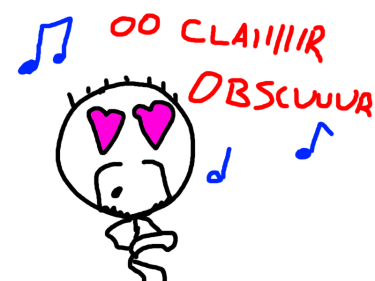
Hello. It's after 1am and I haven't written anything, I need a bath (that can wait until tomorrow) and I'm quite tired. So this will probably be a short one. I did want to acknowledge something, though, which is that I've been playing Clair Obscur: Expedition 33 this evening, and it's real good.

I was a little skeptical about it after feeling a bit burnt by the Blue Prince situation, but this time around it's just flat-out a good game, not "a good game if you have the right kind of brain and 150 hours to plough into it".

I will write more about it on MoeGamer anon, but I did want to acknowledge that my first impressions are very good indeed, and that it has a very distinctive atmosphere about it. I'm getting quite strong Nier vibes from it in terms of its rather melancholy atmosphere — indeed, my wife walked in at one point and asked if it was another Taro Yoko joint. I explained that no, it's French, but I can completely see why she would think that just from overhearing the music.

Oh man, the music. One of the most important things to get right in a dramatic RPG, and boy did they get it bang on in this game. Sweeping orchestral pieces, triumphant choirs, lonely soloists, tinkling pianos, it's all there, and it all hits one right in the Feels.

I was a little concerned about coming to a "J-style" RPG that everyone was saying was the best thing ever when chances are the last "JRPG" they played was Persona 5; I thought it would be an interesting exercise to approach the game from the perspective of someone who has been consistently engaging with this type of game for the last 20 years, while many other folks haven't for various reasons. And I think it's still going to be interesting, but so far my impressions are that no, this isn't just "good if you haven't played an RPG in the last 20 years", it's a good RPG.

There's Nier, there's Final Fantasy, there's even bits of Souls in Expedition 33's DNA, and it all works together in a thoroughly interesting fashion. But, like I say, it's after 1am and I really should probably go to bed. I will write more about this game — much more — over on MoeGamer very soon. But for now, I bid you good night!


Want to read my thoughts on various video games, visual novels and other popular culture things? Stop by MoeGamer.net, my site for all things fun where I am generally a lot more cheerful. And if you fancy watching some vids on classic games, drop by my YouTube channel.

If you want this nonsense in your inbox every day, please feel free to subscribe via email. Your email address won't be used for anything else.
#oneaday Day 321: My Switch 2 concerns

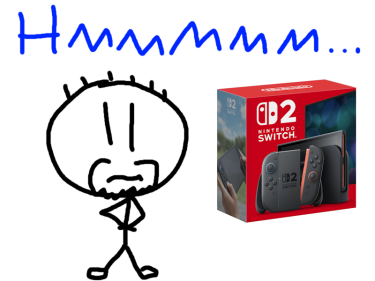
I still have my preorder in for a Nintendo Switch 2 and I'm looking forward to having a play with it. But I am quite concerned about some things that seem to be cropping up in these initial pre-launch months.

Chief among these is the "Game Key Card" thing. For the unfamiliar, this is effectively a replacement for the "code-in-a-box" nonsense some publishers pulled with Switch games, where you'd buy a "physical release" and get nothing more than a box with a voucher for the digital version of the game in it. The box was then completely useless because there was nothing to put in it. The sole justification for this, one might argue, is that it allows "digital" games to be given as gifts. But only the ones that have actually had this treatment, of course.

Game Key Cards is… possibly a step forwards from this, but still not in any way desirable. Effectively how they work is that they're a cartridge you put in your Switch 2, and this then automatically causes the digital version of the game to download from the eShop. There are a few justifications for this: it keeps costs down while still allowing for a boxed release of sorts, which in turn can be given as a gift just like code-in-a-box.

Unlike code-in-a-box, however, Game Key Cards are transferable. They need to be in the Switch 2 to play the game even once it's downloaded, and they can be loaned, traded or sold to others. This is arguably an improvement in that they make digital purchases more portable — you can take a game over to a friend's house, for example, although one might argue the inherently portable nature of the Switch 2 makes this a moot point anyway — but one suspects it is going to be used by a lot of companies as an excuse for cost-cutting.

We're already starting to see a number of games that have announced their "physical" release will be on one of these Game Key Cards, with no other option than the digital-only version. As a collector of physical media, neither of these options are desirable.

Some have conjectured that this situation has arisen because Switch 2 carts are, supposedly, expensive — like, $16 a unit expensive. That means once companies have paid their cut to Nintendo, paid manufacturing costs, paid marketing expenses and everything else that goes into making a game, there potentially won't be much left for games sold around the £30-40 mark. This is, apparently — and remember this is mostly hearsay at the moment — the reason that physical releases like Mario Kart World are £70 or more.

Thing is, I'm not sure I understand why they're so expensive. They're essentially flash carts. Admittedly, in the case of Switch 2, they're high-speed flash carts, which are slightly newer (and thus more pricey) tech. But $16 a unit for something that supposedly only goes up to 64GB seems… high. (Oh yes, that's seemingly the other reason some are going for the Game Key Card approach — games such as Street Fighter 6 flat-out won't fit on one.)

I've long said that if a console generation arose that was digital-only, I would probably bow out and stick to my existing library of games — which, as most of you probably know, is pretty enormous. Nintendo, whose consoles have long been a champion of physical media — Switch 1 carts are the only releases of the current(ish) generation that don't require lengthy installs before you can play — seem to be pushing towards that all-digital future that I'm not sure anyone really wants, particularly those involved in a hobby that has always been, to some degree, about collecting.

I'm willing to give Switch 2 a chance. I'm even getting the bundle with the digital version of Mario Kart World included — I figure as a game with an online component, it's probably going to have regular updates and/or DLC, making the physical edition useless after a while anyway — but I'm still a bit concerned.

I guess one thing worth waiting to see is what the limited-press physical houses do — if anything — with Nintendo Switch 2. A significant portion of my Switch 1 library consists of limited-print physical releases of games that would have otherwise been digital-only. If that situation continues, then I think I'll be all right. I know some folks hate the limited-print stuff, but I suspect it's going to become an increasing reality of video game collecting in the coming years. We'll have to see, I guess.

I wish we could just be excited for New Thing. It feels like a long time since we've been able to be unreservedly excited for New Thing. The last few New Things we've had — particularly in gaming — seem to have had particularly big caveats involved, and Switch 2 is no exception.

Think back to the run-up to the PlayStation 2's launch. Nothing but excitement. A new system that could produce incredible visuals, could take full advantage of the new DVD format for storage, and which was fully (almost) backwards-compatible with the previous PlayStation? Sure, the price was a sticking point for some, but that came down. And the PS2 went on to be one of the most beloved systems of all time, with good reason.

I wonder if the last couple of generations of console hardware are even going to have a legacy to leave behind once their digital services are turned off.


Want to read my thoughts on various video games, visual novels and other popular culture things? Stop by MoeGamer.net, my site for all things fun where I am generally a lot more cheerful. And if you fancy watching some vids on classic games, drop by my YouTube channel.

If you want this nonsense in your inbox every day, please feel free to subscribe via email. Your email address won't be used for anything else.

#oneaday Day 320: Attempting to list one turn-based RPG a year for every year between Final Fantasy X and now

The recent release of Obscure Claire or whatever it's called has spawned some frankly toxic discourse about turn-based vs. real-time RPGs and the perceived accessibility of the RPG genre, so I thought I would take a moment and see if it was possible to name at least one turn-based RPG that had come out every year between Final Fantasy X, which a frightening number of people think was The Last Great Turn-Based RPG, and now.

I'm taking English language releases as gospel here, not Japanese release dates in the case of games that originated there. Because we're talking about English people and their weird selective memory. I'm also going to try not to include more than one entry from a series, and I'm not restricting the list to just "JRPGs". Anything where you take turns to make numbers pop out of monsters is fair game.

Are you ready? Here we go! (Ya ya ya ya… wait, no, wrong genre.)

2001: Final Fantasy X
2002: Suikoden III
2003: Pokémon Ruby and Sapphire (yes, they count)
2004: Lord of the Rings: The Third Age (aka Final Fantasy Tolkien)
2005: Mario and Luigi: Partners in Time
2006: Ar Tonelico: Melody of Elemia
2007: Eternal Sonata
2008: Etrian Odyssey II
2009: The Last Remnant
2010: Atelier Totori: The Adventurer of Arland
2011: Hyperdimension Neptunia mk2
2012: Fire Emblem: Awakening (strategy RPGs are still turn-based RPGs!)
2013: Bravely Default
2014: South Park: The Stick of Truth
2015: Shadowrun: Hong Kong
2016: Shin Megami Tensei IV: Apocalypse
2017: Blue Reflection
2018: Octopath Traveller
2019: Death end re;Quest
2020: Trails of Cold Steel IV
2021: Mary Skelter Finale
2022: Dungeon Travelers 2-2
2023: Sea of Stars
2024: Like a Dragon: Infinite Wealth
2025: Clair Obscur: Expedition 33

Cor. Some crackers among that lot, for sure, many of which I'm still yet to play.

And, it should probably go without saying, these were far from the only turn-based RPGs released each year, to say nothing of RPGs that don't specifically use turn-based mechanics but are nonetheless particularly noteworthy, such as the Xenoblade Chronicles X rerelease this year.

I've said it before, I'll say it again: turn-based RPGs have never, ever gone anywhere. The only difference with Clair Obscur is that all eyes are on it thanks to it using fancy new Unreal Engine 5 tech — which some are already saying is a bit of a hindrance rather than a benefit.

The fact that a lot of the above games don't get much attention outside of niche-interest circles is, more often than not, down to a refusal to engage with anything that might be on the lower budget side of things, or particularly if it involves an anime art style. I know people who have missed out on some absolutely fantastic games just because they refuse to engage with anything that looks a bit anime, regardless of subject matter. And that's their loss.

Getting people to "read" a bit more widely is, I'm sure, a problem with every medium. But dear Lord is it ever frustrating when you've spent years of your life screaming about games you find fascinating, only for people to shrug and make it very clear that they haven't paid any attention whatsoever.

Oh well. As I say, their loss. I know what I like, and I have plenty of the stuff that I like on my shelves. And I guess that's all that really matters at this point.


Want to read my thoughts on various video games, visual novels and other popular culture things? Stop by MoeGamer.net, my site for all things fun where I am generally a lot more cheerful. And if you fancy watching some vids on classic games, drop by my YouTube channel.

If you want this nonsense in your inbox every day, please feel free to subscribe via email. Your email address won't be used for anything else.
#oneaday Day 316: Mario Kart World looks like fun!

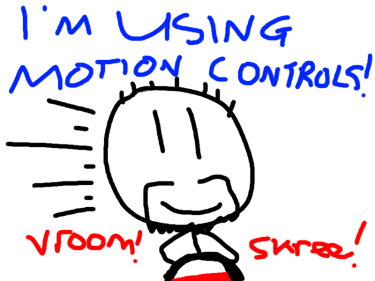
You will doubtless be aware of the impending release of the Nintendo Switch 2, and its launch title Mario Kart World. You may also be aware of the fact that people are complaining about the price (not unjustifiably). And you may even have sat down and watched the Mario Kart World-centric presentation the other day.

Some people seem to be a bit down on Mario Kart World. I had to banish a video from my YouTube recommendations earlier for it claiming to offer "the unfortunate truth" about the new game, when said "truth" was just that the video maker, who hadn't played the game, didn't think it going open world was a good idea.

I'm not going to get into whether he's right or wrong (he's definitely wrong, though), but instead I want to talk about my own personal response to what I've seen of Mario Kart World so far, with the caveats that I haven't played it, I haven't been to any of the "Nintendo Switch 2 Experience" events, and that have preordered the Switch 2 bundle that comes with a digital copy of Mario Kart World, so I am perhaps predisposed to like the thing I've spent money on.

Basically, I'm well up for what Mario Kart World has to offer. I like common-or-garden Mario Kart to a decent degree, and it usually comes off the shelf any time friends are over. But despite the improving tech, visuals and course design with each new installment, the overall structure of the game hasn't really changed all that much since the SNES original. Mario Kart has always had a bit of a problem with its single-player modes being a bit bare-bones, and this is something that has never really been fixed over the course of 8 mainline installments. It was particularly apparent in the Nintendo 64 era, where Rare's Diddy Kong Racing offered an impressively substantial single-player "Adventure" mode that really made Mario Kart 64's paltry grand prix offerings look a tad weedy.

Granted, today the enduring appeal of modern Mario Kart games is in playing online, where you get the performance and visuals of single-player but the thrill of competing against real opponents. But that's not something that everyone enjoys — particularly since, as a popular game, it's filled with people who have no-lifed their way into mastering the most important "skills" (and/or exploits) in order to win every time. Playing Mario Kart online as a casual player is a great way of testing whether or not you really believe that "it's not the winning that counts, it's the taking part". Because after myriad sessions of seeing the frontrunners scream off over the horizon, never to be seen again, and not really knowing why or how they did that, it gets a bit old.

Mario Kart World, now, though, that's different. Online is still going to be an important part of the experience, and with the Nintendo Switch 2's GameChat feature, it looks like a potential return to the early days of Xbox Live, when it's easy to get folks together to shoot the shit while you're playing games — and not necessarily the same games. The key difference, this being Nintendo, is that GameChat is restricted to your friends, so no jumping into public lobbies and immediately being screamed at or called a racial epithet, unless that's what your friends are like. In which case you should find new friends.

But perhaps more importantly, judging by what we've seen so far, is that Mario Kart World offers a substantial single-player experience, and it's all down to that open world. Driving games are one type of game where it makes perfect sense to have an open-world map, and theming the game around rough-and-ready vehicles such as go-karts and motorcycles makes it feel less weird to go off-road exploring. One of my favourite games in this regard is Codemasters and Asobo Studio's Fuel, which has an absolutely vast open world filled with events to participate in and things to find. Plus it's just plain fun to drive around and see how a variety of different vehicles handle the various terrains.

Fuel is a semi-realistic game, though; Mario Kart World, meanwhile, is not beholden to the laws of reality, being a game set in a cartoonish fantasy world. That means we can have a map with incredible geographic diversity, weird and wonderful things to discover and a real sense that you might find anything around the corner. For all I love Fuel, its overriding colours are dull green, grey and brown, and any changes in the map you encounter as you pass from region to region are gradual rather than drastic. Not so in Mario Kart World, and I think that's going to be a lot of fun.

One of the things I really like the sound of is how the races link together, with circuit races leading to point-to-point races that take you to the next course in the sequence. I absolutely love point-to-point races — a side-effect of growing up with games like OutRun and Lotus Turbo Challenge — and Mario Kart World sounds like it's going to implement them not only as interstitial races in the main Grand Prix events, but also as non-stop "knockout" rally competitions that unfold as one long race taking you between multiple areas, with the bottom [x] participants being knocked out at every checkpoint.

But then the open world is filled with collectibles to find — the exact function of which we don't know just yet — and "P-switch challenges", which task you with completing various missions that test your driving skills. It's this exploration aspect that I think I find most exciting, particularly as you can not only play it solo, but you can bring friends along, too. Burnout Paradise was excellent fun in its multiplayer free-roam mode — sadly, I only ever really got to play it with friends once — and I can see this being very enjoyable; a great way to virtually hang out with friends over GameChat while having a meaningful, but relaxing and not-too-demanding, gaming experience.

Whether or not all this is really "worth" £75 for its physical RRP remains to be seen, and "game worth" is a completely subjective thing anyway. But I know that after seeing the announcement and the subsequent Direct, I'm very much on board with Mario Kart World, and I'm looking forward to getting stuck into it when June finally rolls around.


Want to read my thoughts on various video games, visual novels and other popular culture things? Stop by MoeGamer.net, my site for all things fun where I am generally a lot more cheerful. And if you fancy watching some vids on classic games, drop by my YouTube channel.

If you want this nonsense in your inbox every day, please feel free to subscribe via email. Your email address won't be used for anything else.
#oneaday Day 314: The news churn

There was a good piece over on Aftermath today titled "Video game blogs from the 2000s were fast, reckless and very bad at news". The gist of the piece was that video game websites that adopted a continuously updating "blog" format, in contrast to the "magazine" approach many earlier gaming sites had used, inadvertently set in place a format for games journalism that isn't particularly helpful for readers, and is definitely not good for the writers.

The piece goes on to note that the pressure to have [x] number of articles per day, or the fact that many writers were paid (a pittance) by the article placed a great deal of pressure on the site's writers to make even the most mundane, pointless bullshit somehow "newsworthy". It is this, among other things, that led numerous websites to continuously and uncritically quote Wedbush Securities analyst Michael Pachter whenever he spouted off something that was either immensely obvious (the new Grand Theft Auto will probably sell well!) or so utterly vague as to be completely useless.

I wasn't involved in the biz at the start of this, but I definitely felt its effects. When I joined GamePro in 2011, the site was just starting to experiment with a new format for its news coverage. At the start of my shift each day, I was to dig up a bunch of stories and post them as just headlines and a brief summary on a front-page forum as a sort of "news briefing". Then, later in my shift, after the stories had all had a bit of time to percolate, I would write one or two up in further detail based on which of the posts had seemingly been the most popular, judged primarily by comments.

GamePro's readers initially fucking hated it, because the way it was implemented cluttered up the front page of the site's main forums, and I wasn't a huge fan of it, either, because it felt like the time I spent digging up those initial stories — which, more often than not, took the form of either another site having reported on something first, or a press release we'd received that morning — could have almost certainly been better used finding bigger stories to explore, or writing features, or reviews, or anything other than desperately, vainly scrabbling for just a scrap of news, please, guvnor.

That said, over time it did seem to settle down a bit, I broke a few genuine exclusives and provided some good editorial commentary on other stories that were happening, and I was told on multiple occasions that the work I was doing was playing a big role in giving the site a nice uptick in traffic.

Of course, even that uptick was all for naught when IDG Media unceremoniously closed the site and the magazine just before Christmas that year, meaning I woke up one morning all set to do work, only to find that not only was there no job to work any more, all the stuff I had written was about to become absolutely impossible to find due to the inexplicable decision to fold some (not all) of GamePro's material into the unrelated publication PC World. Good stuff. (If you dig deep enough into PC World's atrocious search function, you can still find the odd bit of my stuff, but it's not easy to find, which was great for building a portfolio, I can tell you.)

Something similar happened at USgamer, also. When we started the site, the intention was for the whole thing to be a return to something like the 1up.com days: a primarily personality-driven site, where each of the writers would have their own specialisms, and they would be free to write about whatever they wanted, developing their own little sub-communities in the process.

That went great for a while! I wrote about anime RPGs and visual novels, another chap wrote about racing sims, and all the other people on staff each had their own Things, too. Comments from the community were positive; I can't speak specifics to the other folks' work as I didn't tend to delve into their comment sections, but on my pieces, there was always a great deal of appreciation for my work making USgamer a site that was welcoming and inclusive to a portion of gaming that didn't always get a lot of love and respect from the mainstream sites. This was all pre-Gamergate, I'll add, so there was no culture war bullshit going on; it was just folks who liked anime-style games, including those with mildly provocative content (as there was a fair amount of in the mid-2010s) having an appreciation for a site that didn't just write their favourite games off as being for perverts or whatever.

That lasted for a few months, but then an edict came down from On High (in this case, USgamer's parent company Gamer Network) that we needed to juice the numbers. In other words, abandon everything we'd done to make the site unique and start the daily churn of news and guides that is so painfully familiar to this day. I went from being able to post whatever I wanted to having to get manual approval for each and every news story I wanted to post, and I was outright forbidden from covering certain games.

Eventually, when I was laid off from the site — again, through waking up one morning only to discover I didn't have a job any more — I was forced into spending the majority of my days rejigging and reposting "guide content" from Prima Games, which was also under the Gamer Network umbrella at the time. Out of spite, I stuck with several of my regular weekly columns even with this SEO-juicing bullshit I had been lumbered with, and it was that degree of spite for what the site had become that eventually led me to create MoeGamer: a site where I could play by my rule and cover whatever the fuck I wanted, and fuck traffic numbers.

MoeGamer itself has had a few evolutions over the years. Initially, it was an occasional blog where I basically continued writing my JPgamer column from USgamer — I'd just write about things that interested me, or which I'd happened to play recently, or which had been on my mind. Eventually, when I was working a series of very boring office jobs that had nothing to do with the games press, I launched my "Cover Game" feature, with a mind to giving underappreciated, oft-overlooked titles the level of detailed coverage that your average traffic-baiting triple-A title did. At the height of my boredom in the office, I was posting stuff on MoeGamer daily, including episodes in each multi-part Cover Game feature, plus shorter one-off articles about things that I found interesting, or had happened to collect back when CEX did free shipping (ahh, those heady days), or that I had always loved but never written about.

Today, I actually like my day job, so MoeGamer has had to take a bit of a back seat, but I'm still writing over there sporadically. It's nice to have a space that is for a specific subject, and a contrast from this general-purpose thought-dumping ground that is this blog. I don't have any intention of making MoeGamer "big" or "famous" or trying to make money from it; it's just my site about games I like, and over the last 10+ years I've filled it with a lot of work I'm very proud of. Today, I think I'm more proud of what I've built with MoeGamer than my all-too-brief time as part of the professional games press.

I've pretty much taken the MoeGamer approach with YouTube, too, albeit with more of a focus on retro games than RPGs and visual novels. And y'know what? While my channel hasn't exploded in terms of growth since I launched it (or since I started using it a bit more actively around 2018 or so), it has seen steady growth without me putting any effort whatsoever into either algorithm-baiting or SEO juicing. I have over three and a half thousand subscribers over there right now, and while that's a drop in the ocean compared to the Mr Beasts of this world, I feel creatively fulfilled and proud of what I've done, and am not an awful human being.

So much about the modern Internet sucks, and as Ed Zitron frequently notes, so much of it is about the growth-at-all-costs mindset. It's not just business that this "rot economy" infests; it's creative pursuits, hobbies, specialist fields. So many people are desperate to monetise everything they put online that the actual value for the people looking at the articles, videos and suchlike is diminishing — and the conditions for those producing the work are becoming increasingly intolerable. Throw AI garbage into the mix — and the fuckers who are now flooding YouTube and social media apps with AI-generated bilge that they pump out all day every day — and you have a real melting pot of absolutely rancid filth.

It's definitely a good idea for people who are Into Things to retreat into their own little specialised corners of the Internet, rather than the whole Internet being treated as some great Marketplace of Shit. This is happening to a certain degree, with many communities forming on Discord these days — though Discord itself isn't immune to enshittification, and I suspect we'll all have to find a new home before long — but I do miss the glory days of forums. I really do. I know a few forums still exist, but the 1up.com Radio Boards days are long gone, and every day I miss them a little more.

This has been quite the ramble, and I'm not sure I made a specific point along the way, but hopefully you understand what I was waffling on about. I am grateful to Past Me for setting up spaces like this blog and MoeGamer for me to continue to express myself, and as time goes on I feel personal spaces like these are going to once again become an important part of life online. Because the alternative is wading out into the mires of advertising-laden shit that is the rest of the Internet, and that gets less appealing day after day.


Want to read my thoughts on various video games, visual novels and other popular culture things? Stop by MoeGamer.net, my site for all things fun where I am generally a lot more cheerful. And if you fancy watching some vids on classic games, drop by my YouTube channel.

If you want this nonsense in your inbox every day, please feel free to subscribe via email. Your email address won't be used for anything else.
#oneaday Day 309: The most enduring game genres are the ones we used to think were too prolific

I settled down this evening to play some PC Engine games on my Coregrafx Mini, a delightful little mini system that I'm very fond of, but which I realised contains a number of games that I haven't explored at all as yet. The pull of Soldier Blade is, I'm afraid, often far too much to resist, as it was once again this evening — though I did at least spend some time with Lords of Thunder, which I've not got around to trying before. (It is hard.)

One thing occurred to me while I was playing, and that is the title of today's post: the fact that game genres we used to think were overdoing it a bit have ended up being the most enduring; the ones that have "aged the best".

What I mean by this is that back in the 16-bit console era in particular — I'm talking Mega Drive, Super NES and PC Engine to an extent (yes, I know the PC Engine isn't actually 16-bit, but its capabilities put it pretty much up there with the Mega Drive, so shut up) — reviewers were often a bit jaded and cynical any time certain types of game showed up. There was a near-constant cry of "where's the originality?" among critics of the period, and this, to an extent, filtered down to members of the public who, at the time, only really had the word of the folks who wrote for the magazines to go on, since the Internet wasn't yet a thing.

There are several game genres that spring immediately to mind when I think about this: shoot 'em ups, fighting games and beat 'em ups. Yes, the latter two are different, despite the term "beat 'em up" being used interchangeably to describe both in the UK in the late '80s and early '90s. (If you're wondering, fighting games refer to competitive games where combatants — either human or computer-controlled — fight in closed arenas one-on-one, or perhaps in tag team battles, while beat 'em ups typically involve one or more players cooperating against a stream of enemy characters, often, though not always, going on a journey as they do so.)

Shoot 'em ups, beat 'em ups and fighting games reached a point where they elicited little more than groans from the jaded reviewers of the period. This led to situations that are laughable in retrospect, such as the TV show GamesMaster rating the UK release of the absolutely classic and genre-defining NES beat 'em up River City Ransom (known as Street Gangs over here) just 32%. In the show's defence (slightly), the game didn't show up over here until 1992, three years after its original release and well into the next generation of games consoles. Still, 32% is an embarrassing rating for a game that is quite rightly regarded as incredibly important to gaming development and history. But I digress.

The point is, members of the games press were — perhaps understandably — jaded at the number of shoot 'em ups, beat 'em ups and fighting games that were coming out, particularly from 1991 onwards, post-Street Fighter II. I say "perhaps understandably" because gaming back then didn't have quite the same breadth it does today; technology precluded certain types of game that we take for granted today from being made back then. Consequently, for someone whose job it was to look at the games coming out each month and then write about them, one could understand why it might get a bit tiresome if there didn't appear to be much variety — or originality, as was the constant refrain back then — in each new crop of new stuff.

But, as it turns out, there were a lot of shoot 'em ups, beat 'em ups and fighting games made for a very good reason: these are three very flexible genres that you can do a lot with, and all three of them have also scaled well with advancing technology.

Let's focus on shoot 'em ups, because that's what I've been playing this evening. You can go back to a shoot 'em up from 30-40 years ago (Xevious is 42 years old, fact fans, and Space Invaders is just shy of 50) and still have a good time with it today, even if you weren't there for it first time around. The genre has evolved over time, yes, in terms of both presentation and mechanics. But there's a timeless quality to it that means, outside of games that really didn't get it even when they were originally released — and there are plenty of those — the 30-40 year old games are just as playable and accessible today as they ever were. Likewise, if it were possible to take a game like, say, Eschatos back to the past, a Raiden fan would be immediately at home.

The same is true for both fighting games and beat 'em ups, too. I probably don't need to tell you that fighting games remain one of the most popular forms of competitive video game out there; while they have grown in complexity over the years, the fundamentals are still pretty much just as they were in 1991 with Street Fighter II. In fact, some fighting game pros even specifically recommend beginners should start with Street Fighter II to get accustomed to the genre without added complications like special meters and peculiarly named mechanics found in later titles.

The beat 'em up has had a slightly rougher ride over the years — at least it seems that way to begin with. It found favour until the early '90s due to it being a great means of showcasing beautiful character and background pixel art. It reached a particular high with Konami's excellent licensed arcade games such as Teenage Mutant Ninja Turtles, The Simpsons and Asterix (kudos if you played the last one, it remains my fave of those games), but then sort of fell off the map a bit for a while.

At least, it seemed to. What actually happened is that it became the basis for a whole bunch of other, brand new genres that were suddenly made possible thanks to the advent of the 3D age: action-strategy games like the Dynasty Warriors series; arena combat games like the Senran Kagura titles; character action games like the God of War, Devil May Cry and Bayonetta series. All are definitely their own discrete types of game these days, but they can all be traced directly back to beat 'em ups. And, in more recent years, the traditional belt-scrolling beat 'em up has made a triumphant comeback with excellent titles like Streets of Rage 4, Fight 'n' Rage and Teenage Mutant Ninja Turtles: Shredder's Revenge.

I think the difference people would point to today, as outlined above, is that these days, we have a lot more choice. Hundreds, possibly thousands, of new games come out each week, and they cover all manner of interactive experiences, ranging from the comfortably familiar to the gleefully experimental. Shoot 'em ups, fighting games and beat 'em ups are no longer seen as passé and unoriginal because they get more lost in the noise these days — and, with the possible exception of fighting games, they have somewhat declined in importance to the overall market. If a company wants to make money these days, they do a big open world game or a cinematic action game about a middle-aged white dude being sad. Shoot 'em ups and beat 'em ups in particular have become niche interest, and fighting games, although popular and doubtless very important to the bottom line of companies like Capcom, have a considerably higher barrier to entry than they used to.

But none of them have gone away. None of them have declined in importance so much as to be completely unviable as a commercial prospect today, or completely unknown to those who came to gaming in more recent years. And many of those games that were decried as unoriginal, boring takes on crowded genres back in the early '90s are judged much more generously and accurately today.

And that's good. When the day comes when there's a gaming system with no good shoot 'em ups or beat 'em ups (I can personally take or leave fighting games, to be honest, but I do respect them), that's the day I don't buy that gaming system. Thankfully I don't think that day's coming any time soon — and even if it did, there is a vast library of stuff from the years that have led us up until this point to explore, both through emulation and official rereleases for modern platforms. I think I'll probably be OK.


Want to read my thoughts on various video games, visual novels and other popular culture things? Stop by MoeGamer.net, my site for all things fun where I am generally a lot more cheerful. And if you fancy watching some vids on classic games, drop by my YouTube channel.

If you want this nonsense in your inbox every day, please feel free to subscribe via email. Your email address won't be used for anything else.
#oneaday Day 308: The apparent need to hate

It's been interesting to see the public response to Blue Prince since it came out yesterday. A bunch of folks on Steam, the absolute worst place to talk about video games, seem oddly resistant to the idea that it might actually be quite good.

(For the record, I'll note that for now, after about 6 hours of play, I'm definitely enjoying Blue Prince, but I'm not yet convinced of all the "Game of the Year!" accolades it's already getting. I am open to it convincing me, however.)

Earlier, I saw someone praising a negative review by saying "finally, an honest review", and others noting that the "positive reviews are suspicious", despite the vast majority of them being articulate and knowledgeable about the game and its appeal elements. In the Discussions tab, which is where hope really goes to die, there are some folks getting legitimately angry that some people are enjoying the game more than they do.

I'm not entirely sure why this is occurring, either. Blue Prince is not, to my knowledge, a particularly — and you'll pardon me for using this obnoxious word — "woke" game in that it doesn't force Gamers™ to acknowledge the existence of black, female, homosexual or transgender people. (If it does later, it certainly doesn't within its first 6 hours of play. This is not a criticism — more a side-effect of the way the game is designed and structured, since you are alone while you play, and the other characters appear in photographs, notes, journal entries and suchlike.)

I mention this because the attitude I'm seeing from some people is normally reserved for the "anti-woke" crowd when they want to tear a game down for challenging their narrow-minded perceptions of the world. But… there's seemingly nothing like that in here, which makes the sheer passion with which some people seem to hate this game on principle all the more confusing.

Now I will admit that Blue Prince is probably not a game for everyone. It is slow-paced, thoughtful and contemplative. There's nothing that one would call "action". It requires that you learn its rules through play rather than having your hand held through tutorials. And it is a game where, despite there being no real "skill" involved from a hand-eye co-ordination perspective, you will still fail a lot before you roll credits on it — and where you will doubtless fail even more after those credits have rolled and there is more to discover.

I get that. When I encounter a game like that, my response is to go "Eh, okay, I see why some people like that but it's not for me." Then I turn it off, uninstall it, whatever, and I don't play it again. I might return to it when some time has passed — there are several games I've come to appreciate many years after I bounced off them when I first encountered them — but, in most cases, I won't be mad at the game. I think the maddest I've got at a game was with Call of Duty: Modern Warfare 3, because I found the single-player campaign in that singularly insulting to my intelligence, but even then I just… did what I outlined above. I uninstalled it, then I didn't play it again. Job done.

The funny thing about the people getting absolutely frothing mad about Blue Prince right now is that in most cases, they are revealing themselves to have not understood what the game is doing. Blue Prince is deliberately obtuse in some ways, yes, but I am particularly stupid when it comes to things like this and I got the general vibe of what's expected of me pretty quickly. The people getting most upset by it are the ones who seemingly want a simple, straight line to the finish, to max out all the achievements and say they're "done" with it. Rather delightfully, Blue Prince is not at all forthcoming with achievements and trophies; it eschews the usual "started the game!" and "got a Game Over!" achievements in favour of a small collection of awards that demonstrate you've made meaningful progress. The fact that this is probably making some people mad is quite enjoyable.

Also whiny little babies pissing and moaning about "no ultrawide support" can get in the bin. Buy a normal person monitor, or play the game in 16:9. No-one gives a shit about your "no ultrawide, no buy" policy.

Anyway, Blue Prince has been a good time thus far. Like I say, so far I remain unconvinced of its "Game of the Year" status, but I'm willing to keep plugging away at it to see what I can discover, because there's enough here that I do like. And if I end up tiring of it? I won't be mad, and I won't feel like I've wasted my time. It's nice to be part of the current conversation for once and to experience something that has clearly resonated with a lot of people for one reason or another.


Want to read my thoughts on various video games, visual novels and other popular culture things? Stop by MoeGamer.net, my site for all things fun where I am generally a lot more cheerful. And if you fancy watching some vids on classic games, drop by my YouTube channel.

If you want this nonsense in your inbox every day, please feel free to subscribe via email. Your email address won't be used for anything else.

#oneaday Day 307: Blueprints to my brain

After seeing the glowing praise it's been getting recently, I decided to give the new indie darling Blue Prince a go. I've been suspicious of sudden indie darlings ever since I absolutely detested my time with Jonathan Blow's Braid, but everything I was hearing about this one made it sound thoroughly interesting. As such, I was more than happy to forego my usual suspicion and give it a go.

For the unfamiliar, Blue Prince positions you in the role of an heir to a rather curious mansion. Said mansion supposedly has 45 rooms… except it doesn't, and there's actually a super-secret hidden 46th room somewhere. Your dead uncle has challenged you from beyond the grave to find said 46th room. Succeed, and you inherit all his stuff; fail, and you're doomed to perpetual roguelike hell.

Yes, Blue Prince is a roguelike of sorts in that it's based around repeated runs of the same thing with a heavily randomised element. But it's not a combat-based game, nor a role-playing game; instead, its focus is purely on exploration. While the roguelike descriptor is apt, Blue Prince is perhaps better thought of as being akin to tabletop games such as Betrayal at House on the Hill.

The way it works is like this: each in-game day, you begin a new run with 50 "steps" of stamina available to you. Each time you cross the threshold from one room to another, whether you're making progress or backtracking, you use up a step. Your initial aim is to make it from the entrance hall in "rank 1" of the mansion to the antechamber in "rank 9"; things get a little more complex later, but I haven't got that far yet, so I can't talk about that side of things with any great authority as yet.

Each time you open a door in the mansion, you pull three room "cards" from the deck you have available and can pick one to draft. This room then attaches to the door you just opened, and you gradually build out the mansion map from there. Rooms are automatically oriented based on the direction the door you opened is facing, and in this way you can plan out your route to a certain extent; as time goes on, you'll familiarise yourself with the "deck" of room cards and know which ones work better where. For example, you might want to find a means of safely ditching "dead end" rooms as soon as possible so they don't come up later in your run, but various rooms have special effects (both positive and negative), too, so you'll need to bear those in mind.

As you progress through the mansion, you'll acquire various resources. Keys are used to open locked doors. Gems are used to draft certain particularly powerful or helpful rooms. Coins are used to purchase items in special "shop" rooms. Dice allow you to redraw three room cards if none of the ones you initially drew tickle your fancy. And then there are a variety of items that show up along the way, too; for example, the metal detector makes it easier for you to locate keys and coins, while the shovel allows you to dig in patches of dirt to find additional resources and items.

You'll run into puzzles of various types in the mansion. These appear to take two basic forms: firstly, there are self-contained puzzles that always show up in specific rooms, and these usually reward you with resources or items if you solve them correctly. Secondly, there's the overall meta-progression puzzles, which involve you figuring out the somewhat convoluted means through which you can actually move forward and, once you reach it, get into the Antechamber.

Blue Prince does have a few things that carry over from run to run, but the main thing is knowledge. Information you learn in one run can be used in the next; there's no not being able to do something because your character hasn't seen a particular piece of info in this particular run. As such, it pays to take notes and/or screenshots as you play, because as you discover new pieces of information, you'll eventually find a use for it. It might not be right away, but you'll get there in the end.

The game also isn't completely randomised. As previously noted, you can learn the deck so you can have a good idea of what rooms you should burn early on in order to draw more helpful ones as you get deeper into the mansion. Certain rooms will only show up in certain positions on the map, or display particular scenery elements if positioned in the right place. A "coat check" room allows you to stash an item in one run and pick it up in the next; under normal circumstances, you lose everything at the start of each new day, aside from the knowledge you, the player, have accumulated.

I've played for about three or four hours tonight and I'm starting to get a feel for it. It's a really interesting game. Some folks claim to have spent upwards of a hundred hours playing this and this intrigues me; the central gameplay mechanic is intriguing and enjoyable, but I am very much under the impression that "winning" the central challenge is just the beginning of what makes Blue Prince so interesting. Right now, everyone is being deliberately obtuse about things — partly at the developer's request, and partly just not to spoil it for everyone else — but I am definitely intrigued to see where things go.

My only concern is that I fear I may be too stupid to figure this game out by myself. But that's what talking about it with friends online is for, right?


Want to read my thoughts on various video games, visual novels and other popular culture things? Stop by MoeGamer.net, my site for all things fun where I am generally a lot more cheerful. And if you fancy watching some vids on classic games, drop by my YouTube channel.

If you want this nonsense in your inbox every day, please feel free to subscribe via email. Your email address won't be used for anything else.