1910: Please Proceed to the Right - One Way Heroics

I've been revisiting a game I reviewed a while back: One Way Heroics from Japanese indie developer Smoking WOLF and localisation specialists Playism.

I made a video, even.

For those disinclined to watch a complete 40-minute playthrough of the game (the first time I ever beat it, fact fans — lucky I was recording, eh?) I shall also use the power of written words to explain what's going on and why you should give this game a shot.

One Way Heroics is a sort-of roguelike crossed with the auto-scrolling levels from old Super Mario Bros. games. If that sounds strange, you'd be right, but that's what makes the game interesting.

The concept is simple: the Darkness is swallowing the land a bit at a time, and it's up to you to track down the Demon Lord supposedly responsible for this whole mess and punch him in the face until he stops being such a rotter. The encroaching darkness is represented by the scrolling screen — every move or action you perform causes it to advance slightly, and if you fall off the left side of the screen, you die. Naturally, this opens up the possibility of getting "trapped" in places, so you have to plan your movements pretty carefully to make sure you don't get stuck.

There's a selection of different character classes to play, each with their own distinctive pixel-art appearance and base stats. They can be further customised by choosing "Perks" at the outset of the game, which give you skills such as lockpicking, swimming and mountain climbing, or simple bonuses to your base statistics. Each class has its own starting equipment and skills, too, and you'll have the opportunity to unlock additional skills and abilities as you progress.

This is a game in which you shouldn't get too attached to anything — the town you just visited, your character, your equipment — and should instead keep pushing onwards. As you progress, the path your journey takes will see you finding new items or upgrading your existing ones with scrolls you discover. Eventually, the basic weapon you start the game with can become something like what I had by the end of the video above: a high-quality sword that is difficult to break, sets things on fire and confuses enemies.

Although your characters and the worlds they explore are inherently "disposable", there is a degree of persistence in the game: completing a run, whether or not it was successful, rewards you with "Hero Points" that can be spent on purchasing new perks and character classes or expanding your Dimensional Vault, allowing you to carry items across into a subsequent playthrough.

There's also some interesting online features. Every day, a specific random world "seed" is set aside as one for online play, and while you don't directly adventure alongside other player characters — it's not "true" multiplayer — you get updates on how other people are doing and may occasionally run into the ghosts of those who were less lucky. If you successfully complete the game, you'll be told how many people got there ahead of you and you'll have the opportunity to compare your performance with them. It's a simple, subtle and unobtrusive use of online features, and it works very well in the context of the game.

I've really enjoyed revisiting this game recently, and was delighted to hear the news that it's being kind-of remade for Vita by Spike Chunsoft as part of their Mystery Dungeon series. As you'll know if you've played it, this game would be perfect for handheld play, so I'll absolutely be there when it releases!

For now, I've got a Demon Lord to punch in the face.

1898: A Realm Concluded

It was an interesting day for Final Fantasy XIV today, as it saw the release of Patch 2.55, also known as Before the Fall Part 2. This was a highly anticipated patch primarily for the fact that it promised to bring the A Realm Reborn storyline to a conclusion as well as set up the events of the upcoming expansion pack Heavensward, due out in June.

So far as "game content" goes, there wasn't a huge amount of new stuff in this one — the main attraction was the one new Trial on the Steps of Faith, which we'll talk a little about in a moment. But "content" was never really the intention of this patch; it was always intended to be a narrative-centric patch to send off Final Fantasy XIV version 2.x with a suitable bang and prepare the playerbase for what might await them in Heavensward.

I shall endeavour to refrain from major spoilers in this post, but a few mild ones may slip in.

The storyline for Before the Fall Part 2 primarily concerns the Dravanian Horde's initial assault on the isolated land of Ishgard, a nation which was once part of the Eorzean Alliance alongside Ul'Dah, Gridania and Limsa Lominsa, but which subsequently closed off its borders and effectively locked the majority of its people inside its city walls. The Dravanians — who are big fucking dragons — have been making incursions into Ishgardian territory for some time thanks to a longstanding war between the two nations, and indeed the adventurers of Final Fantasy XIV repel their attacks on a number of occasions through the dungeons you challenge over the course of your career.

This time it's different, however; there's rumblings of one of the Great Wyrms making an appearance, and before long due to various unfortunate circumstances and villainy, the Ishgardian protective wards on the giant bridge The Steps of Faith are under assault from Vishap, probably the biggest enemy in the entire game, and his assembled Dravanian forces. The new Trial sees you and seven companions battling Vishap as he makes his inexorable progression across the Steps of Faith, hopefully taking him down before he breaches Ishgard's last line of defence.

Following the pattern of past patches, this big battle (and it's a pretty huge, quite challenging battle) isn't the endpoint of the story; far from it, in fact. The overall conclusion to the A Realm Reborn storyline is quite genuinely shocking, surprising, dramatic and emotional. Oh, and long; the game warns you before triggering these cutscenes that you're going to be sitting and watching for quite some time. It's a worthy watch, though, and it drives home the fact that on the whole, A Realm Reborn has done a significantly better job with storytelling than pretty much any other MMO out there. You'll care about these characters and what happens to them — be it triumph or tragedy, and for sure there's a bit of both in the ending.

The finale isn't perfect — some have already criticised the parts where it takes agency away from the player character, though it didn't personally bother me all that much — but it forms a fitting conclusion to A Realm Reborn, bringing a sense of closure to the storylines that have been running for the last couple of years now while simultaneously building anticipation for Heavensward through the introduction of some new characters, the reintroduction of some we haven't seen for a while and an extremely intriguing cliffhanger right at the very end.

Now all we have to do is wait until June to find out what happens next… although in the meantime, we still have the Final Coil of Bahamut to defeat, so I'm sure that will keep us busy until the expansion arrives!

1897: Ruins of the Moon

It occurs to me that I never gave some final thoughts on Fragile Dreams after I finished it the other day, so I shall do my best to rectify that right now. There will be spoilers ahead!

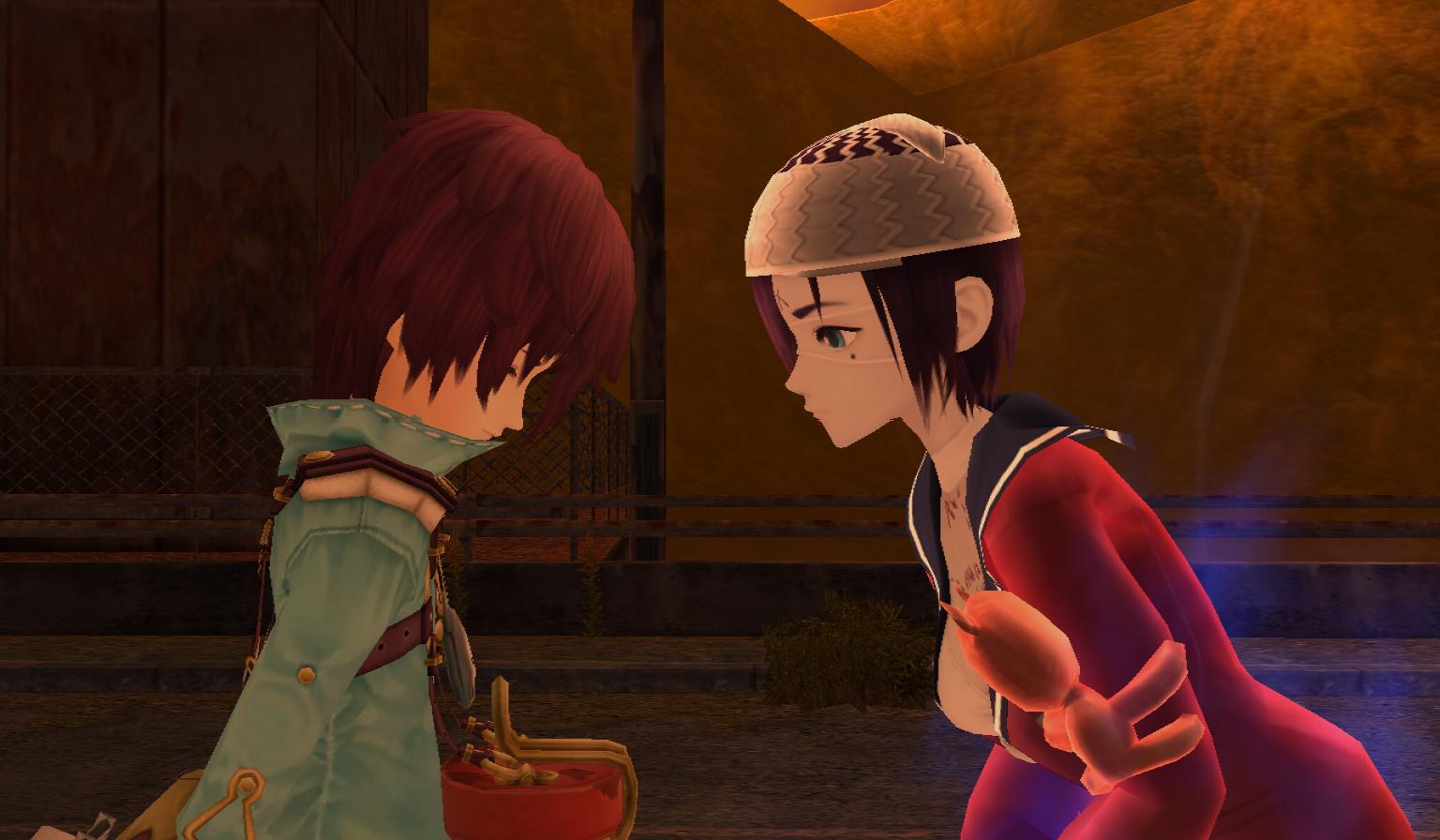
Fragile Dreams wasn't a particularly outstanding game from a mechanical perspective — its use of the Wii Remote and Nunchuk combo made combat in particular extremely cumbersome, a fact not helped by the extremely limited repertoire of moves available for each weapon and the seeming inability to dodge quickly — but it nonetheless proved to be a consistently compelling experience from start to finish.

Fragile Dreams also didn't quite match up to its own ambition in storytelling: the final hours descend somewhat into your fairly typical "madman wants to destroy the world" (in this case, destroy the world again) scenario, and the overall plot itself is riddled with holes and inconsistencies. But again, this certainly didn't diminish from the overall experience.

Fragile_Dreams-thumb-550x361-27947

Fragile Dreams was an oddly beautiful game. Despite being a low-resolution Wii title, it looked good. It had a distinctive aesthetic all of its own, and immediately set itself apart from other post-apocalyptic adventures by the simple use of colour and contrast throughout. There's a fair amount of crawling around in the dark by torchlight, but the game sensibly breaks this up with some colourful segments. Escape from a subway system earlier in the game and you're treated to the gorgeous, rich colours of dawn in the sky. Pick your way through a forest to a secluded hotel and you're surrounded by lush greenery. It's a far cry from the greys and browns that usually come with the post-apocalyptic territory, and it made the game less of a chore to play than the trudging through endless wastelands of something like the Fallout series.

There were some interesting characters, too. Much of the story is about protagonist Seto's desire to find someone with whom he can share his experiences — to laugh, to cry, to point out how beautiful something is. The characters he does run into throughout the course of the story all provide him with a certain degree of companionship, but none are quite the same as actual human company.

First he runs into what appears to be a piece of military hardware called "Personal Frame" or "PF", which has its own artificial intelligence and personality. PF provides good company for Seto for a few hours as he explores, and it's clear that Seto starts thinking of "her" (for although she looks like a backpack-mounted radio, she has a female voice) as a friend. This friendship is cut short, however, when PF's battery runs out and she "dies", leaving Seto all alone once again.

Then he runs into Crow, a somewhat androgynous-looking boy who appears to have cats' eyes and fangs. Crow initially antagonises Seto by stealing his locket — which is full of precious memories, including a screw he took from PF's "body" — and this results in a chase all over the abandoned theme park Crow calls home. Crow eventually admits defeat after taking a nasty fall from the park's Ferris wheel; seemingly against all odds, he survives, and claims to accept Seto as a friend, even going so far as to steal his first kiss because "that's what friends do" — something which Seto is somewhat surprised by, but which he doesn't reject outright. It becomes clear that all is not quite right with Crow, however, as many of the things he says are direct quotations from a children's storybook Seto finds a little earlier; indeed, Crow's true nature is revealed later when Seto discovers him slumped in a room with hundreds of discarded robotic bodies: Crow is indeed a robot, and their budding friendship is once again cut short as his batteries expire, leaving him, like PF, as an empty shell devoid of life and consciousness.

fragile-dreams-screenshots-11

Seto's next encounter is with Sai, the ghost of a young woman who appears to have committed suicide or at least succumbed to a drug addiction; this isn't made outright explicit, but can be easily inferred from the pills scattered around her dead body and the syringes, tourniquets and other paraphernalia littering the room. Sai doesn't mention this and Seto clearly doesn't understand it, so nothing more is said; the two develop a close and honest friendship as a result, with Sai accompanying Seto for most of the rest of the game from this point onwards. Again, though, although Sai and Seto become fast friends, it's not quite the same as real human company for Seto; in a heartfelt speech to Sai, Seto admits that he just wants to share his experiences with someone else, to feel their warmth, to feel like he isn't alone, and for that, a ghost just isn't going to cut it, hence his game-long search for the mysterious silver-haired girl Ren.

The characters are all interesting, unconventional and have plenty left open to interpretation, and this is something of a pattern for the game as a whole. One of the strongest pieces of narrative design in the game comes through the use of "memory items"; bits and pieces of junk that Seto comes across in his journey that have the last memories of the dying world's inhabitants infused into them somehow. Some of these are mundane, some of them are profound, some of them form part of a larger story, some of them hint at the truth behind the situation in which the world finds itself. There's a sequences of recollections between a young woman whose legs became paralysed when she was a little girl and her botany-obsessed childhood sweetheart Mao that is particularly heartbreaking, for example.

After a while, then, you start to build up a very vivid mental picture of the game world both as it exists now and as it existed prior to the disaster that wiped everyone out. It's pretty bleak and lonely, but also fascinating to explore, and one of the most interesting things about the experience is how many unanswered questions it leaves at the end. Whether this is intentional or simply due to the writers not having thought about it — a bit of both, I feel, if an interview I read a few days ago is anything to go by — doesn't really matter in the end, since it's this thought-provoking nature that will keep you thinking about Fragile Dreams long after you've finished it.

1895: More Noire

Been playing some more Hyperdevotion Noire today, so I make no apologies for spending another post talking about it.

I am enjoying it a whole lot so far, and although I'm still relatively early on in the game, the interesting mission and map design is starting to shine through as the game adds more and more map gimmicks and mechanics to take into account while playing.

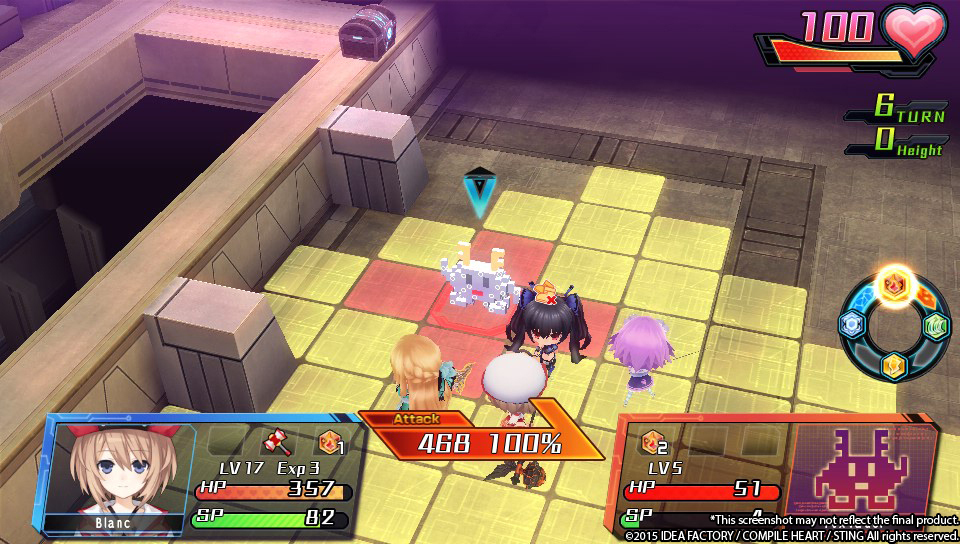
Of the last few missions, I've played, for example, one saw my party of four (Noire, Neptune, Vert and Blanc) fighting against the emphatically-not-Chun-Li-oh-wait-she-clearly-is "road pugilist" Lee-Fi. She was on the far side of a large arena whose walls were electrified, which means that knockback attacks had a use beyond simply getting enemies away from you. Some of the floor was electrified, too, necessitating careful route planning and an understanding of the game's "orientation" system, whereby the direction a character is facing when they start moving (you can change it freely) determines the initial direction they move if the target space is not in a straight line from their current position.

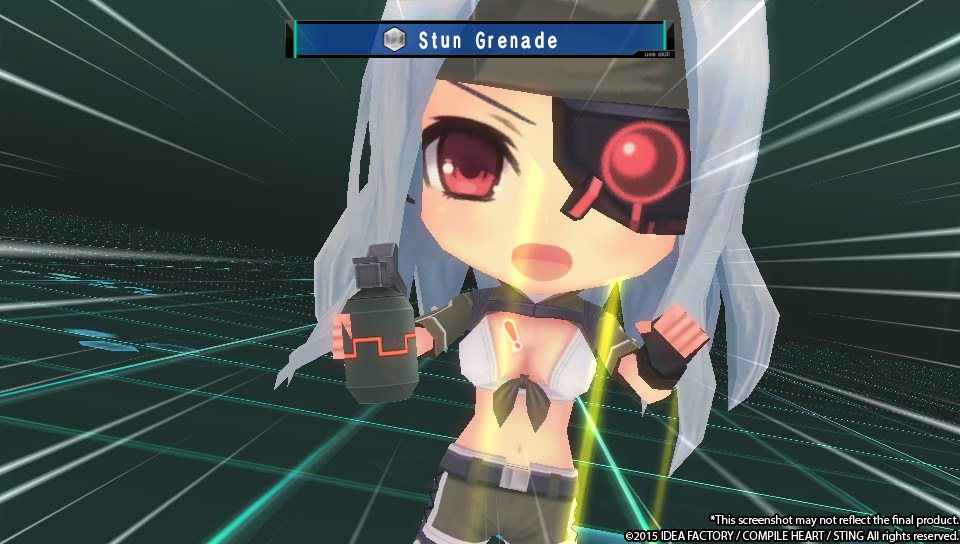
This was followed up by a fight against the emphatically-not-Solid-Snake-with-tits-oh-wait-she-clearly-is superspy Lid, whose battlefield was riddled with booby-traps, necessitating, again, careful navigation while fending off her supporting units. Two strips of the battlefield are also covered by large, heavy damage-dealing cannons, too, though once you notice that they can only fire in a straight line immediately in front of them it's easy enough to avoid them.

This was then followed by a battle against the Agarest-inspired character Resta, who was on the other side of a huge chasm, the only means of traversing which was a rickety railway carriage that could only hold three of your four party members at once. Resta also has an absolutely devastating super-move which obliterated my party in a single turn by dropping giant explosive bunches of bananas on their heads, so after my second "Game Over" of the game (the first being not paying attention to the cannons in Lid's stage) I realised that it was essential to take her down in a single turn and not get distracted by her supporting units, since the mission objective was simply to defeat her, not everything on the map.

Thus far the game has put up a reasonably stiff challenge. The first couple of missions are deceptively simple, but beginning with the Lee-Fi fight, things have been getting noticeably more difficult — and a little more gradually than most Neptunia games, which are somewhat notorious for inconsistent difficulty spikes throughout most of the experience, then becoming ridiculously easy once you pass a particular level threshold. The difficulty hasn't been insurmountable, though, and the new mechanics have been introduced gradually enough that I haven't felt as overwhelmed as I have done in similar games like Advance Wars and Fire Emblem, where I often can't work out why my strategy failed when it inevitably does. Here, failure seems to generally be the result of not paying enough attention — and given that you can examine all the units on both sides of the battle before you start fighting, there's really no excuse for the mistakes I have made up until this point; I've certainly learned to carefully survey the battlefield before charging in now!

I've always quite liked tactics games and even finished Final Fantasy Tactics way back in the day, but Hyperdevotion Noire is the first one I feel like I'm understanding a little better. It's designed well, plays well, looks great and features probably my favourite cast of characters in gaming. What's not to like?

1894: Goddess Black Heart

Finally got around to firing up the rather grandiosely titled Hyperdevotion Noire: Goddess Black Heart today, and I'm pleased to report that thus far it appears to be excellent.

scr15

For the unfamiliar, Hyperdevotion Noire is another installment in my perennial favourite game series Hyperdimension Neptunia, or more accurately, it's one of several "spinoff" games that have broken free of the main continuity… not that Neptunia has ever been a series particularly concerned with internal continuity. In other words, it stands by itself as its own self-contained story, though naturally you'll probably get more out of it if you're already familiar with the characters and concepts involved.

Unlike most of the Neptunia games, Hyperdevotion Noire puts, oddly enough, PlayStation personification Noire in the leading role. Unfolding in a separate, parallel setting to the main Neptunia games (the land of "Gamarket" instead of "Gamindustri"), Hyperdevotion Noire opens with Noire dominating much of the world with her superior military might, army of generals (each of whom represents a well-known game series, such as the Metal Gear-inspired girl named "Lid" seen in the screenshot below) and overwhelming support from the people. Unfortunately, her position as top dog isn't to last; after being tricked into releasing the power of her "Shares" — the source of a Goddess' power in the Neptunia universe — monsters run amok in her city, people disappear and her once-trusted generals start fighting among themselves. It's up to Noire — along with the rest of the Neptunia gang, who show up pretty near the beginning of the whole affair — to sort out the mess she had a part in creating, find out who the mysterious woman "Eno" who set these events in motion is (hint: she looks uncannily like recurring series villain Arfoire) and ultimately unite Gamarket.

It's up to you, meanwhile, to take care of Noire and help her out as she goes about her business. Yes, like fellow spinoff Hyperdimension Neptunia: Producing Perfection, Hyperdevotion Noire puts the player in the game as a first-person protagonist rather than simply telling the story of the main cast. Recruited as Noire's secretary shortly after meeting her, you're tasked with managing the party, strategising in battle, renovating and decorating Noire's headquarters and helping her make appropriate policy decisions as the citizens of Lastation come to her with requests.

scr19

The meat of the game comes in the battle sequences. Rather than being a dungeon-crawling, item-gathering/crafting RPG as the mainline Neptunia installments are, Hyperdevotion Noire is a strategy RPG, developed by Sting (of Gungnir, Knights in the Nightmare and Yggdra Union fame). Mainline Neptunia games have always had a slight element of tactics to their battle sequences thanks to positional bonuses, cleaving attacks and formation skills, but battles in those games are generally pretty short; punctuation to dungeon crawling. In Hyperdevotion Noire, a single battle represents a complete encounter and provides you with specific objectives: sometimes you'll simply have to defeat all enemies; sometimes you'll have to defeat a specific enemy; sometimes you'll have to complete objectives before a specific number of turns pass.

The game does a good job of introducing concepts to you gradually, and there's a bunch of interesting systems at play. Core to the game is the "Lily Boost" system, whereby characters can power up their relationship values with other characters, earn "Lily Points" and reduce the cost of their special moves by triggering their skills when adjacent to other characters, which causes the supporting characters to give the acting character an adorable little peck on the cheek. Chu! Although cheeky and flirtatious, the system adds an interesting dynamic to battles: you have to think very carefully about both turn order and formation when setting up attacks, especially when you're dealing with enemies who can hit several tiles at once. It's no good getting all set up for a four-way snog if an enemy with a massive cleave is just going to kill all of you at once when it comes to their turn, after all.

That's not all to think about, though. Battle maps include treasure chests in awkward-to-reach locations, which you'll need to acquire before completing your objectives if you want the goodies therein. A Final Fantasy X-style "Overkill" bonus rewards you with rare drops if you defeat an enemy with far more damage than you need to. Maps have variable elevation and environmental hazards — both of which can be conveniently bypassed if you switch the goddess characters into their flying "HDD" forms, but in order to do this you'll need to build up the Lily Points gauge first, and then it only lasts for three turns, so you need to make the most of it. Setting a specific character as the "leader" of the squad confers special bonuses (and, sometimes, penalties) on the group as a whole. Characters each have their own array of "challenges" to complete, each of which rewards them with significant stat bonuses.

scr13

There is a hell of a lot of game here. This is nothing new for a Neptunia game — I've easily spent over 100 hours on the last few installments in an attempt to get the Platinum trophies and hidden goodies — but considering this is a "spinoff" game and not technically part of the main series, it's impressive. I'm only a short way in to the overall plot so far, but I'm already enjoying both the narrative and gameplay sides; it's shaping up to be a fine installment in a favourite series, and all the more noteworthy for doing something a little bit different.

1891: Fragile Dreams

I fancied playing something a bit… different tonight, so I went to my shelves, bulging with backlog bounty, and looked at a few possible titles to give a go to. I didn't feel like starting a traditional RPG just yet, so quite a few things were out, but my eye eventually stopped on a Wii title I knew nothing about but owned a copy of: Namco Bandai's Fragile Dreams.

You may wonder why I own a copy of a game I know nothing about. Well, it was from a while back, when UK retail chain Game was in a bunch of trouble and looked like it might be folding; they were selling off a ton of their stock at ridiculously low prices, so I took the opportunity to grab lots of things that looked even a little bit interesting with a mind to eventually playing them at some point in the future. Fragile Dreams was one of them.

So how is it? Well, pretty damn cool so far. I'm not entirely sure what I was expecting, but I don't think it was a feels-heavy action-RPG survival horror adventure game featuring the same "your Wii Remote is a torch" mechanic that worked so well in Silent Hill Shattered Memories. There's actually a touch of Silent Hill in the game's atmosphere, though in the case of Fragile Dreams it's not so much about psychological horror as an ever-present sense of loneliness and abandonment.

At the outset of the game, the old man whom protagonist Seto has been living with dies, leaving him all alone in what appears to be a post-apocalyptic landscape. We don't know anything about what has happened to humanity as the game begins, but little bits and pieces are revealed as you make your way through the game, both through elements of the environment that can be examined and "memory items" that allow you to hear the final thoughts of the world's former inhabitants when you take a rest to restore your HP and save.

Seto isn't completely alone in the world, despite initial appearances. Very early on, he encounters a silver-haired girl and proceeds to spend the next few hours (and, I'm guessing, going by my experiences so far, most of the game) chasing after her in an attempt to find out who she might be. Along the way he encounters some sort of sentient computerised backpack with mild self-esteem issues called PF, a not-quite-human person called Crow, a dead little girl with a penchant for cheating at hide-and-seek… and I don't doubt there will be more strange and wonderful characters to encounter before the story has reached its conclusion.

It's been a really interesting ride so far. The combat kind of sucks, but it's a relatively minor part of the game, and the "survival horror" elements of having limited inventory space and weapons that have finite usage before they break add a bit of tension to the experience. It's not been particularly scary so far, despite the presence of ghosts and whatnot, but it has been thought-provoking and emotional, even just four or so hours in. The emphasis appears to be more on the general atmosphere and feelings of loneliness than on outright trying to scare and disturb the player, and I'm fine with that.

There's a lot of subtle charm to the game, too. Seto is just a kid forced to find his own way in the world well before he would have normally had to, and while he handles his task with a certain degree of maturity that you might not expect from someone whose voice hasn't broken yet, his childlike qualities come through in game elements such as the automap which, rather than being a bland, clinical but clear affair, is presented as childish scribblings, complete with notes and doodles about scary and awesome things you've come across in your travels. Likewise, the baffling inclusion of lots of cats around the game world who can be tempted to come and play with you through the use of a cat toy makes for a welcome break from hitting ghosts with improvised weaponry, or trying to track down that one key you really need right now.

There's clearly a lot about Fragile Dreams I don't yet understand. But I'm very glad I chose to take a chance on it and see what it was all about; it's shaping up to be a fascinating, deeply memorable experience. I hope it manages to keep this up until the end.

1890: Nael deus Defeated

A group of friends and I (including Andie) reached a milestone in our Final Fantasy XIV careers this evening: we defeated Turn 4 of the Second Coil of Bahamut, also known as "Turn 9" owing to it being the ninth in the series of thirteen high-level raid encounters that make up Final Fantasy XIV's endgame.

FFXIV's endgame raid is split into three main parts. The Binding Coil of Bahamut (which consists of Turns 1 to 5) is mostly — mostly — trivial in terms of difficulty these days owing to the fact that the average gear level of a level 50 character who plays a reasonable amount each week now exceeds the level these encounters were designed for by a considerable margin. As time has gone on, The Binding Coil of Bahamut has also been "nerfed" in terms of mechanics — i.e. made easier — and parties challenging it are now given a substantial buff to their HP, damage dealt and healing when they walk in, though those looking for a bit more of a challenge can optionally turn this buff off.

The Binding Coil of Bahamut reaches its conclusion with Turn 5, a notoriously difficult fight that sees a party of eight taking on Twintania, a very angry dragon. Turn 5 remains a challenge for many groups to this day not because Twintania is particularly difficult to kill in terms of her HP and damage — the aforementioned gear issue here makes the encounter much easier than it once was — but because everyone in the group needs to have a solid understanding of most of the fight's mechanics in order to succeed. Again, the power creep has meant it's easier to recover from critical errors, but if you don't know how to deal with her notorious Divebomb attack, for example, you're going to die and quite possibly take the rest of the group with you.

The Binding Coil of Bahamut is followed up by the Second Coil of Bahamut, which consists of Turns 6 to 9. These are significantly more challenging, even with the "Echo" buff to player HP, damage and healing. Mechanics are more unforgiving — though again, a number have been nerfed over time — and they're still not exactly the sort of encounters you can pick up and expect to coast your way through without knowing anything about them. Groups need to work together and be able to communicate effectively in order to pass through these challenges, and it all comes to a head with Turn 9.

Turn 9 remains notorious as one of the hardest fights in the game, even with the Final Coil of Bahamut subsequently being added after it. It proves to be a considerable roadblock to many groups, and indeed our party has been working on beating it for many weeks now.

The reason why it's such a challenge — even more so than Turn 5 — is because of its extreme complexity. In this one fight, which takes in the region of 10 minutes to complete, there are roughly as many mechanics as you'd see in at least four separate boss encounters earlier in the game. There is a lot to learn, and it feels like an insurmountable challenge the first time you jump in, but as our group have proven tonight, taking it a step at a time and practicing together whenever we get the opportunity allows you to eventually reach success.

And my God what a wonderful feeling it was as that HP bar dropped to 0% tonight. We'd had several close calls earlier in the evening — first a 9%, then a 10%, then a 6% — but there was no guarantee that we were going to beat it. But beat it we did, and many celebrations were had; now we have until June to make it through the Final Coil of Bahamut before the expansion pack Heavensward comes along and gives us an entire new raid set in Alexander to take on.

I'm looking forward to the challenge. The feeling of jubilation at finally defeating this notoriously difficult boss this evening is unlike pretty much anything I've ever experienced in any other game — and at least part of that comes from the game's multiplayer element. It wasn't just my victory, it was our victory. We worked together, we practiced, we communicated, and eventually we prevailed. And it felt great.

We poked our head into the first turn of Final Coil this evening, but didn't get anywhere, as expected. That's an adventure for another day! In the meantime, here's our clear video:

1889: My Dear Ninjas

Having finished Criminal Girls, I was all set to make a start on Hyperdevotion Noire, a game that I've been very excited to play for quite some time. But I didn't; I decided I should try and clear out some of the games I've left half-finished first, the main one being Senran Kagura Shinovi Versus.

Shinovi Versus is an underappreciated little diamond in the Vita library. It's an enjoyably over-the-top 3D action game vaguely in the vein of Dynasty Warriors (in that in a number of levels you hack and slash your way through hundreds of enemies, and your combo count frequently reaches the thousands) but also providing a fun take on fighting in 3D.

There are two… well, maybe three core appeal elements when we're talking about Senran Kagura, and Shinovi Versus in particular. The first is, of course, the fanservice element; let's not beat around the bush here, it's the reason the series exists in the first place. The girls are pretty, their boobs are jiggly, the costumes are sexy and as you fight, they get ripped. Despite the girls technically being ninjas and using a variety of rather painful-looking implements to battle one another, no-one ever seems to really get hurt or killed; the main damage anyone suffers is to their pride, since a well-timed Ninja Art at the conclusion of a bout can cheerfully whip off the underwear of your opponent, leaving them in no doubt as to who is the winner.

But anyway. The two main things I wanted to talk about were the narrative and the mechanics. The narrative I've already talked about in past posts: considering the game is regarded by outsiders as little more than gratuitous fanservice, if you're unfamiliar with it you may be surprised to note that the series features some excellent characterisation, including characters with genuine development and growth over the course of their stories. It's a game that's not afraid to juxtapose the serious and the absurd, either; while the main storylines for each of the four "schools" involved in the overall plot are fairly serious in tone, the girls' individual stories are more light-hearted in nature, leading to some ridiculous situations. It effectively allows us to see the cast "at work" and "at play", and it gives us a pretty good picture of who they all are as people.

Mechanically, the game is a delight. The control scheme is simple to understand, but the depth comes from the wide variety of characters and how very differently from one another they all handle. Some are friendly to simple button-mashing — Asuka is a good example, particularly once she unlocks her spinny death tornado move — while others demand mobility, observation, timing and sometimes unconventional tactics. By the end of your time with the game, you'll have at least one "favourite" character, both in narrative terms and mechanically, too.

It's a game bursting with content. There are four separate "episodes" to the story, each focusing on a different main cast, and each has a different tone. The scenes involving characters returning from Senran Kagura Burst on the 3DS are heartwarming, while the scenes involving new characters give us a good idea of what makes the newcomers tick. Depending on which order you choose to play the stories, you'll meet all the characters from several different perspectives, and between all these angles — and side missions like the girls' individual stories — you'll get a solid understanding of who everyone is and how they all relate to one another.

Not bad for a fanservice-heavy hack and slash. I'm pleased to be rediscovering it now that Criminal Girls is done and dusted, and looking forward to spending some time with the characters I don't know all that well yet.

1885: Backloggery

I like lists. I like checklists. I like ticking things off and completing objectives. I like quests.

As such, it surprises me that despite having had a Backloggery account for about two years now, I've not done a whole lot with it. It is, I'd say, an ideal means of both tracking your game collection and your progress through beating as much of it as humanly possible — although the site isn't without its flaws.

The main issue with any sort of curation system like this, be it a database you set up yourself (which, to be honest, is pretty much what Backloggery is; the site simply provides an easily understandable front-end for your particular chunk of said database) or a pre-built solution is that it takes time to set things up appropriately. Backloggery, for example, is not at all useful until you've manually added each and every game in your collection to your account, a process which is not at all automated, and which requires you to go through, enter the title (without suggestions), choose the platform and any other pertinent details you might want to add.

I spent a bit of time playing around with it today and despite the initially daunting prospect of inputting the games I own and haven't yet beaten — there are a lot of them! — I actually started finding it quite fun after a while. What I particularly like about Backloggery is the ability to add your own personal flavour text to your database entries: you can add both a "progress note" describing what you're working on in the game at any given moment, or what you hope to achieve in it, and a review (complete with star rating) for some more detailed thoughts once you feel comfortable enough to express your thoughts about it in a bit more detail. The latter option sensibly has a character limit, so you're forced to be brief in your thoughts; it's not a space for an in-depth critique, rather simply some personal, immediate reactions to the game and perhaps a link to some more detailed thoughts elsewhere if, as I often do, you feel the need to write in great depth about something you've really enjoyed.

My Backloggery account at present is not complete by any means, but I'm going to work on adding my collection to it piece by piece. It might, then, provide the incentive for me to work through some of these games and share my thoughts on them. And, in theory, the site acts as a sort of social network, too — though I only have one friend I know on there at present — so you can use it as a means of sharing your thoughts on games and perhaps convincing friends to try out some particular favourites you've discovered in the course of delving into your own backlog.

As I say, it's not the perfect solution for this sort of thing by any means, but its presentation is cute and the fact it's been around for a good few years now without turning into something complete shit means that it's unlikely to just disappear in a puff of smoke one day, leaving all the curators' hard work for naught. I'll be interested to start using it a little more regularly to see if it adds any value to my gaming life. If you're on there, feel free to add me to your "multitap" via the link above.

1881: Path to Redemption

I'm in the process of finishing up Criminal Girls: Invite Only on Vita, and I've been really pleasantly surprised how good it ended up being. I'm planning on writing something a bit more in-depth for MoeGamer when I've beaten it properly, but I thought I'd share a few thoughts on here for those who don't visit MoeGamer, or for those who just want to hear some disjointed ramblings about it now.

It's easy to write Criminal Girls off as an oversexualised mess of an RPG, with a gratutiously exploitative minigame in which you spank, electrocute, drip liquid on and tickle a series of young women posing in suggestive positions. And indeed, even with the "pink mist" censorship introduced in the Western release of the game (and the loss of the girls' voices in these sequences) these sequences are pretty clearly sexual in nature: everything from the poses they're in to the provocative outfits they wear and their reactions after you've, uh, finished — all point to something that while it isn't outright explicit, is certainly rather close to the, if you'll pardon the expression, bone.

But, as with most material of this nature, it bears further exploration, and doing so reveals something a lot more interesting. Why are these sequences there in the first place? From a gameplay perspective, you're expected to complete them in order to unlock the girls' new abilities through five different "tiers", with each tier involving a slight variation on the touchscreen-based minigame. From a narrative perspective, you're "motivating" these girls — who are dead and in Hell, but being given a second chance — to try harder in their struggle for redemption, though in the original Japanese script, still audible through the Japanese-only voice acting, the wording was おしおき (oshioki: punishment) rather than "motivation". If we're being super-picky, we're not actually spanking, electrocuting, dribbling on and tickling the girls themselves; in the minigame you're removing "temptations" from their bodies via various means, and the removal of these "temptations" allows them to take a step closer to being free of sin and becoming "Blameless".

Interestingly, the girls' reactions to this treatment changes significantly throughout the course of the game. Early on, they react with fear and anger when you approach them with the intention of indulging in some "motivation time" and clench their teeth in pain afterwards; by the end of the game, however, they're starting to sound like they're actually enjoying themselves, even going so far as to praise you in some instances.

This can be interpreted in a number of different ways, not all of them positive, but given the themes of the game's narrative as a whole, it's pretty apparent that this is symbolic of the growing level of trust between these "delinquents" and the player-protagonist self-insert character. By the end of the game, they trust the player-protagonist completely, and are aware that the removal of their temptations brings them closer to redemption, in turn making them more powerful and more likely to succeed. A turning point in the story comes with all of the main cast confronting the sins that landed them in Hell in the first place, and it's only through the bonds of trust they've built between one another and with the player-protagonist that they're able to make it through this experience unscathed.

I'm yet to see how the story reaches its several conclusions, but I'm very interested to find out. It has been, for sure, one of the most unusual role-playing games I've played for a long time, both in gameplay and narrative terms, and one that I feel I'll be remembering for quite some time after it's left my Vita.

And no, not just for the kinky pictures.