#oneaday Day 599: Earth Must Die!

I've been looking forward to a game that released today: Earth Must Die! by Size Five Games, creators of Ben There, Dan That, Lair of the Clockwork God and numerous other excellent games. Today isn't a "review" as such — I'll save some more substantial thoughts on the game for MoeGamer and YouTube once I've finished it — but I did want to pop down some initial thoughts and give a hearty recommend to it. As an indie title, the first few days of sales are critical for visibility on Steam, and this is a game that absolutely deserves to see some success from what I've played so far.

Earth Must Die! casts you in the role of VValak Lizardtongue, third in line to the throne of the planet Tyryth and its empire, the Ascendancy. After tricking his two brothers into murdering one another, VValak ends up in charge, and inadvertently causes the Terranoid forces of Earth to invade. That's as far as I've got, but as the name suggests, one can expect that the remainder of the game will involve VValak finding a way to get revenge on the Terranoids and get his empire back. Or maybe not…?

It's an adventure game, but with a few interesting twists from the usual formula. You have direct control of your character's movement, and interacting with hotspots is done using a cursor that can be popped up. It's clearly designed to be played with a controller and works well like that, but can also be played with WSAD movement controls and a mouse cursor. I think I might have preferred a simple mouse-only interface for its non-controller implementation, but not enough to want to kick off about it or anything.

VValak, as an arrogant (wannabe) tyrant, refuses to touch anything himself because poor people might have touched it before him. Thus you have to solve all the situations in the game without VValak ever getting his own hands dirty. This sometimes involves using his companion robot and former nursemaid, Milky, to perform various actions, and sometimes involves convincing other characters in the scene that they should carry out your orders. It's an interesting mechanic that sidesteps the usual inventory puzzles.

Like I say, I'm not too far in the story as yet so I am hesitant to say too much more in that regard, but one thing I will highlight is the incredible voice cast, which includes numerous big names in British comedy such as Alex Horne, Tamsin Grieg, Matthew Holness, Alasdair Beckett-King, Don Warrington, Mike Wozniak and many more. Plus, of course, Ben Starr is in it, because Ben Starr is the Nolan North of the 2020s (complimentary). That cast might not mean much to anyone who isn't British, but you should know that this is a full-on celebrity cast of comedy royalty, and it's incredible to see them all coming together for a video game.

The net result is that the game sounds like a late-night Channel 4 comedy show (complimentary), and it has some really beautiful animated 2D art to go along with it. It's very much designed along the lines of games like Discworld II, with large, cartoonish sprites and plenty of close-up animations — and much of the humour will be familiar to those who enjoyed Terry Pratchett's work, too.

That's about all I want to say for now. It's an easy recommend if you enjoy silly games that will make you laugh, and is a seriously impressive project from Size Five in terms of scope. I'm looking forward to getting stuck in over the next few days, and, as I say, I will have a full report, likely on MoeGamer and YouTube, once I'm done with it!


Want to read my thoughts on various video games, visual novels and other popular culture things? Stop by MoeGamer.net, my site for all things fun where I am generally a lot more cheerful. And if you fancy watching some vids on classic games, drop by my YouTube channel.

If you want this nonsense in your inbox every day, please feel free to subscribe via email. Your email address won't be used for anything else.
#oneaday Day 598: Poptimism

There's been a lot of grumbling over a new game called Highguard just recently. I don't really know what Highguard is, which is part of the problem — apparently it was initially shown off at The Game Awards last year, then just went pretty much radio silent until its… launch? Now? Something like that?

From what I can make out, Highguard is a live service multiplzzzzzzzzzzz — ah, so that's why I haven't really been following it. But that's not precisely what I want to talk about today. I, instead, want to talk about the discussions that have been happening over the last few days on the subject of coverage of Highguard.

It started with an op-ed over on IGN written by Senior Editor Simon Cardy, whose article Can We Stop Dunking on Highguard Before It's Even Out, Please? is fairly self-explanatory in terms of its core thesis. Cardy argues that it's annoying when a game is seemingly randomly picked as a whipping-boy and becomes the butt of jokes before anyone has actually gone hands-on with it and is thus in a position to comment on it from an informed, experienced perspective.

I get this. I kind-of-sort-of agree with it. It is annoying when there's something you're interested in, and all you can find in terms of coverage is How Bad Does This Game Look?! clickbait. And it is a bit daft for people to be pre-judging Highguard based on a single trailer and a remarkably quiet marketing department.

At the same time, as this piece by Autumn Wright argues, there's a strong argument to be made that the press covering a particular medium is under no obligation to remain what they describe as "poptimistic". It is not the press' job to go to bat for a particular game or company — especially not ahead of its release — and there are a lot of things about Highguard that do warrant discussion. Exactly why has its marketing been so non-existent? Does the world really need yet another live service multiplzzzzzzzzz? I'm so uninterested in the game as a whole I can't even think of a third possible question, but I'm sure there's something else that needs asking.

The problem, as ever, is in how different people see the role of the enthusiast press.

Some see it as an extension of marketing — and indeed, there are plenty of outlets that operate like this. There are plenty of outlets that have since gone under that operate like this, and there will be more in the future. It's a bit of an occupational hazard; by engaging with the standard news-preview-review cycle, you are part of a Marketing Plan, whether you want to be or not. And that's always been the norm for the games press, dating right back to magazines. It was never really questioned all that much until relatively recently; people wanted to know what was coming up, and they wanted to know if the thing they had thought looked cool for the last six months actually ended up being any good or not.

Others see it as fulfilling a critical role — critical in the sense of "administering criticism", not as in "really important", though the people who feel this way would probably argue that also. People who feel this way are interested in the stories behind the games and how games can fit into broader cultural commentary. They ask what particular games can tell us about society, and what the artistic meaning behind a work — both intended by the author and perceived by the audience — might be.

The challenge, of course, is access. The former group gets access to games because they tacitly agree to being part of the Marketing Plan. They get invited to press events to try out a new game; they get sent preview and review codes early; they agree to embargoes so the publisher of a game, not the press outlet, remains in control of the coverage. The latter group, meanwhile, tends to have to fend for itself to a certain degree. This gives them a lot more freedom in terms of what they cover and how, of course, but they can't rely on having access — whether that means "getting an early copy of a game" or "being able to pick the lead writer's brain without a PR person breathing down their neck".

I don't really know what the answer is, or even if there is a satisfactory one. I don't quite fall into either of the above categories with what I do over on MoeGamer, but then that's a site by an individual run as a passion project, not a commercial venture. As such, I have the freedom to pick and choose what I cover, and to exclusively concentrate on things that I, personally, feel have some worth and value — or, at the very least, are interesting enough to want to talk about. That means my site skews positive, which is anathema to some people, but I'm not there to do a PR company's bidding — nor am I there out of any obligation to criticise things just because they "need criticising". I simply choose to focus all my attention on games that I think are worthwhile, and that I think more people should check out.

I hate to sound like I'm "both sides-ing" the issue, but the reality is, there are valid points from all angles here. It is silly to pre-judge Highguard with little to no information — or perhaps it's more accurate to say it's silly to make assumptions about what Highguard will be with little to no information. At the same time, though, outlets have no obligation to hype up a new release — and especially, one would argue, when the marketing department doesn't appear to have been doing its job at all.

This is, I can guarantee, the only thing I am going to write about Highguard. Because the one thing I have managed to glean from the discussion over it is that I don't really give a shit about it. So I'll just say I hope it's as good/bad as you were anticipating, and leave it at that.


Want to read my thoughts on various video games, visual novels and other popular culture things? Stop by MoeGamer.net, my site for all things fun where I am generally a lot more cheerful. And if you fancy watching some vids on classic games, drop by my YouTube channel.

If you want this nonsense in your inbox every day, please feel free to subscribe via email. Your email address won't be used for anything else.
#oneaday Day 597: The MiSTer as reference library

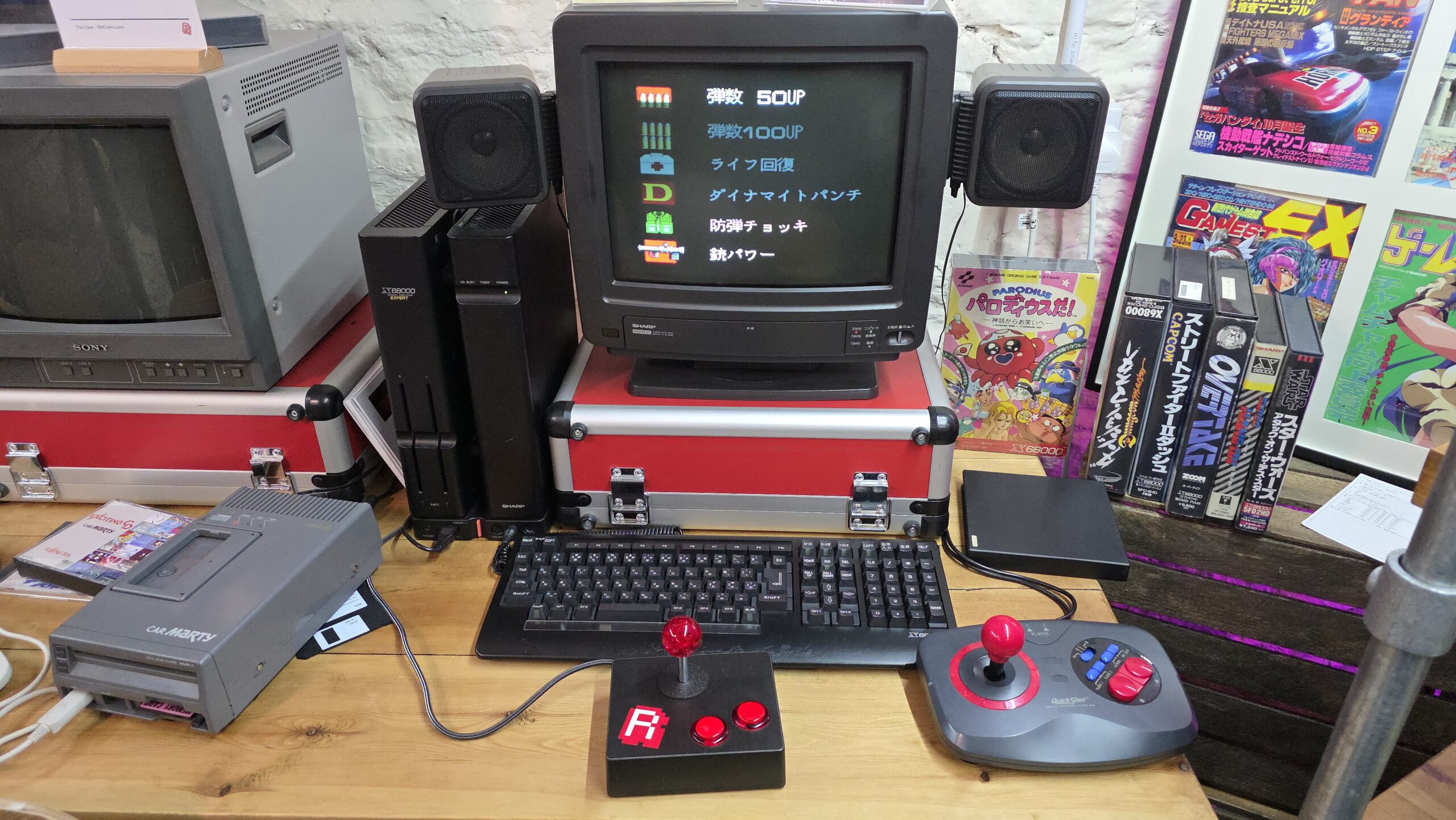
One of my favourite purchases in recent memory is the MiSTer Multisystem 2 from Heber, which is an all-in-one console designed around the open-source MiSTer framework. If you're unfamiliar, this is a specification for hardware-based emulation of classic computers and games consoles, using a technology called FPGA. The advantage of FPGA is that it produces much more accurate results than typical software emulation, and thus it is a good substitute for original hardware, particularly if you're going to go the whole hog and use analogue CRT displays.

I think the most valuable thing about the way I've set mine up is that it is now effectively an interactive reference library of video games from the Atari 2600 right up until the PS1, N64 and Saturn. I invested in a large amount of external storage early on precisely so I could load it up with absolutely everything I might ever want (and quite a lot of things I will probably never want) and thus never have to worry about tracking down ROMs and disc/disk images ever again. (Until I discover a New Favourite Console, of course. Which has been known to happen.)

This is a useful resource both for my own curiosity and for my day job. We're working on something thoroughly interesting in the latter regard right now — no, you won't get any hints here — and an important part of that is ensuring that the project is accurate to the original version. Having the MiSTer Multisystem 2 up and running right next to me in my study means that, at a moment's notice, I can flip it on, check something and capture video for my colleagues to compare to. This is a good thing.

Having a storage device full to bursting with ROMs and disc/disk images, of course, runs the risk of the dreaded "analysis paralysis". But at the same time, if someone says something like "oh, I used to really like Enduro Racer on the Master System", I can pull that up and check it out immediately, knowing that the experience I'm having is authentic to the original hardware, and all without having to swap around cables, power adapters and controllers.

I have a lot of original hardware, which I like owning. But pretty much all of it is now primarily on display on the shelves rather than being used directly — because with very few exceptions, the MiSTer Multisystem 2 works just as well as the "real thing", with little in the way of compromise. And some improvements in some cases; it's absolutely no contest between a modern 8bitdo controller and the dreadful original Sega Master System joypad.

The one thing that is a compromise is the tactile nature of using original computers. Different computers had their own different case designs and keyboards, and thus a distinctive feel to using them. I have the 8bitdo mechanical C64-style keyboard as a suitably "retro" input device for computers, and it's great — but it does mean I miss out on little things like the distinctive shape of the Atari ST's function keys or the unique keys on certain systems' keyboards. (And documentation on exactly what these unique keys are mapped to on a modern keyboard is remarkably lacking, it has to be said!)

You also, of course, miss the fun tactile aspect of working with physical media. There's still something undeniably lovely about putting a cartridge in a slot or loading up a disk and listening to the whirr-snark of a floppy drive, and it will be a sad day when no-one remembers doing that. But with original hardware — particularly floppy disks — becoming more unreliable and prices for second-hand copies of retro games going through the absolute roof, at this point attempting to collect games for old computers and consoles feels like a complete waste of money.

Meanwhile, I have not regretted a single pound I have spent on my MiSTer setup. And, with any luck, given the lack of moving mechanical parts in it, it will last for a good long while, too.


Want to read my thoughts on various video games, visual novels and other popular culture things? Stop by MoeGamer.net, my site for all things fun where I am generally a lot more cheerful. And if you fancy watching some vids on classic games, drop by my YouTube channel.

If you want this nonsense in your inbox every day, please feel free to subscribe via email. Your email address won't be used for anything else.
#oneaday Day 594: Point. Click.

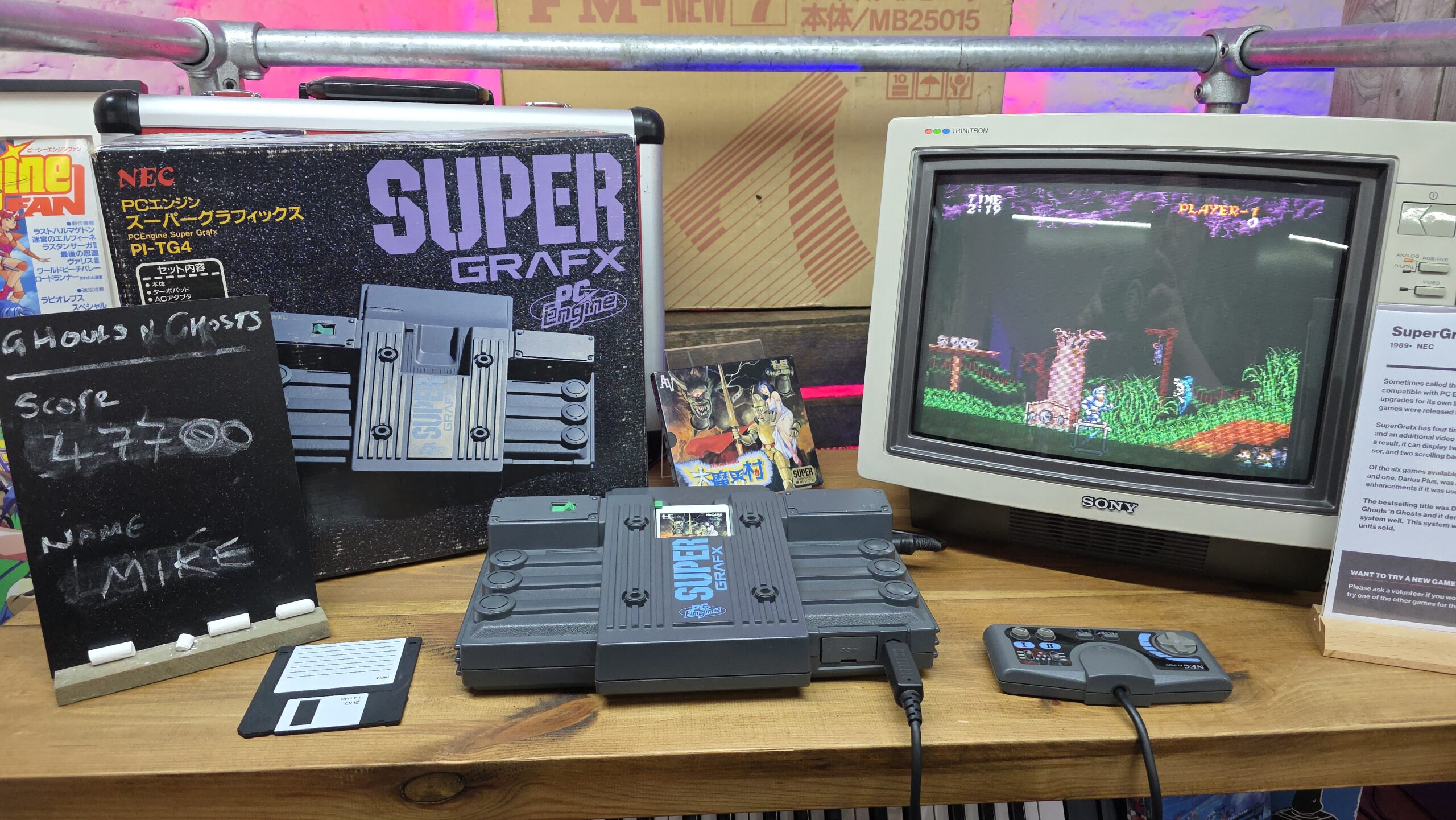
I love point-and-click adventures. Back in the '90s, they were probably my favourite type of game. I devoured everything LucasArts came out with and a lot of stuff Sierra did — though I must confess, there are still a few gaps in my knowledge on the latter front.

LucasArts stuff was just better than Sierra stuff, at least in the early days. Early on, LucasArts' developers decided to take the things that annoyed people about Sierra games — chiefly the ability to die and get yourself into unwinnable situations — and throw them out of the window. Far from removing all challenge from the games as a result, this just made them much more fun to play — although it's interesting to note quite how short a lot of those games are by modern standards.

One thing to remember is that when we were playing stuff like Indiana Jones and the Fate of Atlantis, Internet access wasn't particularly widespread. Hell, GameFAQs wouldn't exist for another few years, even if you could get on the Internet; some resourceful folks were writing walkthroughs and posting them on places like CompuServe's GAMERS forum (a frequent online hangout for myself), but for the most part, when it came to solving a tricky game, you had two options: figure it out yourself, or wait for a magazine to print a walkthrough.

This meant that games that are maybe three or four hours long start to finish could actually take days, weeks or even months to complete. We had a lot more patience for that sort of thing back then — although I do recall finding it quite eye opening when I bought a brand new copy of Full Throttle, played it for two hours with my brother and we rolled credits on it.

Today, point and click adventures are still going strong. Press and public alike have enjoyed saying the genre is "dead" for many years, but in reality it's been nothing of the sort. What changed is the part of the market that point-and-click adventures occupied; while once a Sierra or LucasArts game would be considered a "big release" in a similar fashion to today's triple-A titles, after the turn of the millennium they became more niche interest affairs.

I'm not entirely sure why, either; they hadn't fundamentally changed what they were doing, or their core appeal elements. Although thinking about it, that's probably precisely why they became more niche interest affairs. From the late '90s onwards, the "upper" (for want of a better term) end of the market was going 3D, exclusively. And adventure games, up until this point, had been resolutely 2D affairs, tending to be showcases for beautiful rotoscoped or hand-drawn animation, painted backdrops and suchlike. In the age of PlayStation, that suddenly wasn't fashionable any more for a variety of reasons — and the few attempts to bring point-and-click adventures into the 3D realm had been met with a mixed response.

As with most niche interest things, an enthusiast community developed, with many of them rallying around a piece of software called Adventure Game Studio. Initially DOS-based, this was a tool that allowed anyone with a creative mind and the ability to produce basic graphics to put together a point-and-click adventure. It took effort, mind; this wasn't a "game generator", but a fully featured game engine, suitable for creating point-and-click games similar in style to Sierra, LucasArts and any number of other models.

Remarkably, Adventure Game Studio is still going to this day — and the enthusiast community is still using it. Only now, we see a lot more commercial releases from independent developers. And even more remarkably, the stuff being put out today by small outfits is pretty consistently better than anything from the genre's supposed "golden age" of the mid '90s.

There are more point-and-click adventure games that have been released in the last few years than there ever were back in the '90s. And they're really, really good. For just a few recommendations: the Kathy Rain series is an excellent series of investigative adventures; Old Skies by Wadjet Eye Games is an incredibly thoughtful narrative-centric game with a time travel hook; Lamplight City by Grundislav Games is what happens if you take Gabriel Knight and stick it in a steampunk setting; Brok the InvestiGator by CowCat Games is a brilliant, lengthy animated adventure with optional beat 'em up mechanics.

Even better, these games are a lot longer than their mid '90s counterparts. Old Skies took me a good 12 hours. The two Kathy Rain games are about 8 hours each. I'm 7 hours into Lamplight City so far and on the fourth chapter of five. I'm not sure how long Brok was but I have a feeling it was pushing 20 hours.

"Length of play" isn't the sole metric by which you should measure a game's worth, of course. But what a longer game means in the adventure game space is a more detailed, in-depth story to explore and enjoy. The difference between watching a movie and a whole season of a TV show. Both have their place, of course — I'm not averse to a short adventure game, still, and frequently go back to some '90s faves — but it's always nice when one of these modern games really gives you something to get your teeth into properly.

Best of all, though, is that there's loads of them. The ones I've mentioned above are just scratching the surface. As someone who has always loved this type of game, that excites me. And I've really been enjoying playing Lamplight City of late in particular. More on that over on MoeGamer when I've beaten it, though….


Want to read my thoughts on various video games, visual novels and other popular culture things? Stop by MoeGamer.net, my site for all things fun where I am generally a lot more cheerful. And if you fancy watching some vids on classic games, drop by my YouTube channel.

If you want this nonsense in your inbox every day, please feel free to subscribe via email. Your email address won't be used for anything else.
#oneaday Day 593: A meaningfully revised roadmap

Ubisoft has announced today that they are cancelling six games, delaying seven more, closing two studios and forcing everyone back to five days a week in the office. Their justification for this is the usual mealy-mouthed, weasel word-filled business-speak nonsense:

In the context of a persistently more selective market as illustrated by the last quarter, and as part of the finalization of the Group's new operating model, Ubisoft has conducted a thorough review of its content pipeline over December and January. This has led to the strategic decision to refocus its portfolio, reallocate resources and comprehensively revise its roadmap over the next three years. This will support the objective to return to exceptional levels of quality on the Open-World Adventure segment and step-change the Group's position in the GaaS-native experiences segment, as illustrated by the recently acquired project, March of Giants.

In other words, Ubisoft is going back to focusing almost exclusively on the type of game people have been taking the piss out of them for years for — there's a reason people refer to open-world games where you hoover up icons from a map as "Ubisoft Game #[bigNumber]". And, when they're not doing that, they're going to jump headfirst into the exceedingly volatile live service arena, where the last decade or so has clearly demonstrated that if your name isn't Fortnite or Roblox you are almost certainly going to release an enormously expensive colossal failure of a game that will be shuttered in less than a year.

To put it another way, for every Fortnite there are hundreds of Concords. And most of them don't get the coverage Concord did. They just release to zero excitement, zero acclaim and zero passion from anyone, then quietly die in obscurity, destined to be forgotten forever.

All of this seems extraordinarily stupid, particularly since one of the cancelled games was the remake of Prince of Persia: The Sands of Time, whose original incarnation is one of the company's most well-regarded games from years gone by, and a title that would have doubtless reviewed and performed well among today's audience. But no; because it "does not meet the new enhanced quality as well as more selective portfolio prioritization criteria at Group level", it is kaputt. It is no more. It is an ex-game.

Ubisoft has, of course, been undergoing something of a turbulent time, so these "strategic decisions" to "refocus" (read: lay people off) are not a surprise to see. Business decisions like this are, at times, regrettably unavoidable.

However, what is eminently avoidable is charging headlong into sectors that the general public have clearly indicated that they're sick of. Not only "the Open-World Adventure segment" and "GaaS-native experiences", but also, unsurprisingly, they slipped this little bit into their "revised roadmap":

The new operating model will further empower the execution of the Group's strategy, centred on Open World Adventures and GaaS-native experiences, supported by targeted investments, deeper specialization, and cutting-edge technology, including accelerated investments behind player-facing Generative AI.

There it is! Of course there's fucking generative AI involved, because why wouldn't there be? The industry that is losing billions of dollars a year and is pretty much universally hated by anyone whose job isn't just "shareholder" is clearly the right thing for this ailing company to focus on! Surely the generator of what is commonly agreed to be called "slop" these days will help us make better games! Everyone loves AI! Don't they?

(silence)

(a quiet cough)

God fucking dammit. Living in this century is so fucking frustrating, like, all of the time. I haven't been much of a fan of Ubisoft stuff for numerous years at this point, but all this just makes it abundantly clear that they have zero respect for any of the actual creative work that goes into games. Look again at those quotes above, and count how many times artistry and creativity are mentioned.

That's right. Absolutely nothing whatsoever.

At least they're being honest about it, I guess.

I wonder how long they have left?


Want to read my thoughts on various video games, visual novels and other popular culture things? Stop by MoeGamer.net, my site for all things fun where I am generally a lot more cheerful. And if you fancy watching some vids on classic games, drop by my YouTube channel.

If you want this nonsense in your inbox every day, please feel free to subscribe via email. Your email address won't be used for anything else.

#oneaday Day 589: HeroQuest First Light, First Session

I've done it! I've finally played a game of HeroQuest with actual real human people. And we had a really good time! We got through the first two quests in the First Light campaign — I've bought both First Light and the big-box core set, but I wanted to give First Light a go because it's a completely different campaign to the big-box core set, and the big-box core set campaign is largely based on the 1989 original, which I was already familiar with.

Both sets stand by themselves, and both are a good means of getting into HeroQuest as a hobby; the main difference is that First Light is a lot cheaper and comes in a smaller box, because it lacks the big collection of plastic miniatures included in the big-box core set. And, having played the game with those big-box core set miniatures today, I'm glad I picked it up; making the whole game a lot more "3D" really adds to the atmosphere and makes it look great on the table. (For the budget-conscious, the cardboard standees for monsters in First Light have some great artwork on them — and you do still get miniatures for the heroes and a recurring dragon boss — but all the furniture items are flat cardboard tiles that just show a plan view of the furniture. They serve their purpose, but it's hard to deny that the 3D furniture is just better.)

Playing Zargon (known as Morcar in the European '80s version) is an interesting experience. One thing you have to remember while playing is that although you are technically an "adversary" for the Hero players, you are not necessarily trying to defeat them. You are, instead, attempting to facilitate a fun session of storytelling, using the game mechanics as a framework, and that sometimes means quietly fudging things a bit, rebalancing the difficulty on the fly and responding to things that happen in a way that isn't necessarily laid down for you in the Quest Book in black-and-white.

Some people turn their nose up at HeroQuest because of its simplistic mechanics, and I can totally understand that; there are games with similar theming that go much harder on strategy and tactics, with each encounter feeling a lot more like a tabletop wargaming skirmish than a dungeon crawl. For some, that's what they want; for me, though, I've always been very fond of HeroQuest's straightforward mechanics, because not only do they keep the game pacy and help emphasise the collective, emergent narrative of the players' quest, they also make it very easy for newcomers to pick up. There's very little trawling through an epic rulebook once you have the basic rules sorted, which means there's very little downtime, and a lot more time for moving, fighting and searching things — because those are the three main things you do in HeroQuest.

The two quests we played today were enjoyably different from one another. The first was a relatively open-plan dungeon in which the Heroes, by chance, picked the "correct" way to go at the beginning and ended up at the concluding encounter relatively quickly, but in the process they also missed out on potentially collecting a bit more treasure. The second quest had an interesting series of magic portals that could send the Heroes to different parts of the dungeon, some of which connected with one another and some of which did not.

The second quest was noticeably harder than the first. The Heroes did have a bit of a run of bad luck with dice rolls — particularly once they opened up a secret room and found a pair of Mummies, which are surprisingly tough enemies to beat — but that made their eventual victory over the quest's "boss" feel hard-earned and definitely worthwhile. And relatively little Zargon fudging was required to keep everyone alive!

The cool thing is that I think the Hero players learned something from how these two quests went down — notably, that it is helpful to stay together, but in a tactically advantageous formation so, for example, the Wizard doesn't get twatted in the face, so the Barbarian doesn't block doorways and so everyone is able to get a chance to line up and punch something. The Wizard got equipped with a staff after the first quest, which allows him to attack diagonally, so that helped inform some tactics, and the Heroes have also determined that getting themselves some better equipment probably wouldn't be a terrible idea, either.

Lots of scope for growth, and the players enjoyed themselves enough to want to play it again! So with any luck, in a couple of weeks' time, it'll be hitting the table again and the campaign can continue.

I'm really very happy about this. I've been wanting to run a proper game of HeroQuest since I was, like, ten, and now I am. And I'm having fun! Sometimes you just need patience. And to buy the game multiple times in the intervening years.


Want to read my thoughts on various video games, visual novels and other popular culture things? Stop by MoeGamer.net, my site for all things fun where I am generally a lot more cheerful. And if you fancy watching some vids on classic games, drop by my YouTube channel.

If you want this nonsense in your inbox every day, please feel free to subscribe via email. Your email address won't be used for anything else.
#oneaday Day 587: Why are you doing that?

One thing I find quite interesting when looking at games from over the years is contemplating how, as time has gone on, we have become a lot more preoccupied with the "why" of what we are doing in a game than in the past. And, as part of these contemplations, I've come to realise that games which don't really give you much of a "why" beyond "this is what the game is" actually have their own very distinct appeal.

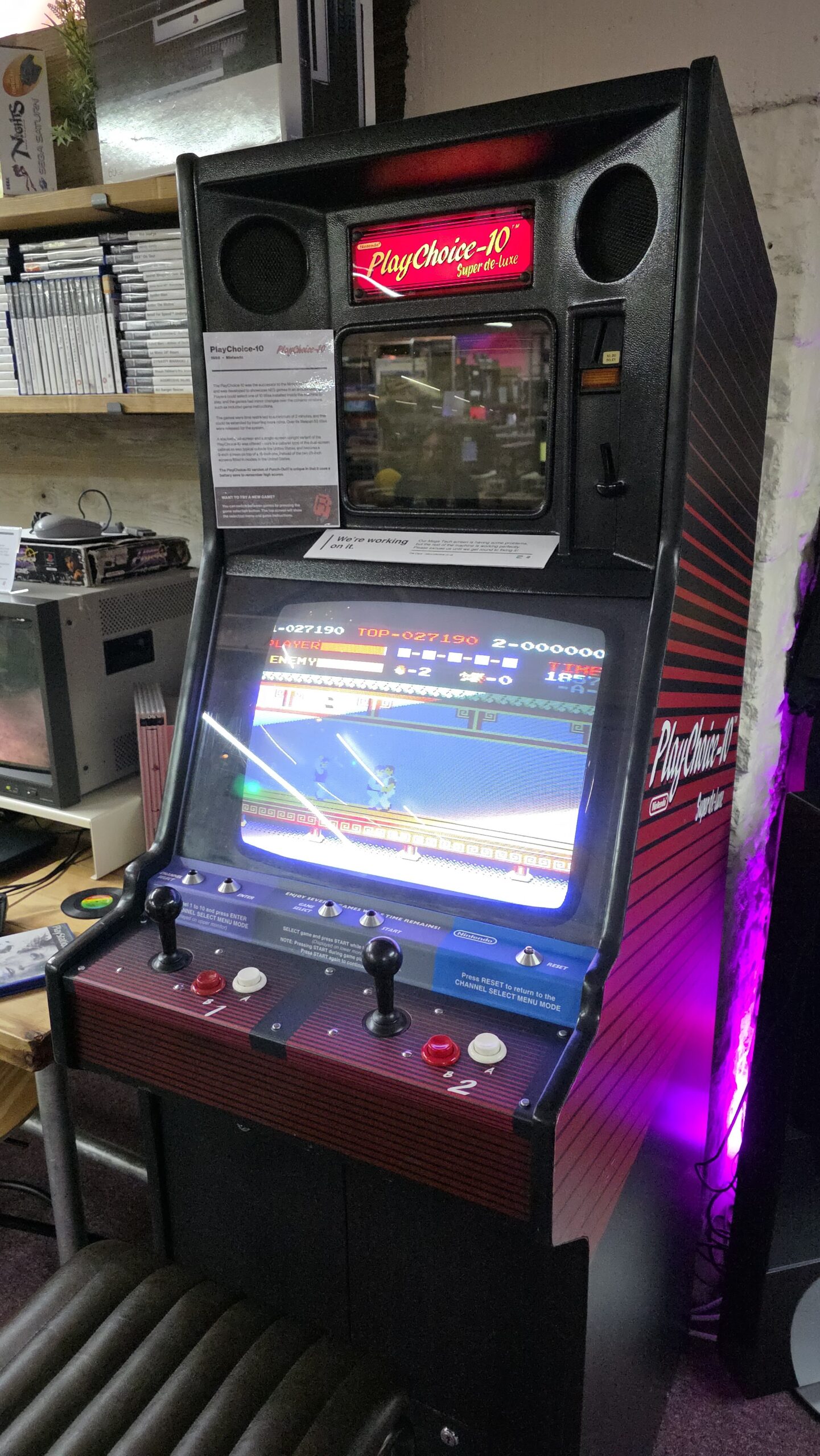
As a case in point, I've been playing some Nintendo 64 "collectathon" platformers recently. This is a type of game that very much fell out of favour at some point between the PlayStation/Saturn/Nintendo 64 era and the PlayStation 2/Xbox/Gamecube age. There are still some folks making games like that — most notably Nintendo — but they are by no means as common as they used to be. And a lot of it, I think, comes down to the apparent expectation that everything must have some sort of narrative context or justification.

Now, I'll hold my hands up here and say that, in the past, I have been guilty of thinking that pretty much every game would be better if it had some sort of narrative context. In the earliest days of this blog, back when the people behind WordPress gave a shit about their community rather than going all-in on AI or whatever shit they're up to at the minute, I even had a post featured for making this very argument specifically about racing games — blissfully unaware, as I was at that point, of Namco's PC Engine conversion of their arcade game Final Lap Twin and the fact they added a Pokémon-ass RPG to it. I do actually still think there's scope for racing games with stories, but I also don't think all racing games need stories — and those which do have stories had better have bloody good ones if they expect me to sit through them rather than skipping right to the racing.

Err, what was I saying? Oh, right. Games didn't always feel the need to justify the things you were doing in the game in terms of narrative. Collectathon platformers are, in many ways, the quintessential example of this: they have characters, a world and indeed a plot, but none of those get in the way of the core "point" of the game: solving puzzles and overcoming challenges to acquire shiny things that let you access more of the game. No-one ever gave a shit about why Mario was collecting Power Stars in Super Mario 64, they just knew that he had to collect Power Stars, and that was enough.

This is one of the things I found quite refreshing about Donkey Kong Bananza recently. That's a game that strikes a very good balance between having an unfolding story and just giving you a basic objective to complete before getting out of your way and letting you accomplish it. For the vast majority of your time in Donkey Kong Bananza, you are looking for Banandium Gems. It doesn't matter why. Donkey Kong wants them, and that means you want them. That's all that matters. That's all that needs to matter.

I'm not saying that games with plots have no place. Hell, you know me, I'll gladly bury my head in a 100+ hour RPG, particularly if it makes me cry at least once along the way. But sometimes it's nice to play a game that is less concerned with wanting to be taken seriously as a great work of art or a masterpiece of characterisation and worldbuilding, and more with being a fun toy that just feels good to fiddle with.

I could have probably phrased that better. But I'm leaving it like that now, deliberately. And I'm off to go and acquire some more shiny things.


Want to read my thoughts on various video games, visual novels and other popular culture things? Stop by MoeGamer.net, my site for all things fun where I am generally a lot more cheerful. And if you fancy watching some vids on classic games, drop by my YouTube channel.

If you want this nonsense in your inbox every day, please feel free to subscribe via email. Your email address won't be used for anything else.
#oneaday Day 584: Paint chase

"Are you going to paint them?" Andie asked, looking at the wealth of miniatures in the big-box HeroQuest set that arrived today.

"Probably not," I said. "I don't know how."

This probably isn't quite accurate — as Andie pointed out, the how of painting something is pretty bloody obvious. But what I meant by that was I have no idea how to do it in such a way that it doesn't look absolute shite.

Now, granted, I am basing this on my previous attempts to do this, some 30+ years ago, when I had a Citadel Miniatures starter paint set and a single brush that was, frankly, woefully inaccurate for the job at hand. The results were, as you might expect, Not Very Good — not least because I only ever really got as far as doing base colours, and never got into doing highlights and shadows. I always got hung up on the how of those bits — how do you know which bits need highlights and shadows? (Obviously, you shine a light on it, and put shadows in the bits that have shadows in them, and lighter bits on the bits that have light on them — I realise that now.)

With this in mind, I've been pondering whether I should try again. And I was surprised and pleased to discover that miniature painting technology has, unsurprisingly, moved on quite considerably in the intervening 30+ years since I last attempted it.

I'm especially interested in some curious little gizmos called Speedpaint Markers by a company called The Army Painter. This is, in turn, a spinoff of a type of paint this company creates called Speedpaint, which purports to do all the highlighting and shadowing for you to a certain extent. It does this through a particularly blended paint, whose properties mean that when it gets into cavities it takes on a darker tone, while on flatter, more raised areas it has a lighter tone, and on everything in between it has a… well, kind of "normal" tone, whatever that means for the specific colour you're using. It's a different sort of idea to acrylic-based paint, which is what I had previously experimented with, and looks like being a very beginner-friendly approach to painting minis.

The Markers take things a step further. Rather than requiring a specialist brush, palette and other equipment, they're a little brush-pen hybrid that delivers the paint right onto the miniature without any other equipment required. Obviously you still need to prime them beforehand, but that's simple enough that even I can do it.

I'm tempted to give them a try. It's a bit of money to get a decent starter set of colours (and, annoyingly, the one thing the "starter set" of markers lacks is a regular flesh tone) but if it really is as easy as it looks to use these things, I might finally be able to enjoy something that has, to date, eluded me.

I dunno. I'll think about it. But it would be cool to have painted minis for HeroQuest.


Want to read my thoughts on various video games, visual novels and other popular culture things? Stop by MoeGamer.net, my site for all things fun where I am generally a lot more cheerful. And if you fancy watching some vids on classic games, drop by my YouTube channel.

If you want this nonsense in your inbox every day, please feel free to subscribe via email. Your email address won't be used for anything else.
#oneaday Day 583: Heroic leap

(Experimenting with some different techniques today. The above isn't what I'd call a "finished" image but I feel like I can probably build that into something.)

We were originally supposed to be having some friends over to play HeroQuest today, but the collective illness of me, Andie and at least one of the friends in question over the course of the last week caused us to postpone to next weekend. So I can't really offer a recap of what occurred in our first session, but I can take a moment to ponder exactly why I'm looking forward to jumping into this.

HeroQuest was an important part of my childhood. I was introduced to it through my brother's girlfriend at the time, who was big into heavy metal, fantasy role-playing and suchlike. Her Dad was into miniature wargaming, also, so I wonder how much that was an influence on her — though, of course, Warhammer and its ilk was always a lot cooler than the sort of "historical re-enactment" miniatures her father collected. Perhaps it was a case of "oh, I kind of like those, but I don't want my Dad to think he's cool, so I'll get into something tangentially related".

Anyway, fact is, I was introduced to HeroQuest by my brother's girlfriend, who did an admirable job of putting up with her boyfriend's annoying younger brother by letting me look at her stuff. I don't think I ever actually played HeroQuest with her, but I was so enamoured with it that I asked my parents to get me a copy of Advanced Heroquest one birthday or Christmas, and I got it. Still have it, in fact.

To my frustration over the years, I've actually had relatively few opportunities to play either the original HeroQuest or Advanced Heroquest with real people. Fortunately, Advanced Heroquest includes some very robust solo play rules, so it wasn't a complete waste, and I did manage to play it a few times with people over the years. But the original HeroQuest was always something I really wanted to play with other people over the long term — ideally with me in the role of the games master, taking the players through a full campaign of adventures.

HeroQuest, for the unfamiliar, is a fairly straightforward dungeon-crawling board game. The original MB Games version from the late '80s was developed in conjunction with Games Workshop's Citadel Miniatures brand, and thus was regarded as part of the Warhammer universe; Advanced Heroquest made this much more explicit. A few years back, however, Hasbro and its Avalon Hill brand, now rights holders for the HeroQuest license, decided to resurrect the game with a crowdfunding campaign.

The new HeroQuest has had a few changes since its late '80s release. The new version is now universal worldwide, being based on the previous incarnation's North American rules, rather than having European and North American variants. This means a few things. Firstly, the games master player is now called Zargon instead of Morcar, which to my mind is an infinitely worse name, but it seems "Morcar" is being reintroduced to New HeroQuest with an upcoming expansion, so I'm not too mad about it. Secondly, the game is a tad more difficult — in the European original, all monsters had just one Body Point, so you just had to hit them in order to kill them, even in the case of "bosses". Thirdly, there are some differences and variations in how the quests are composed.

I initially bought the First Light standalone "starter" set for HeroQuest but, having seen a good price on the full-size core set, I've splurged on that too. (Christmas money!) It's actually worth having both, though, because First Light has a completely different campaign of quests to take on as well as a double-sided board with a new map layout that isn't in the original. The downside of First Light is that as a lower-cost starter set, it only has five miniatures: the four Heroes and a dragon boss that recurs throughout the First Light campaign; the remainder of the Stuff is implemented either as flat cardboard tiles, or cardboard standees. Conversely, the full core set has miniatures for all the main monster types in both the First Light and original core quests, plus plastic 3D furniture to put in the rooms.

I'm really looking forward to getting into playing this, because as much as I have had fun with some subsequently release dungeon crawler games such as Descent: Journeys in the Dark, The Legend of Drizzt, Gloomhaven and another one I've completely forgotten the name of, a lot of those feel like they get a bit bogged down in being tactical wargames rather than exploration-focused dungeon crawlers — and it's the exploration and storytelling that has always attracted me to HeroQuest and its surrounding works.

Hopefully at this point next week I'll be able to provide a report on how our first session went. I'm looking forward to it a lot, and hope it will be able to become a semi-regular activity. We shall see!


Want to read my thoughts on various video games, visual novels and other popular culture things? Stop by MoeGamer.net, my site for all things fun where I am generally a lot more cheerful. And if you fancy watching some vids on classic games, drop by my YouTube channel.

If you want this nonsense in your inbox every day, please feel free to subscribe via email. Your email address won't be used for anything else.

#oneaday Day 582: Getting some mojo back

No drawing today as I've been doing other creative things, as I shall talk about in a moment.

I have not felt at all like making any videos for a while, which is a little bit frustrating to me, because the first two episodes of my Space Rogue playthrough actually did surprisingly decent (for my channel) numbers, and I reckon there's just one or two episodes more of The Granstream Saga to do before that's all finished. I just haven't quite been able to summon up the energy to continue those recently, not helped by a week of feeling ill that I'm just getting over.

However, with a soft embargo date approaching for Super Woden Rally Edge, a game I wanted to cover — the video I made on this game's previous installment is the best-performing video on my channel by a long shot — I felt a bit more inspired to actually do something today. So I recorded a bunch of voiceovers: both for this, and for some other things that I've previously written articles for, but wanted to turn them into videos. All in all, I've recorded voiceovers for Super Woden Rally Edge, Old Skies, Return to Castle Wolfenstein, Wolfenstein 2009 and Wolfenstein: The Old Blood, which should result in a nice spread of 15-20 minute videos for each. I've even edited the Super Woden Rally Edge and Old Skies ones already, but I'm going to leave the Wolfenstein ones to another time — maybe tomorrow, maybe later in the week, depending on how I'm feeling.

I continue to go back and forth on what is "best" to do for my YouTube channel. Up until now, I've built it on Let's Play-style playthroughs of games, and I think a lot of my viewers like that sort of thing, particularly as I make an effort to explain how to play the game, why it's interesting, why it's still relevant (if it's an old game, which it usually is) and what I, personally, think of it. These are fairly easy to record and edit, but they are time- and energy-consuming to produce, since they do involve me sitting and playing a game, often for quite a long time, and attempting to find meaningful things to say for the duration.

At the same time, the pre-scripted videos tend to overall do better, particularly over the long term. I think I'm probably more "proud" of those overall, too, since they involve more in the way of editing, and delivering a voiceover is a different skill overall to off-the-cuff, unprepared commentary while playing "live". However, they take a lot more time to both prepare and edit, since there is often a lot of miscellaneous footage required to capture along with the footage of the main thing I'm covering, and the editing process involves a lot more in creatively finding ways to visually represent the things I'm talking about.

Part of me wants to commit to one or the other of these approaches, because I feel it would probably be a good idea to. At the same time, I think there's value in both approaches; you can show things in "live gameplay" that you can't show in a "video essay"-style production, and vice versa.

I do, however, think that kicking off long playthroughs again might have been a mistake. The videos for The Granstream Saga have performed more poorly than anything I've done for a long time, although, as I say, the first couple of episodes of Space Rogue did surprisingly well. So I'm inching towards abandoning those, though I feel like at this point I probably should finish The Granstream Saga at the very least.

Anyway, that's something to think about another day. I have enough on my plate with these new videos for now, so watch for them coming soon to my channel!


Want to read my thoughts on various video games, visual novels and other popular culture things? Stop by MoeGamer.net, my site for all things fun where I am generally a lot more cheerful. And if you fancy watching some vids on classic games, drop by my YouTube channel.

If you want this nonsense in your inbox every day, please feel free to subscribe via email. Your email address won't be used for anything else.