2310: My First Ys

0310_001

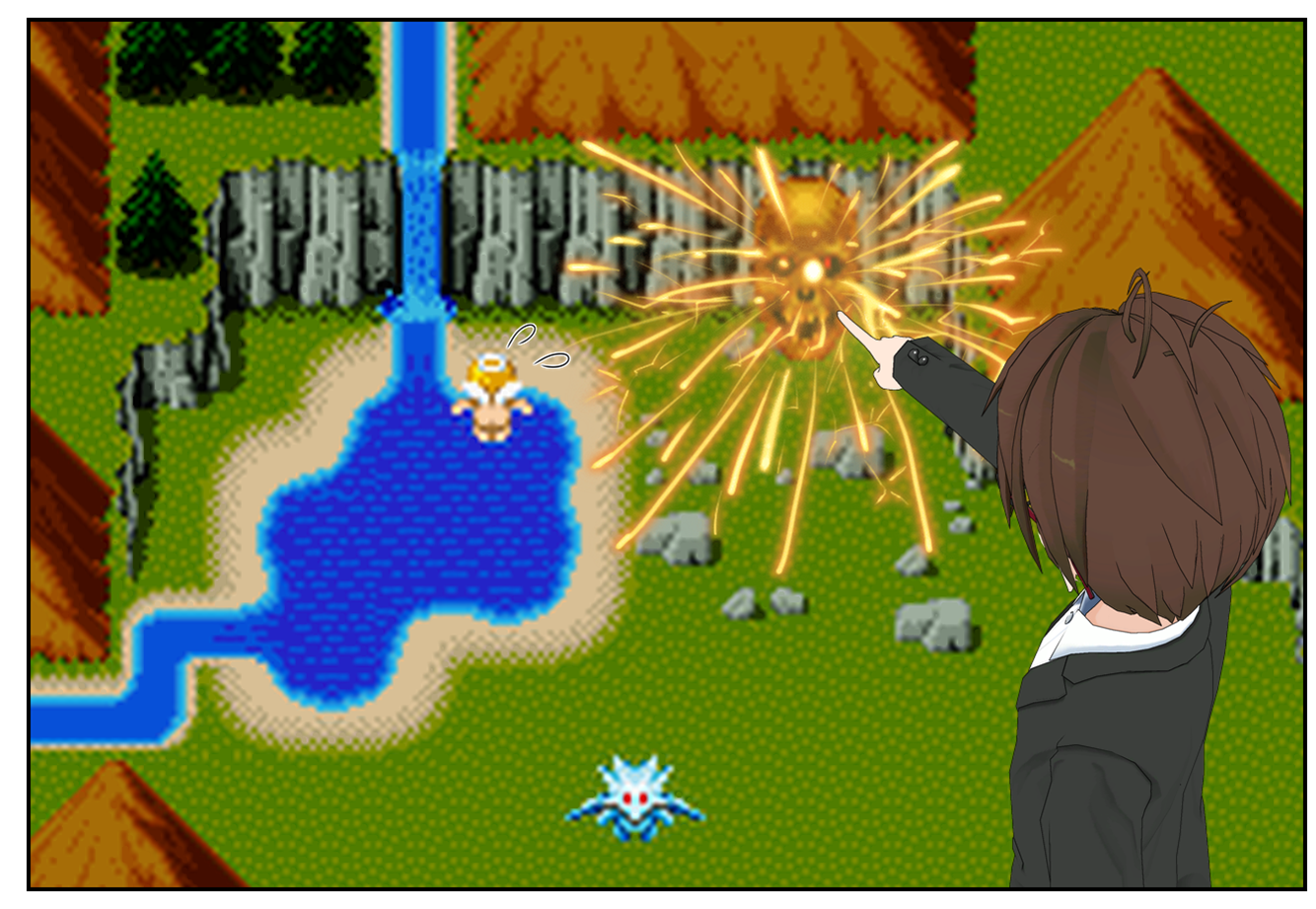
I've been meaning to check out the Ys series for quite some time — my Steam library informs me that I have owned a number of the PC versions for several years, and I also have a number of the PSP versions loaded on my Vita, too. For some reason, though, I've never got around to it.

I decided that it was time to change all that, so I booted up Ys I to start at the beginning. And, well, I kind of wish I'd done this sooner.

Ys is a series I've been dimly aware of for many years. I remember some seriously random things from my childhood, and one of the things that is still stored in my memory for some inexplicable reason was seeing a review of Ys III: Wanderers from Ys in the SNES magazine my brother's girlfriend at the time was working on, Control. Something struck me as very interesting about this side-scrolling hack and slash adventure, and I often found myself wondering what it would be like to play. For one reason or another, though, I never did check it out, but the Ys series had always been at the back of my mind ever since.

Ys I is a rather different affair from Ys III, which took a distinctly Zelda II-esque approach of attempting to reinvent the series as a side-scrolling platform action RPG rather than the more traditional top-down perspective of other installments. But Ys I isn't like any other RPG I've played, either. It's not like Zelda because of its use of the rather peculiar (but fun and satisfying) "bump" combat, wherein you attack enemies just by walking into them, and whether or not they do damage to you depends on the angle you hit them at. It's not like Final Fantasy or Dragon Quest because it's not a turn-based RPG, nor is it a globetrotting adventure. Instead, it's something that very much has its own identity.

Ys I — and, indeed, most of the subsequent Ys games — casts you in the role of one Adol Christin, a redheaded adventurer lad who washes up on the shores of the land of Esteria against all odds after surviving a strange phenomenon surrounding the island called the Stormwall. After a brief convalescence — and specifically against the recommendations of his doctor and nurse — he heads out into the world to explore and figure out what is going on, and before long, oh, wouldn't you know it, he's some sort of Chosen One at the centre of all sorts of mystical happenings that appear to converge on Darm Tower, a hulking, sinister structure on Esteria that seems to be the source of everyone's troubles and woes.

Where Ys shines is in its small scale. In this sense, it's rather similar to the only other Falcom game I've played to date, The Legend of Heroes: Trails in the SkyTrails in the Sky featured a fairly hefty journey for its main cast, but its real appeal was in how much character and personality it gave each and every party member, shopkeeper, NPC on the streets and distinct region of the world. Ys I is the same, only in more concentrated form; the island is a very small place that you quickly learn to find your way around, even with the game's total lack of any sort of map function, and it's not long before you feel like you've got to know pretty much all of the 88 characters who are scattered around the game world, some of whom have something interesting to say, others of whom are simply background colour.

What's fascinating about Ys is that even the incidental, "useless" NPCs are full of personality and have clearly been written with a greater context in mind. They each have their own little stories to tell, and over the course of Adol's adventure, the things they say change subtly, giving you a good feeling of the sort of person they are and what they think about everything that's been going on. And the game sometimes surprises you by making what appeared to be an incidental character rather more important than they first appeared.

Couple all this with some really lovely pixel art in the field, some gorgeous visual novel-style illustrations when speaking with the more important characters, and an absolutely rockin' soundtrack, and, well, you have a game that is really rather good: unconventional, memorable, interesting and, most of all, fun.

If Ys I, the oldest and most primitive title in the series, is this appealing to me, I can only imagine how enjoyable the most well-regarded entries like Oath in Felghana and its ilk are. I'm looking forward to investigating the rest of the series in detail, and anticipate that I may well become a bit of a Falcom fanboy by the time I'm done with them.

2309: Ingress' Real-World Cyberpunk Shows Us What Mobile Games Should Aspire To

0309_001

One of the most popular buzzphrases that mobile game developers use is "console-quality graphics and gameplay". (This ranks just behind "THE #1 RPG ON MOBILE!!" — as voted by the developer's mum, presumably.) And indeed, it certainly is impressive how powerful today's mobile phones are; I remember when Epic first released that cool tech demo showing Unreal Engine working on the iPhone (and it later turned out to be the rather uninspired Infinity Blade) and everyone lost their shit over mobile phones killing dedicated gaming handhelds.

Here's the thing, though: I don't want a console-quality experience on my mobile phone, and I doubt many other people do, either. In circumstances where the only gaming-capable device I have on my person is my phone, I probably don't have the time or inclination to sit down and play some sort of battery-guzzling game that looks great but takes ages to load, demands more than a couple of minutes of my time for a meaningful play session and controls like complete ass because touchscreens suck for traditional input schemes. To put it another way, if I want to play games while I'm out and about, I'll have my Vita in my bag; a device with actual buttons on which I can play games that are actually good, don't require an Internet connection, don't try and fleece money out of me at every opportunity and, as previously mentioned, don't control like complete ass.

Mobile games are very much in a rut at the moment, with the vast majority of the most successful titles being Asian-origin "gacha" games, in which you draw cards/items/heroes/weapons of varying rarity with real money or in-game currency, add them to your party and level them up until they overpower everything the game has to offer. The exact execution of these games varies — Granblue Fantasy looks and plays somewhat like a traditional JRPG without the exploration, for example, while Love Live! School Idol Festival is a rhythm game — but their basic structure and game loop is always the same:

  • Log in, get daily bonus
  • Spend all your energy points (or equivalent) on either linear main story quests (if you're trying to level up) or daily dungeons (if you're trying to collect specific items)
  • Draw a free crap card/hero/item/weapon
  • If you've earned enough premium currency/paid for premium currency, draw guaranteed "rare or above" card/hero/item/weapon
  • Use collected crap cards/heroes/items/weapons to fuse with "rare or above" cards/heroes/items/weapons to level them up
  • Close game, wait for energy to regenerate
  • Repeat

Once you've played one, you've played them all, with the only real variation being the exact execution of how the quests play out. Even then, they tend to be grossly simplified versions of what you'd get on a full console — Granblue Fantasy's combat, for example, has very little strategy beyond picking the right element for each enemy and/or overpowering them with overleveled or rare heroes.

It's this rut that mobile gaming has been stuck in that means I have very little interest in modern mobile games — and it makes the original, bold claims that mobile gaming was something new and revolutionary that was going to take over the whole gaming industry look somewhat laughable.

However, there are some experiences out there that do make good use of mobile gaming's unique capabilities, and Ingress is one of them. Ingress is a daunting prospect to get into, but I've spent a bit of time with it today, and it turns out it's not nearly as scary as I thought it was.

Ingress is an augmented reality game — that is, it's a game that overlays fictional game elements on the real world. The concept is that "exotic matter" or "XM" has started leaking into our world, and aliens called "Shapers" are up to some sort of mischief. Two factions have risen up to try and deal with the XM situation in their own way: the Enlightened want to learn more about it and how they can use it to help humanity, while the Resistance want to get rid of it and protect humanity from the unwanted machinations of the Shapers.

At the start of the game, you pick one of these two factions, and that's your team for the duration you play the game. You can switch sides, but it's a lengthy process to do so and effectively entails you starting the game all over again, so there's not a lot of point unless you really need to play for the other team.

Ingress' augmented reality nature comes in the form of "portals" scattered around the real world. It's the job of the Ingress players on both sides to proceed to these portals — like, actually go to the places they are — hack them to acquire various useful items, and capture them for their respective faction. You can then use the items you've acquired to protect your own portals from enemy attack or go and try to cause some mischief on enemy portals. There's an overarching metagame that tasks you with linking nearby portals strategically and covering the map with triangles made up of three linked portals to score points for your faction, too, and meanwhile the game's overall plot unfolds organically in the background with special, live events around the world, video clips that you can loot from portals and all manner of other goodies.

Even its core game loop is interesting:

  • Check the intel site for portals you're interested in visiting/hacking/attacking/capturing
  • Go to the portal location
  • Hack the portal to acquire items if it belongs to your team
  • Attack the portal's resonators with weapons if it's an enemy portal
  • Capture the portal with your own resonators if you sufficiently weakened it
  • Link captured portals together with Portal Keys acquired through hacking — but note that links can't intersect, so do this strategically
  • Form Fields by linking three portals together in a triangular formation, capturing a region of the map for your team and adding MU (Mind Units — overall score) to your faction's overall rating.

Within that, there's plenty you can do to mix things up. You can collaborate and coordinate with other nearby players to carry out a heavy assault on a well-defended portal. You can strategise with teammates on what will be the best formation for linked portals and fields. You can post and follow "Missions" — sequences of portals designed to take you on a tour. Or you can simply use the game as an excuse to get out and about to visit some places.

By far the best thing about Ingress is that it's something that couldn't be done anywhere other than on a mobile device. Everything about it — the fact that it's GPS-based, the fact that it pulls information from the Internet, the fact that it's an inherently social game, the fact that it works best on a device you can keep on your person at all times — is made for mobile gaming: it's a completely unique experience that simply wouldn't work anywhere else, and it's a much, much better experience for it.

Also its cyberpunk-style aesthetic is absolutely gorgeous, with neon, glowing colours on a black background; stereotypical "computer" noises and speech synthesis; dramatic "ping" noises as you approach a portal; and well-produced videos to advance the ongoing plot. It's an extremely well-crafted product, all round, and best of all it's completely free to play, with no play throttling attempting to squeeze money out of you at any point by preventing you from playing as much as you'd like.

I spent a good couple of hours just wandering around the local area experimenting with Ingress earlier, and I enjoyed the experience enough to know it won't be the last time I do so. It's one of the most interesting mobile games I've ever played, and studios considering churning out yet another identikit gacha RPG should take a long, hard look at Ingress to see how to really take advantage of mobile devices as a platform for unique, fascinating gaming experiences.

2308: An Open Letter to @wilw About Games as a Lifeline, "Male Tears" and Inexplicable Blocks

0308_001

Hi Wil,

You don't know me, and I don't know you. Apparently I've done something to offend you in the past, though, because you have me blocked on Twitter. I don't know why and I don't know when this happened because as far as I know, we've had no direct interaction on any occasion ever, but I will apologise for whatever it was anyway. I will also express my sincere disappointment that someone I used to look up to as a bastion of what modern nerd culture should aspire to feels somehow threatened or upset with something I've done in the past — threatened or upset enough to simply cut me off from the prospect of ever interacting with him.

I was an avid viewer of many of the Geek and Sundry videos when it first launched — particularly Tabletop, which introduced my friends and I to a number of board games that are still in our regular rotation. Tabletop was an excellent show that gave a good flavour of how the various games played — even if there were occasional bits of fuzzing over the rules in the name of keeping things snappy! — as well as providing a great opportunity for some of the most entertaining, fun people in geek culture to come together and have a good time. A good time that was infectious — so enjoyable was the atmosphere on Tabletop that it felt like the audience was right there with you all, sitting around the game table, rooting for your favourite player to win and commiserating with you when you inevitably came lost. (As the resident person in our tabletop gaming group who perpetually comes last in pretty much everything, I could relate to your position quite a bit.)

On a more serious note, nerd culture in general is something that I've talked a lot in the past about giving me a lifeline when I needed it. In the case of video games, they've provided a constant and much-needed centre of stability in a life that has often been chaotic and beyond my control and understanding; in the case of tabletop gaming, they provide one of the few means of face-to-face social interaction in which I feel completely comfortable, whether it's with close friends or, as it was for me this Friday evening just gone, complete strangers. I think it's the fact that interactions over a tabletop game are, for the most part, clearly structured: it's why I gravitate towards games with clear rules, turn structures and player roles as well as those with strong themes that include flavour text I can read out dramatically to our group. Conversely, those games that require a certain degree of negotiation or freeform interaction are those I feel less comfortable with, since I'm sometimes not quite sure what I'm "supposed" to say.

But all that's by the by; it's just a bit of context of who I am. Needless to say, games of both the video and tabletop variety are extremely important to me; as you said in your keynote speech at PAX East in 2010, "some of the happiest days of our lives would not exist without games and gaming. Games are important. Games matter." I agree entirely, and when I took a risk, flying from the UK to Boston, MA for that PAX East — my first time attending such an event, and only, I think, the second time I'd taken a solo trans-Atlantic flight — I found somewhere that I really felt like I belonged. My life was, at that point, a bit of a mess: my marriage was falling apart — my wife at the time would go on to leave me shortly after I returned from Boston — and I didn't have a reliable source of income. Games gave me a sense of being grounded; somewhere to retreat to when I couldn't face the terror that everyday life at the time confronted me with. Games gave me common ground with which I could interact with other people; games gave me something to talk about, something that I could call "mine".

That time in my life was turbulent. I've had ups and downs since then, and as I type this I'm very much in a "down". Over the years since 2010, I've come to recognise the importance of acknowledging one's emotions, the causes of these emotions and the ways to deal with them. I'm not afraid to cry as I once was back in high school; as someone who sometimes has difficulty expressing exactly what he wants to say verbally, there are times when bursting into tears says more than words ever can; there are others when the act of opening those floodgates allows the repressed emotions to be released in a more controlled manner once you've calmed down a bit, letting you communicate what's really bothering you after the storm has subsided. Crying is important. Crying matters.

Which is why this image you posted on Twitter bothers me so much:

CiWuwtnUoAEcRkF

For anyone reading this letter who doesn't already know, the expression "male tears" is usually used by the more toxic side of online activism as a means of demonising men — usually straight, white men — when they wish to express themselves. It's largely brought out during arguments between the more militant side of feminism and those — usually, but not exclusively, men — who are tired of all the sociopolitically charged fighting that takes place every day on the Internet, particularly those who fight back somewhat aggressively with foul language, threats and exhortations for people to kill themselves. The "joke", such as it is, is that all this unpleasantness just bounces off the noble "progressive" types — referred to disparagingly by their critics as "Social Justice Warriors" or "SJWs" for short, an epithet which these people flip-flop between absolutely hating and trying desperately to reclaim in the same way black culture has largely reappropriated "nigga" for itself — and is just interpreted as straight, white men crying about something not going their way for once; the fact that "male tears" is written on a mug allows the "progressive" activist the opportunity to drink from it, suggesting that they relish the opportunity to feed on the tears of their enemies.

Pretty unpleasant however you look at it, and while the original intention may not have been to reinforce traditional ideals of what these same people call "toxic masculinity" — stereotypes such as "big boys don't cry" and "be a man for once" — I can't help but look at it that way. Speaking as a (straight, white) man who does cry, isn't ashamed of the fact that he cries and, in fact, has cried quite a bit over the last few months due to his own life situation and the suffering of the person he loves most dearly in the world: to see the idea of "male tears" used so gleefully and indiscriminately as a means of oneupmanship, of proving one's "progressiveness" feels grossly distasteful and insensitive. To have it proudly promoted by someone I once looked up to as almost an idol; someone I thought I could aspire to follow in the footsteps of; someone who proved that a person with my interests could find success and a place for themselves in the world? That just feels like a stab in the back, with a few good twists for good measure.

I don't deserve to feel like that, and I'm pretty certain I'm not the only person who feels this way. Some may express their disappointment and upset with this more eloquently or more aggressively than others, but however they choose to register their discontent and however much or little I agree with their methods of expressing it, I understand it completely. As someone who, now 35 years of age, was often ostracised and ridiculed for his interests and hobbies in his youth, was subsequently delighted when geek culture started to become fashionable over the course of the last decade and most recently has noted with a growing sense of discomfort that the things he finds most relatable, most important to him are those that are getting relentlessly torn down in the name of being "progressive"? It hurts. A lot.

I haven't done anything wrong. I haven't hurt anyone. I just want to be left alone to enjoy the things I enjoy with friends who also enjoy those things, and likewise to leave those who are interested in different things to do what they enjoy. I don't care about this perpetually raging culture war that has all but destroyed meaningful online discourse around video games in particular over the last five or six years, and put a serious strain on a number of friendships. I don't believe in a "one size fits all" approach to inclusivity and diversity, which is what many "progressive" types seem to argue for; I instead subscribe to a "many sizes fit many" ethos, which makes for a more vibrant, interesting and cross-pollinating culture in the long-term. And yet somehow, at some point, I've been branded with a scarlet letter, thrown in the pit with all the other social rejects. I've also been called a paedophile, a pervert, a misogynist and plenty of other things besides. My crime? I like Japanese video games with pretty girls in, and frequently argue against the misrepresentation of these games as soft porn in the mainstream press by those who won't take the time to engage with them.

Frankly, the whole situation makes me want to cry, but now I feel I shouldn't, because it will just, apparently, give you some sort of satisfaction. And that, to be honest, seems like the very inverse of your own credo, your own Wheaton's Law, of "Don't be a dick!"

You almost certainly won't read this, Wil, because having blocked me on Twitter I'm not sure there's any way you'll see it outside of someone you haven't blocked directly sharing it with you, and I don't see that happening. But I wanted to post it anyway; even if you don't read it, hopefully it will bring some sense of comfort to those who feel the same way I do about all this; put some feelings into words; provide a sense of solidarity.

As you argued in your speech, this feeling of solidarity, of belonging, is extremely important. We should all strive to help each other feel like we belong doing the things we love with the people we love in the places we love. With photos like the one posted above, you deliberately block off people from feeling like they can engage with this part of culture they adore, and people they might well otherwise get on with. And whether or not you believe that "male tears" only applies to men who don't know how to behave themselves politely and appropriately, know that it can — and will, and has — been interpreted in a way that just comes across as exclusive, combative and gatekeeping: the exact opposite of what you yourself argue we should aim for.

This whole situation needs to stop, as soon as possible. I hate it. Everyone else I know hates it. Can't we all just get around a gaming table and settle this the old-fashioned way: with dice, cards and chits — maybe even some fancy miniatures?

Thank you for your time, and thanks for reading, whether you're Wil Wheaton (unlikely) or some random passer-by who just wanted to see what I had to say.

Love & Peace
Pete

2305: Fighting Talk

0305_001

I spent a bit of time playing some Dead or Alive 5 Last Round online with a friend from Final Fantasy XIV earlier. (Hi, Neon!) I've never really played a fighting game online before — it's a genre that has something of a reputation as being brutally unforgiving to newcomers, and with good reason, since the fighting game genre is one that attracts significant numbers of people good enough to actually get paid to play these games.

Thankfully, my friend Neon appears to be of a roughly equal level of skill to me, since we had a series of matches and we both came out roughly equal in terms of victories and losses.

So far in Dead or Alive 5 I'd been focusing on the Training mode, attempting to learn some combos and moves for characters I liked the look of, because I'd love to get past the "button mashing" phase that everyone goes through when they first pick up a fighting game. As such, I was a bit hesitant to even jump into the story mode, because I didn't feel like I knew any characters well enough. But I thought I'd give fighting another person a go — and I'm glad I did.

Fighting Neon gave me a potent reminder of exactly why I've always liked the Dead or Alive series in preference to perhaps more established, popular fare like Capcom's Street Fighter series. It's kind of hard to describe the exact feeling, but I think it's best described as the game feels instinctive, almost primal. You can spend hours learning the specific button combinations to pull off specific moves at the right time — and doubtless the really good players do that — but at a fairly rudimentary level, which is where I'd generously put myself, the fighting system works in such a way that you can look at what's going on on the screen, push directions and attack buttons and have something that "feels" right unfold in front of you. Opponent blocking high blows? Get in there with some low kicks. Taunting you? Charge in and tackle them with a running throw. Knocking you off balance with a flurry of blows? Block, block, block dammit, oh for fuck's sake. (I never have quite mastered blocking in fighting games; given how important and helpful — and tied to the series' iconic countering system — it is in Dead or Alive, I should probably do something about that.)

I haven't yet picked a "main" to play with. I will almost certainly end up going with Kasumi, at least initially, because Kasumi is hot and I vaguely know some of her effective moves. Today I also particularly enjoyed playing as Hitomi (who appears to have wonderful reach with her kicks) and Momiji (though I haven't done any training with her yet, so I was taking wild stabs at her moves). I also discovered that, as I previously thought, I want to steer clear of slower, heavy-hitting characters, because I very obviously don't know how to handle them effectively and tend to get my ass handed to me if I try and fight with them in the same way as the Kasumis and company of the world.

My few games today were an eye-opening experience, then. I'm definitely up for playing some more; if you, too, suck at fighting games and would like a punching bag to play with, feel free to hit me up on PSN under the ID Angry_Jedi.

2304: Blizzard's New Phenomenon

0304_001

I know I wrote about Overwatch the other day, but having been, well, present on the Internet for the past few days I think it's fairly safe to declare that Blizzard has an honest-to-goodness phenomenon on its hands.

Overwatch's open beta (read: free demo — the best marketing tool they could have possibly used) ended at the start of this week, but people haven't stopped talking about it since. They also haven't stopped producing fan art, incorporating Overwatch characters into memes and cartoon strips, discussing strategies, taking the piss out of people who play nothing but Bastion and admiring Tracer's admittedly fine posterior.

It's kind of remarkable, really, because it seems to have come out of nowhere and evolved organically without a trace of interference from the marketing or PR machines. A few weeks ago, I knew very little about Overwatch and had little interest in it; after a couple of days with the beta on both PS4 and PC, I'm well and truly sold and am happily enjoying the wealth of fan-made content that's been produced seemingly in just the last few days.

Blizzard has always been a somewhat unconventional developer-publisher, producing wildly popular games that eschew popular conventions — mechanically, aesthetically and even functionally. Their insistence on using their own proprietary client Battle.Net to distribute, update and even sell their latest games initially drew criticism — particularly in the case of Diablo III — but as the world has become more and more comfortable with the idea of being always online and multiplayer-centric titles, these complaints have started to fade into the background until now, Blizzard's ecosystem allows it to have extremely successful titles without having to rely on the more established distribution channels such as Steam.

Overwatch's stealth marketing is another example of this. While there have been TV spots, video ads and site takeovers for the game, it has never felt like an aggressive marketing push in the same way that a Call of Duty or a Battlefield sees. Instead, Blizzard chose to rely on the most powerful marketing tool in the world these days: word of mouth. Putting their absolute confidence in their game and releasing it to the public for free for a few days achieved more than any multi-million dollar marketing campaign ever would; it allowed people to try the game for themselves and either confirm that yes, they did want to play it, or, in many cases, sate their curiosity as to what it was all about. In more than one case, the satiation of that curiosity has led to additional sales.

So why is Overwatch such a phenomenon? Well, a lot of it has to do with its striking visual design — it's immediately recognisable — but I think the biggest contributing factor is its wildly varied selection of playable characters. There's something for everyone in Overwatch's cast, whether you're into moody, dark types; big, stompy robots; hot girls; cute girls; frightening muscle-bound girls who probably have a Tumblr page; Westerns; sci-fi… there's a bit of everything. And somehow despite this massive variety in its cast, Overwatch feels coherent and none of its characters feel like token inclusions.

This, naturally, leads to people picking favourites — never underestimate the power of the waifus! — which, in turn, leads to people producing fan-created content based on their favourite characters. And, from there, other fans can enjoy this content and express how much they like their favourite character through sharing these fan-made productions or engaging with the artists. Over time, a whole meta-community outside of the game builds up, even bringing in people who don't actually play the game but just like watching it, or appreciate the art direction, or like the look of the characters.

In short, Blizzard would have to do something absolutely spectacular right now to fuck up Overwatch. I'm really looking forward to giving the full version a go at the end of the month, and if you're up for a multiplayer rumble in its wonderfully colourful world, be sure to hit me up.

2303: Review in Progress

0303_001

I've noticed a lot of gaming sites posting "review in progress" articles for new releases recently. And while there is a time and a place for this sort of thing — most notably in the case of massively multiplayer online games, or multiplayer-centric titles that are dependent on their communities — I don't think it's a particularly appropriate way to handle single-player games.

The idea of a "review in progress" is for the author of the article to post their thoughts and opinions about the game as they're playing it, updating it over time before coming to a final judgement and a score, assuming the publication in question does scores. This does kind of make sense in a way, because some games are slow burners that take a while to learn, and it can be interesting to see how someone's reactions and feelings change over time. But at the same time, I find myself asking why the author didn't just hold fire until they'd beaten the whole thing, then talk about their complete "journey" all in one go. That makes for an interesting structure for an article; in the case of games with strong emergent narratives but challenging mechanics — something like a Paradox strategy game, for example — it can even provide the basis for a compelling "story" of how the reviewer learned how to manage their empire more effectively after their incompetent beginnings.

The reason why "reviews in progress" exist should be obvious by now, though: they're there to hoover up some of those sweet, sweet clicks from people Googling, say, "valkyria chronicles remastered review" or "overwatch review" or whatever else the latest hotness might be. Because the word "review" is in there, these half-finished articles show up in search results (assuming the tech guys at the sites in question have done their SEO homework) when what people are really looking for is detailed, authoritative, helpful and knowledgeable information on games they're interested in. It's one of many examples we have today of the inner machinations of the press being self-serving rather than in service of their readership.

More than that, though, as someone who's floated in and out of the games press since he was a teenager, I find the idea of a "review in progress" somewhat objectionable on another level. When I took on my first ever writing assignments, I did so on the understanding that you should finish the game you're writing about before putting pen to paper in order to be able to give a complete, in-depth appraisal of everything it had to offer. Granted, this was in the magazine age, when publications had rather more time to assemble their articles, and also in an age where there weren't nearly as many games released every week as there are today — not to mention an age where 100-hour games were pretty much unheard of — but still, I think it's a good goal to aspire to.

If you're a professional critic, regardless of what you think the "purpose" of game reviews are, people are going to come to you on the assumption that you know what you are talking about, and that your articles will be well-researched, informative and helpful for making a purchase decision, or simply to find out more about a game. If you're not doing your job properly — in other words, if you're posting garbage like this or this, to give two extreme examples — then you shouldn't be at all surprised when you become the object of ridicule that the average modern games journalist is today.

In other words, the games press would be a whole lot better — and more helpful to its readers — if it stopped worrying about churning out articles to release dead on embargo time, and instead only post pieces when the author in question actually has a full, complete and knowledgeable understanding of the thing they are commenting on.

Sadly, I don't see this happening any time soon.

2301: Overwatch

0301

I decided to give the game everyone seems to be talking about — Blizzard's new first-person shooter Overwatch — a bit of a go this weekend. They were running an open beta, after all, so there was no risk whatsoever involved in downloading it and giving it a shot.

And what do you know — it's actually pretty good. I'm not sure if I'm sold enough on it to want to pick up a copy when it comes out later in the month, but I certainly enjoyed the time I spent with it over the last couple of days.

For those who have perhaps heard of Overwatch but not found out any more information about it, it is, in many ways, similar to Valve's classic Team Fortress 2 in that two teams made up of various different characters with different capabilities face off against one another in order to complete an objective of some description. In the game as it stands at the moment, the objectives on offer include a "king of the hill" type affair, where over the best of three rounds, each team has to control a particular area on the map for a certain amount of time; an "attack and defend" situation, where one team has to defend a point against assault from the other team; an "assault" variant, where the attacking team has to escort a slow-moving "payload" vehicle from one end of the map to the other while the other team stops them; and a mode that mixes the "attack and defend" and "assault" objectives together.

Like Team Fortress 2, the different characters have different roles on the team. Offensive characters are nimble but fragile, with their weapons and abilities concentrating on inflicting damage efficiently. Defensive characters have the ability to do things like lay down turrets or, in the case of one particular character, turn themselves into a turret. Tank characters have a huge pool of health points so are designed to act as a distraction for the other team. And support characters generally have some sort of useful ability to help the team out — usually some form of healing, buffing or both.

Where Team Fortress 2 only had one character of each archetype, though, Overwatch has several, each of whom has a unique weapon and loadout of special abilities. Weapons have clips of ammo and have to be reloaded when empty, but you have infinite clips, so there's no hunting around for ammo or any punishment for spray-and-pray gunplay. You can restore your health by returning to your home base, similar to how Blizzard's MOBA Heroes of the Storm works. And if you find a hero isn't working out for you, you can switch either when you die or when you're in your base.

Overwatch strikes an excellent balance between simplicity and tactical depth. The characters are all easy to learn in terms of mechanics, but applying their weapons and skills to situations throughout a match is the real challenge. That and not blowing yourself up in some instances; my favourite character so far, D.Va, has the ability to self-destruct her mech suit, killing anyone nearby, which is an absolutely devastating skill, but also very likely to take you with it if you don't immediately run away.

There's also a fun metagame that doesn't fall into the Call of Duty trap of excessive challenges and skill levels: you simply have an experience level, which gives you a "loot box" every time you level up, and the items in the loot box are randomly selected skins, animations, spray paint logos and voice clips for the various characters in the game. None of these have any effect on the characters' abilities — they're just there as cool collectibles as an incentive for players to keep playing. The choice to make Overwatch a full-price game rather than a free-to-play affair also seems quite sensible, too; while some may balk at paying full whack for a multiplayer-only game, there's a substantial amount of content in here, both heroes and maps, and Blizzard claim that they're going to support the game post-launch with new, free add-on content rather than paid DLC. A round of applause for them, then; doubly so since their parent company is Activision, who loves milking the annual Call of Duty installments dry.

The other nice side-effect of it being a full-price game is that everyone has access to everything from day one. Everyone can pick a favourite character and get to grips with them without having to wait for them to come around in a free-to-play rotation; everyone is, in other words, on a level playing field to begin with, with no advantage given to someone who has paid up for characters, boosters or whatever.

As I say, I'm not yet sure if I'm convinced enough by the beta to hand over 50 quid for the full game when it releases later in the month, but I will say it's the most fun I've had in a first-person shooter for a very long time indeed, and I generally don't go in for competitive first-person shooters. The beta seems to have had some positive attention, too, so hopefully it will enjoy a solid community for some time — long enough for it to be worthwhile for Blizzard to keep adding new content.

If you want to give it a go for yourself, I believe you have until Monday morning to try it out. Better hurry!

2300: Buried Treasure

0300_001

Andie and I were both feeling a bit sorry for ourselves earlier (well, emphasis on me, somewhat; recent life has been getting me down a bit. All right, a lot.) so we decided to go out and do something together rather than sitting at opposite ends of the house playing computer games and not talking to each other.

Andie's sister Michelle had taken her Geocaching a while back, so she suggested we give it a try. Geocaching is something I've been meaning to try for a while but never got around to; it's also something that, I feel, is more fun with other people in tow, as you can put your heads together to solve problems then.

For the unfamiliar, Geocaching is a sort of real-world game that you play using a GPS-equipped phone, a pen and possibly some digging implements, tweezers and bramble-proof clothing. Hidden caches are marked on your map; you have to find them. Whoever hid the cache leaves a description, a hint and perhaps a hint photo to help you find them, then when you find it you open it, write your name and the date on the bit of paper inside it, log it on the website or phone app, then put it back so someone else can find it at a later date.

That's about it for the basics, really. There are different types of caches, including those that you're only "allowed" to register if you've fulfilled certain conditions beforehand, and those that hide their final location behind a series of riddles, but yes; the basic formula is go to place, find thing, log thing, put thing back.

What I find interesting (and pleasing) about the whole thing is that it's all built on trust, and people appear to stick to this honour system. I don't see any trolling on the cache pages, and I don't see any evidence of people deliberately and maliciously moving or hiding caches somewhere other than where they're supposed to be — both things I would have thought would be a risk with this sort of activity. But, at least in my local area, I haven't seen anything like that so far, though admittedly I've been out on just one excursion so far.

I think part of the reason that there's no trolling involved is that, despite technically being a "game" of sorts, Geocaching has very little in the way of actual "gamification", to use the buzzword that was popular a few years back. In other words, there's no scoring points, no earning experience, no levelling up, no badges — just a simple count of how many caches you've found and a map that gradually fills up with smiley faces as you successfully find the hidden goodies secreted at the various locations around your area — or indeed the area that you happen to be in, since one of the fun things about it is that you don't have to limit yourself to the local area, and can instead participate in it as an activity wherever you happen to be, assuming there are some caches hidden nearby.

It was a fun afternoon, then, and a pleasant way to spend a Saturday in the sunshine — though after all the walking we did we were both more than ready for a long sit down by the time we finished. I'm looking forward to giving it another try in the near future; there are still lots to find around Southampton, and I bet there's a whole bunch out in the New Forest, too…

2299: The Sprawling Endgame of Dungeon Travelers 2

0299_001

I must admit, when I first started playing Dungeon Travelers 2 I was concerned that its dungeons were a bit on the small side compared to the dungeon crawler I had previously played, Demon Gaze. As the game progressed, however, it became apparent that I didn't have anything to worry about.

And then I heard about the post-game content. And then I got into the post-game content.

Demon Gaze had a certain amount of post-game content — most notably a fairly straightforward dungeon where you re-fought all the bosses from earlier in the game, then a horrendously difficult true final boss right at the end. It took me quite a while to plough through it, mind you, though this was partly due to the fact I was also chasing the Platinum trophy, which necessitated a certain amount of grinding on the random number generator in the hope of getting some of the best item drops in the game.

Dungeon Travelers 2's postgame is on a whole other level, though. It's practically a whole other game's worth of content; you finish the main story of the game around about the level 50 mark or so, and the postgame will take you to 99 (and beyond, if you level reset in the hope of "crowning" your characters through permanent stat bonuses) across a number of different dungeons.

What I find most fascinating about Dungeon Travelers 2's postgame is how much effort has been put into it. I find myself wondering how many people will beat the final boss of the main story, watch the credits roll and then put the game down. It would be perfectly valid to do so, after all, since the game is technically "complete" then, even if you haven't even seen half of what it has to offer. There aren't even any specific trophies for the postgame — the only trophies you're likely to see pop in the postgame is the enormous grind that is "kill 20,000 enemies" (you won't even have killed 10,000 by the end of the main story, but you most certainly will have at least 20,000 under your belt by the end of the postgame) and the Platinum. In other words, the only reward you're going to get from seeing the game through to its true end is the satisfaction of having beaten it.

But boy, is that going to feel good when it happens. The postgame dungeons are significantly more challenging than their main story counterparts, and in some cases make use of mechanics that haven't been seen anywhere else in the game. There are dungeons where you have to contend with the relationship between several different floors, dungeons where you have to flip switches to open coloured doors in the right order, dungeons where you have to bring certain classes in order to pass through certain doors (bet you wish you'd leveled Tsurara now, huh) and dungeons that are just a single floor, but absolutely enormous.

Each of the dungeons has two or three bosses to fight as you progress through them, and a level 99 God boss at the very end who will most likely destroy you if you charge in there when you first reach them. Instead, what you're supposed to do is explore each dungeon until you reach a trigger point (normally just before the door to the God battle) which opens up the next one. In a couple of cases, you have to increase your Quest Rank to a certain level before the next dungeon will open up, too, so hopefully you've been paying attention to the Quests as you go through the game!

I'm currently on the second-to-last dungeon, Gear Castle. This is a five-floor futuristic tower with a lot of puzzles. The first floor featured switches that opened blue or red doors (and closed the others), while the second was largely based around conveyor belts that you could switch the direction of with levers around the level. The third, which I'm currently on, features a mix of these two aspects, and I'm yet to see what the fourth and fifth floors offer.

Once I'm through Gear Castle I'm on the home straight: all that stands between me and final victory — aside from that 20,000 kills trophy, which I have no idea how close I am to — is the 30-floor Tower of Bogomil and whatever lies at the very top. I understand that reaching the 26th floor of Bogomil is a significant moment, as it's at this stage your party should be levelled enough to take on the Gods, so I'm looking forward to that with a certain amount of trepidation.

All in all, the clock is going to be well over 200 hours by the time I'm finished with this beast, and I have absolutely loved it throughout. It's seriously one of the best dungeon crawlers — if not RPGs, generally — that I've ever played, and more people need to play and love it.

Assuming I make it to the end by then, I'm planning a month of coverage on MoeGamer next month. There's certainly a hell of a lot to write about.

2298: Holiday on Zack Island

0298_001

I wasn't just trying Dead or Alive 5 Last Round out of the blue yesterday; I was inspired to finally pick it up after playing some Dead or Alive Xtreme 3, which I've been enjoying a great deal.

For those unfamiliar, the Dead or Alive Xtreme series has very little to do with the fighting game series Dead or Alive save for involving some of the same characters — specifically, kickboxer and playboy Zack, who owns the various tropical paradises the Xtreme games unfold on, and a selection of lovely ladies from the series indulging in various holiday-ish activities.

The first Dead or Alive Xtreme game — Dead or Alive Xtreme Beach Volleyball, which many people thought might be a joke when it was first announced — was released on Xbox and largely focused, as you might expect, on playing volleyball, but there was a curious dating sim metagame attached, too, where you could give gifts to the various girls in the hope of getting them to partner up with you — you can't play beach volleyball without a partner, after all.

Dead or Alive Xtreme 2 on Xbox 360 was a very similar game but had a couple of additions to the original formula. Most notably, it added jetski racing, which was a hell of a lot of fun, and provided a reliable means of making money for those who weren't very good at volleyball or some of the smaller activities the game offered.

And so we come to Dead or Alive Xtreme 3 on PlayStation 4, which in many senses is a bit of a step backwards for the series in that it's closer to the original game in structure, but manages to remain enjoyable regardless. I miss the jetskiing in particular, but I'm enjoying the volleyball and other activities, and the fact that the game is a lot less obtuse about things like what gifts the girls like, what is happening to your relationship levels and suchlike makes it a much more pleasant experience. Couple that with a simple mission and levelling system plus a "grade" given at the end of every 14-day virtual vacation, and despite being pared back in terms of content, Dead or Alive Xtreme 3 is, in many regards, the most well-structured game in the series.

The thing I like about Dead or Alive Xtreme — all of them, but most recently in particular — is that it's just plain relaxing to play. Gentle, chilled out music plays in the background as you engage in various activities ranging from beach volleyball to rock climbing or a tug of war on floating platforms in the swimming pool. As day gives way to night, your chosen girl heads back to her hotel room and has the option to hang out in the casino and play roulette, blackjack or poker. Then the whole process repeats again.

The reason why it's so relaxing is that it doesn't put any particular pressure on you to play in a given way. "Mission" pop up every so often, either from the girl you're controlling or Zack, and these provide rewards for the overall metagame, but they're strictly optional. In the case of the girls' missions, they can provide a good indicator of how well you're doing on this playthrough, though — in order to get the best score at the end of her holiday, you need to have completed 7 of her specifically numbered missions, ending with "Satisfy [girl] by the end of the vacation".

Aside from that, though, you can tackle the game how you see fit. You can focus on trying to get a complete collection of swimsuits for a favourite character. You can work on trying to satisfy as many of the girls on the island as possible in a single playthrough — pretty difficult when you first start playing, but as you level up their "excitement level" over time, it becomes easier. Or you can switch to "Owner Mode" and just use the game as an attractive software toy, allowing the computer to take control of your chosen girl in various activities while you play with the camera angles and take photographs.

Dead or Alive Xtreme 3 is notorious for not getting an official English localisation due to some controversy a while back. There is some debate over whether or not publisher Koei Tecmo really believed that the game would be subject to backlash from social justice types when it was released, but you can bet if the game did see an official Western release, we wouldn't hear the end of it from the numerous holier-than-thou publications and writers on the market today.

The silly thing is, it's not offensive in the slightest. It's sexy, sure, but Dead or Alive has always featured spectacularly beautiful women, and this in itself isn't offensive. Some of the swimsuits are quite revealing, and some of the minigames cause an entertaining "swimsuit malfunction" for the loser, though the suit in question doesn't actually fall off or anything — it just comes untied and stays magically attached. In other words, there's no nipples, no fannies, no bumholes, no fucking, no kissing and definitely no holding hands. It's just an all-female cast hanging out on the beach, playing games and having fun rather than punching each other in the tits like they do in the mainline Dead or Alive games.

To put it another way, Dead or Alive Xtreme 3, like its predecessors, is a game that it's just nice to play. It's not a deep game, it's not a complicated game (unless you want to optimise your playthrough strategies for the fastest progress) and it's not a difficult game, but it is a game that it's just thoroughly pleasant to spend time with, and I predict it's one I'll keep coming back to when I just want to chill out and enjoy myself without thinking too hard about anything.

The perfect virtual holiday, in other words.