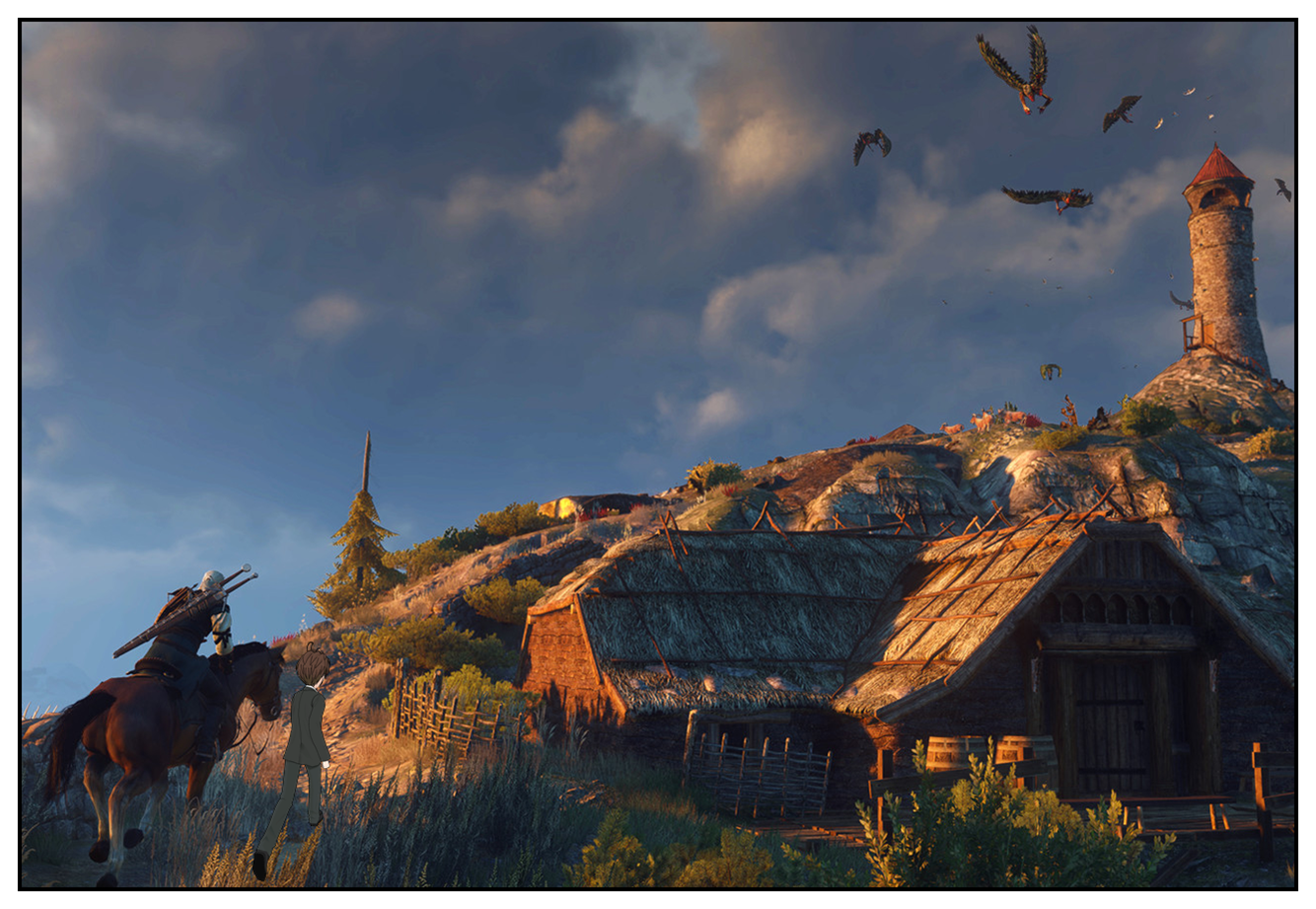
2391: You Can Go to That Mountain

0391_001

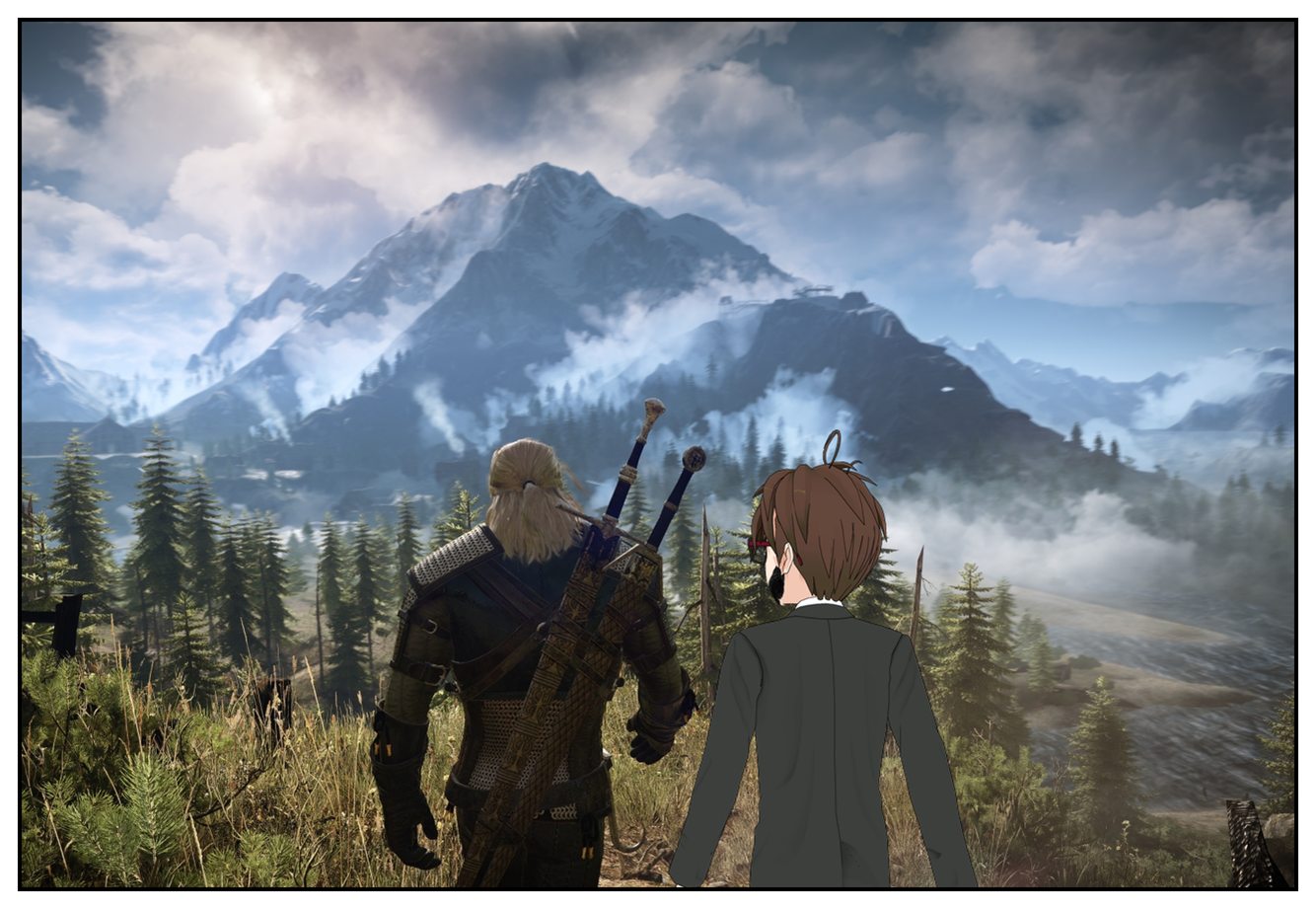
My lukewarm feelings towards The Witcher 3's open-world nature got me thinking a bit today as I progress through the Blood and Wine expansion pack, which, unlike Hearts of Stone, suffers from some of the same issues I had with the main game: most notably the numerous distractions that the game world offered having a detrimental effect on the overall pacing of the main story.

I got thinking: is this a fundamental problem I have with open-world games in general, or is it something that seems particularly glaring with The Witcher 3? After a little reflection, I have to conclude that, for me anyway, it's the latter.

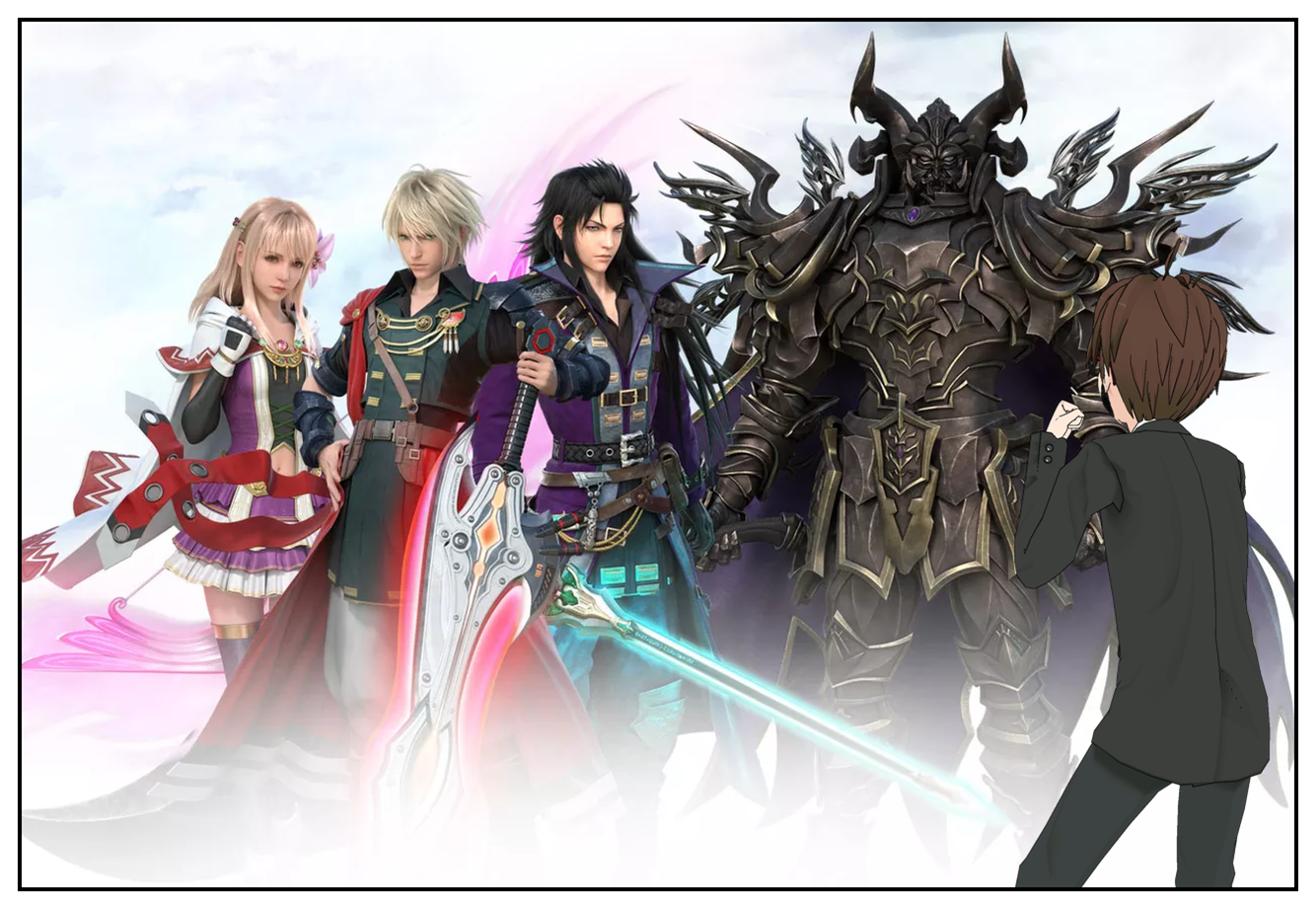
I thought back to my time with Xenoblade Chronicles X on Wii U and how much I enjoyed exploring the vast open world that game offered — and why I think much more fondly of that game's open world than I do of The Witcher 3's.

I think it's to do with the emphasis the game places on its different elements. In Xenoblade Chronicles X, while the main story was interesting enough, it was, oddly enough, mostly a minor distraction from the real meat of the game: exploring the planet Mira fully. The game got a fair amount of criticism for this on its original release, but I found that it worked really well. Xenoblade Chronicles X's emphasis was not on telling that single main storyline; its emphasis was firmly on making you believe that you were exploring an alien world, acting as part of a brave team of humans who were slowly finding out more about where they had ended up, and putting out the numerous fires that result when people of various backgrounds and cultures are all thrown into a rather desperate situation together with one another.

Xenoblade Chronicles X's story, in other words, was nothing to do with those cutscenes and boss fights and whatnot; its story was your story of how you came to Mira, worked your way up through the ranks, got yourself a Skell and proceeded to become one of the leading authorities on the flora and fauna this strange and diverse planet had to offer. Along the way, you'd help out with various things that happened, and all the things you did had an impact on the world. Help someone with the preparations for building a water treatment plant, for example, and the next time you pass a big lake, said plant will be there.

The Witcher 3, meanwhile, is the opposite type of RPG to Xenoblade Chronicles X, which I'd either describe as being mechanics-centric or featuring a quasi-emergent narrative. The Witcher 3, by contrast, has a specific story to tell. Sure, there are a number of branching points and different endings you can get based on the choices you make along the way, but the main story beats between the beginning and the end are largely similar for the most part.

When you place this much emphasis on an ongoing story, it absolutely kills the pacing if the narrative suddenly comes to a grinding halt while the protagonist goes off and does something completely unrelated to the main plot. This was made all the more apparent to me with Hearts of Stone, which chose to focus pretty much entirely on its central plot with minimal distractions along the way, and was all the better for it. I've also been enjoying Blood and Wine a lot more by following its main plotline and minimising the number of times I get distracted by side content. I can always come back and do that side content later, anyway; after you finish the main story of The Witcher 3 and its expansions, it basically turns into the Xenoblade Chronicles X style of RPG: no clear "main" narrative to follow, just the things you choose to engage in, whatever they might be.

I also found myself thinking why this bugged me so much with The Witcher 3 when I'll happily spend hundreds of hours grinding in a JRPG more conventional than Xenoblade Chronicles X, often putting the plot on hold in the process. And I think it's largely because, despite their reputations for strong, linear narratives, many modern JRPGs are very much mechanics-centric rather than narrative-centric. In many cases, the most time I've spent with a JRPG comes after the end credits roll, when progressing through the story no longer matters and it becomes purely about the mechanics — Compile Heart games are always particularly good for this.

I don't know. I don't want to sound like I don't like The Witcher 3, because I absolutely, definitely do. I think it's more that The Witcher 3 received such gushing, unequivocal praise from press and public alike around its launch that I, coming to it rather late and thus free of most of the hype, am seeing the warts where a lot of people didn't — or chose to look past them.

Or perhaps I'm just a grumpy old man who doesn't like open-world games. Who knows? Either way, I'm going to see Blood and Wine through to the end, because I absolutely want to know what happens. I do not, however, feel the same draw with The Witcher 3 to see everything and do everything that I do with something like a Compile Heart RPG — and consequently will probably put it down for good once those end credits roll — and I think I'm fine with that.
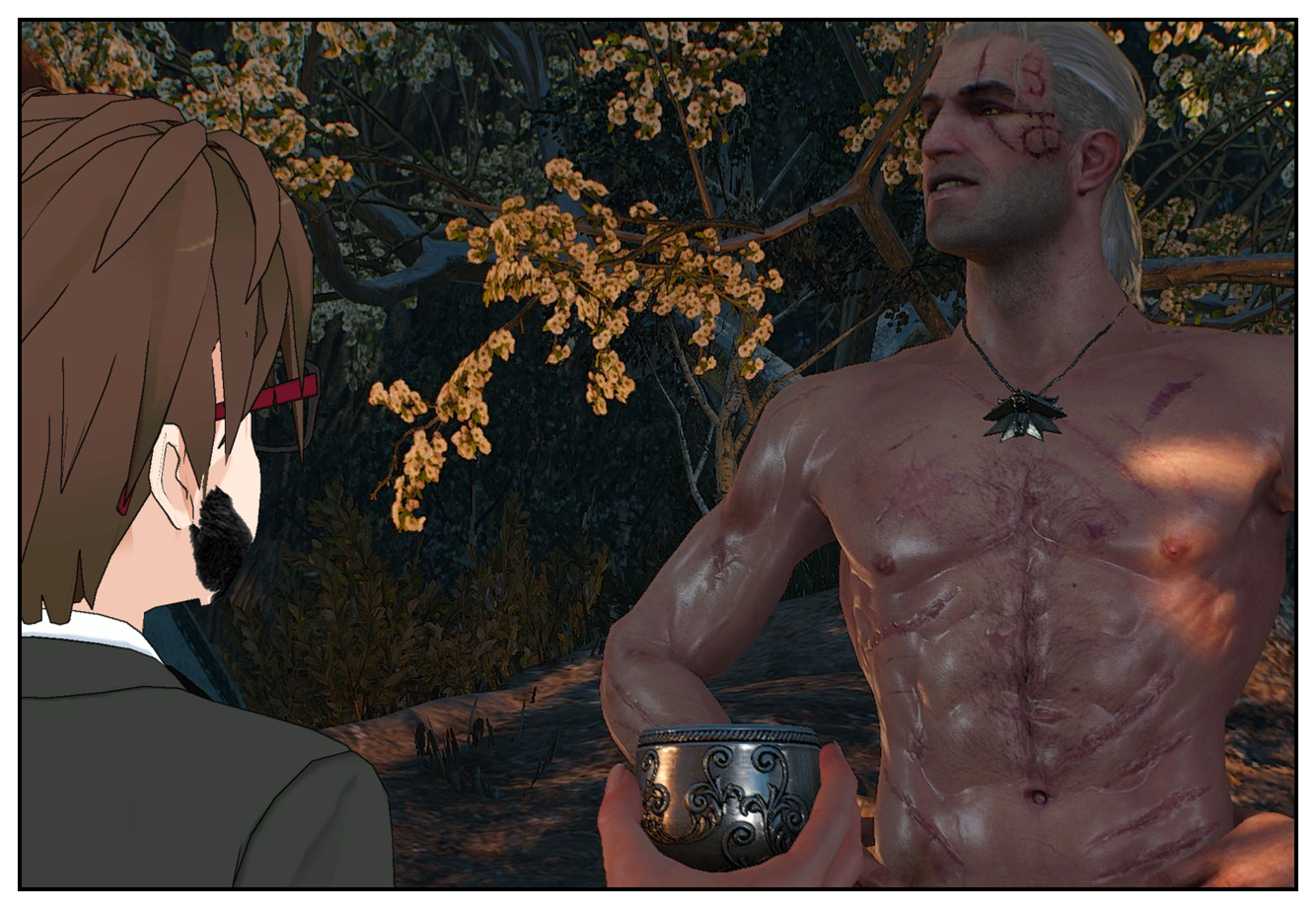
2390: Hearts of Stone

0390_001

I finished The Witcher 3's first expansion pack Hearts of Stone this evening, and I've come away thoroughly impressed. In fact, I'd be inclined to go so far as to say that I enjoyed the tightly focused (and somewhat shorter) experience that was Hearts of Stone's main story considerably more than the main story of Wild Hunt and all its various distractions.

Hearts of Stone benefits from not trying to be too grand in the story it tells. It concentrates largely on a single character — one Olgierd von Everic, who happens to be the initial contact to start the expansion's questline — and proceeds to weave an interesting, mysterious and thought-provoking tale with a few enjoyably Silent Hill-esque twists along the way.

Hearts of Stone, I feel, benefits considerably from playing it the way I played it: ignoring all other sidequests I had in my journal and simply ploughing through the entirety of the main story from start to finish. Perhaps I would have felt less lukewarm about Wild Hunt as a whole if I had tackled its main scenario in this way; certainly for a good 90% of the Wild Hunt main narrative, I was considerably outlevelled for the challenges it offered, making even supposedly climactic encounters rather trivial at times. (I tried using the "enemy upscaling" option, but this led to ridiculous situations where starving wild dogs could rip me to shreds at a moment's notice rather than Geralt slicing through them like butter, and consequently turned it right back off afterwards.)

Anyway, hard to say in retrospect; certainly I can say with confidence that the best way to play Hearts of Stone is to play through the entire main story without getting distracted along the way, since this gives it an excellent sense of pace and progression, leading to an absolutely brilliant final area that was far more interesting and enjoyable than pretty much anything in the main game.

Hearts of Stone also fixes a few other issues I had with the main game, most notably certain instances of combat. While I got through Wild Hunt using the same old combo right the way through, Hearts of Stone had some really cool boss fights that demanded careful dodging and timing of attacks as well as observing enemy attack patterns. Some of the encounters were even vaguely puzzly; a late-game encounter with a wraith that jumps in and out of paintings proved to be particularly memorable for this reason.

The best thing about Hearts of Stone is that it concentrates on what the whole The Witcher series has always done best: tell interesting, personal stories with bags of characterisation, filled with shades of grey morality and some agonising decisions to make. Olgierd makes an excellent central character as he's quite a piece of work, but not quite enough for him to be considered loathsome beyond redemption. On the contrary, Hearts of Stone's tale has such a driving force behind it because it's clear that there's a chance, however small, that Olgierd can find redemption and peace if only all the pieces fall into place.

The other highlight of Hearts of Stone is Gaunter "Master Mirror" O'Dimm, whose exact role I shall refrain from spoiling for the benefit of those yet to play the expansion. Suffice to say that from his initial mysterious introduction through his occasional enigmatic appearances at various points throughout the main story, he proves to be an extremely effective character whose intentions are never entirely clear — at least until you discover the truth about him, that is, but you'll have to find that out for yourself.

I got to the end of Wild Hunt feeling like the more I played The Witcher 3, the less I liked it; it was starting to feel a bit like a chore by the time I beat the main game, but Hearts of Stone has reinvigorated me, and now I'm very much looking forward to jumping straight in to Blood and Wine, the pastel-coloured fairy-tale adventure in the land of Toussaint that has had me so intrigued ever since I first saw how different its vivid screenshots seemed in comparison to the drab colours of the main game regions. It certainly has a lot to live up to after Hearts of Stone, mind you, so let's hope it delivers.

2389: Mobius Final Fantasy: Also Doing Mobile Free-to-Play Games Right

0389_001

Square Enix is on a roll with the mobile games at the moment; a few months after Final Fantasy Brave Exvius hit the market, we find ourselves faced with a brand new free-to-play Final Fantasy game for mobile devices in the form of Mobius Final Fantasy, a game that has been shrouded in a considerable amount of mystery for a while, but which is finally available to play for both iOS and Android devices.

Let's get one thing out of the way first: this is a distinct experience to both Final Fantasy Record Keeper and Final Fantasy Brave Exvius, and has a very strong identity in its own right. In fact, I'd go so far as to say that despite it being based around the usual "gacha" core of drawing and upgrading cards to progress, it is one of the most distinctive, original mobile games I've ever had the pleasure of playing. And if you know how much I hate 98% of mobile games, you'll know that's high praise indeed from me.

Mobius Final Fantasy casts you in the role of (insert your name here), who finds himself drawn through time and space to the ruined world of Palamecia, which appears to have been laid waste to by the malevolent force that is Chaos. Alongside the other "Blanks" who appeared in Palamecia alongside you, you must begin a journey to determine your worthiness to become the Warrior of Light and defeat Chaos once and for all.

If all this sounds rather familiar, you'd be absolutely right; Mobius Final Fantasy draws heavily from the very first Final Fantasy game in terms of thematic ideas, even going so far as to include a number of characters with the same names — most notably Garland and Princess Sarah of Cornelia. It remains to be seen whether these individuals are actually the same people as in the original Final Fantasy — Palamecia was the name of the empire in Final Fantasy II, not the original, so it's entirely possible their resemblance and nomenclature is pure fanservice — but it's a nice touch if nothing else.

Gameplay-wise, however, Mobius Final Fantasy is entirely original, although its overall aesthetic is somewhat similar to Final Fantasy XIII in terms of character and interface design.

Playing Mobius Final Fantasy involves traversing a node-based world map, with each node housing a number of different battles and perhaps a stronger boss to fight. Most of the nodes represent your journey across the ruined world of Palamecia, but some are dungeons that have several floors to clear and sometimes even an area you can explore freely at the end. Unlike many free-to-play mobile games, after just a few short hours of gameplay, Mobius Final Fantasy opens up and starts to give you a considerable amount of freedom in where to go and what to do. There's always an obvious place you should be going next to advance the story, but in some instances you'll be presented with a path that won't open until you clear a particular quest — and you'll have to find the target for that quest yourself by exploring.

You don't freely explore the areas (thankfully, since controlling free movement in mobile games using just a touchscreen is horrid) but rather advance from battle to battle, defeating enemies and earning rewards along the way. The emphasis, in other words, is very much on fighting.

So it's fortunate that Mobius Final Fantasy has such a fun, interesting and original battle system. Rather than reskinning Brave Frontier as Brave Exvius did, or taking the retro approach of Record Keeper, Mobius Final Fantasy has its own take on how you fight. You're alone, for starters; no party members to back you up here, but you are able to take a number of different "cards" into battle, each of which has an ability attached and an elemental affinity.

The flow of combat is relatively straightforward, though takes a little explaining. Normal attacks deal damage and also draw out elemental orbs of four out of five possible types: fire, water, earth, wind and life. Each Job can only draw three of the elemental types plus life orbs, which are drawn at a much lower chance than the others. These elemental orbs are primarily used to trigger the abilities on your cards, each of which have a requisite number of a particular element before you can unleash them.

The card abilities have two main functions: to exploit elemental weaknesses of enemies, and to make their "Break" gauge vulnerable. This latter feature is somewhat akin to Final Fantasy XIII's "Stagger" system, whereby if you empty an enemy's gauge, they will become significantly weaker against your attacks along with being unable to hit you for a short period. If you can Break an enemy, in most cases you'll be able to press the advantage right up to victory before they're able to get back on their feet.

But what if you don't draw the right elemental orbs to use your abilities? Well, here's the other use for them: you can absorb them, which removes them from your stock and gives you temporarily increased resistance against that element (or, in the case of life orbs, heals you). That's not the only effect, though; absorbing elemental orbs in this way shifts the balance of elements, making you less likely to draw that type from enemies for a short period and consequently more likely to draw the others. In this way, you can absorb an element an enemy is strong against, which in most cases will make you strong against the enemy's attacks, and increase the likelihood that you draw orbs suitable for unleashing abilities that will damage the enemy to a greater degree.

I don't feel like I've explained that all that well. Let's give a practical example.

Battle begins. You're faced with an enemy that has a wind affinity. You're playing a Ranger job, so your normal attacks will draw water, wind, earth or life orbs — no fire for Rangers.

You attack three times, the standard amount you are able to do in a single turn. In doing so, you draw a bunch of wind orbs and a couple of earth, though not enough to use an earth ability. A wind-element enemy would be weak against earth abilities, so it's in your interest to get one up and running as soon as possible.

The enemy attacks. You take a bit of damage, though nothing to worry about.

For your first action, you absorb the wind orbs you drew last turn. This gives you temporarily increased resistance against wind attacks — i.e. any attacks the enemy will throw at you. It also makes you less likely to draw wind orbs for a few turns.

For your second action, you attack. This draws enough earth orbs to attack an earth ability, which requires four orbs to use.

For your third action, you unleash your earth ability, which causes the enemy's Break bar to turn red and become vulnerable. Your turn is over.

The enemy attacks. You take a bit of damage again, though a bit less this time thanks to your increased wind resistance.

Next turn, you throw out three normal attacks, which are enough to empty the vulnerable Break bar of your opponent. It enters Break status, and you get another turn as it topples to the ground. You throw out three more normal attacks, which are now significantly more effective against your downed foe, and defeat it. You win! One step closer to Warrior of Light-hood.

What all this means for Mobius Final Fantasy is that it's by no means a glorified clicker game with boring, automated combat like so many other "card battle" games on mobile. There's depth and strategy here, but it's presented with such glorious visual panache that you can't help but be drawn in to this strange ruined world, particularly as the exciting battles are punctuated with fully voiced cutscenes (with dual audio, for those who prefer Japanese speech) and some beautiful sights.

I'm relatively early in the game so far, and the game as it stands only features two "chapters" of the main story so far (plus a special region for grinding XP and other resources against the clock) but it's already clear that Mobius Final Fantasy is something quite special. And that's the last thing I ever expected to say about a mobile game in 2016.

I'm very interested to see where the game goes next and how it expands on its already solid mechanics over time — and I'm invested in the story, too; I want to know whether or not this actually is Final Fantasy I's world — which is plausible, given that part of Final Fantasy I's plot dealt with Chaos creating a time loops, and "Mobius" can be used to describe the characteristic "infinite loop" symbol — and, if not, what on Earth happened to allow Chaos to ruin it as comprehensively as he did.

Find out more about Mobius Final Fantasy at the official site; there are links to download it for iOS and Android devices there, too.

2388: Two Things The Witcher 3 Didn't Need to Be

0388_001

I've been playing a fair bit of The Witcher 3: Wild Hunt recently, and while it is certainly a very good game indeed, there are two issues with it where I feel the experience as a whole would have been better served if they… well, if they weren't there.

As it happens, they're two rather major aspects of the game's design as a whole, but thankfully the things that the game gets right more than outweigh the annoyances that these two particular aspects present me with. (Your mileage may, as ever, vary.)

All right, let's jump right in then.

1. The Witcher 3 didn't need to be an open-world game

Here's how I play open-world games:

  • Spend first hour or so looking around, wowed in all the usual ways (wow, much draw distance, very mountain in the distance can go there, so pretty) and deliberately taking "the long way" to get to my specified destination.
  • After first hour or so, start using faster means of transportation. (Geralt's magical teleporting horse Roach, in the case of The Witcher 3)
  • After another few hours, start using fast travel points.
  • 50+ hours in, start very much resenting the fact that there are approximately 300 miles of identical-looking forest/hills/mountains between me and where I actually want to be, and naturally I haven't yet unlocked a fast travel point where I want to be yet.
  • See destination is on other side of mountain. Attempt to climb mountain. Fail. Swear. Get annoyed. Go around mountain. Discover that there was passageway not marked on map that would have saved me about half an hour of virtual travel time. Swear again.

The fact that The Witcher 3 is an open-world game does have a few benefits, primarily that it gives you a good sense of both the geography of the various regions in which you find yourself and the scale of said regions. However, the fact remains that as with most other open-world games, there are far too many vast tracts of nothingness, and the few interesting things that are there out in the open world are throwaway distractions that become mind-numbing chores after a while.

The Witcher 3 could have been a much tighter game with a better focus had it taken a similar approach to its two predecessors: set the action in large and interesting but self-contained and more carefully designed zones that don't have any unnecessary fluff in them. As it stands, there's a whole lot of game world in The Witcher 3 that just isn't very interesting and really doesn't need to be there.

2. The Witcher 3 didn't need to be a role-playing game

I'm serious! Despite the game revolving around a man with swords chopping monsters' heads off, I really don't think The Witcher 3 benefits from its RPG mechanics at all. In fact, I'd go so far as to say that they are, by far, its weakest aspect. Combat is boring and formulaic (slash, slash, slash, dodge, Igni/Aard for fire elementals, repeat has gotten me through the whole game so far), the perks you acquire when levelling up don't seem to have particularly noticeable effects, and you spend most of the game fighting the same monsters anyway, only with gradually increasing numbers next to their names, and occasionally with a few extra spikes on their backs.

Then there's the whole dissonance thing in that protagonist Geralt is supposed to be some sort of monster-slaying badass, having survived the considerable trials of two previous games, but here he starts at level 1 again, barely able to hold his own against a drowner until he starts wearing some proper armour.

Chuck out all the RPG elements (including equipment, since once you get one of the sets of Witcher gear you pretty much make everything else in the game completely irrelevant), I say, keep the combat if you absolutely must (for, indeed, the world of The Witcher is a violent place, and fights are inevitable at times) but make it an action game rather than an RPG.

What The Witcher 3 gets right

I mentioned at the start that despite these two pretty major issues I have with the game, it still manages to be an enjoyable, compelling experience. And that's because the more adventure game-type aspects of it — the dialogue, the puzzle-solving, the detective work — are outstanding. I would have been more than happy to have nothing but the main plot of Wild Hunt and maybe a couple of the Witcher Contracts, presented more as a sort of adventure game with combat. Keep the player on a tighter leash when traversing the world, remove the extraneous and unnecessary fluff, and I think it would have been a much better game.

Ultimately all this is moot because The Witcher 3 is still an astoundingly good game that is well worth your time if you have a computer or console capable of running it, but I can't help feeling that some of that time and effort CD Projekt Red expended in making sure that there were just the right amount of trees in the south-west corner of Velen could have been better used for other purposes.

Let's hope they learn some lessons from this game with their upcoming Cyberpunk title, which I'm very excited for, particularly as, believe it or not, there's a throwaway teaser for it in The Witcher 3's main plot.

I've now beaten Wild Hunt's main storyline and I'm feeling like I'm probably just going to make a beeline for the two expansion main storylines without distractions along the way. I'm already at the recommended level to start the second expansion and I've only just started the first, so I feel this may end up actually being the optimal way to experience the game anyway, leaving all the side content available if I feel like just jumping back into the world at a later date to hunt some monsters.

2386: Final Fantasy Brave Exvius: Doing F2p Mobile Games Right

0386_001

A while back, I wrote a piece on my other site MoeGamer about how free-to-play games had quietly got good. While there is, make no mistake, still a veritable flood of absolute shit being released on a seemingly daily basis, occasionally someone gets it right, and it's worth celebrating when they do.

Which brings us to Final Fantasy Brave Exvius, a free-to-play mobile game developed as a collaboration between Final Fantasy rights holder Square Enix and mobile game specialists Alim and Gumi.

The astute among you will recognise the latter two as being behind Brave Frontier, one of the mobile games I had previously praised for not being a total pile of shit. Brave Frontier wasn't without its problems — most notably a lack of any real strategy in the combat thanks to a relatively limited number of things you could do — but so far as mobile free-to-play RPGs went, it was certainly one of the better ones, featuring an interesting story with some enjoyable characterisation and a wide variety of units presented in beautiful pixel art.

FFBE, as I shall refer to it from hereon, is essentially Brave Frontier 2 with a Final Fantasy skin. And that's not a bad thing at all, because it manages to fix the few issues I had with Brave Frontier while simultaneously being a surprisingly decent Final Fantasy game in its own right.

I'll rewind a moment for the benefit of those not already familiar with Brave Frontier and explain FFBE.

In FFBE, you take on the role of Rain, a young and rather idealistic member of the castle knights, who appears to have some unresolved daddy issues in true Final Fantasy tradition. Rain is accompanied by his longstanding friend Laswell, who ironically seems to have gotten on with Rain's father better than Rain himself. While out on patrol, Rain and Laswell encounter some strange happenings, including a mysterious girl called Fina trapped in a crystal and a man in dark armour who appears to be up to no good.

Unsurprisingly, the man in dark armour is indeed up to no good, and Rain and Laswell return to their home city to find it has been attacked. Their adventure then begins in an attempt to determine what the motivations of the black-clad man are and who exactly this "Fina" girl actually is.

Gameplay has a number of components. Firstly is the metagame, where you collect various units by "summoning" them using premium currency (which the game is pretty generous about doling out for reaching significant milestones), summon tickets (which often come as rewards for logging in regularly, or as part of events) or "friend points" accumulated when making use of your friends' units. The units vary in strength and their rough power level is denoted by a "star" rating — the more stars, the more powerful, or rather, the more stars, the more potential a unit has, because in order to make it useful, you're going to have to level it up. In other words, a fully levelled two-star unit may well be a better choice than a completely unlevelled four-star unit.

Levelling up can be accomplished in two ways: by gaining experience from participating in battle (an option that was absent in Brave Frontier) or by "fusing" it with other, unneeded units. In the latter case, you can fuse a unit with any other unit, but there are particular benefits if you fuse with an identical unit, or with a special "experience" unit, the latter providing you with significantly more experience points than a regular unit and thus being the best means of quickly levelling a character if you happen to have any on hand.

Your party can also be equipped with weapons, armour and accessories, which improve their stats to varying degrees, and most units can also equip up to two additional Abilities above and beyond their innate abilities that they acquire as they level up. In this way, you can customise your units as you see fit according to the challenges you know you're likely to be facing, or simply munchkin them all with the best gear possible so you can steamroller your way through every encounter.

On top of the battle units, you'll also acquire Espers a la Final Fantasy VI along the way, which can be attached to specific characters to provide them with various passive bonuses as well as a super Summon attack when a meter fills up to maximum in battle. Espers can be levelled up independently of characters, though you have to use collected materials to do this rather than just grinding, and each level awards them with Skill Points that can be used to unlock various abilities, both passive and active.

Once you're finished fiddling with your party lineup, you can either visit a town or go into battle. Pleasingly, visiting towns is presented in traditional top-down RPG style and there are even sidequests to complete, giving a great degree of personality to the world that Brave Frontier lacked somewhat, thanks to it being entirely menu-driven. For those for whom time is money, however, there's also a quick access menu that quickly warps you around town to the important places like the shops, though in doing this you'll probably miss out on NPCs who might have useful information or quests for you.

When you choose to go into battle, there are several different ways you can do this. You can advance the story, which presents you with a string of battles that you have to complete without stopping, punctuated by cutscenes. You can "explore" an area you previously completed the story for, which again goes into a top-down RPG-style exploration mode punctuated with random battle encounters. You can visit the Colosseum to battle monsters and earn points towards various prizes. Or you can enter the Vortex to the Farplane, which has a different special dungeon every day, plus a series of other specialised dungeons that you can unlock as you desire — one for free, additional ones for premium currency. These specialised dungeons provide a convenient means of acquiring experience points for your units, money, crafting materials or other materials needed to power up units or Espers, but the payoff is they tend to cost significantly more energy to jump into than story missions.

Yes, there's an energy system, but like in Brave Frontier, if you manage it carefully it never becomes an issue. Following story quests tends to see you level your player up regularly enough that your energy bar rarely empties — not only does its capacity expand when you level up, but it also gets refilled to maximum — so this is the best thing to do if you're spending a bit of time with the game. Alternatively, if you know you only have a few minutes, by far the most effective use of your energy is to tackle the most difficult Vortex dungeons you can manage, as not only will this burn through your energy but it will also provide you with far more loot and experience than regular missions tend to provide in the same amount of time.

The battle system itself is very much like Brave Frontier, with one notable exception: units have more options than just attacking or using their special Burst attack when it's charged up. Individual units can use items now, rather than you using items on your party from your omniscient overseer perspective, and each unit unlocks individual abilities as they gain levels, which are appropriate either to their Job if they're generic units or appropriate to their original incarnation if they're making a guest appearance from another Final Fantasy.

Yes, indeed, Brave Exvius features a considerable amount of series fanservice by incorporating characters from past Final Fantasy games, and they work exactly as they should; Edgar from Final Fantasy VI has his machinist "Tools" abilities present and correct, for example, while more magically-inclined characters have plenty of magic spells to fling around to take advantage of enemies' elemental weaknesses.

Which perhaps brings us to an obvious question: is this better than Final Fantasy Record Keeper, which is also a fanservice-heavy Final Fantasy free-to-play mobile game?

Yes, it is. And I don't hesitate one bit when saying that.

Record Keeper is a clunky mess of a game, with loading screens literally every time you tap a button. It's slow, sluggish, poorly optimised and generally a chore to play, and even the wonderful SNES-style pixel art depictions of every Final Fantasy from I to XIV don't make up for this. Record Keeper also has no real focus; it sees you leaping around from timeline to timeline pretty much at random, attempting to act as a sort of Final Fantasy Greatest Hits but losing all sense of coherence in the process. This lack of focus also extends to its progression and collection systems, in which you collect characters, but also equipment items, and the main "fuse and improve" mechanics come with the far less interesting equipment than the characters; it's way less fun to upgrade a sword that supposedly appeared in Final Fantasy XII than it is to buff up Balthier to the max.

Record Keeper makes nostalgia the main — no, the sole — point of its existence, and it suffers for this, particularly when it comes to the underrepresented Final Fantasies like XIV and XI. FFBE, meanwhile, uses nostalgia wisely; it just drip-feeds you classic characters without making a big deal about it, and it doesn't demand any knowledge of the previous games — if you're a Final Fantasy newcomer, you might just find that Firion is an awesome fighter, but if you know your Final Fantasy history, you'll have an understanding of where he actually came from, for example.

FFBE, while suffering from occasional loading breaks and the requirement to be online at all times while playing, at least preloads enough stuff into memory for it not to have to load after every button press, and both in combat and when wandering around town, it's smooth as butter.

Oh, and FFBE is also a beautiful-looking game. And a beautiful-sounding game, featuring one of the best Final Fantasy battle themes of all time. Yes, seriously. Listen.

Basically… look, it's really good, all right? And regular readers will know I don't say that lightly about free-to-play games.

Check it out here on Android, and here on iOS.

2385: What a Difference a Light Makes

0385_001

A fairly quick one tonight as I'm suddenly very tired, but I'll make it a "Pete's RPG Maker Game Teaser" post just to make up for it, or something.

I thought I'd talk a little about lighting effects, because they make a huge difference to the overall look and feel of a game (or part of a game's setting) and can add a lot to the overall personality of something you're making.

More than anything, lighting effects can be a huge contributing factor in ensuring your game doesn't look like "just another RPG Maker game", which is by far the most common criticism of games made with RPG Maker. Hey, you provide people with tools, they're gonna use them, sometimes lazily.

Anyway. Yes. So far as I'm concerned, the best ways to make your game not look like "just another RPG Maker game" without actually replacing the built-in graphics is a combination of fiddling with lighting effects (and screen tints to go with them) and tweaking the user interface so it's no longer recognisable as the default RPG Maker battle system. (Of course, there's nothing wrong with just using the default bits and bobs while you're learning, but once you start feeling ambitious, it's a good idea to try and put your own personal stamp on the project, and the easiest way to do that is through careful selection of audio-visual assets.)

So here are a few comparison screenshots of a map in the RPG Maker editor, which doesn't show lighting, and in the game itself (which also features elements of the UI).

Here's how a security computer room looks in the editor. (The checkerboard background means there's nothing there. If you set up a parallax background, it will appear where the checkerboard is; otherwise if will simply render as black in the game.)

Screenshot 2016-08-01 02.25.08

And here it is in game, using a lighting plugin for adjustable, colour-able light radiuses wherever you like on your maps. Makes some really nice atmospheric effects.

Screenshot 2016-08-01 02.26.40

Here's a house (currently with no door, because I haven't made the inside yet) in the editor:

Screenshot 2016-08-01 02.28.14

And here it is in game, the simple addition of a transparent "sunbeams" overlay image giving it a bit more life:

Screenshot 2016-08-01 02.29.04

Here's the edge of a swamp in the editor:

Screenshot 2016-08-01 02.27.45

And here it is in game, featuring a moving "mist" overlay image, plus a change to the screen tint that gives it a slight purple hue as well as desaturating the colours a bit:

Screenshot 2016-08-01 02.29.37

Finally, here's part of a forest labyrinth in the editor:

Screenshot 2016-08-01 02.28.27

And here's the dramatically different presentation in game, featuring an adjusted screen tint and a tiled overlay to simulate the leaf canopy blocking out sunlight:

Screenshot 2016-08-01 02.30.26

I know to all the jaded pros out there it probably still looks like "just another RPG Maker game", but given that I'm mainly using this project to experiment with the software and see how easy it is to put a complete experience together, I'm happy with the twists on the standard look and feel I've got going on so far.

More teasers in the coming weeks.

2383: Fencing with Fairies

0383_001

Doubtless I'll be writing about this in more detail at some point in the near future over on MoeGamer, but while it's still new and fresh I thought I'd give some initial impressions on Fairy Fencer F: Advent Dark Force, Compile Heart's latest PS4 release.

FFF:ADF, as I will refer to it hereafter, is a Neptunia Re;Birth-style reimagining of the PlayStation 3 game Fairy Fencer F. It includes the whole story of the original game, updated and expanded with all-new mechanics, plus a whole bunch of brand new content as well, making for what looks to be an absolutely sprawling mammoth of a JRPG that I'm very much looking forward to sinking my teeth into.

For the uninitiated, FFF:ADF casts you in the role of Fang, a lazy asshole who we're introduced to as he's been locked in prison for stealing bread. Three days earlier, it transpires, Fang pulled a legendary sword known as a Fury out of the ground, and thus found his fate inextricably intertwined with the adorably cute but rather headstrong fairy Eryn. Fang, wanting nothing more than a good meal and a warm bed, finds himself rather hastily recruited into a quest to find all 100 other Furies scattered around the world and use the power of the Fairies within to wake up the Goddess and prevent some sort of horrible catastrophe from occurring.

FFF:ADF follows Compile Heart's usual RPG formula fairly closely. Town scenes are menu-based and allow you to visit a number of different locations to purchase and sell items or just chat with NPCs. As you progress through the game, more facilities become available in town.

When you leave town, you'll likely be entering one of the game's dungeons, which are filled with enemies you can see wandering around the map, and perhaps an event and/or a boss fight to complete.

Striking an enemy with your weapon while you're in the field — a challenge made significantly easier than in the Neptunia series by the simple addition of a visual and auditory cue when you're in range to connect a hit — allows you to get the jump on an enemy; mistiming it or letting an enemy run into your back, conversely, lets them ambush you.

Combat initially appears similar to the Neptunia series but there's a few twists on the basic formula. For starters, characters only begin with a basic attack rather than a multi-hit combo. Multi-hit combos can be unlocked later — and they include fighting game-style techniques such as launching and juggling enemies — but initially the bulk of your damage will probably come from your special skills, which are further subdivided into weapon skills and magic spells.

The thing that's looking most interesting about FFF:ADF at this early stage is its progression system. Whereas Neptunia's character progression was completely linear — though once you unlocked abilities you could customise your characters to a minor degree, and Megadimension Neptunia made more of this by making different weapons capable of different combos — in FFF:ADF you earn WP ("Weapon Points") through combat, which can then be spent on unlocking abilities, buffing stats and activating passive skills. In practice, there's probably a "right" order to unlock things in — and if previous Compile Heart RPGs are anything to go by, you'll probably unlock everything by the time you're through — but it's nice to at least feel like you have some options.

Other cool features include a battle system that allows up to six party members at a time, which will hopefully make for some interesting encounters later in the game — I only have two characters at present! Neptunia's Challenge system is back, too, providing you with useful stat boosts in exchange for completing various tasks.

It's early days yet, but FFF:ADF looks like Compile Heart's most polished title to date; there's none of the weird screen tearing from Omega Quintet and, so far, none of the frame drops of Megadimension Neptunia, and the 2D art (courtesy of Neptunia artist Tsunako) is as gorgeous as ever.

I'm looking forward to seeing what this game has to offer; everything I've heard from people who have already played it makes me feel like it's going to be a really solid JRPG, and I'm excited to see what other gameplay features I'll be fiddling around with as I progress further.

2382: A Tease

0382_001

Since I've just spent a bit of time painstakingly stitching together the various screens that make up the maps for one of my as-yet unrevealed game's "worlds", I thought I'd take the opportunity to tease said game a little by sharing said stitch.

Here we go, then:

mapstitch.png

This isn't the complete map as yet, though most of the south to southeasterly portions are now done. There's a fair bit to do in the north and the west of the map, and then I can finally start making some events to go on it. And building dungeons! Fun times ahead.

I decided early on to make the game non-scrolling and instead move screen to screen in a somewhat old-school fashion. This has proven to mostly be beneficial to my overall efforts of putting things together, because it means I can tackle it in small chunks rather than being overwhelmed by the prospect of creating an interesting scrolling map. It's also been a challenge, however, to ensure that the player can't wander off the side of one screen and find themselves on the next embedded in a wall. Fortunately, the very act of stitching the map above together has helped me to spot any such glaring errors and fix them easily.

To design this map, I did a simple old-school adventure game-style map on paper first, using a square for each screen or "room" and lines to indicate connections between rooms. Then I numbered each of the boxes, since RPG Maker numbers the maps you create, and the plugin I'm using for automatic transitions when you walk off the side of a screen is dependent on these numbers, before finally tackling it a bit at a time. In order to finish this "world" I'll need to get up to map number 125; as of the stitch above, I've reached 84, so things are flowing along quite nicely so far.

I had a rough concept in mind for the overall map when I started, though it's evolved a bit as I've been putting it together. I'm trying to give things a vaguely realistic scale rather than the skewed, exaggerated scale seen in RPGs with a "world map" screen; to put it another way, it's more a Zelda approach to an overworld than a Final Fantasy, though the gameplay uses a separate turn-based battle screen rather than Zelda's action RPG-esque combat.

As I've mentioned a couple of times, this is just one of several worlds players will visit in the game. Each world is going to have a slightly different style of play about it: this one has the aforementioned Zelda-style overworld with discrete dungeons to complete; another is going to be a Resident Evil-inspired haunted mansion kind of affair with plenty of puzzles; a third will be a more linear sci-fi world; a fourth will place emphasis on character interactions and narrative rather than combat; and the final world, which you'll only be able to enter once the previous four have been completed… well, that's a secret!

As a great man once said, please look forward to it.

2381: Awareness is Half the Battle

0381_001

Remember a few days ago I wrote about my own particular take on "creative block"?

Turns out the simple act of explicitly acknowledging the fact I'm aware of this issue with my own attention span has helped me to do something about it.

In the times when I've been working on my RPG Maker MV project, I've been considerably more productive than I have been in the past, with far less staring into space and far more in the way of map-making. The current map count for the project now stands at 72, which means I'm well over halfway to assembling the first of the five "worlds" in the game, which is also likely to be the most complex and largest, and so a good idea to get out of the way first. (I know I'm well over halfway because I've mapped out what I want the final overall map to look like on paper, and numbered each of the individual "rooms".)

I've also found this awareness to be very helpful when doing actual work rather than just pissing around with RPG Maker. I've finally had some freelance work start flowing in again, and I've been managing to sit down and concentrate on it enough to get it done efficiently and in plenty of time to submit for the deadline without having to do a last-minute rush on everything. (Even when I did a last-minute rush, I always got stuff in on time, mind you; it was just rather more stressful than it really needed to be.)

Whether this new way of thinking will stick around — and, for that matter, if it's anything to do with the new anti-anxiety drugs I'm on, which have just about stopped making me feel perpetually stoned now, thankfully — remains to be seen, but I'm going to take full advantage of it while it's here, and maybe even get a creative project or two actually finished. That'd be something, eh?

Incidentally, I'm not quite ready to reveal the full extent of my RPG Maker MV project as yet, since its very nature is something I'd like to keep as a bit of a surprise for some of my friends. Over the coming weeks as things start to come together, though, you can expect a few teasers of what I've been up to. I will, however, say up front that I've mostly been using RPG Maker MV's stock art resources with it (albeit with some lovely lighting effects courtesy of a wonderful plugin), because that always seems to be something that people whinge about with RPG Maker projects, even those just done for "fun" like this one. I am hoping, however, that the story, the writing, the characters and the humour in it will more than make up for my own lack of artistic talent and consequent reliance on provided art resources.

There's also going to be some great music in it; some of it stock RPG Maker tracks (RPG Maker MV's provided music is seriously way too good not to include at least some of it!) and some provided by members of the RPG Maker community. If I'm feeling particularly adventurous, I might even compose some of my own work for it, but let's take things one step at a time, shall we…?

2380: Gal*Gun: Deeper Than You Think

0380_001

Lightgun and rail shooters generally aren't regarded as particularly deep and meaningful experiences for the most part, and this is fine; after all, sometimes all you want to do is hold a plastic gun in your hand (or aim a crosshair) and blow seven shades of shit out of everything walking your way.

Sometimes, though, these games go the extra mile and provide a surprising amount of depth beneath the facade of mindless blasting. Nintendo's Star Fox series has been a good example of this in the rail shooter genre since Star Fox 64, with its complex scoring and medals system, and Gal*Gun: Double Peace does something similar for the (lightgun-less) lightgun shooter genre. Which may surprise you.

Gal*Gun's wrapper mechanics are that of a dating sim — a proper, full-on, stats-based one like True Love rather than the games that get called "dating sims" but are actually just visual novels with romantic themes. The protagonist has statistics determining his intelligence, athleticism, fashion style and lewdness, and these can be adjusted over the course of a playthrough either by taking girls into the "Doki Doki Field" and poking them until they emit some extremely suggestive moans, or by purchasing items between stages. The difference between the two approaches is that while purchasing items allows you to choose the stats you raise (or lower, if you need to) so long as you have the ability to pay for it, taking girls into the Doki Doki Field generally affects more than one stat at a time to a more significant degree, and each and every one of the girls in the game has a different impact on your stats. In other words, if you're trying to form a particular "build" — something that becomes particularly important in the more "freeform" mode that unlocks after you've beaten the main story-based routes — you'd better learn which girls are most useful for your purposes.

The stats are relevant in a couple of instances. Firstly, in the story-based routes, your stats need to be at a particular level in order to choose certain dialogue options. For example, if your lewdness level is too low, you are unable to make lecherous comments towards the heroines, which is probably for the best. Secondly, in the freeform mode, in order to pursue a particular girl, you'll need your stats to be in specific regions in order to be the type of guy they want you to be. I haven't got far enough to try out this mode yet, but it presents an interesting twist on the formula; in the story-based routes, you can pretty much get away with just raising all your stats as high as possible in order to have the maximum available options in dialogue.

As for the story-based routes' structure, they have a Good End and a True End, with the latter being dependent on a combination of your overall score for the playthrough being high enough and your affection rating with the heroine being high enough by the time you reach the final chapter. The latter is mostly a case of saying the right things in dialogue sequences, but it's also affected by the "event" levels where you're doing something other than just blasting incoming girls.

The scoring system, meanwhile, has a certain degree of depth to it, too. Most of your points come from fending off the girls who relentlessly charge towards the protagonist, but just blindly blasting away won't get you the best scores. No, in order to score highly, you need to achieve "Ecstasy Shots", which allow you to one-hit eliminate a girl by hitting her in a weak point. These are helpfully indicated when you move your crosshair over the girl by a piece of Japanese onomatopoeia appearing, though you can also learn where each girl's weak point is over time, too. There are four main weak areas: red popups indicate you should hit them in the head, orange means the neck, yellow means the torso and pink means the legs.

Each time you get an Ecstasy Shot, your combo counter increases by one. Your combo is broken if you take damage or eliminate a girl "normally" without performing an Ecstasy Shot. There's also an additional Quick Bonus for eliminating girls in rapid succession.

The Ecstasy Shot system makes the shooting a lot slower and methodical than the typical franticness of regular lightgun shooters, and there are a couple of other techniques you can use to tip the scales in your advantage, too. Firstly, shooting a girl anywhere but her weak spot without eliminating her stuns her for a moment, preventing her from doing her attack animation briefly. Secondly, holding down the fire button allows you to do a "Charged Shot", which covers a wider area and can likewise stun enemies briefly. Thirdly, taking one or more girls into the Doki Doki Field and poking them until not-an-orgasm-honest causes a smart bomb effect to go off, taking out all girls in the vicinity as if you'd Ecstasy Shotted them. These techniques are particularly helpful — even essential — during the sequences where enemies come at you from all sides and you have to manually turn to face several different directions to fend them off as they approach.

As well as the points earned through eliminating enemies in each level — not all of whom charge at you, so some need to be quickly taken out as they wander past during transitions between "shooting gallery" areas — there are also three bonuses at the end of each level for clear time (the quicker the better), amount of damage taken and accuracy, ranked between one and five stars, with five stars providing significantly more points than anything below. Clear Time is a particularly variable one, as many of the levels offer branching routes, with some being significantly quicker than others, but perhaps counterbalancing this with fewer enemies to chain Ecstasy Shots off.

As well as clearing the various story routes and attaining high scores, there are loads of hidden collectibles to uncover throughout the game. Some of these are hinted at by the "requests" you receive on your phone between levels, and largely involve finding either hidden objects or characters and shooting or staring at them, depending on what the request was. Others are simply hidden objects and provide anything from point bonuses to new costumes — the game's Dressing Room mode allows you to customise each and every character in the entire game to your own personal preferences (including undies), though disappointingly, the PS4's Share facility is blocked while you are using this, meaning you can't take pictures of your own personal take on the cast.

Alongside the hidden objects are student and teacher handbooks hidden in plain sight around the levels; shooting these unlocks parts of each character's profile, and you can complete said profile by taking each character's bust, waist and hips measurements by using the "zoom" function (also used to locate hidden objects by seeing through otherwise opaque scenery such as locker doors) and staring at them in the appropriate region before you blast them into euphoria.

On top of all that, there's at least one hidden ending that you can achieve by fulfilling a particular set of conditions (they're fairly obvious, but I wasn't expecting them to actually lead to a full-on ending) and a Score Attack mode that allows you to play either a whole story route or an individual stage and record your best score and highest combo.

So yes. There's a lot to this game. It's no Time Crisis, in other words, which, while it was great, pretty much played all its cards within twenty minutes if you were the slightest bit skilled with a lightgun. Gal*Gun, meanwhile, looks set to keep me busy for a very long time indeed.