#oneaday Day 97: EverDriving the '64

Inspired by my success with the GDEMU for the Dreamcast, I decided to pick up an EverDrive 64 for my Nintendo 64. Long-term, I'm planning on grabbing one of these excellent devices for all my cart-based consoles, as I've been burned just once too many by duff cartridges purchased from second-hand sources. As much fun as it is to collect things and have the satisfying tactile thunk of slamming a cartridge into a slot, it's even more fun to have games that actually work.

For the unfamiliar, an EverDrive is a cartridge designed to work with a cartridge-based system… obviously. In most cases, they have a micro SD card slot, on which you load some simple OS files for the thing to be able to do its thing, and then any ROM files you want to use. This effectively means in most instances, you can carry around the complete library for a system on just one cartridge. Very convenient — particularly as the EverDrive also takes care of managing save data, and even allows you to back up and restore Controller Pak saves so you don't need umpteen of the little buggers to be able to save your progress.

The one small issue I've found is that when running NTSC games on my PAL N64, there's a horrible "ghosting" effect on the image that makes playing those games undesirable. It's a bit of a shame, as there are a few North American NTSC N64 titles I wouldn't mind playing, but to be honest, I suspect the EU library will keep me busy for quite some time.

This evening I've been exploring a few games I've always been curious about, but never had the opportunity to play for one reason or another. The two that I've probably had the most fun with are both Midway titles, as it happens, and both arcade conversions: San Francisco Rush and Gauntlet Legends.

San Francisco Rush is an arcade racer that is markedly different from most other arcade racers from the '90s that I'm familiar with. Probably its most notable standout feature is that its courses are relatively "open", often offering alternative routes and shortcuts, and in some cases allowing you to proceed around a section of the course in the opposite direction to the rest of the pack and still end up where you're going.

Of course, open-structure races aren't a particularly uncommon sight these days — to be honest, it's harder to find a modern racing game that isn't open world outside of the hardcore sim sector — but I suspect back in the '90s, San Francisco Rush would have been quite the unusual little thing.

It's also noteworthy in that it's an arcade racer where you really do have to slow down for corners. If there's a drift function, I certainly haven't got to grips with it; thus far I've had a reasonable amount of success with just actually using the brakes (or at the very least letting off the accelerator) ahead of sharp corners — and with the game being set in San Francisco, there are lots of sharp corners.

The visuals are fairly ugly by modern standards, though I found that I quickly stopped noticing the low-resolution blurry nature of the game, and the fact that many of the races are covered in fog is entirely appropriate for the setting. It thus far seems to be an enjoyable racer, and with a decent amount of longevity, too; the main "championship" mode is 24 tracks long, thankfully with the ability to save your progress.

Gauntlet Legends, meanwhile, is a successor to the classic 4-player dungeon crawler from Atari Games. It takes the action into the polygonal 3D realm, though still plays mostly like a top-down maze game. It has all the classic Gauntlet elements present and correct: finding keys to open doors, standing on switches to open up walls, blasting generators to stem the tide of monsters. It adds a few new elements to the mix, though, including an inventory where you can activate and deactivate power-ups at will, and some RPG-lite mechanics whereby you can level up and improve your stats.

Perhaps most importantly, your health doesn't tick down gradually as you play. Bliss! This makes it one of the few Gauntlet games that it doesn't feel utterly futile to play; as much as I like old-school Gauntlet, the various home ports tend to trivialise themselves by providing you the opportunity to "insert coins" as much as you want, affording you effectively unlimited health.

Not so in Gauntlet Legends! Instead, you lose health at a much more sensible rate if you get hit or caught in a trap, and healing items give you a meaningful amount of health back. Plus you can buy more health with the gold you earn in levels, and you also get more health every time you level up.

Probably the thing I'm most impressed with about Gauntlet Legends is how smoothly it runs. While it doesn't run at a rock-solid framerate, it happily gets up to a full 50fps (I'm running PAL, remember) when you're wandering around exploring, and while the frame rate does drop a bit when the screen gets busy, it's never to an unplayable degree, and the controls always remain nicely responsive.

I'm looking forward to spending a bit more time with both games, along with revisiting some old favourites and discovering some new titles. If you have an N64 and a bit of cash to splash, I can highly recommend an EverDrive; I suspect it's going to revitalise my interest in this classic system, and I'm looking forward to getting one for my other classic consoles, too. After payday, though; they ain't cheap!


Want to read my thoughts on various video games, visual novels and other popular culture things? Stop by MoeGamer.net, my site for all things fun where I am generally a lot more cheerful. And if you fancy watching some vids on classic games, drop by my YouTube channel.

If you want this nonsense in your inbox every day, please feel free to subscribe via email. Your email address won't be used for anything else.

#oneaday Day 95: Yars Rising - First impressions

My copy of Yars Rising, the new game from WayForward and Atari, arrived today. I've been playing it for the last three hours or so and I really like it. It's a solid exploratory platformer with a great soundtrack and the interesting wrinkle that in order to unlock new abilities, open doors and acquire upgrades, you have to play numerous variations on the Atari 2600 classic Yars' Revenge.

I'm disappointed by how some people I know have been reacting to this game, though. Today I've seen people writing it off without trying it on the grounds of its anime-inspired art style, the dialogue in its trailer and even its price. (For the record, it's £24.99, which I think is an eminently reasonable price for a good quality game with decent production values, which is what this is.) I also saw people prepared to write it off based on its first two published review scores, which both happened to be low.

This is one of those situations where, I suspect, review scores will be utterly useless. I defy anyone to play it and conclude that it is a "4/10" game, which is what those first two publications suggested. Yes, one of them was the notoriously stingy Edge magazine and can thus probably be ignored by most people. The other complains of "poor execution", which is simply nonsense however you look at it.

Anyway, I am satisfied with what I have played so far; it is very much in line with what I thought when I tried the demo in a Steam Next Fest a while back. It's a smooth, slick exploratory platformer with satisfyingly weighty combat, a wisecracking heroine who manages to be cocky without going full Marvel movie about it, and some interesting mechanics. The soundtrack, featuring music from some very cool artists including frequent Atari collaborator Megan McDuffee, Moe Shop and more, is excellent, and the voice acting is of very good quality.

Most of all, it just plays well. Anyone who has played a WayForward platformer will know what to expect from this one: an expansive map that frequently teases you with areas that you can't reach yet and thus will have to come back to later. One of the best things about Yars Rising is how these areas are marked on the in-game map: not only are "blocked off" areas marked as such, they also indicate what the "problem" is when you select them. The map also updates to show you newly accessible areas when you acquire new abilities, too, so you can always quickly see at a glance any areas you might want to return to in order to investigate.

The game invites this sort of exploration pretty much from the outset. While there is always a big flashing beacon on the map indicating where the next major story event is, at any given moment there are usually some other areas you can go off and investigate. The game doesn't specifically point you at them so in theory you could "miss" them, but anyone who has played this sort of game before knows how to be thorough, I'm sure.

Yars Rising also resists the temptation to make getting around too easy. There is a "fast travel" system of sorts in the form of the elevator in the QoTech building, but accessing each set of doors (which becomes a fast travel point from thereon) is generally behind a relatively challenging platforming sequence that you'll have to overcome. The game strikes a good balance in this regard, though; while you will have to redo some tricky platforming sequences when backtracking or exploring, any particularly time-consuming sequences such as avoiding patterns of lasers are usually a "once and done" sort of affair, with the lasers turning off after you've passed through or activated the terminal beyond them.

And the Yars' Revenge-themed hacking sequences are excellent. I was concerned in the demo that they might run out of ideas pretty quickly, but so far there have been no direct repeats. As you progress through Yars Rising, more and more individual mechanics are introduced to the hacking sequences, and the more challenging hacks (particularly those in optional areas) combine these different elements together in creative ways. Of particular interest to longstanding Atari fans will be the way in which these sequences pay homage not only to the original Yars' Revenge, but also other Atari classics such as Missile Command and Centipede. There's even some non-copyright-infringing Space Invaders-style sequences, which acknowledges how the port of Space Invaders to Atari 2600 was something of a "killer app" for the console in the early days.

This is a game that has been made with love and respect for both the modern exploratory platformer genre, and Atari's heritage. It disappoints me to see how many people are refusing to even contemplate it based on something exceedingly superficial — with some coming annoyingly close to the usual casting of aspersions on anyone who likes games with an anime-inspired art style.

But anyway. I'm enjoying myself, and ultimately that's what really matters. If you enjoy a good exploratory platformer and have a love for classic Atari, I encourage you to check it out; it's a good time.


Want to read my thoughts on various video games, visual novels and other popular culture things? Stop by MoeGamer.net, my site for all things fun where I am generally a lot more cheerful. And if you fancy watching some vids on classic games, drop by my YouTube channel.

If you want this nonsense in your inbox every day, please feel free to subscribe via email. Your email address won't be used for anything else.

#oneaday Day 93: The Truly Tragic Tale of the "Woke Content Detector"

One of the most truly insufferable things about the "gaming community" over the course of the last decade has been the rise of the "anti-woke" crowd, which started to really raise its head around the same time as the Gamergate saga — and, indeed, which many people still point to as the real point behind Gamergate rather than any legitimate concerns over ethics in games journalism.

To be clear and completely transparent, around the time of Gamergate being active I may well have expressed some sentiments and concerns that might have got me lumped in with this crowd.

However, I made an effort to distance myself from the movement as a whole, because I could see it was something of a scarlet letter, regardless of whether or not an individual had legitimate, worthwhile concerns.

My issues were always to do with the games journalism side of things, with my particular focus being on reviews and articles that treated Japanese titles (particularly those which featured sexually provocative content) unfairly and from an ill-informed perspective. I steered well clear of any discussions where it was clear people were being full-on racist and sexist — i.e. objecting to a game because it had a woman in a leading role, or a non-white person appearing prominently. I was entirely concerned with how certain portions of games journalism were treating specific games — and the people who enjoyed them — like absolute shit: nothing more, nothing less.

To put it another way, I always thought the people who were objecting to "woke" content in games were being massive weirdoes, and I didn't want anything to do with them. Where games did feature obnoxiously over-the-top "look how progressive we are!" content, I tended to just steer clear of those — or perhaps comment on them in terms of alternatives that did the same thing, but better. To date, my favourite example of this is Read Only Memories and VA-11 HALL-A. Both of these games unfold in the same "world", with the latter being a spinoff of the former, developed by a completely different team. Read Only Memories is absolutely obnoxious about how it handles progressive themes; VA-11 HALL-A integrates them extremely well into the plot.

But I digress. I have zero time for people who object to games purely on the grounds that they contain "woke content". Particularly when the definition of "woke content", as defined by the Woke Content Detector group on Steam, is so broad. I invite you to take a look at their official spreadsheet of which games are and are not "woke" and have a good laugh at it, and we'll pick out some classics below.

Starfield

A screenshot from the Woke Content Detector database. Reads "Contains overtly Pro-LGBTQ+ messaging. Contains overtly pro-DEI messaging. Pronoun selection including the option for they/them. All populated areas are equally diverse. Many important people are POC."

Here's a prime example of what this list is actually about: being sexist, racist, transphobic and homophobic. I'm not sure much more needs to be said about this definition, other than to clarify for those who are somehow unfamiliar with Starfield that it is an open-structure role-playing game set in space, in which you play a self-insert character. Therefore having the option to select your name, gender, ethnicity and appearance makes a lot of sense. The implication of "many important people are [people of colour]" is that in The Future, we will have moved beyond white dominance and oppression of non-white people, but this is a bridge too far for the anti-woke crowd.

Civilization VI

A screenshot from the Woke Content Detector database. Reads "Contains overtly pro-DEI messaging. Contains overtly pro-climate action messaging. Race swapped Suleiman and added historically unimportant female leaders. Global warming and carbon capture mechanics."

This one is particularly hilarious. A game about running a civilisation on our planet, and considering important matters that both occurred in history and which might occur in the future is "woke" for acknowledging things like climate change. I guess we add "climate change denier" to the "sexist, racist, transphobic and homophobic" list. Some racism and sexism on open display there, too.

BioShock Infinite

A screenshot of the Woke Content Detector database. Reads "Contains overtly anti-western society and overtly pro-DEI messaging. Colombia's residents are hyper-exaggerated, racist caricatures of 19th century Americans. Heavy social commentary on racism."

Another good one. The funny thing about this one is that they clearly got the point of BioShock, but then got offended by it.

Forza Horizon 5

A screenshot from the Woke Content Detector database. Reads "Contains overtly pro-LGBTQ+ messaging. Prnoun selection including an option for they/them. Uses unlabeled presets instead of clearly defined male and female options during character creation."

I have to include this one just for how stupid it is. Forza Horizon 5, the game in which you spend your entire time in a car, is "woke" because it allows you to choose how the in-game characters refer to you. Because only big strong boys play car games, you know.

Spider-Man: Miles Morales

A screenshot from the Woke Content Detector database. Reads "Contains overtly pro-LGBTQ+ messaging. Contains overtly pro-DEI messaging. Prominently displayed pride and BLM flags. The new POC main character overshadows Peter Parker."

This one is brilliant, because it's criticising the fact that the protagonist named in the game's title is "overshadowing" the character who is explicitly not the protagonist. Because he's black. Let's not beat around the bush here: this is racism. Again.

Disco Elysium

A screenshot from the Woke Content Detector database. Reads "Contains overtly pro-LGBTQ+ messaging. Features multiple LGBTQ+ characters, including the player character. Heavy social commentary regarding communism. Whether pro or anti is unclear."

I'll take "I played Disco Elysium and didn't understand any of the big words" for 2,000, Alex. If you played Disco Elysium and didn't understand whether it was pro or anti communism, you don't deserve to be playing video games that have words in.

Final Fantasy VII

A screenshot from the Woke Content Detector database. Reads "Contains subtly pro-LGBTQ+ messaging. Contains subtly pro-climate action messaging. Forced cross-dressing. You start the game working for an ecoterrorism group."

And I have to include this one just for the giggles. Final Fantasy VII features "subtly pro-climate action messaging". Yeah, Final Fantasy VII is real subtle about its environmental message, guys. Real subtle.


I'm utterly amazed at how committed these people are to being pathetic and weird. Because that is exactly what they're being. There are 386 entries on their "Recommended" (i.e. "not woke") list, while there are 746 "Not Recommended" ("WOKE!!!") titles and 299 "Informational" ("A BIT WOKE!!!") titles.

That's a thousand and forty-five games that these people will refuse to consider because they might be exposed to a black person, a gay person or, heaven forbid, a woman. There's no way you can look at that and not think it's utterly pathetic.

Unless you're one of them. In which case fuck off. I don't want to know you.


Want to read my thoughts on various video games, visual novels and other popular culture things? Stop by MoeGamer.net, my site for all things fun where I am generally a lot more cheerful. And if you fancy watching some vids on classic games, drop by my YouTube channel.

If you want this nonsense in your inbox every day, please feel free to subscribe via email. Your email address won't be used for anything else.

#oneaday Day 90: Dream modding

The Dreamcast is a notoriously unreliable and temperamental console, particularly now the poor old thing is getting on a bit in years, so I've been meaning to look into optical drive emulators (ODEs) for a while, as I mentioned here.

Well, today I finally got together all the bits for one of these possible ODE solutions, known as GDEMU. This included the GDEMU board itself along with a mounting kit that plugs the gap left behind when you remove the Dreamcast's original GD-ROM drive, and also allows easy access to the "disc change" button for multi-disc titles. (It also supposedly helps with airflow; having a honking great hole inside the Dreamcast supposedly isn't great for that.)

I'd looked up instructions on how to fit a GDEMU and for the most part it seemed like a very simple job. I normally hand over anything that requires delicate use of tools to my wife as she's much less cack-handed (and much more handy) than I am, but this looked like something I thought I could probably do myself. So I decided to be brave and to do it myself.

And you know what? It was easy. There were just a few steps to the process that went roughly as follows:

  • Remove three screws from the bottom of the Dreamcast
  • Remove the modem (it just pops out)
  • Remove the screw that is revealed when you remove the modem
  • Pop off the top of the Dreamcast
  • Remove three screws holding the GD-ROM drive in place
  • Remove the GD-ROM drive (it's just plugged directly into a connector that sticks out from the bottom of the casing)
  • Screw the mounting kit to the GDEMU board (I forgot to do this, but getting the board back out to do it was easy… I then also forgot to put the button for the disc change in the mounting kit, but, again, it was easy enough to undo the work and correct the mistake)
  • Stick the GDEMU board into the socket the GD-ROM drive went in
  • Screw the GDEMU board into the Dreamcast case where the GD-ROM drive used to be
  • Put the case back together
  • Put the four screws in the base back in
  • Put the modem back in
  • Done!

Most places online also recommended putting some resistors in the power supply between the 12V pin and one of the three Ground pins. This is apparently because without the original GD-ROM drive drawing from the 12V… whatever it is, the inside can get a lot hotter than it would do normally, but this can be avoided with the resistors, which basically trick the power supply into thinking the GD-ROM drive is still drawing power. I don't entirely understand everything about it, but I understood what I had to do, which was twist the wires on three resistors together, then poke one end in the hole with the 12V pin, and the other end in the hole with one of the ground pins.

This was the one part of the procedure I really wasn't sure about. I haven't done any sort of fiddling with electronic components before (outside of maybe a term's work on very simple circuits — mostly logic gates — in secondary school Design and Technology and Science classes) so I was a bit nervous I'd poke something in the wrong hole and make things go bang. I was reassured by some people who take apart old computers and consoles all the time that it was very unlikely putting a few resistors in would make anything go bang, but I was still a bit concerned the resistors might not stay where they were supposed to be or would short-circuit something.

It took a few attempts to get it done to my satisfaction, but eventually I got the resistors in the right place and was satisfied that they were as secure as they were going to be without getting hot glue involved, and I put the whole shebang back together.

And, believe it or not, when I booted it up, it all worked first time! I was expecting something to go wrong somewhere, but no — everything went very smoothly, and I now have a Dreamcast that has a nice selection of games built right into it. No worrying about the drive failing mid-game and causing a reboot to the system menu; no worrying about discs not reading properly; no worrying about region, either.

I'm very happy with how things went, and I'm looking forward to using my Dreamcast a lot more now it's been "revitalised" like this. It also encourages me to look into similar solutions for other consoles — particularly the Saturn. I have a Saturn that I acquired at some point (but no power supply, AV cables or controllers… or indeed games) that it would probably be fun to get loaded up with games in the same way. So I'll probably do that at some point.

Long term I'd like to get all my classic systems hooked up with a solution like this, such as the Everdrive range for cart-based systems. As fun as it is to collect for old consoles, I've been burned just a few times too many by cartridges that don't work — I have two copies of Desert Strike for SNES that don't work in the exact same way, for example — plus I don't really have a lot of room left for collecting, either.

There's still a certain magic about playing games on classic hardware — and part of that, admittedly, is using original media; the clunk of the cartridge slot on consoles like the SNES in particular is a fun part of the experience. But as many of these old games are starting to run into reliability issues by virtue of their age, it's great that we have alternative solutions that allow us to still enjoy the consoles themselves, even if the media is past its best. And for everything else, we have emulation and modern, officially licensed solutions like the Evercade.

Now maybe time for a bit of Dreamcast before bedtime, I say.


Want to read my thoughts on various video games, visual novels and other popular culture things? Stop by MoeGamer.net, my site for all things fun where I am generally a lot more cheerful. And if you fancy watching some vids on classic games, drop by my YouTube channel.

If you want this nonsense in your inbox every day, please feel free to subscribe via email. Your email address won't be used for anything else.

#oneaday Day 87: The most toxic person in retro gaming

One of the things that continually surprises me is quite how toxic the retro gaming community, particularly in the UK, can really be. I'm fortunate that I have only ever really encountered people who are thoroughly nice and lovely — and, even better, have been able to draw inspiration from them to make my own creative work better.

In this regard, I'd particularly like to throw some love (and some links to their YouTube channels) at, in no particular order and off the top of my head, RoseTintedSpectrum, WhatHoSnorkers, Timberwolf, Gouldfish on Games, Dudley of Yesterzine, Kim Justice, Slopes Game Room, Digitiser, More Fun Making It, Beyond the Scanlines, Gears of Games, Yawning Angel and doubtless myriad others that I'm forgetting. All of these folks are thoroughly lovely, supportive people that I am happy to have had direct contact with to varying degrees at various points over the course of the last few years. Click those links and subscribe to all of them. They do amazing work.

Sadly, there's a really unpleasant underbelly to the retro gaming community in the UK, and a lot of it centres around an individual known variously as "George Bum", "George Cropper" (not his real name), "Funky Spectrum" and any number of other aliases. "George" is a serial harasser who has been thrown off YouTube for his behaviour, and now festers in his own filth on his own little website (which, no, I'm not linking to), surrounded by chirruping sycophants who hang on his every shit-encrusted word — many of whom are very much old enough to know better.

I'm not pulling any punches here: "George" is an absolutely vile human being, and the way he has picked on several members of the retro gaming community for years at this point without any sort of punishment is utterly repugnant. He has particularly targeted the YouTuber Octavius with stalker-like obsessiveness, and is almost as bad with his fixation on Peter "Nostalgia Nerd" Leigh and his Norwich-based vegan bar-cum-arcade Barcadia. Most recently, he's had Kim Justice in his sights, because he thinks her well-researched book is not as good as his AI-generated drivel that he listed on Amazon for £250.

And yet no-one does anything about him. Because there's not really anything that can be done about this festering waste of space any more.

He's in his element on the Twitter of 2024, which is a disgusting sinkhole full of the absolute worst people on the entire Internet — many of whom are openly spouting their garbage under their real names — although I take some small comfort from the fact that anyone with any sense has abandoned the platform long ago.

He's been banned from YouTube for his harassment videos. (Of course, he maintains he did "nothing wrong".) Now, at least, he's confined to his stupid website. Sadly, as it's self-hosted I suspect there's not much anyone can really do about him short of actually raising a legal objection to some of the things he posts on there. And I doubt anyone wants to go through the time, energy and expense involved in doing that.

Which sucks, really, because it means this festering boil on the arse of UK retrogaming will never truly get lanced. All I can really do is encourage anyone reading this to never go anywhere near him. He is Bad News.


Want to read my thoughts on various video games, visual novels and other popular culture things? Stop by MoeGamer.net, my site for all things fun where I am generally a lot more cheerful. And if you fancy watching some vids on classic games, drop by my YouTube channel.

If you want this nonsense in your inbox every day, please feel free to subscribe via email. Your email address won't be used for anything else.

#oneaday Day 86: Emio - Roll Credits

I just finished Emio – The Smiling Man: Famicom Detective Club, the new Nintendo Switch release that, as the name suggests, acts as an official sequel to the two classic Famicom Detective Club games that were first released on Famicom Disk System, and subsequently remade for Switch a couple of years back. You can read my thoughts on both of them here and here.

I'll do a "proper" writeup on the game at some point in the next few days over on MoeGamer, but suffice to say for now that it was excellent, and acts as a wonderful successor to the already very good two predecessors.

For the unfamiliar, the Famicom Detective Club series unfolds as Japanese-style adventure games. That means you spend the majority of your time selecting actions from a menu, reading a lot of dialogue and searching for the next "trigger" to move the story along. Japanese adventures are more about the plot than solving puzzles; to put it another way, they are the modern equivalent of the narrative-centric "interactive fiction" versus the mechanics-centric "text adventures".

The first two Famicom Detective Club titles occasionally lapsed into "click on every option multiple times until something happens", which was mildly annoying, but this new third one makes the sensible decision of highlighting important words and phrases in the dialogue which generally gives you a solid idea of what you need to do next. You can actually turn this feature off if you prefer, but honestly just leaving it on is the best way to keep the story flowing.

The story this time around concerns a dead body that has been found. The corpse is a student named Eisuke, and he appears to have been strangled. Unusually, his corpse was found with a paper bag over his head, and a creepy smiley face scrawled crudely on the bag. What then follows is your attempts (as both the self-insert protagonist from the first two games and his long-suffering coworker Ayumi) to solve the case by interviewing suspects, examining important locations and gradually piecing everything together.

In the tradition of Japanese adventure games, you're not really "doing" much beyond simply advancing the plot, but that's fine. There's no "moon logic" to worry about here; it's just about enjoying the story unfold, and occasionally demonstrating that you've understood what you've witnessed through short "Review" sequences that quiz you on the most recent happenings. There aren't really any consequences for getting these wrong other than Ayumi giving you the stink-eye, but that will be punishment enough for many players.

I'll refrain from saying any more about the plot for the moment for the sake of spoilers, but I will say it's refreshing and welcome to see Nintendo going unabashedly adult with this one. It's PEGI 18 rated with good reason; it does not pull punches, and I mean that in several respects. The game is all the better for not holding back; it drives home the fact that the case you're investigating is very serious for a number of different reasons, and the complex motivations of the many characters you'll encounter over the course of the plot will keep you intrigued right up until the end.

I was also impressed by how comprehensively it wrapped things up by the conclusion. It pulls a little bit of a fast one on you in this regard, but I'll leave exactly how for you to discover.

Anyway, yes; Emio – The Smiling Man: Famicom Detective Club is proof that the Switch very much still has plenty to offer in what most people are assuming is its twilight year. And it's yet another reminder, if one were needed, that modern gaming isn't actually all that bad, really — so long as you steer clear of the shit bits.

More on MoeGamer at some point this week.


Want to read my thoughts on various video games, visual novels and other popular culture things? Stop by MoeGamer.net, my site for all things fun where I am generally a lot more cheerful. And if you fancy watching some vids on classic games, drop by my YouTube channel.

If you want this nonsense in your inbox every day, please feel free to subscribe via email. Your email address won't be used for anything else.

#oneaday Day 84: Modern gaming is great

It's very easy to be cynical about the state of modern gaming if all you pay attention to is triple-A. There are a bajillion YouTube videos on this very subject. I even made my own counterpoint, which you can enjoy here if you see fit:

Fact is, though, if you look outside all the identikit Live Service open-world player retention monetised-out-the-wazoo triple-A space (and the indie darlings who desperately wish they were part of that space), we've never had it so good.

We're living in a world where, in 2024, there is a brand new Famicom Detective Club game out now, with an English version and a physical release. I bought it, because I really enjoyed the modernised versions of the first two. (You can read my thoughts on them here and here, and some more detailed thoughts on this new third entry will follow soon.)

We're living in a world where preservation of retro games is not just taking place in the form of rereleases — and it's great that that is happening in itself — but also in the form of fantastic "museum-style" pieces featuring interactive historical artifacts, video clips and all manner of other goodness.

We're living in a world where Japanese games we once thought would never be localised are readily available in English — and with gorgeous big-box physical releases just like PC games from 25 years ago.

We're living in a world where all the mainline Yakuza/Like A Dragon games are available in English, which I'm sure makes the guy who used to harass me on MoeGamer because he thought anime-style games were stopping Yakuza games from getting localised mad for some reason.

And, of course, we're living in a world where thanks to emulation and related solutions, everyone has easy access to pretty much every game ever made, so if you ever claim you have "nothing to play" you really only have your own boring ass to blame.

There's plenty that's shit, of course. The aforementioned live service games. Perpetually unfinished releases with endless "roadmaps". The scourge that is Game Pass. The death of traditional games journalism, particularly magazines. The general standard of "discourse" online (or lack thereof) surrounding video games. All of that sucks fat horse dick.

But a lot of it also doesn't matter. Because you can shout and scream and yell about how shit you think "modern gaming" is… or you can actually engage with "modern gaming" until you figure out that it's much, much more than just the incredibly shit bits. And the sooner you leave the incredibly shit bits behind — and yes, it absolutely is possible to do so, I have done since about 2010 and have been eating well games-wise ever since — you'll find things better than ever.

So close that Twitter window where you're complaining about Helldivers II or whatever, and boot up a copy of, say, Emio: The Smiling Man. And don't look back.


Want to read my thoughts on various video games, visual novels and other popular culture things? Stop by MoeGamer.net, my site for all things fun where I am generally a lot more cheerful. And if you fancy watching some vids on classic games, drop by my YouTube channel.

If you want this nonsense in your inbox every day, please feel free to subscribe via email. Your email address won't be used for anything else.

#oneaday Day 83: Modernising the old stuff

One of the nice things about being into retro gaming and computing these days is that there are a lot of very convenient things you can use that simply weren't a thing Back In The Day for one reason or another. And while I'm not a huge fan of doing major modifications to classic hardware that effectively rips out the original "soul" of the machine, I do want to share a few things that just make life a little bit easier for various use cases.

SDrive-MAX (Atari 8-bit)

One of the most common points of failure on classic hardware is old media — both in terms of the media itself, and the hardware required to read it. I have several disk drives for my Atari 8-bit computers, and none of them quite work properly. One of the 1050s can be coaxed back into behaving itself by taking it apart, giving it a poke and putting it back together again, but that's a bit of a pain and I'm always wary of doing so.

So what's the alternative? Well, enter the SDrive-MAX, a little gizmo that plugs into the Atari 8-bit's SIO port (precursor to USB, fact fans) and effectively acts as a virtual disk drive. Like most convenient add-on gizmos these days, it's based around a little Arduino mini computer that basically pretends to be an Atari disk drive. Set it up with the default gubbins and it automatically boots to a convenient menu screen — using the Atari's own OS, not anything you've "bolted on" to it — where you can choose from disk images and executable files you've put on an SD card. You can even create new disk images to save things — such as documents in productivity software and saved games in games — and mount multiple disk images simultaneously for easy swapping between.

It's a lovely little thing, and has effectively removed most of the need I might have for a classic Atari disk drive. There are some old files and documents trapped on old Atari floppies that I'd like to find a solution to preserve at some point, but if I just want to play a game or something on real Atari 8-bit hardware, the SDrive-MAX is all I need.

UltraSatan (Atari ST)

A similar sort of thing for Atari ST is the UltraSatan. This, once again, is a little gizmo you plug into a port on the base spec micro without having to make any modifications, and it allows you to load things from SD card rather than having to rely on floppy disks. There are ways to make it boot floppy disk images, but by far the most convenient thing to do is set it up as a virtual hard drive and boot everything from there.

One of the most popular things to do in this regard is contact a slightly intimidating member of the Atari enthusiast community who has diligently worked to convert a massive selection of Atari ST games to run from hard drive. Not only that, but he's set a lot of them up to support save states and quick quitting back to the desktop without having to reboot the machine — and he's also put in the work to ensure that the vast majority of things work on all variants of the ST's operating system, thereby completely eliminating one of my biggest bugbears with the ST: the fact that some games will only work on certain models of ST.

Like the SDrive-MAX, the UltraSatan fitted with the "PeraPutnik" driver and hard drive image turns the ST into a ready-to-go gaming battlestation, loaded up with every game you might possibly want to play (and some you'll never want to touch). And because using it doesn't involve faffing around with anything inside the ST — it plugs into the hard drive port that already exists on most STs — you can still use your old floppies, too.

MemCard Pro 2 (PlayStation/PlayStation 2)

One thing PlayStation enthusiasts have almost certainly run into at some point is the challenge of remembering which memory card has what saved games on it. If you have a large PlayStation and PlayStation 2 collection, it can be easy to lose track of what is saved where, unless you're diligent about labelling and cataloguing your cards, which I'm willing to bet most people are not.

Enter the MemCard Pro 2, another little gizmo built on a tiny computer. This time, it's not for booting game images; it's for creating virtual memory cards on an SD card. This means you can easily organise and catalogue your saved games without having to constantly swap cards; changing memory cards is a matter of pressing a button on the device, or using the Web-based interface from your mobile phone to select a "card" directly.

It supports both PlayStation 2 and PlayStation memory cards, and the only limit to how many virtual cards you can have is the size of the SD card you put in it. And with PS2 memory cards being 8MB (and PS1 being 192KB!) you can fit a lot on even a small SD card.

Even better, if you're just getting into PlayStation collecting and you start a game for the first time, the MemCard Pro 2 can automatically detect and create a memory card specifically for that game. If you use this feature, you basically never have to switch anything ever again — though if you have existing saves on old memory cards, you'll probably want to spend some time copying them across to the MemCard Pro 2 at some point.

8bitdo Retro Receiver (PlayStation/PlayStation 2)

Finally, you can easily upgrade your PlayStation or PlayStation 2 to modern wireless controls with this lovely little thing. You can pair it with all manner of devices, including Sony's own DualShock 4 controllers to keep the authentic PlayStation feel, and finally bin all those old DualShock 2s that have been making weird rattling noises for years. Lovely stuff.

I'm looking forward to adding the Dreamcast GDEMU (and I also ordered an EverDrive for the N64) to this mix. Modernised retro consoles ahoy!


Want to read my thoughts on various video games, visual novels and other popular culture things? Stop by MoeGamer.net, my site for all things fun where I am generally a lot more cheerful. And if you fancy watching some vids on classic games, drop by my YouTube channel.

If you want this nonsense in your inbox every day, please feel free to subscribe via email. Your email address won't be used for anything else.
#oneaday Day 82: Ode to ODE

I've bought an ODE for my Sega Dreamcast. For the unfamiliar, an ODE is an Optical Drive Emulator: a replacement for ageing optical disc drives that instead loads disc images directly from some sort of flash storage — usually an SD card of some description.

I've been meaning to do something like this for a while, but the seemingly prohibitive cost of doing so was putting me off a bit. But it turns out I was looking at the absolute most expensive possible way of doing it, known as a "MODE" device. This is apparently a nice bit of kit, but a much more affordable means of doing almost exactly the same thing is known as a GDEMU.

I'm generally hesitant to go for console modifications because I'm not at all confident with my own skills at taking things apart, putting things that weren't originally supposed to be there inside, then putting it all back together again — and the instructions for doing so are usually put together by the sort of person who installs Linux for fun. But the Dreamcast GDEMU operation looks so simple I'm pretty sure even I can do it. You unscrew the case, unscrew the disc drive assembly, take the disc drive out and then plug the GDEMU directly into the same socket the disc drive was in. And that appears to be it — aside from a slightly scary-sounding suggestion that you stick some resistors in one of the bits of the power supply to help prevent overheating since the disc drive is no longer using that part of the power supply.

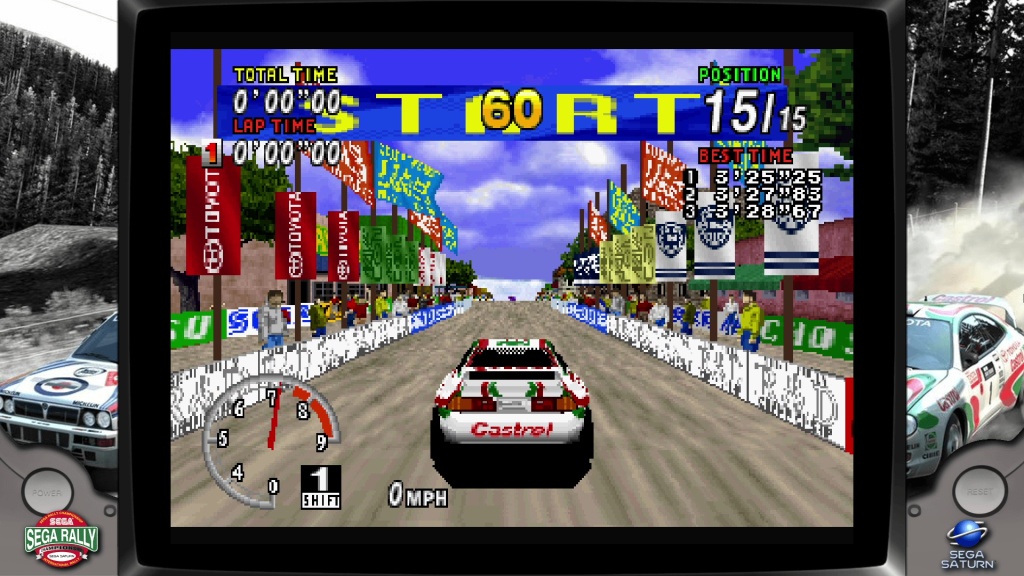
The way I see it is this: my Dreamcast is already a battered old thing that likes to reboot Sega Rally while I'm in the middle of playing it, and I'm pretty sure that the disc drive is to blame for all the woes I have with it. So if you take that out of the equation and replace it with something solid-state, then it will become much more enjoyable to use, and thus I will probably be more likely to use it on a more regular basis. If it all goes wrong, I'm left with a Dreamcast that didn't work all that well in the first place, so no biggie. And if it does work, I have a revitalised machine that will hopefully be a lot of fun to use.

The reason I'm considering this at all in the first place is because although Dreamcast emulation is in quite a good place, it's nowhere near as "near-perfect" as emulation for the classic cart-based systems and the PlayStation at this point. There are just enough little graphical glitches and considerations with Dreamcast emulation to make me want to take this approach with real hardware; I'm sure that will change with time, but for now, I think it's going to be a more practical, enjoyable option.

The Dreamcast is a delightful system with a small but well-formed library filled with some great arcade-style games. It's probably the last console where classic arcade-style games was a priority of the library — and while that probably contributed to its downfall as more ambitious, more hefty games took hold of the public's imagination on other platforms, it makes the Dreamcast a very appealing prospect today. An ideal system for when you don't want to get involved in anything too deep, but you still want to play a game.

So I'm looking forward to giving all this nonsense a go. It'll be a while before all the parts I need arrive, but I'll give a full report when they do.


Want to read my thoughts on various video games, visual novels and other popular culture things? Stop by MoeGamer.net, my site for all things fun where I am generally a lot more cheerful. And if you fancy watching some vids on classic games, drop by my YouTube channel.

If you want this nonsense in your inbox every day, please feel free to subscribe via email. Your email address won't be used for anything else.
#oneaday Day 80: Gaming specialism vs. generalised mediocrity

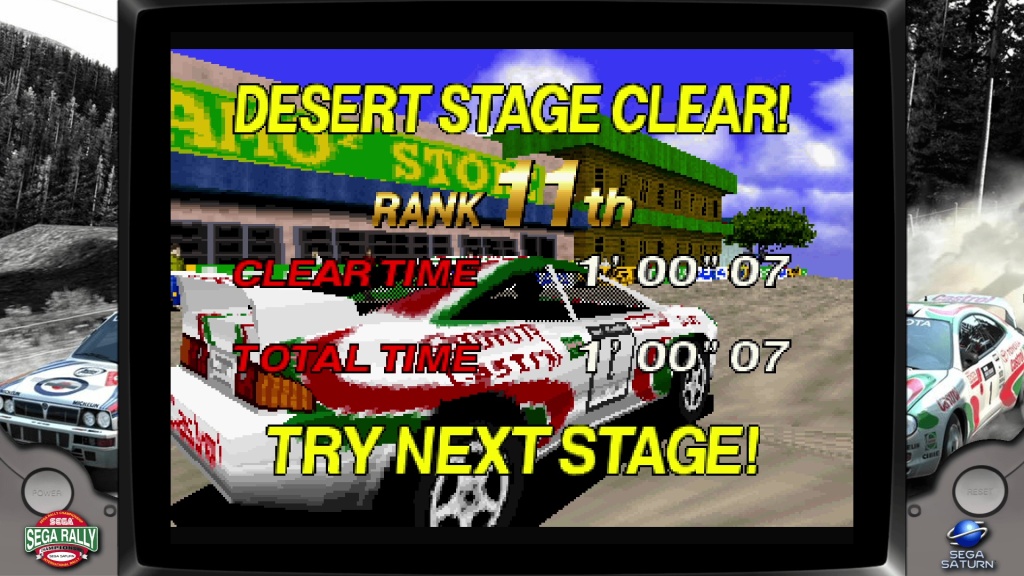
I decided to hop on board with a friend's "high score" (well, "best time", really) challenge over on his Discord today. The game? Sega Rally on the Saturn, a game (and console) I have precisely zero experience with outside of an occasional go on an arcade machine back in the '90s.

Unsurprisingly, I am not yet at a standard where I can even enter the challenge, given that it requires participants to complete all three stages of the game and post a time on the game's high score table. But I'm not mad about that. In fact, it brought something into focus that I've probably been aware of for a good long while, but which I hadn't really thought about actively before.

A key difference between older, arcade-style games and the stuff we typically get today is that older games demand that you specialise — get really good at one very specific thing — while today's games only demand that you reach a bare minimum acceptable standard in a wide variety of different activities.

Using racing games as an example, when you play Sega Rally, outside of stuff like the Time Attack and two-player modes, you're always doing the same thing. You're always racing the same three courses in the same order using one of the two same cars each time. Minimal variables. Minimal randomisation. Maximum scope for learning how to play the game well, and developing specific strategies that work for you.

Compare with a modern-day racing game. Leaving aside the fact that arcade-style racers barely exist any more outside of the indie space, today's racing games are much more likely to give you hundreds of individual challenges to complete, and never really demand that you get good at one of them to a notable degree. Rather than specialising in one very specific thing, you are developing a standard of generalised mediocrity — enough to get by, but nothing more.

Of course, some players choose to take things a little further and want to top the online leaderboards or beat things on the hardest difficulty, obtain "S-Ranks" or whatever. But I'm willing to bet that a statistically significant portion of players of any given game featuring a wide swathe of content (ugh, I know, but bear with me) will play each thing the precise number of times they need to in order to mark it as "complete", and then never touch it again.

I'm not saying either of these approaches is wrong per se — although I suspect a game as "content-light" as Sega Rally would be a hard sell as a full-price game today — but it is interesting how different those two types of game feel. My brief jaunt with Sega Rally this afternoon was genuinely exciting. I could see myself improving as my lap times got better with each attempt — and the successful completion of the challenge was within sight. Add the competitive element to that (once I've actually cleared the three races, of course) and you have even more exciting thrills.

This isn't to say that games like this don't exist in the modern day, either — although they're less common. The last time I really feel like there was a highly competitive, specialised game that I spent a significant amount of time with was probably Geometry Wars 2 on Xbox 360, and that must be pushing 20 years old at this point. But it was the exact same sort of thing I was feeling today with Sega Rally: a specific, well-defined, non-randomised challenge, and the desire to do well at that one thing.

The other benefit of games like this is that they're much more friendly to shorter sessions. This makes it ideal for those of you who have been browbeaten into believing you "don't have time" to play games any more, or if you only have a half hour before your food arrives, or before you have to catch the bus, or log on to Teams and pretend that you're working or something.

There's something to be said for the "no strings" aspect of these games; the fact that they don't demand your commitment over the long term, and they're not trying to bribe you into making that one game your complete lifestyle with things like Battle Passes, microtransactions, progression systems and other such shenanigans. On top of that, it often just feels like games that have a small number of very specific challenges to complete are probably better designed; if you only have three tracks in your racing game, you better make sure they're damn good ones, whereas if you have 100 tracks, who cares if one or two are a bit of a stinker?

If you haven't played a "specialised" game like Sega Rally for a long time, I highly recommend the experience. Boot it up, spend some time with it, enjoy the experience, then set it aside and do something else. Far from being a "waste of time", as certain quarters of modern gaming might like you to believe, I think you might be surprised what a pleasantly invigorating experience it is… and how likely you might be to come back and try again later.


Want to read my thoughts on various video games, visual novels and other popular culture things? Stop by MoeGamer.net, my site for all things fun where I am generally a lot more cheerful. And if you fancy watching some vids on classic games, drop by my YouTube channel.

If you want this nonsense in your inbox every day, please feel free to subscribe via email. Your email address won't be used for anything else.