Something Kinda Fishy

Hello! I'm back from a day in London that's left my feet aching. I really need some new shoes. The revolting sweatiness of my feet has all but destroyed the inner soles of most of my pairs of shoes. Nice. Anyway, sweaty feet and shoes that are falling to bits are not what today's entry is about.

We went to the London Aquarium, or the London Sea-Life Aquarium to give it its full title. It was Jane's birthday the other day and she decided a few weeks back that she wanted to come and see the fish. We'd seen some great displays of fish and underwater life at zoos in both Toronto and New York over the last year, and we'd resolved to go and see more things that were a little closer to home. After all, London is a little over an hour's train journey away, and there's tons of cool stuff there to see and do, even if you do have to deal with taking your life into your hands every time you cross a London street. That said, it's no worse than Italian streets, from my limited experience with them. Probably better.

First challenge of the day was, of course, trying to buy a train ticket from the machines at the station. You'd think this would be as easy as selecting "London" as your destination, indicating that yet, you would like to come back as well as go there, and then purchasing your ticket.

No.

Do you want a Standard Day Return? A Super Saver Off-Peak Day Return? A Mega Buster Super-Fantastic Awesome Only Valid For Three Minutes A Day Which You've Already Missed Day Return? All of these cost varying amounts of money. If you remember to book in advance they cost different amounts again – considerably less, usually, but that requires pre-planning. Which is, let's face it, not always on the cards.

Battle with the ticket machine won, we got on the train and headed to Waterloo before walking down to the South Bank to find the Aquarium. For my international readers unfamiliar with London, the South Bank of the River Thames is a pretty vibrant area that always has loads of things going on. There's a whole bunch of concert halls there which see everything from black tie classical performances to Video Games Live, several museums, lots of places to eat, the London Eye, boat trips, and today there appeared to be some sort of world culture event going on. This was mostly filled with stalls selling food, tat made to look faintly "ethnic" and, bizarrely, what looked like the opportunity to have one's photo taken with an African man. How odd.

But I digress. The Aquarium beckoned, and Jane had had the foresight to print out some of the 2 for 1 offers on this site, meaning the two of us effectively got to go in for half price. Or only one of us paid. Or however you want to look at it. We went in and immediately discovered that the London Sea-Life Aquarium do not have a very good toilet strategy. There is one toilet by the entrance, along with a sign saying that "The next toilets are 20-30 minutes into your journey" – so naturally, there was a huge queue, even before we'd got in. (Wee-d got in. Do you see what I… oh, never mind.)

The Aquarium itself was great. Plenty of huge fishtanks with lots of interesting fish from all over the world to see, including many from Britain, too, as well as some of the more exotic fish (and other… things) from tropical waters. And, of course, sharks.

I remember someone saying a while back that under the sea is one of the only places on earth where you legitimately get things that you can call "monsters". And it's true. There are things down there that would be terrifying to find yourself confronted with. Even the monsters of Lovecraft (themselves from beneath the waves) aren't that outlandish compared to some of the things that really do exist, particularly in the deep. It's interesting to see creatures that are just so completely alien in design and function to land-based creatures.

Take a jellyfish, for example. No brain, almost completely seethrough body and four balls that you can see in the middle of its body. Sorry, "gonads", to use the technical term. (I always find it amusing that "gonads" is a scientific term, particularly in light of this gentleman from British comic history) Weird shit. And certainly not something you'd want to wake up with on your face, for example. And sharks. They have big teeth. Sounds obvious, I know, but it's not until you see one up close in a big tank with glass windows that you realise quite how vicious those things look.

The other interesting thing I thought about while looking around is how easy it is to look at these creatures and see human characteristics in them. Sharks, for example, look pissed off all the time. Manta rays look like they enjoy flying out and surprising things like ghosts. There were a bunch of fish that looked like they were belming. And, of course, there's Happy Fish. Now, who knows whether or not these undersea things really are feeling these things that they look like they're feeling, but it's certainly fun (or the sign of an overactive imagination!).

The only disappointing thing about the Aquarium was the "Shark Walk", which is hyped as one of the big attractions there and I was assuming was one of those "glass tunnels" where you walk through the middle of a tank full of sharks. (The promotional picture I have posted at the top of this entry probably went some way to making me think this.) However, what it actually was turned out to be, essentially, the attic of the Aquarium with a glass floor. The sharks were quite a long way below where you stand, and the water was a bit murky. It was very disappointing, but the fact that you could see the same shark tank earlier in the tour of the place with much bigger windows made up for it.

It was a good trip, and I'd recommend it to anyone who, well, likes fish. I believe there's times when there are proper tours – there was some guy with a mildly annoying voice rabbiting on about sharks as we passed one area – but otherwise you can wander around and read the (relatively simple) information and quizzes scattered around the place. To be honest, it's quite pleasant just looking at the fish, even if you don't learn that much.

After the Aquarium, we wandered over to St. James's Park, which looks just like it does in Project Gotham Racing, only with more people and pelicans in residence. Yes, pelicans. The area in the centre of the park is set aside as a sort of "nature reserve", with a variety of non-native birds making their home their. There are pelicans, canada geese, other kinds of geese whose name I've forgotten and a whole bunch of other things there. Jane freaked out a bit when we noticed there was a pelican on the loose in the main part of the park. It was just wandering around. It wasn't causing any trouble, but it was amusing to see the people sitting on the grass look around and react with shock, fright or amusement. "OMG WTF PELICANZORZ", they seemed to say.

OMG WTF PELICANZORZ

Then we had a hot dog in the park, walked back to Waterloo via Trafalgar Square (which is much closer to Waterloo than I realised) and then caught the train home, accompanied by people who don't know where the volume control on their ringtones are. Now we're sitting watching The Cube. Well, I'm blogging too. But The Cube is on next to me.

So yes. A nice day. I'd recommend it, as I say, to anyone who likes fish.
Changing Course

Hello everyone and thanks for stopping by, as always!

In an effort to write more on this site, I've decided to change tack a little from past entries. This blog started as a purely personal blog and gradually morphed into mostly games-related stuff. And fair enough, it's a principal hobby of mine. But I have all these unused categories going free at the top of the page so I thought I'd branch out and try to write a bit more on some other topics to give all of you lovely readers the opportunity to get to know me a bit better in some other areas. Plus, you never know, I might even pick up some more readers along the way – this was clearly demonstrated a while back when I reviewed Haunted Stereo live at the Hobbit (cue Pingback on myself… 'cause no-one else ever links to me :)) and I met a whole bunch of fine new folks as a result.

So from this week forwards, this blog will be… a blog, as opposed to a games blog. You'll still find games writing here, of course, but there are plenty of other things I'd like to talk about. My last few video games articles have also been posted over on Bitmob, so do go check me out (and comment!) over there if you like what you see. You'll also see a couple of my articles on Good Old Games, which should be your first destination for picking up… well, good old games. Check out my articles on Rise of the Triad and Simon the Sorcerer.

Right. On to other matters.

My Dan and Charlie project that I discussed in my last post has been proceeding nicely. It's been fun to "roleplay" these two characters and imagine the situations they have been getting into and how they interact. In practice, it has also been an interesting experiment in separating out various facets of my own personality into two separate people. Those who know me well will have already spotted this, but I also think it's a potentially interesting way of telling a story from different perspectives. My research on the subject is admittedly limited, but does anyone know if anything similar has been done before, outside of ARGs such as Perplex City? (Perplex City is, I confess, where I got the idea from in the first place, although those characters' stories were rather less mundane) I'd be intrigued to see how other people have approached it.

That's it for now. Like I say, this change in approach is largely an excuse to get me writing more on a broader variety of different topics, so assuming I have a bit of self-discipline about this I'm sure I can find something interesting to say on a semi-regular basis. I hope I don't disappoint. 🙂

Meet Dan and Charlotte

So I've been a bit lax on the creative writing front for a while. I thought I'd rectify that with an experimental fiction project I've had in mind for some time.

I present to you Daniel Harris and Charlotte Bristow, two twentysomethings who live in the glamorous city of Southampton. Daniel and Charlotte have the same birthday (29th August) and both studied English at the University of Southampton. In fact, they sat next to each other on a number of occasions. But they don't know each other. They don't even know the other one exists. Not yet, anyway.

They don't have a lot in common. Dan is depressed, lonely and increasingly turning to drink. Charlotte is happy, hopeful and uses the word "party" as a verb. However, both of them enjoyed their study of English and are pedantic to a fault, and they do have a few interests in common. Both of them are struggling to work out what to do with their lives now university is over, and are temping to pay the rent.

This project, which I haven't given a name to yet (working title "Dan and Charlie") is an exercise in improvisatory blogging. I will be playing the role of both Dan and Charlie and improvising their fictional lives, perhaps with a little fact interspersed here and there for local colour. After all, I too live in Southampton and studied English (along with Music) at the University of Southampton, so after all we have a bit in common… conveniently. It will be an interesting exercise in "method acting" (for want of a better description) for me, and an exercise in self-discovery for Dan and Charlie, who are both new to blogging.

If anyone actually reads the blogs, thinks they're real people (so no-one who knows me directly, then) and feels the need to comment or interact with Dan and Charlie (who have their own email addresses and eventually will find their way to at least Twitter and possibly other social networking sites if I can be bothered to "network" that much on behalf of both of them), that may well inspire their independent storylines to develop in particular directions. I have a few "events" in mind for the pair of them and, of course, they will come across each other at some point. What happens from there remains to be seen.

I intend to blog on behalf of the pair of them fairly often. It'll be an interesting exercise in creative characterisation and allow me to keep myself in practice of writing stream-of-consciousness first-person narrative if nothing else – maybe it won't go anywhere, maybe it'll develop in interesting and unexpected directions. Who knows? We shall see.

One rule for those of you reading this: don't let on, at least not on their sites. As far as readers of their sites are concerned, Dan and Charlie are real people, and it'd be cool to have them interacting with strangers and see how that develops their own personal stories. Comments will be moderated and anything "out of character" won't be approved by either Dan or Charlie.

Well, this will either be an interesting exercise or I'll end up with Multiple Personality Disorder. We'll see. I hope you enjoy the mundanity of their everyday lives.

Dear Esther

I remember first hearing about Dear Esther a while back, during one of those interminable "games as art" discussions. It was held up as an example of using one particular genre of gaming (the first-person shooter, in this case Half-Life 2) as an interesting means of storytelling. Half-Life 2 itself is, of course, well-known for integrating storytelling and gameplay together, but Dear Esther set out to be something altogether different. Designer Dan Pinchbeck describes it as a "multimodal, environmental storytelling experiment" which "presents a sparse environment with no embedded agents, relying purely on the player's engagement with and interpretation of a narrative delivered through semi-randomised audio fragments". (source)

That's a very dry description of what this mod is doing, but it's an accurate one.

Dear Esther places the unnamed player on a seemingly-deserted island, starting on a jetty facing an abandoned house. The beautifully-delivered narration begins immediately, reading from a letter to the titular Esther and gradually developing as the player passes around the island.

The interesting thing about the story is that there are several threads running at once, and the randomised delivery of the audio cues throughout means that after a while, they all begin to blur together until it's not clear where one story ends and the other begins. Pinchbeck notes that "two plots develop simultaneously: the avatar's visit to the island following the historical record of a 17th century cartographer, and repressed memories of a car accident". The way these plots intertwine and seem to share themes and ideas in common, as well as wildly disparate elements too, mean that, in Pinchbeck's words, "a closed reading, or understanding, of the events is impossible to ever reach."

In this sense, Dear Esther is a dream come true for people who enjoy finding their own interpretations of games. The mod reminded me a lot of Flower, if not in execution then certainly in atmosphere. Flower makes very little of its story (if indeed there is one) explicit and is very open to wildly different interpretations. One could take it literally or metaphorically – and it is the same with Dear Esther. The game raises unspoken questions about whether or not the island you are walking around is actually real, who the mysterious characters the narrator refers to really are and, of course, who Esther actually is.

Pinchbeck himself was surprised at the positive response to his deliberately open narrative, noting that "the notion of an unfolding mystery that is never solved actually appeals to [players]" and that "the atmosphere and drive to find out more about the story is enough of a pull to get them all the way through the experience".

It's true. Dear Esther presents an intriguing mystery that makes it clear from the outset that there are no specific answers, yet there is a clear "goal" for the player to attain. This was achieved through use of the environment combined with the spoken narrative. Although the environment of the game is very "open-plan", being based on an island, at no point did it become difficult to determine where to go next, as there was always something that "looked interesting" over the next ridge. As the narrative progresses, a huge aerial in the middle of the island becomes visible with a large flashing red light, and the fact that this is almost constantly visible gives the player some indication of 1) where they are going and 2) how much longer they have to go.

Music is also used very effectively throughout. Haunting piano and string themes drift eerily over the speakers as the narrator slowly speaks his lines. As the story builds to something of a climax towards its "conclusion" (for want of a better word) the music becomes thicker, more intense, and with more mysterious, unidentifiable noises creeping into it. It gives a sense of progression in a game which leaves more questions unanswered than answered at the end.

There's certainly no denying that Dear Esther, like Flower, is an experience that will make you feel something. That "something" will be different to different people, as Pinchbeck notes that:

"…we have been surprised how many players report being scared. Several others describe the experience as eerie, moving and very sad. These last two are emotions that normally fall beyond the affective range of games, especially first-person games."

Lewis Denby, writing on Rock, Paper, Shotgun, had plenty to say on this subject, and it's well worth reading his excellent article. One particularly interesting point he had to mention was:

"I love my Marios and what-have-you as much as the next person, but I still feel games have an incredible untapped potential for negative emotions. Some have tried – Braid stands out for having a bloody good go – but we’re still a little too comfortable with enjoying everything we play. Any stretches of sadness in this medium tend to be restricted to self-indulgence or vapid tearjerker fare, and even they invariably make way for happy endings and bunny fluff."

Dear Esther, he says, is noteworthy for taking players into uncomfortable emotional territory and refusing to give in throughout. The whole experience is infused with a kind of melancholy throughout, and the final moments of the story as it comes to a close without any real "resolution" are heartbreaking.

All this in a barren, empty landscape with no human interaction, no speech besides that of the anonymous narrator, no guns, no white-haired pretty boys, no anime cutscenes – and yet somehow, deprived of all that exterior fluff, Dear Esther manages to present an intriguing story which has compelled more than a few people to play it through several times and develop their own interpretations further – and all this using an engine which is renowned for its fast-action run-and-gun FPS gameplay. It just goes to show what a little bit of creativity can achieve.

Dear Esther can be downloaded here.

Pinchbeck's notes on the mod can be read here.

Player Character WLTM companion w/personality, GSOH

hl2_080

“Soldiers!” she cries, as we hear the indecipherable radio chatter behind the door to the cellar we are hiding in, then that terrible bleeping that means they’re going to blow the door and come flooding in like they have done so many times before. I push the clip into my machine gun firmly and she does the same. My trigger finger itches.

The door explodes inwards, and a soldier strides in purposefully, his gun ready to fire. Fortunately, we are ready for him, hiding behind a crate. We leap up and unload a hail of bullets into his head and he slumps to the floor, blood splattering the wall behind him.

“Come on,” she says, heading for the door. I follow. Outside there is more radio chatter and more gunfire. There’s lots of them. I worry that we might not make it out of this one alive, despite her remarkable resilience to being shot in the face and my relative fragility. And I’m the one in the Hazard Suit.

“Gordon, look out!” she cries as a grenade flies in through the door. Quick as a flash, I pull out the Zero-Point Energy Field Manipulator, grab the live grenade and fling it back out of the door. It explodes as it lands, sending soldiers flying every way. I look over to her for approval. “Nice shot,” she says with a smile. Then she turns back to the window to clean up the survivors. I do the same.

After the battle, we manage to deactivate the force field that was holding our car captive, allowing us to get on our way. We sprint back to the waiting vehicle, a battered old wreck that will hopefully get us where we want to be. I hop into the car, and she jumps in through the front and lands in her seat. I look over at her before I start the engine, and she smiles and winks at me, a small gesture that means a lot.

Right at that moment, I fell in love with Alyx Vance.

Companions in videogames are nothing new. The earliest RPGs saw the player tooling around town/fantasyland/space with a party of fellow adventurers in tow, but it’s not been until relatively recently that we’ve had a true feeling of “camaraderie” between a game’s protagonist and their companion(s). When it’s done right, though, it adds a huge amount to a game, and even makes the presence of a silent protagonist less jarring.

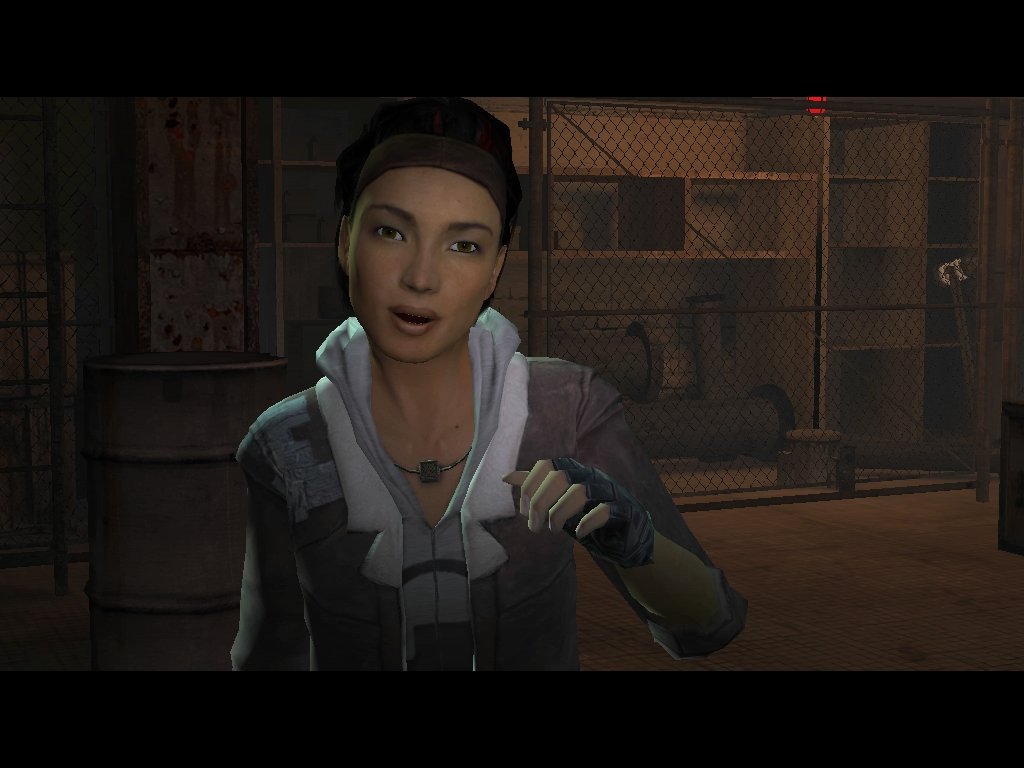
Take Alyx above, for example, in a scene from Half-Life 2 Episode 2. (Apologies if that constitutes a “spoiler”, by the way.) Her distinctly “human” responses to situations that she and Gordon find themselves in allow the player to engage on a personal level with what is going on without Gordon himself having to say anything. Half-Life is sometimes criticised for its lack of characterisation of Freeman, but it’s safe to say that as Half-Life 2 has developed through the original game and its two Episodes so far, Alyx has very much become a “protagonist by proxy”, coming out with the quips and one-liners that you might hear a typical character in a third-person action game come out with. The fact that she’s not the player character, though, allows her to be used as a sort of “reward mechanic”. Achieve something good and Alyx will praise you, which always feels nice, even if you know it’s scripted in many cases.

Squad-based shooters would be a fine genre to use this kind of approach in, since by their very nature you have constant companionship of at least one other character. So why are these characters so often generic and uninteresting, little more than “Yes sir, open and clear” when there is such scope for characterisation and storytelling?

The best use of a squad in a game to me is in Star Wars: Republic Commando. From the outset of this game, your character and his three squadmates are set up to be unique characters with their own attitudes – peculiar, given that they’re supposed to be clones, but you can suspend your disbelief for that one, I guess. Throughout the game, there is constant radio chatter between the squad members, a good mix of simple “Yes sirs” and commentary on their surroundings. Proof positive that it can be done.

Beyond Good and Evil is another great example. Throughout the game, protagonist Jade is constantly accompanied by at least one companion character, sometimes more than one. As she proceeds through the areas of the game and comes across obstacles, the banter between Jade and this companion again helps the player to feel more like they are part of a “living world” rather than a lifeless avatar simply solving puzzles and fighting monsters. Sometimes, though, this banter is not simply there to provide a hint on how to solve a puzzle – it’s just there as a means to develop the characters. Jade herself is perhaps underdeveloped throughout the course of the game, though the reactions of her companions more than make up for this.

This approach was taken to another level in Uncharted, where both protagonist Nathan Drake and his companions throughout his adventure are well-defined characters with personalities of their own – and, notably, great voice acting. Uncharted is often quoted as an example of what happens when you let your voice actors have more than one take at each line – you get very naturalistic conversations between them that sound like scenes from a decent film rather than a bad late-night porno.

Uncharted takes the approach of Nate and his companion offering “commentary” on what is happening, much as characters in a movie would do. As Nate and Sully run through the jungle at the outset of the game, for example, they are discussing what they think they might find and how they think things will proceed. This adds interest and also adds to the movie-like ambience – when was the last movie you saw that consisted of the protagonist just running and jumping without saying anything for ten, fifteen minutes at a time?

This even continues throughout battle scenes. Get into a shootout and your companion will contribute to the battle rather than being a useless meatshield who causes a “Game Over” if they happen to catch a bullet in the neck. As the battle goes on, Nate and his companion will shout things to one another, and you’ll hear their reactions to things happening. If a grenade lands near Nate or his companion, they’ll react, not only with a hasty “Oh, shit!” but also with some beautifully naturalistic animations – cowering away from the blast, rolling away, scrambling to escape.

This sort of thing is something that we will hopefully see a lot more of in games to come – and I don’t mean in the sense of your squad saying “Eat shit and die!” every time you shoot a bug in the head, I mean in the sense of feeling like you’re “there” with someone else, someone who you’d fight for, someone who you’d die for, someone for whom you wish there was a “hug” button on the keyboard.

Perhaps we're not up to the level of a fully artificially-intelligent companion character who can accurately respond to absolutely anything we'd care to do, but we're certainly getting there. Characters are getting more "human" (or perhaps it would be better to say "more natural") in their responses, and this, in turn, helps to create a greater and greater feeling of immersion in the game's world.

Rise of the Bizarre

I'd love to have sat in on the design meeting for Apogee Software's 1995 FPS Rise of the Triad, now available on Good Old Games. In my mind's eye, it runs something like this:

"So, gentlemen. That Wolfenstein thing did rather well. Let's do a sequel."

"Yes! I love Wolfenstein. Who wants a beer?"

(Beer is chugged. Conversation resumes.)

"Right. So how are we going to make this better?"

"Okay. Here's the deal. Umm… Hitler was actually being controlled by… like… um… some big corporations."

"Great. Sounds good. How many?"

"Um. Three. Three's always a good number. Wolfenstein had three episodes. Plus another three."

"Right! We could call them the Triad."

"I think that's been done."

"Doesn't matter. Okay, so Hitler was being controlled by the Triad."

"Yes. I need another beer. It helps me think."

(More beer is chugged. Conversation resumes.)

"Okay. So, game-wise, what are we going to add?"

"Rocket launchers."

"More gore. More gore!"

"Dual-wield pistols!"

"Traps! Spiky things! Flame traps!"

"All good suggestions, but… let's think outside the box a little."

"Boss?"

"Yes?"

"Don't use management-speak. It makes you sound like a douche."

"Sorry. Where were we? Come on. Think bigger."

(Silence ensues.)

"Nothing? Really? Okay, maybe this will help." (Produces a bottle of absinthe.)

(Absinthe is chugged, with much teeth-sucking and head-shaking.)

"Right! That should get those creative juices flowing. Okay, let's try again!"

"Ooo! Ooo! We need jumping."

"Yes, but not normal jumping, no. We need springboards."

"Yes! And floating platforms to jump onto. Otherwise there's no point."

"Right. And we can call them Gravitational Anomaly Discs."

"GADs?"

"Yes. And the elevator ones can be called EGADs."

"Egads! What a fabulous idea."

"I see you're getting it. Let's have another drink."

(Another shot of absinthe is consumed.)

"Jesus. Maybe… maybe you… maybe we should have a… y'know… God mode."

"Ishn't that, ishn't that… jusht… y'know… an invinsh… invinsh… invuln… can't die mode?"

"No no nononono, I mean an actual… actual God mode. Where you become God."

"Oooo! I likesh it. You could get really big."

"Yesh. And kill… peoplesh by pointing at 'em. You'sh an angry God."

(Hysterical laughter.)

"Oooo! And how about… y'know… as a joke… we also put in a… a… Dog mode!"

"What, where you turn into a dog?"

"Yesh. You get *hic* really shmall and bite peoplesh nutsh."

(Thunderous belch.)

"Ugh. *hic* This is… 'scuse me… *hic* shounding great. You know what? Shall we just ditch the World War II thing?"

"Yeah. Too much research."

"Let's have shome mad monksh inshtead."

"Monksh with ROBOTSH."

(Fade to black as hysterical laughter continues.)

The alarming thing about Rise of the Triad is that all of the above features were actually included in a game that was originally intended to be a sequel to Wolfenstein 3D. Now, Wolfenstein didn't take itself too seriously anyway, what with all the zombies, and a very fat Hitler in a mechanized suit wielding two chainguns, but presumably at some point it became apparent to Apogee's Developers of Incredible Power, the team behind Rise of the Triad, that a World War II setting wasn't going to cut it. Instead, the game features a very strange setting, with players battling everything from soldiers dressed in what look like World War I uniforms to robots to monks, armed with a selection of weapons ranging from the straightforward (pistol) to messy (bazooka) to bizarre (drunk missile) to outright insane (Excalibat, which is exactly what you think it is). Add in the God/Dog modes, the ability to fly with Mercury mode, the headache-inducing Shrooms mode and you have a game which is clearly designed for fun foremost with the story being cast aside in tatters.

It's all the better for it. The sheer speed and insanity of Rise of the Triad is one of the game's best features. The relatively simplistic, boxy level design design based on an evolution of the Wolfenstein 3D engine means that it's easy to race through relatively mindlessly, or those who prefer a more methodical approach can attempt to solve some of the quasi-platforming environmental puzzles in order to unlock the game's secrets.

It's evidence of a simpler time, when games either weren't capable of telling a decent story, or it was seen as a secondary thing to do. Half-Life this ain't. Rather, Rise of the Triad represents a time when gameplay was at the forefront, and shareware games were on the cutting-edge of technology. These days, shareware titles are less prominent in their importance for many people, but in the mid-90s when Wolfenstein and Rise of the Triad appeared, shareware developers like ID/iD/id/whatever and Apogee were very much leaders of the pack, pushing the capabilities of the PC to the limit. This was also a time when "shareware episode" meant "complete game in and of itself" – both Wolfenstein and Rise of the Triad's free shareware episodes featured ten full levels, which were complete experiences in their own right. Rise of the Triad actually went one step further by making its shareware episode a completely different set of levels to those in the full, paid version, meaning those trying out the game and then going on to buy it didn't have to run through the same levels again. There were no 30-day time limits or crippling of features – if all you wanted to play was those ten levels, so be it. If, however, you wanted more levels and more features (in the case of these games, more enemies, more playable characters and more multiplayer modes) then you shelled out the money to support the game.

Apogee, of course, later became 3D Realms, which begat Duke Nukem 3D and Max Payne. Rise of the Triad does show that it's worth delving back into a company's history as you can often found some hidden gems amongst them, however bizarre they may be. There's one thing you can't deny about Rise of the Triad, and that is that it's immensely creative within the limitations of the time, the genre and the medium. Releasing titles as shareware often freed up developers to do what they really wanted to do – and if that was to have the player assault an island full of soldiers, monks and robots while armed with a magic baseball bat and having the occasional ability to turn into a dog, that was up to them. Occasionally these days with indie titles we see glimpses of the same creativity. It's important to keep that dream alive, otherwise we end up with a hundred and one identikit brown shooters.

Rise of the Triad 2009 on XBLA anyone?

Bio. SHOCK!

Topical, huh? Yes, I finally completed Bioshock, a game that has been sitting on my own personal pile of shame since release day. It's a game I have steadfastly refused to trade in because it's a game I knew I "should" finish before I even considered it. Other games I know I'll never get around to, so often they're trade fodder, unless they're the sort of thing that's likely to become difficult to find in the future in which case I'll hang on to them – because ironically, the rarer stuff fetched much lower trade-in values anyway.

But I digress already. Bioshock, then.

THERE WILL BE MASSIVE SPOILARZ IN THIS POST. IF YOU HAVEN'T FINISHED BIOSHOCK AND INTEND TO, TURN BACK NOW.

It's not an understatement to say that I was looking forward to Bioshock a great deal as a result of a Squadron of Shame mission on System Shock 2 – this was in our pre-podcast days so don't go looking for a SquadCast on it… yet. I absolutely adored System Shock 2 and its prequel, which I also played all the way through thanks to the magic of DOS emulation. They were two games absolutely dribbling with atmosphere, and they featured one of the greatest villains of all time – SHODAN. SHODAN was a magnificent villain because she was creepy without overdoing it, she was omniscient and she had a level of power that was never entirely clear to you. It was important not to underestimate her, because she could very often put you into a difficult situation and then mock you from the shadows. The fact that she was incorporeal also helped a lot with the creepiness factor – until the very end of the first game, there was very little you could do to hurt her directly.

Bioshock necessarily took a different tack thanks to its retro-themed 1950s setting rather than the futuristic environments of the System Shock games. An omniscient computer perhaps wouldn't fit in with the setting, so instead we have two people watching your every move through the security systems in the underwater city of Rapture – Andrew Ryan and "Atlas". Ryan is set up to be "the bad guy" of the piece, with his constant taunts echoing SHODAN somewhat. Indeed, your whole experience with Ryan is similar to your relationship with SHODAN in the Shock games. He sits in the shadows far away from you, affecting the things that are happening around you. And these are drastic effects he has, too – in one memorable sequence, he kills the forest created in the underwater city, threatening to deprive you of oxygen. The area is flooded with gas and the trees wither and die around you. It's a powerful moment that pushes home the necessity for you to go forward with your mission to destroy Ryan.

Atlas, on the other hand, is where the "big twist" happens. Atlas is set up from the start of the game to be "the good guy" – your voice in the darkness guiding you onward. Yet paying close attention to the things he says, it is clear that he has his own motivations for you to move forward. When you arrive in Rapture following a plane crash, you have no idea what you're doing there, and it's not until Atlas asks "would you kindly…" rescue his family, deal with various problems and finally stove Ryan's head in with a golf club that you have any clue as to your purpose in that place.

Of course, it's all been premeditated. Atlas is Fontaine, Ryan's rival in the underworld of Rapture, and he knows how you work. The trigger phrase of "would you kindly" turns out to be something programmed into your brain to make you do things. You're under the control of anyone who uses that phrase. Ryan demonstrates this to you with fatal consequences when he hands you the aforementioned golf club and says "would you kindly… kill", and you oblige. It's a powerful moment and a nice way of handling the relatively linear nature of the game – the fact that you've been surreptitiously manipulated throughout the whole thing was a great justification for what you've had to do up until that point.

Following Ryan's death, there's some great sequences where Fontaine taunts you with another trigger phrase that gradually causes your health to seep away… and then when you find the antidote, it only half-works, causing violent hallucinations and random, indiscriminate use of Plasmids. Eventually you manage to pull yourself together thanks to another dose of the antidote that you find, and it's on to the final confrontation.

This is where Bioshock, for me, started to sadly tail off a bit, and a lot of people feel the same way. The sequence where you have to make yourself into a Big Daddy is quite neat, but the gameplay mechanic used here – an escort mission! Ugh! – is rather irritating, unless you enjoy the sight of little girls being shot to pieces with little you can do about it. The feeling of being a Big Daddy is quite fun though – your footstep sound changes to the big clumpy boots that they wear, your grunts of pain when you get hit have the low groaning of a Big Daddy, and your vision is distorted through the diving helmet that you wear.

Finally, of course, there's the notorious battle against Fontaine. This is, without a doubt, the most ridiculous part of the game, and one which there was really no need for. During your Little Sister escorting, you hear Fontaine suddenly "discovering" gene splicing so that by the time you get to him he looks like something out of Fantastic Four. Oh, and he's naked. You then have a protracted boss battle with him that pretty much involves you hurling every piece of ammo you've got left at him then running up to him and pressing the "Action" button, then repeating this three more times.

Now, as previous posts have shown, I'm a big fan of final confrontations, particularly if the music involved is suitably stirring. But this battle felt so entirely incongruous with the rest of the game. I would have preferred something more along the lines of Uncharted's final battle (which I won't spoil here, but those of you who have played it will know what I mean) which is a masterful piece of gameplay that is entirely appropriate for the setting. It's still essentially a "boss battle" of sorts but there's nothing stupid about it. There's no giant monster, for one thing. (OMG SPOILARZ.) Why couldn't we just have had a plain old shootout with Fontaine as a human, or fisticuffs atop a submarine or something like that?

Sadly, Bioshock's ending falls into the same trap that many other games have done in the past – great game, fell apart at the end. Indigo Prophecy, aka Fahrenheit, is perhaps the most notorious example of this, but it's by no means the only one. Many games are rushed in their final stages by pushy publishers keen to get the game out of the door. It's sad really, because commonly-accepted wisdom has it that the things we take away most from (for want of a better word) "artistic" experiences are beginnings and endings. A lot of games have great beginnings, but shoddy endings. I'd rather that they made the beginning and the ending first and then sorted out the stuff in the middle afterwards. If there's a lull in the middle, that's nothing unusual. A lot of books, films, pieces of music, whole albums… many of them lull in the middle but pull themselves together for an explosive (not necessarily literally) finale.

Of course, with games there's the argument that if you suffer through a lull in the middle you'll never get to the end of the game. The ideal situation would be, of course, if developers were free to work on their games until they were completely, totally 100% done and dusted to the writers' and designers' complete satisfaction. Sadly, in the high-pressure world of commercial video games, this doesn't always happen, which is why many commercial publishers could, I think, learn a lot from indie developers making smaller games. Take something like Flower on PSN. It's short, sure, but it's a wonderfully "complete" experience that takes you on a journey from beginning to end. Some people weren't fans of the end of Flower, sure, but at least it didn't feel like it was rushed through – it felt like it was a conscious artistic decision by the team.

One day, maybe we'll get the perfect game – one that doesn't need patching, one whose ending doesn't suck and remains a consistently excellent game all the way through. Bioshock gets so close, so very close… but falls apart at the end. It's a shame – but that's not to say that you shouldn't play it. I'm really glad I finally played it through as it's a pretty incredible experience. It still looks great, the atmosphere is second to none and the overall story has been thought through well. It's just that in a rush to tell that whole story, that boss fight had to get shoehorned in.

So, Bioshock? Good. Very good, in fact.

Retro or "Inspired By"?

turtles-in-time-reshelled-screenshot-now-only-10-dollars

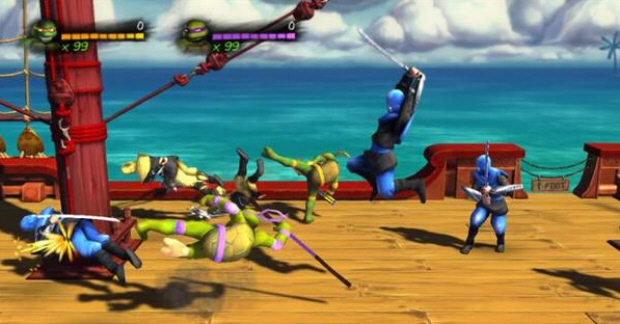
Tolkoto's recent Exploding Barrel rant about reviewers' reactions to the recent Turtles in Time remake on Xbox Live got me thinking. What is it that gets people so excited about some "retro" games and not others? I agree with him, in fact – reviewers' reactions to Turtles in Time was somewhat harsh, particularly considering it's only 800 space dollars. Criticising the gameplay of the original by measuring it against modern yardsticks clearly isn't acceptable… or is it? It's difficult to say. After all, this may be some gamers' first encounter with an early-90s brawler (although XBLA has hosted the previous Turtles arcade game along with the magnificent Streets of Rage 2 and the diabolical Double Dragon) – what gives? And how come Castle Crashers – fundamentally the same game in many respects – gets smothered in adoration?

A common criticism of the brawler genre is that it's "too simple". But let's take a look at another genre in the form of the PSN's recent brick-breaker Shatter, which has garnered almost universal praise since its release a couple of weeks ago. Shatter is, let's not kid around here, Arkanoid. Okay, you have a "suck" button. And a "blow" button. (Stop sniggering at the back.) But fundamentally, it's still Arkanoid. You're a bat-shaped spaceship hitting a ball into bricks that are floating in space with some flimsy justification laughably called a "plot" buried somewhere in the Help menus. There are powerups, including one where you can just shoot down the bricks. Pretty much the sole point of the game is to achieve as high a score as possible – and high scores are something the game does well. It's a simple game. Everyone loved it for this fact.

So in terms of gameplay, Shatter adds little to the Arkanoid formula save a few fancy bits of physics, some HD art and a kickass soundtrack that I love and Feenwager hates. So why is this game awesome and Turtles in Time a bit steaming turd to reviewers? God knows.

The important thing is, of course, what the player thinks of all this. Those who enjoy the brawler genre or have fond memories of playing Turtles in Time on the SNES will have an absolute blast with the new XBLA remake. Similarly, those who enjoy bouncing things around and smashing walls will love Shatter. But are people more predisposed to like Shatter as it was designed from the ground-up to be a new game rather than a "re-imagining" of Arkanoid? Arkanoid LIVE on the 360 released to mixed reviews and has, it seems, been mostly forgotten already. Shatter, on the other hand, gives me the impression that people will perhaps be more inclined to give it a go, particularly given its very generous price point ($7.99 in the US store, £4.79 over here) as a result of the few things it does a little bit differently.

This pattern follows us around a great deal. LittleBigPlanet for PS3 is a 2D platformer, and unashamedly so. Yet plonk someone down in front of that, then down in front of, say, Rolo to the Rescue and see which they prefer. Actually, that's perhaps not strictly accurate. Plonk someone down in front of an HD version of Rolo to the Rescue sold for $10 on XBLA or PSN and ask them which they prefer. Would the answer still be LBP? Judging by what has happened with Turtles in Time here, it may well be, though many players, particularly those who have played and loved both, may feel a bit differently.

This has been yet another rant without any real point but do feel free to comment if you have any feelings. I'm planning a new music post very soon – those take a bit more preparation though. 🙂

Af Wubbas Do (Or: Evil in the world of The Sims)

So I bought The Sims 3. So I like The Sims, and have done since the first one. So I usually buy most, if not all of the expansion packs. What of it? Huh?

If I sound defensive, it is of course because The Sims is seen by many as one of the banes of the hardcore gamer. I've found it fascinating over the years, though. Ever since first playing Sim City, then being able to fly around a Sim City 2000 save game in Sim Copter, I wondered for the longest time how cool it would be to get right down to the "personal" level… and the original iteration of The Sims delivered bigtime. It became a social event, too – I was living in halls at university at the time, so inevitably I made all of the people in our flat as best I could. Everyone came by regularly to see what was going on and laugh at who had pissed themselves or passed out from exhaustion that day (hey, managing six people is tricky!) and it is a source of many fond memories.

Fast forward to today, and we have The Sims 3. Some things haven't changed much (the basic gameplay still involves bossing your Sims around and making sure they don't shit themselves, though this has been played down a little in favour of "Moodlets" – mood "buffs" and "debuffs" – this time around), and others have changed a great deal. The biggest change is the much-vaunted "open world" design of the game. In practice, this means that Sims can walk out of their front door, walk down the street and go and visit someone else. The difference this makes is enormous – no longer are you confined to your own house or specific "community lots" – now you can actually explore the world, and there's a bunch of gameplay elements to reflect that. You can go fishing, collect things, find "treasure" – in many ways, the design of the game is getting closer and closer to something along the lines of an MMORPG.

Anyway, this time around, as usual, I made myself and my wife and am playing them "straight" – that is, attempting to be as successful as possible and maintain the family bloodline. As such, as Sim Pete and Sim Jane enter their twilight years, their two kids are growing up nicely and developing into fine young men. I just hope they don't die before the kids reach adulthood, which is, of course, a possibility!

Having read some articles online, the Prima official guide (which is a good, fun read if you're interested in the game and its mechanics) and, most notably, this touching and heartbreaking blog about two homeless Sims, I was intrigued to try out a completely different kind of Sim, using some of the more… shall we say "unpleasant" Traits on offer at character creation. Here were the results:

This is Lars. As you can probably see, he's a miserable git. Maybe people laugh at his Sephiroth hair and overuse of man-makeup. Whatever the reasons, he's become a bitter and twisted individual. He's Grumpy pretty much all the time, which makes it difficult to keep him happy. He's also Evil, which means he delights in the misfortune of others.

Naturally, he has an evil-looking house surrounding by a grungy-looking moat/swamp combo. He deliberately designed it to annoy his neighbours, who have a very pleasant-looking house.

Lars wanders over to pay his new neighbours a visit and is confronted with Roxy, a young woman whom he takes an immediate dislike to due to her looking "a bit hippie".

The conversation turns sour quickly. Roxy recoils in horror as Lars starts yelling at her for no other reason than he felt like it. He insults her appearance and her house. (Most of this was without any intervention from me.)

Lars decides enough is enough and spontaneously decides to attempt to punch out Roxy. He fails once. Humiliated, he tries again and is victorious. Both sims are left feeling faintly ashamed, but Lars is pleased that he's caused some misery.

Dusting himself off, Lars turns to Roxy's roommate, who has been watching in horror at the sideshow unfolding in front of her. Lars is sweetness and politeness, though, and uneasily (and some may say foolishly) she allows him into her house. Roxy is not happy.

"What a nice house," thinks Lars, his Kleptomaniac Trait itching. He restrains himself for the moment, as people are watching and he's already made a… memorable first impression.

In an attempt to ingratiate himself with his hostess (and perhaps build up some misplaced trust which could come in handy later…) Lars decides to tell the one about the broccoli, the tomato, the carrot and the pepper. Roxy's housemate isn't sure what to make of Lars' aimless ramblings. But then there's a clattering thump behind them.

Roxy has passed out on the floor. Evidently the exertions of meeting Lars for the first time were too much for her. Lars, Roxy's housemate and Madame Dungarees all have their own thoughts on Roxy at this point.

At this point, the household gets another visitor. Lars doesn't even bother to find out her name before he starts spreading gossip about how unlucky Roxy is. "She sure was unlucky to meet me today," he cackles.

The visitor is unimpressed. Lars sneers, knowing that the poison has been dripped. Roxy blushes as she listens to him carry on.

Lars starts on Roxy again, who looks close to tears. Roxy's housemate, getting rather fed up of this, starts thinking about going to bed and just leaving them to it.

Roxy decides to stand up to Lars and squares up to him. Her housemate stares into space behind the quarreling pair.

Finally, as Lars goes to give Roxy a good slap around the kisser, Roxy's housemate finally decides enough is enough and politely asks Lars to leave on account of his "misbehaviour".

He graciously leaves, bidding his hostess farewell. Then he tips their trashcan over…

…and steals one of their porch lights, not because he needs one, but because he can.

Tired and hungry, Lars heads home to contemplate the evil he has committed that day. Preparing himself a piece of toast, he suddenly realises that his house doesn't have any chairs in it, so, unprompted by me, he decides to settle down on the toilet to enjoy his toast.

I was laughing hard by this point. This was such a different experience to anything else I'd done in The Sims before. Sure, you could play an evil God and kill them off by rebuilding their houses in ways that, shall we say, weren't to their advantage, but the "negative" social interactions were always seemingly discouraged. By playing an Evil Sim, you're actively encouraged to be mean and nasty to as many people as you can. The Sim's Wishes reflect that, showing their heartfelt desires to go out and steal candy from a baby, or slap a special someone.

The expressiveness on the faces of the Sims has developed a lot over the years. Check out the faces that Roxy pulls as Lars is mean to her. I also found it pretty funny that Lars did a lot of the unpleasant things to Roxy completely of his own volition thanks to the "free will" option. He obviously felt an uncontrollable urge to make his presence known to his new neighbours, so I just kind of went along with it. It was fun, in an ever-so-slightly wrong way.

Give it a try. Playing an unconventional, flawed character presents some interesting challenges that you'd never come across if you were playing relatively "straight-laced".

TWANG! Waggle! Kick! Punch! It's all in the mind!

Those of you following me on Twitter may be familiar with my Jedi Health Kick blog. Perhaps you're reading it already, in which case you'll know I recently picked up a copy of EA Sports Active in my latest attempt to hammer and chisel my woeful body into a shape vaguely resembling human. It's good stuff, and for anyone doubting the value of Wii Fit as an exercise programme, you can rest assured that EA Sports Active gives you much more of a battering than Wii Fit ever did thanks to the fact it actually takes you through set programmes (although, of course, you can create your own also) rather than leaving you to your own devices and relying on your own self-discipline which – let's face it – your lack of is probably the reason you came to titles like Wii Fit in the first place!

The thing I like about it is how "videogamey" it makes the whole experience. Being a supergeek as I am, I like anything that rewards achievement in a noticeable way. I'm a sucker for slidey bars, percentage markers and trophies. Ironic, really, that I never got into sports, since sports are also filled with slidey bars, percentage markers and trophies. Anyway, the fact is that EASA is full of these things. You get trophies not only for successfully completing workouts, but for smaller things like doing a certain number of laps around the virtual track across all your workouts, doing a certain number of squats, burning a certain number of calories and the like. These are all goals that you would probably set yourself if you were one of those people who are "into fitness" and can motivate themselves, but for the gamers (or the lazy) amongst us, it helps to have something to remind us that even smaller achievements are worth celebrating.

Anyway, to cut to the tenuous link: there's been a lot of discussion surrounding motion control and full-body control recently, particularly after E3. Some seem to think that it's "the way that games are going", with the idea of us standing up to play games and running the risk of hurricane-kicking our TV a very real possibility. Others are very much a fan of the traditional controller, believing that it is something fundamentally "gamey". I'm inclined to fall into this latter camp, but the motion control thing has some obvious health benefits which are clearly demonstrated by titles like EASA.

The question is, of course, do you want something that is primarily an entertainment device to provide health benefits all the time? Look at other media. TV and books offer health benefits sometimes – you can watch a yoga DVD or read a lifestyle book – but for however many of these there are, there are an equal if not greater number of "junk" items to enjoy – pure, unadulterated enjoyment with no pretense of "doing it for your own good". In this sense, while motion controls are cool and groovy, I'd like to hope that the controller isn't dead just yet.

A key part of the experience is tactile feedback. While motion controls allow you to feel your own body moving, when it comes to actually touching or hitting something, you don't feel anything. This is also a problem with touchscreen controls – a joypad on a touchscreen will never match a real joypad until a technology is developed where you can "feel" it. I also question how some genres would work with motion controls – take an FPS, for example. How do you look up? If you REALLY look up, then you can't see the TV any more, so unless Halo Natal comes with some sort of 360-degree "vision ball" that you have to stand inside to play (which would be awesome, incidentally) then you're resorting to flailing your arms around in some arbitrary gesture or pointing something at the top of the screen.

I think there's work to do – and I just hope that people aren't going to embrace these new technologies too completely. I very much like them and think they're going to be a lot of interesting fun to play with – plus I think all of them provide plenty of scope for further titles like EASA and Wii Fit to improve gamer lifestyle, which can only be a good thing – but let's hope the controller isn't dead just yet, hmm?