 There's a lot to be said for interactivity (or at least the illusion of interactivity) in storytelling. It allows things to be done that are simply impossible with non-interactive media such as books, TV and film.
I spent a couple of hours this afternoon playing Digital: A Love Story, a wonderful game set on the desktop of an Amiga "five minutes into the future of 1988". If you haven't played it yet and are intrigued by the premise, I suggest you play it before reading on, because I'm probably going to spoil some things about it. I'll try not to be too explicit.
At the outset of the game, the player is the proud recipient of a brand-new "Amie" computer with a built-in modem. Your benefactor also provides you with a phone number of a BBS that you might want to check out. And so the story begins with the player dialing into the BBS, complete with terrifyingly authentic-sounding dial and modem tones screeching from your computer's speakers. The player quickly gets friendly with a person named Emilia and things develop quickly in a manner that will be immediately familiar to anyone who has ever had an online relationship.
All is not as it seems, however, and the player, through a bit of investigation, discovers that there are strange things at work. The BBS crashes, and there is no way of getting in contact with Emilia. Just prior to the crash, she said she was "leaving home" and "getting out". Thus begins a quest across several BBSes, ARPANet and Sprint's long-distance calling-card system to track down Emilia and discover what happened.
The game is completely linear. Things happen in a set order, right up to the ending, when the player is faced with an inevitable conclusion that there really is no way around. At this point, we reach one of the most powerful things that gaming can do, and ironically one of the least interactive things about narrative games.
Offer the player the opportunity to do two things: do something, or walk away. Walking away is usually not an option, though Heavy Rain managed to convincingly offer this as an alternative at several points throughout its narrative. Digital: A Love Story, however, makes it abundantly clear that there is only one course of action open to you, and it's an unpleasant one. Given the great pains that the game has taken up until this point to make you "feel" for the characters involved, despite being based around screens of text, it is difficult to make that final mouse click.
This is something you just can't do with a book. Stopping halfway down the page and printing "Turn the page to see what happens next" is not an established literary convention, nor should it be. Same with TV and film; with those media, we're just along for the ride. It's the reason very few books save the Fighting Fantasy and Choose Your Own Adventure series are written in second-person perspective.
But with a game, the player has been driving the story all along, even if there is only really ever one thing they can do at a time to advance the plot to the next "event". That illusion of interactivity allows the player to be all the more invested in the story, as if they're part of the game world. This is further aided in titles such as Digital: A Love Story, which don't break "character" for a moment. As far as the player is concerned, they're using an Amiga… sorry, "Amie". They're not playing a game, they've been transported back in time to 1988, a land of 320×200 graphics, questionable multitasking capabilities and scanlines.
The ending of Digital: A Love Story is bittersweet and if you've engaged with the game up until that point in the way it is intended to be engaged with, you'll find it genuinely emotionally affecting. It's always interesting when a title which looks so unassuming can actually end up being more powerful than self-consciously "epic" CG cutscenes and over-the-top orchestral music with people singing in Latin.
So, if you remember 1988, if you ever had an Amiga or you remember the golden age of the BBS, check out Digital: A Love Story. It's free, and well worth your time.
 It's easy to be cynical about Christmas these days, given that it starts in mid-September and proceeds to get increasingly more present in the months leading up to December until it is eventually omnipresent. (Happy, Mr Hussick?) By the time it actually arrives, people are so thoroughly sick of the whole "Christmas" thing that they just want it over and done with for another few months until the whole thing starts over again.
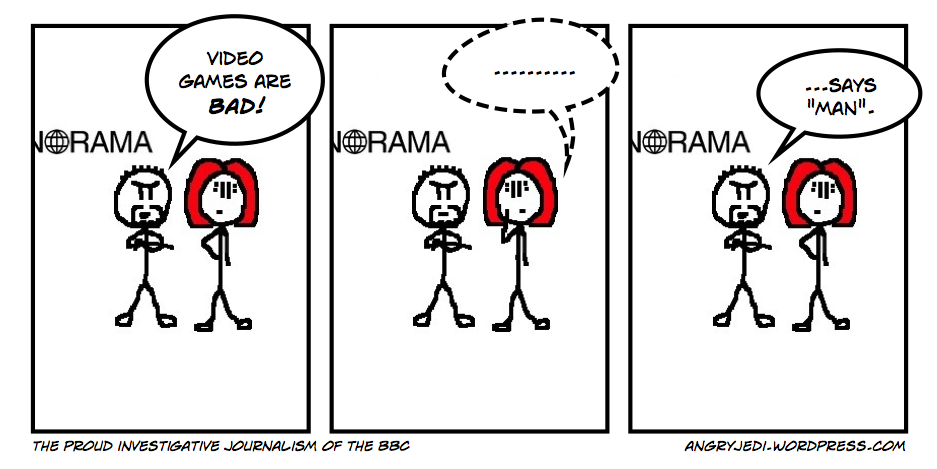 An hour ago, the BBC aired an episode of Panorama, our go-to investigative journalism programme, on the subject of video games. The subject, predictably, was the ever-present "are video games addictive?" question that has been raised and not answered many, many times prior to now.
 Goodness me. Thank you to everyone who read yesterday's post, including the unprecedented 602 of you who showed up today. Whether or not you agreed with the sentiments therein (and whether or not you were polite about it), thanks for reading.
 Are you morally-conscious? Feel like you should be doing more to help your fellow man, but feeling a bit strapped for cash at the moment? Don't feel like putting together some sort of fund-raising event because, after all, it is a bit cold outside and it might snow.
 I've just done something I haven't done for a while. I've beaten a game with no Achievements. No, I don't mean that I played the game so terribly that I didn't get any Achievements (I don't think there's a single Achievement-supporting game out there that will allow you to do that)—I mean I started, played, enjoyed and beat a game which did not support Achievements of any kind, be they Steam Achievements, Xbox Achievements, PSN Trophies or a built-in Achievement-like system.
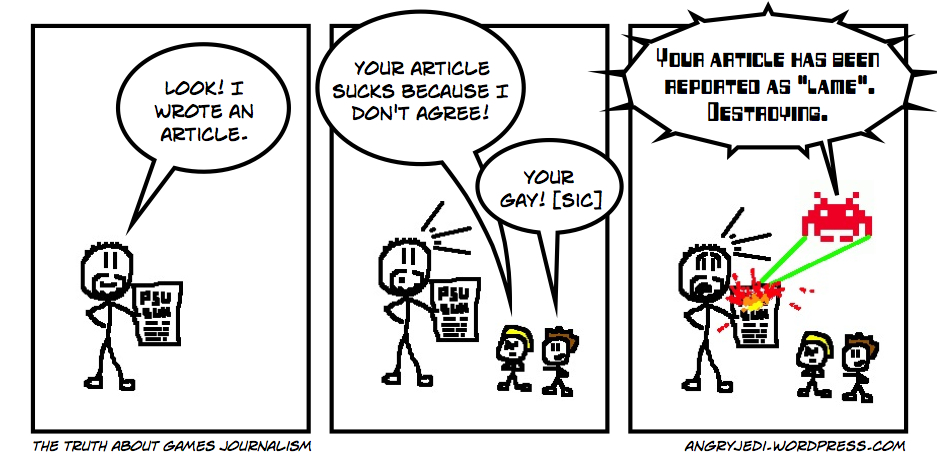 There is an increasingly popular—and increasingly worrying—tendency for games journalism and writing about games (which some people are keen to point out are two different things) to be judged as "broken" or "lame".
 Yes, you have read that correctly; one of the options for reporting an article as unworthy of appearing in the N4G news feed is that it is "lame".
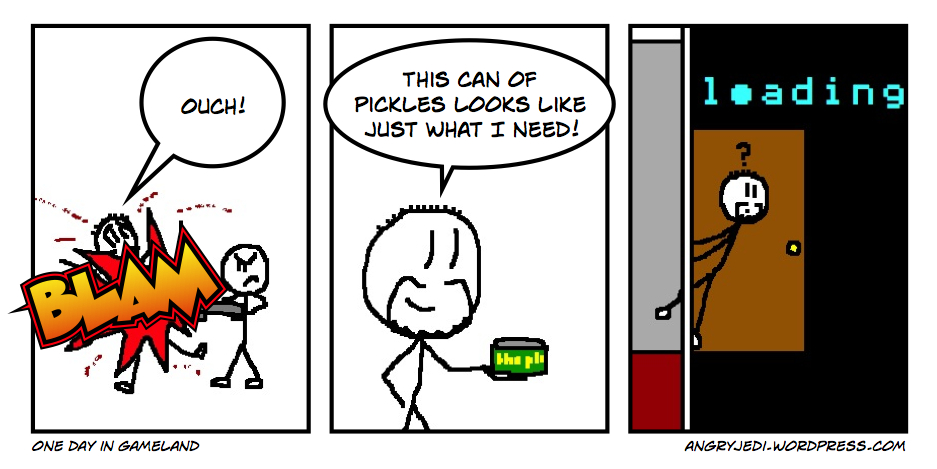 In discussing Deadly… I mean DEADLY PREMONITION with a couple of others recently, we came to the conclusion that the universe of games has such a distinct logic, such a distinct culture, that you could probably write an entire treatise on the culture, physics, metaphysics and theology of Game-Land.
 First up: DO YOU SEE WHAT I DID WITH THE TITLE IT'S CLEVER AND FUNNY AND BUGGROFF
 The poor shopkeeper doesn't have it easy, whatever form they take. If they're a retail monkey working for minimum wage in some sweaty hell-hole where chavs repeatedly come up and ask if the nearly-black garment they have in their hands is available in black, then they're probably losing the will to live by the second. If they're working in a, shall we say, "premium" retail environment they're probably having a better time but rapidly growing sick of the fixed grins they're forced to wear, not to mention the stock phrases that spew forth from their mouths like some form of verbal effluvia.
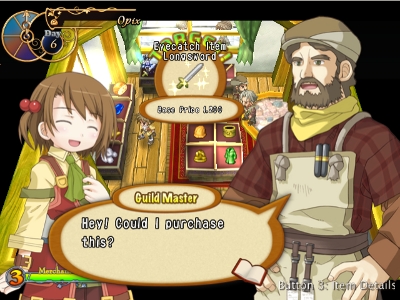 So far, so Animal Crossing, you might say. And you'd kind of be right. Except not. There really isn't another game quite like Recettear out there. There are games which focus on individual elements of the game, sure. But none which blend together such peculiar and diverse elements with such successful results.
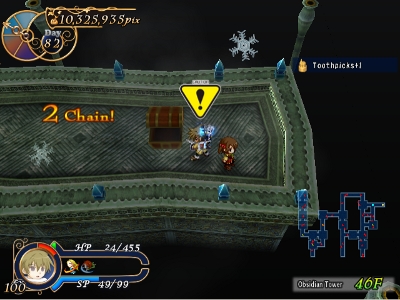 Yes, there are dungeons. Because sometimes the local markets just don't have the things people want to buy. When that's the case, Recette is free to pop down to the local Adventurers' Guild and hire one of the guildies she's made friends with. It's then into an action-RPG dungeon crawler to kick monster booty and gather lots of crap that people might want to buy.