#oneaday Day 626: Farewell, Mr Jobs

"Your work is going to fill a large part of your life, and the only way to be truly satisfied is to do what you believe is great work. And the only way to do great work is to love what you do," said Steve Jobs to a group of Stanford University graduates during a commencement speech in 2005. "If you haven't found it yet, keep looking. Don't settle. As with all matters of the heart, you'll know when you find it. And, like any great relationship, it just gets better and better as the years roll on."

Wise words from a great man — who sadly passed away yesterday, aged just 56. I'm actually quite sad about this because, although I obviously didn't know the man personally, he's had a profound impact on my life. I'm not the only one, either — this morning various social networks are filling up with tributes to Jobs, his life and the influence that his company Apple's products have had on their lives. My good buddy AJ Minotti, for example, noted that he's been podcasting with his brother for four years now — and this is longer than anything else he's ever committed himself to in his life, whether that's work, school or relationships. Podcasting defines him, and although podcasting may well have come along in a different form with a different name had Apple not pushed it as a publishing medium, in his mind it's inextricably associated with Jobs and Apple as a whole.

For me, my exposure to Apple products began with an early stint as a freelance writer for the Official Nintendo Magazine in the UK. I was putting together walkthroughs for Turok 2, Star Wars: Battle for Naboo and Banjo-Tooie. To take screen grabs from these titles, I had to play the game through a video capture card linked to a Mac and take shots from the video feed as I played through. I'm not sure exactly why they used the (then-OS 9 sporting) Macs for their office work, but I guess it was due to the supposedly common knowledge that Mac software was good for creative and design work.

Subsequently, I got myself an iPod with a 20GB hard drive. At the time, I couldn't imagine ever being able to fill it — but having graduated to it from a 32MB (yes, really) MP3 player it was a revelation to be able to carry that much music around with me in my pocket. I took it everywhere with me, and it lasted a good few years, too. It moved house with me several times, remained an almost permanent attachment to my car stereo and joined me at the gym on many occasions. I came to know and love the music on it and, to this day, that first iPod is one of my favourite pieces of technology I've ever owned.

After joining Apple back in 2007, I got my first exposure to the modern OSX Mac, and I was instantly smitten. Here was a system that ran smoothly and efficiently, did what I wanted it to do with minimum fuss and yet still remained powerful enough to let you tweak it as you saw fit. The online community agreed, too, and Macs remain a great platform for independent publishers to release awesome and useful applications, utilities and — to a lesser extent, admittedly — games.

It was the creativity side of things that really grabbed me though. Apple's iLife suite was excellent, allowing you to do things that many inexperienced users who came through the doors of the store assumed to be difficult, challenging or demanding on their computers. Things like editing and organising photos; editing video; making a DVD; or producing professional sounding music — all of it was within reach of the average user, and all of those applications gave users a firm understanding of the concepts they'd need to be familiar with prior to graduating on to more advanced, professional software.

When my role changed from the in-store "Mac Specialist" salesperson position to the in-store "Creative" personal trainer position, I got to spend all day every day working with these applications, teaching people how to use them, presenting workshops and tutorials on them with genuine enthusiasm — I believed in these products because I'd used them extensively myself — and even training new members of staff on what they needed to know about the computers and their applications. It was, for a very long time, absolutely the best job I ever had, and I felt very much what Steve described when he was addressing those Stanford graduates in 2005. I'm sorry that I had to leave — but, without going into too many details, poor in-store leadership that seemingly rejected many of the core values of the Apple credo meant that I, and several others, saw little choice but to move on to pastures new. In my case, this pretty much marked the "beginning of the end" for me, as from that point I was to only have one more short-term teaching job before a year of unemployment and the collapse of my marriage — along with my life as I knew it, of course. I won't lie — I regret some of the choices I made back then, but what's passed is passed, and you can't change what's already gone by.

Besides, nowadays things are seemingly back on track, of course. In Apple terms, I still use my Mac every day for work. While it's getting on in years a bit and, like a faithful old dog, is a little sickly and decides not to do what it's told at times — Apple products don't break, you know, yeah, right — it's still my weapon of choice for all sorts of things: browsing the web, working on documents, working with photos, making music. While I have my PC for gaming, now, Macs will always be a part of my life, as will my trusty iPhone, which never leaves my side.

In short, Steve Jobs has — at least indirectly — had a profound impact on my life. As an employee, he was an inspirational leader with an obvious vision for where he wanted the company to go, and even for those who aren't Apple "fanboys" it's difficult to deny that he was a figure in the tech industry who commanded — demanded — respect. He will be greatly missed by all — whether they knew him personally or not.

Farewell, Mr Jobs — and thank you for the good times.
#oneaday Day 625: Communal Listening

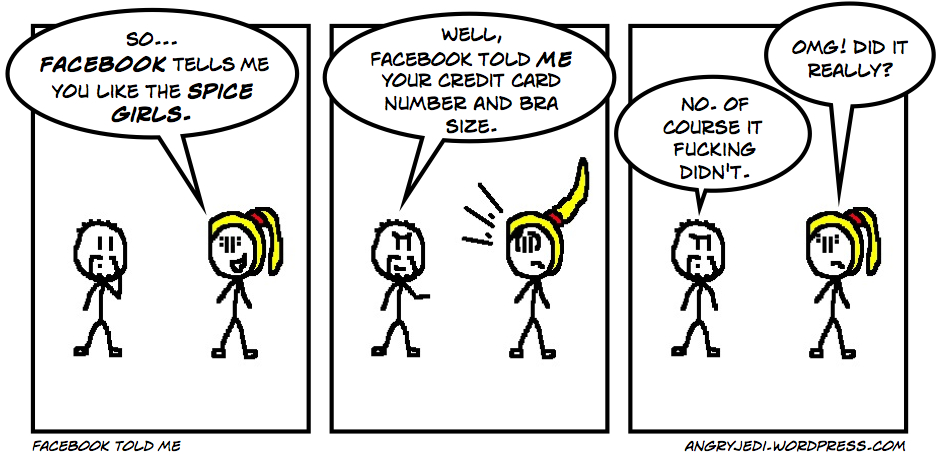
I've seen a fair bit of negativity floating around surrounding Spotify's new (optional) integration with Facebook — for those unfamiliar with the changes, Facebook now has a new Music dashboard which broadcasts the details of what you're listening to from services such as Spotify in real time and provides links for other people to go and listen for themselves.
I've seen several people on several social networks decry this as some sort of gross invasion of privacy, but I can't help feeling they're missing the point in a number of different areas.

Firstly, the whole "Facebook privacy" concern thing is something of a moot point when you consider the point of the site — it's a social network designed to let people connect with each other and share things, whether that's a banal status update, what album they're listening to or the fact they unlocked an achievement in The Binding of Isaac. What you share on there is, ultimately, up to you, and if you're worried about your details being online then — there's no simpler way to say this — don't put them online. Facebook doesn't belong to you. It's never claimed to be a private network and, in many ways, locking yourself in a walled garden when using a social network defeats the object somewhat — if you just want to use it with close friends and family then you might as well just use email.

Taking the music thing specifically, Facebook integration is an excellent idea. Consider how we used to consume music in the pre-Internet days. We'd listen to the radio, watch Top of the Pops, talk with our friends. We might have friends over and listen to a particular band's latest album together — we'd certainly talk about it the following day at school, in the office, wherever you happened to be spending most of your time. Buying a new album was an event — these days, music is just "there", it's just something to have on in the background and people don't think twice about buying a track here, a track there without any thought of its context as part of a larger album. As part of this evolution, the whole real-world social aspect of music has been somewhat diminished.

Which is why embracing online socialisation is a good thing. Your personal musical tastes — key word personal — are your own individual thing, and there's very little reason why you shouldn't want to share them with fellow listeners. In fact, Spotify has always been set up to encourage the discovery and sharing of new tracks thanks to its Spotify URLs and ability to share on Facebook, Twitter and other services. The automatic broadcasting of what you're listening to right now is simply an evolution and automation of the process. And, if you're embarrassed about your musical tastes, then you can always turn the facility off.

Facebook is guilty of many things — pointless interface redesigns, a bizarre definition of what "Top News" is, fiddling around with settings behind your back without telling you and gradually building up a near-monopoly on the social Web — but one thing it has always done over the years is do exactly what it set out to do — provide an online social network with which you can communicate and share with your friends. The precise definition of what you can (and what is worth) sharing has changed and grown over the years — but why shouldn't music be a key part of that? And why, if the infrastructure's already there to do so, shouldn't that process be automatic?

You're very welcome to look at my Music page — here it is.

#oneaday Day 624: Genre-Bending Hogs

These days, there's a whole lot more game genres than there once were. Whereas in the "olden days" we had shoot 'em ups (which no-one would dream of shortening to "shmup"), platform games, beat 'em ups (which no-one would dream of referring to as "fighting games", and which had not yet begat the distinction between "fighting game" and "brawler"), adventure games and, occasionally, RPGs. Nowadays, the growth in gaming amongst people who aren't white spotty nerds with malodorous armpits has meant a corresponding growth in genres which aren't quite so rooted in gaming convention.
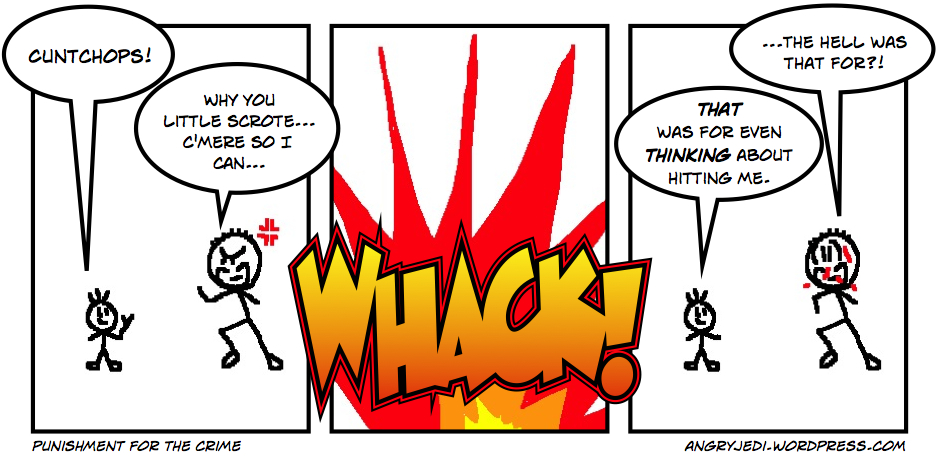
We've had the "match 3" puzzle genre — itself an evolution of earlier puzzle titles such as Klax. We've had the "time management" game — itself a super-super-super lite version of the real time strategy genre. And we have the "hidden object game", also known as the "HOG". (For some reason this annoys me. I'm not sure why. Call me irrational. [You're irrational. — The Audience.] Thanks.)

I hadn't tried a hidden object game prior to tonight, but since my BT Broadband account comes with three free months of OnLive's PlayPack I figured I'd try some of the obscure titles on offer. A game called Elizabeth somethingorother M.D. caught my attention, so I jumped in, not knowing quite what to expect thanks to OnLive's not-particularly-good job of describing what games are in its catalogue. I was hoping for something more like Trauma Center (itself an example of a new genre) but instead I was confronted with a rather bizarre experience.

If you've never tried a hidden object game, here's how they work: Plot Happens, like in a point and click adventure game (or, more accurately, like in a visual novel, since your interactions in the story are typically fairly limited.) Then, suddenly, for no discernible reason whatsoever, you are tasked with finding the aforementioned hidden objects in a scene, sometimes against a time limit, in order to advance the story.

Now, this sort of "puzzle book" gameplay would be absolutely fine if it made any sort of sense whatsoever. If I was looking for items to use in an adventure game style I would have no problem with suspending my disbelief while Doctor Elizabeth thingummybob faffed around trying to work out why she'd left her forceps on the bookcase. But instead you're tasked with finding completely incongruous objects that have no bearing on the scene whatsoever.

I'll give you an example: in the first interactive scene of Doctor Elizabeth Investigates or whatever it was called (I'd look it up, but I can't be bothered — there's your journalistic integrity for you right there) I was tasked with taking the patient's heartbeat using my stethoscope (fair enough, good start) and testing his reflexes with a hammer (similarly doctor-y). However, I was then challenged to find — in a hospital ER, I might add — three beetles, two statues, a club symbol, a gift-wrapped box, a plunger, a dinosaur and several other bizarre items which, oddly enough, vanished as soon as more Plot needed to Happen.

Now, I wouldn't call the experience "bad" as such, since hunting for the objects on the screen had a certain addictive quality to it similar to that which kept you fumbling around in puzzle books before anyone knew what handhelds or iPhones were. But it's the sheer bizarreness of interspersing a fairly serious-sounding plot with the complete flippancy of hunting down bizarre objects against a time limit — and that's not even beginning to consider the hospital's cleanliness record if it's letting that many giant beetles into its emergency room. That said, I guess the combination of elements is no more bizarre than Puzzle Quest.

I'm not sorry I tried it, but the genre's apparent popularity is somewhat bewildering. Hidden object games are seemingly only slightly less prolific than match-3 puzzle games with the casual market — which suggests that people are buying them. This means that they either don't notice the incongruity of the gameplay and the narrative — or they don't care. Which is fair enough, I guess — it all depends on what you want to get out of your gaming experience.

#oneaday Day 623: Crime and Punishment

It's been a while since I told a story from my past life at the chalkface, so I feel it's about time we fixed that with another real-life tale of What Teaching is Really Like.

I worked in three schools (not counting those I did supply teaching in) during the course of my teaching career — two secondary and one primary. One of the secondaries and the primary were in what could politely be termed "somewhat deprived areas" while the other secondary was right on the border of an aforementioned "somewhat deprived area" and a very middle-class town — the sort of place that has shops that sell nothing but fabric, and tearooms rather than branches of Starbucks, that sort of thing.

All three of them, regardless of location, and regardless of age group, had Problem Children. You could often preemptively tell a Problem Child from the names on the register — generally speaking, if a child was male and called Jordan, female and had some obscure misspelling of a relatively normal name (Kaylee, Abbygale, Rooth) or of either sex and in possession of a completely made-up stupid name (Peaches, Infographia, Cubblers) they were likely to be a Problem Child. Sometimes you were pleasantly surprised — girls named Jordan often ended up being quite nice, and when you got your hands on a new class you often didn't know the sexes of the pupils, particularly if they had stupid names — but more often than not you'd run into a Problem Child sooner or later.

One particular Problem Child I encountered in the primary school in which I taught had a relatively normal name and, ironically, was one of the brighter kids in the class. But my God he was an asshole. He'd answer back, he'd yell at the teacher, the teaching assistant and his peers, and he'd frequently storm out of the room if he was pulled up on any sort of inappropriate behaviour. When parents' evening came around, I spoke to his parents about his behaviour — particularly the violent side of things — and I was told that they had simply told him to react to anything he saw as "unfair treatment" by striking back. "If someone hits you," said the dad, "you hit them back."

There's not much you can say to that, really, even with all the Anti-Bullying Policies and Zero Tolerance Initiatives in the world.

Then there was a Problem Child I came into regular contact with during my time at the first secondary school at which I taught. He, too, was an asshole, and this time with no redeeming features whatsoever — i.e. he was a dimwit as well. Again, he'd be aggressive, sweary, belligerent and completely resistant to authority. And again, there was no support from the parents.

"My mum says I don't have to come to detentions," he told me upon receiving a detention for being a cunt (obviously not the exact wording I used on the form recording said inappropriate behaviour). "So I'm not coming."

He didn't come.

With many of these children — particularly in cases there was no parental support for whatever reason — it was pretty much impossible to instill any sort of discipline in them. There was nothing that they feared. They didn't fear detentions because they just wouldn't turn up. They didn't fear the wrath of the teachers or senior staff members. And they didn't fear exclusion because that just meant time away from the school they hated so much. There was little to nothing that could be done to discourage these little grotbags from acting like complete bellends.

The teacher training guides would say that punishment is not the way to go — that positive reinforcement is, in fact, the way in which they best learn what behaviours are appropriate and which are not. The trouble is, taken to the extreme, you end up with the ridiculous sight that many schools indulge in — primary schools in particular — which is the weekly Celebration Assembly. Here, the whole school gathers and a selection of children from each tutor group are called up one by one to come to the front and receive a certificate. These certificates aren't necessarily for academic achievement — and, indeed, usually aren't. No, these certificates are frequently awarded for "playing nicely with the other children" and "sitting in a chair for over half of the lesson" and "not hurting anyone". All of those are genuine examples, by the way, unlike the names I gave earlier, most of which were made up.

Now, while it's nice to celebrate the fact that little Cockbag, who never sits in his chair for more than 5 seconds and loves punching everyone in the neck, actually sat down and completed two maths questions in the last week, it completely devalues the entire concept of "rewards" for everyone — teacher and pupil. When I was at primary school in the late 80s and early 90s, we were rewarded for good work in class or special achievements. Go and colour in a square on your rocket. Have a gold star. Show the class what you've done. No-one got a square on their rocket, a gold star or the opportunity to show the class what they'd done for successfully sitting in their chair for more than fifteen seconds at once.

I wonder what on Earth the solution could be. It's pretty clear from what I saw that the one and only thing that the Problem Children feared was humiliation in front of their friends and peers — something that undermined their "authority", for want of a better word. So perhaps some sort of Inverse Celebration Assembly would be warranted, where the headmaster solemnly called out the names of the worst offenders each week, brought them onto the stage and forced them to do the Dance of Shame while everyone else pointed and laughed. Anyone who refused to do the Dance of Shame would be fed to the goldfish kept by Class 2, who had developed a taste for human flesh ever since Barry Jenkins kept his hand in there for an entire period for a bet.

But then that's probably some sort of human rights violation, isn't it?

#oneaday Day 622: Party Smart

I may be voluntarily indicting myself into the "I am an old man now" club but I have come to the irrefutable conclusion that You Do Not Need Alcohol to Have a Good Time.

Well, duh, you might say. We've been told that for years. But how many people really believe it?

I'm speaking purely from my own perspective here as I'm more than aware that plenty of people use booze as a form of social lubricant prior to slipping their conversational penis into the Vagina of Meaningful Interactions. I'm saying it doesn't really work for me.

I thought it did for a while. At University, as most people tend to do, I drank a lot, mostly out of a desire to be sociable and fit in — even with seeing a close friend suffer from (and, thankfully, subsequently beat) a drinking problem. I quickly confirmed my early suspicions that I didn't like beer at all, which precluded me from most Student Night promotions, and instead opted for spirits or alcopops.

Even with those, however, I found I had an obvious "line" which, if crossed, would switch the night from being "entertainingly blurry" to "unpleasantly blurry". Sometimes I crossed this line by accident with just one sip too many; others I was goaded and cajoled into it by the company I was with at the time; others still I, like a child in some ways, wanted to "test my limits". The result was always the same, however; a kebab on the way home, a longer-than-average dump during which I'd often almost-but-not-quite fall asleep, a night of disturbed sleep wondering whether or not I'd be sick (to which the answer was usually "yes") followed by a morning of being sick, barely being able to move and always taking a bin into the bathroom with me in case disaster struck while I was the wrong way around to puke in a manner which didn't require cleaning up.

Despite the inevitability of the above scenario, I still continued to do it. Drinks of choice changed — vodka and Red Bull being a favourite for probably the longest, despite its ludicrous cost — but the presence of social occasions did not. Drinks down the pub after a session with a club. Monday nights at the local grotty nightclub following Theatre Club rehearsals. And, of course, the occasional house party.

I used to hate house parties, but I'd still go. Most of them tended to devolve into me finding my "line", stopping just short of it and then spending the rest of the evening looking longingly across the room at some girl I'd arbitrarily decided that night that I fancied, and then didn't go and talk to for fear of her thinking I was a dick, a perv or quite simply just someone she didn't want to talk to.

In short, then, in a good 8-9 cases out of 10, alcohol didn't particularly work as the social lubricant it's sold as. A few half-hearted "woo, I'm so drunk!"s do not make for meaningful friendships and relationships, and as such I'm pretty sure that most of my aforementioned meaningful relationships and friendships started and were best cultivated when sober. Sure, there were times when I'd gone out, got drunk and had a great time with said people — but as time passed, these got less and less frequent, and the booze became less and less important.

When I finally left university and started work as a teacher, the demands of the job meant that for the most part I didn't have time to drink, let alone the inclination. I dabbled with having a stiff G&T upon coming home from the first school in which I worked — which was a nightmarish shithole conjured up from between Satan's very buttocks — but it didn't particularly help with the growing feelings of stress and depression I had, and nor was I expecting it to. I had an occasional G&T because it was a nice drink in the summer, and it happened to be one of the few alcoholic beverages which I didn't hate the taste of.

Fast forward to now and I haven't drunk for quite some time, and I don't miss it. The last few times I drank wine or vodka or gin, the taste was not something I enjoyed, and it felt like it "burned" on the way down, leaving me with a slight lingering feeling of unpleasantness after just one sip in many cases. Certainly it was enough to put me off a university-style binge, but it's also pretty much enough to put me off it altogether. It's unnecessary for me, it doesn't particularly help me open up to people — though it does help me act like a dick, but then, I'm in no hurry to be the butt of everyone's jokes for being wasted — and, in more cases than one, I've seen what it can do to people, and that's not pleasant.

In short, then, I think I'm knocking it on the head. This isn't a strict teetotal policy or anything but I'm certainly not going to seek out alcohol or feel pressured into it on social occasions.

I've been away this weekend and heard the phrases "you need to be drunk" or "you need to drink more" uttered several times. No you don't. Or, more accurately, Idon't. No-one needs to be drunk. No-one needs to drink "more". You should be free to enjoy a drink if you enjoy it, but it should not be a necessity.

If this has come across as in any way sanctimonious, that certainly wasn't the intention and I apologise — I'm simply saying how I feel about it and what works for me in this instance. I'm certainly not judging those who do enjoy a drink and know their limits — and equally, I'm not judging those who have a genuine problem and are taking steps to deal with it. Everyone's different, after all. All I'm saying is this: if you're socialising with me or at a party I'm throwing (haha, yeah, right) then have a drink or two by all means — just don't expect (or, worse, demand) than I join you.

And don't throw up on my carpet.

#oneaday Day 621: Fun, Fun, Fun in the Sun, Sun, Sun

It's October, and it's very sunny. Temperatures have been up around the 30 degrees mark (Celsius, obviously) and the sun has been beating down like an army made up entirely of marching bands.

As I remember it, this has happened for the last few years. As difficult as it may be to think back on my wedding day now, the one thing I do remember is that it was a lovely day, and in October too.

The sun is something of a double-edged sword. Beautiful sunshiney days such as today are lovely to look at and ideal to go and visit outdoor attractions such as the zoo or the gardens of an old stately home (the latter of which we did today). It's nice to be out in the sun, and lying on some green grass in the shade as the bright sunshine warms the air is super-nice.

Problem is, last couple of times I've had a lovely day like that out in the sun I've promptly spent the afternoon and evening suffering with the mother of all headaches thanks to (presumably) mild sunstroke, or possibly brain AIDS. But more likely the sunstroke thing.

Memo to self, then: wear a hat. Supplementary memo to self: buy a hat. Because as a kid you can just about get away with wearing some awful hand me down trucker hat that your parents dredged up from somewhere. But as an adult, wearing an inappropriate hat that doesn't suit you just makes you look a bit special needs.

I've asked for book and music recommendations in the past; I wonder, will the Internet be able to recommend me a hat that doesn't make me look like a dick, a chav or both?

#oneaday Day 620: Country House

Andie and I are staying in an old country house. It's her sister's 30th, so a bunch of her friends (including us) are in attendance for the festivities.

Country houses are cool. I'm not talking about houses that are just in villages, since increasingly as villages become hotbeds for pretentious commuter relocation, more and more generic brick houses are springing up. I'm talking about proper country houses that might have once been part of a farm — or in some cases still are.

There's something special about a house with rooms you have to duck to get into; a house with mysterious hobbit-size doors in the bedrooms and bathroom with an inexplicably small crawlspace behind; a house with a basement; in short, a house from which you could fend off (or at least survive) a zombie invasion.

That said, the olde-worlde nature of the building materials in most of the house would inevitably lead to Resident Evil-style situations with zombies bursting through wooden walls and punching their way into your room. And God help you if they find their way into that crawlspace. Although if they did they'd have to be hobbit-size zombies or midgets, which would be mildly terrifying.

Hmm. Not sure I can sleep now.

#oneaday Day 619: Bound by Isaac

Edmund "Super Meat Boy" McMillen and Florian "I Work With Edmund 'Super Meat Boy' McMillen Quite A Bit" Himsl have a new game out — you may have heard of it. It's called The Binding of Isaac and it costs just £3.59, or $5 to you American types. It's also a prime example of a project that would never have got greenlit by a large publisher, for many reasons.
These reasons start with the very premise of the game — you play a nude, crying child attempting to escape from his mother who has been hearing messages from God and believes that she must rid her child of corruption by, as in the Biblical story, killing him. Little Isaac isn't willing to stick around and wait and see if God stays his psychotic mother's hand, however, so he escapes into the basement, only to be confronted with numerous manifestations of his own fears and nightmares. What follows is a genuinely horrifying yet darkly amusing quest through a series of Zelda-inspired randomly generated dungeons where Isaac dispatches his enemies by crying on them and powers up through a series of items, most of which affect his appearance in some sort of particularly grotesque and inappropriate manner. Sound fun? Or just plain weird? It's both.

The exact items you'll encounter are different on each playthrough, making each run through the game's short dungeons a genuinely unpredictable experience. On one run you might come across a syringe full of steroids first of all, which beefs up Isaac and makes his head swell in an unpleasantly tumorous manner. On another run you might come across a wire coat hanger which, revoltingly, he impales through his own head and increases his capacity for crying. On yet another run you may find something else — there's about 100 different items to find and discover the uses of, and every one of them affects little Isaac's appearance in one way or another.

This being a game from McMillen, it's got a distinctive art style that is entertaining, amusing and horrifying all at once. Cute little worms slither around, only to come flying at you with fang-filled maws agape as soon as they become aware of your presence. Nightmarish clones of Isaac with no eyes in their sockets stagger around — and continue to do so even after Isaac has blown their heads off. And flies buzz around destructible lumps of shit before turning on Isaac in anger.

It's an utterly bewildering game, but strangely compelling and addictive. The fact that a single death forces you to go back to the start of a new dungeon and try again means potentially limitless replay value, and a huge number of unlockable items — including extra characters — only add to this. The game parodies the NES original Zelda dungeons perfectly, right down to the mostly mute shopkeepers with just three wares lined up before them — only in the case of Isaac's adventure, the shopkeepers are effigies of him that have been strung up by their necks and hang from the ceiling.

At $3.50, it's certainly worth giving a shot, even if you play it once and are too horrified and disgusted to play it ever again. If nothing else, it's refreshing to see fairly traditional play mechanics married to an aesthetic and setting which is utterly shameless and doesn't hold back from showing things that are either darkly hilarious or stomach-churningly revolting — I haven't quite made my mind up yet.

One thing's certain — for more reasons than one, you're never going to see this one on Xbox Live Arcade.

#oneaday Day 618: Glitch in the System

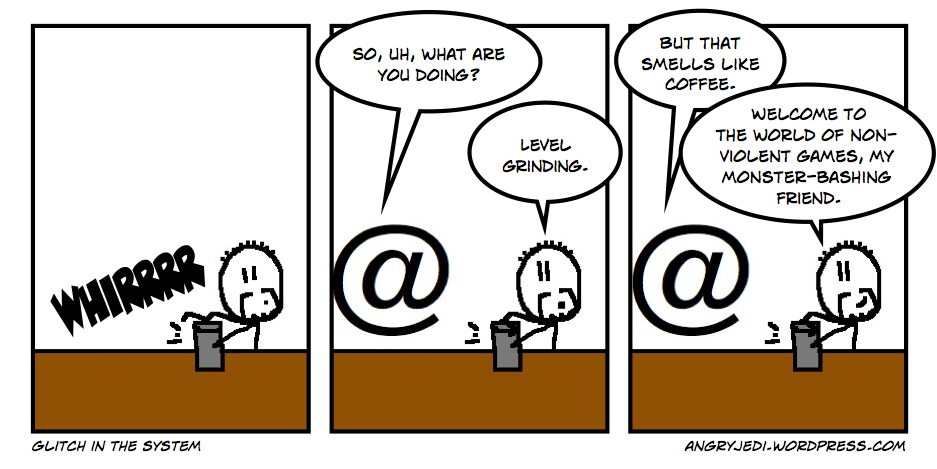
Glitch, brainchild of Flickr cofounder Stewart Butterfield, launched to the public today following an extremely lengthy and well organised testing period. I played the game briefly during testing while writing an article about it and found the experience utterly bewildering. I've had another go, and I still find it utterly bewildering.

The thing that is most bewildering is arguably its most defining feature — its non-violent nature. There is no hacking up wolves to collect 300 pelts for someone in the village. There is no dungeon delving to defeat some terrible great evil. There is no "take on this army of identical enemies singlehandedly, unless you're in a party." No, there's just a world, filled with trees, pigs, butterflies and bureaucracy, and it's pretty much up to you what you choose to do with your time there.

Your pet rock, who introduces the game to you in a tutorial which doesn't really tell you much beyond the basic controls, offers you a few quests to show you what you can do over the course of your first few hours. But beyond that, it's up to you what you choose to get on with and what skills you choose to focus on. Are you going to become a miner? A chef? Someone who talks to animals? There's a wide range of things for you to do — but none of them involve killing things.

The saying goes "you don't know what you've got until it's gone" (or something along those lines) and it's true — it's easy to take for granted that the fundamental play mechanic of the vast amount of games out there is killing things, whether it's dudes, monsters, aliens, zombies or anything else threatening the status quo. As gamers, we're comfortable with that. It's been the core mechanic of gaming since many of the earliest titles. Conflict is inherently competitive, and thus lends itself nicely to being a "game". Non-violence, however, is a more tricky prospect. What's the point of a game if there's no world to save, no princess to rescue and no Big Bad to kick the bottom of?

I'm yet to discover exactly what makes Glitch tick, but there's a lot of people playing who seem to enjoy it, so I'm willing to give it a chance. If nothing else, its non-violent nature should hopefully mean it's free of the sort of people who use words like "noobfags" and "stfu". And the whole "freeform" thing has been working pretty well for Minecraft, so why shouldn't it work for a 2D browser-based MMO platformer where there's nothing to kill? Granted, Glitch is not quite as freeform as Minecraft, though its RPG-like elements (such as learning skills) are stronger. It's not really a good comparison at all, thinking about it, save for the fact that both games are fundamentally pointless but compelling wastes of time that are inexplicably popular with hundreds, thousands, millions of people.

I shall be giving Glitch a bit more of a go over the next few days and weeks. I shall be sure to report back if I do happen to find anything interesting.

#oneaday Day 617: Phase 1 Complete

I've beaten Phase 1 of EA Sports Active 2 and while I may not be all buff and ting just yet, I like to think it's helping. Of course, measuring actual results is more tricky, though a big part of the challenge in getting fitter is the psychological barrier of getting into it in the first place.

I could just step on the scales, but 1) we don't have any and 2) I hate stepping on the scales as it's embarrassing, even when no-one else is around. In my adult life I've never been a slight fellow (ironic, since I was skin and bones as a young kid) and it's always been a bit of a hangup of mine — and all the more frustrating if the good habits you've made a specific effort to get yourself into (exercise, trying not to have KFC every lunchtime, that sort of thing) doesn't appear to have an effect.

When I started doing the running a while back that, combined with some pressups and situps, had a noticeable impact on my body. I'm not sure if I actually lost weight or not (for the aforementioned reason) but my body certainly changed shape. I had a noticeable waist for the first time in ages, and while I still had a horrible big wobbly gut, down the sides it was more noticeable that some of the bulk had gone.

When I started working every day again, the timing meant it was more difficult to squeeze in exercise, so following my 10K run in London back in May (May? I think.) I kind of fell out of the habit, which is why I picked up EA Sports Active 2. I already had the first one on Wii, but I'd heard the second one was much better in terms of how the programme was designed as well as having motion sensors you couldn't accidentally garotte yourself with, unlike the previous game's Wii Remote and Nunchuk combo.

It's challenging — and I'm working on the "Medium" intensity level at present — and there are some exercises which I dread coming up (particularly: foot fires, stride jumps and mountain climbers, aka to other fitness types, inexplicably, "burpees") but doing the activities 4 days a week (sometimes more) is making me feel a bit better about taking positive steps to improve myself, or something. As I say, specific progress is somewhat difficult to measure when you don't like stepping on the scales, but psychological progress is still progress, too — and while I still dread the loading screen for mountain climbers, I find I can get through a set of them without wanting to die quite as much as I used to.

Plus, of course, there's trophies. While in a lot of contexts trophies and achievements bug me, here they're used well to mark milestones in your training, as well as some "fun" ones marking good performance over the long term in some of the minigames. EA Sports Active 2 also really loves progress bars, and as any social game developer will tell you, progress bars are an excellent motivational system. As such, you have a progress bar for how far through the whole programme you are, a progress bar for an individual workout, progress bars for all the trophies, progress bars for your personal goals — it may sound silly but it's one way of tracking progress that you can see — even if it's mostly measuring dedication rather than improvement in your fitness.

From Thursday, I move on to Phase 2 of the 9 Week Program(me). I'm not sure what to expect. Phase 1 was pretty tough at times — I'm wondering what Phase 2 offers over and above this. Perhaps longer workouts? I hope it's not longer sets. 55 mountain climbers in a row is enough to give me a headrush and make me want to lie on the floor for quite a while.