I was chatting with my friends earlier this evening about the matter of achievements and trophies in games. As long-term readers will know, my opinions on these metagame awards that were introduced with the last generation of games consoles have gone back and forth somewhat, but on the whole I feel I'm starting to come down on the side of liking them.
The reason for this is simple: after nearly 10 years of them being A Thing in gaming, a lot of developers are getting the hang of how to use them effectively — and the reasons for using them.
There are, in fact, several reasons for the existence of achievements. From a developer perspective, they provide feedback on just how much people are playing games and what they're doing. This is why so many games have a "started the game" achievement — look at the rarity statistics on PSN and you'll see that there are a surprising number of people who have booted a game up for long enough to add the trophy list to their profile, but not actually started to play it. I couldn't even begin to contemplate what the reasons for doing this might be, but it happens; as an example, the wonderful shoot 'em up Astebreed gives you a trophy for completing the interactive prologue sequence — something you have to do before you can even access the game's main menu — and yet only 91% of players have accomplished this, suggesting either that 9% of players simply turned the game off for some reason or other during the prologue, or were unable to complete it. And I'm not sure that last option is even possible.
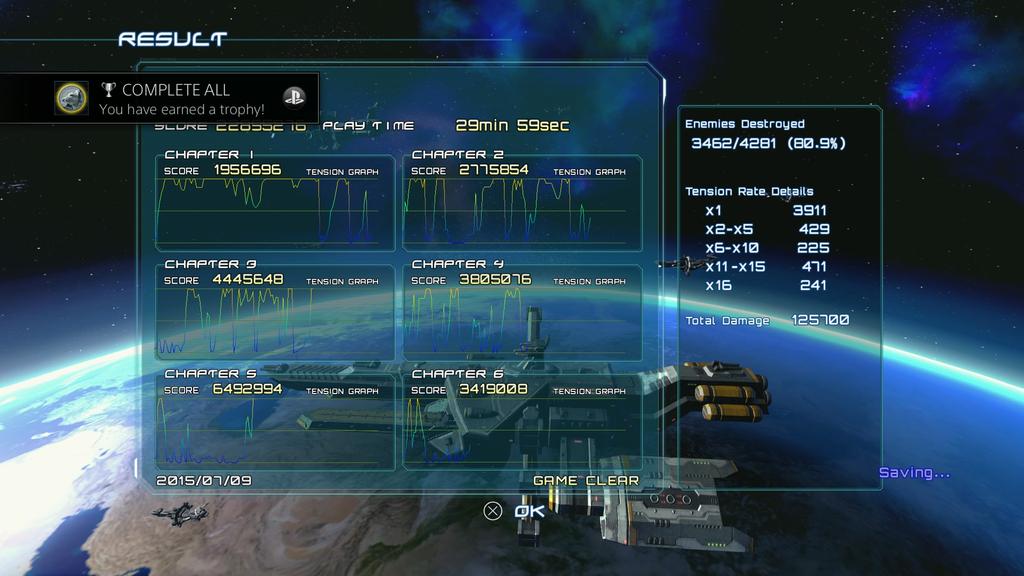
From a player perspective, a well-designed trophy list provides a metagame to layer on top of the existing game structure. They can provide challenges for players to complete and encourage them to explore a game in full rather than simply making a beeline for the credits — and, again, those rarity statistics suggest that relatively few people who pick up any game, regardless of length and quality, make it to the end, which is kind of sad — or suggest new ways to play.
A good example from recent memory that I'm still engaged with is Compile Heart's PS4 RPG Omega Quintet. I have gone for the Platinum trophy in most of Compile Heart's games to date (largely the Neptunia games) because I have a keen awareness of how the developers probably use them for statistics, as mentioned above. I see attaining a Platinum trophy — which for those unfamiliar with PSN is the trophy you acquire when you have achieved all of the other trophies in a game — as a mark of support for the developer; a sign that someone out there cared enough about a game to play it to absolute death. (Omega Quintet's Platinum trophy, incidentally, has a 1.1% rarity rating, which is not altogether surprising as going by my own experiences it's something of a beast to attain.)
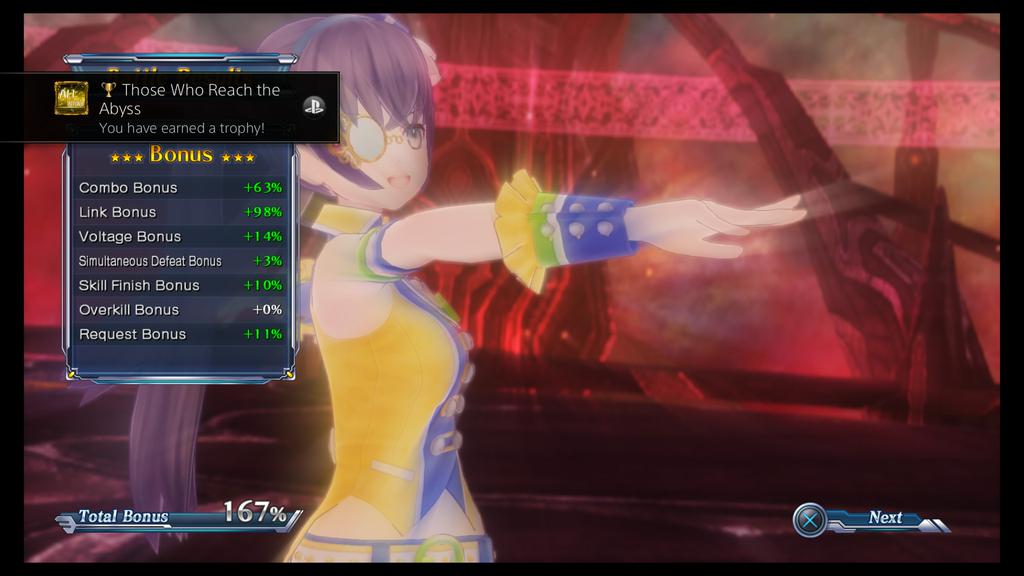
And in Omega Quintet's case, that Platinum trophy really is a sign that you have explored everything the game has to offer, because it's a good trophy list that runs the gamut from "deal 1 million points of damage in a single combination attack" (something that gets significantly easier the further in the game you go) via "complete all the quests" (something which you can miss in a single playthrough if you're not fastidious about cleaning up quests before advancing the story) and "see the True Ending on Advanced difficulty" (having figured out the conditions to do so, of course — hint: get Aria and Otoha's affection levels to 4 to guarantee this) to "defeat Double X" (a superboss who sits at the bottom level of the optional Training Facility dungeon and provides one of the stiffest challenges the entire game has to offer)
The interesting thing about Omega Quintet's trophy list is that by the time I finished my second playthrough (during which I achieved the True Ending on Advanced difficulty) I had only accomplished about 50% of the available trophies. Deciding early on that I wanted to go for the Platinum, I jumped into the post-game (the ability to keep playing the game after you've beaten the final boss and seen the end of the story) to explore what these additional challenges might be.

Nearly 50 hours of gameplay later, I'm still playing, though the end is finally in sight. In those 50 hours, I've beaten the 13-floor Training Facility dungeon, pretty much mastered the game's combat system — the extreme difficulty of the Training Facility encounters, including Double X, demands that you know what you are doing, otherwise you will get your ass kicked, even if you grind all the way up to the level cap of 999 — maxed out the affection values for all my party members, mastered all the weapon proficiencies with Kyouka and have come pretty close with a couple of the others, completed all the sidequests and recovered all the hidden archives. This latter one is particularly interesting, as the archives reveal an absolute ton of story context that isn't made explicit in the main narrative, largely because it's not directly relevant to the main cast's personal stories, but instead provides some interesting background lore and worldbuilding context. You stumble across some of these as you simply explore the main game, but quite a few of them are hidden in post-game content.
In other words, without the trophies to give me a nudge in the direction of this additional content, I might not have gone looking for it. One might argue that the game not necessarily signposting this sort of thing is a problem, but if the trophy system is there — and it's compulsory to use on both Xbox and PlayStation — it may as well be used to push people on to explore things further. Combine that with PSN's "rarity" feature and there's a really nice sense of… well, achievement when you know that you're one of the 1.1% who has seen everything Omega Quintet has to offer.

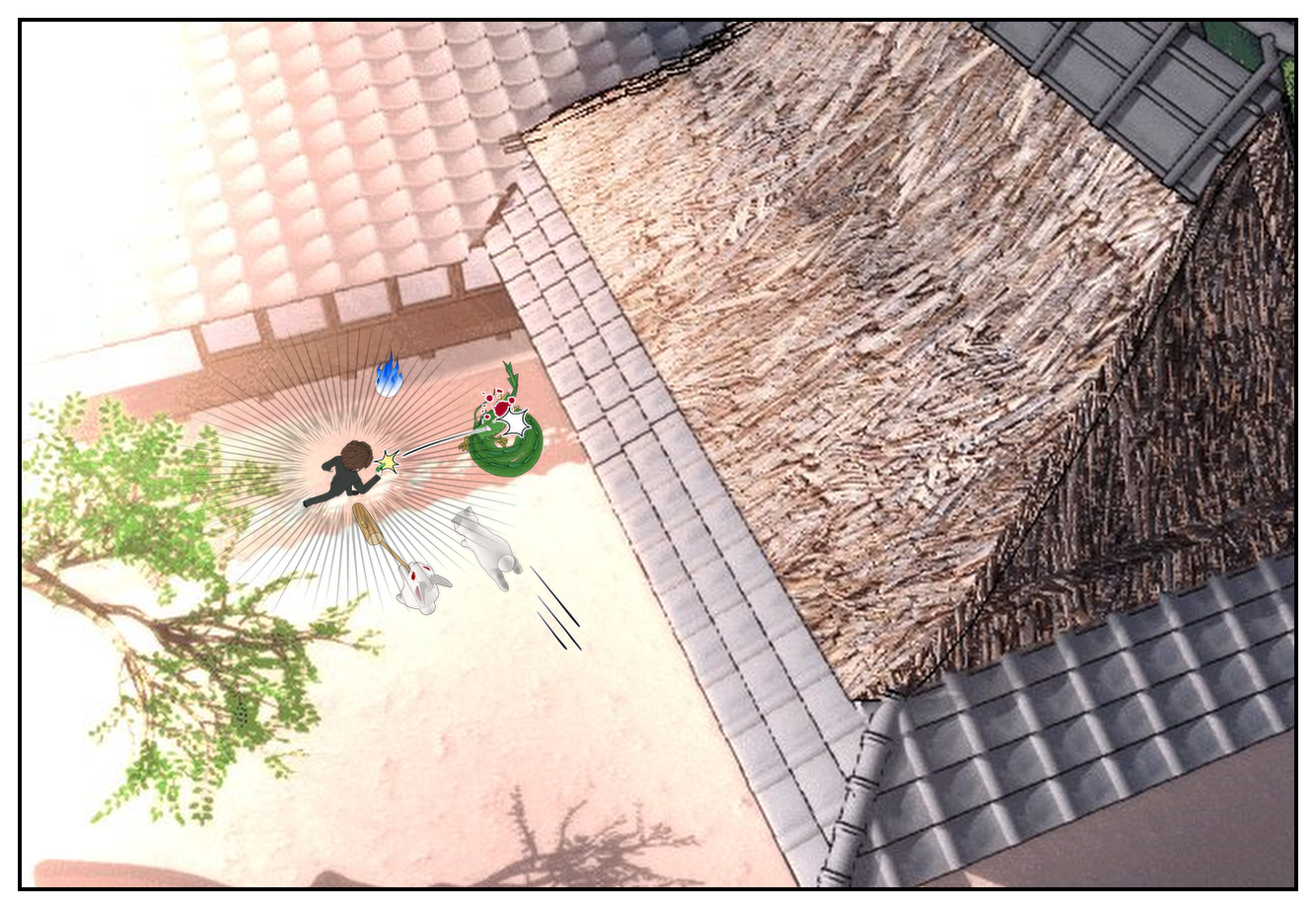
(Just two more trophies left to go: kill 10,000 enemies and get 1 billion approval rating points. I sense that the challenging DLC dungeons and bosses — including the fearsome Banana Demon pictured above — will be my main means of achieving this!)
 One of the best — or worst, depending on your perspective — things about PlayStation Plus is that there are regular deals on a wide variety of games, seemingly almost at random. During these sale periods, games drop to Steam sale-tier prices (i.e. £2-3 for a typical indie game) and consequently make trying some new things out a rather more appealing prospect than it might be under other circumstances.
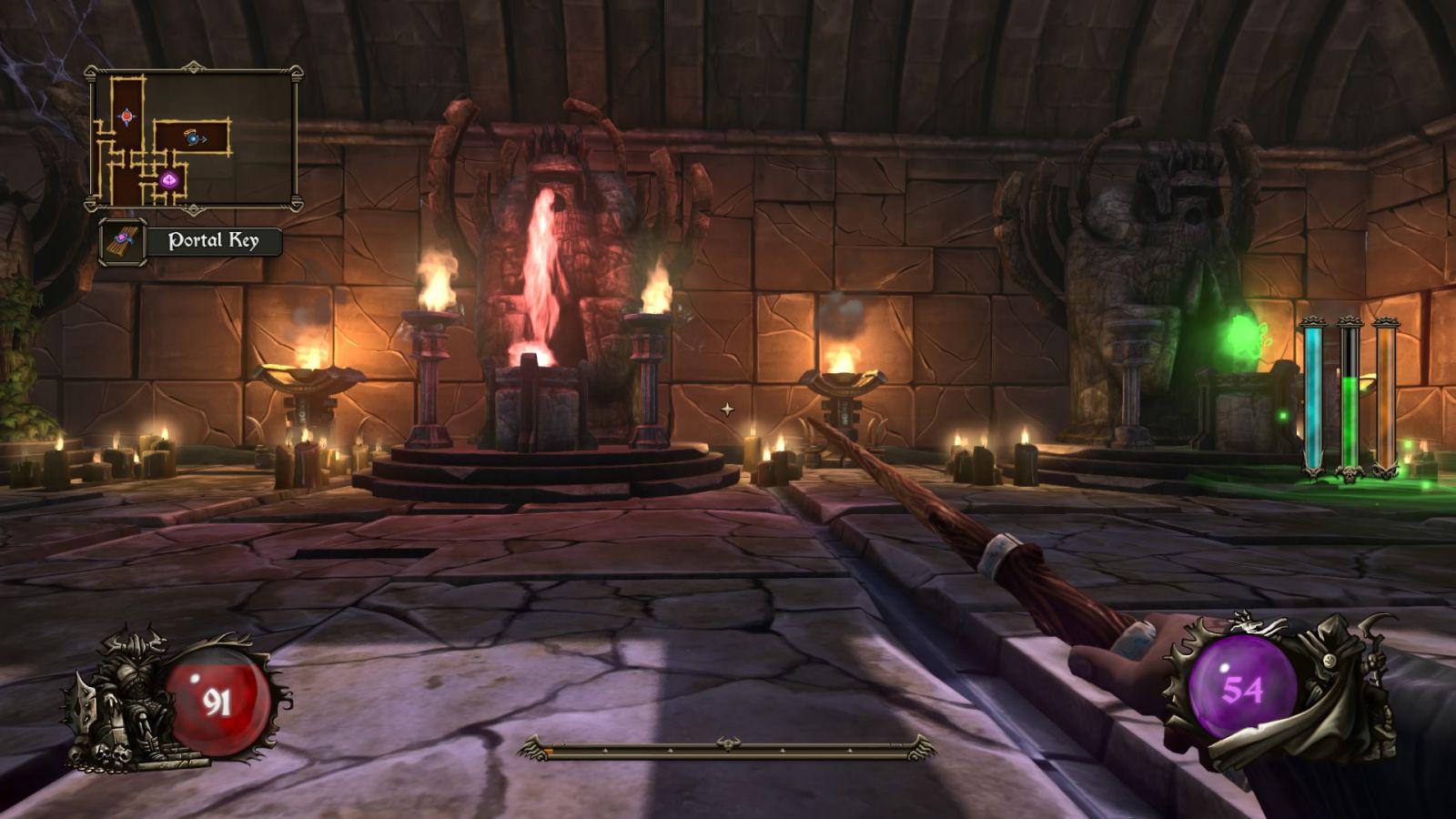
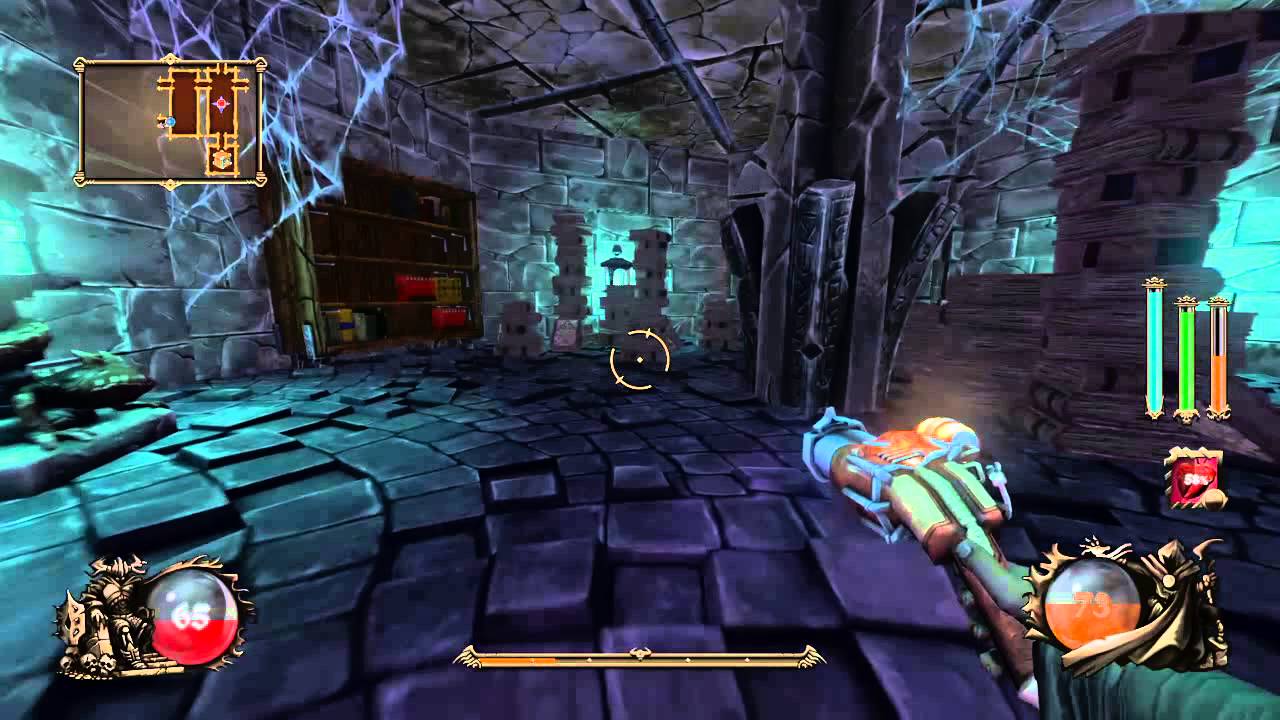
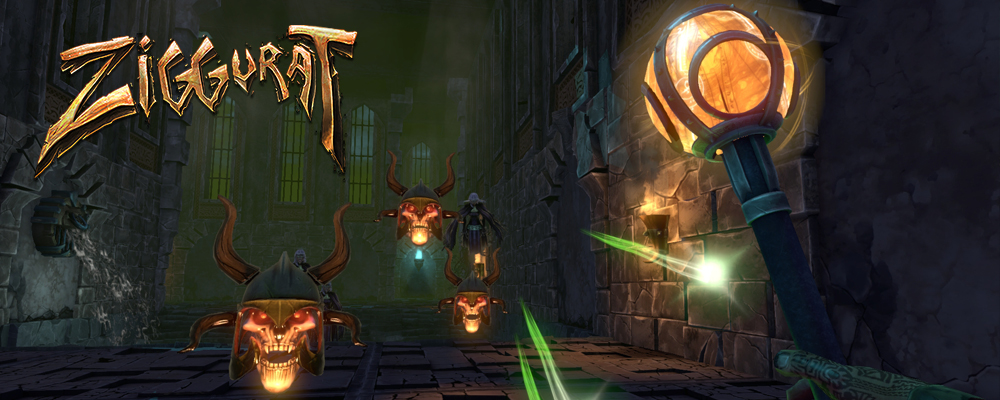 Ziggurat is the latest in the interminable line of "roguelites" out there; that offshoot of the roguelike genre that keeps the "permadeath" and "procedurally generated" parts and ditches the heavy-duty stat crunching and turn-based exploration in favour of something a bit more immediate, accessible and, in many cases, action-packed. Sometimes it works better than others; procedural generation is something that is very impressive on paper, but in practice it can often lead to levels that are chaotic messes with no real sense of "design" about them, just some tiles splattered around the map at random. This sort of thing is fine in an ASCII roguelike, but less fine in a game with actual visuals.
 Although I'm not pretending to have any real understanding of social interactions in general — in fact, as I often mention, I go through life feeling like I really do't know what to do in a lot of "everyday" social situations — I find the way little communities and cliques develop to be fascinating, both to observe from the outside, and to be a part of from within.
 Interesting indie game time? Interesting indie game time.


 It occurs to me that I haven't yet written about Tentacle Bento, a card game I picked up at PAX but have only recently had the opportunity to try for the first time.


 A little while ago, I
 One of the highlights of the current anime season for me right now is Monster Musume: Everyday Life with Monster Girls (typically shortened, as appears to be the custom nowadays, to MonMusu).

 Protagonist Kurusu is a remarkably tolerant individual who takes most things in his stride — and he proves himself early on to be a dependable, reliable sort of person who stands up to people he feels are "wronging" those that he cares about. The main concept of MonMusu is, of course, a thinly-veiled racism allegory, and Kurusu represents an idealised interpretation of what a truly tolerant, inclusive sort of person should strive to be. He doesn't treat the monster girls any differently to how he would treat human girls; he doesn't refer to them as "monster girls"; he's patient and he explains things to them when they don't understand — which is pretty often, as you might expect. But he's not perfect, either; he's a young man who has no experience with women (and even admits outright that he's a virgin in an early episode) and consequently has hormones going pretty crazy in his body — particularly as the girls engage in provocative behaviour or fight over his affections. He's a good protagonist for this type of show, in other words — and mirrors the journey the audience goes on as they overcome the initial hurdle of trying not to judge the monster girls by their "monstrous" aspects and instead see them as just people.


 In between the "current" anime shows I've been trying to keep up on this season, I've been gradually working my way through High School DxD (no, I still don't really know what the DxD is for — likely something to do with devils) and like it more with each episode.