Since my post a few days ago about getting into manga, I've been well and truly bitten by the bug, as it were, and I'm also about to branch out into my first light novels, which we'll come onto a little later.
So far, I've read the first volume of Monster Musume, Is It Wrong to Try to Pick Up Girls in a Dungeon? (better known as DanMachi) and High School DxD, and have subsequently picked up the subsequent five volumes of Monster Musume and two more of High School DxD. (The later volumes of DanMachi have proven surprisingly difficult to track down, a fact not helped by the fact that Amazon has its listings for the light novel and manga versions all squished together into a not-particularly-clear form.)
Longtime readers or those who know me will recognise all of the above titles as series that I've watched the anime of, and this was a deliberate choice. I was initially hesitant to do so, but it turns out that reading the manga having seen the anime (or, I imagine, vice versa — I haven't done this way round yet) doesn't particularly diminish the experience any. In fact, in many cases the manga, being slightly longer in form than your typical anime's 13 20-minute episodes, goes into more detail than its animated counterpart, often with new story threads, deeper exploration of characters and sometimes even a different overall tone.
Light novels, meanwhile, are something I haven't explored at all, and until recently I wasn't even particularly sure if there was a distinction between them and, you know, just a plain ol' novel. "Light novels" are very much a Thing in Japanese popular culture, though, with many popular series starting as a light novel and subsequently being adapted into other forms of media such as manga, anime, video games and visual novels, so I was curious to investigate this particular part of culture.
I haven't read any yet, but I have picked up two volumes of Sword Art Online: Progressive, a retelling of Sword Art Online's original Aincrad arc, focusing on more personal stories and a single "floor" of the game at a time. It's an ambitious project, considering the Aincrad arc supposedly unfolded over the course of several years and 75 floors — the first two volumes just cover floors 1 and 2 — but I'll be interested to see if it comes to fruition, plus the Sword Art Online anime drew some criticism from certain quarters for rushing through the narrative of the original light novel it was based on, so I'll be interested to see the story retold (and tweaked a bit, from what I understand) from a new perspective.
Anyway, if you were wondering, a "light novel" appears to be the Japanese equivalent of young adult fiction: relatively short works, often illustrated, but primarily text-based rather than the visual nature of manga. I'm interested to dive in; it's actually been quite a while since I've read any book (i.e. one with words rather than one with pictures and speech bubbles — not that there's anything inherently "inferior" about that format) so this will be a nice return to form if the Progressive novels prove to be a compelling read; I used to absolutely devour books, but for one reason or another, I've not really found a lot of time for reading in the last few years.
Ironic, really, considering the number of words I've typed on this here blog over the last few years — including a substantial number of fiction prose — but perhaps this will give me some ideas of my own!
There was a bit of salt being spilled earlier today on the subject of translations and localisations. It's clearly a topic that people feel very strongly about so I'm not going to give a "judgement" one way or the other on it, simply share my own thoughts.
The discussion surrounding this issue came about as a result of Gaijinworks' recent release of Class of Heroes 2 on PSP. Gaijinworks is a company that specialises in localisations of Japanese games, and is made up of, among other people, former Working Designs staffers. Working Designs was a company from the PS1 era who also specialised in localising Japanese games.
The use of "localisation" rather than "translation" is important there, because the two terms refer to two distinctly different schools of thought on what to do when bringing non-English material into English-speaking territories. A translation is exactly what it sounds like: it's taking the original text and, as literally as possible, reproducing it in another language. A localisation, meanwhile, takes the essence of the original text but takes varying degrees of artistic license with it in order to make it more accessible to people outside of its original audience.
The furore over Gaijinworks' localisation of Class of Heroes 2 largely stems from the fact that, in the eyes of many people who prefer more literal translations, the team had taken unnecessary liberties with the original text, even going so far as to put in completely incongruous ability names for certain character classes — the most egregious being the Samurai class' use of "Pimp Slap" and "Hammer Time". The whole thing would have probably died down a bit quicker were it not for whoever runs Gaijinworks' Twitter account turning on the snark and speaking to disappointed customers in a tone that… wasn't entirely appropriate, shall we say. Consequently, the company has done a bit of damage to its reputation among fans of Japanese games; on the one hand, both Working Designs and Gaijinworks are known for their talent in localisation rather than translations, so people should have perhaps expected something like this to happen; on the other hand, however, responding to criticism with snark and the suggestion that people learn the original language (sure! It's just that easy!) isn't the best way to recover an unfortunate situation.
But I don't want to dwell on that too much, because I'm sure there's still plenty more arguing to do there — and anyway, to be perfectly honest, localisation that takes some liberties doesn't really bother me all that much, so long as the essence of the original text and characters is left intact.
A good example is the Ace Attorney series by Capcom. In Japan, these are set in Japan, known as Gyakuten Saiban (Turnabout Trial) and star a character called Naruhodou Ryuuichi. In the West, they are set in the USA (albeit a version of the USA where there are traditional Japanese villages randomly scattered around the place) and their protagonist is called Phoenix Wright. There are all manner of other changes around the place — and the games aren't any weaker for it. In fact, Westernising it made it a lot more accessible to a much wider audience — so much so that it's widely renowned as one of the best mainstream adventure game/visual novel series in recent years.
The reason a lot of companies choose to localise rather than translate is to do with things that… well, simply don't translate. In the cast of Ace Attorney, the protagonist's name "Naruhodou" is based on the Japanese word "I see" — something that your average, non-Japanese-literate Westerner wouldn't know. Making his surname "Wright", though, opens up all sorts of potential for punning fun — potential that the games seize at every opportunity. Right, Wright? Or should I call you Phoenix Wrong?
Then there's things like the fact that Japanese puns work in a completely different way to English ones; take Squid Girl, for example. In the Japanese original, Squid Girl ends all her sentences with the words "de geso" instead of the more common "desu" (roughly, "it is"), the former being a bastardisation of "desu" that incorporates the Japanese word for "squid legs". Likewise, all the episode titles are expressed as questions, only using the word "ika" (squid) at the end of the sentence rather than the particle "ka" which denotes a question. Because both of these puns rely on Japanese grammar and particles, which are very different to English, it's simply not possible to translate these things directly. So instead we get a localisation, where Squid Girl speaking in English instead takes the English approach to punning, shoehorning in references to squids and ink at every opportunity. Squidn't that ink-redible?
Ahem. Anyway. The point is, in some circumstances, localisation works well and helps to expand the audience of something beyond what it would have if it remained more true to the original. This is particularly true when it comes to cultures that are very different from one another — such as, say, Japanese and American or English cultures. People like to be comforted by the familiar, and making something more comfortable is a sure way of getting people who might not have otherwise given a particular game a chance to actually try it out for themselves.
On the flip side, localisation loses some "authenticity", and consequently isn't entirely appropriate in all circumstances. Take the Persona series, for example; its third and fourth installments in particular are heavily based on Japanese culture, particularly surrounding teenage and high school life. While there are similarities between Japanese and Western high-schoolers, there are enough differences — particularly with regards to things like how people address one another — to make it worthwhile using a more literal translation. Not only does it make the experience more authentic for those who wish to use it as a means of immersing themselves in a culture they find fascinating, it also provides a very effective means of learning about that other culture from scratch.
Some games take this idea of education and really run with it. Visual novel Steins;Gate, for example, includes an in-game glossary that explains everything from otaku terminology to Japanese cultural norms as you work your way through it — the first instance of a non-English term or reference is highlighted, providing the player with the opportunity to look it up, and from that point on, it simply uses the term as it would be used in Japanese. In this way, you familiarise yourself with everything from elements of Japanese popular culture to ways in which people address one another — and again, it's a fascinating way of learning something while you enjoy the story.
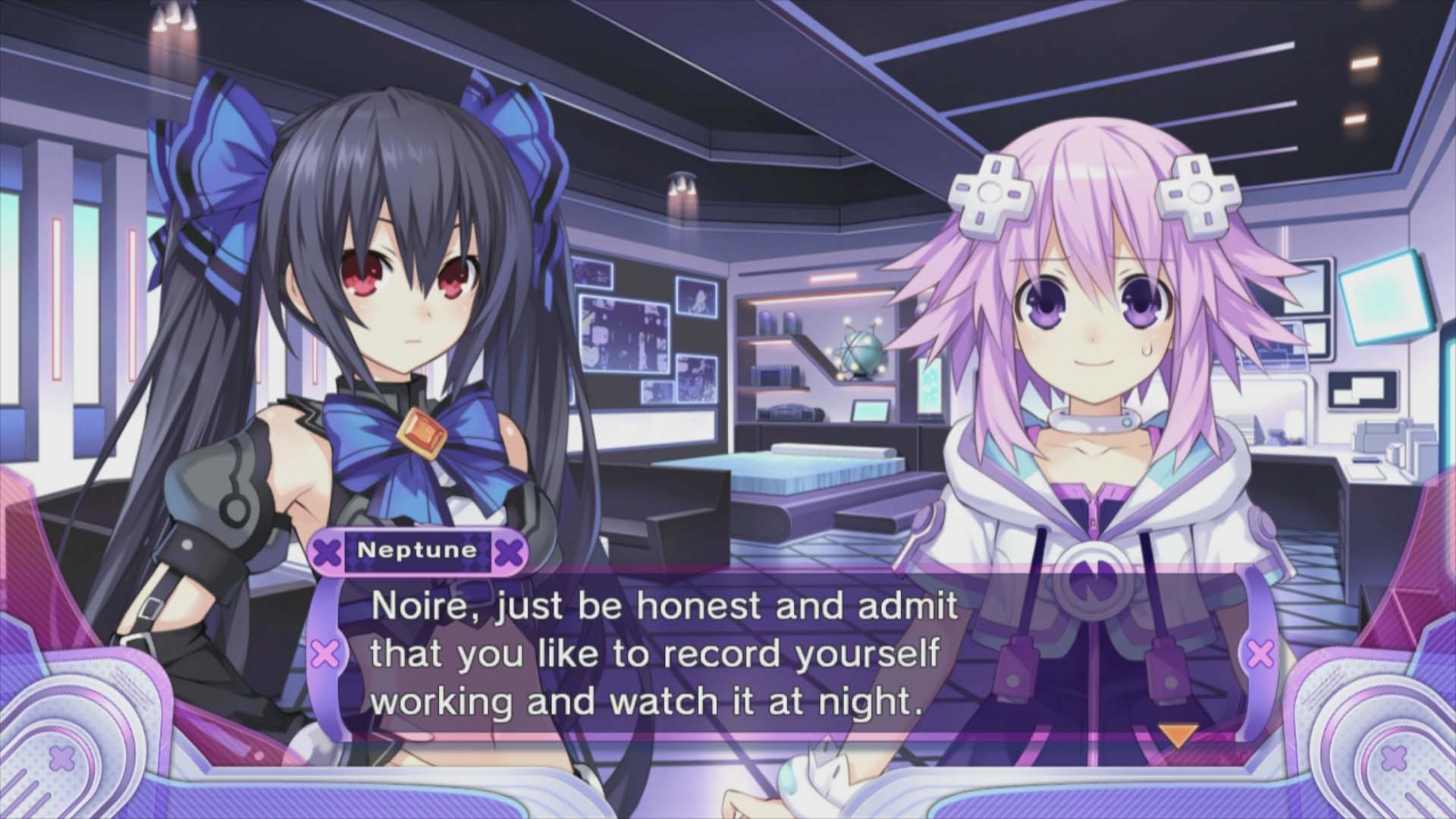
And then there are situations where either approach could work. A good example would be something like the Hyperdimension Neptunia series, whose English scripts over the years (initially by NIS America, now by Idea Factory International) have had a somewhat mixed reception from longstanding fans — particularly those familiar with the original scripts. There are some changes that just seem to have been put in for the sake of a quick pun that wasn't present in the original — the English version's use of "CPU" (Console Patron Unit) instead of the Japanese version's "megami" ("goddess"), for example, as well as Neptune's use of distinctly Western-style slang. Personally speaking, this sort of thing doesn't bother me too much — it works as a pun, although arguably it's making a bigger deal of the whole "look! all these girls are games consoles!" thing than the original Japanese script did — but there are some people who get pretty upset about this sort of thing.
I guess what we can conclude from all this is that, unfortunately, there is no one single optimal way to handle these things. Localise things too much and you risk alienating the purists who want something that is as true as possible to the original text. Conversely, translate something too literally and you either get something that reads very awkwardly in English, or something that isn't entirely accessible to someone who isn't already familiar with various aspects of Japanese culture. The ideal situation would appear to be somewhere in the middle, but very few people seem to get that balance absolutely right, and doubtless we'll continue to see salt being spilled any time things tip a bit too far in one direction or another.
Me? I really don't mind either way. I relish the opportunity to learn more about a culture I find fascinating through more literally translated works, but equally I very much enjoy a good localisation that remains reasonably true to the tone and intention of the original; in the latter case, it might perhaps help to think of it as a "remake" of sorts rather than a translation. Or it might not, in which case you can feel free to rant and rave about it as much as you like on social media. More often than not, though, I'm simply happy to have these games (and anime series, and manga series, and visual novels…) brought to the West in my native language so that I can enjoy them in some form, even if it's not always quite the exact same as the original.
In response to The Daily Post's writing prompt: "No, Thank You."
"If you could permanently ban a word from general usage, which one would it be? Why?"
I'm going to cheat a little here and not talk about a specific word, but more a general style of communication. There are numerous words that could be used to represent this style of communication, but not one that particularly stands out more than others, so I'm going to talk in more general terms.
As most of you know, the rise of the Internet over the course of the last few decades has made it easier than ever for people to communicate with one another. And with that ease of communication has come a relaxation of the rules of formality when communicating. In some ways, this is a bit of a shame, because the distinction between formal and informal use of language can often send implicit signals to the people in an interaction as to what is and is not appropriate to talk about. But in others, I'm actually very much relieved about this, because formal language is so mind-numbingly impersonal it's borderline offensive to be confronted with.
I'm thinking particularly in terms of "professional" email messages here, and I'll give you an example of the distinction. I've been doing some freelance work for a company for a while. When I started, the company was very much in its infancy, with relatively few employees and a single point of contact for the work I was doing. Said point of contact was a delightful young woman who was always chatty, helpful and charming whenever we spoke to one another. It was a pleasure to interact with her, even though for the most part we were only ever exchanging standard pleasantries and details of work assignments. But just little things like her squealing enthusiasm for me when I told her I was getting married, or chats about the extremes of weather we've seen this summer — all of those things were nice, and gave me a feeling of being "connected" to her and, by extension, a feeling of "belonging" to the company as a whole, despite simply being an outside contractor.
A few weeks ago, my former contact was replaced as she (presumably) moved on to other duties in the company as it has started to grow. She's still with the company and tends to get copied in on email messages, but I haven't heard a peep out of her since. Her replacements are like robots. And I mean that pretty much literally — every message I get from them absolutely stinks of copy-and-paste, email-by-template communication… largely because they clearly are copy-and-paste emails-by-template, and it's easy to tell this due to the fact that there are the exact same words in each one.
There's a good reason for this sort of thing, of course; as companies grow and have to communicate and collaborate with more and more people, it's not considered to be particularly efficient to manually type out each and every message. So in come the templates, the form letters, the copy-and-paste boilerplate text.
Efficient it may be, but that feeling of "connection" is gone as a result. I don't know these people, and even having sent messages to them in the same tone as I spoke with my previous contact, they've made no effort to engage with me in any way; I may as well be downloading assignments from an automated message board.
This is frustrating enough by itself, but combine it with the passive-aggressive tone that business communications tend to take — all "gentle reminders" and "looking forward" to something you haven't done yet — and it's not something that I feel is particularly conducive to a good working relationship.
It doesn't really bother me all that much, to be honest; the company in question is a means to an end (said end being "getting money") for me right now, and ultimately a personal connection with it isn't all that important to me. I just find it a little sad that what was once friendly, personal interactions between two people now feels like sending commands and requests to an automated system. You're human beings; act like it!
So, to (sort of) answer the original question, then: I would ban business-speak, form letters and email templates from general usage and insist that everyone communicate with everyone else as an individual. It would help make the world just a little bit friendlier as a result, and I feel that would work wonders for making people feel more positive about all sorts of things.
One of the highlights of the current anime season is Himouto! Umaru-chan, a rather odd little show that takes the Squid Girl approach of splitting each "episode" up into several shorter little vignettes in which nothing really happens, but it's entertaining nonetheless.
Umaru (as I shall refer to it hereafter for simplicity's sake) is a show that exemplifies the Japanese concepts of honne and tatemae, these being a person's "true feelings" and their "public face" (or, literally, "facade") respectively. Title character Umaru is the very model of beauty and respectability when she's out in public: she's the darling of her whole school, always gets the best grades, is good at sports and is respected by everyone. Back home, however, she's a lazy slob who sponges off her long-suffering brother and sits around in her hamster hoodie playing games and drinking cola all day.
Umaru highlights this contrast by literally changing the character's appearance when she switches from one "face" to the other. When she's out in public being the beautiful and respected Umaru-chan, she's the epitome of moe — long, flowing hair; big, sparkling eyes; a calming, gentle voice — but when she gets back home she immediately becomes represented by a short, aggressive, chibi character that is cute in an entirely different way to "full-size" Umaru. Her behaviour and mannerisms are completely different, her voice becomes louder and more forceful, but it's abundantly clear that this is when she's at her happiest.
As the series progresses, Umaru reveals a third persona: that of the elite gamer "UMR". UMR is something of a balancing act between the two extremes she had previously exhibited up until this point; she's realistically proportioned and acts like a normal human being, but is passionate and enthusiastic about gaming — not to mention in possession of some serious skills. UMR is by far the most naturally likeable of all Umaru's personalities since she tends to keep things fairly low-key — she even dresses considerably more conservatively than her "ideal schoolgirl" persona — but is also a lot more honest about who she really is.
The idea of the necessity of putting up a facade for the rest of the world to respect you is a defining characteristic of the series, and it's not just Umaru who exhibits this. Umaru's friend Ebina, for example (above), is an attractive, busty young girl who draws the eyes of everyone around her, but she's afraid to open her mouth in case her country bumpkin dialect slips out, as it occasionally does when she's feeling at ease and comfortable. Likewise, recurring character Kirie is completely unable to approach moe Umaru at school, despite wanting to, but she manages to bond with lazy slob Umaru — whom she actually believes to be Umaru's younger sister, just to complicate matters — over games, cola and laziness.
Over time, these characters all become better defined, and their different personas start to merge into one another. I'm interested to see whether or not the series intends to "say anything" with this concept by its conclusion, or whether it's simply going to continue using them for comic effect. Either way is fine by me; Umaru is not the kind of show that particularly feels like it needs to have a strong moral message — though I won't deny it will be somewhat satisfying to see the precocious little slob version of Umaru get her comeuppance for taking her poor brother for granted by the end of the run!
Regardless of how it ends, Himouto! Umaru-chan has been a really fun series so far, and I hope there's more in the future.
For today's post, I'm going to raid my Retrospring inbox for questions, then answer them. (I'll be posting these answers on Retrospring as I go, too, so if you follow me on Twitter and have read these already, you can safely skip this post.)
Let's begin!
Is chivalry dead?
I wouldn't say it's "dead" per se, but I do feel like it's almost frowned upon in today's hyper-sensitive culture surrounding gender. Acts that one person believes to be "chivalrous" can be interpreted as "benevolent sexism" by another, so it feels almost like chivalrous acts are being discouraged — at least when it comes to traditional things like a man holding the door open for a woman, "ladies first" and all that sort of thing. Personally speaking, I think this is a load of old tosh, but in the interests of keeping people quiet I just try and be a decent sort of chap to anyone, regardless of gender.
Ever regretted something you've done even though you know it's really just a small and unimportant thing?
Oh yeah! Many, many times. As I sit here I'm having trouble thinking of a specific example, but yes, most definitely. With the anxiety-riddled way in which my mind works, too, I inevitably end up spending hours or even days worrying about whether or not I should have done that thing.
I guess a good example would be from back before I started doing Slimming World; a hefty proportion of my weight gain could probably be attributed to simply not knowing when to stop, and consuming, say, an entire bag of sweets even though I'd maybe start feeling a bit queasy halfway through the bag and should probably have stopped then. I regretted doing that every time it happened, because I could see the consequences. It took a long time to pluck up the courage to admit it was a problem and finally do something about it, though. Now I'm 4.5 stone lighter than I was when this was an issue, and I certainly don't regret that particular decision.
What are some of your favorite Japanese Role Playing Games?
I really have trouble picking favourites, as I tend to have a positive outlook on whatever I'm playing, and it's pretty rare I will abandon something completely — I usually try to "see the good" in things where possible, because that's much more fun and rewarding than writing something off immediately. As a result of this, I've become a fan of many games that have either flown under the radar or been poorly reviewed by the media.
Favourites off the top of my head include the Hyperdimension Neptunia series, Tales of Xillia and its sequel, Criminal Girls, Omega Quintet, Final Fantasy XIV, ZHP: Unlosing Ranger vs. Darkdeath Evilman (really must beat that one day) and… oh, too many to list.
In games where you have the option of playing Good or Evil, which side do you generally pick?
Good. Always. I find it way too difficult to play Evil; I get emotionally attached to things very easily indeed, and I feel really bad mistreating them, even if they're just a collection of pixels. The only time I ever really successfully played "evil" was when I worked through the Dark Brotherhood storyline in Oblivion. Even then, once I was done with that and the Thieves' Guild's quests, I couldn't resist embarking on a journey of redemption and was pretty much a paragon of virtue by the time I was finished with that game.
How do you feel with ecchi in anime when it's not central ?
I like it! I'm a red-blooded male and I enjoy some tits and ass as much as a typical red-blooded male can be expected to. I feel ecchi is most effective when it's incorporated as part of a work's overall aesthetic, though, rather than just dropped in for the sake of a quick panty shot just to say there's a panty shot in there. Senran Kagura is a good example, though that's a game, I know: there, the ecchi is simply part of the game's overall look and feel, and after spending some time with the game it's simply What It Does.
Would you rather talk online publicly or privately?
I can't really give a straight answer to that one, because it's different for different situations. I talk about things privately with my friends when I don't want to "go public" with something, or if it would be inappropriate, unprofessional, a breach of an agreement or outright illegal to do so. But I also talk about things publicly, because that's one of the main ways you meet new people and find out more about them on the Internet. Without talking about things publicly, I wouldn't have made some of the great friends I've made on the Internet over the last few years.
Ever felt like pretty convincing evidence is staring you straight in the face but you still fervently deny whatever it is the evidence is pointing at?
I'm sure there are plenty of examples of this, but admitting what they are wouldn't be fervently denying them now, would it? Human beings are stubborn creatures; when we get an opinion on something, we sure as hell don't like to change our minds about it.
DO YOU LIKE TO CYBER-TEXT?
Sure. The written word can be a powerful, uh, stimulus. To the… imagination. Yes, imagination.
Do you own any collector/premium/limited editions of things you like?
Yeah! I didn't used to bother with limited editions, but since getting into Japanese games and anime, I've been much more inclined to pick up special editions where possible, I think perhaps because I'm aware these things are "rarer" by their very definition of being more niche interest than, say, your Assassin's Creeds or your Call of Duties. I'm enjoying being a collector of these things, and I proudly display them on my shelf at home. They're a conversation piece as well as being something that brings me comfort, as strange as that might sound.
All right, I think that'll do for now. If you want to ask me random stupid questions now and again, pay my Retrospring profile a visit here — you can even ask questions anonymously if you want!
Whew, that got pretty heated, huh? I make absolutely no apologies for yesterday's post: it needed to be said, and I stand by every word of it. To reiterate: if you don't like ecchi content in your games, that's absolutely A-OK. The second you start branding people who do like ecchi content in their games as paedophiles, though, that's when you cross a line from "opinionated person" into "total cunt".
I'm really disappointed to hear of the number of NeoGAF bans that have resulted from the article I mentioned yesterday. (Still not going to link to it.) Quite a few friends — and quite a few new acquaintances — all found themselves banned simply for expressing dissent or dissatisfaction with the article, often in a polite manner. And no, that's not just excuse-making — they really were polite about it. More polite than I was yesterday, anyway.
I've never been a member of NeoGAF. Not through lack of trying, though every time I have tried, my email address hasn't been "good enough" for them to allow me in, whatever the hell that means. In one particular instance, it took nearly two years for my "application" to be rejected; I didn't try again after that.
If it hadn't been Omega Labyrinth, some other game would have been the victim of the latest round of outrage — and, it has to be said, likely a beneficiary of a ton of awareness it wouldn't have had otherwise, so it's not all bad.
NeoGAF is regarded by many as the de facto gaming community online. It's where all the game journalists from the mainstream publications hang out, it's where game developers and publishers hang out — in short, it's a huge, centralised place to talk about games. Or at least, it should be: in the last few years, however, there's been an increasingly tight leash put on exactly what is and is not acceptable to talk about there — and, relevant to what we've been talking about, a lot of the stuff that is outright banned from discussion falls under the Japanese gaming umbrella.
Trouble is, from what I can tell as an outsider to the overall community, there is pretty much no rhyme or reason to what is and is not acceptable. Senran Kagura is acceptable, it seems — or, at least, it was; a significant number of participants in the long, active Senran Kagura thread got banned as part of this latest nonsense — but something like Criminal Girls is not. Japanese games are the only games that appear to be subject to this much scrutiny; big Western games are discussed without any issues whatsoever, regardless of if they have any sexual or violent content in them.
I don't want to dwell too much on NeoGAF because, as I've already said, I'm not a member there and so cannot comment with authority from the perspective of an actual community member. What I do want to talk about, however, is the broader problem that NeoGAF's situation and yesterday's debacle really highlights: the fact that it's deliberately (and, I'd argue, maliciously) creating a divide between different "strata" of people who enjoy video games. In other words, if you like one of the "approved" games, you're absolutely fine; you can continue discussing games and gaming culture as much as you like. But if you like one of the "forbidden" games — regardless of the fact that these games are not illegal, are not banned and are sold at retail — then your opinion is, it seems, automatically invalid; you're not welcome to discuss it in the Internet's equivalent of "polite society" and are instead forced underground to find cliques and subcultures who will accept you for your tastes, rather than everyone being in a happy melting pot respectfully exchanging opinions and learning from one another.
Dungeon Travelers 2 was the last game to come under the microscope for being responsible for all society's ills. Unfortunately for the outrage brigade, it turned out to actually be a really good game, too.
As I've argued before both here and over on MoeGamer, this situation does a lot of creative works an enormous disservice. In my last ever JPgamer column at USgamer, I commented on the fact that a lot of the games that are habitually branded as "creepy" (or worse) by mainstream critics actually tick a considerable number of the boxes that these people tend to want to see as evidence that gaming is "growing up".
Female protagonists? Or at least women in important positions with regard to the narrative? Sure; check out the Neptunia series, Omega Quintet, Criminal Girls, the Agarest series, Akiba's Trip, Monster Monpiece, Moe Chronicle, Demon Gaze, Dungeon Travelers 2.
Unconventional storyline that isn't simply "solve all your problems by punching/shooting/swording them to death"? Sure! Check out the Atelier series, Recettear, the Ar Tonelico series and plenty more.
Ambitious narrative themes? Sure! Take a look at The Witch and the Hundred Knight (coming soon to PS4!), Time and Eternity, Senran Kagura, Criminal Girls, Ar Tonelico…
You get the idea: these games don't get anywhere near enough credit and are, more often than not, either ignored or derided by people purely on the grounds that they're open and up-front about — in most, not all cases — wanting to indulge in a bit of light-hearted, cheeky teasing as part of their overall aesthetic. In some cases, the ecchi content is even used genuinely effectively to depict the growing relationship between characters; Time and Eternity and Demon Gaze were both particularly good in this regard, reflecting the protagonist's sexual frustration and the growing relationship of trust and love between the player character and their main quest-giving "contact" Fran respectively.
Now, as Brad Gallaway wrote in his absolutely exemplary review of Dungeon Travelers 2, "people who are allergic to skin-heavy content might have a hard time getting past it to enjoy the game underneath. And honestly, that's all right. I've always said that not every game is right for every person, so bouncing off of Dungeon Travelers 2 for that reason alone would be totally understandable." This is the point that appears to be most frequently missed: games are not always for everyone. Sure, there are plenty of box-ticking focus-grouped triple-A games out there that are designed to appeal to the broadest possible demographic: they have to, because they cost an absolute fortune to make, so they'd better sell through multiple millions of copies to prove all the developers' hard work wasn't for naught.
I was specifically forbidden from even mentioning Monster Monpiece during my time at USgamer because of its provocative artwork — despite the fact that it's a really interesting collectible card game.
But here's the important thing: not every game is like that, nor should it be. Games with ecchi content are designed for a specific audience — and that audience cannot simply be defined or written off as "horny teenage boys", as it usually is, though they are certainly part of it. In reality, the market for otaku games is male and female; young and old; straight and gay; trans and cis; and made up of pretty much each and every race, nationality and religion. The one thing they have in common? They like what they like. Simple as that. And these games are designed to push their buttons without caring what people outside that existing niche think of them. And that's absolutely fine.
Tastes in art are complex, fluid, ever-changing, and one person can be into lots of things. You can enjoy high-class art and the most lowbrow of entertainment, and I know plenty of people who do. Likewise, you can also choose to enjoy just high-class art or just the most lowbrow of entertainment, or something middle-of-the-road. In the world of games, you can be someone who plays every "walking simulator" out there and believes they're the future of interactive entertainment. You can be like my Dad, and only ever play Microsoft Flight Simulator. You can play nothing but hidden object adventure games. You can be someone who just plays Call of Duty with their friends on weeknights. You can be someone who has invested a thousand or more hours into Dota 2. Or you can be someone who enjoys games where anime girls have breasts and flash their panties.
Or — and here's how you get the richest possible experience from one of the most exciting and complex forms of creative media in the world in 2015 — you can be into multiple things, and you can be open to new experiences. You don't have to like everything, and you almost certainly won't. That's all absolutely, completely and utterly fine; the diversity in tastes is one of the best things about modern gaming, and the fact that month after month, all manner of different tastes are specifically catered to by developers and publishers is absolutely brilliant.
I maintain that anyone who hates Neptunia needs far more joy in their life.
What's emphatically Not Okay by any stretch of the imagination is, as we've already said, shaming people for what they are into, regardless of what it is. Don't like anime panties? Fine. Don't throw horrible names at people who do. Don't like Gone Home? Also fine; likewise, don't throw horrible names at people who do. Don't like Call of Duty? Also fine… you get the idea, no? To sum up: don't be a total cunt.
A little respect goes a very long way. And gaming culture as a whole is not remembering that fact right now, and it saddens me greatly. Let's all try and do our bit to make our wonderful medium a little bit better for everyone, shall we?
Earlier today (or possibly yesterday, I think), a former colleague posted a piece on a site I used to work for bemoaning, not for the first time, the amount of "ecchi" content in modern Japanese games, particularly dungeon-crawling RPGs. (I'm not going to link to it.)
The piece did have an interesting point to make, which was to conjecture that many creators are interested in making sexually explicit — outright pornographic — games rather than just flashing the odd pair of panties like they do nowadays, and that it's the current strict censorship laws in Japan coupled with the platform holders' stranglehold on what sort of content does and doesn't get approved for sale that is holding this back from happening. I'm not sure I entirely agree with this — the nature of ecchi as opposed to hentai is to tease and titillate rather than be outright explicit, erotic, masturbation material — but it was an interesting point to consider.
Unfortunately, he then went off the deep end with accusations of games like Dungeon Travelers 2 — a game that, by all accounts from people who have played it and not pontificated for thousands of words about How Bad And Wrong Anime Panties Are, is very good indeed — being "borderline child pornography". When called out about it on social media and in comments, he then took to his personal blog to wag his fingers and make some snide remark about the current situation with former "Face of Subway" Jared pleading guilty to numerous child sex-related charges and how, given that situation, people really shouldn't be defending games that "advocate child molestation".
For fuck's sake.
I feel like I have written this post a thousand times over by now, but it seems that I need to write it again, if only to blow off the steam I've had building up inside my head all day. So this may get a little bit angry, and for that I make no apologies whatsoever.
For fuck's sake.
The "child pornography" line is one that is usually trotted out by people who want to criticise Japanese media without knowing anything about it. Yes, Japan has plenty of morally questionable material — to Western sensibilities — readily available. Yes, Japan was somewhat "late to the party" when it came to legislating against this sort of thing. Yes, Japanese creators still produce media that would simply be illegal in Western countries. But Japan is also a different culture. And this isn't excusing any of the things that I personally find morally repugnant — because there are plenty of things I want nothing to do with, just as there are plenty of aspects of Western culture I want nothing to do with — but it is worth considering when contemplating whether or not you should tarnish an entire country's cultural output with as scathing a brush as "paedophilia".
The assumption that "if you're into ecchi games, you're a paedophile" makes — mistakenly — is that people who enjoy this sort of thing cannot distinguish between fantasy and reality. I can guarantee you — speaking from experience — that a considerable proportion of people who like to take a walk on the ecchi side of life are doing so because it entertains them, not because it arouses them. Ecchi games are refreshingly frank, honest and open; ecchi games often have strong characterisation and realistic depictions of how relationships progress — including sexual encounters (or implied sexual encounters at the very least); ecchi games are completely up-front about what they are, and unashamed of that fact. More often than not, ecchi games are having fun with sex. They're using it in a cheeky way, or in some cases as a means of exploring characters. (Criminal Girls is a great example of the latter, with the characters' reactions to the light S&M scenes throughout changing as they grow and mature as people, and their relationship with the protagonist changes.)
What these games are emphatically not is a means for people who want to abuse children to get their rocks off. And this also means that people who enjoy these games are emphatically not paedophiles, or "advocates for child molestation". Do you seriously fucking believe that because someone made use of a silly game mechanic in Omega Labyrinth that they're going to go out and start squeezing the tits of random girls on the streets? Do you seriously fucking believe that someone finding a hand-drawn character in a game — with nothing whatsoever real about them except their voice actor, who is inevitably an adult — attractive in some way means that they're going to be pulling up a dirty old van outside schools and kidnapping children?
In other words, if you must acknowledge them at all, how about you criticise things you don't like without fucking insulting the people who do like them? That would be simply lovely.
I am absofuckinglutely sick of having to defend my hobby against people who take the lazy, "moral majority" approach and decry something they don't like as being "sleazy" or "skeevy" or, as we've seen above, far worse. In my experience, the Japanese games and anime enthusiast community are some of the nicest, most articulate, most friendly, most passionate people I have ever met. Through my coverage of Japanese games back when I was on USgamer — I'm sure fucking glad all the time and effort I spent on that wasn't a complete fucking waste of time — I've made some great and doubtless lifelong friends. And, moreover, I've been exposed to some really, genuinely great games — and not one of them has made me want to go out and fuck kids. Not even a little bit. How about that?
Compare and contrast with these puritanical fuckwits who just want to brand everything not on their Pre-Approved List of Things That Are Super-Rad!! as somehow Bad, Wrong and Problematic, and, well, I know which side I'd rather be on. I'll be over here with my fellow deviants, thank you very much.
I decided today — and not for the first time — that with my interest in all things Japanese, it was high time that I got involved in manga: the print side of Japanese popular entertainment, and, in many cases, the original source of various series that go on to become popular anime series.
People who are big into manga are always going on about how the original manga (or, if you're a real otaku hipster, light novel) is, more often than not, better than the 13-episode anime adaptation. And, to be fair, I can sort of see their point; while anime has a lot more immediacy about it thanks to the combination of colour, music, sound, voice acting and, you know, animation, the longer format of manga allows it by its very definition to go into more detail, to explore characters, themes and storylines further, and to provide a more "comprehensive" experience for fans. Plus it's the otaku equivalent of watching a movie adaptation of a book and going "well, the book was better" (which it often is).
Anyway. The manga I decided to jump into are ones that I'm already reasonably familiar with the anime adaptations of. I considered picking up the Sword Art Online manga, but I kind of want to check out the light novels rather than the manga, since that was the original original version, and most people say that it explores the storyline at a much more manageable pace than the breakneck speed of the anime. Instead, then, I picked up the first volumes of Monster Musume and High School DxD.
I haven't checked out DxD yet, but I've read the first couple of chapters of Monster Musume. So far I'm impressed with how true the anime has stuck to the tone and feel of the manga, though the manga itself is a bit more explicit in a number of ways — most notably with the presence of nipples, but also in another sense in that it fleshes out the storyline and characters' inner thoughts a lot more. So far it hasn't been vastly different from the anime, but I understand that differences between anime and manga tend to come a little later as a series progresses; anime often skip out large chunks of the manga with varying degrees of success, and I believe in Monster Musume's case there are characters who are in the manga who aren't in the anime. Possibly. Maybe.
The other advantage of reading the manga — assuming you stick with it through multiple volumes, of course — is that you can read further on in the story than the anime tends to go. A lot of 13-episode anime seasons end just as they're getting interesting — DanMachi (aka Is It Wrong to Try to Pick Up Girls in a Dungeon?) was the last show to do this — and then present their audience with a substantial and frustrating wait before they can see any more. Meanwhile, in many cases, the manga comes out first, allowing you to continue following your favourite characters' (mis)adventures well before the adaptation hits the airwaves.
So far I don't know how long I'll stick with these series or any others I decide to pick up. I've enjoyed the couple of chapters of Monster Musume that I've read so far, and it's a fun, different way to engage with a series that I've come to enjoy a whole lot since it launched. So we'll see!
I should probably reorganise my bookshelves in anticipation, though…
Astute long-term readers will notice that I haven't been talking much about Final Fantasy XIV recently. And the reason for that is simple: I just haven't been playing it that much.
It's not that I've gone off the game per se — I still see myself playing it for many years to come — it's more that I've got out of it what I wanted to get out of it so far. The Heavensward storyline was exciting and dramatic — and, for my money, better than A Realm Reborn's main quest — and the Alexander raid dungeon was an enjoyable challenge, though we're still yet to clear its Savage incarnation.
Trouble is, outside of levelling alternate classes there's not a huge amount to do at level cap right now.
This is the exact situation A Realm Reborn (and, I imagine, most MMOs) found itself in at launch, of course; the difference here, however, is that whereas it took me a good few weeks to make it to 50 in A Realm Reborn — I reached the level cap a while after the more dedicated players in my Free Company — I got through Heavensward pretty quickly. This was deliberate, of course; I binged on the new story content because it was enjoyable and interesting, and also because I wanted to see everything that the expansion pack had to offer. I also wanted to avoid inadvertently being spoiled on the storyline, since Final Fantasy XIV is that rare example of an MMO where the story is actually worth paying attention to and even told pretty well.
Consequently, I got to the "end" a lot more quickly than I did with A Realm Reborn, and consequently I've found myself with a lot more "dead time" with stagnant content. Sure, I could run Alexander over and over again to try and get some more gear sets. Sure, I could level other classes — I probably will do this at some point. Sure, I could run the current two level 60 dungeons over and over to get as many Tomestones of Esoterics as possible to gear up one or more classes.
Trouble is, I simply don't have a lot of motivation to do so right now. And that's sort of fine by me, really; whenever I play an MMO I always find myself in a weird place where I'm really enjoying the experience of playing the game and getting good at it — I maintain that Final Fantasy XIV is one of the few games I genuinely consider myself to actually be pretty good at — but also feeling a strange sense of "guilt" that I'm not playing any of the other million and one games that have been staring at me from my shelves for the last few years. Conversely, I play a game that isn't Final Fantasy XIV and I feel a similar sense of "guilt" that I'm not playing Final Fantasy XIV more. I can't win. Stupid brain.
On balance, though, this "dead time" is actually proving to be rather welcome, as since I have little inclination to log in right now for anything other than my weekly raiding commitments — and the group as a whole is pretty half-hearted about the whole thing at the moment, to be honest — I am having plenty of time to delve into other experiences. I managed to get the Platinum trophy on Omega Quintet. I'm working on the Platinum trophy for Hyperdevotion Noire. I am loving the shit out of Sword Art Online on PS4. And I'm also really enjoying Splatoon, Heroes of the Storm and any number of other games right now.
The trouble with any hobby that has a lot of different elements to it — be it gaming, music, reading, movies or whatever — is finding that perfect balance where you can enjoy all those different elements at different times and not feel like you're neglecting any of them. Right now, even though I know that I don't have much motivation to play Final Fantasy XIV, I still feel like I'm neglecting it because I'm not logging in to talk to my friends. So perhaps I still haven't quite found the right balance there. But eh. I'm not going to worry about it for the moment — a new content patch for the game might rekindle my interest for a while, but in the meantime I'm going to cut right back and enjoy the other experiences I have on the go right now.
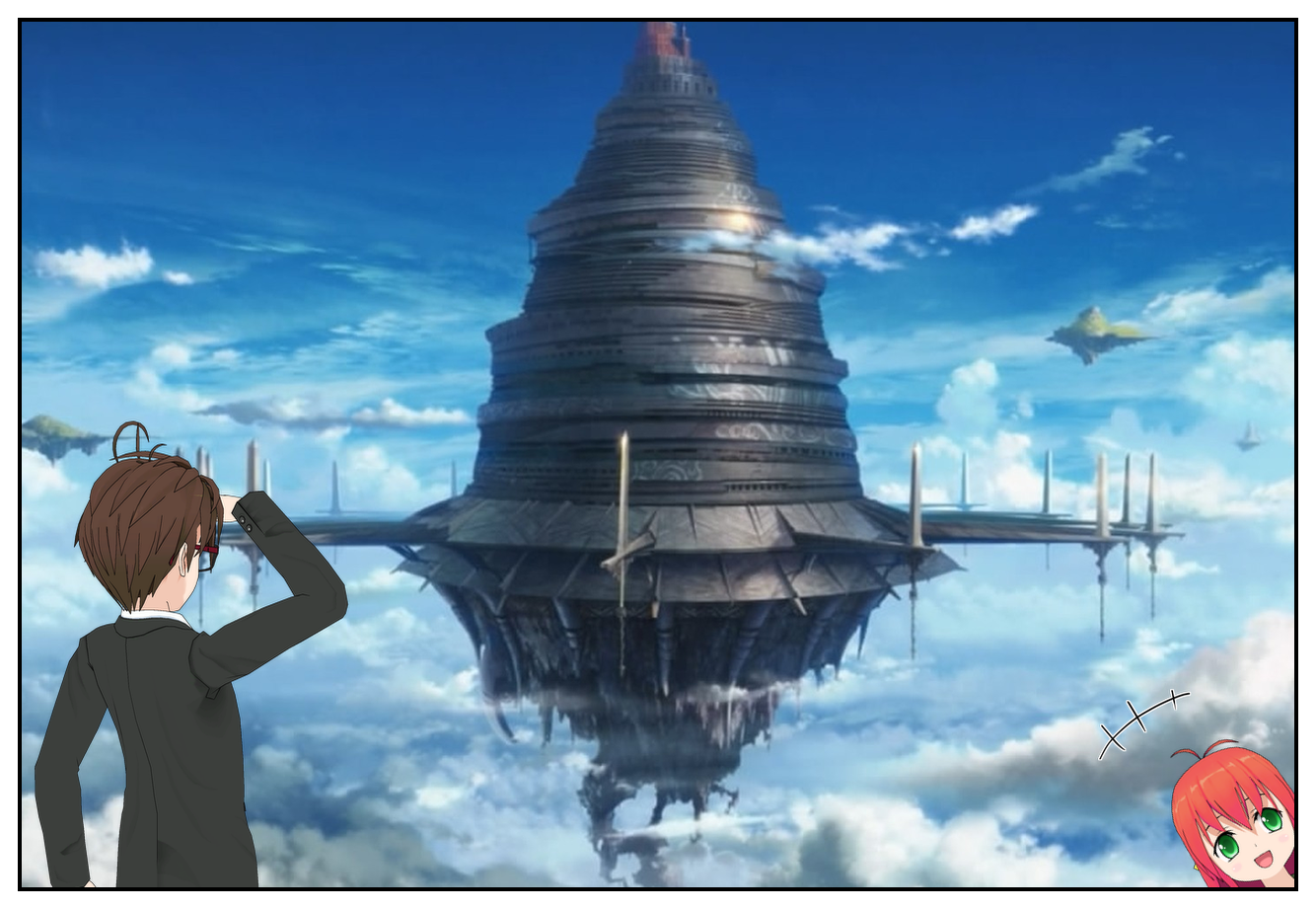
Another Sword Art Online Re:Hollow Fragment post, I'm afraid, but, well, deal with it; it's good, I'm enjoying it, and I want to talk more about it.
I was describing the game to a friend earlier and the thing that struck me is how utterly different from your typical JRPG it is. It's extremely non-linear at heart — that is to say, there are a number of parallel linear objectives to follow at any given moment, but it's always entirely up to you which one you pursue at any given moment, or even whether you pursue them at all or just decide to grind out a few levels fighting powerful enemies.
So far the "main" quests I've encountered include the ascent of Aincrad, which is the way you "beat" the game; the storyline that unfolds as you unlock access to each part of the Hollow Area; the "Grand Quest" which mysteriously appears on one trip to the Administration Area; and a line of waifu-specific objectives that demand you go into the Hollow Area with a specific companion and complete a particular kind of Hollow Mission, the exact details of which are usually given in fairly vague terms, so you have to figure out exactly which missions will fulfil their criteria for yourself.
In my relatively brief session on the game earlier, I chose to forego the waifu quests I had previously been working on (largely because I couldn't find a Hollow Mission that involved fighting kobolds or goblins to progress Silica's questline) and instead continue with the Grand Quest. This part of the game — which I believe was added in a free update post-release on the original Vita version — involves entering a mysterious new part of the already mysterious Hollow Area, known as the Abandoned Area, and promises the reward of powerful new Sword Skills that you can't get anywhere else.
The Abandoned Area is introduced to you with a beautiful garden, one end of which is dominated by an enormous pair of doors — doors which are, of course, locked. However, since Sword Art Online is well and truly aware that it is a game, it very much follows the rules of a game, and consequently there are two obvious depressions in the door where "something" most certainly fits. And, wouldn't you know it, there are two pathways out of the garden, each of which leads to a different "dungeon" area — one in some fiery caves, another in the mountains. And oh! It just so happens that your map indicates that there's a powerful Area Boss waiting in the furthest reaches of each of these areas. Guess what you have to do to progress the Grand Quest?
It's not just as simple as wandering in and smacking the boss about a bit, though, not least of which because the bosses are challenging encounters with plenty of mechanics to figure out. In order to even get at the boss of the fiery cave area, you need to complete a number of different Hollow Missions that reveal some interesting facts about the local fauna — most notably the explosive bugs that become petrified when they die, and which conveniently explode with sufficient force to knock down walls when triggered by the correct catalyst. Once you've discovered this useful piece of information, you then have to scour the area for other instances of these petrified bugs, blow them up and see if they reveal a convenient pathway through to the boss.
The mountain area is similar in execution, though it is set up in such a way as to prevent you from progressing too far without completing the fiery caves first — you need a key item to melt open a door that is frozen shut. In this area, however, you quickly encounter the Area Boss without too much difficulty, who promptly screeches at you with a noise so terrible you're forced to retreat. The challenge here, then, is to uncover a means of protecting yourself against his powerful sonic attacks. I'm yet to discover exactly what that means is, but it will almost certainly involve a convenient Key Item somewhere, because that's how games work and, as previously noted, Sword Art Online is very much aware that it is a game.
The fiery cave area boss — dramatically known as Gaiard the Volcano — is a great fight that is far more than simple hack and slash. It's a fight where you'll have to pay attention to what moves are coming up — they are telegraphed in various ways — move carefully to avoid them, order your companion around (assuming you brought one with you) and take every opportunity you have to get in your most powerful attacks. It's an intense fight that really doesn't let up for a moment; opportunities to attack are short and easy to miss if you're not paying attention, and you need to keep a close eye on your partner's condition, too; letting them die is as instant a Game Over as if you died yourself. It's extremely satisfying when you finally clear it, however; it took me a good few attempts, but like the very best boss fights, it never felt like I was being smacked around by cheap, unfair moves — I learned something every time and progressed a little further, until eventually I was able to counter almost all his earth-shaking attacks and take full advantage of the openings that were presented throughout the battle.
If you're the sort of person who enjoys setting their own objectives and pursuing things in whatever order they like, then, Sword Art Online Re:Hollow Fragment is something that will very much appeal. Plus I was delighted to see today that it appears to be a top-seller on PSN right now, which means that it's a game that is getting noticed, played, enjoyed and promoted by people who like it. That makes me really happy; while it is far from the most technically proficient game in the world — the upscaled PSP graphics and somewhat inconsistent frame rate will be a culture shock for many — it's a beautifully designed, enormously addictive and extremely playable game that I can see myself spending a very long time with before I move on to something else.

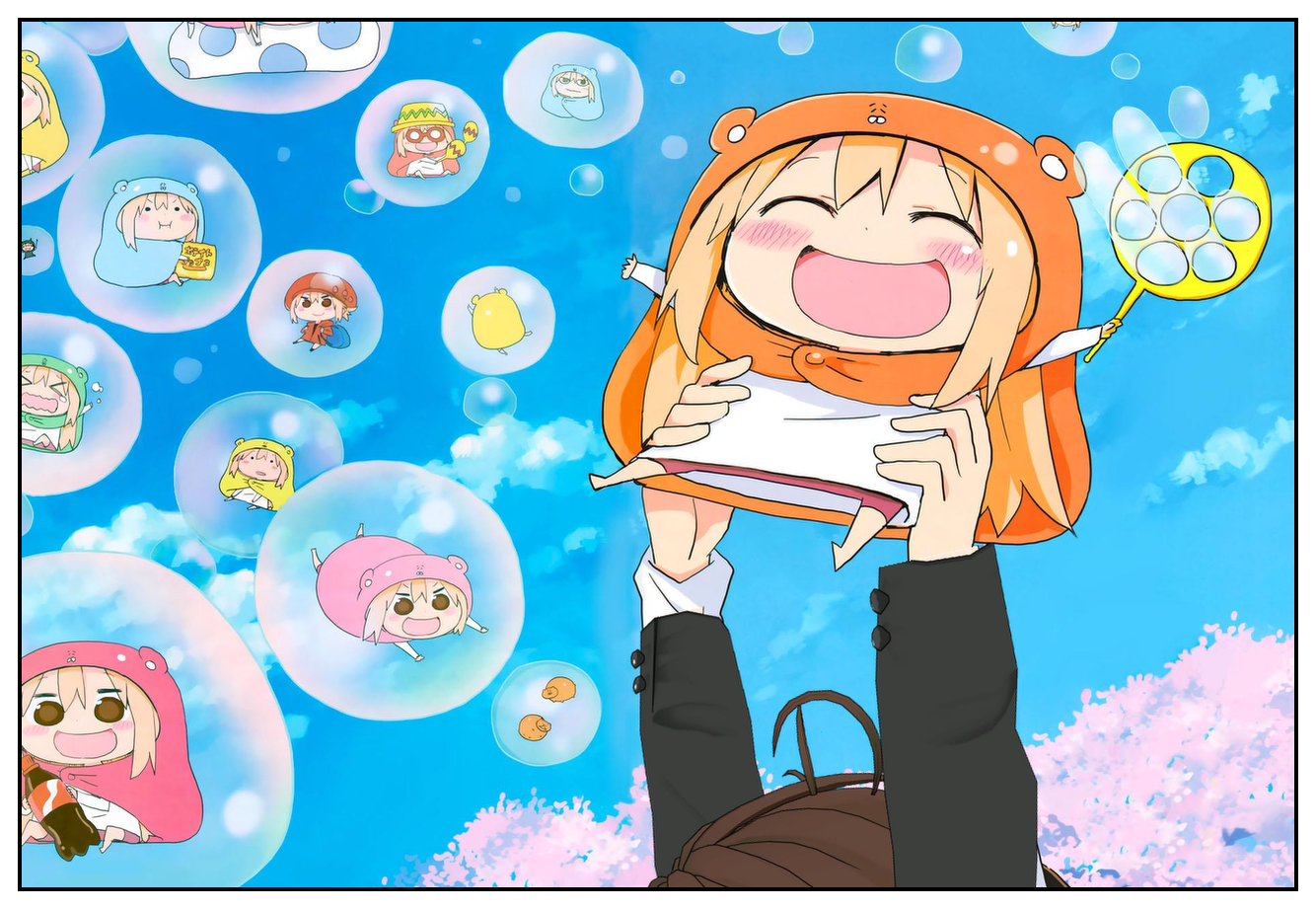 One of the highlights of the current anime season is Himouto! Umaru-chan, a rather odd little show that takes the Squid Girl approach of splitting each "episode" up into several shorter little vignettes in which nothing really happens, but it's entertaining nonetheless.


 For today's post, I'm going to raid my Retrospring inbox for questions, then answer them. (I'll be posting these answers on Retrospring as I go, too, so if you follow me on Twitter and have read these already, you can safely skip this post.)
 Whew,


 Earlier today (or possibly yesterday, I think), a former colleague posted a piece on a site I used to work for bemoaning, not for the first time, the amount of "ecchi" content in modern Japanese games, particularly dungeon-crawling RPGs. (I'm not going to link to it.)

 Astute long-term readers will notice that I haven't been talking much about Final Fantasy XIV recently. And the reason for that is simple: I just haven't been playing it that much.
 Another Sword Art Online Re:Hollow Fragment post, I'm afraid, but, well, deal with it; it's good, I'm enjoying it, and I want to talk more about it.