2176: Life on Mira

0176_001

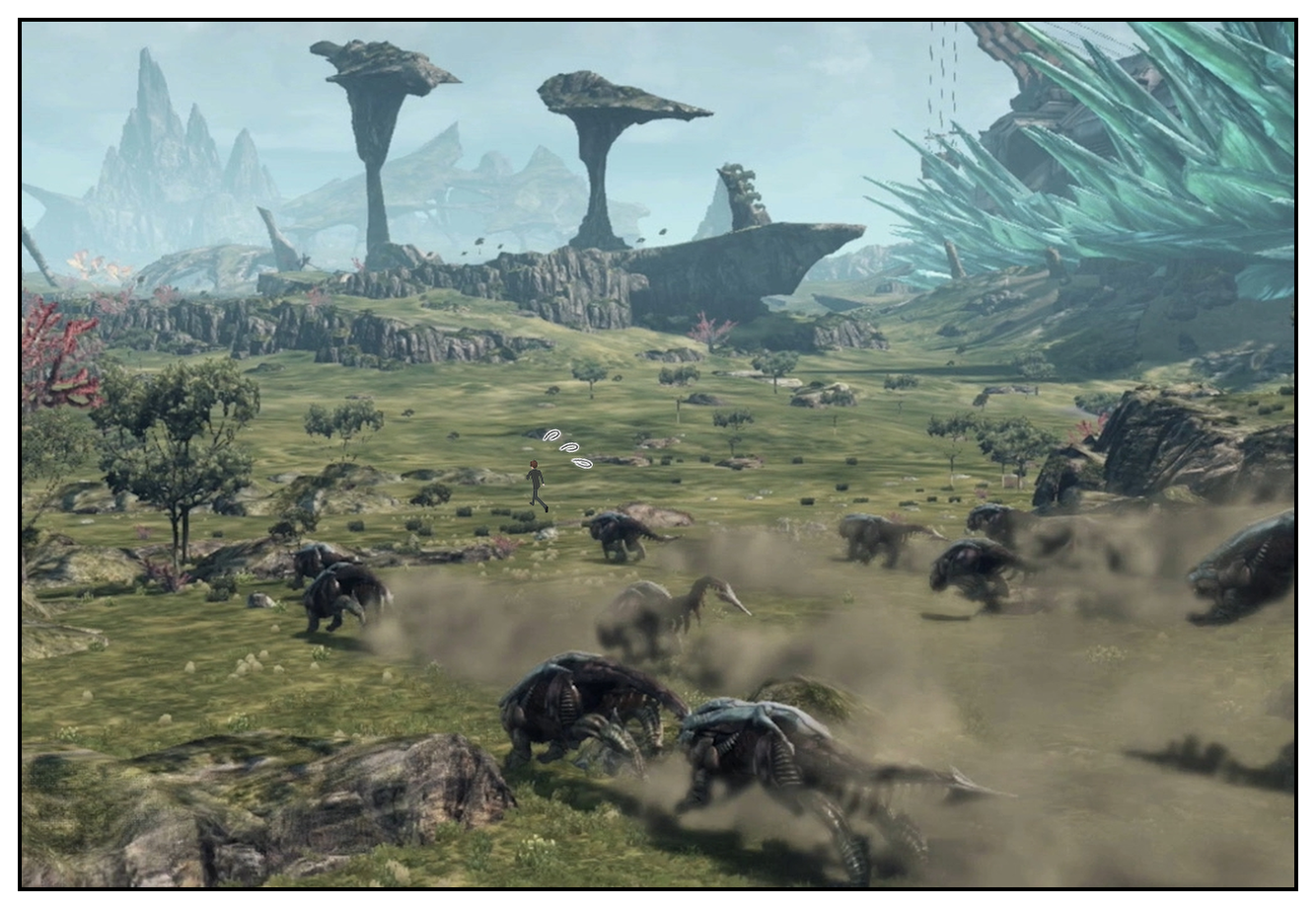
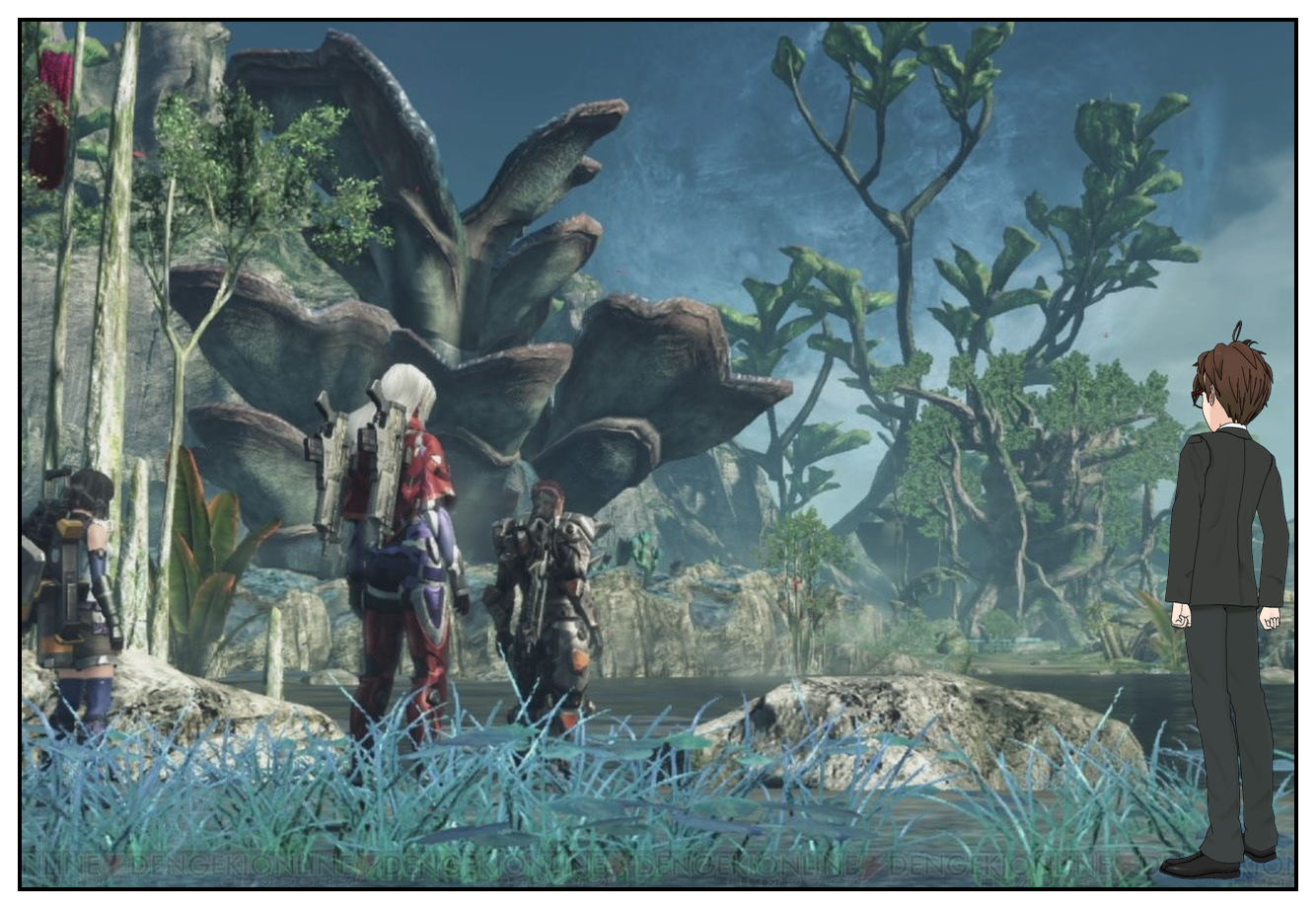
I finished the main story of Xenoblade Chronicles X today, but my time with the game is far from over, since there's still a whole lot to do once you clear the story.

I wanted to reflect a little on my experience with the game so far — 100 hours' worth — and reiterate that I think it was absolutely the best game released last year that I had the good fortune to play. There may be some spoilers ahead, but I'll try and keep them to a minimum.

The most common criticism I've read of Xenoblade Chronicles X is that its story is "weak" or "not as good as Xenoblade Chronicles". While I don't disagree that its manner of storytelling is an acquired taste, I don't agree at all that its story is weak or of poor quality — nor do I agree with the assertion that the characters aren't particularly well-defined.

Let's take the first point first. I've already commented on this in depth in this post, but it bears mentioning again: Xenoblade Chronicles X's storytelling is about more than the main scenario quests and the cutscenes. It's an immersive storytelling experience in which you are part of the world of Mira, and things unfold around you, both with and without your intervention. The world changes and evolves as you complete missions and develop your relationships with characters, though the impact of your actions may not necessarily be immediately apparent. As you spend time in New Los Angeles and interact with its populace — initially all human, but later integrating several different xenoform cultures — you start to get a very strong sense of time and place from the people of Mira. It's ultimately one of the most well-realised worlds I've come across since the Final Fantasy MMOs — and, from me, that's high praise indeed, since these have previously been some of my favourite game worlds to hang out in.

Xenoblade Chronicles X's main story is a relatively straightforward affair, though its final act gets into some intriguing philosophical territory. But in many respects, the main story is the least important part of the overall narrative experience: the "true" Xenoblade Chronicles X, if you like, is in going about your day-to-day life as a BLADE, completing missions, interacting with others and developing your understanding of the world as a whole. Sidequests happen in the strangest of places at times, and you'll encounter a huge cast of weird and wonderful characters, many of whom have "affinity" links with one another just waiting to be discovered. Each of these sidequests is crafted with care, attention and meaning, and many of them tell their own compelling little "short stories" in their own right; others still form part of a larger ongoing narrative proceeding in the background alongside the main scenario. As a complete package, it's hard to think of an RPG with quite such a comprehensive narrative that you can explore in as much depth as you like.

Now, on to the second point: that of the characters. It's true that the main scenario largely focuses on the characters of Elma, Lin and Tatsu, with even your avatar not getting a lot in the way of development — though it's worth noting that in stark contrast to many JRPGs, you can play your character's personality in a lot of different ways, and there are often consequences for the choices you make — but to say that the other characters don't get explored is nonsense. For one, all the playable characters have their own chain of affinity missions and heart-to-heart events to explore as you develop your relationships with them, and some of these are even prerequisites for proceeding through the story. Plus, all of them have their own unique things to say during and after battle, with certain character pairings even having unique conversations with one another. Pleasingly, this even includes your avatar (who has a voice in combat despite being a silent protagonist for most of the game) — many of the things he/she says are responded to by other party members, which makes you feel like a more important part of the team than you might do otherwise.

Again, you're free to explore this side of the narrative in as much or as little depth as you please, since most of the affinity missions are optional affairs. The content is there, though — like most things in Xenoblade Chronicles X, though, it simply isn't handed to you on a plate. I like that, though; it gives a feeling of achievement when you discover something.

Final-ish thoughts for now, then? Xenoblade Chronicles X is a masterpiece of sci-fi, and the sci-fi game I've wanted to play since I was very young. It's not perfect by any means — the Wii U hardware arguably holds it back a little at times, though not as much as the original Wii held back titles like the original Xenoblade Chronicles and The Last Story — but it really is an astoundingly good game, and a truly impressive achievement. It deserves to be celebrated a whole lot more than I've seen, and I shall continue to bang my drum about it for as long as anyone will listen.
2175: Nail'd It

0175_001

My good friend Mr Alex Connolly was kind enough to donate me a copy of Nail'd on Steam over the Christmas period. This is a game he's mentioned to me before, but I'd never gotten around to trying it. Now I'm regretting not checking it out sooner!

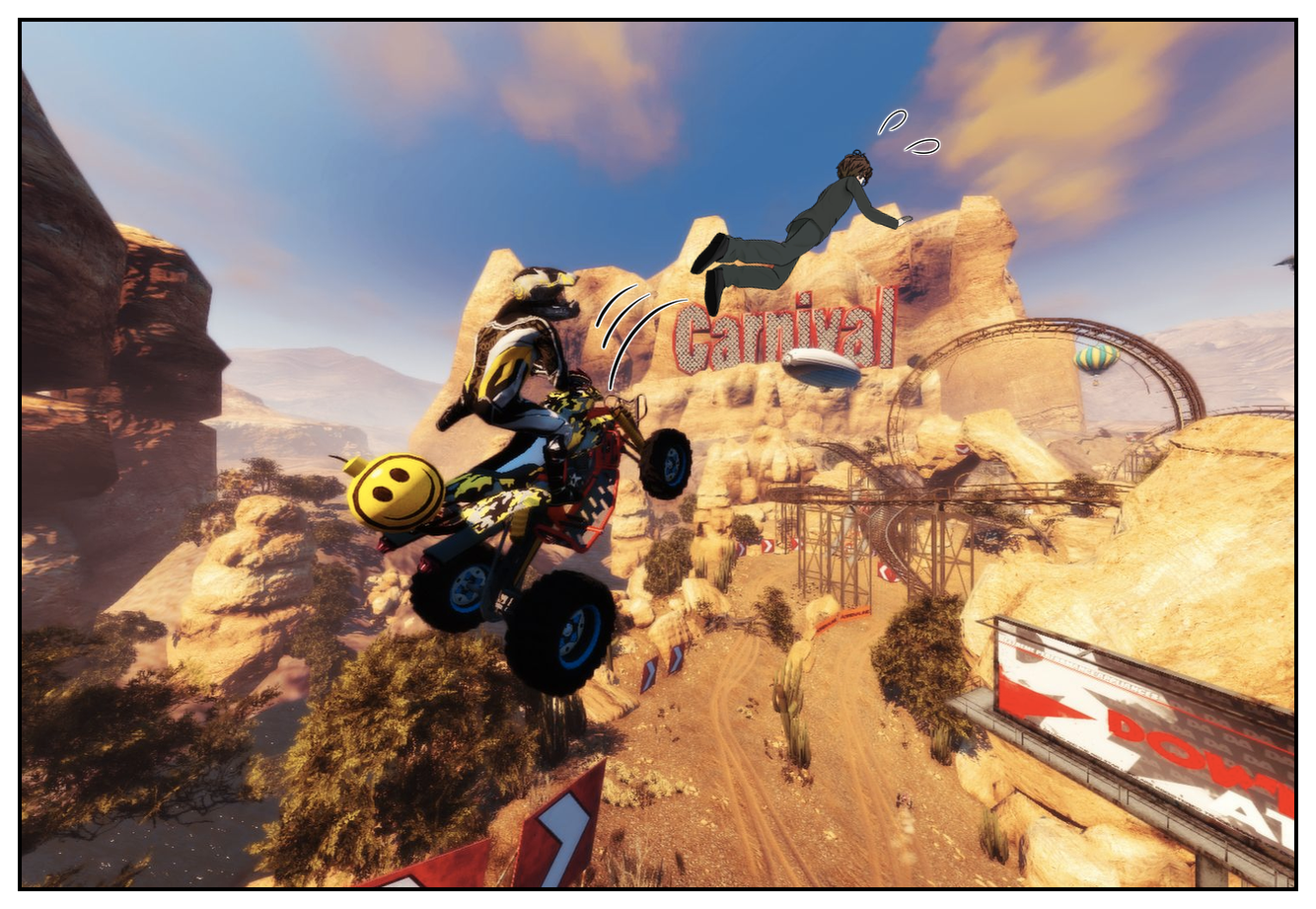
Nail'd is an offroad racing game from Techland and Deep Silver, the developer-publisher combo perhaps best known in recent years for the Dead Island series and its not-really-but-sort-of follow-up Dying Light. It's an unshamed arcade racer experience, with no pretensions towards having a plot or any reason for existing beyond simply being fun — nor, it must be said, is it making any attempt whatsoever to be the slightest bit realistic.

Nail'd is ridiculous. There's no other word for it, really. From the moment you squeeze the accelerator and you immediately ramp up to approximately three thousand miles per hour in less than a tenth of a second, it's clear that this is not a game intended to be taken seriously. This feeling is further cemented when you take your first jump and spend a good ten seconds airborne before landing with no ill effects, and set in diamond when you crash for the first time and your quad-bike explodes into fragments, while your driver goes spinning off into the distance with exaggerated ragdoll physics.

Taking part in a race in Nail'd is a rollercoaster ride. There's dips and undulations, huge jumps, banked corners, environmental hazards, narrow gaps to traverse and stunts to perform. Pleasingly, there are multiple routes through each track, too, bringing the races a feel somewhat akin to EA's classic SSX series back in its heyday, particularly as many of Nail'd's races are downhill point-to-point affairs rather than circuit races.

I hadn't previously been particularly interested in motocross or ATV racing games before, and I don't know how many of them are like Nail'd. But I do feel I've been missing out on some crazy offroad fun with this game, at least; it's an absolute pleasure to play, it's a challenge while keeping its mechanics extremely simple, and it's one of the most thrilling, exciting racers I've come across, ever. It's just a pity that the multiplayer servers are no longer active, so it's not currently possible to share the ridiculousness of a Nail'd race with other people, except by doing some jiggery-pokery with the LAN mode and external software.

My arcade racing renaissance continues, then; Nail'd has been a delight to discover, and it's inspiring me to check out some other racers I haven't spent all that much time with — or haven't tried at all — with a mind to doing a full roundup at some point in the future, either here on the blog or in video format, or perhaps even both!

Now I think I'll go hurl myself off a few cliffs before bedtime…

2174: Souls

0174_001

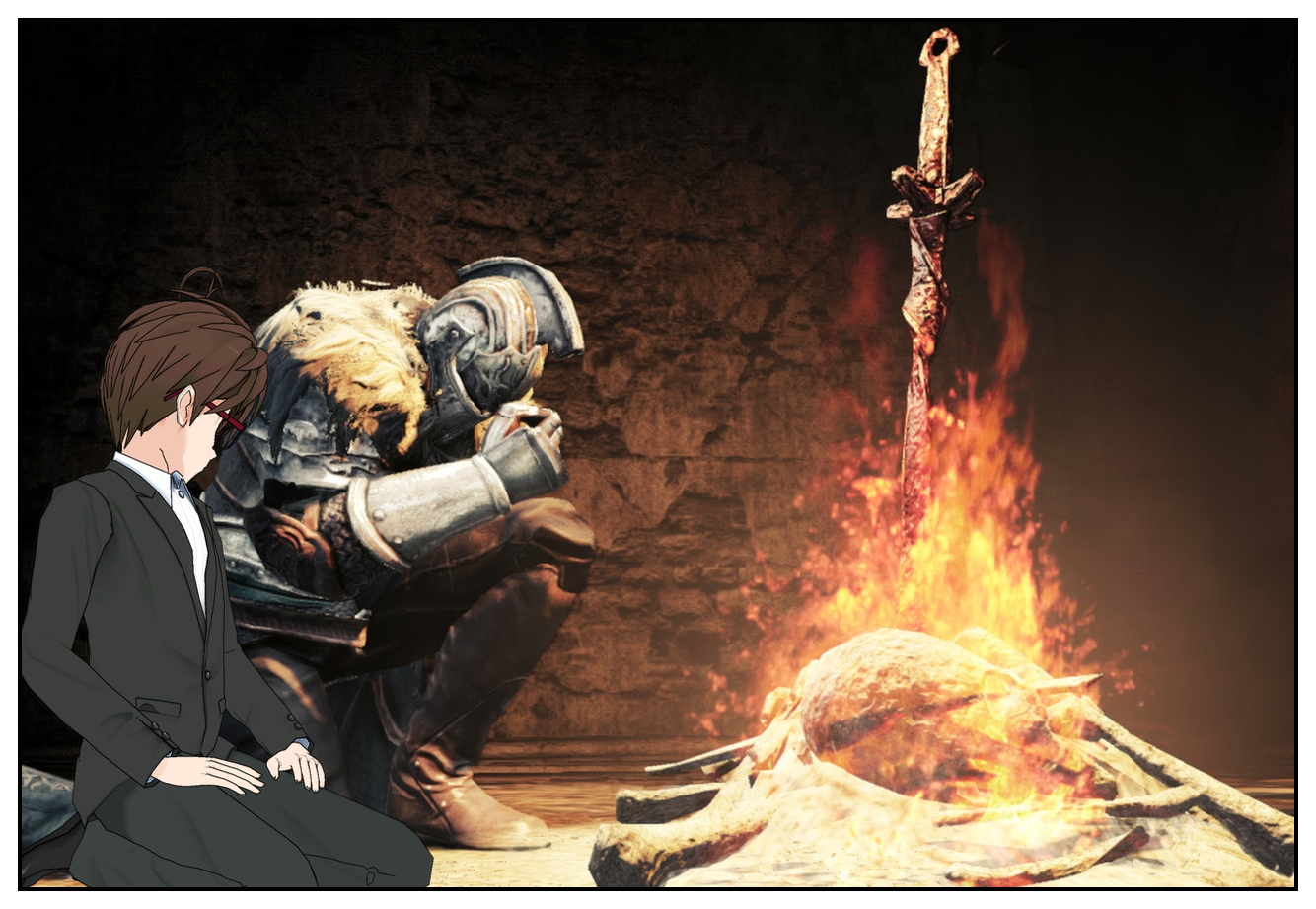
I've tried on several occasions to get into the Souls series from From Software, and have never quite succeeded, despite liking the overall atmosphere of the whole thing. This time around, though, I feel I'm finally starting to Get It. Kind of.

I'm playing Dark Souls II: Scholar of the First Sin, the rejigged and enhanced version of Dark Souls II that was released for PC and next-gen platforms a while back. It was a Steam sale acquisition; for its low price, I was willing to give it another chance, so I jumped in on the understanding that Dark Souls II is, on the whole, perhaps a little easier to get into than the other games of the series. I'm not sure if I believe that yet, but I feel like I'm starting to get a feel for it all.

There are several things to get into your mind when you start playing Dark Souls. Firstly, it's a good idea to think of it a bit like a "single-player raid". You need to learn things: develop a strategy and execute it, preferably flawlessly. This is particularly apparent when fighting the game's bosses, but it also applies to regular enemies: most of the time they spawn in the same places, so you can prepare for ambushes where they got the jump on you the first time you went down that particular corridor, and instead slice them to ribbons before they can even touch you.

On a related note, Dark Souls' combat, while initially appearing to be relatively straightforward, is very "Japanese" in nature in that it has a heavy reliance on pattern recognition. When fighting everything from the most lowly of crap enemy to the biggest of bosses, you need to recognise the patterns of their attacks and counter them accordingly: dodge them to avoid taking damage, and take advantage of an opening to attack, while simultaneously being aware of your own stamina so you leave a bit left over to dodge out of the way when the next attack comes.

Yes, Dark Souls is not a game where you can flail wildly and hope for success. My early encounters with the Souls series saw me hating that Stamina bar and how quickly it gets used up, but this time around, again, I feel like I'm getting more of a feel for it. You can almost relate it to a turn-based sort of system in a strange sort of way — or perhaps it would be more accurate to compare it to the "cooldown" system used by most MMO combat systems. In other words, you can't just spam the attack button and hope an enemy is dumb enough to walk into your swing; most attacks are slow and ponderous enough to leave openings wide enough for enemies to hit you, even while you're mid-attack. As such, timing is crucial.

So far, I'm playing a mage-type character, since it allows me to deliver some decent damage from afar, which in turn helps me to develop my confidence to fight the more difficult opponents a bit more. I'm getting a feel for the hand-to-hand combat too, though; I can now pretty confidently dispatch lowly opponents with a dagger rather than a couple of spells to the face, though it remains to be seen if my overall play style will change too dramatically by the time I get to the end of the game… if I get to the end, of course.

So, then, I think I finally sort of "get it". I'm not sure I love it quite as much as some people do yet — I don't think I'm far enough in to feel that way — but I'm interested enough to keep going and find out more. Which is, you know, nice.

2173: Three Swords

0173_001

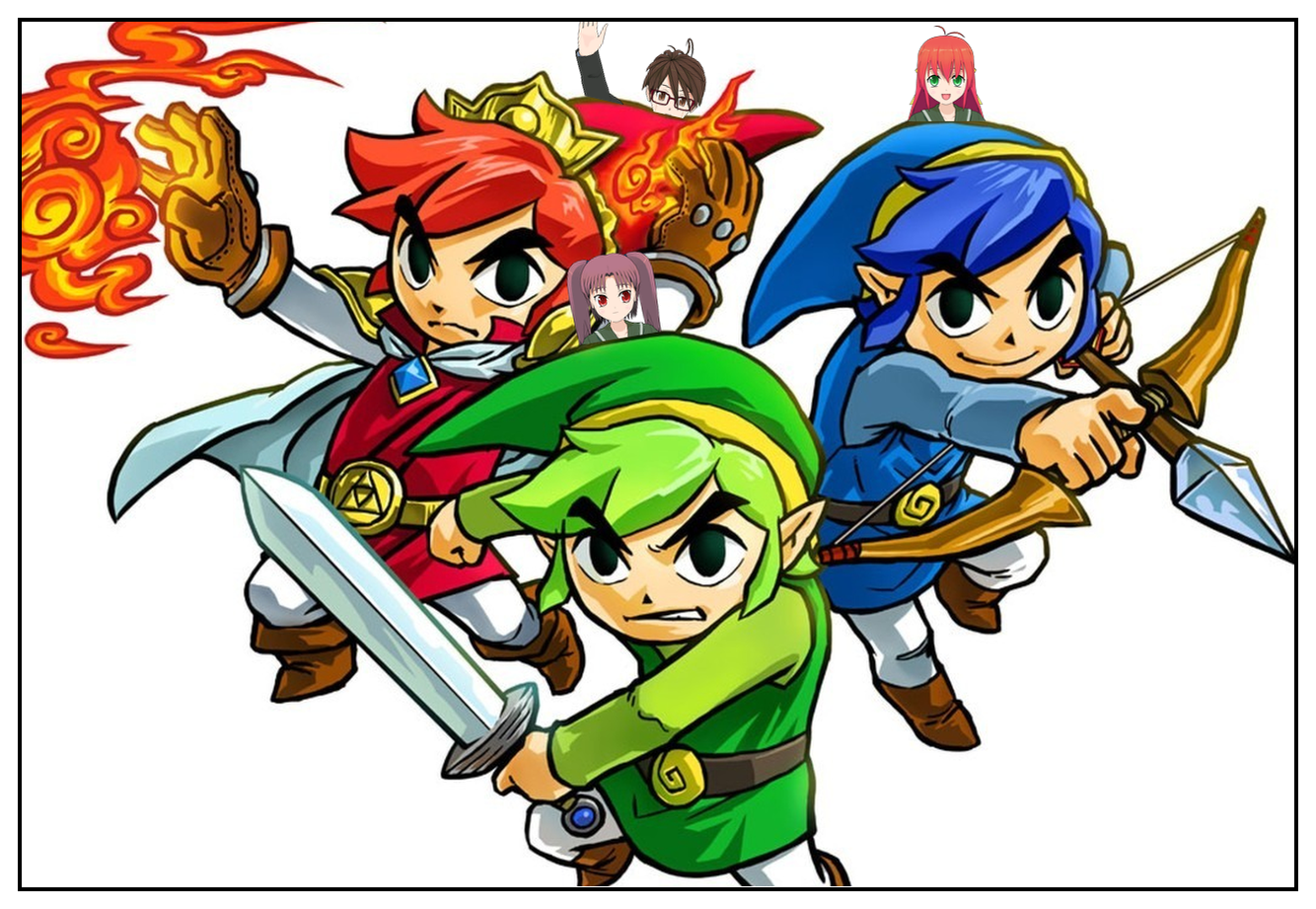
Been playing a little bit of one of my Christmas acquisitions recently: the intriguing The Legend of Zelda: Triforce Heroes. This isn't a "mainline" Zelda game in that it's not particularly narrative focused and is instead a largely cooperative multiplayer affair, but I've been very pleasantly surprised quite how playable it is — and how it very recognisably has that Nintendo "magic" about it.

Triforce Heroes casts you in the role of a Toon Link who may or may not actually be Link and throws you into the town of Hytopia, which is currently undergoing something of a crisis: the local evil witch is apparently cursing everyone who is getting a bit too fashionable, and thus it's up to the local heroes (for whom the populace have very specific requirements) to sort things out once and for all.

It's an eminently stupid premise, obviously, but in a way that works in the game's favour, because the lack of focus on a coherent narrative allows the game to instead concentrate on gameplay, and in a multiplayer-centric affair, this is by far the best approach.

Triforce Heroes unfolds over a series of discrete levels, each of which makes up a number of different regions in the Drablands, the area the witch calls home. As you complete the various levels, you'll acquire materials and Rupees, both of which can be used to create new costumes for maybe-Link and confer special abilities and bonuses — or, in some cases, penalties. You then repeat the process, gradually increasing your completion and/or grinding levels you've already done for more materials. That is, so far as I can determine, it. But rather than being a throwaway affair, it's actually rather compelling.

It helps that the levels are well designed to necessitate cooperation. Unlike, say, Super Mario 3D World, where additional players were more of a distraction than anything else, Triforce Heroes' levels are specifically designed with three players in mind. Most of the cooperation involves picking up and throwing around the other two players to reach out-of-reach platforms — not-Link, as ever, can't jump — but also making use of the "totem" ability to create a stack of up to three people in order to shoot at/smack/bomb/collect things that are too high off the ground for a single player.

One particularly charming aspect of the game is that as with most Nintendo online games, Triforce Heroes has no means of directly chatting with other players. Instead, you're given a set of endearing emotes ranging from "Over here!" to "Noooo!" that you can spam at will. Most players have already developed a means of "communicating" using these emotes creatively — and, indeed, it's a heartwarming moment when you come together with two strangers all spamming the "cheerleader" emote to signal your joy at having completed a particularly difficult area of the dungeon you're in.

Perhaps best of all for those who have friends with 3DSes, though, is the fact that the game supports Download Play, meaning that only one person needs to actually own a game cartridge for a group of three to be able to enjoy some cooperative fun. Obviously this doesn't apply when it comes to online play, but for local multiplayer sessions I can see it being a riot — I'm looking forward to trying it sometime.

It's not the sort of game I see being a thing you'd spend hours on at a time. But as something to while away a few minutes with at a time, Triforce Heroes is an impressive achievement: a cooperative game where yelling at each other is kept to a minimum, and where the whole experience just feels so delightfully wholesome that you can't help but enjoy it with a big smile on your face.

2172: Happy New Year, 2016

0172_001

Happy new year! It's the beginning of another arbitrary division of time which we ascribe more meaning to than is strictly necessary. And yet, as always, it's difficult to resist the allure of thinking that "this time, things will be better".

2015 was pretty shit. Not just for me, but for a lot of people I know. And that sucks. I hate to see people I know and care about having a shitty time, but it does make me feel slightly better (if a little guilty) to know that I wasn't the only one dealing with difficult shit.

I don't know whether or not 2016 will be better or not. I'd like to hope it will be, but realistically I know that there's no reason it will be. I don't have anything in particular to look forward to, but at least I don't think there's anything I'm particularly dreading either. Compare and contrast with the start of 2015, where it was gradually becoming apparent that I was getting forced out of my job (albeit one I didn't like anyway) and where my own personal well-being with particular regard to my weight was at something of a low ebb, and the start of 2016 already looks a little more positive in comparison.

2015 wasn't all bad, of course. I got married, for one thing, and that was pretty great. I met a bunch of new friends, too, and developed my interests further and deeper. I successfully got through what was quite possibly the second work-related nervous breakdown I've suffered in my life and out of the other side mostly intact. I lost nearly six stone in weight (though have probably put a bit back on over the Christmas period — we haven't been terribly strict!) and feel noticeably better about myself.

So I guess I should be feeling all right about looking forward to the new year. There are still lots of things I'm worried, anxious and upset about. But the only thing I can really do about them is keep on pushing forwards and hope things work out for the best in the long term. After all, that approach has got me this far, even if I'm not exactly in the position I thought I'd be in at the age of 34 when I was younger.

Happy new year, everyone. May 2016 be a good year for you, and if you, too, suffered a mountain of stress and other shit in 2015, may it soon be nothing but a distant memory. Thank you all for your support and kind words over the last 365 days, and here's to many more good times and pleasant chats as we slide inexorably into the future.

2171: Pain

0171_001

There are many types of pain in the world. There's physical pain, which can range from mildly annoying to excruciating and debilitating. There's mental pain, which, likewise, can range from occasionally distracting to life-consuming. There's emotional pain, which ranges from feeling a bit blue to wanting to end your own existence.

Few things compare to the pain you feel when helpless to do anything to help someone you love, though. This pain cuts deep, right through your very soul, and threatens to rip out the very core of your being. It's as excruciating, life-consuming and debilitating as all of the very worst the other kinds of pain have to offer, with the added joy that there's absolutely no way whatsoever to treat it. If there were, you wouldn't be feeling it in the first place.

Mostly this pain stems from a position of impotence: a position of complete powerlessness to do anything to help resolve that which is causing your special person anguish. It's the frustration at not knowing what to do, and at the things you do try not being enough or not working. It's the realisation that there really is nothing you can do but watch as someone else suffers, and just hope that people who are better qualified to sort things out are able to sort things out — or, in the worst possible circumstances, that things will just resolve themselves somehow.

I do not know how to deal with that pain, and I am suffering dreadfully from it. And I feel bad bringing it up, because the pain I feel is something intangible that is a consequence of someone who is physically suffering. But it's there, nonetheless, and it probably needs "treatment" of some sort just as much as the physical pain does.

I don't even know where to begin, though. Let's hope that the old saying about time healing all wounds is really true.

2170: The Slowest Racing Game You'll Ever Play

0170_001

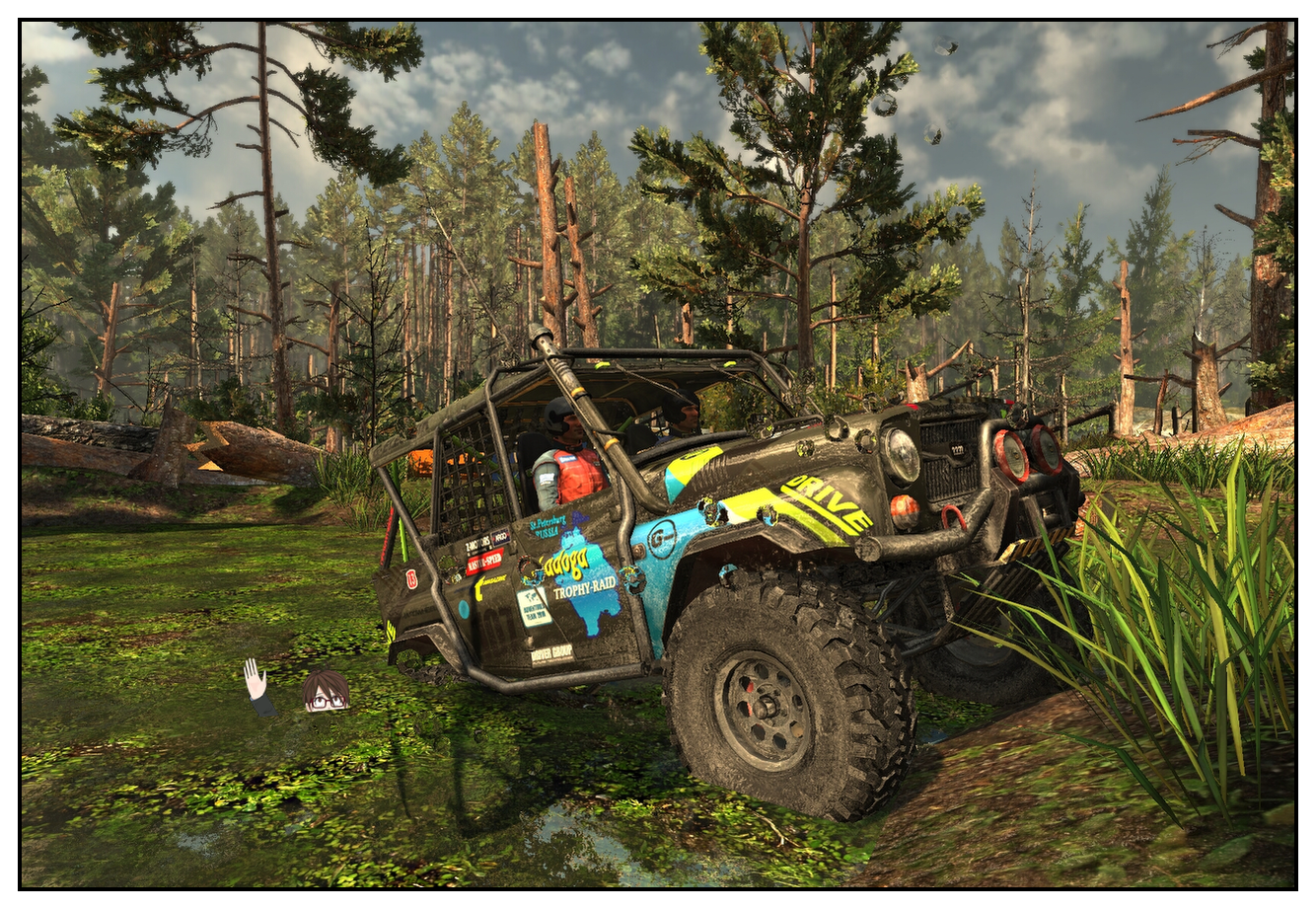
My good friend Mr Alex Connolly saw that I had been investigating various racing games recently, and recommended something of an oddball curiosity to me: the rather literally named Off-Road Drive, a charming, clunky mess of a game from Russian publisher 1C Company.

Off-Road Drive is a game about offroading. Not offroading in the usual video game sense — that is to say, racing like you're playing Ridge Racer, only with mud textures — but rather a more realistic(ish) take on offroading in heavy duty vehicles more suited to chores on the farm than barreling around courses at high speed.

The interesting thing about Off-Road Drive is that it goes into a lot more detail than many other racing games, yet at the same time manages to do so without making itself completely obtuse to the non-petrolheads among us. The game features not only the usual accelerate and brake buttons, but also switches to toggle between two- and four-wheel drive, do something or other with your differential, hoist yourself up with a winch, downshift into a low gear and let the air out of your tyres.

You may wonder why on Earth you would want to do any of those things and it's initially baffling. However, a good tutorial mode gives you an introduction to the most common hazards you'll face while offroading — and the appropriate tool from your arsenal to make use of when attempting to traverse it. By the end of a couple of laps of the tutorial circuit, you should have a pretty good idea of how things work and what you should do when. It's perhaps best thought of as a racing game in which you're required to use various special abilities at specific points on the track; thinking of it this way rather than trying to get your head around what the "differential" does is the way to go, it seems.

Off-Road Drive is not a particularly polished product. It doesn't support VSync in full-screen mode, leading to screen tearing; its menus are clunky and don't work properly with a controller (despite the game itself supporting controller); controller buttons are labelled the wrong way around (LT instead of RT and vice-versa); and its collision detection is occasionally a little questionable, but there's little doubt that the developers set out to create something different to the norm and have succeeded in producing something that's actually rather interesting and fun to play.

One of the greatest things about gaming is that it gives us the opportunity to try things we'd never do in real life. I don't see myself ever flinging a Land Rover around a muddy course in Thailand, so Off-Road Drive acts as an eminently suitable substitute for now, at least.

Now, to go and look up what the fuck a "differential" is.

2169: Starting GRID (2)

0169_001

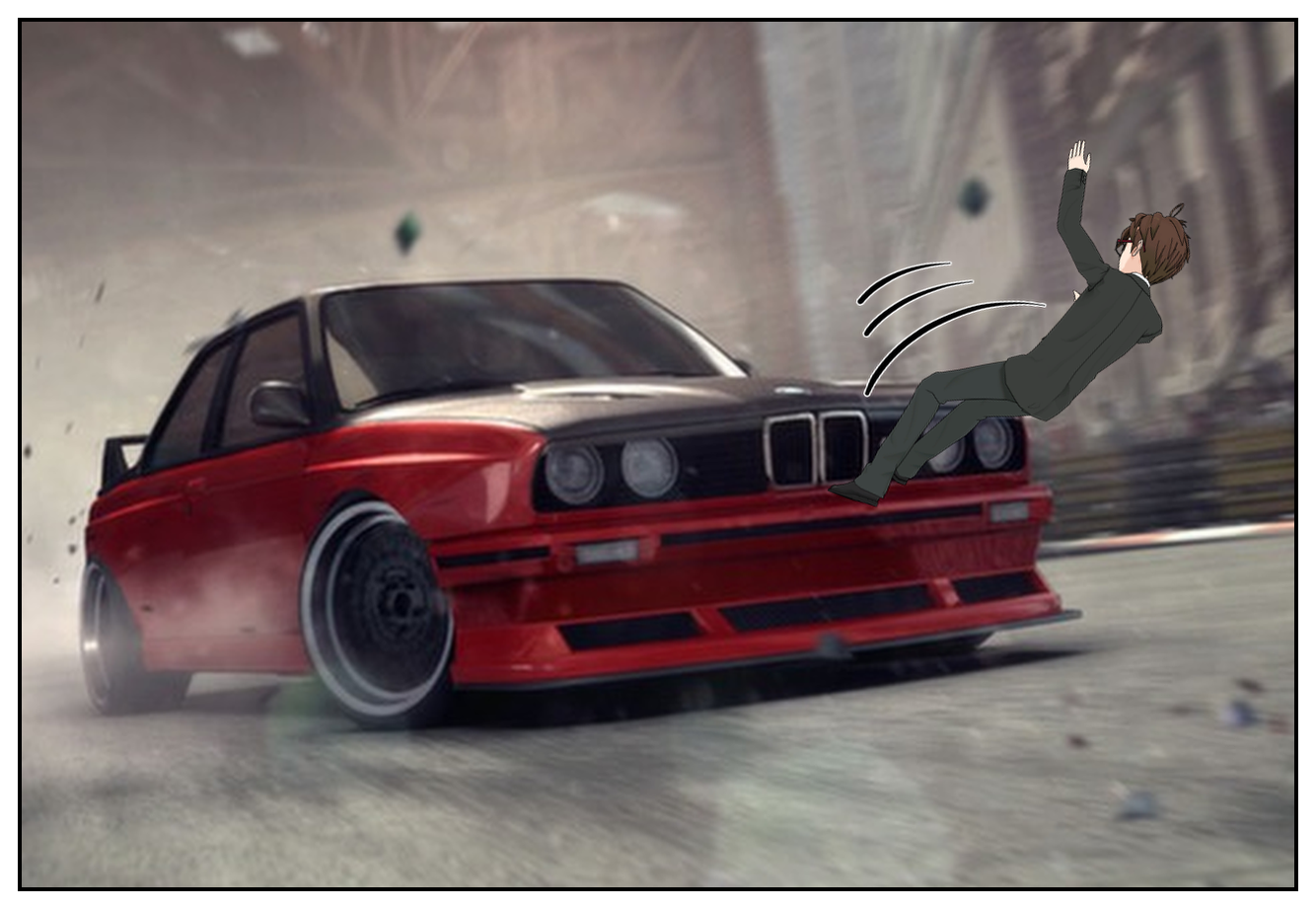
One of my acquisitions in this year's Steam sale was Codemasters racing game GRID 2. I already owned the previous GRID game and had enjoyed what I played of its multi-discipline racing, but hadn't delved into it in depth. The price that GRID 2 and its more recent sequel GRID Autosport were going for was too much to resist, however, so I snagged copies of both and have been putting the former through its paces over the last few days.

GRID 2 was a bit of a controversial release when it originally came out, since it's a distinctly more "arcadey" affair than its predecessor. That's not to say that the original GRID was particularly sim-like in the first place, but the true petrolheads of the Internet appreciated things like its lavishly detailed first-person cockpits and semi-realistic handling. In contrast, GRID 2's emphasis on drift-heavy driving and the removal of the cockpit view led to a bit of an uproar among the racing enthusiast community, who saw it as a step backwards from its well-regarded predecessor.

Me, though, I love it; GRID 2's slidey handling is exactly the sort of thing I love in a racing game, and to be honest, while I love the way a cockpit view looks, I find it extremely difficult to race from that perspective, since visibility is so limited in most cases, and you don't have the peripheral vision you'd have in reality. Consequently, I much prefer racing from a bumper or bonnet cam (preferably the latter) since I find it much easier to judge my own position and have a feeling of spatial awareness during a race.

I also appreciate GRID 2 for its attempt to spin a story throughout its single-player game. All too often, racing games are rather dry affairs in which you navigate boring-looking menus to get to the actual racing, and there's often very little in the way of personality. GRID 2 doesn't go so far as to be Wing Commander with cars — although man, I would so play that game — but it does feature voiceovers and a sense of narrative progression as you play through the game. It's not a complex narrative — you're an up-and-coming driver headhunted by an eccentric rich dude who has decided he really wants to set up a new worldwide multi-discipline racing league, and your efforts as the face of the series allow you to build up the fanbase required for the WSR to become a success — but it works well in context, and it's punctuated nicely with infrequent cutscenes, including authentic-looking TV broadcasts featuring full-motion video rather than in-engine characters.

This sense of narrative progression and personality carries over into the actual racing gameplay, too. You're constantly getting advice and feedback over your radio while you race, and most race series highlight a named rival for you to try and beat. While the personalities of these rivals aren't developed all that much outside of text messages and social media posts in the menu screens, it's a nice touch that gives you more of an incentive to do your best than simply trying to get into first place.

The game also makes minimal but cinematic use of music: most races don't have background music, instead featuring some impressive sound effects that allow you to hear not only the roar of the car's engine, but the rumbling of the tyres on different surfaces, the sound of the crowds as you whizz past them, and other environmental sounds according to where you're racing today. There's an exception to this, though: when you get into the final races of each season, the final lap or sector of each race is accompanied by some electro-orchestral music that lends a real sense of drama to proceedings, making some already butthole-puckeringly tense finishes even more exciting. Good job there.

There's a good variety of events, too, with both circuit races and point to point races — a subject that I was talking about wanting to see more of just a few weeks ago — as well as time attacks, overtaking challenges, endurance races and all manner of other disciplines. The aforementioned petrolheads don't seem to like the fact that the game's career mode insists that you participate in all the disciplines, since most seem to prefer picking and choosing their favourites, but I really like the amount of variety this brings to the campaign: it, again, gives a good sense of progression as each new season presents you with new disciplines to conquer and new types of car to get to grips with. By the time you reach the end of the career mode, you'll most likely be a well-rounded driver able to turn your hand to all manner of different events — ideal for jumping online and taking on all-comers.

So I like it a lot so far, then. I'd go so far as to say that it's shaping up to be one of my favourite arcadey racers for quite some time, and I'm very interested to explore it in more detail over the coming weeks.

2168: Xenoblade Chronicles X: My Game of the Year

0168_001

It being the 28th of December, I feel fairly confident in declaring my own personal Game of the Year, and it will probably not surprise any of you to hear that it is Monolithsoft's spectacular Wii U role-playing game Xenoblade Chronicles X. In this post, I will attempt to explain exactly why this game has impressed me so much — and why I'm disappointed (though, I must admit, unsurprised) that the popular games press has given so little attention and/or Game of the Year consideration to it.

The first thing to note about Xenoblade Chronicles X is that it is not Wii classic Xenoblade Chronicles. Aside from a number of similarities in the combat system — including a bunch of abilities that have been brought over wholesale from the original game — Xenoblade Chronicles X is a completely different affair to its predecessor. Where Xenoblade Chronicles' focus was on its strong, linear narrative punctuated by sidequests, Xenoblade Chronicles X's main scenario is, in many ways, the least important part of the whole package, with the incredible sense of worldbuilding produced by the numerous sidequests and optional events instead being the main point of proceedings.

Let's go back a step, though, for the benefit of those who are unfamiliar with Xenoblade Chronicles X in general, and consider it on its own terms rather than getting too hung up on comparing it to its predecessor — which, as we've established, is a different (and not necessarily superior or inferior) experience.

Xenoblade Chronicles X's setup is classic sci-fi. Earth gets caught in the crossfire between some powerful alien races, and looks set for certain destruction. Numerous people manage to escape on colony ships, which take to the stars in search of a new home. Our story concerns the White Whale, a ship which crash-landed on a planet called Mira when one of the alien forces responsible for Earth's destruction caught up with it and destroyed it.

The White Whale broke up on its destruction, but its habitation section remained intact, and humanity quickly set about converting this part of the ship into Mira's first human city. Being modelled on 21st century Los Angeles, the city is dubbed New Los Angeles, and it doesn't take long for a suitable system of social structure to be put into place and help ensure everyone is doing their bit for humanity's survival.

Key to these efforts is BLADE, an organisation concerned with Building a Legacy After the Destruction of Earth — do you see what they did there? BLADE is made up of several Divisions, each of which specialises in important tasks for humanity's continued survival, be it scouting for raw materials, defending the city from dangerous indigenous creatures or maintaining the peace within the city walls.

Your character — for you can create your own avatar in this, rather than playing a pre-scripted character as in the original Xenoblade Chronicles — awakens in a crashed escape pod with the obligatory JRPG amnesia. Discovered by a young woman named Elma, who immediately shows herself to be a capable combatant and responsible individual, you're brought back to New LA and you join BLADE. From there, you become part of humanity's efforts to settle on Mira — and to defend your people from the threat of the Ganglion, a collective of aliens who want nothing more than to wipe humanity off the face of the universe for reasons known only to themselves.

As you progress through Xenoblade Chronicles X, more and more interesting things open up to you. The first couple of chapters are story-centric, but allow you to wander off and explore the game's enormous open world on foot as you see fit if you so desire. Once these are out of the way and your character has joined BLADE, you can start taking on missions, which range from simple MMO-style "collect this" or "kill this" Basic Missions to scene-setting, context-providing Normal Missions and character-centric Affinity Missions.

You're free to progress through the twelve chapters of the game's main story at whatever pace you choose, and the narrative is actually designed in such a way that it doesn't provide a sense of dissonance if you leave the main scenario hanging for a while. Instead, each chapter of the main scenario is effectively a self-contained mini-story in its own right, so there's no sense of putting Important Shit on hold while you go and pick flowers or hunt dinosaurs or whatever. This means that Xenoblade Chronicles X's story becomes as much about what happens in between those major story beats as it does during the more dramatic, cutscene-heavy nature of the main scenario.

In fact, in many ways, it's the side missions of Xenoblade Chronicles X that are the best part of the game, because they render the strange world of Mira and humanity's attempts to start over in far more detail than a linear story ever would. The side missions introduce numerous alien races, for example, many of whom choose to move in to New LA and coexist with humans after your successful first contact with them. Side missions also affect the world, and many of them are written in chains, where events that transpired earlier have an impact on what happens later, with some even having branching outcomes and questlines according to decisions you made earlier in the game.

Character development and customisation is pretty spectacular, being more akin to what you'd probably expect from a Western RPG than a Japanese affair. Your own character is completely customisable: you can switch between classes (and the associated weapons) at will, and mastering a particular branch of classes masters its weapons, allowing you to use them (and their associated abilities) in whatever combinations you see fit. You can also equip your character in armour that you feel suits your play style well, be this damage-absorbing heavy armour, evasion-heavy light armour or a mixture. Armour and weapons can be customised with augments, and upgraded with minerals mined via probes you place around the open world during your exploration. New armour, weapons and vanity clothing can be crafted. And your actions will cause various arms manufacturers to set up shop in the city, with the quality of their wares improving as you use their equipment and donate resources to their respective causes.

Once you hit the game's halfway point, a whole other set of systems opens up as you gain access to "Skells", the giant mechs that have been seen throughout much of the game's promotional material. Skells are just as customisable as characters, perhaps even more so; they're equipped with a vast array of weapons, each of which corresponds to a particular ability as well as affecting the Skell's performance as a whole. You can swap out various pieces of armour and weapons, paint it a lurid shade of pink and name it "Murderbot" if you so desire. And then you can equip the rest of your squad with them once they reach level 30, too, building your party into an unstoppable force of Big Stompy Robots.

Pleasingly, gaining access to Skells doesn't mean that you never participate in the excellent on-foot combat ever again. Rather, both in-Skell and on-foot fighting each have their own benefits according to what you're doing. Skells are generally better for fighting larger opponents, while you get more experience for taking down opponents on foot. On-foot combat also features a mechanic called "secondary cooldowns", where if you let a skill charge twice instead of just once before using it, it will have some form of added effect that could be anything from additional damage to being able to immediately reuse it. Skell combat, meanwhile, allows you to bind enemies so the rest of your team can wail on them uninterrupted, and also has an entertaining mechanic called Cockpit Time, where you get an awesome in-cockpit view of your character pulling levers and flipping switches to unleash the Skell's weaponry on your opponent. You are invincible while this is going on, too, so you can enjoy it without having to worry.

Later still in the game, you gain the ability for your Skells to fly, which gives the game a whole different feel again. Flight allows you to access numerous locations that you wouldn't have been able to get to before — plus Mira looks pretty beautiful from the air. It's also incredibly impressive that Xenoblade Chronicles X's world is genuinely seamless — you can take off from New LA's residential district in your Skell, take to the skies and fly all the way north to the fiery region of Cauldros on the other side of the ocean without seeing a single loading screen.

Xenoblade Chronicles X is, for me, my Game of the Year because it makes me happy on so many levels. It's a beautiful realisation of a classic sci-fi concept that has fascinated me for years. It features some of the best worldbuilding and sense of the setting being a real place that I've seen outside an MMO. It has incredible — and unconventional — music. And it tells great stories: the main scenario is interesting, compelling and dramatic, but just as entertaining are the more subtle stories told by the sidequests, the gossip you overhear in the streets and your own personal career as a BLADE.

Xenoblade Chronicles X deserves to be hailed as a classic. It's the most ambitious, impressive console RPG I've seen for years — perhaps ever — and, while it has its flaws and perhaps may not gel with everyone who tries it due to the obtuseness of some of its systems, it succeeds far better in its attempts to provide a convincing simulation of surviving life on a new and hostile planet than any number of procedurally generated Early Access Minecraft knockoffs you'd care to mention.

Buy a Wii U. Buy Xenoblade Chronicles X. This game deserves to be a success, and it deserves to be celebrated much more than it has been to date.

2167: Boxing Day

0167_001

Today was Boxing Day, apparently a day when everyone and his dog decides to go shopping, because having a single day of the year when you can't go shopping is apparently too much for some people to deal with.

While I certainly don't begrudge people the business they have brought my place of work over the festive period, since they keep me in a job for the time being, I do find myself a little bewildered at the eagerness to get right back out into an absolutely rammed town centre and do something it's possible to do almost every single other day of the year.

I guess it's the promise of "sales" that has people enraptured with the idea of immediate post-Christmas shopping: the prospect of being able to pick up a bargain with any money and/or vouchers that came their way to celebrate the anniversary of the birth of our Lord, but looking around town today I can't honestly say that I saw anything I'd particularly regard as a "bargain". Sure, some stuff was maybe a little bit cheaper than it is usually, but we're talking a reduction of like 20-25% at most in many places, which doesn't amount to all that much.

Mostly the thing that bewilders me about immediate post-Christmas shopping is the fact that people are willingly giving up time where it's absolutely fine — even encouraged — to slob around at home doing nothing of any consequence save for eating, drinking and playing with toys, and instead spending money they probably don't really have on things they're not sure they want, perhaps for people they don't really like.

Oh well. As I say, I certainly don't begrudge these people their choices, since the amount of money we took today — a lot of it cash, too, making for some impressive wads in the tills — is proof enough that online hasn't quite killed the high street just yet, and it's keeping me in employment for the moment, and hopefully for a bit longer after the holiday season is officially over. That last bit remains to be seen, so fingers crossed.

As for me, though, I don't plan on doing any shopping anywhere other than Steam over the next few days, and I don't have to get off the sofa to do that. I have two days off now, so I will most certainly be doing as little as possible over the course of the next 48 hours to ensure I'm rested, relaxed and ready for action as we creep towards the new year.

I hope you all had a thoroughly pleasant Christmas, and that you're having the chance to enjoy at least a bit of a rest over the holiday period.