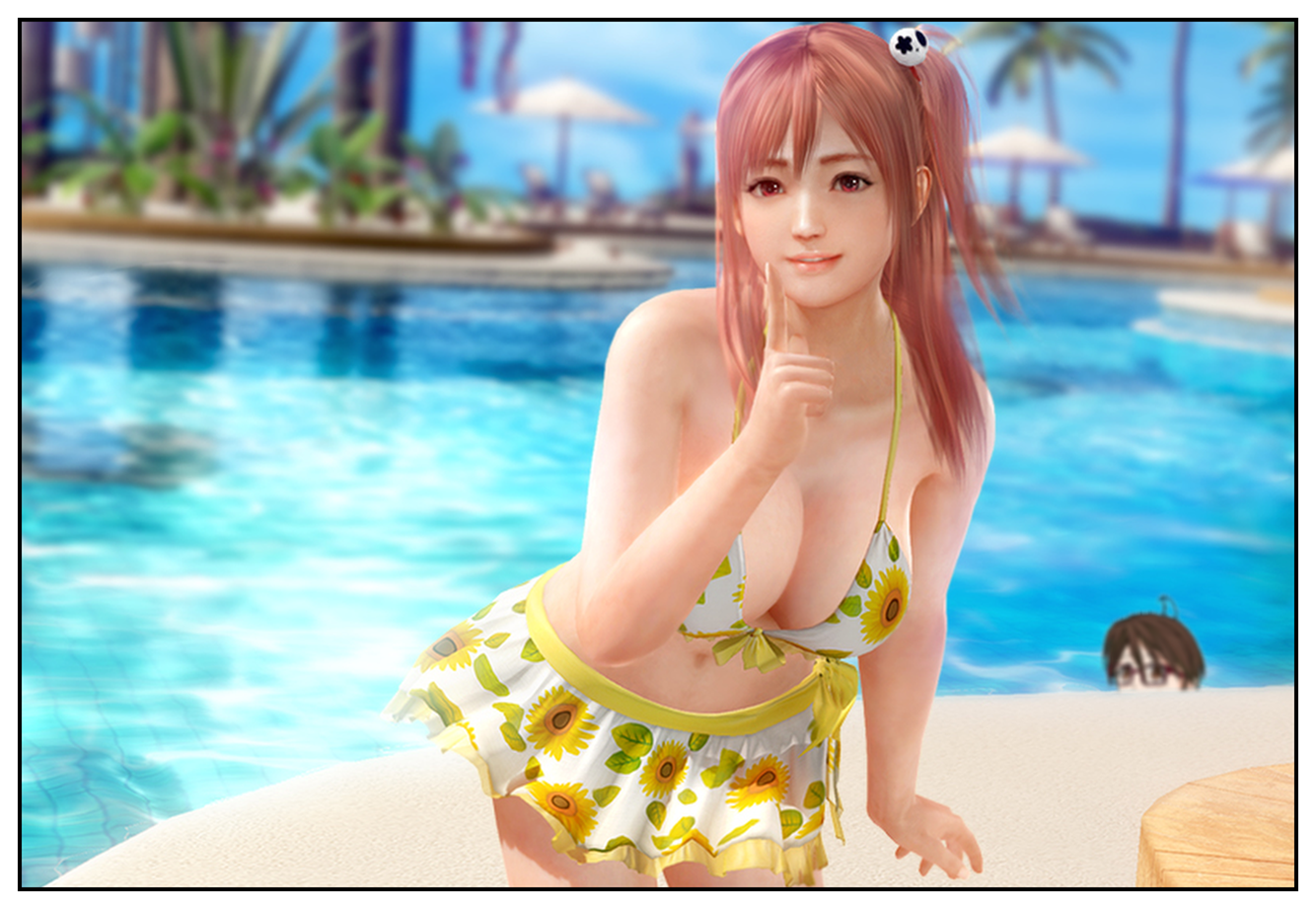
2306: Happy Birthday, Discord

0306_001

Back in the early days of "going online" — after the days of Bulletin Board Systems but before the widespread Internet we know today — our family used CompuServe to get at information online.

For a teenager like I was at the time, it was very exciting. For the first time, I was able to "meet" and communicate with people from all over the world, discuss common interests and even exchange files.

One of my favourite features of CompuServe was an area it rather grandiosely referred to as the "CB Simulator", after the units used by ham radio operators to communicate with other enthusiasts over the radio waves. In reality, it was simply what we now know today as a chatroom, but it was a revelation to the young me, who had always had a bit of difficulty finding new people to talk to, particularly those who were into the same things.

In the CB Simulator, I could talk to people without fear of them, say, judging me for my appearance, or my mannerisms that clearly indicated I was uncomfortable with talking to strangers, or how I tended to go the colour of beetroot when talking to girls I liked. No; in the CB Simulator, I was able to communicate in the way I had always felt most comfortable: through the written word.

A few years later, when "the Internet" started to become more of a thing and self-contained, fenced-off communities like CompuServe and AOL were starting to become less of a thing, I looked into Internet Relay Chat, or IRC. There, I found a similar experience to that which I'd had in CompuServe's CB Simulator: the ability to communicate and express myself through text to people from all over the world. And now, I could "emote" too, which in turn led to my first experiences with online roleplaying through a group that "simulated" Star Trek missions through text chat.

I was kind of sad when chatrooms fell out of favour with the rise of what we now know as social media, but for those of you, like me, who always used to enjoy the real-time nature of talking in chatrooms, may I introduce you to the wonderful service that is Discord, which is now celebrating its first birthday.

Originally designed as a free, lightweight alternative to Skype and Teamspeak, Discord has been actively developed over the last year to become one of the best — arguably the best — real-time chat application out there, particularly if you're a gamer.

For the unfamiliar, it works in a slightly different way to instant messaging services such as Skype and its earlier counterparts AIM, MSN and Yahoo Messenger. Instead of focusing on private chats with individuals on your friends list, Discord is instead server-based, much like IRC was. Within that server — again like IRC — there are channels for whatever purposes the server admins desire. Anyone who is a member of that server — and servers can be public or private — can hop in to a channel and text chat. There's voice chat facilities, too, which have very good, reliable, clear voice quality and connections, making it an ideal solution for "party chat" on PC, or even using alongside games that don't normally offer voice communication: the Splatoon community, for example, use it quite a bit, since that game has no means of direct communication whatsoever.

Mostly the thing that excites me about Discord is how much it feels like those old IRC servers, only with a more modern coat of paint. Inline image posts, markdown formatting, animated GIFs and link previews are all a natural evolution of the purely text-based chat that IRC offered, and Discord's cross-platform nature — it works via the Web, on PC or Mac desktop clients or even on mobile — makes it an ideal means for keeping in touch with groups of friends or specialised communities.

I'm very happy that Discord has been such a success since it originally launched, and hope it continues to be A Thing for many years to come yet. It's been a great way for me to interact with friends from elsewhere on the Internet in new, more immediate ways than services like Twitter offer, and, depending on the server, it can be a nice quiet safe haven away from the noise of more public social media channels.

I'm a member of several different Discord servers, but the one on which I'm most active is probably the one I'm an admin of. If you'd like to stop by and say hi — the server is largely focused on video games, anime, lewds and general shitposting, but everyone there is just happy to have a good chinwag — then you can do so by following this link.

Happy birthday, Discord, and happy chatting to those of you who choose to come and join us!
2305: Fighting Talk

0305_001

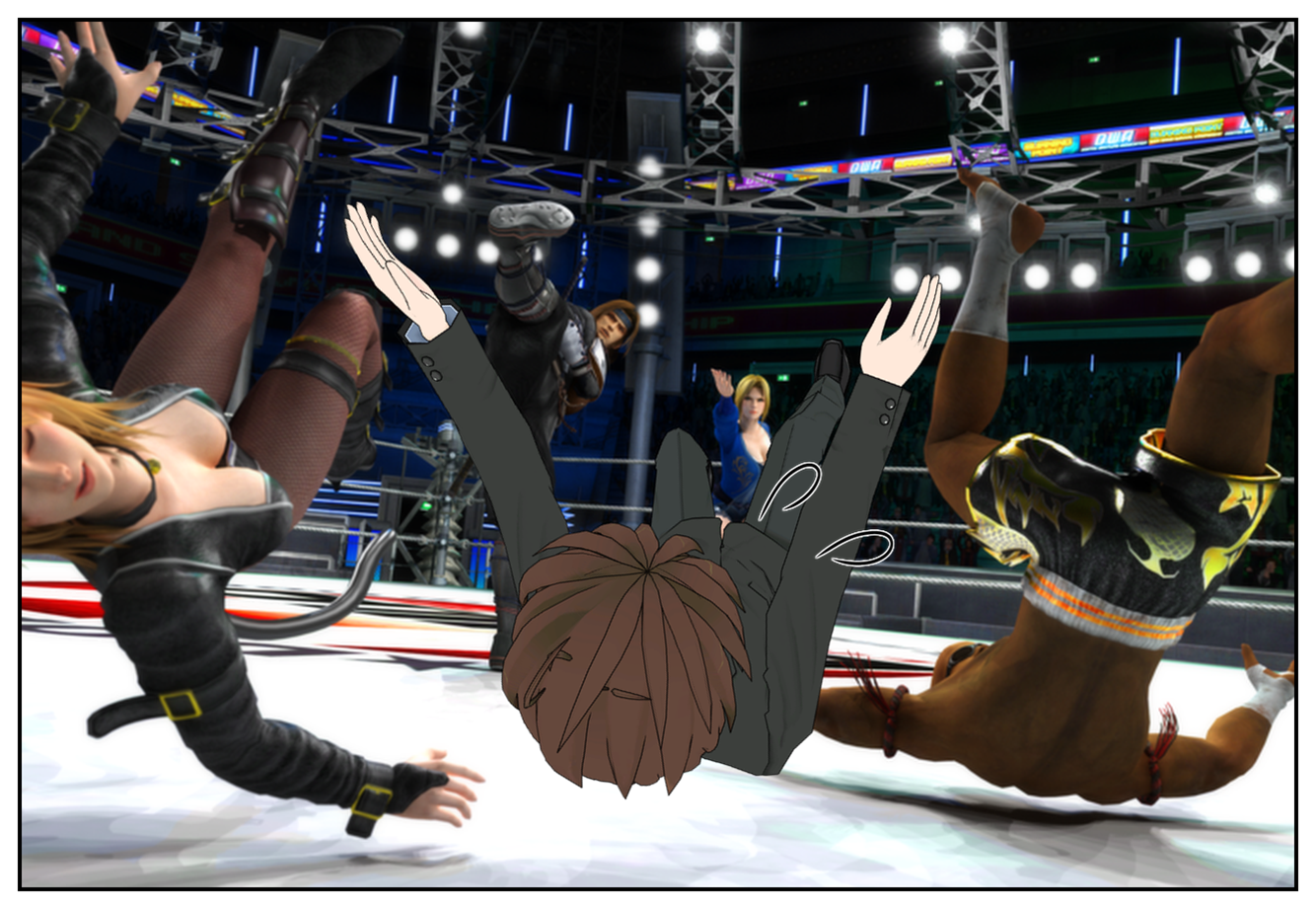
I spent a bit of time playing some Dead or Alive 5 Last Round online with a friend from Final Fantasy XIV earlier. (Hi, Neon!) I've never really played a fighting game online before — it's a genre that has something of a reputation as being brutally unforgiving to newcomers, and with good reason, since the fighting game genre is one that attracts significant numbers of people good enough to actually get paid to play these games.

Thankfully, my friend Neon appears to be of a roughly equal level of skill to me, since we had a series of matches and we both came out roughly equal in terms of victories and losses.

So far in Dead or Alive 5 I'd been focusing on the Training mode, attempting to learn some combos and moves for characters I liked the look of, because I'd love to get past the "button mashing" phase that everyone goes through when they first pick up a fighting game. As such, I was a bit hesitant to even jump into the story mode, because I didn't feel like I knew any characters well enough. But I thought I'd give fighting another person a go — and I'm glad I did.

Fighting Neon gave me a potent reminder of exactly why I've always liked the Dead or Alive series in preference to perhaps more established, popular fare like Capcom's Street Fighter series. It's kind of hard to describe the exact feeling, but I think it's best described as the game feels instinctive, almost primal. You can spend hours learning the specific button combinations to pull off specific moves at the right time — and doubtless the really good players do that — but at a fairly rudimentary level, which is where I'd generously put myself, the fighting system works in such a way that you can look at what's going on on the screen, push directions and attack buttons and have something that "feels" right unfold in front of you. Opponent blocking high blows? Get in there with some low kicks. Taunting you? Charge in and tackle them with a running throw. Knocking you off balance with a flurry of blows? Block, block, block dammit, oh for fuck's sake. (I never have quite mastered blocking in fighting games; given how important and helpful — and tied to the series' iconic countering system — it is in Dead or Alive, I should probably do something about that.)

I haven't yet picked a "main" to play with. I will almost certainly end up going with Kasumi, at least initially, because Kasumi is hot and I vaguely know some of her effective moves. Today I also particularly enjoyed playing as Hitomi (who appears to have wonderful reach with her kicks) and Momiji (though I haven't done any training with her yet, so I was taking wild stabs at her moves). I also discovered that, as I previously thought, I want to steer clear of slower, heavy-hitting characters, because I very obviously don't know how to handle them effectively and tend to get my ass handed to me if I try and fight with them in the same way as the Kasumis and company of the world.

My few games today were an eye-opening experience, then. I'm definitely up for playing some more; if you, too, suck at fighting games and would like a punching bag to play with, feel free to hit me up on PSN under the ID Angry_Jedi.

2304: Blizzard's New Phenomenon

0304_001

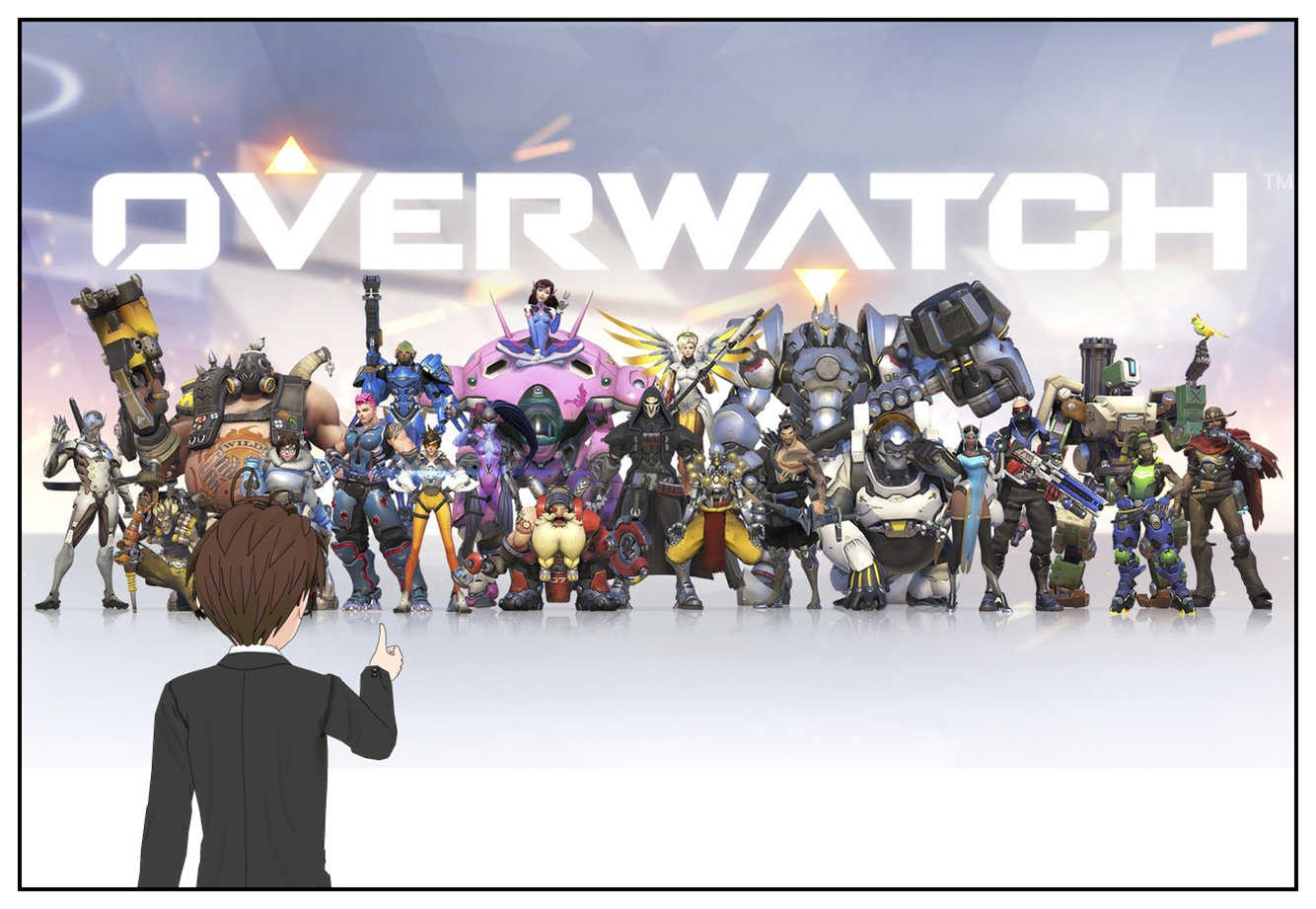
I know I wrote about Overwatch the other day, but having been, well, present on the Internet for the past few days I think it's fairly safe to declare that Blizzard has an honest-to-goodness phenomenon on its hands.

Overwatch's open beta (read: free demo — the best marketing tool they could have possibly used) ended at the start of this week, but people haven't stopped talking about it since. They also haven't stopped producing fan art, incorporating Overwatch characters into memes and cartoon strips, discussing strategies, taking the piss out of people who play nothing but Bastion and admiring Tracer's admittedly fine posterior.

It's kind of remarkable, really, because it seems to have come out of nowhere and evolved organically without a trace of interference from the marketing or PR machines. A few weeks ago, I knew very little about Overwatch and had little interest in it; after a couple of days with the beta on both PS4 and PC, I'm well and truly sold and am happily enjoying the wealth of fan-made content that's been produced seemingly in just the last few days.

Blizzard has always been a somewhat unconventional developer-publisher, producing wildly popular games that eschew popular conventions — mechanically, aesthetically and even functionally. Their insistence on using their own proprietary client Battle.Net to distribute, update and even sell their latest games initially drew criticism — particularly in the case of Diablo III — but as the world has become more and more comfortable with the idea of being always online and multiplayer-centric titles, these complaints have started to fade into the background until now, Blizzard's ecosystem allows it to have extremely successful titles without having to rely on the more established distribution channels such as Steam.

Overwatch's stealth marketing is another example of this. While there have been TV spots, video ads and site takeovers for the game, it has never felt like an aggressive marketing push in the same way that a Call of Duty or a Battlefield sees. Instead, Blizzard chose to rely on the most powerful marketing tool in the world these days: word of mouth. Putting their absolute confidence in their game and releasing it to the public for free for a few days achieved more than any multi-million dollar marketing campaign ever would; it allowed people to try the game for themselves and either confirm that yes, they did want to play it, or, in many cases, sate their curiosity as to what it was all about. In more than one case, the satiation of that curiosity has led to additional sales.

So why is Overwatch such a phenomenon? Well, a lot of it has to do with its striking visual design — it's immediately recognisable — but I think the biggest contributing factor is its wildly varied selection of playable characters. There's something for everyone in Overwatch's cast, whether you're into moody, dark types; big, stompy robots; hot girls; cute girls; frightening muscle-bound girls who probably have a Tumblr page; Westerns; sci-fi… there's a bit of everything. And somehow despite this massive variety in its cast, Overwatch feels coherent and none of its characters feel like token inclusions.

This, naturally, leads to people picking favourites — never underestimate the power of the waifus! — which, in turn, leads to people producing fan-created content based on their favourite characters. And, from there, other fans can enjoy this content and express how much they like their favourite character through sharing these fan-made productions or engaging with the artists. Over time, a whole meta-community outside of the game builds up, even bringing in people who don't actually play the game but just like watching it, or appreciate the art direction, or like the look of the characters.

In short, Blizzard would have to do something absolutely spectacular right now to fuck up Overwatch. I'm really looking forward to giving the full version a go at the end of the month, and if you're up for a multiplayer rumble in its wonderfully colourful world, be sure to hit me up.

2303: Review in Progress

0303_001

I've noticed a lot of gaming sites posting "review in progress" articles for new releases recently. And while there is a time and a place for this sort of thing — most notably in the case of massively multiplayer online games, or multiplayer-centric titles that are dependent on their communities — I don't think it's a particularly appropriate way to handle single-player games.

The idea of a "review in progress" is for the author of the article to post their thoughts and opinions about the game as they're playing it, updating it over time before coming to a final judgement and a score, assuming the publication in question does scores. This does kind of make sense in a way, because some games are slow burners that take a while to learn, and it can be interesting to see how someone's reactions and feelings change over time. But at the same time, I find myself asking why the author didn't just hold fire until they'd beaten the whole thing, then talk about their complete "journey" all in one go. That makes for an interesting structure for an article; in the case of games with strong emergent narratives but challenging mechanics — something like a Paradox strategy game, for example — it can even provide the basis for a compelling "story" of how the reviewer learned how to manage their empire more effectively after their incompetent beginnings.

The reason why "reviews in progress" exist should be obvious by now, though: they're there to hoover up some of those sweet, sweet clicks from people Googling, say, "valkyria chronicles remastered review" or "overwatch review" or whatever else the latest hotness might be. Because the word "review" is in there, these half-finished articles show up in search results (assuming the tech guys at the sites in question have done their SEO homework) when what people are really looking for is detailed, authoritative, helpful and knowledgeable information on games they're interested in. It's one of many examples we have today of the inner machinations of the press being self-serving rather than in service of their readership.

More than that, though, as someone who's floated in and out of the games press since he was a teenager, I find the idea of a "review in progress" somewhat objectionable on another level. When I took on my first ever writing assignments, I did so on the understanding that you should finish the game you're writing about before putting pen to paper in order to be able to give a complete, in-depth appraisal of everything it had to offer. Granted, this was in the magazine age, when publications had rather more time to assemble their articles, and also in an age where there weren't nearly as many games released every week as there are today — not to mention an age where 100-hour games were pretty much unheard of — but still, I think it's a good goal to aspire to.

If you're a professional critic, regardless of what you think the "purpose" of game reviews are, people are going to come to you on the assumption that you know what you are talking about, and that your articles will be well-researched, informative and helpful for making a purchase decision, or simply to find out more about a game. If you're not doing your job properly — in other words, if you're posting garbage like this or this, to give two extreme examples — then you shouldn't be at all surprised when you become the object of ridicule that the average modern games journalist is today.

In other words, the games press would be a whole lot better — and more helpful to its readers — if it stopped worrying about churning out articles to release dead on embargo time, and instead only post pieces when the author in question actually has a full, complete and knowledgeable understanding of the thing they are commenting on.

Sadly, I don't see this happening any time soon.

2302: By the Power of the Virtues

0302_001

There's a new-ish trend on social media. And like most new-ish trends on social media, it's not a particularly pleasant one.

Known as "virtue signalling", it essentially involves people making public statements that make it abundantly clear that they hold what is widely regarded to be the "correct" viewpoint on something, be this feminism, homosexuality, Donald Trump, immigration, unisex bathrooms, whether or not we should leave Europe, gun control and whether or not Uncharted 4 deserved more than an 8.8 out of 10.

It's an offshoot of a couple of other social media behaviours that have been happening for a while, most notably Twitter's "dot-reply" practice, which gets around Twitter's usual behaviour of not showing people you follow replying to people you don't follow (because why would you want to "listen in" on a conversation involving someone you don't know?), and the related practice of people complaining at companies on Twitter without putting the company in question's user ID in an @mention at the start of the tweet. "Hey, @amazon, your customer service today was shocking!" — you know, that sort of thing.

Both of these practices — and virtue signalling too, for that matter — are a means of amplifying one's own voice and trying to get noticed. Typically, social media consists of lots of people on a reasonably equal footing all shouting into the void and occasionally having conversations with one another. When you bring in dot-replies, public replies and virtue signalling, however, it becomes less about your actual message and more about public perception of you. When you engage in any of these behaviours, you're trying your very best to get your message heard and, crucially, reshared by as many people as possible. In that way, the word can spread about What A Fine Example of Humanity you are, and you can subsequently reap the social capital rewards from successfully Saying the Right Thing in Front of the Right People.

Taking a public stand on things isn't necessarily a bad thing. But unfortunately, the very nature of social media has a habit of distorting messages beyond recognition, and when combined with such transparent attempts to spread your message as far and wide as possible as what we've just described, the global game of Chinese Whispers kicks into overdrive and your message — which may well have been flawed in the first place, or perhaps just misinterpreted somewhere along the line — gets taken at face value, for better or worse.

And people these days simply do not question the things that are presented to them. This is particularly bad on Facebook, where many people — particularly those less Web-literate — will happily share completely untrue stories without bothering to check the validity of them, and their friends, equally Web-illiterate, will share them further, until they've been around the world and back, with a significant number of people believing the load of old bollocks that some troll from 4chan probably dreamed up in an attempt to see how many idiots he could net.

It happens on Twitter, too, though, and through the media as well. A recent example came via the subreddit for Ubisoft's multiplayer shooter The Division, where a user made up a completely false glitch-based strategy for one of the bosses, and said "cheat" was picked up by numerous high-profile gaming websites without bothering to check whether or not it was legitimate for themselves. (It would have been easy enough to do so, given that the user in question actually posted another thread on Reddit at the same time with a legitimate strategy for the same encounter, admitting that his "glitch" was a complete fabrication.)

And this lack of questioning or critical thinking is poisonous when it's combined with virtue signalling. Opinions that someone made up become accepted as irrefutable fact simply because someone "important" shared them, or lots of people shared them. Take the Ghostbusters reboot trailer, for example — now famous for being the most disliked YouTube video in the site's history. The story runs now that it is the most hated video in existence "because of misogyny" — and there's simply no arguing with that, because so many people  have made loud, proud statements about how they're going to give Ghostbusters a chance because they're not misogynist at all, no sirree, and that means that anyone who simply thinks the trailer is shit (it kinda is) gets thrown under the bus with the genuine misogynists and the trolls who enjoy stirring the pot for the hell of it.

Generally speaking, I tend to take the attitude that if you have to shout loudly about what a wonderful person you are, you probably aren't a particularly wonderful person in the first place. So far I'm yet to be proven wrong with this theory.

2301: Overwatch

0301

I decided to give the game everyone seems to be talking about — Blizzard's new first-person shooter Overwatch — a bit of a go this weekend. They were running an open beta, after all, so there was no risk whatsoever involved in downloading it and giving it a shot.

And what do you know — it's actually pretty good. I'm not sure if I'm sold enough on it to want to pick up a copy when it comes out later in the month, but I certainly enjoyed the time I spent with it over the last couple of days.

For those who have perhaps heard of Overwatch but not found out any more information about it, it is, in many ways, similar to Valve's classic Team Fortress 2 in that two teams made up of various different characters with different capabilities face off against one another in order to complete an objective of some description. In the game as it stands at the moment, the objectives on offer include a "king of the hill" type affair, where over the best of three rounds, each team has to control a particular area on the map for a certain amount of time; an "attack and defend" situation, where one team has to defend a point against assault from the other team; an "assault" variant, where the attacking team has to escort a slow-moving "payload" vehicle from one end of the map to the other while the other team stops them; and a mode that mixes the "attack and defend" and "assault" objectives together.

Like Team Fortress 2, the different characters have different roles on the team. Offensive characters are nimble but fragile, with their weapons and abilities concentrating on inflicting damage efficiently. Defensive characters have the ability to do things like lay down turrets or, in the case of one particular character, turn themselves into a turret. Tank characters have a huge pool of health points so are designed to act as a distraction for the other team. And support characters generally have some sort of useful ability to help the team out — usually some form of healing, buffing or both.

Where Team Fortress 2 only had one character of each archetype, though, Overwatch has several, each of whom has a unique weapon and loadout of special abilities. Weapons have clips of ammo and have to be reloaded when empty, but you have infinite clips, so there's no hunting around for ammo or any punishment for spray-and-pray gunplay. You can restore your health by returning to your home base, similar to how Blizzard's MOBA Heroes of the Storm works. And if you find a hero isn't working out for you, you can switch either when you die or when you're in your base.

Overwatch strikes an excellent balance between simplicity and tactical depth. The characters are all easy to learn in terms of mechanics, but applying their weapons and skills to situations throughout a match is the real challenge. That and not blowing yourself up in some instances; my favourite character so far, D.Va, has the ability to self-destruct her mech suit, killing anyone nearby, which is an absolutely devastating skill, but also very likely to take you with it if you don't immediately run away.

There's also a fun metagame that doesn't fall into the Call of Duty trap of excessive challenges and skill levels: you simply have an experience level, which gives you a "loot box" every time you level up, and the items in the loot box are randomly selected skins, animations, spray paint logos and voice clips for the various characters in the game. None of these have any effect on the characters' abilities — they're just there as cool collectibles as an incentive for players to keep playing. The choice to make Overwatch a full-price game rather than a free-to-play affair also seems quite sensible, too; while some may balk at paying full whack for a multiplayer-only game, there's a substantial amount of content in here, both heroes and maps, and Blizzard claim that they're going to support the game post-launch with new, free add-on content rather than paid DLC. A round of applause for them, then; doubly so since their parent company is Activision, who loves milking the annual Call of Duty installments dry.

The other nice side-effect of it being a full-price game is that everyone has access to everything from day one. Everyone can pick a favourite character and get to grips with them without having to wait for them to come around in a free-to-play rotation; everyone is, in other words, on a level playing field to begin with, with no advantage given to someone who has paid up for characters, boosters or whatever.

As I say, I'm not yet sure if I'm convinced enough by the beta to hand over 50 quid for the full game when it releases later in the month, but I will say it's the most fun I've had in a first-person shooter for a very long time indeed, and I generally don't go in for competitive first-person shooters. The beta seems to have had some positive attention, too, so hopefully it will enjoy a solid community for some time — long enough for it to be worthwhile for Blizzard to keep adding new content.

If you want to give it a go for yourself, I believe you have until Monday morning to try it out. Better hurry!

2300: Buried Treasure

0300_001

Andie and I were both feeling a bit sorry for ourselves earlier (well, emphasis on me, somewhat; recent life has been getting me down a bit. All right, a lot.) so we decided to go out and do something together rather than sitting at opposite ends of the house playing computer games and not talking to each other.

Andie's sister Michelle had taken her Geocaching a while back, so she suggested we give it a try. Geocaching is something I've been meaning to try for a while but never got around to; it's also something that, I feel, is more fun with other people in tow, as you can put your heads together to solve problems then.

For the unfamiliar, Geocaching is a sort of real-world game that you play using a GPS-equipped phone, a pen and possibly some digging implements, tweezers and bramble-proof clothing. Hidden caches are marked on your map; you have to find them. Whoever hid the cache leaves a description, a hint and perhaps a hint photo to help you find them, then when you find it you open it, write your name and the date on the bit of paper inside it, log it on the website or phone app, then put it back so someone else can find it at a later date.

That's about it for the basics, really. There are different types of caches, including those that you're only "allowed" to register if you've fulfilled certain conditions beforehand, and those that hide their final location behind a series of riddles, but yes; the basic formula is go to place, find thing, log thing, put thing back.

What I find interesting (and pleasing) about the whole thing is that it's all built on trust, and people appear to stick to this honour system. I don't see any trolling on the cache pages, and I don't see any evidence of people deliberately and maliciously moving or hiding caches somewhere other than where they're supposed to be — both things I would have thought would be a risk with this sort of activity. But, at least in my local area, I haven't seen anything like that so far, though admittedly I've been out on just one excursion so far.

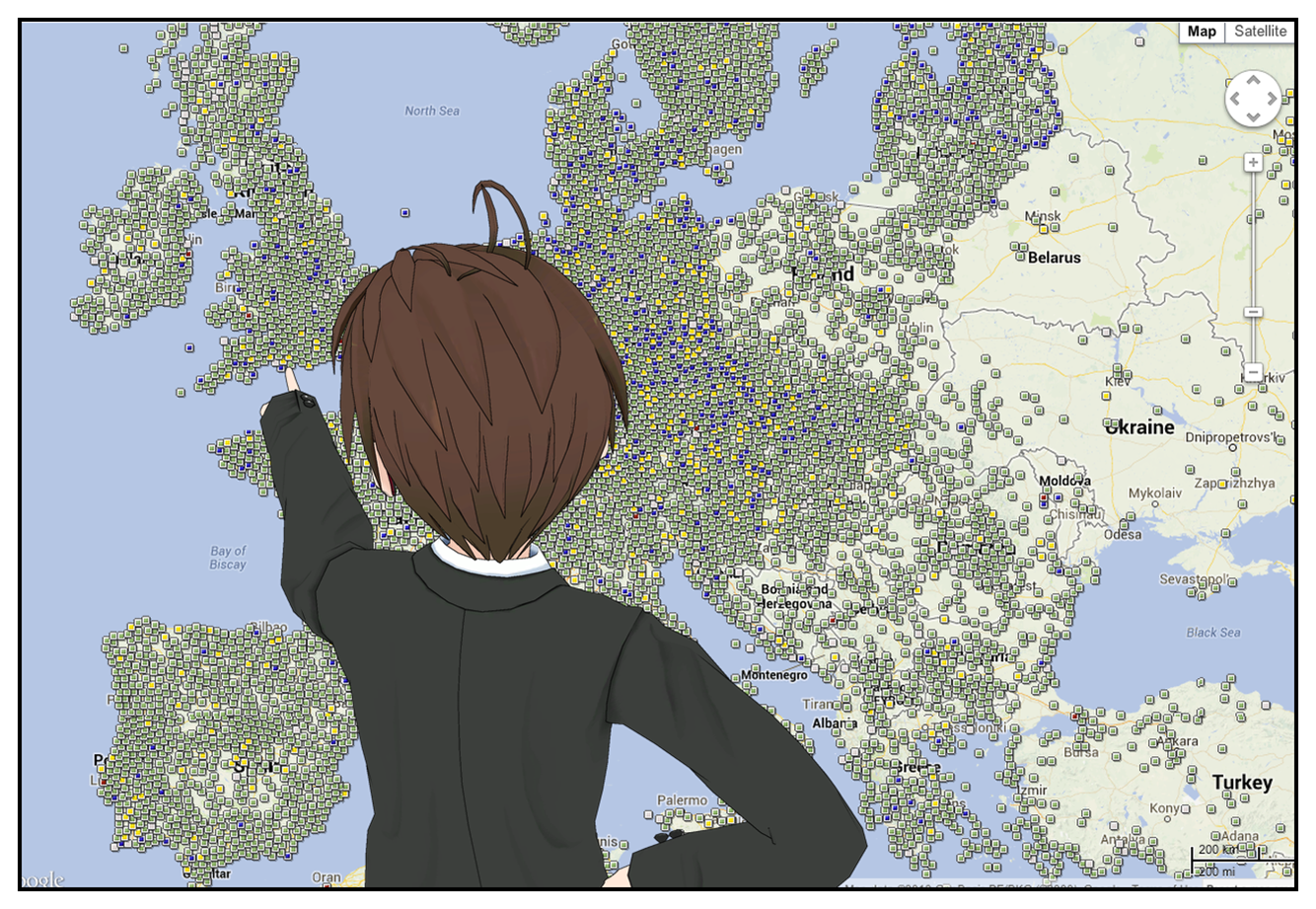
I think part of the reason that there's no trolling involved is that, despite technically being a "game" of sorts, Geocaching has very little in the way of actual "gamification", to use the buzzword that was popular a few years back. In other words, there's no scoring points, no earning experience, no levelling up, no badges — just a simple count of how many caches you've found and a map that gradually fills up with smiley faces as you successfully find the hidden goodies secreted at the various locations around your area — or indeed the area that you happen to be in, since one of the fun things about it is that you don't have to limit yourself to the local area, and can instead participate in it as an activity wherever you happen to be, assuming there are some caches hidden nearby.

It was a fun afternoon, then, and a pleasant way to spend a Saturday in the sunshine — though after all the walking we did we were both more than ready for a long sit down by the time we finished. I'm looking forward to giving it another try in the near future; there are still lots to find around Southampton, and I bet there's a whole bunch out in the New Forest, too…

2299: The Sprawling Endgame of Dungeon Travelers 2

0299_001

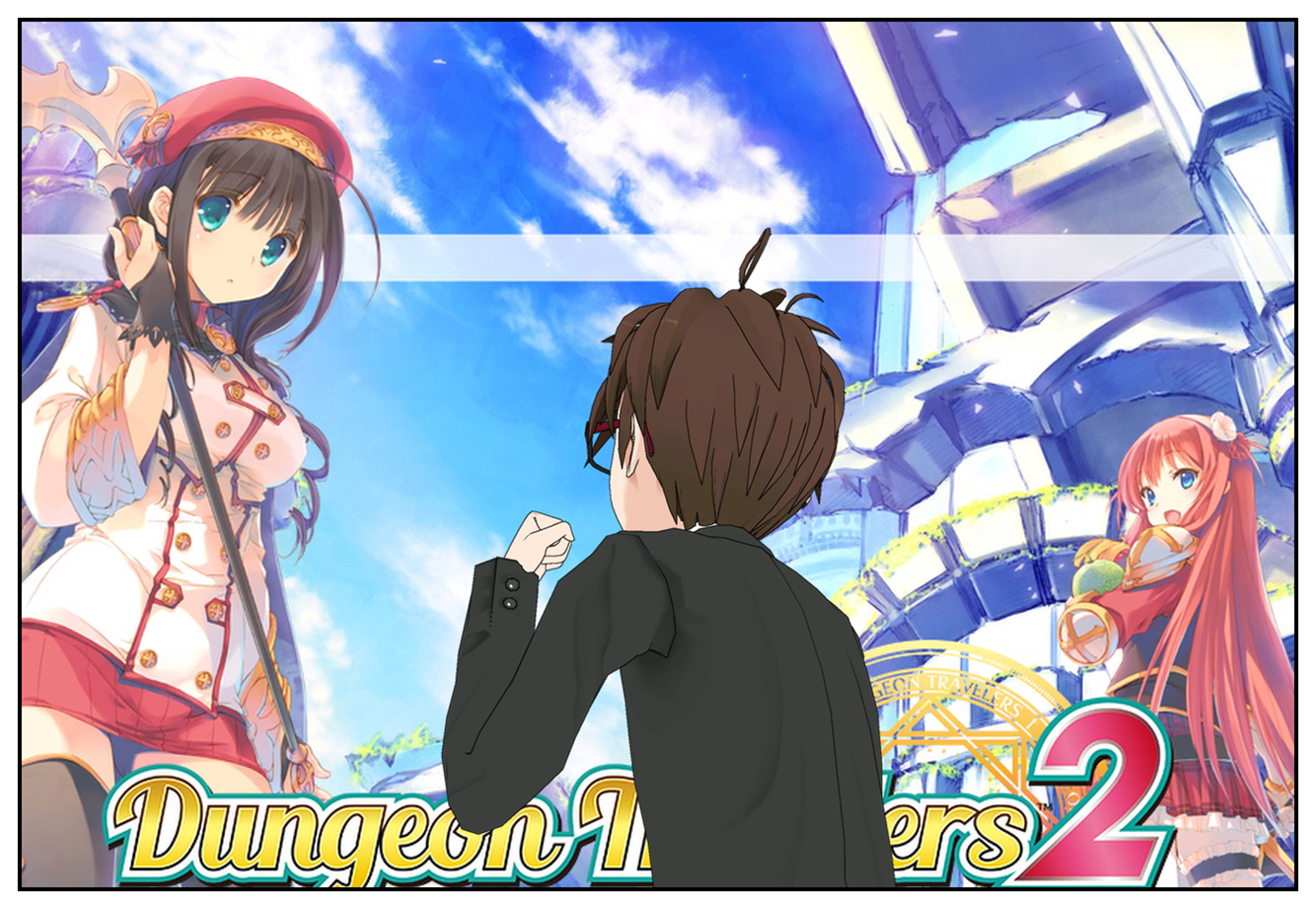
I must admit, when I first started playing Dungeon Travelers 2 I was concerned that its dungeons were a bit on the small side compared to the dungeon crawler I had previously played, Demon Gaze. As the game progressed, however, it became apparent that I didn't have anything to worry about.

And then I heard about the post-game content. And then I got into the post-game content.

Demon Gaze had a certain amount of post-game content — most notably a fairly straightforward dungeon where you re-fought all the bosses from earlier in the game, then a horrendously difficult true final boss right at the end. It took me quite a while to plough through it, mind you, though this was partly due to the fact I was also chasing the Platinum trophy, which necessitated a certain amount of grinding on the random number generator in the hope of getting some of the best item drops in the game.

Dungeon Travelers 2's postgame is on a whole other level, though. It's practically a whole other game's worth of content; you finish the main story of the game around about the level 50 mark or so, and the postgame will take you to 99 (and beyond, if you level reset in the hope of "crowning" your characters through permanent stat bonuses) across a number of different dungeons.

What I find most fascinating about Dungeon Travelers 2's postgame is how much effort has been put into it. I find myself wondering how many people will beat the final boss of the main story, watch the credits roll and then put the game down. It would be perfectly valid to do so, after all, since the game is technically "complete" then, even if you haven't even seen half of what it has to offer. There aren't even any specific trophies for the postgame — the only trophies you're likely to see pop in the postgame is the enormous grind that is "kill 20,000 enemies" (you won't even have killed 10,000 by the end of the main story, but you most certainly will have at least 20,000 under your belt by the end of the postgame) and the Platinum. In other words, the only reward you're going to get from seeing the game through to its true end is the satisfaction of having beaten it.

But boy, is that going to feel good when it happens. The postgame dungeons are significantly more challenging than their main story counterparts, and in some cases make use of mechanics that haven't been seen anywhere else in the game. There are dungeons where you have to contend with the relationship between several different floors, dungeons where you have to flip switches to open coloured doors in the right order, dungeons where you have to bring certain classes in order to pass through certain doors (bet you wish you'd leveled Tsurara now, huh) and dungeons that are just a single floor, but absolutely enormous.

Each of the dungeons has two or three bosses to fight as you progress through them, and a level 99 God boss at the very end who will most likely destroy you if you charge in there when you first reach them. Instead, what you're supposed to do is explore each dungeon until you reach a trigger point (normally just before the door to the God battle) which opens up the next one. In a couple of cases, you have to increase your Quest Rank to a certain level before the next dungeon will open up, too, so hopefully you've been paying attention to the Quests as you go through the game!

I'm currently on the second-to-last dungeon, Gear Castle. This is a five-floor futuristic tower with a lot of puzzles. The first floor featured switches that opened blue or red doors (and closed the others), while the second was largely based around conveyor belts that you could switch the direction of with levers around the level. The third, which I'm currently on, features a mix of these two aspects, and I'm yet to see what the fourth and fifth floors offer.

Once I'm through Gear Castle I'm on the home straight: all that stands between me and final victory — aside from that 20,000 kills trophy, which I have no idea how close I am to — is the 30-floor Tower of Bogomil and whatever lies at the very top. I understand that reaching the 26th floor of Bogomil is a significant moment, as it's at this stage your party should be levelled enough to take on the Gods, so I'm looking forward to that with a certain amount of trepidation.

All in all, the clock is going to be well over 200 hours by the time I'm finished with this beast, and I have absolutely loved it throughout. It's seriously one of the best dungeon crawlers — if not RPGs, generally — that I've ever played, and more people need to play and love it.

Assuming I make it to the end by then, I'm planning a month of coverage on MoeGamer next month. There's certainly a hell of a lot to write about.

2298: Holiday on Zack Island

0298_001

I wasn't just trying Dead or Alive 5 Last Round out of the blue yesterday; I was inspired to finally pick it up after playing some Dead or Alive Xtreme 3, which I've been enjoying a great deal.

For those unfamiliar, the Dead or Alive Xtreme series has very little to do with the fighting game series Dead or Alive save for involving some of the same characters — specifically, kickboxer and playboy Zack, who owns the various tropical paradises the Xtreme games unfold on, and a selection of lovely ladies from the series indulging in various holiday-ish activities.

The first Dead or Alive Xtreme game — Dead or Alive Xtreme Beach Volleyball, which many people thought might be a joke when it was first announced — was released on Xbox and largely focused, as you might expect, on playing volleyball, but there was a curious dating sim metagame attached, too, where you could give gifts to the various girls in the hope of getting them to partner up with you — you can't play beach volleyball without a partner, after all.

Dead or Alive Xtreme 2 on Xbox 360 was a very similar game but had a couple of additions to the original formula. Most notably, it added jetski racing, which was a hell of a lot of fun, and provided a reliable means of making money for those who weren't very good at volleyball or some of the smaller activities the game offered.

And so we come to Dead or Alive Xtreme 3 on PlayStation 4, which in many senses is a bit of a step backwards for the series in that it's closer to the original game in structure, but manages to remain enjoyable regardless. I miss the jetskiing in particular, but I'm enjoying the volleyball and other activities, and the fact that the game is a lot less obtuse about things like what gifts the girls like, what is happening to your relationship levels and suchlike makes it a much more pleasant experience. Couple that with a simple mission and levelling system plus a "grade" given at the end of every 14-day virtual vacation, and despite being pared back in terms of content, Dead or Alive Xtreme 3 is, in many regards, the most well-structured game in the series.

The thing I like about Dead or Alive Xtreme — all of them, but most recently 3 in particular — is that it's just plain relaxing to play. Gentle, chilled out music plays in the background as you engage in various activities ranging from beach volleyball to rock climbing or a tug of war on floating platforms in the swimming pool. As day gives way to night, your chosen girl heads back to her hotel room and has the option to hang out in the casino and play roulette, blackjack or poker. Then the whole process repeats again.

The reason why it's so relaxing is that it doesn't put any particular pressure on you to play in a given way. "Mission" pop up every so often, either from the girl you're controlling or Zack, and these provide rewards for the overall metagame, but they're strictly optional. In the case of the girls' missions, they can provide a good indicator of how well you're doing on this playthrough, though — in order to get the best score at the end of her holiday, you need to have completed 7 of her specifically numbered missions, ending with "Satisfy [girl] by the end of the vacation".

Aside from that, though, you can tackle the game how you see fit. You can focus on trying to get a complete collection of swimsuits for a favourite character. You can work on trying to satisfy as many of the girls on the island as possible in a single playthrough — pretty difficult when you first start playing, but as you level up their "excitement level" over time, it becomes easier. Or you can switch to "Owner Mode" and just use the game as an attractive software toy, allowing the computer to take control of your chosen girl in various activities while you play with the camera angles and take photographs.

Dead or Alive Xtreme 3 is notorious for not getting an official English localisation due to some controversy a while back. There is some debate over whether or not publisher Koei Tecmo really believed that the game would be subject to backlash from social justice types when it was released, but you can bet if the game did see an official Western release, we wouldn't hear the end of it from the numerous holier-than-thou publications and writers on the market today.

The silly thing is, it's not offensive in the slightest. It's sexy, sure, but Dead or Alive has always featured spectacularly beautiful women, and this in itself isn't offensive. Some of the swimsuits are quite revealing, and some of the minigames cause an entertaining "swimsuit malfunction" for the loser, though the suit in question doesn't actually fall off or anything — it just comes untied and stays magically attached. In other words, there's no nipples, no fannies, no bumholes, no fucking, no kissing and definitely no holding hands. It's just an all-female cast hanging out on the beach, playing games and having fun rather than punching each other in the tits like they do in the mainline Dead or Alive games.

To put it another way, Dead or Alive Xtreme 3, like its predecessors, is a game that it's just nice to play. It's not a deep game, it's not a complicated game (unless you want to optimise your playthrough strategies for the fastest progress) and it's not a difficult game, but it is a game that it's just thoroughly pleasant to spend time with, and I predict it's one I'll keep coming back to when I just want to chill out and enjoy myself without thinking too hard about anything.

The perfect virtual holiday, in other words.

2297: Fighting Rhythm

0297_001

I've been giving Dead or Alive 5 Last Round a bit of a go. Dead or Alive has been probably my favourite fighting game series since its second installment on Dreamcast, although I wouldn't say I've ever been particularly amazing at it. The wonderfully assorted characters and the satisfying fighting action meant it didn't matter all that much, though; I just enjoyed the spectacle of the game, since it's always been quite a looker, and the PlayStation 4 incarnation of Dead or Alive 5 is no exception.

What I surprised myself with earlier today was how much I actually managed to get "in the zone" and feel like I was getting a much better grip on the button combinations necessary to fight effectively rather than just mashing the punch and kick buttons and directions randomly and/or instinctively. I deliberately invested some time in the game's training mode — by far the most in-depth, helpful and well-designed training mode I've seen in a fighting game — and came away with a somewhat better understanding of many of the mechanics as well as knowledge of at least a couple of basic combos. Doubtless not quite enough to make me competitive online, of course, but a start, at least.

When I was focusing on correctly performing these combos in the training mode, I found myself focusing and concentrating on the movements of my fingers in much the same way one does when playing a musical instrument. Speed and accuracy is key in both instances, and you won't truly master either until you have the necessary movements well and truly ingrained in your muscle memory. Music is perhaps a bit different in that performing a piece usually involves doing the same movements at the same time each time you play it, whereas a fighting game involves making use of various combos — musical phrases, if you will — according to the situation in which you find yourself. In some regards, then, it can probably be likened to an improvisatory performance; the cues are just visual rather than a chord sequence.

I've never been that good at improvisation, tending to fall back on a few reliable things that I know. In music, it's things like the blues scale; in fighting games, it's the few combos I know — inevitably the most simple ones. To step up your game in either field, you need to expand your repertoire: learn new phrases, be able to perform them on command, commit them to memory, then know the best circumstances in which to use them. It's something that takes practice, and something that not everyone will have the patience for.

I've shied away from many modern fighting games simply because their mechanics and systems seem so obtuse, with meters all over the screen and all manner of peculiar terminology flying around. Dead or Alive, meanwhile, has always felt like a relatively pure and easy to understand experience, and after my experiences today I find myself feeling a little more confident that I might actually be able to learn the game beyond button-mashing. Whether or not that ends up being the case remains to be seen, but in the meantime, I have one hell of a pretty game to look at.

(Also, Marie Rose best girl. Now I know, people. Now I know. Bakabakabakabaaaakaaaa!)