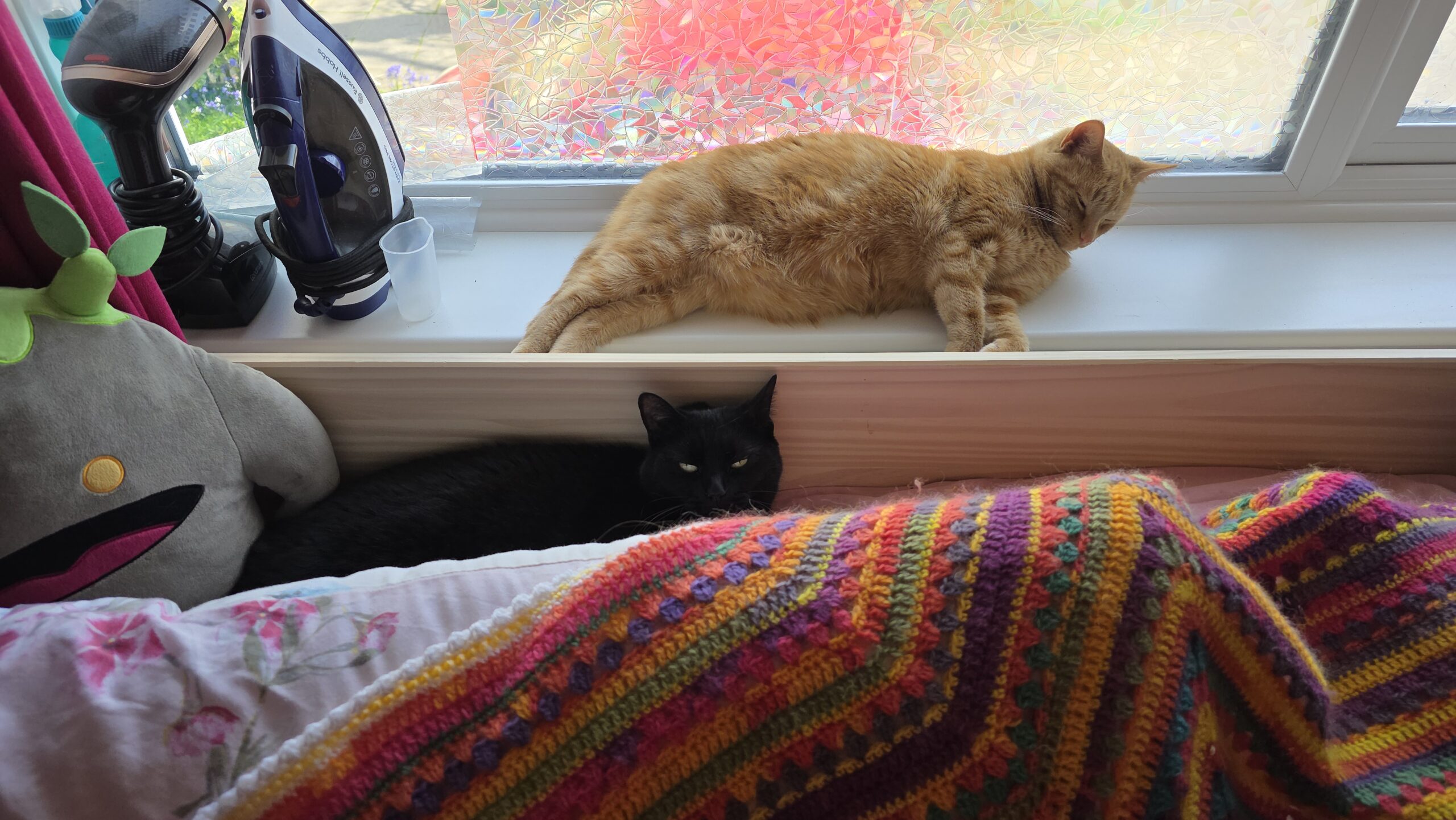
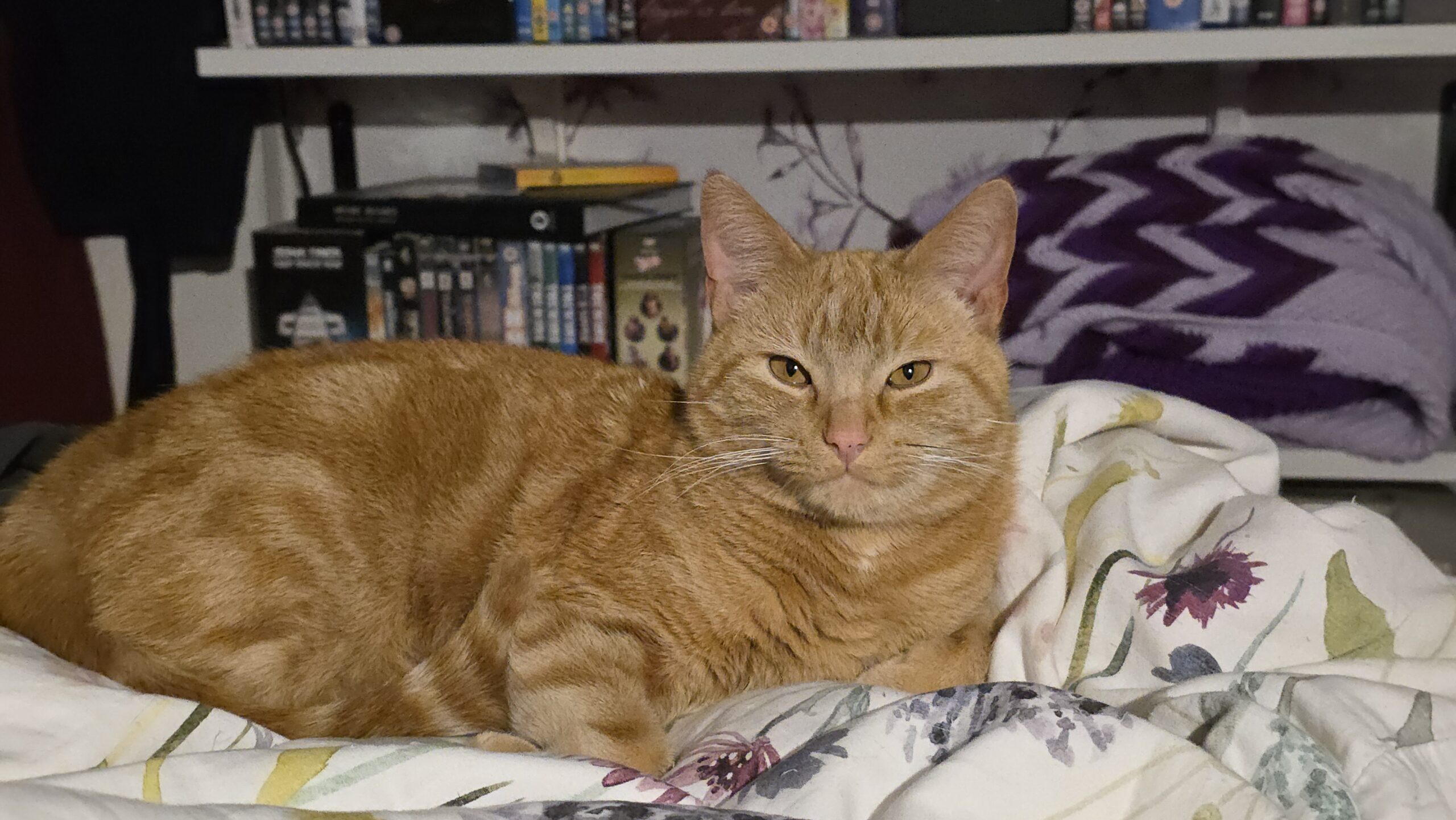
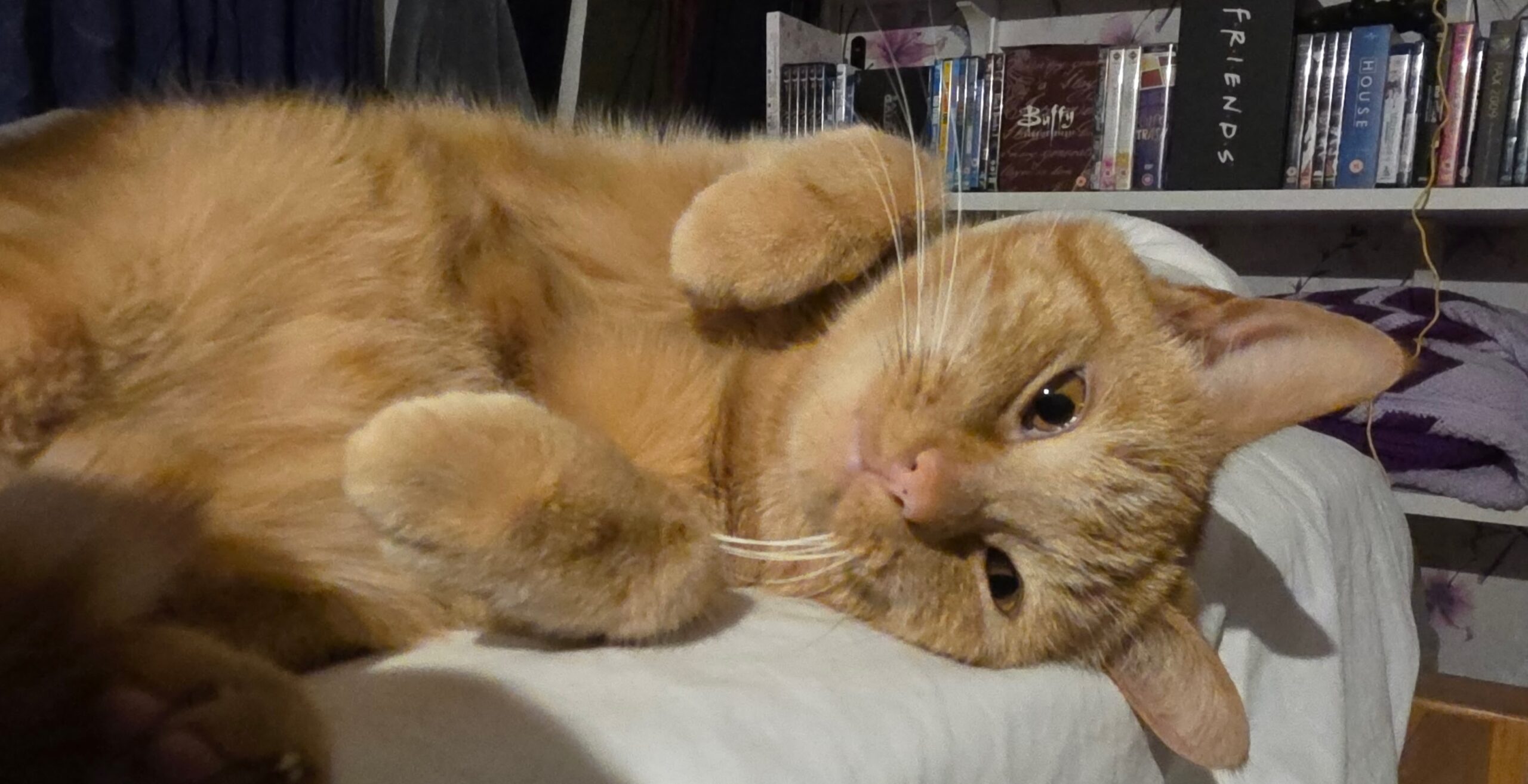
Well, we did what we said we were going to do: we got away from it all. Part of me still wants to be at home waiting with open arms for Oliver to return, but it's been a week. At this point I don't know if he's more or less likely to make it home by himself after this long; apparently typically "indoor" cats tend to return home after about 5-7 days away if they go walkabout like this, but we have something of a suspicion that Oliver, from a previous life (i.e. before he moved in with us) has some memories of Being Outside, hence his apparent eagerness to go wandering off.
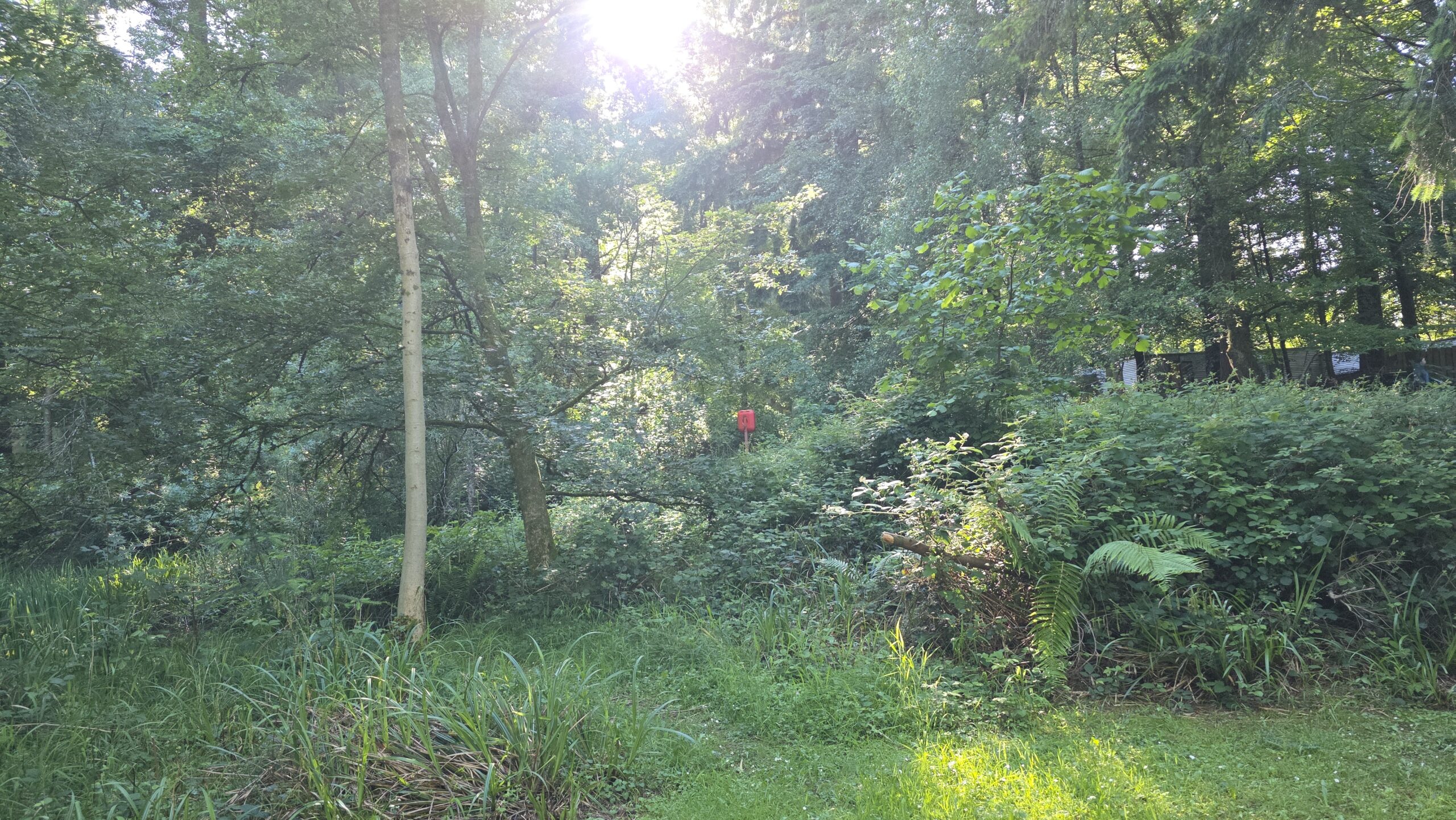
Regardless, we are some distance away from, practically speaking, being able to do anything about his disappearance right now, so all we can do is attempt to enjoy ourselves. We are safely ensconced in our villa, the weather is nice, and this is the view out of the back door:
Green. Green everywhere. It is nice. I feel a certain affinity for foresty settings. I have always liked coming to Center Parcs precisely because they're all slap bang in the middle of a forest, and when I was a youngster, I always used to like trips to Waresley Wood, a nearby small woods that also, as I recall, played host to a sewage works, which was nice. You could tell which way you were going from the smell in certain areas.
I always feel somewhat mixed feelings about being out in nature. I certainly, on the whole, enjoy the experience of being in natural surroundings, and find the general environment to be rather relaxing. At the same time, though, I am always very conscious of the number of things that live in Nature that are more than willing to sting me, bite me or just generally make me very itchy. And these things are not always immediately apparent — though I do tend to tread specifically carefully when I'm in an unfamiliar and somewhat "untamed" environment; memories of enduring the irritation of a brush with some stinging nettles as a kid remain surprisingly vibrant, and I'm not keen to repeat them as a grown adult.
I am hoping the time away will help us. We have been so worried for the last week that it's just completely exhausted the pair of us. As I type this, Andie has just climbed into bed and gone to sleep. It is not even 6.30pm, but I do not blame her one bit. We have been fretting so much over our silly little man, and both of us are still worrying over him, even though we've both agreed that to just go ahead with our time away is the best possible thing we can do with regard to our own self-care.
And like I've said before: Andie's mum is looking after our house and Patti while we are away, so if Oliver does happen to show his face — or if we hear from someone who has seen him — she can take any sort of action that might be needed. Hopefully, that action will just be "shut the little bugger in and seal up all the windows for the rest of eternity" but… well, as I've said numerous times over the last week, we just don't know.
Anyway, I am going to make a specific effort to try and enjoy my holiday now. We miss you, Oliver, and we would love it if we would be able to come home to your smiling face on our return next week. For now, please be safe, take care of yourself… and go make a lot of noise at a sympathetic-looking person who will help you be reunited with us.
We have no particular plans for the rest of the day. I'm off to see if Andie actually wants to wake up at all today, or if we might as well start our holiday properly from tomorrow!
Want to read my thoughts on various video games, visual novels and other popular culture things? Stop by MoeGamer.net, my site for all things fun where I am generally a lot more cheerful. And if you fancy watching some vids on classic games, drop by my YouTube channel.
If you want this nonsense in your inbox every day, please feel free to subscribe via email. Your email address won't be used for anything else.
I have posted more than 30 more flyers about Oliver today. Andie's mum went out calling for him last night. We have put out adverts on social media, informed the microchip company, informed our local vets, informed local cat charities. We have spent several nights staying up waiting, placing stinky pants, litter trays, favourite food and treats outside. We have wandered around the neighbourhood in multiple directions shaking treats and calling for him. At this point I think we have no other option than to draw a line and say that we have done everything we possibly can do for the little bugger, and the only thing really left is just… to wait.
It's not giving up. It's an acknowledgement that we have made an effort to try and find him, and thus far those efforts have been unsuccessful. This could mean any of a number of things: that he's no longer with us; that he doesn't want to be found; that he's gone far enough afield that we haven't been able to run into him as yet; that he's lost and doesn't know how to find his way home; that he's ended up locked in somewhere he shouldn't be; or that someone has taken him in, perhaps even thinking "ooh, I always wanted a cat, I'll keep this one".
Since we don't know the exact reason we have been unsuccessful as yet, it seems like the most sensible thing to do is just to wait and see if any of the seeds we have planted — by which I mean the social media posts, the leaflets, the informing of various local organisations — will bear fruit. This may end in tragedy — I hope it won't, but it might — or it may end in joyous reunion (and a very, very grounded cat). At this point, we just don't know, and as I've said numerous times over the course of the last week, that is one of the most difficult things about the entire situation.
Because we don't know what has happened, we're left in a strange sort of emotional limbo, where all the things we want to feel are both correct and incorrect at the same time. For me, the things that I am holding onto the most are 1) that he hasn't been found, having been hit by a car, on the side of the road somewhere, and thus is hopefully still out there somewhere, and that 2) there are many, many stories of cats who go missing for weeks at a time, who then subsequently come home safe and sound. Apparently my childhood cat, Penny, disappeared for six full weeks at one point, because she had "moved in" with another family. My only concern about this latter potential situation is how to find him if this has happened, and if the people he is with are honest enough to get his microchip scanned and return him to us.
But here, at nearly 7pm on Sunday night, the day before we're going away on holiday, I think I have to draw a line and say "that's everything I can do… for now". Andie's mum is holding the fort while we are away, so if he does turn up he will have a welcoming face ready to spoil him rotten, and if he still hasn't shown up by the time we return, we can continue our efforts to search for him then.
As I say, it's not giving up. It's giving ourselves permission to take a step away from what has been a horrible, stressful week, and to give ourselves some very much needed self-care. I sincerely hope this story has a happy ending, but for now, I guess it is on a hiatus of sorts.
Want to read my thoughts on various video games, visual novels and other popular culture things? Stop by MoeGamer.net, my site for all things fun where I am generally a lot more cheerful. And if you fancy watching some vids on classic games, drop by my YouTube channel.
If you want this nonsense in your inbox every day, please feel free to subscribe via email. Your email address won't be used for anything else.
One of the things I find difficult and, at times, frustrating to deal with, perhaps particularly as a person with an autistic spectrum condition, is properly conveying the emotions that I am feeling and the depth of those emotions. Our recent anguish over Oliver's disappearance is a prime example of this. I am feeling intense amounts of pain, sadness, anger, fear, grief and all manner of other emotions over this situation, on a pretty much continual basis, and yet I'm not sure if I have accurately conveyed that to anyone.
It's not as if I haven't tried to do so. But I feel like any time I have attempted to — with the exception of my therapist yesterday, who is trained in such matters, and my family members, who have been through situations like this and thus understand — I have simply got a response that is, at best, a cursory "oh, Pete, I'm so sorry" and then nothing much after that.
I'm not really sure what I'm expecting or wanting from other people, to be honest. But something about it just doesn't quite feel… "enough", you know? I am here, devastated at the potential loss of a family member — because make no mistake, Oliver is a family member — and I feel like a lot of people I've expressed this to have pretty much forgotten this fact almost as soon as they have given the appropriate response as defined by the unwritten social contract we all agree to.
To be clear, I'm not angry at anyone who has responded this way and I'm not annoyed that very few people have reached out to see how I'm doing as the week goes on. I know that everyone has their own things going on in their lives, and their own priorities of things to care about. I cannot reasonably expect people who are not directly involved in this situation to care about it as much as I do. I know that.
But I think what the problem is, is that this is putting my overall loneliness somewhat into perspective. There simply are not very many people left in my life that I feel like I can express these things to, and that they will give a shit. It is at times like this where you really feel like you need people in your life to support you, to uplift you, to distract you from the dark thoughts swirling around inside your head, and when you simply don't really have that outside of your immediate family members, it can feel a tad difficult to deal with.
I think about how I might feel if someone close to me was dealing with such mental anguish, and how I would want to be there to support them. I think about how I have been with people who were once close to me who have been through similarly challenging periods of intense, sustained emotion. Perhaps I am the one who overdid it? Perhaps I was overbearing, smothering? I don't know. It felt like the right thing for me to do at the time, and the people in question seemed to appreciate it, too.
It's just so difficult. Like I say, I really don't know what emotion I am really "supposed" to be feeling right now, because the fact is I simply still do not know what the situation actually is. All I know is that Oliver is missing, and his condition is unknown. And until we learn something more about what has actually happened, that uncertainty is going to be probably the leading cause of the intense sadness and frustration that both Andie and I are feeling right now.
Want to read my thoughts on various video games, visual novels and other popular culture things? Stop by MoeGamer.net, my site for all things fun where I am generally a lot more cheerful. And if you fancy watching some vids on classic games, drop by my YouTube channel.
If you want this nonsense in your inbox every day, please feel free to subscribe via email. Your email address won't be used for anything else.
The thing about a grieving process — whether it is a result of tangible loss or, as in our situation, simply not knowing what has happened — is that it can very quickly and easily become all-consuming. It can take over your entire life; your entire mind; your entire heart; your entire soul.
There isn't necessarily anything wrong with that. Suffering a loss, regardless of the circumstances, is a difficult thing to contend with, and each of us approach the situation differently. Some of us prefer to completely, wilfully enrobe ourselves in the darkness for a time, then come out of the other side if not necessarily feeling "better", then at least feeling some form of closure and acceptance. Others of us take a more long-term approach, finding ourselves spending a portion of each day in quiet (or not-so-quiet) reflection on our loss, but trying to get on with things. Others still push all that grief and hurt down for as long as possible, then end up exploding in a passionate, emotional outburst once the pressure becomes too much for a mind, heart and soul to bear.
There is no one right way to grieve, and there is no wrong way to grieve, either. But it is easy to find yourself in a situation where you feel like you should be grieving all the time, and by extension end up feeling a curious sort of guilt if you are not actively grieving. To put it another way, one can feel like one is not "allowed" to do anything fun or joyful during a period of grief; it can feel something along the lines of "inappropriate" or "disrespectful" or maybe even "lazy" to not be actively grieving, even if that process is not particularly achieving anything. It can feel wrong to do something that you know will make yourself feel better, because some part of you wants to say that you don't deserve to feel better for one reason or another.
I know I am particularly prone to this. It happens any time I go through a grieving process. I find it very difficult to do regular, everyday things while I am going through such a process; there's a little voice in my head that repeatedly says that I should continue to feel bad about the bad thing that happened, that I should continue to be sad, that I should feel guilt over it, to the exclusion of being able to derive joy from things that, on a less unusual day, would be my go-to way of relaxing and unwinding.
I talked about this with my therapist today, and I already knew the answer, but talking about it made it easier to process. The answer is that you have to actively and explicitly give yourself permission to smile. It might feel difficult to smile, it might feel difficult to find something to smile about, but one sure-fire way of doing your own mental health a serious mischief is refusing yourself the permission to process something that is not miserable altogether. No-one can live in complete darkness in perpetuity; it's why it's a form of torture. And if there's one thing you really shouldn't do, it's torture yourself, particularly if the situation is one for which there is no real sense of culpability, and thus grounds for "punishment".
Thus, while we continue to feel all manner of emotions while we grieve for the uneasy, unknown, unresolved situation in which we find ourselves with Oliver, we must allow ourselves the permission to smile. We must allow ourselves the permission to take care of our own wellbeing. We must allow ourselves the permission to step back from the darkness and take a break to breathe, regroup, refocus and perhaps even reframe how we look at things.
This is, as you might expect, weighing very much on my mind given that we are supposed to be going on holiday on Monday. Without allowing ourselves the permission to relax while we are away, we will never be able to use that time away to rest, recover and recuperate from what has been a very trying time — and, if need be, to continue to face that trying time with renewed strength and fortitude on our return.
And thus I, here and now, give myself permission to smile. It does not mean I love Oliver any less, nor does it mean that I want him to return any less. It means that I am at least attempting to take care of myself, and the people closest to me. It's all I can do at a time where we simply do not know what will happen next.
Want to read my thoughts on various video games, visual novels and other popular culture things? Stop by MoeGamer.net, my site for all things fun where I am generally a lot more cheerful. And if you fancy watching some vids on classic games, drop by my YouTube channel.
If you want this nonsense in your inbox every day, please feel free to subscribe via email. Your email address won't be used for anything else.
In the grand scheme of things, it has only been a few days since Oliver went missing, but it feels like an absolute eternity. I am still refusing to give up on him — in fact, after I type this, I'm going to go out for a bit again — but it is getting very difficult to know what to do. Should I stay around the local area, given that we have seen absolutely no sign of him? Or should we spread our search a little further afield? There's a sports centre nearby that probably has lots of bushes a cat could hide in, so I think I might wander up in that direction this evening. In the absence of any sort of clues whatsoever, I can't think of anything else to do, other than to just go around the same area we've covered for the last few nights.
Apparently mostly indoor cats are inclined to head for home after around 5-7 days of being away, and indeed in the various Facebook and Nextdoor groups I've been dropping into over the course of the last few days, there are a lot of reports of cats that just turned up again after roughly this long — a lot more reports in that regard than those that remained missing for longer, or which… I don't even want to say it, even though I know it is a distinct possibility, especially the longer he is absent.
I guess the one thing I can vaguely take heart from is that because Oliver is microchipped (as is the law now, I believe), if he was to be found, we would have heard something. And we have not heard anything, which means that he is still out there somewhere. What state he's in, I have no idea, but he is still out there somewhere. And I just have to try and cling on to that for now.
Every time Patti looks out of the window, I am hoping that I'll just see his cheeky face looking back up at us, as if to say "what?" Every time our cameras report that there is movement outside, I hope that I'll see him sauntering around the corner as if nothing had happened. Every noise I hear outside, I hope I'll see his little golden eyes shining back at me.
I guess we just have to keep looking, keep hoping and keep waiting. Andie's mum is coming down on Saturday to help us keep looking if we haven't already been able to find him (or if he hasn't already found us). She was coming down anyway to look after the cats while we go away, so we are just going to try and enjoy our holiday as best we can under the circumstances, since it is too late for us to cancel and get a refund, otherwise we would have done that. That means someone is here while we are away, and will be able to keep an eye out for him, be here if he suddenly decides or manages to come home, and be able to go pick him up or whatever is needed if someone finds him and calls him in.
My heart is broken and my mood is pitch black. I don't know what to do. No-one prepares you for something like this, because there is no way you can prepare someone for something like this. All I can really do is refuse to give up completely. Our little man must have some street smarts; our little man must be able to find his way home. He must. He must.
Want to read my thoughts on various video games, visual novels and other popular culture things? Stop by MoeGamer.net, my site for all things fun where I am generally a lot more cheerful. And if you fancy watching some vids on classic games, drop by my YouTube channel.
If you want this nonsense in your inbox every day, please feel free to subscribe via email. Your email address won't be used for anything else.
We have run into a ginger cat in the area where our caller yesterday reported seeing him (we think it was a "him" anyway) — both at night and, just now, in the daytime, and unfortunately, it was not Oliver. This cat was a very good cat, and quite friendly — though also a tad skittish — but it became clear before long that it wasn't our little boy.
We were extremely torn when we came across him last night, as the darkness made it difficult to see him clearly, and obviously, looking out, as we are, for a young ginger cat and then suddenly seeing one… well, you want to hope for the best, don't you? Both of us were feeling such desperation to see Oliver again that we were both having serious doubts about whether or not this cat, standing in front of us, was our special little man. Regretfully, we left him to it, as it looked like his home was somewhere near where we were looking — and when I ran into him earlier today, in the daytime, when it was much easier to see, I confirmed that it wasn't him. It didn't stop me involuntarily gasping when I first saw him come around the corner… but that hope was quickly dashed.
All this, of course, doesn't mean that he's not still out there somewhere, but it does mean that our one promising-seeming lead turned out to be unhelpful, and that is immensely demoralising. Andie is near-inconsolable right now, and I'm pretty sure if I stop Doing Things I will get into a similar state. That's why I went out on the trip where I ran into our ginger friend earlier; I can't just sit here and do nothing.
I'm gradually spreading the word online. Turns out there are quite a few places online where you can report missing pets, and not just Facebook. Some of these places want you to pay a bit, but the cost is primarily for them making a social media ad and then "boosting" it on your behalf. Don't worry, I researched all these places thoroughly before giving them any details. Naturally they want to try and reassure you that they have a solid success rate at this sort of thing, but we're both finding it very difficult right now.
Why hasn't he come home? Where has he gone? Is he hurt? Is he — and this is, of course, the one that hurts the most to consider — even still alive? The absolute worst thing about all this is not knowing. The one faint hope I cling to is that there are so many reports of cats that wandered off one evening and came back about 5-7 days later as if nothing had happened. I am hoping beyond hope that this is what will happen with Oliver — though it would be nice if he'd consider doing this a bit sooner.
As I say, the worst thing is not knowing, because it means I don't know how I should be feeling. Should I be hopeful? Should I be worried? Should I be sad? Should I be angry? Should I give up? Or should I keep believing that it'll all work out, somehow.
Unfortunately, bitter life experience has taught me that it does not, in fact, always work out, somehow. And thus, once again, we continue. Because that's all we can do.
I'm sorry this is all I'm talking about at the moment. But this is all I can think about at the moment.
Want to read my thoughts on various video games, visual novels and other popular culture things? Stop by MoeGamer.net, my site for all things fun where I am generally a lot more cheerful. And if you fancy watching some vids on classic games, drop by my YouTube channel.
If you want this nonsense in your inbox every day, please feel free to subscribe via email. Your email address won't be used for anything else.
Oliver still hasn't come back. We are, of course, still extremely worried and upset, and this is made all the more difficult by the fact that Patti has clearly realised something is wrong, too. She is very obviously looking around to try and find him, and earlier she let out an absolutely plaintive wail of a meow that made my heart absolutely break. I know, Patti. I want to make noises like that, too. But there is, at least, a faint spark of hope.
We've previously posted Oliver's picture and details on some local Facebook pages — the one thing Facebook is actually still vaguely useful for — and earlier today we took around a bunch of flyers to the houses and flats in the nearby vicinity. In the mid-afternoon I got a call from someone down the road; they weren't sure it was Oliver, but they had definitely seen a ginger cat on their back wall recently, and thought that he was "a very friendly chap".
Now, we're trying not to get our hopes up too much, because we know there is another ginger cat in the neighbourhood. The lady who called sounded like she hadn't seen the cat she saw before, however, which leads me to believe that it might, just might have been Oliver. There's also the fact that Andie has apparently encountered "the other ginger cat" and said that it was rather skittish as opposed to friendly; Oliver, meanwhile, has always got along with absolutely everyone he meets, and the personality of the cat our caller described very much sounded like him.
So we have not given up. We cannot give up. I refuse to give up. My heart is battered and bruised and broken from the last few days, and it is difficult to derive any joy from anything. But I cannot give up. I will not give up. He must be out there somewhere, and all we need to do is bring him home.
I do not yet know how we are going to do that, or indeed where he is. But this one little happening today helped me feel just one little spark of hope about the whole situation, and that is something that has been sorely needed since late on Sunday night.
I, of course, do not know how this particular episode of our lives is going to turn out. There is always the possibility that it will end in tragedy, and that is something I don't think I am prepared for. But, as my therapist has said to me on multiple occasions now, I am a survivor, and while I have faced many hardships on life's journey to date, I have made it through all of them so far.
I don't want to have to keep being a survivor, though. I want things to be nice, and happy, and free of worry, and neat. Life, however, is far from neat; simple existence is one of the messiest things imaginable, and I have not yet figured out how — or even if it's possible — to tidy it up.
And so, we continue. For now, we continue, not knowing. Tonight we will walk the streets once again in search of our beloved little man. And tomorrow is another day, whatever that might bring.
Want to read my thoughts on various video games, visual novels and other popular culture things? Stop by MoeGamer.net, my site for all things fun where I am generally a lot more cheerful. And if you fancy watching some vids on classic games, drop by my YouTube channel.
If you want this nonsense in your inbox every day, please feel free to subscribe via email. Your email address won't be used for anything else.
Last night, one of the many "worst nightmare" situations a pet owner can encounter occurred: we realised that one of our beloved cats, the 3-year old ginger Oliver, was not anywhere to be seen. He often roams around the house a bit when it comes to our bedtime, so I wasn't initially concerned; I can usually find him if I go and poke about a bit. He's not a "hider" by any means; in fact, at the witching hour, he's normally playing around. He is an indoor cat, though, so aside from his enclosed "catio" in the back garden, which he can access via a cat flap, he's not allowed out.
I became worried when I couldn't find him as quickly as I normally do, and he wasn't responding to me calling him. And thus our only conclusion is that somehow, he managed to escape, quite possibly through one of the windows we had open for ventilation. We obviously don't like to think he'd be dumb enough to fling himself out of an upstairs window, but he is a very curious boy and we have caught him sticking his head out for a look on more than one occasion.
We searched the house, including all the hiding spots we knew of. Our other cat, Patti, very much is a hider, and thus we have a pretty good understanding of the various nooks and crannies a cat can potentially get into in our house. He didn't appear to be in any of them — and he's the sort of cat who, if he got stuck somewhere, I feel would probably make some noise, particularly if we were calling for him and shaking a packet of treats.
We also checked our home security cameras, and saw that he went upstairs at just before 10.30PM. The cameras did not appear to record him coming down again, leading us to believe that he is either upstairs (seemingly unlikely, as our search would suggest) or he went out one of the upstairs windows that a cat could squeeze through with a bit of effort. The cameras could have just missed him, of course, but they're generally pretty good at catching both him and Patti.
So we did what cat owners do in this situation, and we didn't go to bed for a long time, taking a couple of wanders around the neighbourhood in the hope that we might either find him or be able to coax him out. We eventually called it a night at well after 2AM, as we both had to work in the morning and we thought we should probably at least try and get some sleep. (That didn't really happen.)
We got up again about 5AM for another look around — again, no sign of him. Or at 9AM, either. In some ways, this is mildly reassuring; we hadn't found him injured (or worse) anywhere, which leads me to the optimistic conclusion — I have to be optimistic, I have to be — that he's gone and got himself locked in someone's shed, garage, greenhouse or whatever. We've done another few "rounds" throughout the day, reported his microchip number as missing (so if someone turns him in to a vet or cat shelter or something, they can get him back to us) and posted on a few local Facebook groups. Nothing as yet, and we are both despairing.
Oliver is such a precious little boy. He is everything to us. (Apart from the bit of everything that belongs to Patti, who is also everything to us.) I feel sick to my stomach (quite literally; I've barely eaten anything all day) not knowing where he is, whether he's hurt, whether he's scared, whether he's trapped or anything really. As I say, I have to remain optimistic; I have to just tell myself that this is something that sometimes happens when you have cats — I've spoken to a lot of people who have been through this experience today, with some being left not knowing what to think for months — and I cannot, will not give up hope on my precious little boy.
It's just the absolute worst that this has happened during both a stressful time at work, and just before Andie and I are going away on holiday. The last thing we want while we're supposed to be away relaxing is not knowing what has happened to one of our beloved pets — members of our family.
If you happen to be in the Southampton area, particularly around Lordswood, here's a flyer we're going to put through some doors tomorrow. If, by some fortuitous combination of circumstances, you happen to see him, please get in touch.
Want to read my thoughts on various video games, visual novels and other popular culture things? Stop by MoeGamer.net, my site for all things fun where I am generally a lot more cheerful. And if you fancy watching some vids on classic games, drop by my YouTube channel.
If you want this nonsense in your inbox every day, please feel free to subscribe via email. Your email address won't be used for anything else.
Hello. I am Pete, and I love the Atari 8-bit range of computers. You probably knew that already, but I wanted to talk about it a bit today.
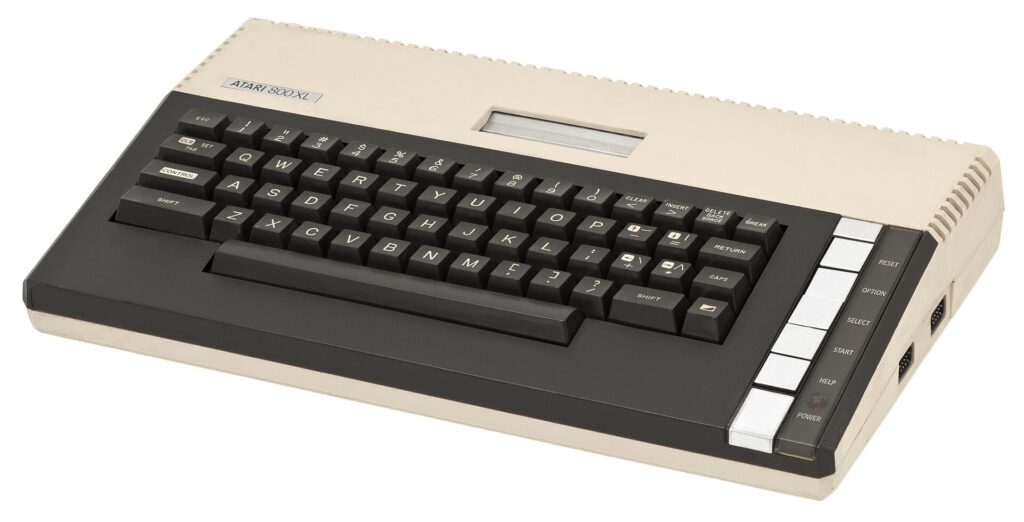
By Evan-Amos – Own work, CC BY-SA 3.0, https://commons.wikimedia.org/w/index.php?curid=18553927
I think I'm probably going to make a video along these lines sometime soon — although my prior video on the announcement of The400 Mini a while back covers a lot of the points I'd want to cover — but it's on my mind today, so that's what we're talking about today.
One of the reasons I want to talk about Atari 8-bit computers is because I don't feel they get nearly enough respect. No, they were by no means as popular as the Commodore 64 and Spectrum — the former of which is the subject of a cover feature in Retro Gamer magazine this month — but I also feel like they had a significantly stronger foothold in the market than other "failed" micros from the era. Not only that, but they are historically very significant for a number of reasons, some of which I'll try and outline today.
This is going to be a bit of a stream-of-consciousness sort of probably autistic infodump, because I'm just banging this out as I feel like it. If and when I do decide to make a video about all this, there will probably be a bit more structure, research, that sort of thing. Like I say, this was just rattling around in my head today, though, so I wanted to at least get some thoughts down on paper. So here it is.
For the unfamiliar, the Atari 8-bit range consists of several models:
The Atari 400, which released in 1978, and initially features 8 kilobytes of RAM, though later revisions bumped this up a bit. This was marketed in some areas as a games machine, as it was the cheaper of the two models to release in 1978, had four joystick ports and sported a flat, supposedly spill-proof membrane keyboard to make it suitable for "family" use.
The Atari 800, which released alongside the 400 in 1978, and was positioned as a more "serious" machine. It had a "normal" keyboard, user-upgradable RAM (up to a maximum of 48 kilobytes) and two cartridge slots instead of one (though there were very few releases that took advantage of this) — and it cost considerably more.
The Atari 1200XL was the first step in a refresh of the Atari 8-bit line in 1983, intended to replace the 800. It came with 64 kilobytes of RAM, a completely redesigned case, built-in self-test features and a rather nice keyboard. It was also much too expensive and had a number of issues, causing Atari to pull it from sale before long, and to not release it in PAL territories at all.
The Atari 800XL (pictured above) was a do-over of the 1200XL project. It also had 64 kilobytes of RAM, the newly designed case (now not quite so deep), built-in self-test features and lovely keyboard, but also added built-in BASIC to the mix along with revisions to the operating system. It was Atari's best-selling 8-bit home computer.
The Atari 600XL was a cost-reduced version of the 800XL, which had an even slimmer case and only 16 kilobytes of RAM. With the 800XL replacing the 800, this was effectively the replacement for the 400, but it did not sell very well compared to its big brother.
The Atari 130XE was launched in 1985, after Jack Tramiel took over Atari, and was designed to look like a "little brother" to the 16-bit Atari ST. It featured 128 kilobytes of RAM, new revisions of the operating system and BASIC and a new case design, but otherwise didn't bring anything significantly new to the table. It is a nice machine, though, and my Atari 8-bit of choice.
The Atari 65XE was essentially identical to the 130XE, only with 64 kilobytes of RAM instead of 128.
The Atari XEGS was a 65XE in a console-style case with a detachable keyboard. It was positioned primarily as a games console, even more explicitly than the 400 back in 1978, but was a fully functional computer that would work with all Atari 8-bit peripherals.
Broadly speaking, these models are all cross-compatible with one another, aside from obvious exceptions such as programs that need a particular amount of RAM to run properly. There are a few compatibility issues between very early pieces of software that were designed for the 400 and 800 and the later XL/XE models, but these can usually be got around by using a "translator" program to temporarily load in an older version of the operating system, and the Atari community at large has also been hard at work patching many games to work universally on all Atari 8-bit systems.
Like most other 8-bit computers, the Atari 8-bit had three means of loading software: ROM cartridge, cassette tape or 5.25" floppy disk. ROM cartridges are incredibly simple: plug them in, turn on the machine and the software is there, ready to go. These were primarily used for games, particularly in the early days of the platform, but there are some pieces of utility or productivity software that run from cartridge, too. Notably, using a cartridge effectively allows the ROM within to "extend" the Atari's capabilities; a good example of this is the SpartaDOS X package, which adds an MS-DOS style command line for manipulating files on floppy disks.
Cassette tapes were certainly used by Atari enthusiasts, but not to the same extent as on the Commodore 64 and ZX Spectrum. The reason for this is that the tape loading system in the Atari 8-bit was significantly slower than on its main rivals, resulting in load times of half an hour or more for games that would take just a few minutes on other platforms. That said, the Atari 8-bit could make innovative use of the tape medium by playing back audio during a program — a good example of this is the Conversational Language series of packages, which teach French, German, Italian and Spanish through interactive lessons, with recorded speech coming straight off the tape and being played back through the TV speakers at the appropriate moments.
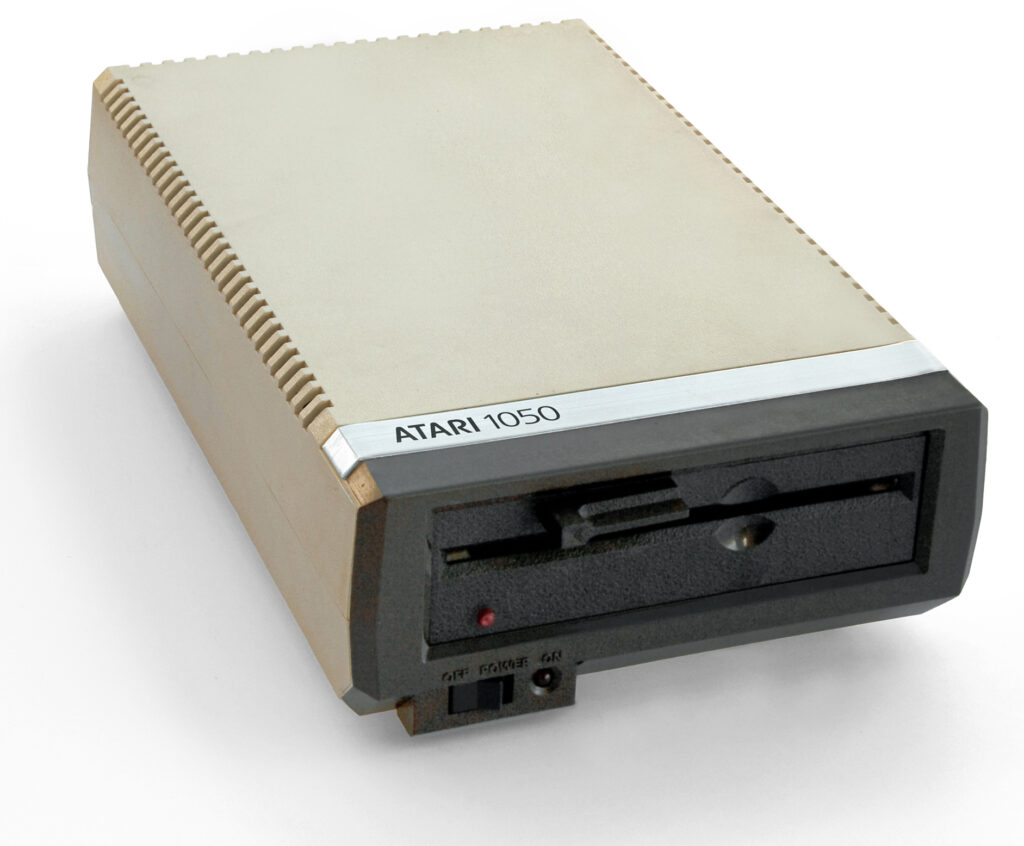
By Bilby – CC BY 3.0, https://commons.wikimedia.org/w/index.php?curid=48108881
Instead, disk drive use was very popular. There were two main disk drives in the prime of the Atari 8-bit's lifespan: the original Atari 810, which followed the design language of the 400 and 800, and the Atari 1050, which was designed to fit in alongside a 600XL or 800XL setup. There was an even later XF551 drive, but this didn't really catch on for various reasons, and these drives are a lot harder to find today.
You connected a tape deck or disk drive to the Atari via its proprietary Serial Input/Output (SIO) port, and this brings us to one of the most historically significant things about the range: SIO was designed as a universal connector for all manner of different peripherals, not just media storage devices. Sound familiar? That's right; it's very much a precursor to modern USB; Joe Decuir, who created this architecture, holds patents on USB.
SIO had a few differences to modern USB, most notably the fact that devices could be daisy-chained together. This means that even though the system only had one SIO port, you could connect multiple devices simply by linking them together. Obviously this was dependent on the device in question having a suitable port — and not every device did — but in theory you could keep on linking as required, making it easy to have, for example, setups that used multiple disk drives, and even cassette and disk simultaneously if you so desired.
Using a disk drive with the Atari 8-bits required one extra step: the use of a Disk Operating System, or DOS. Atari made its own DOS that underwent several revisions over the lifespan of the Atari 8-bit models, and although closed source and distributed under a proprietary license agreement, it could be redistributed. Good job, too, because in order to actually boot something from disk, DOS needed to be loaded first. If you wanted to be able to save BASIC programs to disk, you also needed to boot DOS from disk before starting to write your program.
The most commonly seen versions of Atari's DOS from back in the day used a menu-driven interface that allowed various disk functions such as copying and deleting files as well as locking/protecting them, loading executable files that were not set up to automatically boot when turning the computer on, formatting disks and creating new DOS disks.
Programming on the Atari used, like most of its contemporaries, a dialect of BASIC. Unlike many other BASICs at the time, it is not a version of the popular Microsoft BASIC (although this was available) and thus had a number of its own unique Atari-specific commands. Carrying out many functions, particularly relating to graphics, that would require POKEs on other platforms could be done with dedicated commands on the Atari, but conversely Atari BASIC lacked the ability to create arrays in string variables. It was, on the whole, a well-liked language, and the two main Atari magazines of the era, Page 6 and Atari User (which later merged to become New Atari User), typically printed type-in listings for all manner of programs in every issue. Not just games, either; both magazines were keen to position the Atari computers as capable, multi-function devices that were far more than just sources of entertainment.
Other programming languages were, of course, available. Those keen to get their hands dirty could write programs using 6502 assembler, while as the years went by, speedy languages such as Action! and Turbo BASIC XL came along and offered compelling alternatives to the built-in or cartridge-based BASIC that was, for many, the foundation of programming on the Atari range. These languages could be compiled into executable binaries, too, meaning that an end user would not need a copy of the language to run a program written in it.
The Atari's audio-visual capabilities were very solid. The dual ANTIC and GTIA graphics chips offered hardware scrolling, built-in "player-missile" sprites, and a wealth of different graphics modes allowing various balances between memory usage, resolution and colour depth. The POKEY chip offered four-channel audio with a good amount of customisation — although not quite as flexible as the SID chip found in the Commodore 64. It also handled a lot of the Atari 8-bit's input/output, meaning the system has the charming feature of making blippity bloop sounds when loading and saving from/to disk or tape rather than the horrific screeching heard on other platforms.
And then we come to the games. While some of the high-profile software houses — notably outfits like Ocean, Imagine, Ultimate and suchlike — refused to support the Atari 8-bit, others, like Electronic Arts and Activision, did, at least in the early days, and the budget companies like Mastertronic, Atlantis, Zeppelin and Alternative had a good presence on the platform, too. The end result of this from a 2026 perspective is that the Atari 8-bit library is largely unique, with many titles not being found on any other platforms — and in the case of multiplatform affairs, the Atari release often being a particularly good version. (There are exceptions, of course; the Atari 8-bit versions of Action Biker and The Last V8 are woeful compared to the C64 releases.)
There's also the fact that a lot of games which went on to worldwide success on a variety of platforms often originated on Atari 8-bit. All-time classics like Boulder Dash, M.U.L.E., Miner 2049'er and Spelunker debuted on Atari before spreading to other platforms, and esteemed creators like Archer Maclean were really able to make the system sing with games like Dropzone.
The only thing the library is lacking compared to its more successful 8-bit counterparts is a library of solid arcade conversions from the years following the initial early '80s "golden age"; those early '80s titles are well-covered, however, with excellent versions of Pac-Man, Dig Dug, Pole Position, Qix and plenty more — and a wealth of "unofficial" clones, too.
So why doesn't this system get anywhere near the love and attention that the Commodore 64 and ZX Spectrum do? I honestly don't really know, because although the platform undoubtedly sold considerably less than both of its main rivals, I don't think one can in any respect call it a "failure". Its longest-lasting magazine published its final issue in 1998, for heaven's sake — and said magazine was including material for the Atari 8-bit right up until that very final issue. Not only that, the modern "homebrew" scene is incredibly active and vibrant to this day, with some truly amazing new games being released for the platform on a regular basis, along with some excellent ports of C64 and Spectrum games that never made it to Atari back in the day.
I would love to see the Atari 8-bit get more acknowledgement. There are some YouTubers who do give it its dues — Kim Justice is a good example — but I do wish the field of "gaming history" would, more broadly, pay attention to the Atari 8-bit: a platform that still has a lot to offer, which is a hell of a lot of fun to have been involved with since its original inception, and which is dead easy to explore today with solutions like Altirra for software emulation, and the excellent Atari800 core for MiSTer if you're an FPGA person.
Still, that's a big reason my YouTube channel exists. So I will continue to champion the system how I can — and at least then I know that I have done my part in remembering this wonderful platform and the many amazing journeys it has taken me on over the years.
Want to read my thoughts on various video games, visual novels and other popular culture things? Stop by MoeGamer.net, my site for all things fun where I am generally a lot more cheerful. And if you fancy watching some vids on classic games, drop by my YouTube channel.
If you want this nonsense in your inbox every day, please feel free to subscribe via email. Your email address won't be used for anything else.
I read yesterday that several blogging platforms are integrating the "AT protocol" or whatever it's called that powers services like Bluesky and the like, and one of those was WordPress. So today's post is primarily a big ol' test to see whether or not that functionality, implemented via the ATmosphere plugin, actually works, and whether or not it's something I actually want to use.
Photo by fauxels on Pexels.com. These people are all enjoying my posts. You should, too.
I talked a bit about social media with my therapist yesterday. I discussed how conflicted I feel about existing online right now, what with the emphasis on short-form video and vapid content rather than longer-form, more meaningful material. I'm not saying that the stuff I post here isn't vapid nonsense, of course, but I have always said that I would far rather read someone's vapid nonsense than be delivered it as shouty-face-at-camera content, so this blog continues with that in mind. And if no-one is interested in my vapid nonsense, then at least I still have somewhere to bang out some words and express myself, which is what this has always been about.
Anyway, the kind-of-sort-of conclusion I came to was that at least a minimal presence on social media is somewhat desirable for me, because otherwise I just end up feeling completely isolated. While I enjoyed the total break from all social media, including Bluesky, that I took last year while I was on holiday, I found that I didn't want to maintain it afterwards, as it just left me feeling even more lonely than I already was. And I'm already feeling pretty damn lonely.
Still, the other thing that came to light in yesterday's session is that although I have always kind of feared social interactions and find myself overthinking conversations before I have them — sometimes to the extent that I never actually start the conversation in reality for the fear of coming across as boring or annoying — I am, in many respects, feeling kind of ready to challenge myself in at least attempting to make some new friends, to have some people that I can connect with and, basically, to stop feeling so danged lonely.
The challenge that I have found along the way is not so much initiating those interactions when the opportunity arises — although that is still a somewhat scary prospect for me — but rather finding those opportunities in the first place. I cited an example of when I first went to university and attended a pre-term music course, and I took the uncharacteristically bold step (for me) of introducing myself to someone I was in a lift with while we were transporting ourselves to our respective floors in the tower block where we were staying. That resulted in a longstanding friendship (albeit one that I will hold my hands up and say that I have been very poor at maintaining) and was proof that, as little as I think of myself at times, I can come across as someone that people actually do want to know and are not, in fact, actively repulsed by.
Those opportunities of being "trapped" in a lift with a stranger and the choice being either awkward silence or attempting to clunkily start a conversation just don't really seem to arise these days, though, because I'm never in that sort of situation. I work from home, I don't go out a great deal, I'm not a member of any "groups" or anything (and don't really know how one would go about finding a "group") and I do not have a publicly accessible elevator in my house.
What I am going to at least attempt to do a bit more, though, is to attend some in-person events where I know some people with whom I have at least a casual acquaintance will be attending. My trip to The Cave a few weeks back was a good example, and last year I went to the RetroFest show in Swindon — that is actually happening again this year, but I left it a bit late to organise a trip there. I mean, I could probably snag a ticket and go along tomorrow (today's tickets are sold out), but can I be bothered to do that?
Hmm, can I be bothered to do that…? I might have a think about that throughout the course of today. Swindon is a fairly long way to go, but it might actually be nice to go along and see some interesting things and clever people.
Hmmmmm.
Anyway, today we are going food shopping, so that's fun. Thank you for participating in this experiment of whether or not this thing actually posts correctly to Bluesky via the ATmosphere plugin. If it does, I'll likely hook up MoeGamer proper in the same way. Tatty-bye for now then.
Want to read my thoughts on various video games, visual novels and other popular culture things? Stop by MoeGamer.net, my site for all things fun where I am generally a lot more cheerful. And if you fancy watching some vids on classic games, drop by my YouTube channel.
If you want this nonsense in your inbox every day, please feel free to subscribe via email. Your email address won't be used for anything else.