2376: Gal*Gun: Gloriously Stupid

0376_001

Gal*Gun: Double Peace came out today, and my preorder from a while back arrived right on time. The limited edition comes in an absolutely enormous box thanks to the nice quality wallscroll in there.

But let's talk about the game!

Gal*Gun, as I shall refer to it from hereon, is a peculiar affair that is part dating sim and part lightgun-style shooter. The story concerns our protagonist inadvertently being hit with a fully charged angel's bullet that is 32 times the normal strength of a Cupid's arrow, which means that for the next 24 hours, he will be completely and utterly irresistible to women. There's a catch, however: if he fails to find his true love during this period of unprecedented popularity, he will remain alone for the rest of his life. Thus begins a rather peculiar adventure.

Gal*Gun is split into a number of different components when playing through its Story mode. Firstly, there are straightforward visual novel-style sections with occasional choices, some of which are locked off if your stats are too low or too high. Secondly, there's an "intermission" between the action stages where you can visit the school shop to purchase items that either buff up your character's base stats and personality traits or provide protection against various types of attacks. Thirdly, there are the rail shooter segments, which also incorporate "Doki Doki Mode". And finally, there are minigames corresponding with various events.

The visual novel sections see you pursuing one of several different love interests, with the aim being to get their affection rating as high as possible by the end of the game. You're given auditory cues when you make a choice as to whether or not you picked the correct choice to increase their affection rating, allowing you to make better choices on a subsequent playthrough. The presentation uses a combination of polygonal animated characters for most of the dialogue, and hand-drawn event pictures for noteworthy things happening. The 2D art is quite a lot more detailed than the 3D models, but the 3D models are animated nicely and presented in an attractive cel-shaded style.

During the intermission sequences, as well as purchasing various items from the shop, you can also read a virtual message board, on which the various characters in the game post about problems they've been having or things they've lost. These exchanges contain cryptic clues for hidden items you need to look out for in the coming action stage, as well as whether these hidden things are something you need to actually shoot or just stare at until they register. Sometimes you get a choice of stages to proceed onward to, and certain requests only apply to certain locations, so if you're interested in pursuing a particular girl, you need to pay careful attention to her messages.

The action stages unfold in fairly standard lightgun fashion, with a few twists. Firstly, you're not actually killing anyone; you're fending them off with a "Pheromone Shot" until they collapse from "euphoria". Different girls have different weak spots that allow you to one-shot eliminate them, and doing so is called an "Ecstasy Shot". You can also zoom in while playing the action sequences, and this has several uses: firstly, it allows for more accurate (albeit slower) aiming; secondly, it allows you to see hidden things; thirdly, it allows you to see through things, including tree leaves, items of furniture and, of course, clothing. Ogling a girl for long enough also allows you to determine what her measurements are, which are subsequently recorded in the in-game database.

As you progress, the challenge escalates somewhat. Initially, the girls run towards you and "attack" you with love letters, hugs and kisses, but later in the game as the plot gets underway, you start coming across sadistic girls who have been afflicted by a demon's curse; these rather aggressive young ladies like to slap, punch and step on you, and the only way to snap them out of it is to find the hidden "mini-demon" floating around them, then shoot it before eliminating them in the usual manner.

Success in the action phases increases a meter in the upper corner of the screen; when this is at 1 or higher, you can enter Doki Doki Mode and bring as many girls as the meter indicates. In Doki Doki Mode, the girl(s) are presented posing provocatively, and you're tasked with finding where they like to be poked and rubbed to increase an affection meter at the side of the screen. The main use of this mode is to affect your stats, since each and every girl affects one or more stats in different ways. There's a secondary benefit, though: successfully completing a Doki Doki sequence unleashes a "bomb" when you return to the action phase, making it a good way to clear a particularly stubborn crowd.

Finally, the event sequences occur when the protagonist and a girl find themselves in a somewhat awkward situation; for example, early in one of the routes, the hero's love interest finds herself stuck in a window as she tried to escape being locked in the PE equipment closet. In order to free her, you have to find and shoot various hidden targets over her body, and in some cases do motions on the touchpad, to increase her "Satisfaction" level. Once this phase is completed, you then have a particular action to complete as many times as possible in a short time limit, then you repeat the process twice.

At the end of each section of the game, your score is tallied up and you are graded on your total progress. You're also awarded Angel Feathers to purchase items from the store in the intermission menu.

There are several story routes, an absolute shit-ton of collectibles and a customisation system for all the characters in the game. There's also a score attack mode that can be played independently of the main story mode.

Gal*Gun is gloriously, deliciously stupid. It knows exactly what it is, and isn't trying to be intelligent or clever about it whatsoever. It's colourful, high-energy, joyful fun with a filthy sense of humour, and yet it somehow manages to come across as charming rather than sleazy. The story is surprisingly enjoyable and the characters are fun; I'm looking forward to seeing what hidden depths this game offers! Failing that, just a bit of looking at pantsu will do me nicely.

2375: Mommy Issues

0375_001

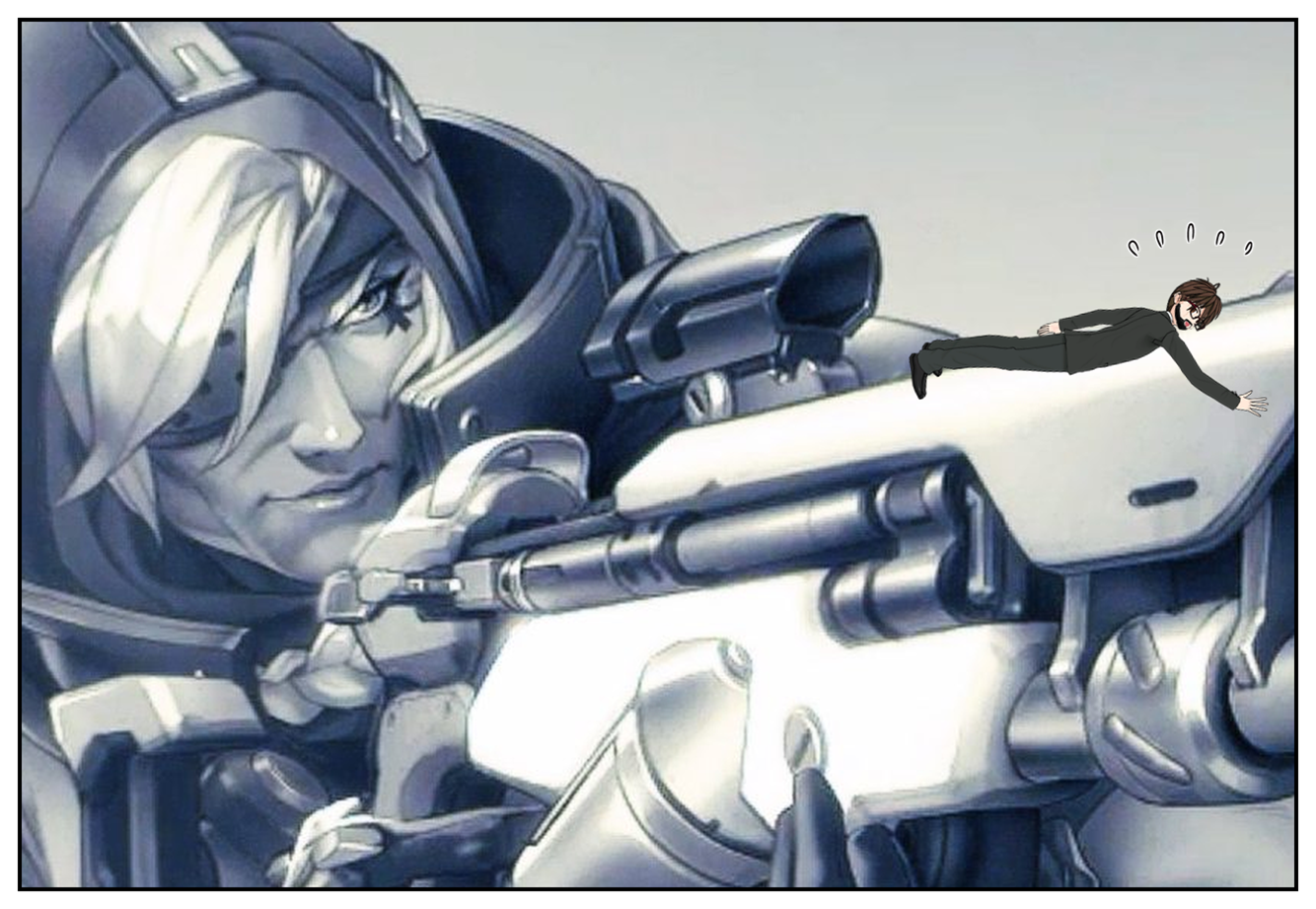
Overwatch has finally seen the release of its first new hero since launch, in the form of Ana, a new Support character and mother of existing character Pharah.

Ana is an interesting concept for a support character because she's based at least partly around sniping, which in Overwatch terms has traditionally been an approach reserved for Defender-type heroes. As a Support character, however, Ana's role is actually surprisingly well-rounded, comprising both offensive and defensive capabilities and possessing an overall feel quite unlike any of the other heroes on the roster.

Ana's basic ability is a sniper rifle that shoots bolts that either heal allies they hit or damage enemies. In both cases, the healing or damage process isn't immediate — it takes a second or two for the value to affect the character's health, though it's not quite a long-duration damage or heal over time either.

What this essentially means is that Ana is able to heal people from a much greater distance than any of the other Support characters, though the tradeoff in this case is that you have to be reasonably accurate in order to register a hit on the person you're trying to heal. You don't have to be absolutely pinpoint accurate, but your reticle still needs to be roughly in the right area to register a hit, unlike Mercy or Lucio, who lock on to nearby targets and affect all targets around themselves respectively.

Ana's other abilities throw some interesting twists into the mix. Her "E" move allows her to throw a grenade that provides an immediate burst of healing to anyone caught in the blast, along with a temporary buff to healing from all sources while it's active. Like her gun, this grenade also has a negative impact on enemy characters, in this case dealing some damage to them and completely preventing them from being healed for a few seconds.

Her Left-Shift ability, meanwhile, is something of a game-changer: it's a dart, shot out from her sidearm, that puts anyone it hits to sleep, causing them to collapse to the floor and be completely immobile for a few seconds. This is an absolute godsend against characters who can be difficult to push through such as Bastion, since it allows you to take the pressure off for a moment — just long enough to sneak in and finish the job. It's also good for interrupting powerful Ultimate abilities from characters such as Reaper and Pharah.

All in all, Ana seems to be a strong addition to the roster. Her healing capabilities aren't up to Mercy and Lucio's standards, largely due to the accuracy requirement, but they're solid enough, but her real benefit is the addition of some solid offensive skills. Her main weakness is in her mobility; unlike the two previous sniper characters Hanzo and Widowmaker, Ana has no means of easily getting up to higher ground, and so must either do her work from ground level or find more roundabout means of getting to good vantage points.

2374: In Praise of the RPG Maker Community

0374_001

I touched on this the other day, but it bears mentioning again, I think: the community surrounding the RPG Maker series of software packages is one of the most interesting, diverse and helpful communities I've had the pleasure of coming across in all of gaming.

Gaming communities can be a variable bunch. Communities that surround online multiplayer games tend to err somewhat on the side of aggressively arguing that their opinions are the "right" ones and that everyone else is wrong — sometimes even putting players at loggerheads with the developers. Retro-gaming communities are keen to celebrate old games but have an often unspoken code of honour about not sharing pirated versions of software — even though this is sadly the only means of getting to play some older or rarer titles these days. And the Steam forums are just… well, no. Nothing good comes of sticking your head in there.

The RPG Maker community, though, they're some of the most cooperative people I've seen ever. Sure, there's an element of the usual supercilious "Search is your friend!" obnoxiousness on the forums when someone asks a question that might have been answered before six years ago, but this is true for pretty much any Internet community out there, and the help and support the community generally offers for the program is second to none.

It helps that RPG Maker has always been extensible — initially just through graphics and sound in the earlier incarnations, but with more recent installments through Ruby scripts and JavaScript plugins to extend and customise the functionality of the basic engine far beyond what it was originally intended for. Many creators provide these additional bits and pieces either under a completely royalty-free license, or under some variation of Creative Commons, which allows people to use them freely so long as they credit the original creator and, in some cases, don't fiddle around with it and pass it off as their own.

This is extraordinarily generous, and it has always amazed me quite how far people are willing to go to help out the community as a whole — though I'm pleased to see with the rise of Patreon that some of these creators are now able to make a bit of money off their creations through pledges from grateful users, something which was very hit-and-miss when going through PayPal as in the pre-Patreon days.

I know that I'm massively grateful to the RPG Maker community as a whole for providing me with all manner of excellent content to extend the functionality of the program — and helping me feel like I can make the best possible game with the resources I have, rather than having to settle for doing something within limitations. While my silly little game that I'm working on at the moment will doubtless never be anything big or exciting — as I've mentioned before, the very reason for its existence is mostly an in-joke that perhaps only four or five people in the world will understand — I am very happy with how it's looking so far, and how unlike the generic, out-of-the-box RPG Maker engine it looks, just with a few simple changes to the basic mechanics and functionality.

I'm thinking I may well spend next month on MoeGamer covering RPG Maker MV, since it's still relatively new, so watch out for that. In the meantime, I've got games to make!

2373: Sheriff of Nottingham

0373_001

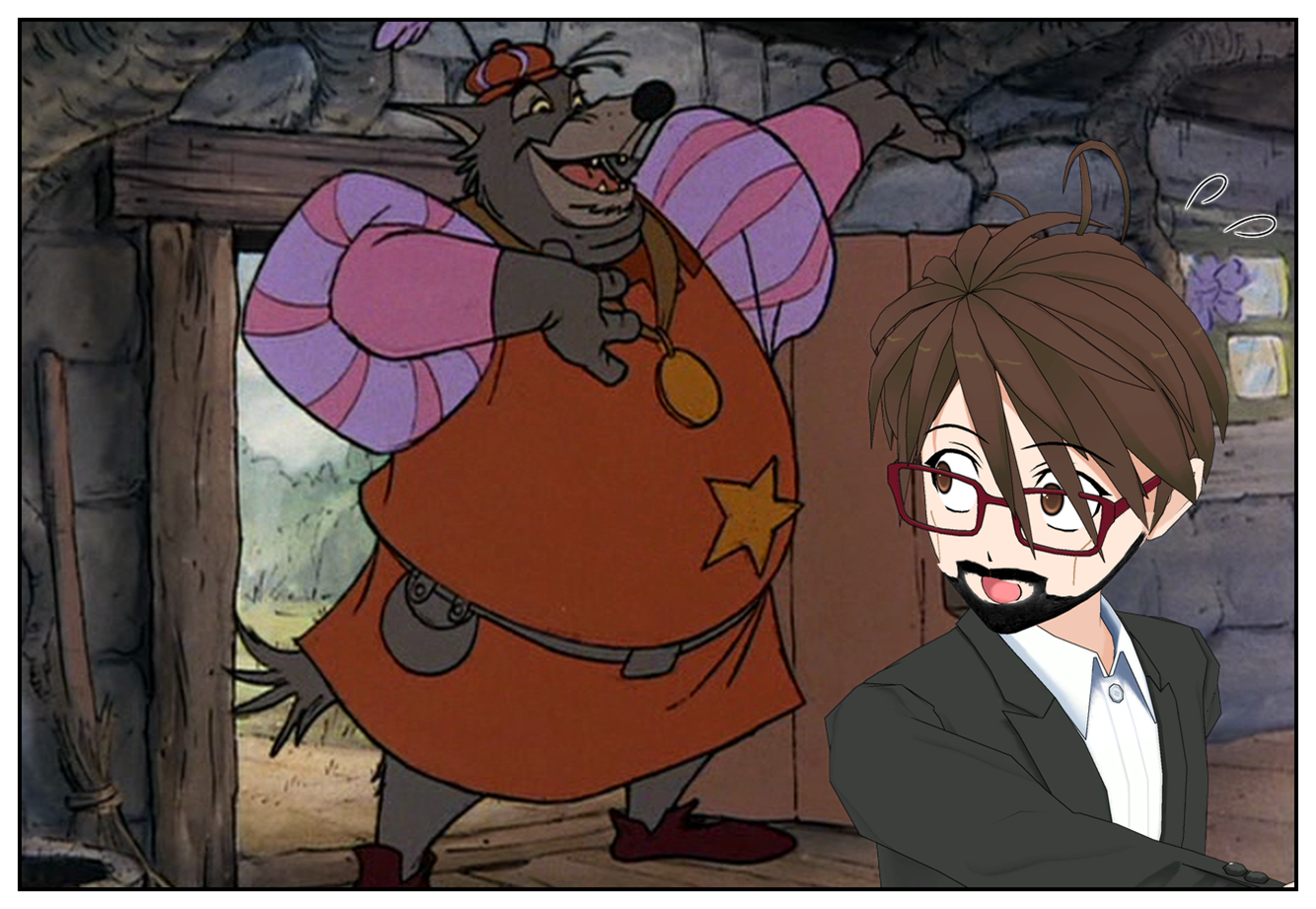
My brother bought me a board game for my birthday known as Sheriff of Nottingham, and it hit the table for the second time this evening. I was particularly keen to see my friends Tim and James compete against each other in it, because they're both very good at arguing (they're both lawyers) and both often get rather competitive — and Sheriff of Nottingham is a game very much designed for argumentative, competitive players.

The mechanics are pretty simple. By the end of the game, it's your aim to score as many points as possible through a combination of the cash you have on hand and the value of the goods you managed to successfully bring to market. To achieve this, you play through five phases several times.

First up, you look at your hand of six cards, ditch up to five of them and draw replacements from either or both of the two face-up discard piles (which have a small initial stock on them) and the central blind draw pile.

Once you've done this, you put up to five cards in your "merchant bag", a lovely little prop with a pop fastener, just big enough to hide the cards you choose.

Next up, each player declares to the Sheriff player (which rotates each turn) what they're supposedly bringing to market in their bag. You can (and often probably should) lie about this, because contraband items are worth significantly more points, and there are also big end-game bonuses available for whoever has the most of each of the four "legal" goods, so it pays not to telegraph your intentions to your opponents too early.

Then comes the Sheriff's time to play, since he hasn't participated in the previous phases. At this point, he has the choice of whether to inspect each player's bag or let them through. If he inspects the bag and discovers its contents are not what the player said they were, the offending goods get seized and discarded, and the guilty player must pay the Sheriff a fine. If, however, the inspects the bag and discovers the player was telling the truth, the Sheriff must pay the innocent player compensation for the value of all the legitimate goods in the bag. In order to determine the best course of action, the interaction at this point is completely freeform: the Sheriff can threaten players (within reason!) while players may offer the Sheriff bribes of money, goods or even favours to let them pass without incident.

Once all the merchant players have been inspected or let through, they lay down the cards they were able to keep — legitimate goods face-up, contraband face-down — and the Sheriff role passes to the next player. This then continues until everyone has been the Sheriff twice, at which point the winner is the person with the highest total points, which consist of the points on the cards they have on the table, plus the number of gold coins they have, plus bonuses for having the most or second most of each of the four legitimate types of goods. (There are no bonuses for having the most contraband, but some contraband counts as multiple legitimate goods when calculating these bonuses.)

It's a really interesting game. It's simple and quite quick to play, but the interaction element makes it rather fascinating — though at the same time also rather dependent on having a group who are capable of negotiating and dealing with one another rather than just not really knowing quite what to offer or threaten with.

It's essentially a game about lying — either getting away with lying, or making other people believe that you're lying when you're actually telling the truth. After two games, I think we're still learning the intricacies of appropriate strategies, but it's been a lot of fun so far, and an eminently good fit for our gaming group as a whole.

2372: The Lost Art of Puzzle Games

0372_001.png

I've been playing some old puzzle games recently. By "old" I mean "predating the smartphone", which in the grand scheme of things isn't all that old, but in technology terms is positively ancient. And, while I've known this for a while, the difference between puzzle games now and puzzle games of then makes it abundantly clear, beyond a doubt, that the modern age has done our collective attention spans no favours whatsoever.

The reason I say this is a simple matter of timing and commitment. The age of mobile and social gaming — Bejeweled Blitz in particular had a lot to do with this, I feel — has redefined the puzzle game as an experience that must be over and done with within 30-60 seconds, lest the participant get bored with the experience. This doesn't necessarily mean it has to be easy, mind you — quite the opposite, in fact, in the case of free-to-play games, where "friction" (ugh) is specifically incorporated into the game design at regular intervals for the sole purpose of extracting money from lazy players.

There are some people who are too stubborn to pay up to get past an artificially difficult level in Candy Crush Bullshit, of course, but these people are in the minority, because the 30-second structure of the levels that are easily beatable trains one to expect a bite-size, painless experience rather than having to actually put in any work or practice. And so for many players, the option to pay up to bypass a particular challenge — or at least make it insultingly easy, for the illusion of them having beaten it themselves — becomes an attractive one.

Compare and contrast with a puzzle game designed in the old mould, then. Rather than being designed as rapid-fire timewasters, puzzle games used to fall into two main categories: those which, like the best arcade games, challenged you to see how long you could last against increasingly challenging odds; or those which, like the other best arcade games, challenged you to demonstrate your superiority over either a computer-controlled or human opponent. In both cases, said challenges took a lot longer than 30 seconds to accomplish — in the former instance in particular, a good run could go on for hours or more if you really got "in the zone".

In other words, puzzle games used to be designed with a mind to keeping a player interested and occupied for considerable periods at a time, rather than allowing them to while away a few minutes — that's what simple shoot 'em ups were for. Everything from the classic Tetris to slightly lesser known gems like Klax and oddities like Breakthru were designed in this way; these games weren't just "something to do" — they were a test of endurance, observational skills, strategy and dexterity, both mental and physical. Having a Tetris game that went on for an hour was a badge of honour rather than an inconvenience; you weren't playing the game until something better came along, the game was the better thing that had come along.

This change in focus for puzzle games is a bit sad, as I miss the old days of them offering substantial, lengthy challenges to tackle over time. That's not to say that there's no place for rapid-fire puzzles, too, but it just disappoints me that 30-second "blitz" challenges are all we have these days.

At least the old games still play just as well as they always did — with them being so graphically light in most cases, puzzle games tend to age a whole lot better than many other types of game.

2371: Bad Education

0371_001

My favourite thing about Netflix is the fact that it allows you to try out various series that you might not have thought to take a look at when they were on TV, nor do you feel inclined to go and pick up a DVD or Blu-Ray of them, but which nonetheless intrigued you for one reason or another. Because you're not paying for the series itself — it's just part of your Netflix subscription — you can try things out, and if they're shit, well, you just stop watching them; and if they're good, you can enjoy them to your heart's content on your own terms.

Such was the case with Bad Education, a show originally broadcast on BBC Three. Something being broadcast on BBC Three is more often than not an immediate signal that it's going to be shit, but since I've always had a certain affinity for media of any kind — books, games, films, TV series, anime, visual novels — set in a school environment, I was very much curious about it. And I've been pleased to discover that it's actually not shit. It's actually some pretty solid — and unabashedly offensive — situation comedy, albeit almost totally divorced from the reality of working in education.

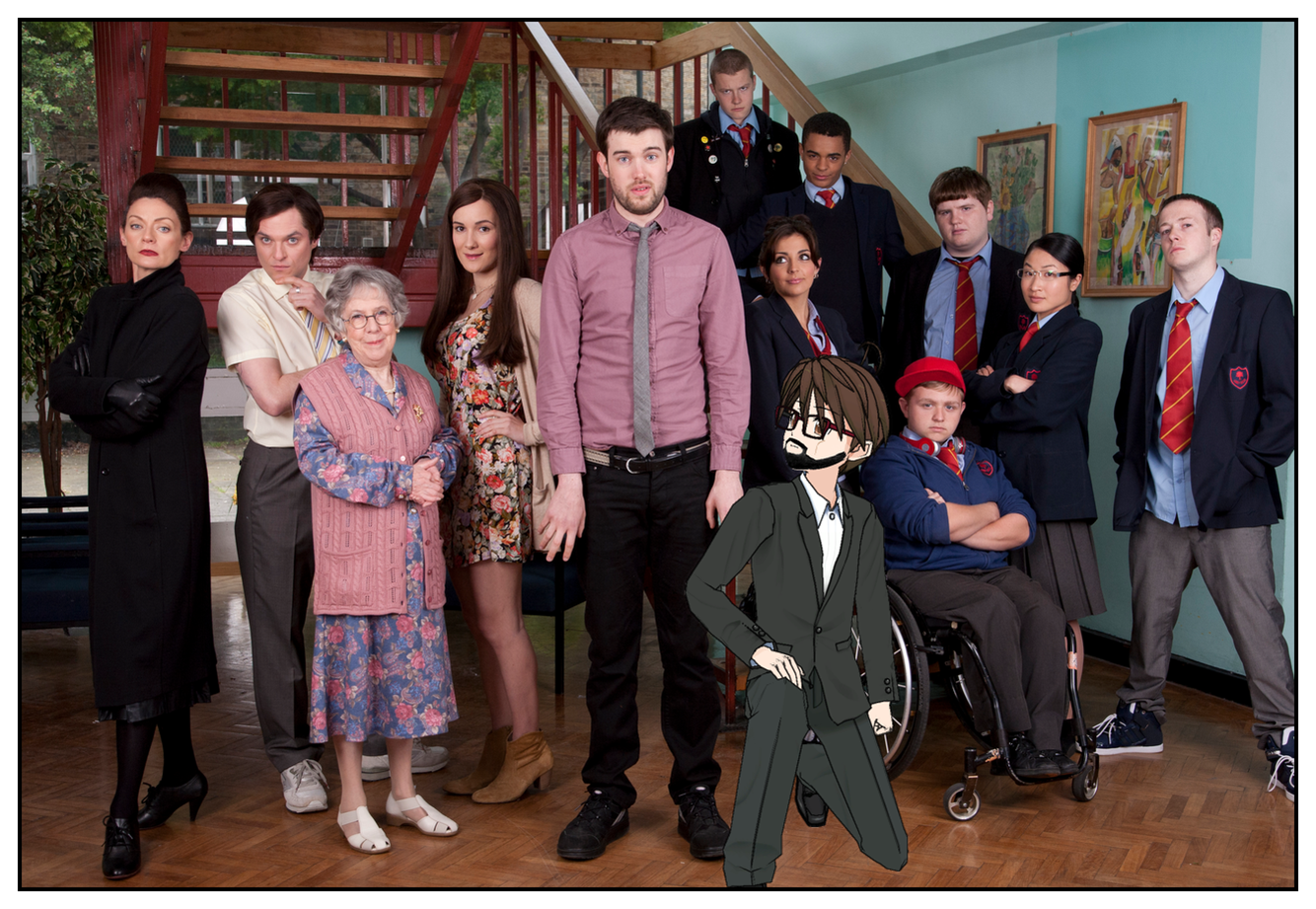
Jack Whitehall stars as Alfie Wickers, an incompetent History teacher who seems rather more concerned with being friends with his (unrealistically small!) form group than actually doing his job properly. Nonetheless, he does care about the kids' education in his own way, with many of his escapades concluding in some sort of life lesson being learned by them — or, more frequently, by him.

Alfie's class is probably the highlight of the show, because it's the most believable, realistic part of it, miniscule size aside. Speaking from the perspective of a former teacher, I can say with confidence that they're the very picture of the class that every school has who are a bit shit at everything — apart from one extremely clever student, whose very presence at a school as shit as that seems completely out of place — but you can't help but like. They remind me very much of class 9VN that I taught in the first school I worked in; for the first few weeks, I thought they were complete shitheads and would never get anything done with them, so appalling was their behaviour and attitude towards Music lessons… and then we discovered that they had a curious affinity for singing songs from musicals. So that's what we did. Or rather, that's what most of them did, while I set the few kids who were actually interested in studying music at GCSE and beyond to some other assignments. The class as a whole ended up being one of the few I actually look back on with a certain degree of fondness.

As for the show itself, it's very much a comedy with a certain degree of surrealism to it. In the second season in particular, it reminds me very much of the gloriously bizarre Green Wing, especially due to the presence of Michelle Gomez, who was also in Green Wing and plays pretty much the exact same character in Bad Education. Its seeming homage to Green Wing is emphasised through chaotic, time-distorted interstitial scenes with heavy visual filters on them to denote the passing of time or the simple division between story beats in the episode — though this only really becomes a thing in the second series, where the show as a whole seems to have a much stronger sense of its identity and what it's trying to do.

The supporting cast is solid, too. Matthew Horne's woefully terrible (and "banter"-obsessed) headmaster Fra$er [sic] is cringeworthy in the extreme in a sort of David Brent manner, but somehow just manages to stay the right side of believable within the context of the show. Harry Enfield is excellent as Alfie's father. And Sarah Solemani's portrayal of Wickers' love interest Rosie Gulliver brings a much-needed "straight man" to the proceedings, though her characterisation is a bit meandering — in particular, her short-lived dalliance with a lesbian side-plot doesn't really go anywhere, and the show subsequently returns to the admittedly solid foundation of the "will they, won't they" relationship between her and Alfie that has been the basis of many a successful sitcom over the years.

Bad Education isn't the best show on television by a long shot, but it's laugh out loud funny, well cast and snappily written. For a BBC Three show, it's god-tier. For something you just want to whack on while you veg out in front of the television, it's solid. As a scathing critique of the modern educational system in the UK, you may want to look elsewhere!

2370: Hidden Arcade Gems: Elevator Action II

0370_001

When I was growing up, my father and brother reviewed various pieces of software for the Atari 8-bit and ST computers. (I did a bit of it too, but I was a bit young to do it too regularly.) This meant we got a whole lot of free games; we had a set of shelves absolutely bulging with Atari ST games in particular, and actually buying a game was a pretty rare occurrence for me until I started getting into console with the Super NES and subsequent generations.

Anyway. One of the earliest Atari ST games I remember playing was called Mission Elevator, and I recall my brother mentioning in his review that it was a clone of a game called Elevator Action. I wasn't familiar with Elevator Action, but looking back on it now… yeah, Mission Elevator was a pretty shameless clone, right down to the animations used.

For the uninitiated, Elevator Action Mission whatever is a game where you play a spy tasked with creeping into a building and nicking Important Stuff, which is hidden behind doors. (Mission Elevator's twist on this formula was that sometimes you'd open a door and amusing or weird things would be happening behind it — or sometimes an agent would just pop out and blow your head off straight away, which was always infuriating.) The building is viewed from a side-on perspective, and getting between the floors is achieved by hopping into the titular elevators, then hopping out at the appropriate floor. The elevators move independently when you're not in them, but when you do get in one you can move it freely up and down to the floor you want to get out at.

Elevators are an integral part of the game. Their absence on your current floor can be an obstacle, meaning you'll have to make a heroic leap across the elevator shaft in order to get to the other side… or just wait for them to turn up. (These buildings apparently weren't built with safety in mind.) And not only could they carry you up and down to the different floors of the building, they could also carry enemy agents to your floor, and getting surrounded was bad news. Also, both you and the enemy agents could be killed through getting squished by an elevator descending onto your head — always satisfying to pull off to your advantage; always disappointing to have happen to you.

Anyway. Elevator Action and its shameless clone were fun, but ultimately quite limited. They got harder as they progressed, but they didn't really change all that much.

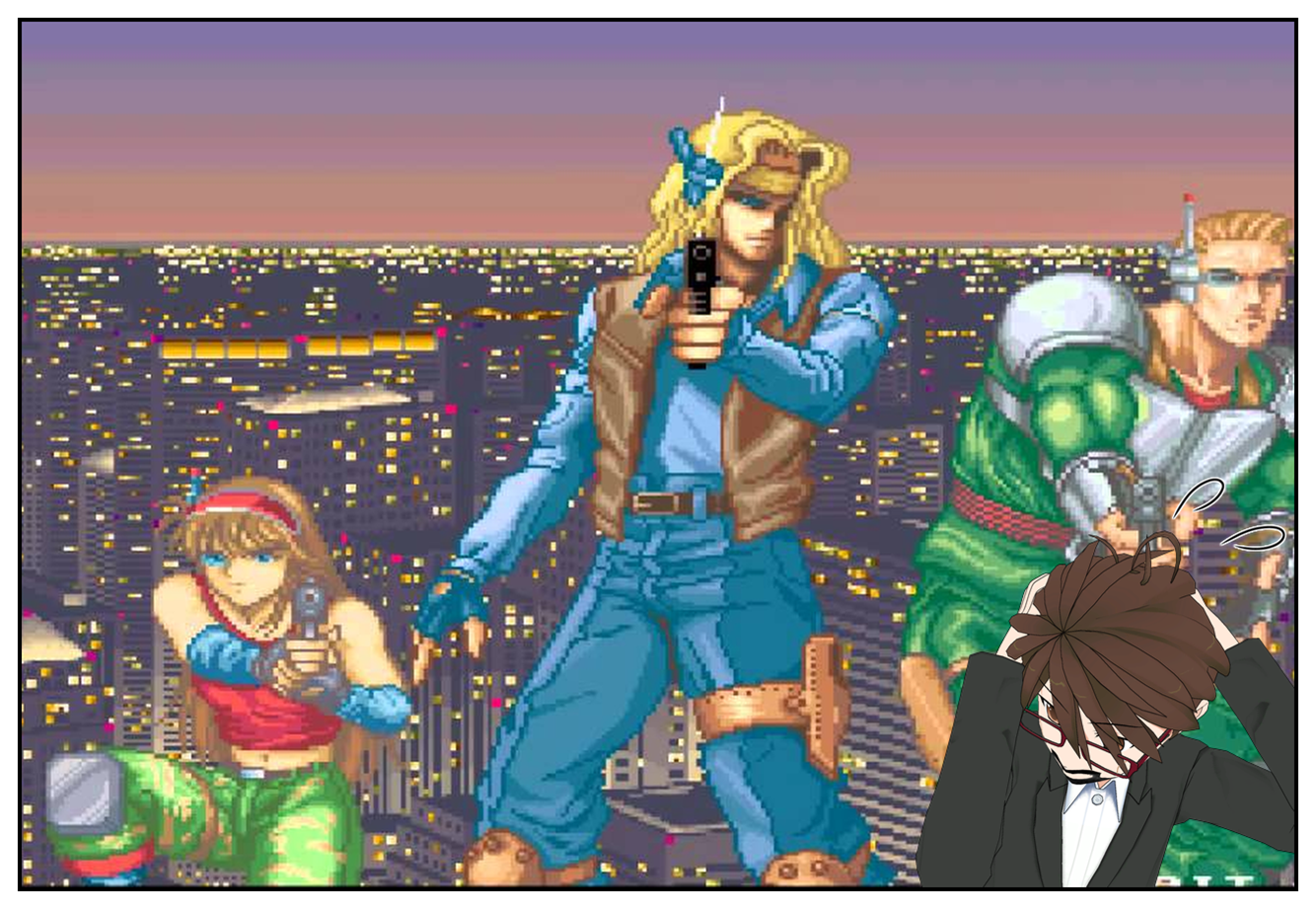
Enter Elevator Action II, a game whose existence I was completely unaware of until I read an article about the series (which I also didn't know existed) over on Hardcore Gaming 101. This game takes the basic mechanics and objective of the original game (use elevators to get to red doors, nick stuff from red doors, escape) and transplants it to a variety of different situations. The first level has you doing pretty much what you did in the first game. But then you're finding bombs in an airport and all manner of other things in the subsequent levels.

There are also three different selectable characters, each of whom handle a bit differently, and a level structure that feels a little like a belt-scrolling beat 'em up, particularly after the first level. You'll reach points in the level where there are setpieces you'll need to clear before you can progress; in the airport level, for example, while crossing a catwalk between two buildings, you get accosted by a horde of bad guys with jetpacks and have to fend them all off before you can proceed.

Elevator Action II raises the stakes considerably from the original game with a much wider range of enemies, not all of whom are humans. The whole thing feels like you're playing a terrible but enjoyable '80s action movie — right down to levels being introduced by you crashing through a window with a helicopter and other such silliness — and it's an excellent evolution of the original game's formula. My only real complaint is some mildly clunky controls, but they're easy enough to live with, and the game is sufficient fun that they don't detract from the experience too much.

If you have a chance to give Elevator Action II a go, take it. You won't be disappointed!

2369: Farewell to Clover, Last of the Rats

Hi Clover. You left us today, and that made me very sad. I'm sure it made you sad, too, but we both knew that it was time for you to go. I actually thought you were going to leave us yesterday, as you looked tired and miserable, but you hung on until today, because you'd always been a stubborn little thing. I'd like to think you clung on to life for a bit longer because you didn't want to leave us, either — as the last of our rats, you'd be leaving us alone — but I guess I'll never know how you really felt.

I can tell you how we felt, though, and how I felt. We loved you very much, and you will be sorely missed. Night-time won't be the same without the sound of you scuffling around in your cage in the dark and eating things in the crunchiest way possible while we're trying to sleep. And I'll miss the way you'd always come up to the door of the cage when we came to see you — not just because we'd usually give you a treat, but because you liked our company, too.

I won't speak for Andie, as I'm sure she has her own things she wants to say to you in private, but I'll tell you how I felt. I'll tell you a secret, in fact; out of the five rats we've had over the last few years, I loved each and every one of you to absolute pieces, but you were — don't tell the others — my favourite. I fell in love with you the moment I saw you in the pet shop. You were patterned a bit like your predecessor Lara, who had passed away and left her cagemate Lucy all alone, but you had an adorable scruffiness to your fur; I could never quite tell if you were actually scruffy or if it was just that you had slightly longer, fluffier fur than other rats.

Whatever the reason, I knew I wanted you to be our friend, along with your friend Socks, whose own unique adorable feature was the fact her shiny grey-brown coat had an enticingly fluffy white bit on her belly. And while, like all rats, it took you a while to get out of that initial stage of seeming absolute terror at everything, you quickly became friendly, getting on well both with us and with Lucy, by now an old lady rat who had clearly been pining for some company ever since Lara left us.

Out of you and Socks, I could never quite tell if you were "the smart one" or not. Socks always seemed to get up to more mischief than you, but I'm pretty sure you did your own scheming on the sly when we weren't looking. You certainly knew how to give us an irresistible, pleading look that would almost always result in you getting a treat of some description, but I like to think you thought of others too. You were always there for me when I needed you, and when I wanted to talk — when things were going badly, when I felt all alone, or when it was the middle of the night and I just couldn't get to sleep — you'd always come and listen, never judging, never answering back (and, I choose to believe, not just because you couldn't) and always making me feel better.

I'm sorry life became such hard work for you towards the end, but I'm grateful that you hung on for us as long as you did. You were well over two and a half years old when you left us, which is super-old in rat terms, and I'd like to think that you stuck around as long as you did, despite your declining health, because you knew how much you were loved, both by Andie and by me.

I'll miss you, Clover, just as I miss Socks, Lucy, Lara and Willow every day. I love you all very much and I hope that wherever you go after you leave us, you have a happy time, free of fear and adversity, full of treats and bursting with eternal joy.

Goodbye, Clover. And thank you for being such a special part of my life. I'll never forget you.

2368: Building a World... Again

0368_001

Playing with RPG Maker MV as I am at the moment, I'm reminded of quite how much I enjoy building worlds. I don't have the skill or technical knowledge to be able to do so using 3D modelling tools (or even level editors for 3D games) but I've always felt I can put together some interesting 2D maps for RPGs.

There are two main approaches you can take when building a world for a game. You can take the "realistic" approach and attempt to build it to something approaching a believable scale, or you can take the "gamey" approach and try to build something that works well in the context of a game.

In actual fact, I tend to find that the best approach is somewhere between the two. A certain degree of game design is necessary when building a world in order to prevent it feeling like an unfocused mess — many modern open-world games fail miserably at this — while at the same time if your world design is completely divorced from reality your players will constantly be aware that they are playing a game rather than immersing themselves in your fictional world.

This isn't always a bad thing, of course. Some people very much prefer exploring something that has been crafted to be fun, interesting to explore and well-paced. Others, meanwhile, like to wander off the path at every opportunity and see what's in that cave, over that hill, behind that locked door. And some of the most satisfying gaming experiences I've had have come in environments very obviously designed to defy all real-world logic (not to mention architectural principles and, well, physics) — Metroidvania-style titles particularly spring to mind in this regard.

Since the game I'm playing around with at the moment is a kind of grand experiment of sorts, I'm going to play around with a variety of different approaches. The concept of the game sees the party travelling to several different "worlds", so each of them are going to be structured differently. One of them will be a condensed fantasy RPG-style world, with the distinction between "overworld" and "dungeons". Another will be one big dungeon — probably a haunted mansion or something along those lines. Besides those, I'd like to do something interesting with a sci-fi/cyberpunk feel, and either something completely abstract or very much grounded in reality. Or perhaps both.

Unlike past projects, where I've sort of "winged it" as I've gone along, this time around I'm actually taking a bit of time to plan things out to a certain degree. I imagine there will still be an element of winging it as I play around and think of new things I'd like to do, but at the very least I intend to plan out the basic structure and/or map of each of these "worlds" and how the player will interact with them. Then it will be interesting to see how much of a challenge it is to implement each of them using the RPG Maker MV toolset.

So far, the game's introduction has a single, linear "dungeon" to introduce the player to the basic concepts. After that, I intend to allow them to choose how they progress through the initial phases of the game — though I also intend to put in some systems to ensure some jumping back and forth between the different worlds and their corresponding styles is in order. Should keep things interesting. We'll see, I guess.

2367: Return to the House on the Hill

0367_001

We played another round of the board game Betrayal at House on the Hill last night. I've grown to really like this game over time — its basic mechanics are simple and straightforward, yet the heavy degree of randomisation with every game means that the experience is subtly different each and every time you play.

I won't give specific details as unlike many board games, it is absolutely possible to "spoil" Betrayal at House on the Hill. For the unfamiliar, the basic flow of gameplay is split into two distinct sections: a cooperative initial section where everyone explores the creepy old house independently, generating its layout as they explore, followed by the "Haunt", at which point one or more players are revealed to be a traitor (or not revealed, in some cases!) and given their own objectives to complete that are kept secret from the remaining "good" players. Which of the Haunts you take on in a session is determined by the combination of the room you were in when the Haunt was triggered, and the item you picked up that triggered the Haunt. The combination of these factors is sufficiently random that across several games, I'm yet to play the same scenario twice.

And those scenarios are enjoyably different from one another. In some cases, the traitorous player remains as a figure on the board, moving around and able to use the abilities and items they accumulated during the initial exploration phase. In others, the traitor's character is removed from the board for one reason or another — perhaps they were killed, perhaps they became an evil spirit, perhaps they were never really there in the first place — and the traitor player instead takes on the role of an "overseer", controlling all the monsters in the house and making use of special abilities to thwart the attempts of the players to fulfil their objective. Said objective usually involves getting the fuck out of the house that is suddenly trying to kill them, but there are often other things that they need to do first.

The mechanic I particularly like is the use of RPG-style "ability checks" to complete various actions. The way these work is simple: you look at your character's current value for the stat in question, then roll that number of dice. The dice in Betrayal at House on the Hill are special six-sided ones that only have faces with one or two spots on, as well as a few with nothing at all on. To succeed in your task, you have to roll equal to or over a given number. For example, for a Knowledge 6+ check, you roll the number of dice for your character's Knowledge stat, and must score 6 or more to successfully complete the task. In some cases — usually items or events — there are variable results according to the score you achieve, with zero normally meaning something horrendous happens. A critical failure, if you will.

The game is strongly thematic, but not at the expense of mechanical elegance. The exploration mechanic works well and produces interesting randomised board layouts each and every time you play, and the various items, events and traps you stumble across in the process make things interesting by perhaps adding shortcuts or hazards to contend with as you explore or run away screaming from a murderous evil thing.

Best of all, it plays pretty quickly — a game takes about an hour or so, meaning our gaming group can absolutely fit a game of it in on a weeknight before people start flagging (or, more frequently, need to get to bed before going to work the following day). I'm hoping it hits the table a bit more often from now on.